

10 Rules You Should Know For Eating At A Korean BBQ Restaurant
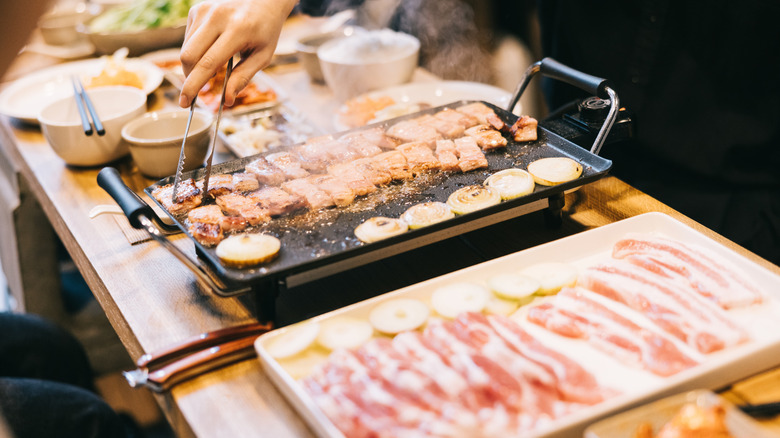
If you love interactive dining experiences with delicious food steeped in cultural tradition, Korean barbecue is for you. Cooking your own meats over a tableside grill is one of those fun dining experiences that is unlike your typical dinner out. It may be trendy now, but there is a long-standing history behind Korean barbecue. It is believed to have originated in Central Asia by a nomadic group of people called the Maek, who brought pre-seasoned meats to prepare over an open flame as a time-saver. The popularity caught on and eventually was adopted by the larger population.
Nowadays, there are many fabulous Korean barbecue restaurants all over the United States. My husband and I had Korean barbecue on our date night list for years, but when we finally got the chance to try it, we felt a bit uncertain. "What order do you eat the dishes? Is this cooked right?" were some of the questions circling our table. We were inexperienced, but not alone, as we learned there are plenty of mistakes you can make when eating Korean barbecue.
To find out more, we spoke with Clara Park, a Korean-American chef and founder of eat cetera philly, to get the scoop on the rules you should follow at a Korean barbecue restaurant. By following her expert advice, you can fully enjoy yourself with the ultimate dining experience.
What is included in Korean barbecue?
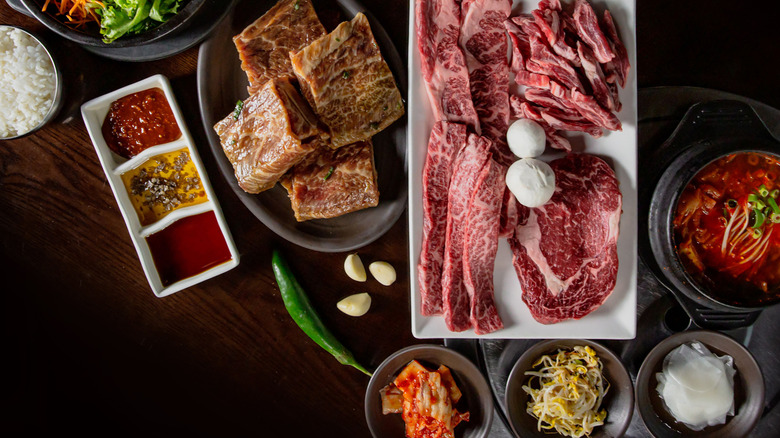
Understanding what comes with your Korean barbecue meal first can clear up confusion before heading to the table. Typical Korean barbecue dining is designed for at least two people, with meat sold in portions per person. "The meal comes with an assortment of banchan, steamed rice, maybe a soup, a platter of raw, marinated meat, and then a basket of red leaf lettuce, ssam jang, and maybe some raw garlic," Clara Park explained.
Banchan are traditional side dishes that come with every meal. They usually include at least one, if not multiple types of kimchi, according to Park. "Napa cabbage kimchi is standard, and then you may see some daikon kimchi, white kimchi, or cucumber kimchi," she said.
As for the meats, there are various types and flavors to choose from at a Korean barbecue restaurant. Bulgogi, thinly sliced cuts of marinated beef, is a popular one, as well as cuts of pork belly, brisket, or chicken. The signature Korean barbecue marinade has a sweet and sticky flavor, with a bit of spice from gochujang — a Korean red pepper paste. Cooking the garlic on the grill with your meat also gives a nice flavor boost, says Park.
Be respectful of your dining companions
The first rule to follow when eating at a Korean barbecue restaurant deals with how you act toward your dining companions — especially the elder ones. "Proper etiquette is allowing the eldest person at the table to eat first and reserving the best pieces for them," said Clara Park. Additionally, it is seen as a sign of respect to pour drinks for your elders, and if an elder is pouring drinks for you, to receive it with both hands on the glass. Your elders should also be offered the first set of finished meats before distributing them to the table.
Age aside, family-style or group dining requires a certain level of awareness for others at your table. "As it is a communal dining experience, be mindful of how much everyone is eating," said Park. "Don't be a pig and eat way more than everyone else." You can practice this dining etiquette by taking small amounts of food from the smaller shared side dishes, so as not to hoard larger amounts onto your own plates (you can always ask for more for the table).
Choose your seat wisely
There are many restaurants where the staff will help you cook your meat on your grill, meaning no tableside grilling by diners required. Otherwise, the responsibility traditionally falls to the person closest to the grill in a group setting, if not for any other reason than the convenient location.
"Typically, the person in front of the grill is the grillmaster and will spend more of their time grilling for the table than anyone else," said Clara Park, adding, "If you can't grill or use chopsticks, do not sit in front of the grill." So when sitting down at the table with your group, select your seat away from the grill if you don't want this responsibility.
There is also another responsibility as grillmaster when it comes to dividing up food for the table. "As grillmaster, it is your job to make sure everyone is getting enough meat," said Park. That means being attentive to your dining companions and their portions. Some diners note that at all-you-can-eat Korean barbecue restaurants, it would likely be assumed that your table has the grill under control.
Use chopsticks when you can
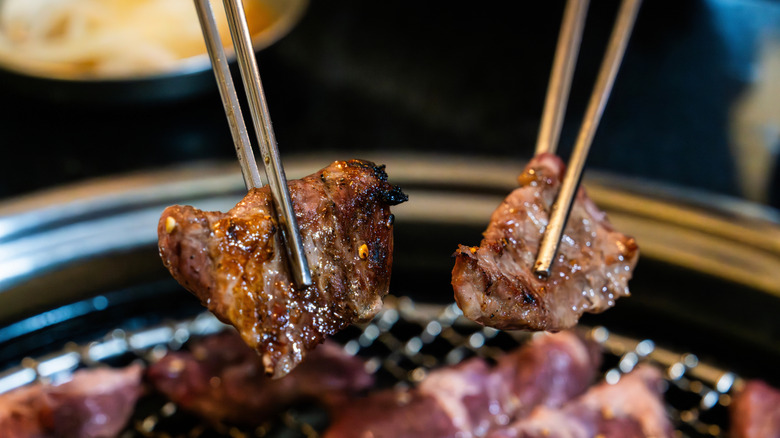
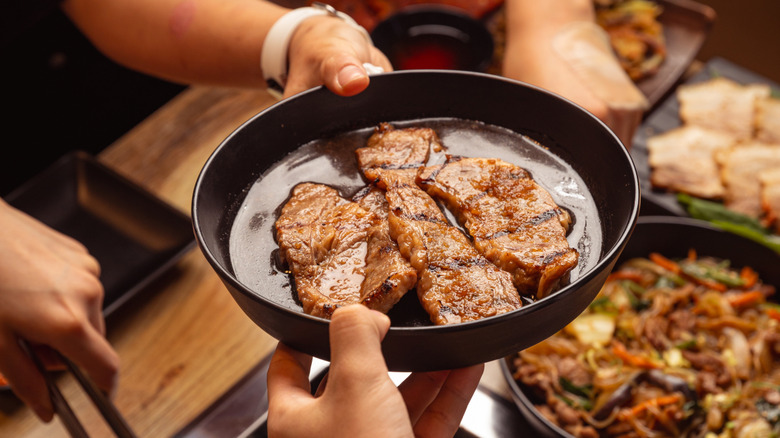
Eating with your hands is generally frowned upon in Korean barbecue, with the exception of the ssam (which literally means wrap). But you won't see forks lying around, as chopsticks are typically the utensil of choice. Once the meat is done cooking on the grill, chopsticks should be used to grab the meat from the grill for yourself or for your neighbors, according to Clara Park. "If you see someone struggling with their chopsticks, help them by loading meat onto their share plates," she said.
Even though you use your hands to eat your ssam, you should still use chopsticks to load the meat and fillings into your lettuce wrap. You can also use scissors to cut your meat into smaller bites if needed, Park said. It should also be noted that some chopsticks themselves could also be trickier to use than others. Diners report that the heavier metal chopsticks can be difficult to use, and not to hesitate if you feel you could work better with the wooden chopsticks.
Don't eat all the banchan (side dishes) first
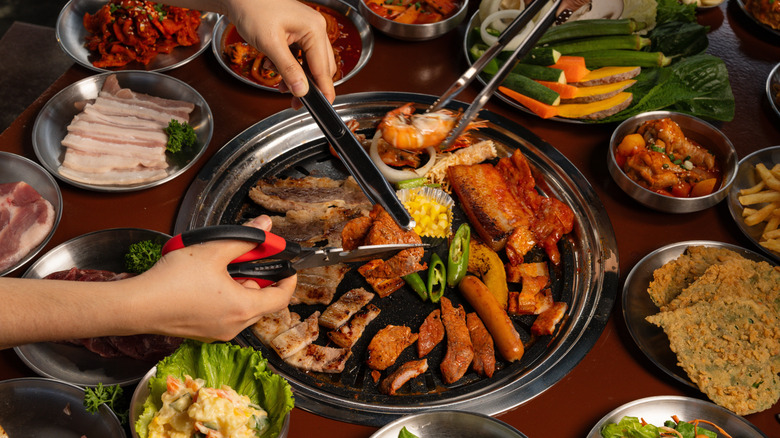
Many of us have been guilty of ruining our appetites when an appetizer arrives at the table ahead of our meal. Similarly, banchan — the side dishes to accompany your Korean barbecue experience — arrives at the table first, but that is where the similarities end. Just because the banchan is served first, you should still resist the urge to chow down immediately. "The banchan arrive first, and everyone takes a few bites, then the marinated meat platter arrives, and the fun really begins," said Clara Park. Instead of eating the banchan all at once, she recommends alternating bites of banchan with grilled meat.
Even though there is a right time to eat the banchan, it isn't distinctly specified what exactly the offerings will be. "There is no set rule for banchan, but it is usually vegetable-forward with sesame oil marinated greens or salads, soy-glazed potatoes, maybe some dried fish or fried fish, and whatever else the chef has cooked up," Park said. "Banchans tend to be seasonal and will vary depending on what is available."
Distribute food evenly
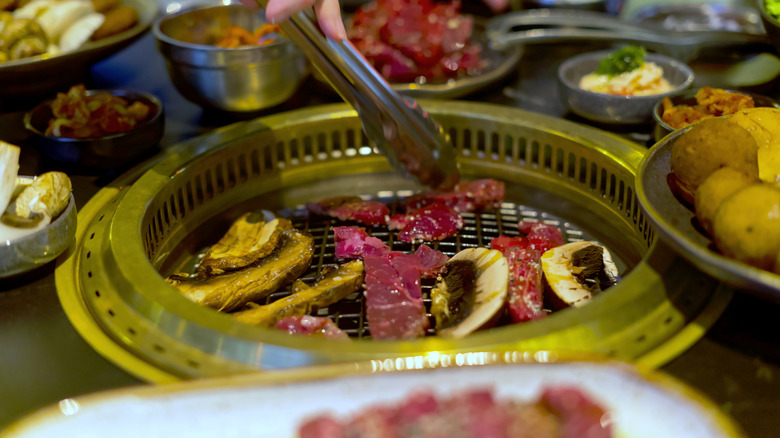
This has been a sentiment echoed across other guidelines of Korean barbecue dining, but you will want to be sure food is being evenly distributed throughout the group. "Korean barbecue is communal dining at its finest. Everything is shared," said Clara Park, adding that the sharing exception is that each guest receives individual bowls of rice or soup. "If you have a larger-sized party, they will give you duplicate banchan so that everyone can try all the different banchan."
Not only do you want to make sure everyone at the table gets enough food to eat, but your dining companions should get the full Korean barbecue experience, too. You will want to ensure everyone gets a chance to take part in the cooking process, Park said. That makes portioning particularly important for the marinated meat, as what you order is meant for the entire table. That being said, if you feel that you are running out of banchan, or even the meat itself, Park says you should feel free to order more.
Don't cook on a dirty grill
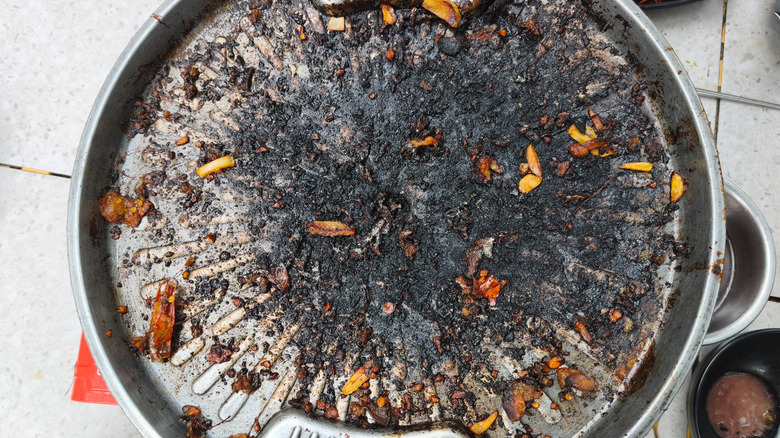
It goes without saying that grilling can get a little messy. As you continuously cook your meat on your tableside grill, you may notice your grill grates getting quite dirty. "If the grill gets super dirty, you are allowed to ask for another new and clean grill," said Clara Park, adding that your server may bring you a new one automatically if they see your grill is dirty.
A "dirty" grill can look like charring on the grates, or have crusted bits of your meat left behind. Another tip to prevent your grill from getting those leftover bits stuck is to use a raw onion (provided by some restaurants) to rub on the grates. This spreads oils across the grill grates and seasons the grill to prevent sticking.
Beyond the look of the grill grates themselves, another time it may be worth asking for a new grill is if it looks like your charcoal is in danger of burning out. A clean grilling surface and consistent heat ensures that your meat is cooked evenly, and prevents one of the biggest grilling mistakes people make.
Ask your server for help if you need it
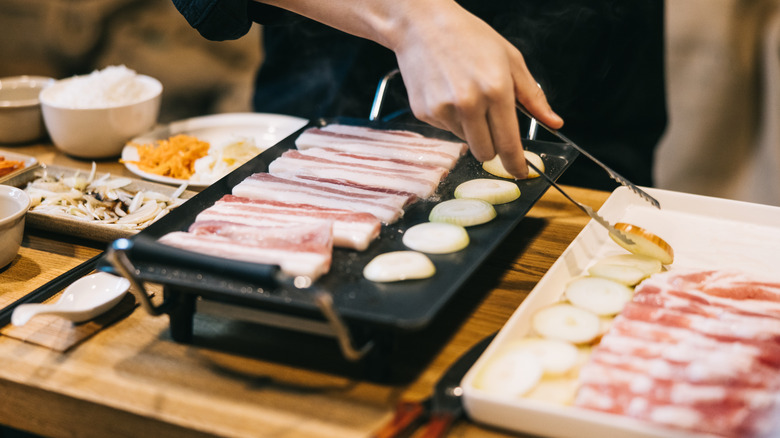
A common misconception about Korean barbecue is that it is mostly a do-it-yourself experience. However, your server is still attentive and there to help you. At minimum, your server brings drinks, banchan, rice, soup, and meat. "If they have time or sense your inexperience, they may cook the meat for you and expertly cut it with scissors," Clara Park said. "In general, they are just like servers in other restaurants. The main difference being that banchan are essentially unlimited, and the server may help you cook your meat."
There are some differences in service depending on the type of restaurant. Some diners note that certain higher-end establishments take care of the cooking for you, while all-you-can-eat Korean barbecue places may leave you to your own devices unless you say otherwise. So if you need help or have questions, don't hesitate to ask your server. On the other hand, if you prefer to do the cooking yourself, diners say you should speak up, and your server will oblige.
Be mindful of what you wear
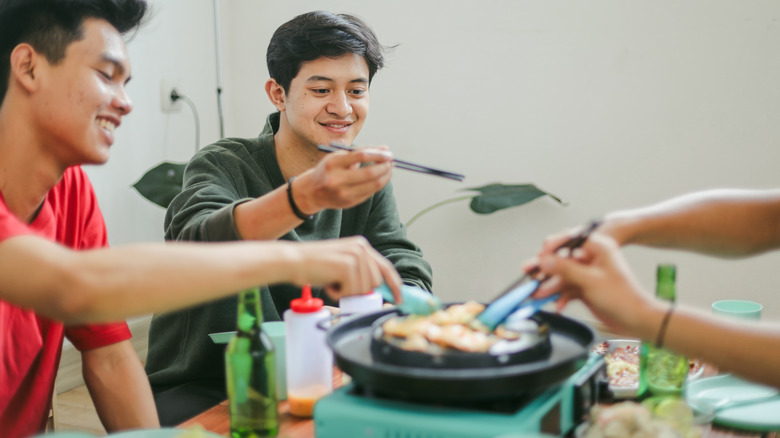
Now this "rule" doesn't have anything to do with fashion or etiquette, but for the longevity of your clothing. Being that Korean barbecue is over an indoor grill, one may notice a certain smoky smell lingers — despite the ventilated hoods over the grill. Because of that, a pro-tip is to take inventory of your outfit before embarking on your dining experience. "Don't wear really nice clothing to Korean barbecue because everything you are wearing will smell like Korean barbecue forever," said Clara Park. It may not quite be "forever," but you should be prepared that it could take some washing to get the scents from clinging to your clothes.
This is a known occurrence with Korean barbecue, so much so that some restaurants offer solutions to mitigate smoky odors sticking around your clothes. You may be provided with a plastic bag to keep your items in, under-the-seat storage, or even a fabric air freshener spray on the way out of the restaurant. All that being said, if you have big plans after Korean barbecue that you want to smell particularly fresh for, you may want to bring a change of clothes.
The most important rule: Have fun!
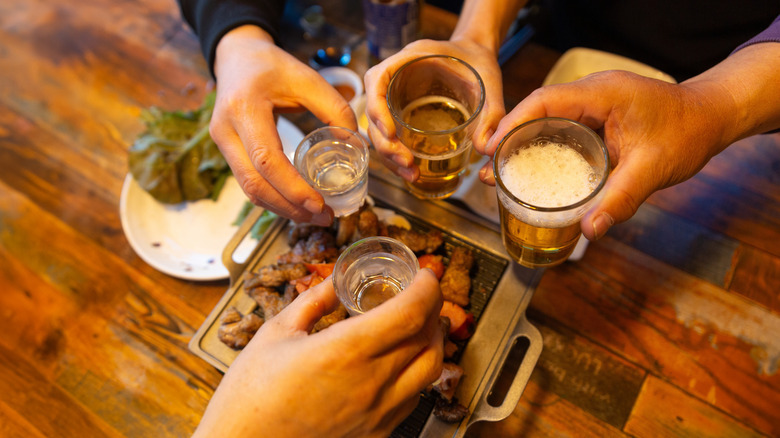
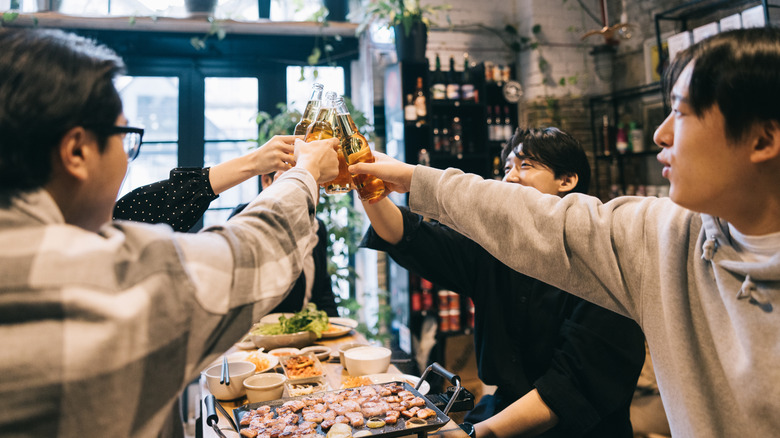
Now that we have covered the rest of the specific dining-related rules, the last one is imperative. Embrace the learning curve of a new dining experience and be sure to enjoy yourself. "Korean barbecue is a time of enjoyment, community, and feasting," Clara Park said. She suggests taking sips of soju or beer between bites and saying "cheers" with your dining companions.
Korean barbecue has been a long-standing tradition in Korean cuisine for centuries as a special occasion meal. The immersive dining experience has evolved to being a more frequent, fun group outing these days. There are even options for vegetarians or pescatarians, as well as newly designed grills to make Korean corn cheese right at your table. So if you find yourself at a Korean barbecue restaurant, try not to get too bogged down with following all the specific rules. Instead, enjoy the fun atmosphere, the delicious food, and you will become an expert soon enough.