

Are Brown Spots On Avocados Safe To Eat?
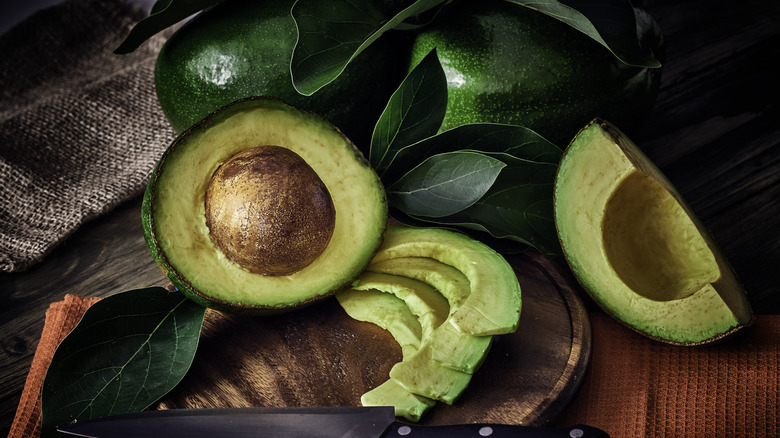
Avocados are frustrating. One minute they're rock-hard, and then they're ripe for about one second before they go bad. That is super annoying because this fruit can be expensive and we have things to make, like a quick avocado toast or a nice, refreshing avocado popsicle. The inside of a ripe one is a bit like a stoplight — when it's green, that means you can go for it. But what happens if you slice open the avocado, and there's a brown spot? Don't panic immediately because that doesn't automatically mean it's overripe.
The browning is a natural process that occurs when the enzyme-rich inside of an avocado meets oxygen, which triggers oxidation. If you've noticed your apples or bananas undergoing such a change while eating them, it's the same process. That outcome is inevitable when you cut up an avocado — internal discoloration can also happen when the delicate fruit takes external damage.
Like other kinds of produce, avocados with brown spots can be eaten — you just need to be wary of the shade. Very dark or black areas indicate rot as opposed to light oxidation. You can also tell if an avocado has gone bad if it smells off, is super squishy or, most obviously, has grown mold. If the color makes you hesitant, do a smell test or dig underneath the spotted area to see if there's green. Lighter brown spots are safe to eat, though they may taste slightly off.
How to select and store your avocados
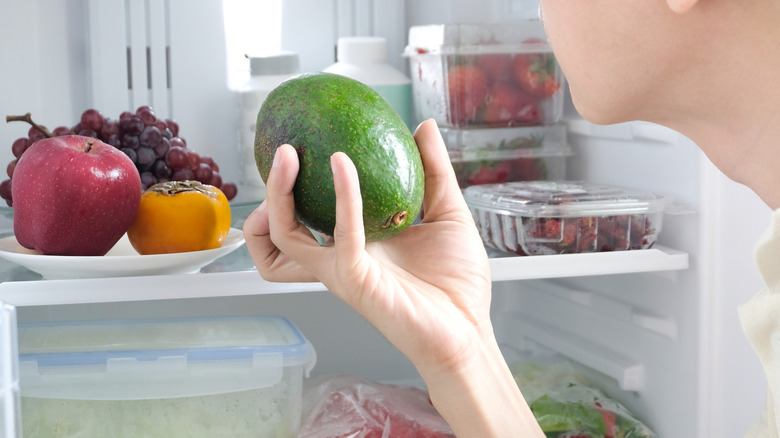
Picking out the perfect avocado at the grocery store can be tricky. Give the fruits a soft squeeze — the softer they are, the riper. Just be wary of ones that are past their prime and don't regain their shape. You should also definitely examine your prospective pick for damage. Sometimes external color is a good indicator, as some avocados' skin gets darker over time. However, as Kimball Avocados' Director of Farming and Operations Rachael Laenen notes, some varieties of avocados don't darken (via Simply Recipes).
If you don't need a whole avocado, there are a few tricks to fight against browning. You can cover its exposed insides with citrus juice or olive oil. Or you can put the fruit flesh-side down on chopped red onion. If you're storing a cut avocado, keeping it refrigerated in a lidded container is a must. Freezing is also an option, but it can alter the fruit's texture (especially if you thaw it). Choosing this route works best if you're planning to put avocados in a dish later as opposed to eating them straight-up.
The fridge is a good way to hinder the decay of whole ripe avocados. For unripe ones, you'll want to leave them out on the kitchen counter. If you're trying to speed up the ripening process, you can store one by itself or with a banana in a paper bag. The latter option gives you ingredients for both guacamole and banana bread.