

11 Sandwich Chains We Hope Make A Revival
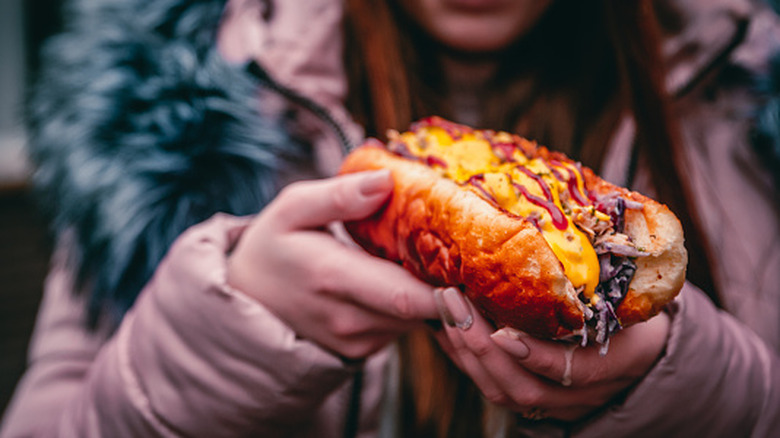
Sandwiches are the world's comfort food. Though we often look to the 18th century to answer who really invented the sandwich, people around the globe have been putting meat and veggies between bread for thousands of years. And while some old-school styles of sandwich have fallen out of favor throughout time, people from 3 to 103 still love to get a loaf, bun, or roll, stuff it with goodies, and savor a satisfying bite.
America's devotion to the sandwich life is clear by how many popular sandwich restaurant chains there are. From Jersey Mike's and Subway to every option in between, people seemingly just can't get enough sandwiches, and everyone has their favorite place to eat them. Sadly, though, over the decades, some of the most iconic and popular sandwich chains of all time have fallen by the wayside, sunk by changing tastes, bad ad campaigns, or shifting economic conditions.
Here's a secret, though: not all of those classic sandwich chains have completely disappeared. While the stores near you might have closed, many of them are still hanging on, diminished in size if not in our memory. Here are some old favorites that might still make a comeback.
Blimpie
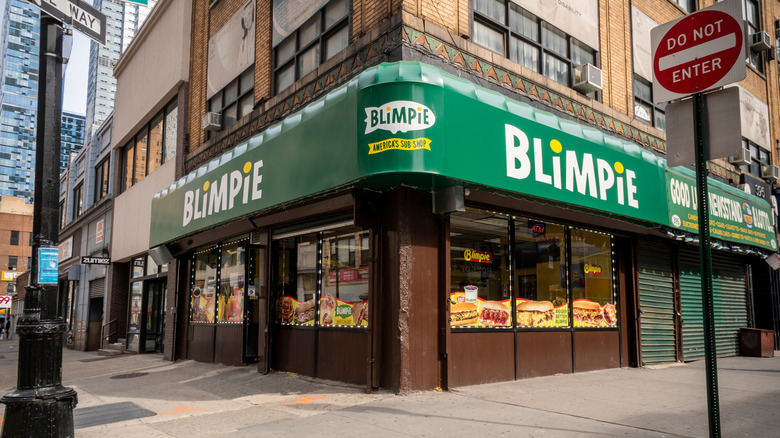
Before Jimmy John's, before Quiznos, even before Subway, there was the OG sandwich shop: Blimpie. Originally opened in Hoboken, New Jersey, in 1964, a year before Subway, Blimpie laid claim to the title of one of the oldest sandwich restaurant chains in the United States. After going public in 1983, Blimpie experienced exponential growth, rocketing from 150 locations nationwide to nearly 2,000 globally by the end of the 20th century.
After new ownership took over the franchise in 2001, though, things went sideways fast. Within just a decade, the chain had closed over 1,100 locations. And downsizing has continued unabated since. By early 2026, there were less than 100 Blimpie locations still in operation in the U.S. In fact, the once-iconic restaurant chain has become so hard to find that some people online actually thought it was a fake chain just made up for TV shows like "30 Rock."
So why is Blimpie struggling to stay in business? Poor ad campaigns and a vanishing social media presence have made the chain less and less relevant for younger consumers. But there's still hope that this classic can make a comeback: In 2025, it was reported that parent company Kahala Brands is hoping to spur a rival by streamlining Express franchises and a new emphasis on catering.
Quiznos
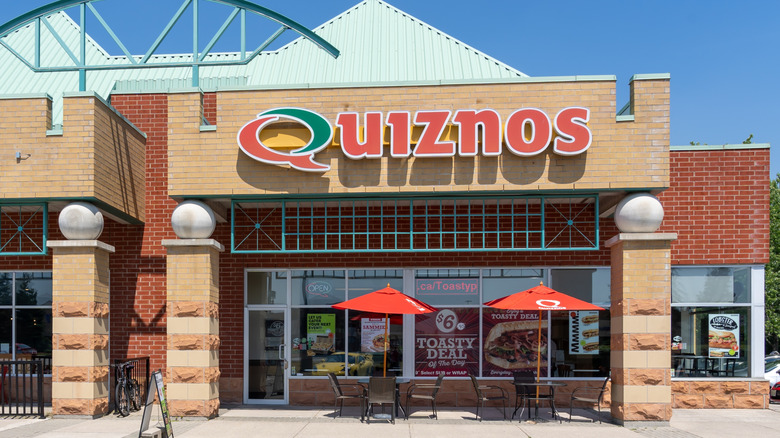
Quiznos was once one of the biggest restaurant chains in America — not just among sandwich chains, but restaurants of any kind, full stop. Operating roughly 4,700 locations by 2007, Quiznos shrank to less than 10% of that in just one decade, dropping below 400 locations by 2017. And the last decade hasn't been any kinder: By 2026, there were less than 150 Quiznos locations left in operation in the U.S.
For sandwich fans of a certain age, the downfall remains both regrettable and inexplicable. Quiznos — which carved out a niche in the sandwich market with its toasted subs — was considered by devotees to have some of the highest quality sandwiches in the game. So what went wrong? Well, a lot. While Quiznos' infamous Spongmonkey commercials have since become a source of beloved nostalgia for the chain's fans, the surreal 2004 ads were seen as a major misstep. But the real problem was a business model that enriched the home office at the expense of franchisees. The company was also taken over in a leveraged buyout in 2006; when the Great Recession hit a couple of years later, profits tanked, franchisees went belly up, and Subway swooped in and (almost literally) ate Quiznos' lunch.
But don't count Quiznos out just yet. In 2024, a new drive-thru location in Arizona opened to record sales, driven by strong customer nostalgia. A year later, current owners Rego Restaurant Group appointed Neel Patel as the new CEO of Quiznos, who is hoping to engineer a revival based on ensuring that franchisees turn a profit — instead of being left holding the bag. As the Spongmonkeys might say, "Mmmm ... toasty!"
Potbelly Sandwich Shop
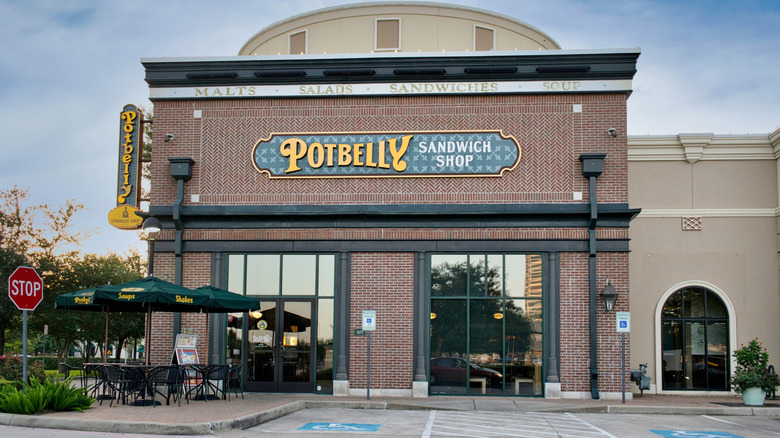
Back in 2017, Potbelly Sandwich Shop was flying high. Originally opened way back in 1977 with one location inside a Chicago antique store, Potbelly began franchising in 1996 after changing owners. And it grew fast, hitting 100 locations in 2005 and ballooning to nearly 500 nationwide by the end of 2017. Popular with diners thanks to the chain's signature toasted subs — the name "Potbelly" comes from the antique stove founder Peter Hastings used to toast his sandwiches — it seemed like only a matter of time before Potbelly hit its goal of 2,000 locations.
Then came a reality check or two. Sales began to fall, necessitating a round of closures in 2018, followed by another round of closures in 2019 after the chain's recovery program misfired. And you may remember how 2020 went: Faced with massive industry-wide losses due to the COVID-19 pandemic, the chain considered drastic measures, nearly closing 100 units.
Some quick thinking, though, headed off a complete catastrophe, as the chain managed to renegotiate nearly 200 leases to keep locations from going under. That intervention meant that only 28 Potbelly shops closed in 2020, far fewer than feared, and set the stage for a possible revival. Despite several years of losses and closures, Potbelly built 30 new locations in 2025 and announced plans for up to 50 more in 2026, which would bring the chain back to where it was in 2017.
Così
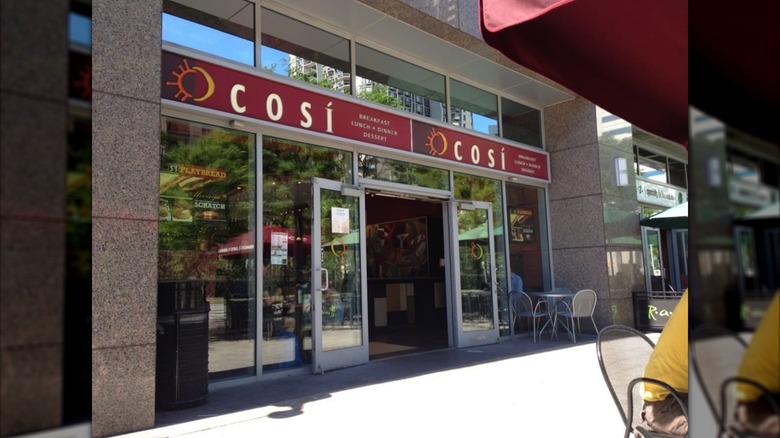
The first Così was opened in 1989 in Paris, France, by a New Zealand native making classic Italian flatbread. That international journey continued in 1996, when brothers Shep and Jay Wainwright were so impressed by a meal at Così that they licensed the U.S. rights and brought the restaurant to America. It was a hit, and by 2008, there were 151 Così locations nationwide.
And now there aren't, leading many fans of the chain to wonder what happened. The answer: Two debilitating bankruptcies, one in 2016 and another at the start of 2020, crippled the chain. Così went up for sale that year, but in another bit of bad luck and bad timing, the COVID-19 pandemic crippled the restaurant industry mere weeks later. The chain ultimately dropped to just 14 remaining locations, mostly clustered in the Northeast.
So is a comeback possible? While the chain hasn't announced any expansion plans, according to its official website it is still open to accepting new franchisees. Così has also unveiled a menu licensing plan, which allows qualified independent partners to sell Così food via DoorDash and other delivery services. And the chain has also leaned heavily into catering. Così may be down, but it's not out just yet.
Jerry's Subs and Pizza
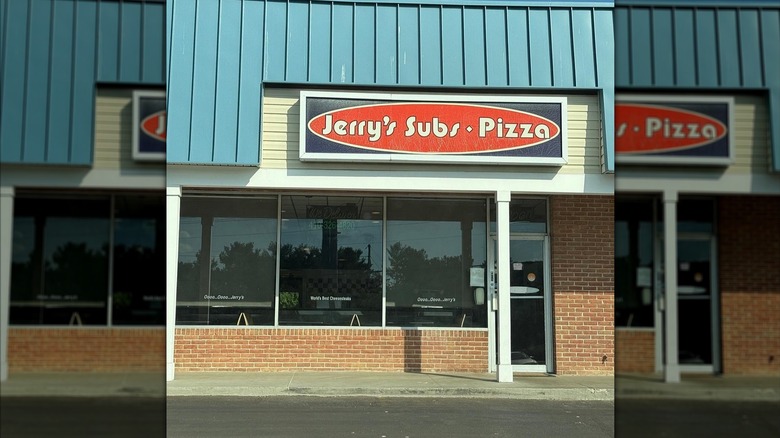
If you're a Marylander of a certain age, chances are you have fond memories of Jerry's Subs and Pizza. The original location opened way back in 1954 in Wheaton, Maryland, but in 1979, new owners decided to start franchising the concept. It was a hit, eventually expanding to over 100 locations up and down the East Coast, with affiliated outposts as far away as Central America and the Caribbean.
But in the mid-2010s, Jerry's Subs and Pizza was sold to a new ownership group, and things started going downhill. Fast forward to today, and there are only three locations left, leaving sad fans to wonder what happened. Despite obvious nostalgia for the brand, driven by the chain's reputation for delivering flavor and variety in its sandwich options, a self-described Jerry's insider shared on Reddit, "A comeback or pop up from the glory days of Jerry's most likely will never happen."
There's still at least a sliver of hope, though, as the official website still includes a pitch to potential franchisees. Maybe a fan with a dream can still bring Jerry's back to a hungry world.
Au Bon Pain
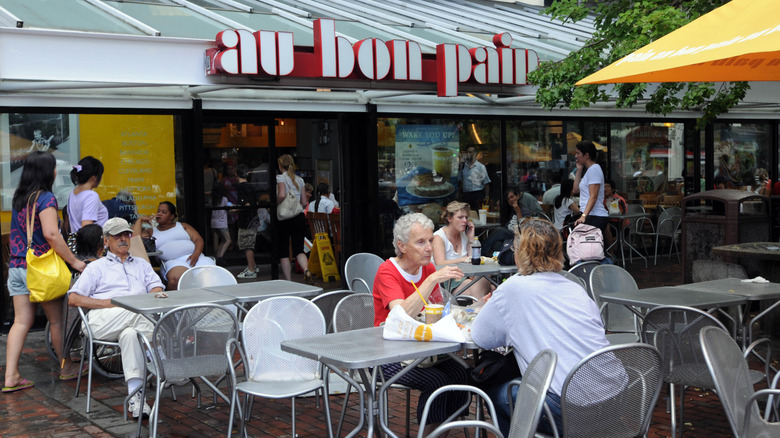
The once-beloved sandwich chain Au Bon Pain is now a shell of its former self. And in a weird way, it has no one else to blame. Founded in 1978 in Boston, the chain became so successful that in 1993 it was able to buy out another regional sandwich chain: Saint Louis Bread Company. That chain was soon renamed Panera Bread, and when Panera ended up becoming even more successful than its parent company, Au Bon Pain was split off and sold off to a new ownership group.
That began a series of sales and mergers that eventually led to Au Bon Pain coming under the stewardship of Ampex. But it's a much smaller chain now than it once was. Once boasting over 200 locations in the U.S., that figure was down to 123 when Ampex acquired the brand in 2022 — and four years later, there are now just 28 Au Bon Pain restaurants left in the nation.
There's some good news for fans of Au Bon Pain, though. According to the chain's official website, there are more than 200 additional Au Bon Pain locations still in operation overseas, including 80 in Thailand. As long as the chain remains popular and viable globally, there's always a chance it can make a comeback in the U.S. as well. For domestic sandwich lovers, though, the fact that there are more Au Bon Pains in Bangkok than in the entire U.S. is still a bit of a downer.
Neptune Submarine Sandwiches
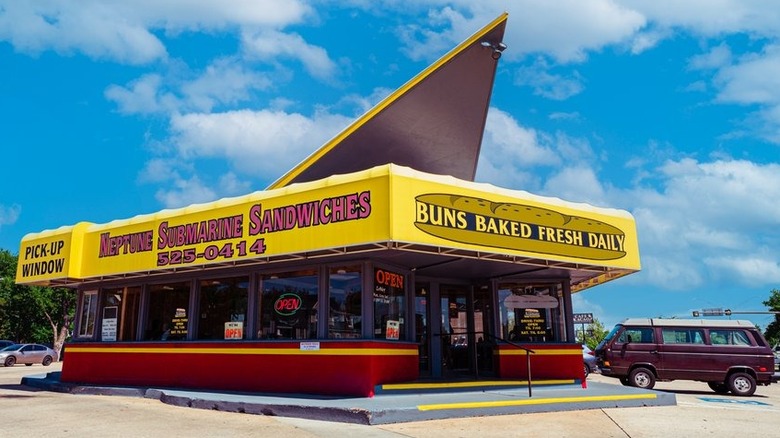
Ask longtime residents of Oklahoma City, Oklahoma, what the best sandwich shop in the city is, and chances are someone will mention OKC's iconic Neptune Submarine Sandwiches. Founded in 1974, Neptune Submarine Sandwiches boasted 17 locations across the greater Oklahoma City region at one point in the 1980s, celebrated for its delicious cold subs.
But times change, and like VHS tapes and leg warmers, the small brand was nearly made obsolete. Emphasis on the "nearly" part. Still housed in its iconic '60s-style building, a holdover from the era of drive-in restaurants, the original Neptune Submarine Sandwiches location remained in operation even after the rest of the regional chain shut down.
And there's good news for nostalgic fans looking for classic subs like grandma used to eat: In response to popular demand, Neptune opened a second location in 2024, raising the tantalizing possibility that a full-scale Neptune revival may still be possible.
Rax Roast Beef
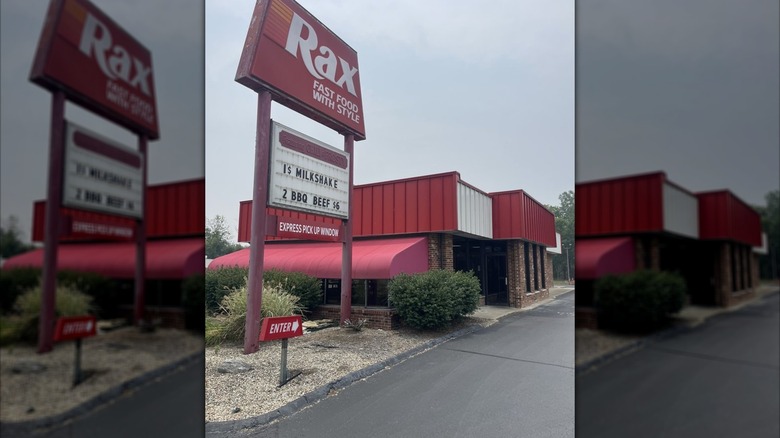
For younger generations, the name Rax Roast Beef probably means just one thing: viral videos. In 2020, the popular YouTube channel vlogbrothers posted a video highlighting a truly strange Rax Roast Beef ad campaign from the 1990s featuring a cartoon character called Mr. Delicious. Labeled as "The Commercial that Killed a Fast Food Chain," the video racked up over 8 million views from people as boggled by the bizarre commercials as viewers were 40 years ago.
But did the ad campaign really contribute to the fall of Rax Roast Beef, which was much more than just a fast food chain? A sort of higher-end competitor to Arby's, Rax Roast Beef was known for its thick roast beef sandwiches, which were so popular that by the '80s, there were over 500 locations worldwide. Within a decade, though, Rax Roast Beef collapsed to hardly any locations due to business decisions that reached far beyond one weird ad campaign. The big misstep was moving away from the signature sandwiches to offer up a wide variety of random foods like salad bars, pizza, tacos, and more. Combined with expensive remodeling at numerous franchises, the chain seemed to move further away from its core audience with every change.
You might be surprised to learn, though, that there are still six Rax Roast Beef locations in operation today. While a return to the chain's glory days seems unlikely, a revival wouldn't be the most unexpected thing that ever happened to Rax Roast Beef. Just ask Mr. Delicious.
Schlotzky's Deli
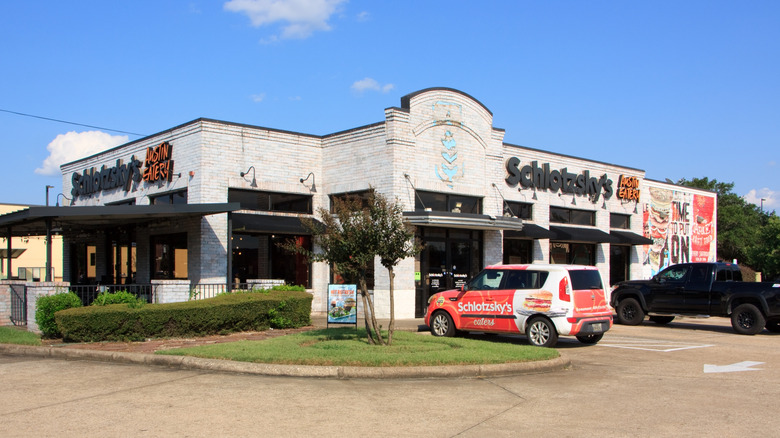
Opened in Austin, Texas, in 1971, Schlotzsky's Deli quickly became known for the only sandwich on its menu: its iconic muffuletta. A unique regional delicacy from New Orleans, Schlotzsky's 8-inch muffuletta was made on sourdough with meats, cheeses, and the sandwich's signature olives. It was a big enough hit that five years later the restaurant branched out into franchising, with the chain's muffuletta — known as The Original — at the core of the menu. By 2001, there were more than 750 locations nationwide.
And then things went belly up. In 2004, the company went bankrupt, and two years later, it was bought out by GoTo Foods, the parent company of chains like Cinnabon and Auntie Anne's. The headquarters was moved from Texas to Atlanta, Georgia, and locations started shutting down; today, there are just under 300 Schlotzsky's Delis left in the U.S., less than half as many as there once were.
Still, those lucky enough to still have a Schlotzsky's Deli in their local area swear by the chain for its delicious bread. And with locations in 24 states, that still leaves half the country open for possible expansion, with the chain actively courting franchisees. Maybe that unique Southern style will be available nationwide soon.
Panera Bread
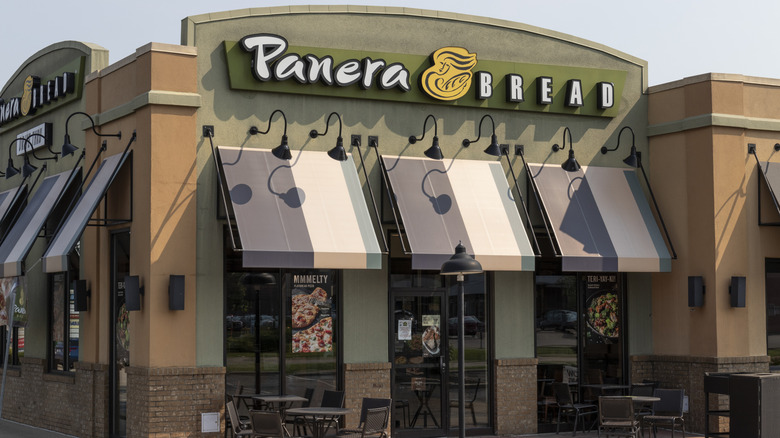
With over 2,200 locations in the U.S. alone, accounting for all 48 contiguous states and the District of Columbia, it's never been easier to find a Panera Bread. But the question long-time Panera devotees are asking is: Do you still want to?
These days, social media is filled with accounts from disappointed diners who feel that that the quality of the chain has gone significantly downhill in recent years. Customers say Panera Bread is overpriced for lower-quality ingredients and smaller portions. Surprisingly, Panera Bread CEO Paul Carbone agrees. In November 2025, he admitted to CNBC, "We shrunk portions, so guests would walk into our cafe to buy a sandwich that has gone up significantly in price, with lower-quality ingredients, in a smaller size."
So can the chain rebound and once again become the restaurant that made diners fall in love with Panera? Maybe. At the end of 2025, the company announced what it called the "Panera RISE" initiative, "RISE" being a jargony corporate acronym that essentially means "we screwed up and we're trying to fix it." This re-focus on quality food, customer service, and value counterintuitively coincides with a decision to stop making fresh bread at individual locations, which the company insists will lead to more uniform quality across the chain. The world is waiting to see if Panera Bread can live up to its promises and hoping that it does.
Even Stevens Sandwiches
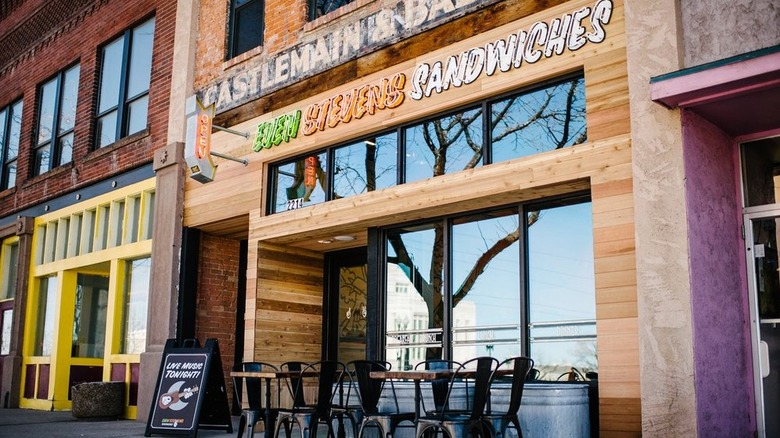
Even Stevens was a restaurant chain initially known for its delicious sandwiches and its commitment to giving. Opened in Salt Lake City, Utah, in 2014, the concept behind Even Stevens was seemingly simple and inspiring: For every sandwich purchased by a customer, the chain would donate a sandwich to a local neighborhood nonprofit. The chain's founders felt that by giving back to the people, Even Stevens would be more than just another restaurant; it would be part of the community.
The chain quickly expanded to multiple locations across Utah, Arizona, Colorado, Washington, Texas, and Idaho. But in 2019, Even Stevens was forced to declare bankruptcy. And things got worse from there. In 2018, founder Steve Down was charged by the SEC with fraud. That same year, the chain stopped its charitable donations, and in 2023, it abruptly shut down amidst a mess of eviction notices and bounced paychecks, leaving a stain on the brand's legacy.
All of which is a terrible shame, because the concept was good and so were the sandwiches. If Even Stevens could be revived by some of the unsung employees who reportedly came up with the charitable aspect to begin with, a lot of good — and a lot of good sandwiches — could come of it.