

11 Best Old-School Bourbon Cocktails
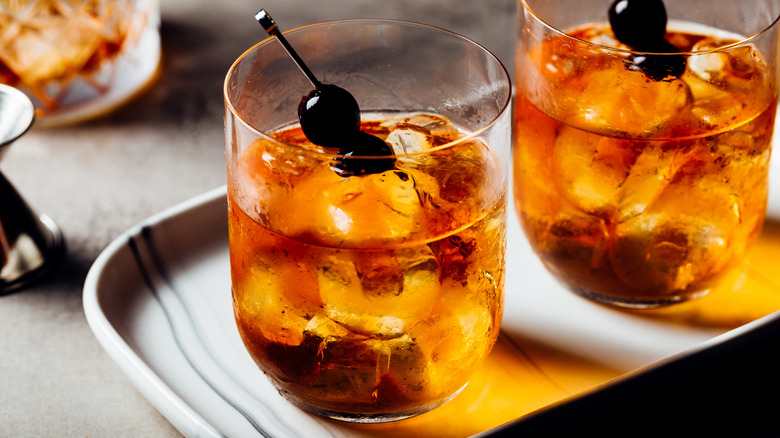
Whether you've chosen one of the smoothest bourbon whiskeys of all time or you've got an average bottle that you don't necessarily want to sip neat, a cocktail is always a good idea. While there are contemporary drinks that tick all the right boxes, sometimes a classic is the way to go. We did the research to find some of the best and most popular old-school bourbon cocktails so that you don't have to. If you have a well-stocked liquor cabinet, you might just be a few minutes away from a top-notch drink.
The thing about these old-school cocktail recipes is they all have a timeless quality. They tend to be simple and to the point, letting the whiskey shine, while also balancing it out with other ingredients. They don't tend to be showy, but they are delicious. After all, these are the cocktails that have stood the test of time when others have fallen by the wayside. There's a reason people are still ordering them at bars today.
If you're after a stiff drink, any one of these old-school bourbon cocktails is a good call. We're going to look into their ingredients and histories, so all you have to do is mix them. Or, head to a good bar and order one.
1. Old Fashioned
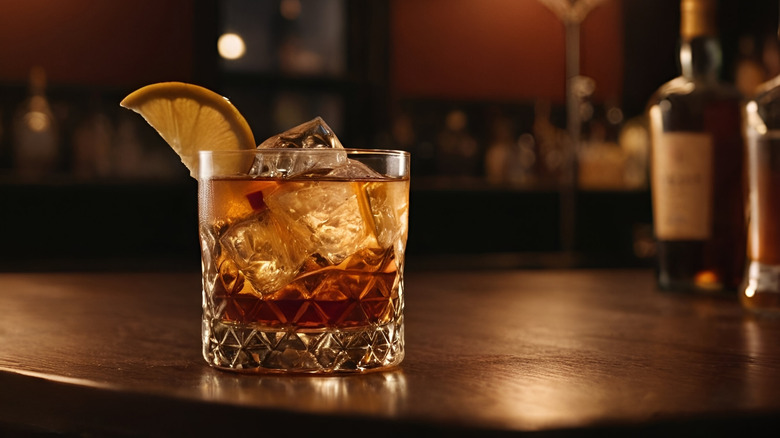
The Old Fashioned is a classic bourbon cocktail that's still popular despite its origins dating back well over 100 years. It's a simple formula that allows for some variation, but whatever Old Fashioned recipe you use, it should always be a straightforward drink. Once you start over-embellishing it, the drink stops being an Old Fashioned and starts becoming something else.
The whiskey used for this drink can be bourbon or rye, but bourbon makes it slightly sweeter and mellower. Bitters are an essential addition, bringing a greater depth of flavor. Once, there wasn't a wide selection on the market, but now there are so many to choose from that it can become overwhelming. Angostura is a popular choice, but feel free to experiment if you want to branch out. Then, the mixture is sweetened with sugar. Either a sugar syrup or, more traditionally, a sugar cube muddled with the bitters and a little water to dissolve. This is all served over ice, which will naturally melt and dilute the drink somewhat, rounding it out.
The history of the Old Fashioned likely goes back to to the very first cocktails around the turn of the 19th century. They were defined in writing in 1806 as any type of spirit, sugar, water, and bitters. Later in the century, bartenders started branching out, adding different combinations of ingredients to cocktails and not everyone liked it. So, around the mid-late 1800s, people would order an "old-fashioned whiskey cocktail" to differentiate it from these newer inventions. And thus the Old Fashioned was named.
2. Boulevardier
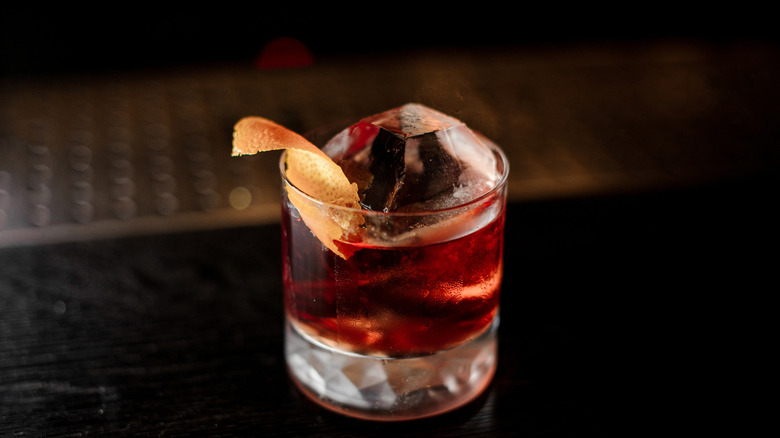
A Boulevardier is another classic, vintage bourbon cocktail choice that people still enjoy today. It's effectively a Negroni but with bourbon in place of gin, so if you're a fan of Negronis, you might just like it. The bourbon adds sweet, smoky notes and rounds out the drink nicely.
If you already have a good Negroni recipe, you should know what to do. But, for the uninitiated, we'll help you out. To make this drink, mix together bourbon, red vermouth, and a red bitter liqueur, such as Campari or Strucchi Bitter. The ingredients are stirred with ice, then strained into a glass of ice and often served with a twist of orange peel. The very first iteration of this recipe called for equal parts of all three ingredients, but some prefer a more balanced 3:2:2 or 2:1:1 ratio.
It has existed since at least the 1920s, as the drink appeared in Harry MacElhone's 1927 book "Barflies and Cocktails." It is said to have been invented by a man named Erskine Gwynne, who was the nephew of railroad tycoon Alfred Vanderbilt, and named for Gwynne's magazine "The Boulevardier."
3. Manhattan
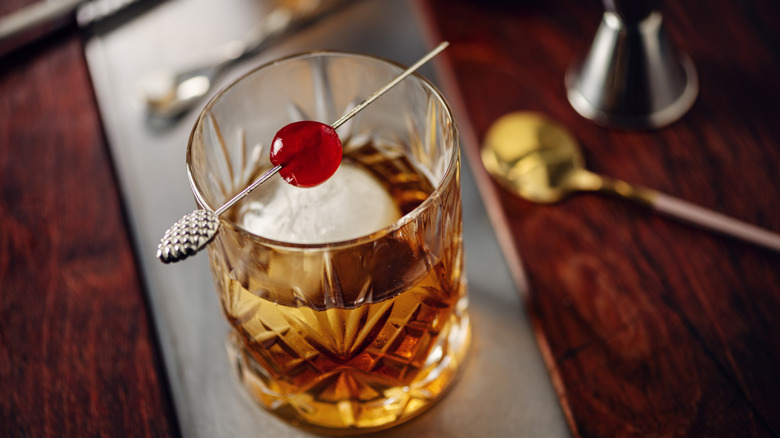
The Manhattan is an enduring favorite for good reason. Like many other old-school cocktails it's simple with minimal ingredients. Although it's well balanced, the drink lets the bourbon remain a major player. It's certainly not the kind of cocktail that aims to drown out the booze.
While you can find many variations on a Manhattan cocktail recipe, most agree on the base ingredients. It can be made with either rye or bourbon, but we're team bourbon all the way. Then, you add sweet vermouth and a couple of dashes of bitters. That's it.
The earliest published recipe for a Manhattan dates all the way back to 1882. It was written about in a newspaper called The Olean Democrat, in Olean, New York. The column discussed a new cocktail in town consisting of a mixture of whiskey, vermouth, and bitters, and mentioned that it went by several names including Manhattan cocktail. So, it stands to reason that it came about in the decade or two preceding publication. While it's a true vintage today, it's considered among the very first modern cocktails.
4. Whiskey Sour
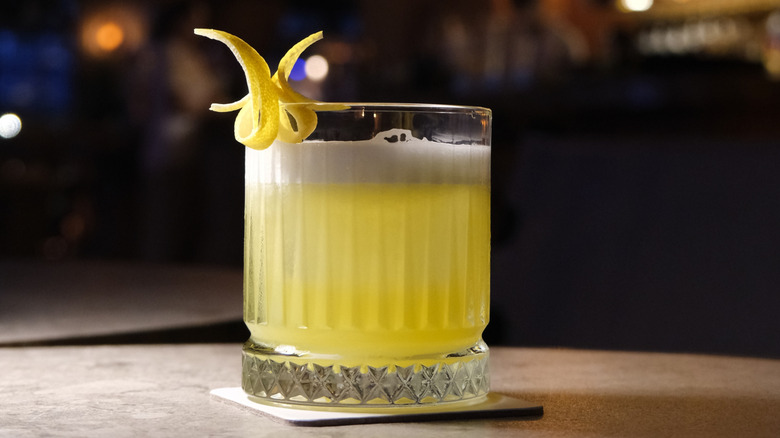
A Whiskey Sour feels contemporary enough that you might assume it's only been around since the latter half of the 20th century. But in fact, it has a history dating back well over 100 years. The sour cocktail can be made with any spirit — with a brandy sour being among the most popular options back in the day — but it's the Whiskey Sour recipe that most people opt for now.
The drink is simple and just contains whiskey, lemon juice, bitters, and sugar. That's all it really needs. Bourbon is a popular style of whiskey for this drink because it brings a sweetness that balances out the lemon juice. Sugar syrup is the most common choice, since it's easiest to mix in with the drink. Some recipes add egg white for a silkier texture and a foamy top, which can be a nice way of elevating the drink, as long as you're not serving anyone who's vegan or has egg allergies.
Sailors in the British Navy are often credited with helping popularize these spirit-and-citrus mixtures, combining them to make the liquor more palatable and help prevent scurvy. This could be considered the precursor to the Whiskey Sour we know and love today. The first written sour recipes appeared in Jerry Thomas' influential 1862 "The Bartender's Guide." Whiskey sours were not among the recipes mentioned, but were likely being mixed at the time. The earliest known mention of a Whiskey Sour by name dates to an 1870 Wisconsin newspaper, suggesting the drink was already familiar enough that it needed no explanation.
5. Brown Derby
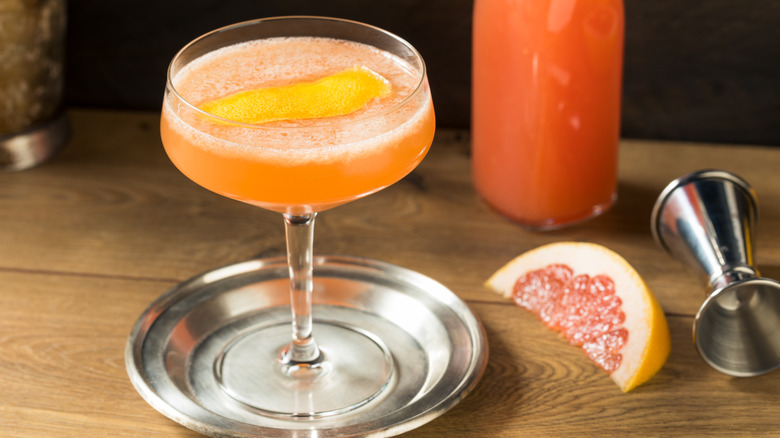
It might not have quite the name recognition of a Manhattan or an Old Fashioned, but the Brown Derby is a blast from the past that's worth adding to your present-day repertoire. It still has plenty of fans and deserves to be more popular. Like a Whiskey Sour, it uses citrus juice to bring a sour note, but in choosing grapefruit rather than lemon, it's still bitter but slightly less intensely tart.
The drink is made with bourbon, grapefruit juice, and a sweetener. Some modern recipes use honey, but technically in that case it becomes a De Rigueur. The original recipes called for maple sugar, so maple syrup is often used in its place today. The ingredients are shaken with ice and served in a coupe glass with a grapefruit twist. A Brown Derby manages to be bright and refreshing while still letting the whiskey come through clearly, along with a complex sweetness from the maple.
While its origins aren't 100% confirmed, the cocktail dates back to the 1930s and is said to have been created by a bartender who worked at the Vendôme Café on Sunset Boulevard in LA. Oddly, it's named after a different Hollywood restaurant, Brown Derby, which was a celebrity hotspot during the golden age of film. Whatever its true story, this is another example of how simplicity and restraint can lead to the best cocktails.
6. Fancy Free
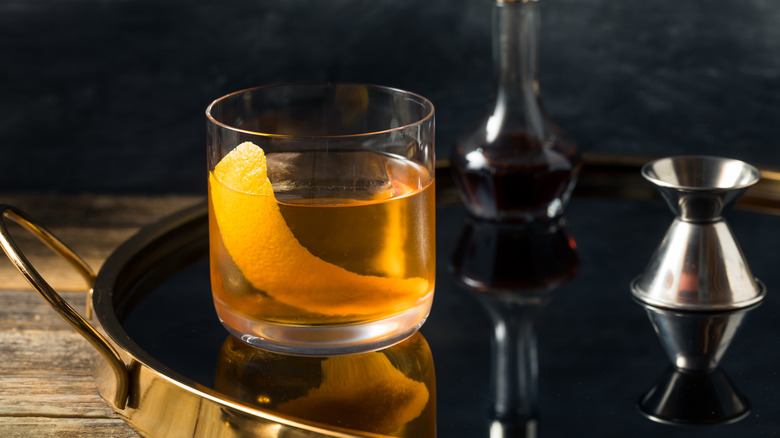
If you're looking for a simple old-school bourbon cocktail, you can't go wrong with a Fancy Free. It uses maraschino liqueur, which isn't the most common ingredient in modern liquor cabinets, but this drink is still a choice that people reach for many decades after its invention.
The Fancy Free only has a handful of ingredients: bourbon, maraschino liqueur, aromatic bitters, and orange bitters, stirred with ice before being strained and served on the rocks. Despite what you might assume about maraschino liqueur, it doesn't taste much like cherries. It is made from Mara cherries and includes the pits, leaving it with a nutty flavor. So if you're not a fan of those neon garnishes, don't worry.
This drink first appeared in a 1940s book "Cocktail Guide and Ladies' Companion" by Crosby Gaige. However, there are some differences between the version in the book and the one that's commonly served today. The original was shaken and strained into a sugar-rimmed glass, while today's is served over ice. The modern version is more like a take on an Old Fashioned and better appeals to contemporary tastes.
7. Lion's Tail
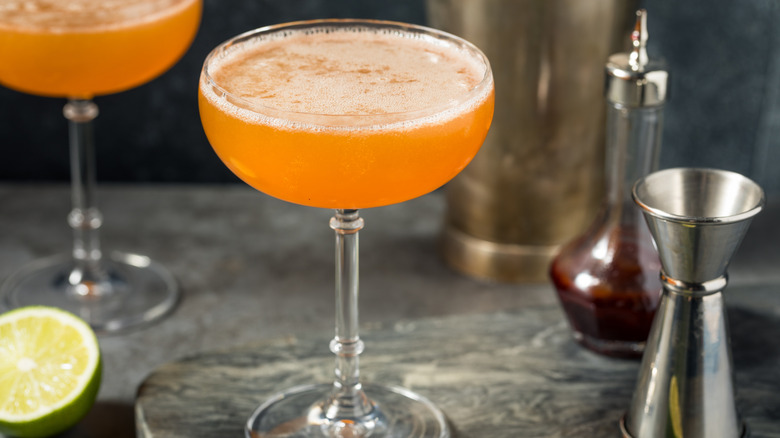
Many old-school bourbon cocktails have something in common with an Old Fashioned or a Manhattan. They're made with just a few boozy ingredients and served over ice. But if you're looking for something a bit different, you might want to try a Lion's Tail. It's made using allspice liqueur, which adds an unexpected note that leads people to still reach for it today.
In a Lion's Tail, you'll find bourbon (naturally), allspice liqueur (also known as pimento dram), lime juice, sugar syrup, and bitters. The pimento dram brings a distinctive spiced flavor with notes of cloves, cinnamon, and anise. This complements the sourness of the lime, while the sugar syrup helps to balance things out. The ingredients are shaken and served in a chilled glass.
The recipe used today doesn't stray much from the version in "Café Royal Cocktail Book" by William James Tarling. The book was published in London in 1937, but experts believe that it was likely created by an American bartender working across the pond during prohibition. This is because the phrase "pulling the lion's tail" was an American slang expression for provoking British people.
8. Kentucky Colonel
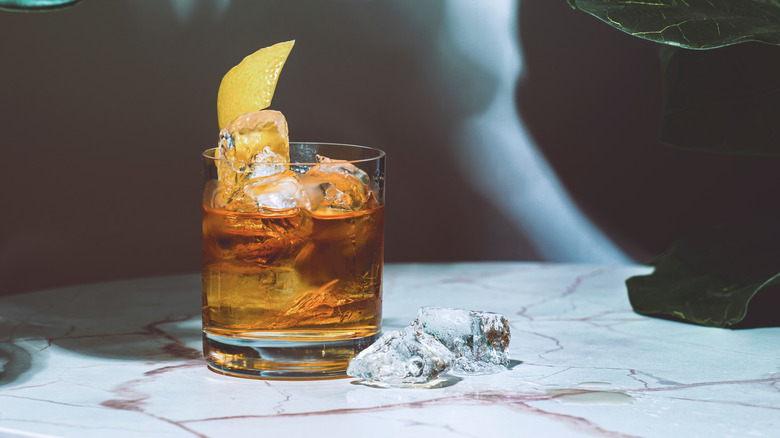
If you're looking for an old-school cocktail that's heavy on the booze and brings bourbon to the forefront, consider a Kentucky Colonel. It's a simple two ingredient drink that's basically a twist on the Monte Carlo, using bourbon instead of rye whiskey. However, since the bourbon is front and center, you'll want to use a brand that you'd be happy enough to sip.
All you need for a Kentucky Colonel is bourbon and Bénédictine. Thanks to its citrusy, spiced notes, Bénédictine does a lot of work here. You might think that a cocktail made with two alcoholic ingredients and nothing else would be a lot, but this herbal liqueur really helps to cut through and elevate the drink. It's stirred with ice, which means some melts into the drink, diluting it a little and taking the harsh edge off. Finally, it's strained and served over ice with a lemon twist.
This drink first appeared in "Manual of Mixed Drinks," which was published in 1914, and has remained virtually unchanged since. You may see slightly different ratios in various recipes, but since there's not all that much to this drink, that's really the only variation to be made. Still, it's a great example of a straightforward drink done right.
9. Mint Julep
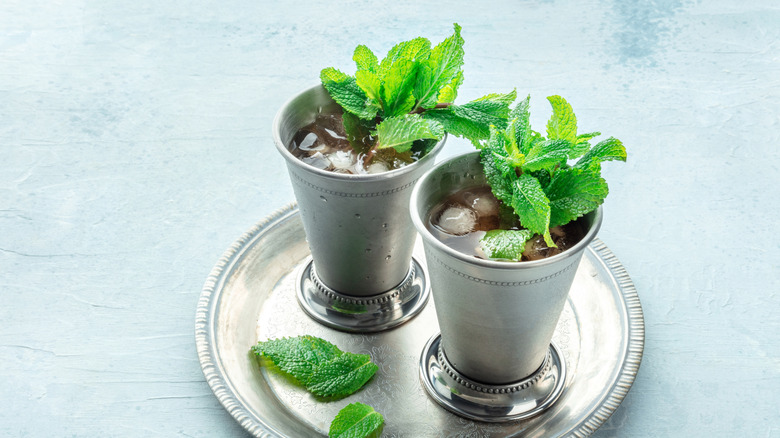
A classic Mint Julep recipe might have some history behind it, but it still feels as fresh as when it was first invented. That's why people keep coming back to it all these years later. It only has a few simple ingredients that on first glance seem like they might not work all that well together. Nevertheless, they make for a refreshing summer cocktail that's perfect for using up the mint plant that's taking over your backyard.
A Mint Julep contains bourbon, fresh mint leaves, sugar syrup, and a few dashes of aromatic bitters. The mint leaves should be muddled, but only enough to bruise rather than crush them, as this keeps them from turning bitter. Depending on the recipe, the mint and other ingredients are then shaken or stirred with ice to achieve proper dilution. Finally, it's served in a glass filled with crushed ice.
Although the modern version of the cocktail is newer and its exact origins unclear, this drink can possibly be traced back to Persia, several hundred years ago. The name "Julep" is thought to come from the Persian word "gulab," which refers to a rose syrup. The theory is that the drink ended up in Europe, where mint was used instead of rose petals. The first written mention of a Julep was way back in 1634 in a court poem written by John Milton, but this likely wasn't referring to the drink as it is served today. Later, in the book "Travels in the United States" published in 1803, it was noted as being a whiskey cocktail.
10. Man O' War
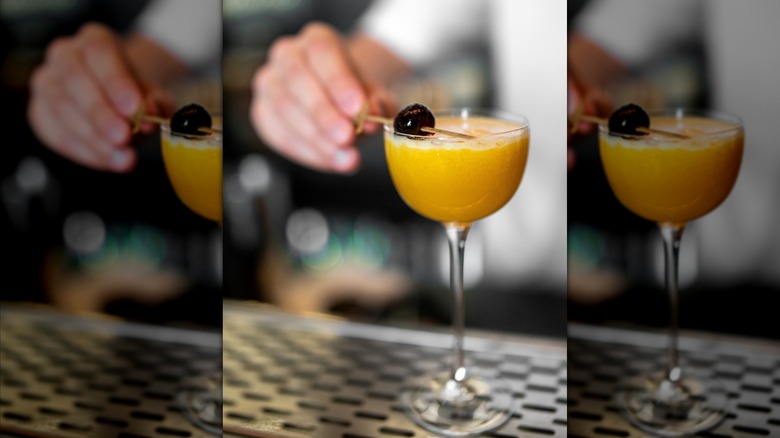
Although the Man O' War doesn't have as lengthy a history as some cocktails in this list, it's still thought to have been created in the mid-1900s, which puts it firmly into old-school territory. It's a fruity, zesty cocktail that packs a surprising punch, which is perhaps the reason it's still among cocktail enthusiasts' favorites today. It's got a pleasant sweetness to it, but it's boozy and not too cloying, making it a fruity grown-up drink.
So, what's in a Man O' War cocktail? Alongside bourbon, you have Triple Sec (an orange liqueur), sweet vermouth, lemon juice, sugar syrup, and sometimes just a hint of salt or saline solution. As with many cocktails, this can vary slightly. For instance, some versions leave out the simple syrup. It's nicely balanced, with a sweetness that's leveled out by the sharpness of lemon juice and the salt, the latter which should be almost indistinguishable and just serving to enhance the other flavors.
This cocktail is said to be named for one of the greatest racehorses in American history, winning 20 out of 21 races around 1920. That said, since this cocktail doesn't seem to date back quite as far as the '20s or '30s, another theory is that it might be named for one of two Man-O'-War Cocktail Lounges that were popular in the 1960s.
11. Whiskey Daisy
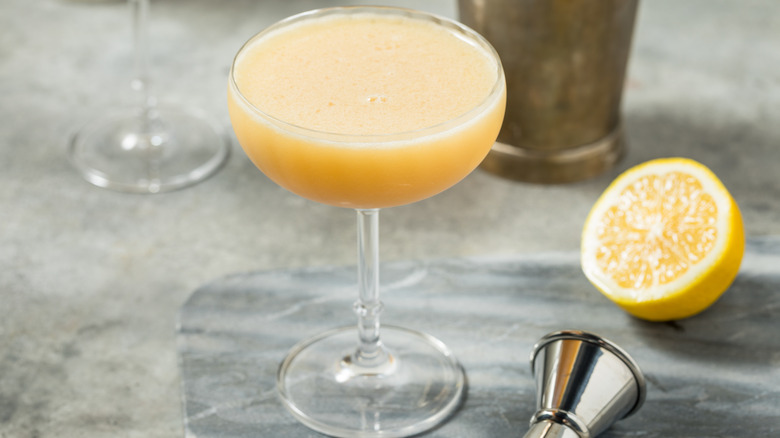
A Whiskey Daisy belongs to a family of drinks known as Daisies, which have been around since the 1800s. Even so, they're still doing the rounds today and they're a change from the more popular bourbon cocktails, like a Manhattan and Old Fashioned. Perhaps because they've been around for so long, there are many variations on Whiskey Daisies, but they all have a few things in common.
Bourbon seems to be the whiskey of choice for a Whiskey Daisy, though some versions use a mixture of bourbon and rye, the latter bringing more peppery, spicy notes. Lemon juice is the other component you'll find in every Daisy and is a big part of what makes this drink. Then, you'll always find some kind of sweetener, such as sugar syrup, honey syrup, or grenadine. But, what sets this drink apart from a Whiskey Sour is that it usually contains an orange liqueur, such as Grand Marnier or Triple Sec. It's also topped up with a little soda water, which mellows the flavors and gives it less of a boozy hit.
The history of the Daisy doesn't necessarily begin with the Whiskey version. The first mention is in Henry Llewellyn Williams' 1866 novel "Gay Life in New York! Or, Fast Men and Grass Widows." A character mentions a drink called a Daisy, without describing what it is. Meanwhile, the first known recipe came in 1876 in "The Bartenders Guide or How To Mix Drinks: The Bon-Vivants Companion," which lists a Brandy Daisy, Gin Daisy, and Whiskey Daisy.
Methodology
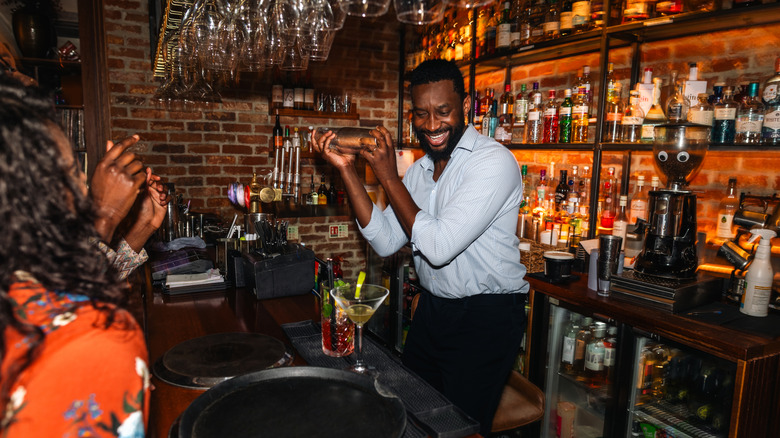
I took to Reddit to get opinions on people's favorite bourbon cocktails. As a former bartender, I also have my own preferences. After making a shortlist, I looked up the history of each cocktail to make sure they adequately fulfilled the "old-school" criteria. Based on this, I came up with the above 11 old-school bourbon cocktails.