

11 Ways To Upgrade Store-Bought Guacamole
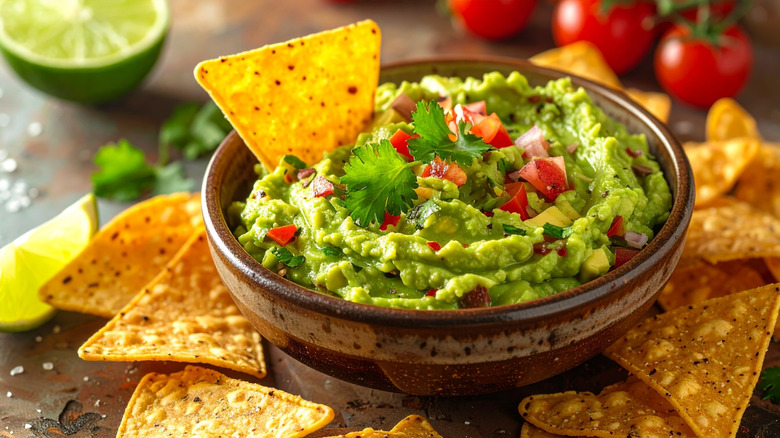
Yes, we all know that fresh is best, but sometimes you don't even have time to make a quick and easy guacamole recipe from scratch. Other times, you might end up with a tub or two of ready-made guac for one reason or another, whether someone brought it to your party or your partner picked it up from the store. This doesn't mean you have to settle for subpar, however, because there are all kinds of ways to upgrade store-bought guacamole. Sometimes, just a few quick tweaks can make it taste as good as something you whipped up from fresh ingredients.
When looking for ways to improve grocery store guac, taking inspiration from recipes made from scratch is a great place to start. Sometimes store-bought versions miss out key ingredients or replace them with ones that are not up to snuff. So, putting those things back in the mix quickly and easily improves even a totally lackluster store-bought option. But you can also take inspiration from other places to give it a boost. Sometimes an unexpected ingredient is just what you need to elevate an otherwise mid tub of guac.
You don't necessarily need much to pull off a significant transformation. You probably already have everything you need in your pantry or fridge. While you can use just one of these techniques alone, mixing a few often yields the tastiest results. So, without further ado, here are several ways to upgrade store-bought guacamole.
Add lime juice to store-bought guacamole
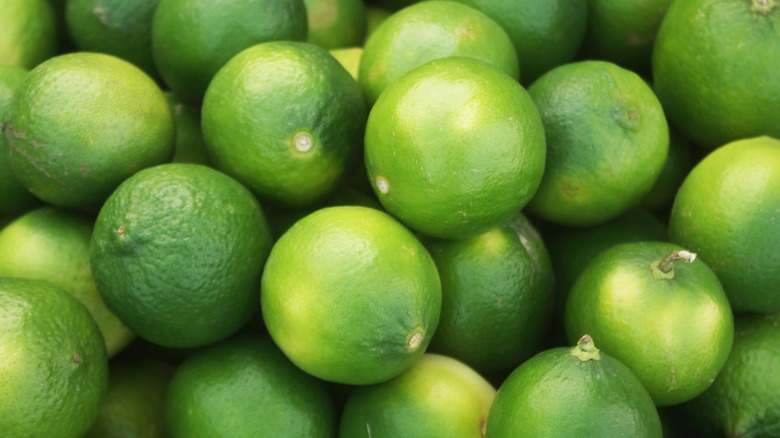
While the best store-bought guacamoles contain lime juice to get as close to homemade ingredients as possible, one of the hallmarks of subpar grocery store offerings is a weird tang. This tends to come from either citric acid or vinegar, which can be used in place of lime juice in particularly processed guac. Its purpose is to add acidity to the dip and act as a preservative to keep it from browning, but it misses the mark. When you notice this processed, preservative-heavy taste, the best thing you can do is add lime juice.
You can't beat fresh lime juice in guacamole. Its role isn't just to bring acidity, but to add those fragrant notes, so no amount of other acids will replace it. Where you have to be careful, though, is the risk of overdoing it. Since grocery store guac often already has added acidity, putting too much lime in could make it unpleasantly tart. So, start with a little squeeze, stir it in, taste again, and repeat until you've reached the desired level of acidity.
Fresh lime is such a simple way to make guac taste far closer to homemade. It doesn't necessarily take all that much to brighten a flat, boring dip, so go slow. If you do overdo it, you can balance out the acidity with something sweet or rich.
Use extra salt
It might seem too simple to be true, but one of the biggest tricks for making better guacamole is to use more salt. And this can easily translate into doctoring the store-bought stuff, too. Sometimes it just needs a little extra salt to make it taste better. Of course, you can easily go too far with it, but it might be just the ticket.
The thing about salt is that it doesn't just make food saltier, but it also enhances its natural flavor. So, guac with too little salt can taste dull and lifeless, particularly because avocado, being rich and fatty, can take a lot of salt to taste its best. While processed food can be extremely salty, you can also find that it goes easy on the salt in order to look like a healthier choice on the label. But there isn't anything inherently wrong with salt if consumed, like all things, in moderation. In fact, our bodies need salt to survive.
If you're unsure whether your store-bought guac needs more salt, you can try a small experiment. Take a teaspoon or so and add just a few grains of salt. Mix them in and give them a moment to dissolve. Now, taste it. If it's improved, great. Go ahead and add more salt to the rest of the guac. If it's overly salty, you'll have your answer; leave it be and try another upgrade instead. Be cautious of using coarse salt, as it takes longer to dissolve, so you might end up adding more than you need.
Fresh herbs can upgrade ready-made guacamole
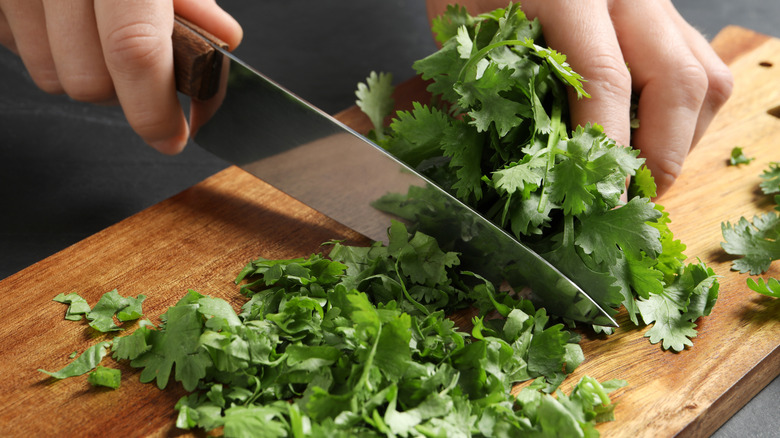
Fresh herbs and guacamole go hand in hand. However, when you buy the dip from a grocery store, brands usually don't use fresh herbs because they can go bad quickly. Taking a few minutes to chop some up and stir them through is an easy way to make a tub taste way more like homemade versions.
We say you should add fresh herbs, but there's actually one particular green that guacamole calls for: cilantro. We know, we know, this herb can be divisive, but stick with us. There is a real reason why some people hate cilantro. It contains a compound called an aldehyde, which some people are genetically predisposed to perceive as soapy. But it also seems like there are cultural factors, so if you think you don't like cilantro, you might just need to get used to it. However, if you're a strict hater, consider using fresh Mexican oregano instead.
If you don't have fresh herbs to hand, you might be tempted to use dried ones, but don't do it. Not only are they not the same flavor-wise, but they also add an unpleasant texture. So, if you only have dried herbs in the kitchen, choose a different way.
Dice some fresh tomatoes
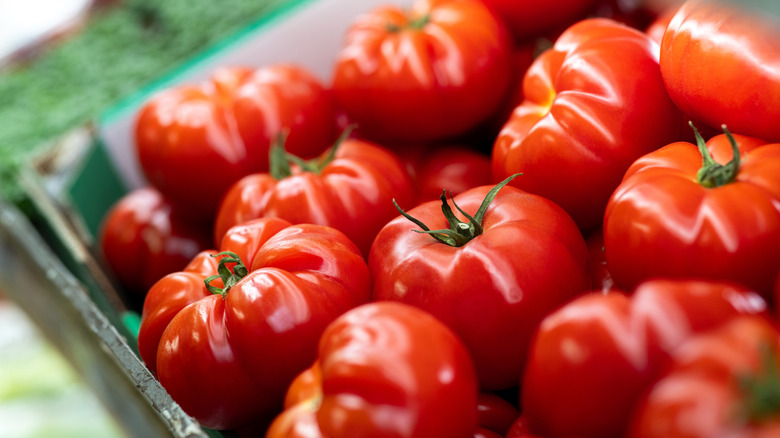
Whether guacamole should have tomatoes can be a divisive question. They're not necessarily an authentic Mexican addition, but many people love the brightness and acidity they bring. Some store-bought guacamole contains tomatoes, but they can be bland and watery, with a soft texture from steeping in moist avocado for weeks. That's why adding your own fresh tomatoes can improve grocery store guac.
There are a few reasons for this. Firstly, when you buy ready-made guacamole, the texture can be a bit off. It's usually excessively mushy without any chunky bits, giving it a texture reminiscent of baby food. By adding fresh diced tomatoes, you're throwing a little bit of crisp into the mix. Tomatoes also have a freshness and vibrancy that the other ingredients can lack, given that they were prepared weeks or months in advance and possibly loaded up with preservatives. In terms of flavor, tomatoes can also bring a delicious burst of sweetness and tartness that elevates guac.
The caveat for adding tomatoes is that if they're not good ones, don't bother. The last thing an already ailing guac needs is sad, anemic tomatoes that don't taste of anything. Choose ones that are perfectly ripe and aren't overly watery, as you want to avoid adding excess liquid and the dip becoming too loose.
Add something spicy
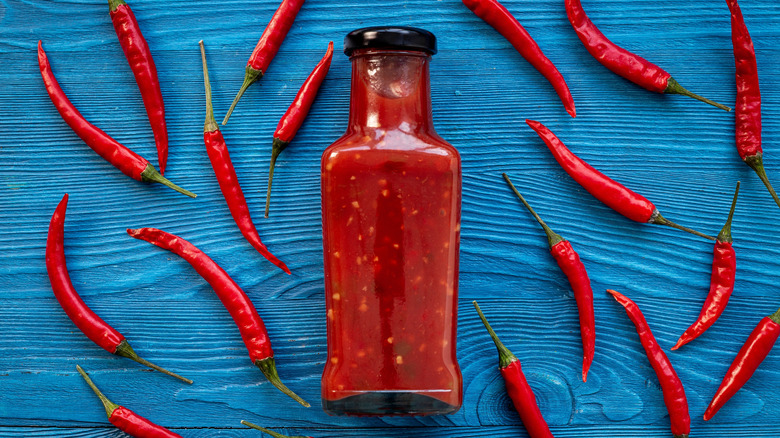
There are reasons why chefs never buy premade guacamole, and one is that it isn't necessarily authentic. Chiles are meant to be an integral part of guacamole, but they're often left out to appeal to a wider palate and range of spice tolerances. As such, simply adding something spicy to a store-bought version can take it up a notch. Traditionally, fresh chiles are used, but other spicy ingredients work, too.
If you're looking to keep things authentic, use fresh chiles. Jalapeños and serranos are both good choices. You can use them raw or char them first on a comal or a cast iron skillet for extra flavor. However, sometimes you'll want to give extra zip to your guac as quickly as possible, and even chopping up a chile might leave you thinking that you may as well have made the dip from scratch. In this case, look for ready-to-use spicy ingredients.
Adding a little hot sauce is a good solution. Even just a few drops can make all the difference. What's great about this is that hot sauce comes in a range of heat levels and flavor profiles, so you're sure to find something that works for your preferences. You could also add a spoonful of chile crisp, which brings spiciness and some crunchy texture. As we mentioned earlier, store-bought guac can be texturally samey, so chile crisp helps solve this problem and boosts the flavor.
Put raw onion in your store-bought guac
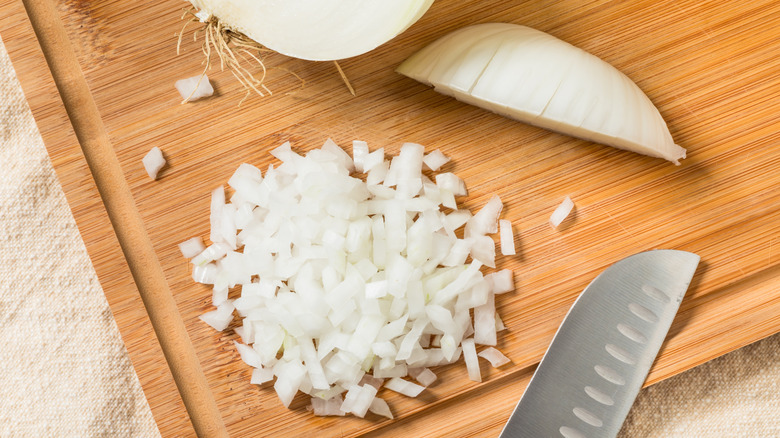
In homemade guacamole, raw onion is a key ingredient. It brings a sharpness along with that aromatic onion flavor, and it's also crunchy and textural. Store-bought versions, however, often go with dried onion flakes or onion powder. This may increase their shelf life, but it's a hallmark of guacamole that isn't particularly fresh and couldn't be mistaken for homemade.
Luckily for us, it's quick and simple to chop up some onion and stir it into your guac, and it adds way more than you'd expect. You can use red or white varieties, depending on your preference or what you have on hand. Shallot is also an acceptable alternative, and green onions are all right in a pinch, but not quite the same. Dicing them finely is a great way to distribute them evenly throughout the dip and means that you won't end up chomping on a huge, aggressively oniony piece.
If you think it's too much, there is a trick for a less overpowering onion flavor. Chop your onions, pop them in a bath of icy cold water, squeeze them, pour off the water (which will have turned cloudy), and repeat a couple more times. After this, the pungency will have mellowed, and you can enjoy the flavor and texture in your guac without them overwhelming the whole thing. Some people also soak them in vinegar for around 15 minutes, which adds a tanginess that we're here for.
Doctor it with some spices
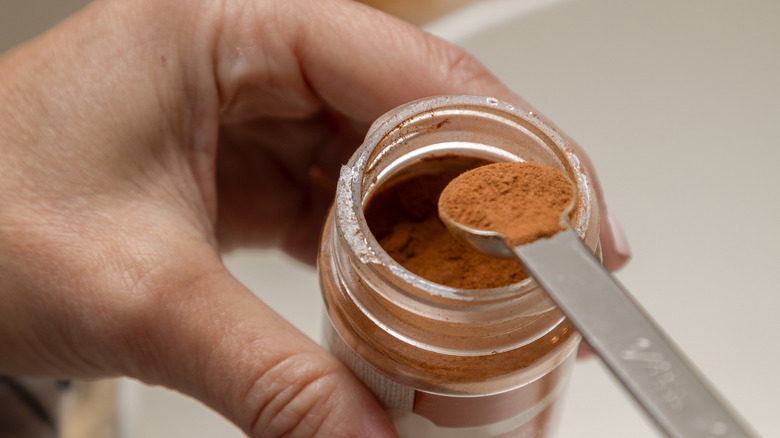
If you're a keen cook, or even if you're someone who occasionally cooks from scratch, you probably already have a bunch of spices in your pantry. Using these is an excellent way to make store-bought guac tastier without more exertion involved than rummaging around your spice rack for the right jar. The main thing is knowing which spices work well with guacamole.
Think about the kinds of spices you might put in Mexican or Tex-Mex food in general: smoked paprika, ground cumin, chili powder, coriander, or Ceylon cinnamon. If it's all you have, you could even use a pre-mixed blend of taco or fajita seasoning. Just avoid ingredients that don't have any bearing on this style of cooking, such as blends like garam masala or harissa.
Then, there's the important Mexican seasoning that isn't actually an ingredient: sazón. This literally means "seasoning" but is actually a more esoteric concept about the magic that happens in the kitchen when someone is cooking. Each person has their own sazón and brings unique things to a recipe that nobody else can, so we can't help with that one. Using spices won't necessarily add a vibrancy that store-bought guac lacks, so it can be good to combine this technique with adding fresh herbs, tomatoes, or onions. However, seasonings' potent flavors can help cover up odd tangs or notes of preservatives that are particularly prevalent in shelf-stable offerings.
Mix in corn
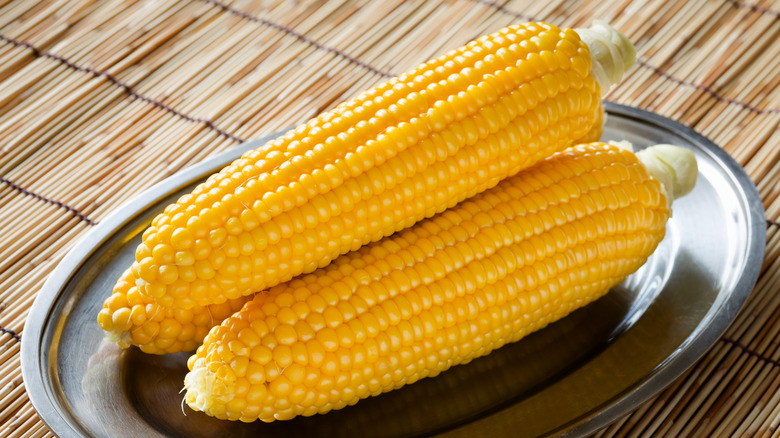
Corn may not be found in classic guacamole, but it tastes great, and that's the main thing. Do it right, and you can even pass off the resulting dish as homemade. The freshness of summer corn can level up tired grocery store guacamole. Pair it with fresh tomato and onion, and you have yourself something that isn't quite guac anymore (more like a type of salsa) but is delicious nonetheless.
If you're looking for an upgrade, the main thing is to use fresh corn. If you opt for canned, you'll only exacerbate the store-bought let-down. The combination of canned corn and premade guac accentuates the lack of freshness in each one. Frozen corn is a better choice if you must avoid cobs, as it doesn't have that canned flavor, but fresh is best.
Grilling the corn before using it creates a nice smokiness and intensifies the sweetness, but it's only a good option if you're already grilling. Otherwise, you're hugely overcomplicating what should be a simple, five-minute upgrade. Alternatively, you can pan fry the corn in butter after taking it off the cob, which gives you some of the same charred notes as grilling. Another option is to use it uncooked. This gives it a crisper texture, though the flavor is less developed. Once you've prepared the corn, just mix it in, and you're good to go.
Use mango in your store-bought guac
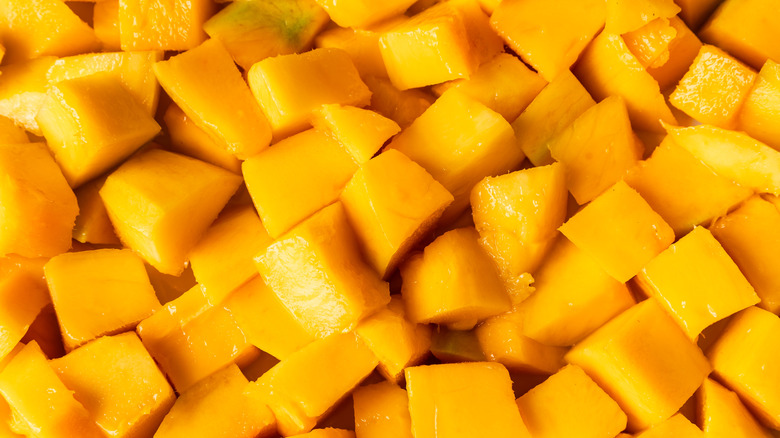
Sometimes, to upgrade a basic store-bought guacamole that needs some love, you need to take it somewhere unexpected. Adding mango certainly does that. It's not the kind of ingredient you'd find in classic guacamole, but when you think about the existence of mango salsas, it starts to seem less strange. The fruity addition brings a sweetness that can take even the blandest of store-bought offerings to another level.
What's great about using mango in grocery store guac is that it brings a sweetness that is sometimes much-needed. One of the problems with certain ready-made guacamoles, especially shelf-stable or more heavily processed options, is that they can have a strange acidity from citric acid used as a preservative. Not only is the flavor profile all wrong, but it can make the dip too tart rather than rich and creamy. A mango's sweetness counteracts this tartness, making it more well-balanced. Now, the acidity doesn't seem out of place because it makes sense with the other flavors.
If you want to try this upgrade, make sure to use fresh mango, rather than frozen, for the best flavor and texture. Choose one that's fully ripe, as you really want to lean into the sweetness. Then all that's left to do is dice it and mix it into the guac. You can choose to cut it into large chunks or use a small dice, depending on your preference.
Add cheese
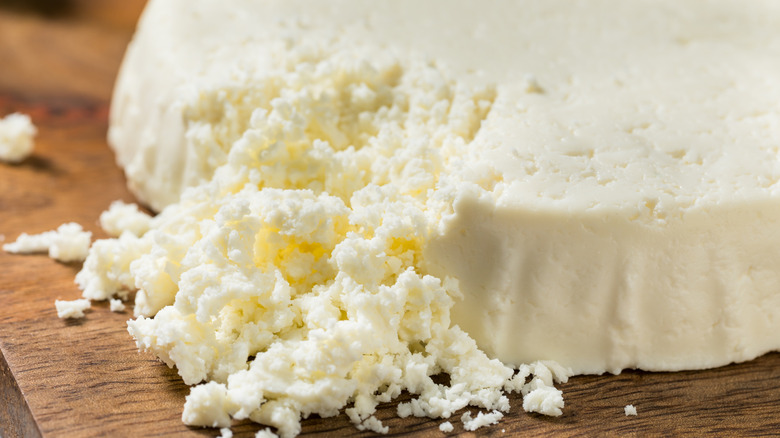
If something doesn't taste great, one evergreen solution is to add cheese. Okay, sure, there are some dishes where cheese is going to make things worse, but guacamole isn't one of them. You've probably already eaten cheese and guac together, for instance, in burritos or quesadillas, so it's clearly not an odd combination.
If you've only got limited ingredients in the house and need something to upgrade your guacamole right now, something like shredded cheddar or jack will do the trick. It might not be the most inventive choice or the one that best fits with Mexican cuisine in general, but it will add salty, savory notes that complement the avocado. However, if you have the time or ingredients, you can do better.
Cotija is a salty, crumbly Mexican cheese that's delicious on top of guacamole. If you can't get hold of it, feta has a similar crumbly texture and intense saltiness, although it's by no means identical. Our ultimate guide to Mexican cheeses will talk you through some other great options to level up your guac. For instance, you could try a mild queso fresco or a punchier queso añejo. Mexican manchego is another good option. It's a semi-firm cheese that can be melted on top of guac for a stringy, gooey texture.
Sprinkle on some everything bagel seasoning
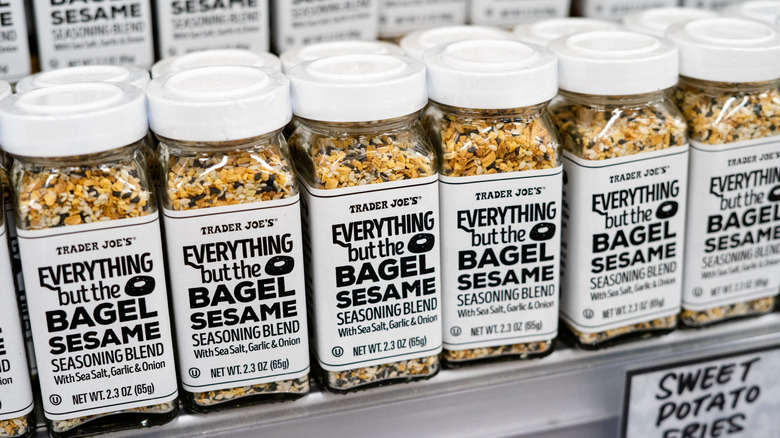
A nice topping can be the perfect finishing touch you need to level up your store-bought guac. After choosing your selected mix-ins, this is a way to round it out and give it a higher-end look. One unexpected but delicious topping is everything bagel seasoning. And, once you think about it in the context of guacamole, it actually makes a whole lot of sense.
Everything bagel seasoning is a mix of poppy seeds, sesame seeds, dried onion, dried garlic, and salt. You can whip up a blend yourself or buy it in a grocery store. They're not exactly classic guac ingredients, but they can add a whole lot to a basic store-bought dip. The poppy seeds and sesame seeds have a slightly nutty flavor, while the dried onion and garlic pack an aromatic punch. And, not only do they taste good, but they also add some crunch. Since store-bought guac can be unpleasantly smushy, anything that's crunchy and adds texture is extremely welcome.
While you can stir it through, we'd recommend using it as a topping to keep it crisp. Otherwise, the onion and garlic will rehydrate, and you won't have quite the same effect. It's a striking finishing touch, too, that's particularly great if you want to fool anyone into thinking you made your guac from scratch.