

6 Chef-Approved Ways To Upgrade Prime Rib
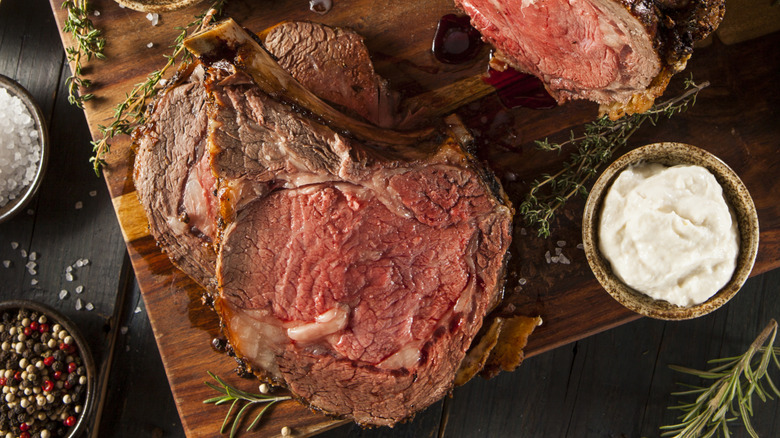
Prime rib probably isn't something you're cooking every night. The massive cut of beef is expensive, slow to cook, and a bit complicated if you want to achieve the perfectly rare, buttery-tender interior you might imagine from a steakhouse. But for special occasions, when you're looking to serve up a drool-worthy prime rib roast, you can impress your guests even more by taking the meat up a notch.
Palladino's Steak & Seafood, located in New York City's Grand Central Terminal, has turned heads with its signature herb-crusted prime rib, carved tableside. But if a trip to New York isn't on your agenda, or the dish's $125 price tag isn't in your budget, not to worry. In an exclusive chat with Mashed, Palladino's executive chef Sam Hazen let us in on the secrets of a perfect prime rib — from covering it with egg whites before seasoning to using the correct knife when slicing — and his tips can help you make this standout dish in your very own kitchen.
Brush on whipped egg whites before seasoning your roast
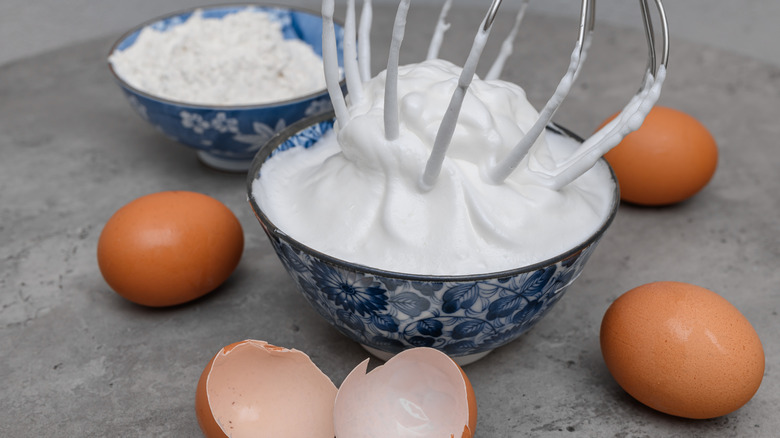
Many home cooks skip an important but unexpected step when seasoning their prime rib. Chef Sam Hazen told Mashed that the roast will come out better if you coat the outside with whipped egg whites before adding herbs and spices. This is the same technique you might use to make a meringue, starting with slow whisking and ramping up to a higher speed using a mixer. Once you've achieved stiff peaks, brush the whipped whites over the meat before adding seasoning for extra-flavorful meat.
This might seem like a bizarre addition, but it's backed by a specific food science reason. Egg whites act as glue, so they keep the herbs and spices adhered to the meat. This is especially important if you're hoping to get an herb crust on the outside of the prime rib, which will help flavor the meat and give it a distinctly restaurant-quality appearance. Otherwise, you risk the herbs and spices falling off during cooking or slicing.
Cook the roast low and slow
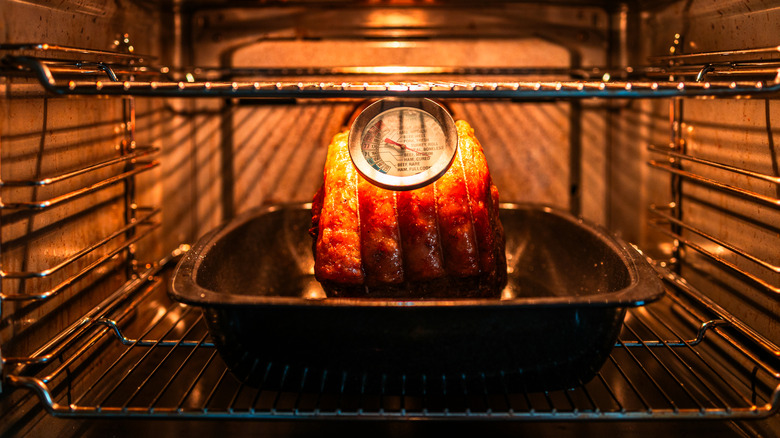
A prime rib roast is a large piece of meat. It's commonly sold in pieces that are several pounds each, but the full cut can be as large as 30 pounds. This is far from a chicken breast that just needs quick grilling on both sides. Instead, Sam Hazen recommends cooking it low and slow.
Just how low? In a conventional oven, that can mean any temperature below 325 degrees Fahrenheit, but we've found that 250 degrees Fahrenheit is the key temperature for tasty prime rib. And just how slow? Around 3½ to 4 hours in the oven will cook the roast perfectly, though this will vary significantly based on the size of your prime rib and a number of other factors. Keeping an eye on the internal temperature will give you a better sense of doneness.
The low-and-slow method is all about tenderness. Not only does slow cooking break down connective tissues and render fat, but enzymes in the meat naturally make it more tender as they break down proteins. These enzymes work better with heat, but they do hit a ceiling at slightly over 100 degrees Fahrenheit. You'll get more tender meat the longer you cook the roast, especially if it's under the temperature at which the enzymes go dormant.
Resting the meat is important for carryover cooking
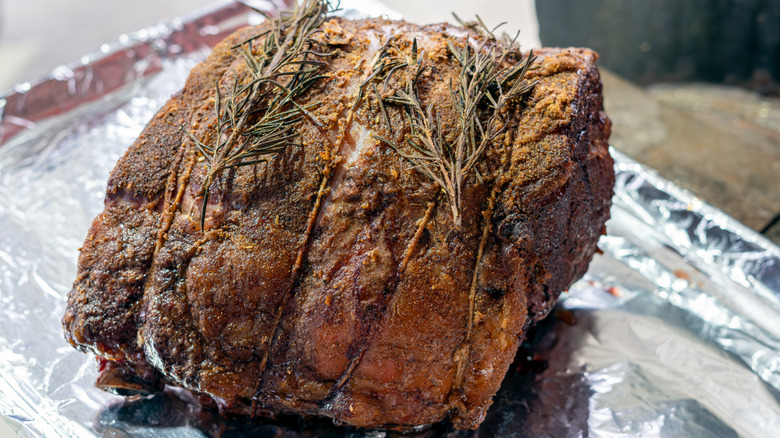
If you've ever made scrambled eggs that were perfectly cooked when you turned off the burner but became dry and hard by the time they reached your plate, you've experienced the effects of carryover cooking. Food generally keeps cooking even after you remove it from the heat, and the hotter exterior will keep warming the cooler interior for some time.
Sam Hazen advises that you let your prime rib rest for at least 30 minutes. If you're keeping an eye on the temperature inside the roast, remove it from the oven when the thermometer reaches 120 degrees Fahrenheit. After about half an hour of resting, the interior temperature will be about 125 degrees, a perfect medium-rare cook. (Predicting the exact amount that the temperature will change due to carryover cooking is nearly impossible, though, so if you want a specific doneness, keep an eye on your thermometer.)
Your bread knife isn't just for bread
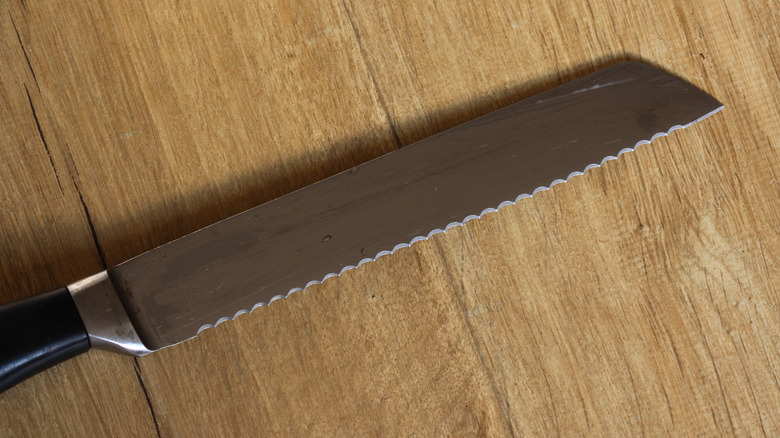
Your trusty chef's knife isn't actually the best choice to slice your prime rib once resting is done. According to Sam Hazen, your best bet is a sharp, serrated knife. That's likely to be the bread knife in your knife block, especially if it's large enough to handle the prime rib, though any serrated knife in good condition will work. Sharpness is key, though. For one, this will help the meat slice more evenly and cleanly. It's also generally true (though somewhat counterintuitive) that sharp knives are safer to use than dull knives.
If kitchen gadgets are your thing, you may consider keeping a carving knife (separate from your usual slicing knife) that you only use for roasts and large cuts of cooked meat. Carving knives generally aren't serrated, and they have long blades designed to cut through large pieces. Some professionals prefer them to the serrated type Hazen recommends, but carving knives are less common in the average home kitchen.
Toppings should complement the meat and provide a little contrast
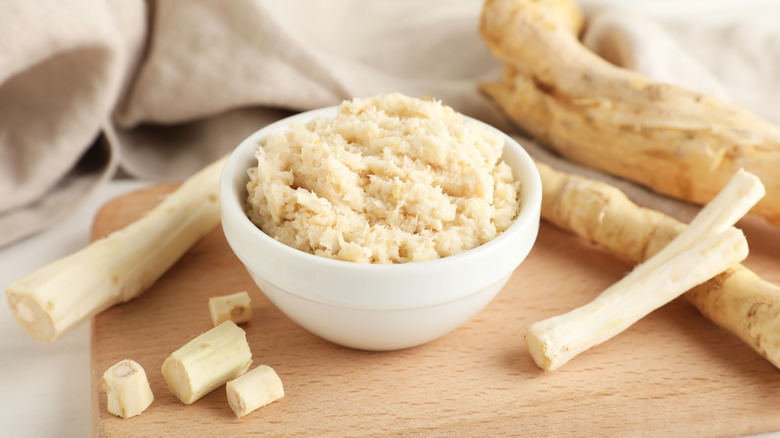
A first-rate cut of meat should speak for itself. A fresh, premium-quality prime rib barely needs any accompaniments to be delicious, but Sam Hazen suggests keeping it classic with additions that pair well and bolster the roast's own flavor. He recommends using au jus and fresh horseradish to deepen the beefy flavor and provide a slight contrast with bright spice.
Fresh horseradish isn't always easy to find, and the more common version that's sold in jars in the supermarket is what's called prepared horseradish. That's a mixture of shredded fresh horseradish root with sugar, vinegar, oil, and seasoning. The taste profile isn't the same, though, as the dominant flavor in prepared horseradish tends to be the vinegar, not the root itself. So, for that steakhouse-style flavor, seek out the fresh variety, which is available in some supermarkets.
Serve your prime rib with freshly baked bread or popovers
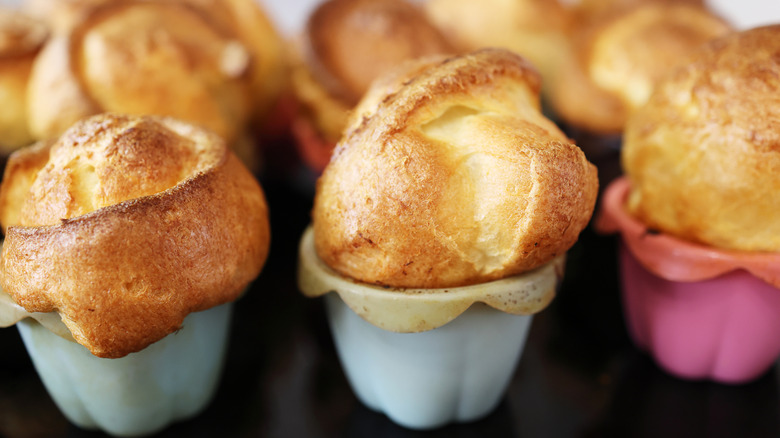
Sam Hazen told Mashed that one of the best ways to enjoy prime rib is on a sandwich — but don't think of a regular lunchmeat sandwich. Fresh bread — or, better yet, a popover (like the ones in this classic popover recipe) — will elevate the prime rib. The buttery, lofty interior of this baked good is full of nooks and crannies that lend themselves well to absorbing the meat's juices and other tasty toppings, such as au jus.
Palladino's Steak & Seafood, where Hazen is the executive chef, has served an herb-crusted prime rib with duck fat popovers for an extra layer of subtle flavors. Duck fat is far from a household staple ingredient, but if you're able to find some, it's actually easy to recreate those restaurant popovers at home. Simply substitute the butter in a regular popover recipe with duck fat.