

What Did The Aztecs Eat And Drink In Daily Life?
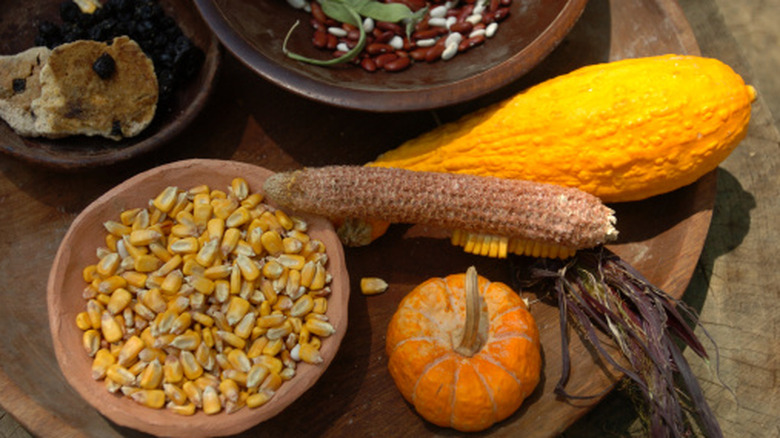
The Aztec people settled in the Valley of Mexico around 1325 in a city called Tenochtitlan and expanded their empire over approximately the next 200 years. At its height, the Aztec empire spanned about 80,000 square miles from the Gulf of Mexico to the Pacific Ocean. The empire fell when the Aztecs were overcome by the Spanish conquistadors. Today, the ruins of the city of Tenochtitlan sit beneath modern-day Mexico City.
During their rule, the Aztecs were resourceful people and experienced farmers who grew a number of different vegetable and grains. While their diet was primarily plant-based, they did occasionally hunt and fish, and eventually domesticated turkeys and ducks for both their eggs and meat. They also harvested acocils, a type of fresh water crawfish, collected ant larvae, and used spirulina algae to make cakes.
To learn more about this interesting Mesoamerican civilization, we asked experts about the Aztec empire to give us an inside look at what this culture ate and drank on a daily basis. Below, you will find insight from Susan Kellogg, PhD, Professor Emerita in Latin American History at the University of Houston and author of "A Concise History of the Aztecs," and Louise Burkhart, PhD, Professor Emerita of Anthropology at University at Albany, SUNY, and author of many works on colonial Aztec religion.
Corn
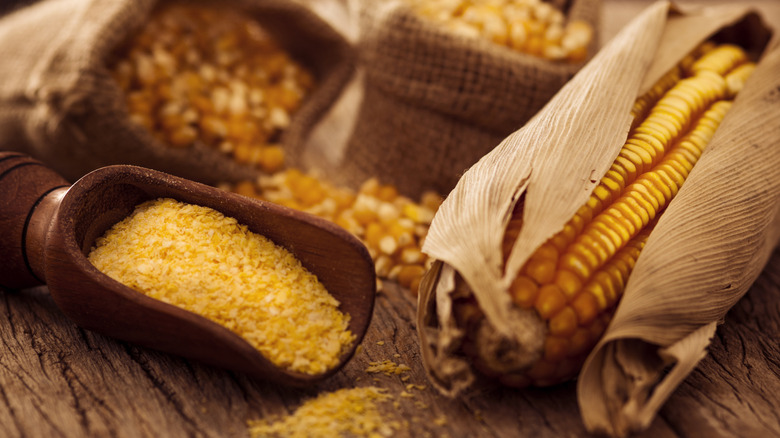
Corn, or maize, was domesticated in Mesoamerica, about 9000 years ago, said Susan Kellogg, PhD, and it was the most important food for the Aztecs. "It was grown across their territories, [was] a very adaptive and productive crop [that could] provide a lot of food and [could] be grown in a variety of environments, and offers high caloric and protein benefits."
Though corn isn't a complete protein, like meat or fish, Kellogg said it can become more complete when it's prepared in combination with beans or lime — a process known as nixtamalization. Corn was eaten as tortillas, tamales, atole (a corn drink), pozole (hominy-based stew), or on the cob (elote). "Its importance is spoken to as it was closely associated with several deities and even worshipped as part of a variety of ceremonies," Kellogg notes.
Louise Burkhart, Phd adds that corn was the primary domesticated grain for the Aztecs, much like rice is in Asia and wheat is in Europe. "Those are things you can produce in surplus, and you can store them, and the elites can tax them," said Burkhart.
Beans

Beans were also an important part of the Aztec diet. Not only were they easy to grow and prepare, but they also were simple to dry and store, said Susan Kellogg, PhD. She said the Aztecs primarily ate legumes, namely common beans or Phaseolus vulgaris, which were most like the kidney beans of today. "Beans were an important source of protein, and mashing and or adding to stews appear to have been the most common form of preparation."
Nutritionally, beans also balanced well with corn to make a better protein profile for the Aztec diet, added Louise Burkhart, PhD. "Corn and beans would basically just be boiled in a pot over the fire, and you can put in ... vegetables, chili peppers, [and] greens."
The Aztecs would also eat beans by dipping tortillas into the pot or making bean tacos. "There wasn't much you could do with beans, except boil them. [The Aztecs] didn't have oil for frying [so] you couldn't have refried beans ... Just bean stews in a pot with onions and whatever you want to put in," says Burkhart.
Squash
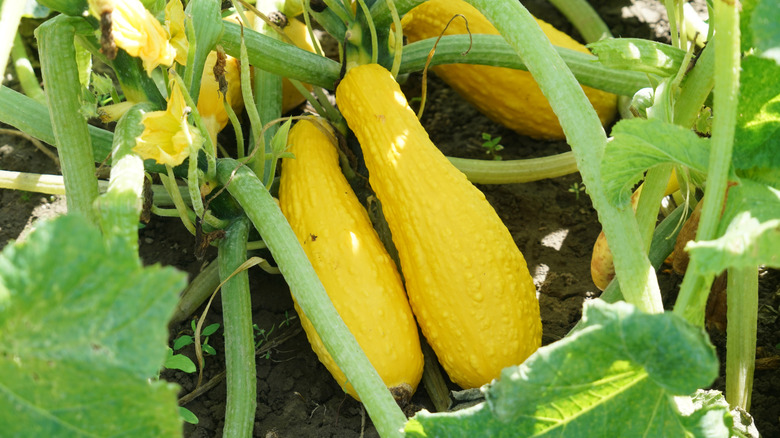
Squash was another staple of Aztec culture. The Aztecs particularly enjoyed pumpkins and water gourds. And, while the pumpkin seeds were appreciated for their protein content, the outside of the water gourd was saved and used as a water container after eating the flesh.
"Sometimes eaten raw, Aztecs could also roast ... or mash [squash]," said Susan Kellogg, PhD. "Squashes and amaranth added vitamins, minerals, and flavors, with chiles adding flavor as well." The Aztecs would also dry squash, so that it would last longer, added Louise Burkhart, PhD. "They did that a lot in North America, but also pretty much just stewed [it] in pots, because if you think [of] the cooking technology, all you had was a wood fire, and you had three ... stones, which were very sacred, and you could put a clay griddle, a flat griddle over the fire."
Additionally, Burkhart said vegetables, like squash, were grown around the lake in raised beds called chinampas. "You scoop muck up from the bottom of the lake, cool it, dump it on top of your little narrow plot that sticks out into the lake, and it's extremely fertile, so you can just grow stuff there year round."
Amaranth and chia seeds
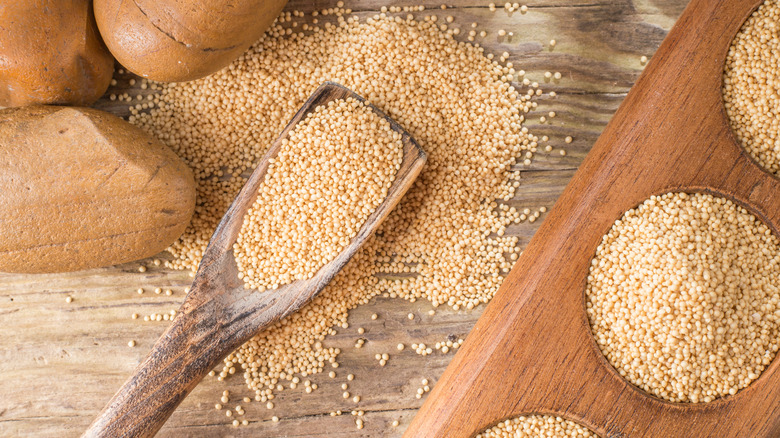
Amaranth, which is a seed, was also an important food source for the Aztecs, according to Susan Kellogg, PhD. Amaranth plants grew widely across Mesoamerica, and were first cultivated around 4000 B.C. "It's highly nutritious, offering protein and minerals. While the leaves were eaten as greens, it was most common to grind the seeds into flour to use in a drink, porridge, or for tortillas," Kellogg said.
And, while amaranth was likely eaten as part of the Aztecs' everyday meals, Kellogg said it was also important to the culture because it was consumed as part of major religious festivals. "Mixed with a syrup (made from the maguey plant), amaranth flour was mixed into shapes of deities or
mountains and used as part of monthly ceremonies."
The Aztecs also ate pinole, said Kellogg, a spin on the Nahuatl word, pinolli, which describes a flour ground from maize or chia seeds. "Whether Aztecs made it into a drink as Mexicans do today is unclear. Atole ... seems to have been a traditional drink, whereas the word "pinolli" seems to refer to the flour, not a drink. In modern form, the two drinks are somewhat different but are often referred to interchangeably." Either way, it was a staple that remains popular in the region today.
Nopales
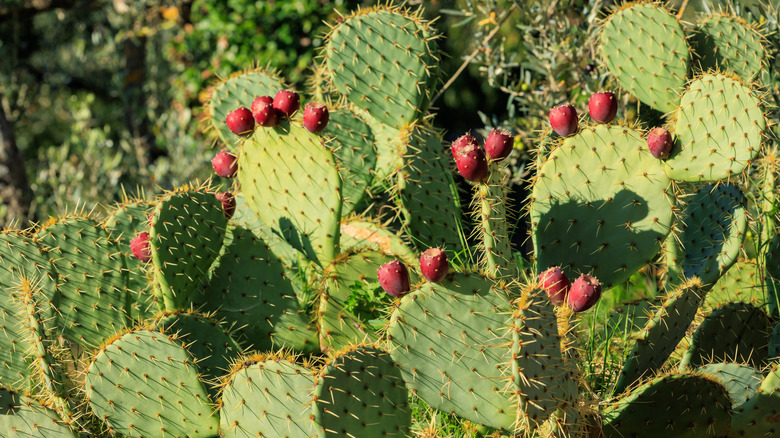
The Aztecs set up their home in the Valley of Mexico after they saw an eagle land on a nopal cactus with a snake in its beak. This area aptly became called Tenochtitlan. Tenochtitlan roughly means "the place of the prickly-pear cactus." This image of the eagle on the nopal cactus with a snake in its beak is also the same image depicted on the flag of Mexico today.
According to Louise Burkhart, PhD, Aztecs often ate the cactus pads from the nopal cactus, especially during droughts, because this succulent plant could survive in very dry climates. To consume the nopales, she said the Aztecs would chop them up and boil them for long periods of time, especially because the plant sometimes had a slimy texture. They also might add them to stews or eat them as is. Additionally, the plant produced fruit, or prickly pears, which they would also consume. Unlike other cacti, the nopal cactus can be eaten in its entirety (save for the prickly thorns).
Aztecs would use the juice for other purposes, too, including treating burns and various health conditions. Overall, the nopal cactus contains a fair amount of antioxidants, fiber, vitamins, and minerals, and it's believed to have antiviral properties, making it valuable indeed.
Maguey
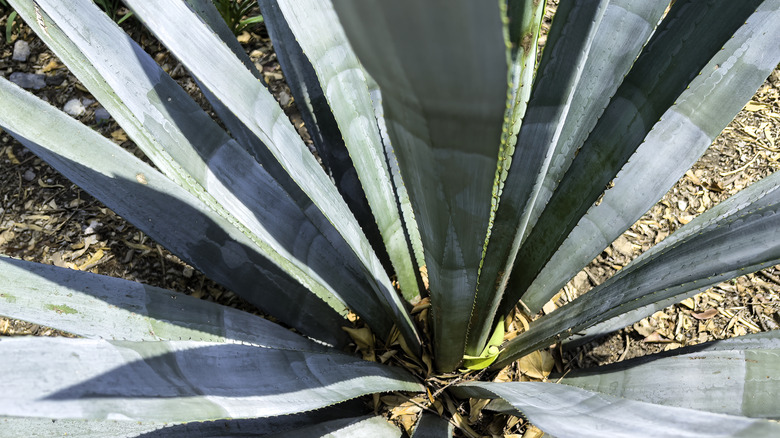
The Aztecs also made juice from the maguey cactus or the agave plant, said Louise Burkhart, PhD. To harvest the juice, they would wait for the plant to come to maturity, then they pulled up the large stalk in the middle and chopped it off releasing the liquid. The Aztecs would ferment this juice and flavor it, or sometimes drink it plain. The fermented version was called pulque.
"This white-colored, thicker than milk beverage [has] less alcohol than beer [and] you can foam that up. It's good, and it's even better if you put some mango [in it] or something ... [there was] a
lot of myth and ritual around it." Burkhart adds that the Aztecs put restrictions on who could consume pulque because it could alter consciousness and was associated with contact with the otherworld. But, she said they did allow their elderly, which was about 52 years old at the time, to drink the concoction, especially if they had aches and pains and needed some relief.
The maguey plant was used in other ways, too, added Susan Kellogg, PhD. For instance, it could be consumed as a sweetener and it was used for fiber, needles, and thread, as well. Lastly, it was important in religious rituals, as pulque was associated with a number of deities and used in a variety of celebrations.
Avocado sauce
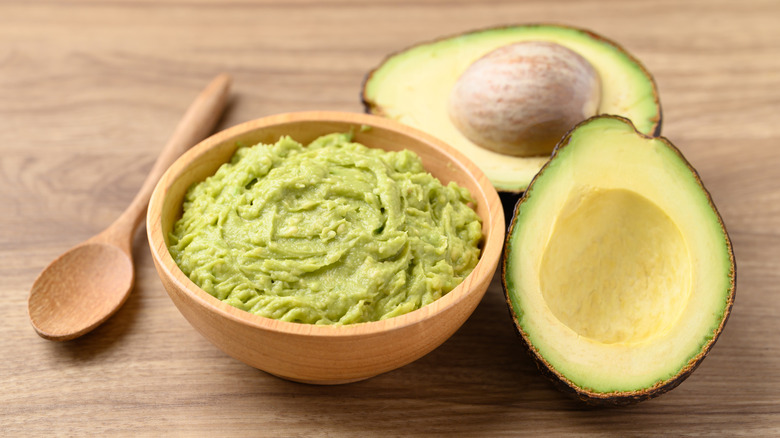
According to Louise Burkhart, PhD, the Aztecs also ate avocados, which they frequently turned into avocado sauce or what we know today as guacamole. They believed these mild-tasting fruits symbolized love and fertility and had mystical powers.
The earliest avocado sauce recipes included just two ingredients, avocado and salt. But, it's possible the Aztecs added in chili peppers, onions, lime, herbs, and other ingredients they had on hand. Likewise, their avocado sauce was chunky as they had no way to purée it.
When the Spanish conquistadors arrived in the area, they also fell in love with this beloved Mesoamerican dish. But, for many years avocado was considered an exotic fruit and regulated accordingly. This meant that guacamole didn't really become popular in mainstream American cuisine until the mid 20th century. Today, California is responsible for 90% of the avocados produced in the United States, but many more are imported from Mexico, Peru, Chili, and other South American countries.
Grasshoppers
When the Aztecs first migrated to the Valley of Mexico, they were faced with an area that lacked an adequate food supply. But, they were a resourceful group of people who worked with what they had available to them. Consequently, one of the food sources they discovered were insects.
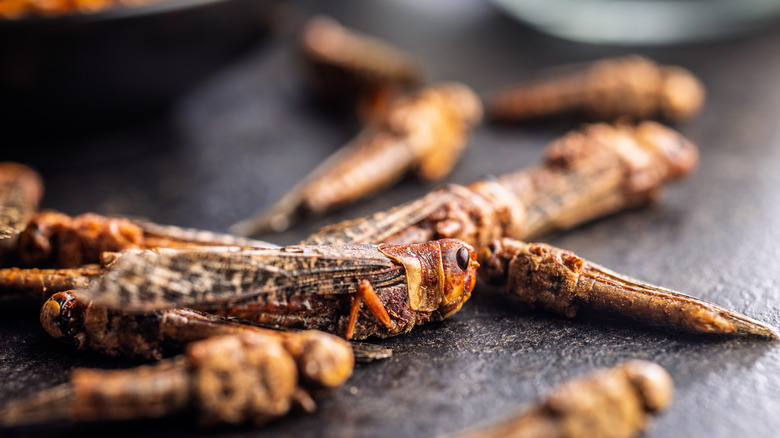
In fact, according to Louise Burkhart, PhD, grasshoppers and other insects became an integral part of the Aztec diet. They would toast them and mix them with some salt and chili peppers for a crunchy snack. These hearty bugs are still eaten today and can be found in many areas of Mexico. You might even see legless varieties or notice some mixed into guacamole. As for the U.S., some MLB ballparks find that these bugs are a best seller.
Grasshoppers, which are known as chapulines, provided the Aztecs with a good source of protein and other nutrients. According to some studies, these insects are surprisingly high in protein and have notable amounts of healthy fats, fiber, and essential minerals, including iron, zinc, calcium, and magnesium. Other bugs the Aztecs ate included jumiles (stink bugs), chicatanas (winged ants), and alacranes (scorpions).
Turkeys and turkey eggs

In the United States, turkeys are symbolic of the country's freedom and are the main attraction during Thanksgiving feasts. But, this country wasn't the first to enjoy turkey as a protein. Instead, the Aztecs were among the earliest to domesticate this wild bird and use it for food. Later, historians indicate that Hernan Cortes, a Spanish conquistador, was one of the first Europeans to see the turkey after visiting an Aztec palace in the 1500s. In fact, it's even rumored that the emperor Moctezuma gifted Cortes and his men over 1,000 turkeys.
In addition to domesticated turkeys and their eggs, Louise Burkhart, PhD, said the Aztecs also had ducks and would hunt for deer and rabbits, too. "Aztecs ate all of these as sources of animal protein, but ... these were a relatively smaller part of the daily diet, with maize, beans, and vegetables being more important," added Susan Kellogg, PhD. "Hunting was an important activity, and the 14th month (Quecholli) was a celebration of hunting and of a deity of hunting, Mixcoatl."
According to Kellogg, deer were believed to symbolize creation, fertility, war, and sacrifice. "Rabbits, too, were hunted and eaten and also associated with creation but also with transgression, including alcohol use, which was generally banned except for certain monthly ceremonies and for the elderly."
Frogs, freshwater fish, and fresh water shellfish
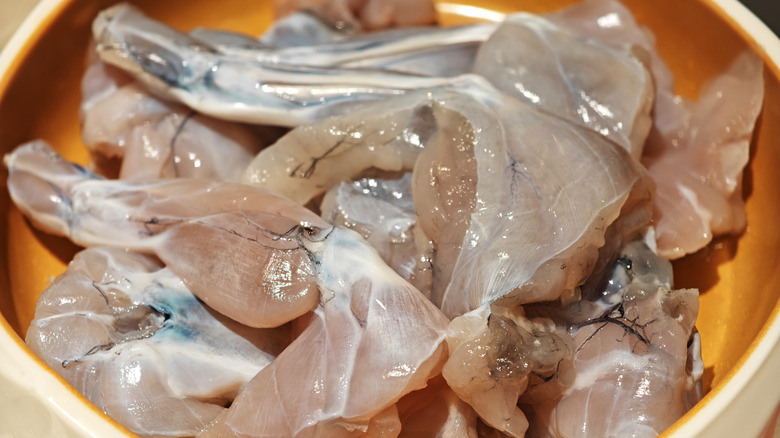
The Aztec diet was largely plant-based and they had very limited domesticated animals to eat other than turkeys and ducks. Because of this they often relied on fish, insects, and amphibians to help round out their meals. Frogs, in particular, were not only plentiful in the area, but also somewhat easy to catch along the banks of the lakes surrounding the Aztec capital of Tenochtitlan. Tadpoles, fish, and fresh water shellfish also became a part of their diet as did turtles, salamanders, crustaceans, shrimps, mole lizards, and water bugs of all kinds.
"Frogs were definitely consumed, with the young ones (tadpoles) being preferred," said Susan Kellogg, PhD. "Frogs were consumed as part of the everyday diet, but toads could provide medicines and served as an offering for temples. The Aztecs ate freshwater shrimp, and those who lived in the capital city of Tenochtitlan and around the lake system ate seafood, though commoners—especially poorer commoners, probably ate such foods rarely."
Today, not everyone is a fan of eating frogs, and some believe you should stop eating frog legs altogether. However, this dish is still popular in France and China. And, you may even find them on menus in the Southern United States. For those who do eat frogs legs, they typically fry them while others sauté them in butter or olive oil or use them in stir-fries. As for the Aztecs, the preparations were likely far simpler and easier to prepare.
Lake creatures
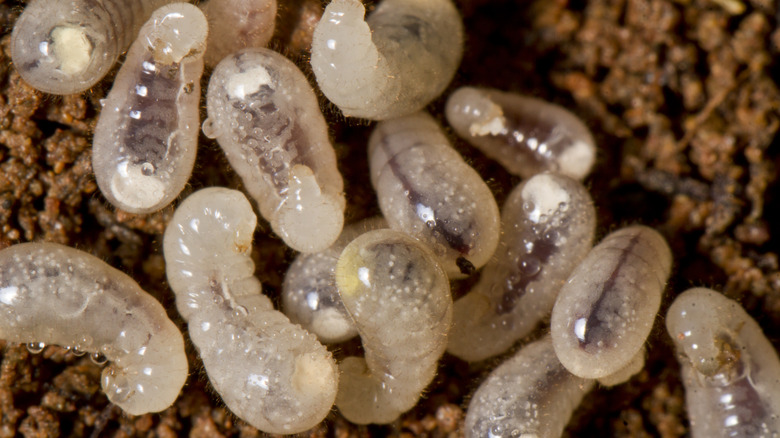
The Aztec Empire was initially built around five joined lakes, the largest of which was called Lake Texcoco. This meant that the Aztec people sourced the lakes and the surrounding area for food. One item that they regularly ate included edible ant larvae, or escamoles. This "insect caviar" is similar in texture to fish roe, and, when cooked, it can produce an earthy flavor with a slightly acidic or briny taste.
According to Louise Burkhart, PhD, the Aztecs would scoop up the ant larvae and form it into little cakes. But, this delicacy wasn't all they sourced from the lakes. She said they would gather other bugs, fish, mollusks, and crayfish from the lakes as well. They would even use the lake to gather algae, like spirulina, which is rich in protein and other nutrients, like iron, manganese and B vitamins. According to historians, the lakes in that area had the perfect mix of salinity and alkalinity for the algae to grow.
Chocolate
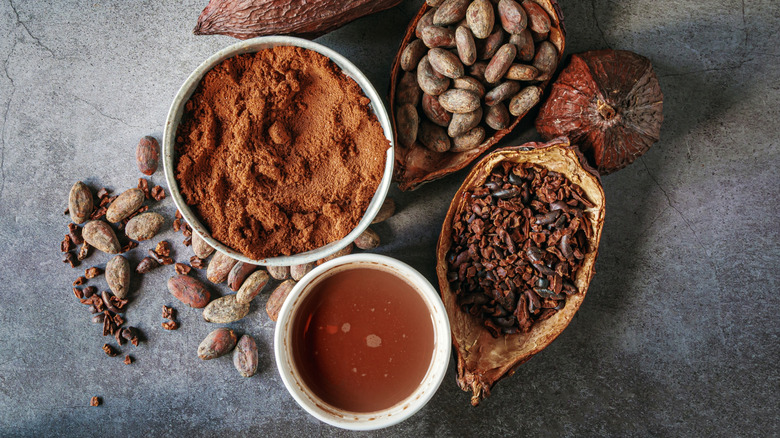
To the Aztecs, cacao beans were gifts from the gods and were worth more than gold. Often, they used the beans as currency, trading them for food and other staples. But, because chocolate was expensive, it was primarily enjoyed by the upperclass, who mostly used it to create beverages.
"The Aztecs valued chocolate, obtained it through trade and tribute, and used it mainly in unsweetened drinks consumed by nobles," said Susan Kellogg, PhD. "While sauces known as molli were used by the Aztecs, how similar these were to today's mole is unknown, even whether these sauces included cacao."
When making their chocolate drinks, the Aztecs didn't use milk or sugar, added Louise Burkhart, PhD. "Basically, it wasn't a sweet drink and it could be flavored with chili peppers. So when you have those chocolate bars today that have chili peppers in it, [the chocolate drink was] a little bit more like that."
To make the chocolate drink, Burkhart said the Aztecs would pour the liquid back and forth between two cups until it foamed up, or they might whip it with a little stick to create foam. But, she said this drink was often reserved for special occasions because it was too expensive to enjoy every day. By the late 1500s, historians indicate chocolate was a favorite indulgence in other parts of the world, too.