

What Does Raising Cane's Do With Its Leftover Food?
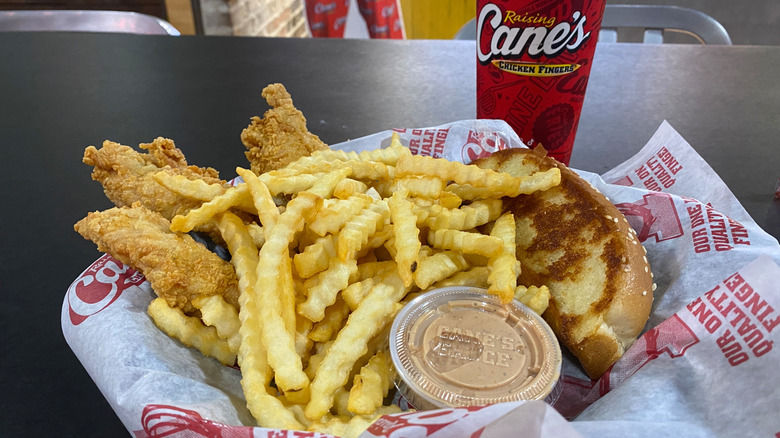
Raising Cane's is best known for its tasty chicken fingers, which co-founder Todd Graves attributes to the use of high-quality meat and a careful prep process. The chain is also quite open about its community commitments and partnerships, which include environmental, educational, and animal welfare initiatives. Despite its positive attributes, the restaurant has been criticized for policies related to food waste. Workers have even claimed that the chain throws away large volumes of unsold food on a regular basis.
In a 2024 TikTok video, a Raising Cane's staff member showed multiple waste buckets piled high with chicken fingers, fries, and Texas toast. On Reddit, a poster complained about "Insane Chicken Waste!" at the restaurant, explaining, "I've seen huge bags of Chicken Fingers that go into the garbage because the breading isn't per company standards."
We obviously can't corroborate these claims, and Raising Cane's hasn't officially disclosed its policies or practices regarding unsold food. We should note, however, that the restaurant does support food banks and similar organizations through its charitable initiatives. And for many businesses, donating food items to worthy causes can prove challenging.
Why don't more restaurants donate unsold food?
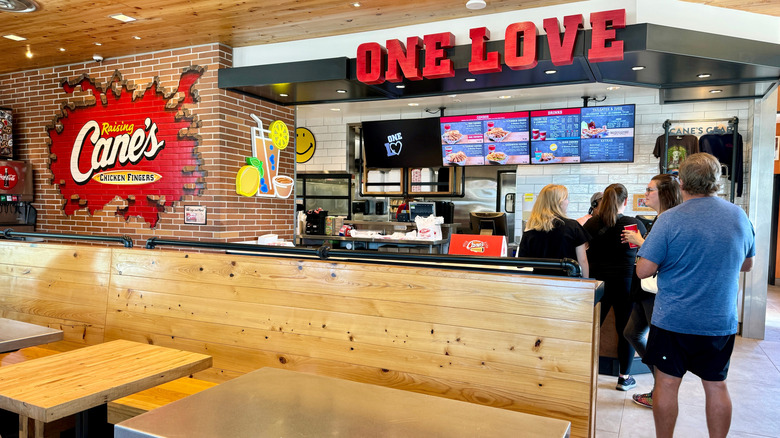
While Raising Cane's handling of food waste has come under fire from workers and customers, the problem extends beyond a single chain. The National Restaurant Association estimates that dining establishments in the U.S. throw away up to 33 billion pounds of food waste on a yearly basis (via Move for Hunger). While some restaurants combat food waste through their menus by transforming leftovers into new dishes, that's not a possibility for places with limited offerings like Raising Cane's. That begs the question: Why doesn't this popular chicken chain (not to mention other restaurants) give away or donate unsold food?
This often boils down to a matter of liability, as business owners worry about legal action stemming from spoiled or unsafe food. In this case, Raising Cane's lack of heat lamps could be a leading factor as to why the chain doesn't donate its unsold items. According to the USDA, hot food must be held at a temperature of 140 degrees Fahrenheit or higher to deter the growth of harmful bacteria. Without heat lamps, those fan-favorite chicken fingers and fries will reach unsafe temperatures much quicker, which could elicit spoilage concerns.