

11 Forgotten Snacks That Made The '70s A Little Sweeter
Sweet snacks in the '70s were all about comfort and convenience, expanding just enough on the tradition of homemade flavors without trying to be flashy or futuristic. There were no spicy chips or dill pickle cookies challenging palates with weird combos; it was a homey vibe that led the charge, putting familiar tastes within reach without requiring home baking skills or parents who loved whipping up goodies for their snack-loving goblins.
Some of the best and most popular American snacks became core memories for the masses of grazers who enjoyed them. But many of these tasty treats have been lost to the mists of time, and a snacking public is always in search of the next big thing. If any decade is deserving of a snack resurgence, the '70s should be at the top of the list. Maybe we can't count on all of these morsels returning to the snack world anytime soon. But, all the same, it's always a good time to review the mouthwatering moments and sweet snacks of the '70s.
Nabisco Butter Cookies
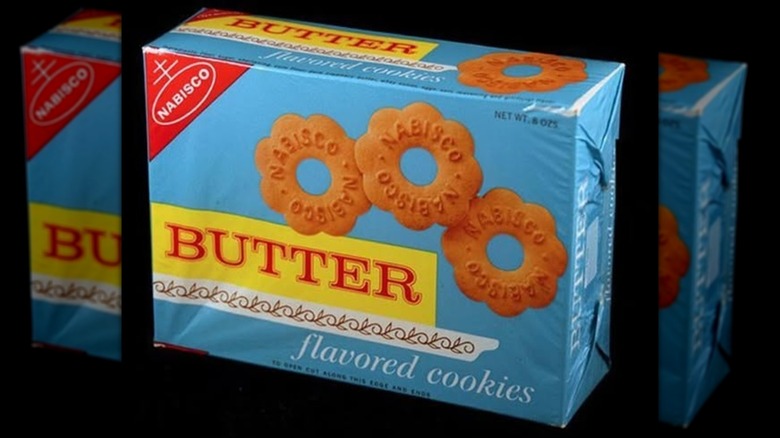
Who doesn't love a cookie you can loop onto your finger and wear like jewelry for future snacking? Nabisco Butter Cookies were one of the few boxed treats from the '70s that made it easy to load up your digits and carry as many of these shortbread rounds as you could. The company that brought us generations of sensational snacking options may not have invented edible jewelry, but that didn't stop young cookie fiends from loading shortbread loops on every finger to make the good times last longer. If any of Nabisco's underrated snacks could remind snackers how good they had it, a box of butter cookies would surely do the trick.
Nabisco has had no shortage of delicious cookies in its collection through the years, but these charming old-style delights made a lasting impression on '70s eaters in particular. There's little information on when or why Nabisco Butter Cookies vanished; they just seemed to drop off shelves somewhere between the '80s and the '90s, likely in favor of jazzier creations. The loss left a hole in more than just the cookies. It also left a gaping chasm in the cookie circuit, with nostalgic snackers still searching out recipes so they can recreate the magic themselves. Even the suspiciously similar Salerno butter cookies just can't quite live up to the memory. It's a mighty powerful butter cookie that can hook snackers in such a permanent way.
Ideal Chocolate Peanut Bars
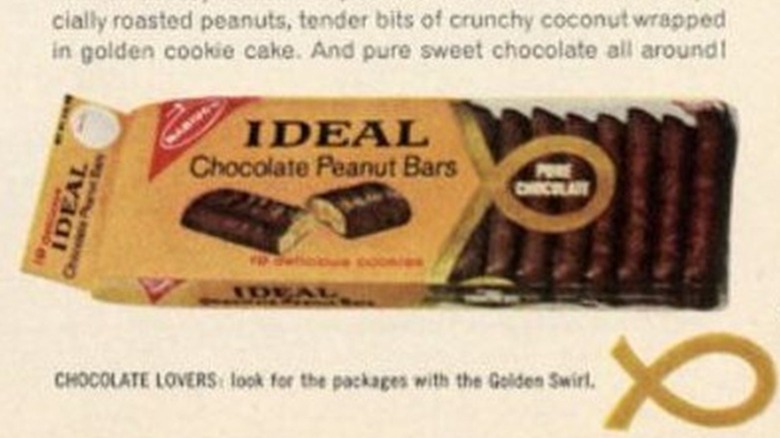
Cookies and candy bars used to share a closer space in the snacking universe, a reality best represented by a little wonder called Ideal Chocolate Peanut Bars. These beauties crossed into the realm of so many classic confections: Reese's cups, Butterfinger, and Twix all come to mind. But this treat from Nabisco was squarely in the cookie category, and the competition surely made the Keebler elves quake in their pointed little shoes.
These cookies weren't new in the '70s; their introduction in the 1960s led to a run that lasted until the early '90s. But they seemed to hit a peak with snackers in the disco era. Members of Generation Jones still recall these crispy cookie bars with their '70s cohort and lament their disappearance. In fact, on a particular Pinterest post showing the original packaging, one commenter after another expresses the sheer joy Ideal Peanut Butter Bars brought them and shares their longing for this exceptional snack from back in the sweet old days. Talk about a memorable treat.
Hostess Big Wheels
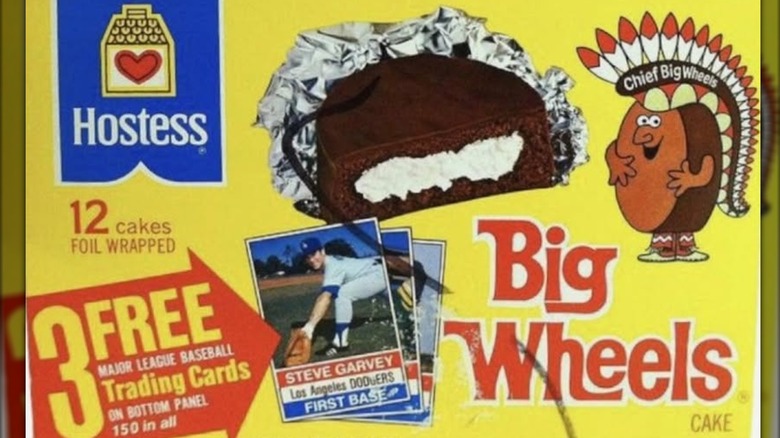
Depending on where you did your '70s snacking, you might have been a fan of a tasty little number called a Hostess Big Wheel. But if you knew it as a Ding Dong instead, you can take comfort in knowing you were enjoying the same foil-wrapped snack. It was a puck-shaped cake with a creme-filled center, wrapped in a chocolatey shell that melted all over your fingers (hence the foil).
Why were there multiple names for the same snack? Competing snack cake company Drake's Cakes had a creation called the Ring Ding available in the Northeastern states, so Hostess adopted the Big Wheel name to avoid confusion in the region. There was even a third name for Canadian markets, King Dong, which wasn't confusing at all as long as you never traveled outside of your home turf. No matter what they were called where you were from, once you peeled the foil off that puck-shaped piece of heaven, all was right in the whole wide world.
The Ding Dong-Ring Ding naming struggle went back and forth. In the late '80s, Hostess and Drake's merged briefly, and Big Wheels became Ding Dongs, though they reverted when the companies split again. Drake's was repurchased in 1998 by Interstate Bakeries Corporation — the company that owned Hostess — allowing for another rebrand. Though some fans prefer one over the other, a Ding Dong is as close as modern snackers can get to that '70s Big Wheel enjoyment.
Nickles Banana Flip
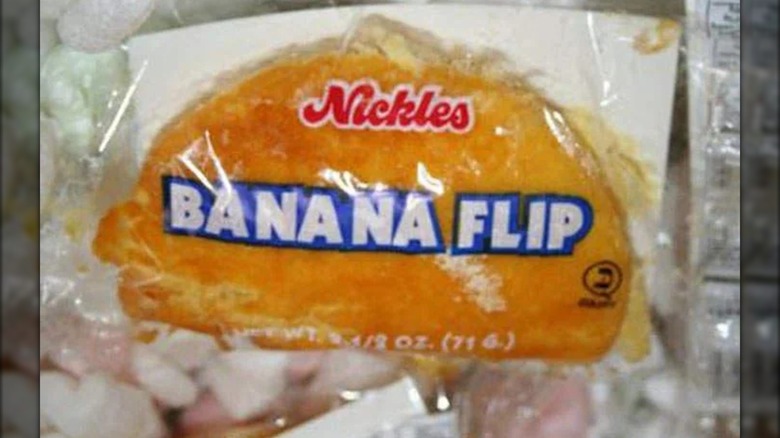
Banana doesn't get its proper due in the snack world these days, but in the '70s, it was the featured player in Nickles Banana Flip. Online enthusiasts reminiscing over the treat share that the snack cake featured a circular banana-flavored sponge folded in half around a dollop of banana creme filling, resembling a dessert taco that gave Little Debbie a run for her money. Brands like Hostess, Dolly Madison, and Nickles released versions of the sweet in the mid-20th century, giving them a heck of a run-up to become a favorite among '70s snackers.
Not everyone could enjoy a Nickles Banana Flip; the treats were only available in the Midwest and Appalachian regions of the U.S., which gave them something of a mythical status. If you wanted to see Sasquatch in the '70s, you had to trek to the Pacific Northwest, and if you wanted to chow down on a Banana Flip, you had to travel to the states that carried them. Those who lived in the area and grew up loving the fruit-flavored goodness made core memories that modern snacks can't replicate. Although the cakes ceased production in the early 2000s, fans are still on the hunt for a satisfying substitute.
Hostess HoHos
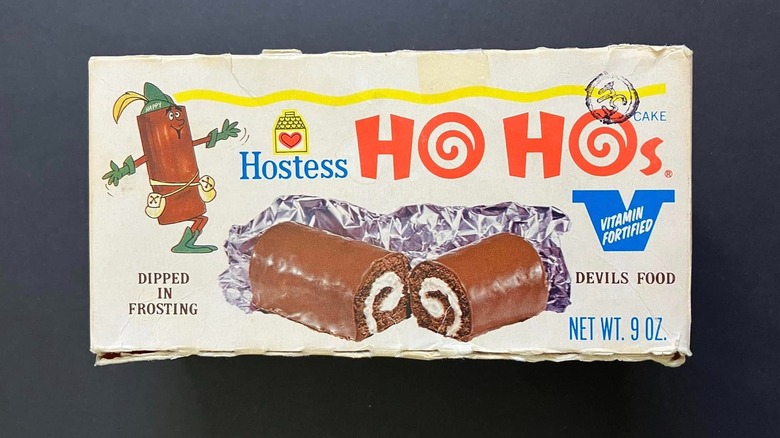
These treats may have been called HoHos, but they had nothing to do with Christmas, other than maybe making an appearance at holiday time as the seasonally-appropriate Peppermint HoHos. Hostess had a hit on its hands with the two-packs of chocolate cake wrapped around a layer of creme and coated with chocolate. The cakes became a beloved treat in the '70s, showing up in lunchboxes as a schooltime dessert that kids came to adore. There was even a Happy HoHo cartoon mascot that helped sell the snacks to the decade's most impressionable eaters.
When Hostess went bankrupt in 2012, all the company's popular snack cakes disappeared. The company's brands were parted out to other owners, however, and soon, HoHos and their sugary cohort showed up on shelves again in a sweeping comeback in 2013. Joyous '70s snackers could once again get their hands on Hostess' most beloved snack cakes, including the much-cherished HoHos and the forever-classic Twinkies.
Nowadays, HoHos are something of a no-go. Even though they appeared in a lineup of holiday Hostess treats some years back, there's no promise that fans can locate them in any form today. Though some lucky seekers share that they can still find their favorite snack cakes, HoHos are no longer listed on Hostess' website products page, leaving them as an elusive sweet snack of the '70s that left an indelible impression.
Kraft Koogle
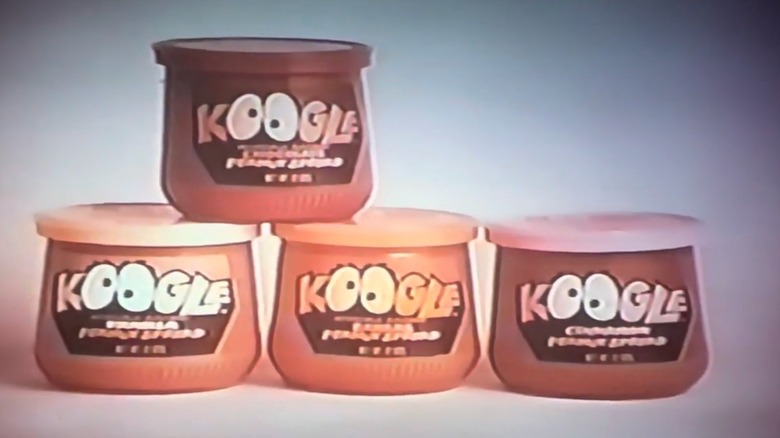
Why open regular peanut butter for your PB&J when a jar of Kraft Koogle could give you flavored peanut spread instead? There were banana, vanilla, cinnamon, and chocolate flavors, in addition to original peanut. It was an ingenious mashup of tastes with a smoother-than-smooth texture that was all the rage with sandwich lovers and school-age kids in the early '70s. Enthusiasts discovered pretty quickly they could dip pretty much anything in the jar and end up happy ... think Nutella, but with peanuts instead of hazelnuts. Pretzel sticks, potato chips, vanilla wafers, or animal crackers — when you had finger food and Koogle at the ready, even the simplest of snacks became a celebration.
The party was short-lived, however, thanks to an expose by Consumer Reports in 1975 that revealed a glut of unsavory ingredients, including a ton of sugar and hydrogenated oils. This was the quaint era when those sorts of additives were shocking and undesirable, before they became the status quo in most snack foods. Those of us who remember the glory days of Koogle before it was ripped from shelves can attest to its captivating nature. Maybe we had to go back to regular store-bought peanut butter brands for better or worse, but we always kept Koogle in our hearts as the original funtime peanut butter (and we still do ... sorry, Goober Grape).
Pillsbury Figurines
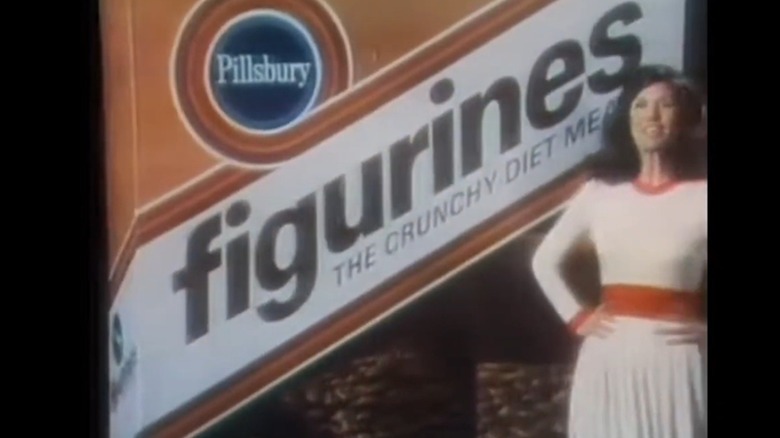
The more sensible snacker of the '70s would find calorie-conscious pleasure in Figurines, an early version of the meal replacement bars that would later take over the nutritional supplement world. Back then, these reduced-calorie bars were a sweet treat that didn't compromise the eater's efforts to maintain their weight. They were marketed toward a decidedly female demographic, but if they were on hand and hungry kids were rummaging through the pantry for something to nosh on, you can be sure they became part of the target audience.
The original suite of Figurines flavors marketed by parent company Pillsbury included the standard chocolate, plus caramel and raspberry versions for the more elegant snackers. The commercials came with their own irritating yet memorable theme song that made more use of the word "crunch" than advertising should allow. They were also pitched as a 138-calorie lunch replacement, but if the youngsters in the house found a box in the kitchen cabinet, it became an anytime snack that had no rules. Just don't let Mom find out you snarfed down her diet bars.
Interest in Figurines fell drastically after soaring to heights of a staggering $30 million in annual sales in the mid-'70s. A mid-'80s revamp called Figurine 100s dropped the calories in hopes of reaching an even savvier health-conscious audience. By 1993, they had disappeared entirely.
Carnation Breakfast Bars
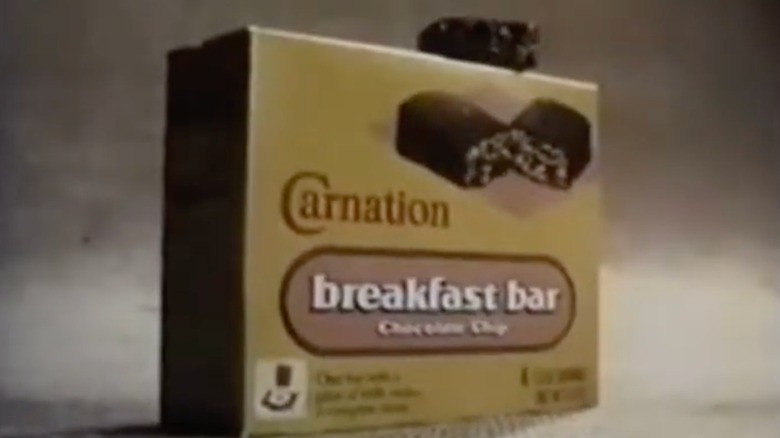
In the mid-'70s, dairy giant Carnation figured out how to reach a broader market with its Breakfast Bars, which took the usual granola bars in a tastier — and presumably healthier — direction. It didn't matter that they were marketed as a replacement for bacon or eggs; you could grab one as a between-meal munchy or an after-dinner dessert treat to enjoy the crunchy, creamy goodness and pretend it was a more nutritious choice than milk and cookies.
The commercials for Carnation Breakfast Bars promoted them as a protein-packed stand-in for candy bars that gave kids easy access to a healthy alternative. They were also covered in chocolate coating, which made them fair game for any snacking occasion. Soon enough, an influx of protein bars a-plenty would shoulder their way into the snack aisle, pushing Carnation's original concept. But for a time in the late '70s, this all-encompassing treat made kids feel like snacking was a healthful practice, as well as a delicious one.
Sales of Carnation Breakfast Bars started sputtering in the '80s, likely thanks to increased competition in the bar market. By the '90s, they'd become a lost cause. An attempted reintroduction in 1994 didn't capture the hearts of the snacking public as the brand had hoped, and the bars were discontinued entirely in 1997.
McDonaldland Cookies
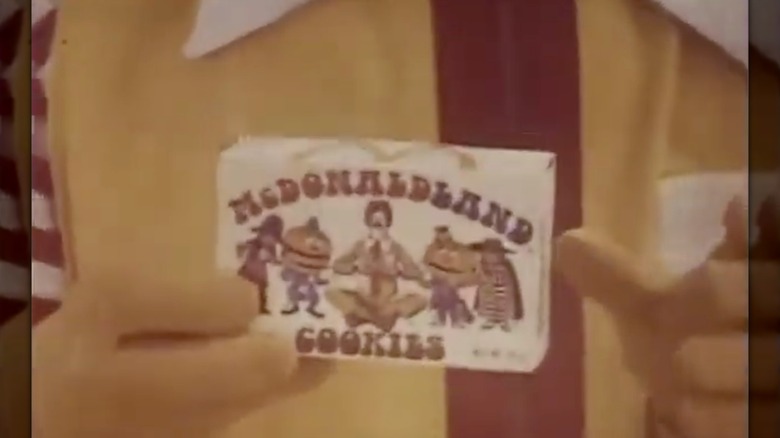
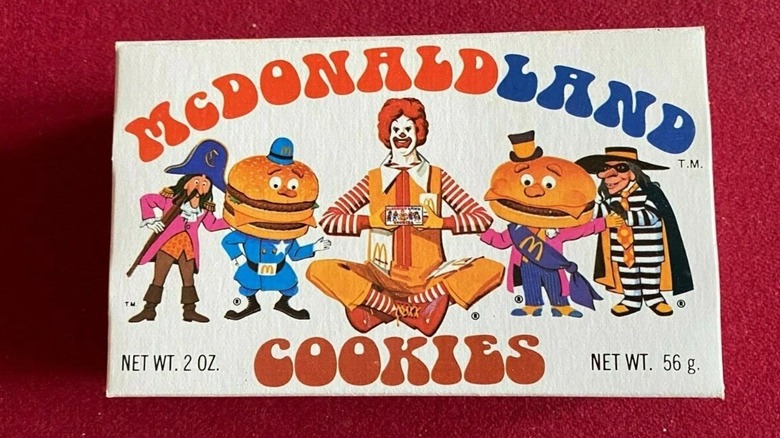
Before McFlurries took over the dessert menu at McDonald's, little ones could count on a box of McDonaldland Cookies to satisfy their sweet tooth. They were nothing more than animal crackers pressed in the shapes of McDonaldland characters, sporting familiar faces like Ronald McDonald, Grimace, and the Hamburgler, but they represented the pot of golden butter cookie goodness at the end of a Happy Meal rainbow that kids of all ages couldn't wait to get their hands on.
There were collector-style box designs that focused on each of the characters separately, with colorful cartoon graphics. Earlier packaging even featured a Golden Arches-shaped carrying handle and activities on the back. The adults could have their searing hot apple pies; we youthful '70s snackers would happily enjoy our McDonaldland cookies instead. Then, boxed chocolate chip cookies showed up at McDonald's in the '80s and made McDonaldland cookies look like baby food. A more upscale chocolate chip cookie became a discontinued McDonald's item that made a comeback in the 2020s, giving more sophisticated fast-food snackers a more age-appropriate option.
By 2010, the chain had discontinued the charming McDonaldland Cookies entirely. But if the chain were to reintroduce these crunchy snacks as a throwback promotional item, there's no question that all the grown-up '70s snackers who loved them all those years ago would show up in droves to relive the magic.
Jell-O 1-2-3
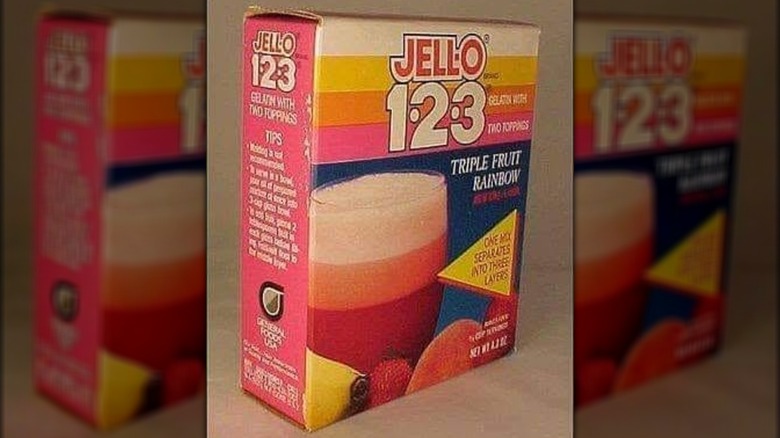
Jell-O 1-2-3, a snack that performed a snazzy illusion by separating into three different layers as it set up in the fridge, was the magical snack that left folks scratching their heads as they shoveled spoonfuls into their mouth. What mad science allowed a single liquid solution to become stratified into gelatin, cream, and a delicate blend of both without requiring human intervention? Was this the alien technology Leonard Nimoy promised us in episodes of "In Search Of..." or a gift from the intergalactic visitors Steven Spielberg introduced us to in "Close Encounters of the Third Kind"?
Nope. It was a simple twist of culinary physics via cold water and a blender that transformed mere gelatin into a dazzling snack dish we wish we could still enjoy, in its original five-flavor collection. Unless it turned out that there was some toxic chemical being used to create the reaction, it's high time Jell-O reintroduces this sneaky snack for modern eaters to discover — and for '70s snacks lovers to relish once again, topped with a generous dollop of nostalgia. For the die-hards wondering what happened to Jell-O 1-2-3 and hoping to recapture the enchantment on their own, there are plenty of copycat recipes that show how a mix of Cool Whip and any flavor of Jell-O can make it possible. But it's nowhere near as fun as the original.
Betty Crocker Snackin' Cake
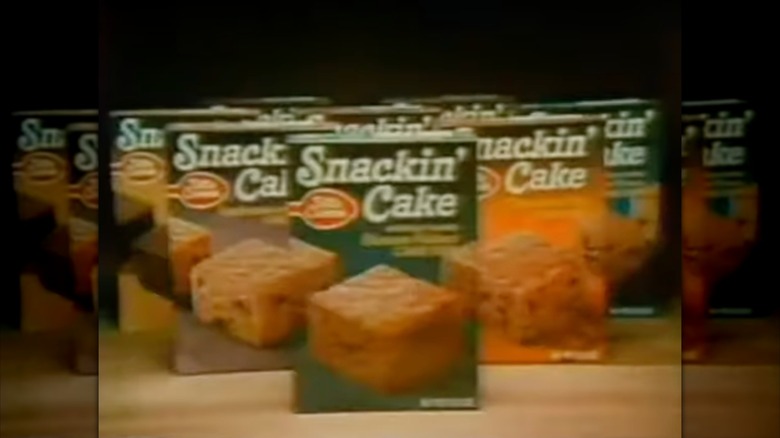
If you were a home baker who couldn't be bothered preparing a recipe when snacktime arrived, you could always keep a few boxes of Betty Crocker's Snackin' Cake mix on hand for a baked treat that was easier than expected. Rather than the typical eggs, oil, or butter required in a standard mix, Snackin' Cake only needed water to become batter. You could mix it up right in the pan you baked it in. It cooked up into a perfectly tender treat that might as well have been a full-fledged cake. The only difference was that a Snackin' Cake didn't need frosting or glaze; the mix replicated loaf-style bakes like banana walnut bread and chocolate chip loaf for easier presentation — and quicker snacking.
Introduced in the '70s and discontinued around 2012, Snackin' Cake became culinary training wheels for young snackers who had to do it themselves, thanks to the Gen X latchkey kid phenomenon. With no parents in the house, these enterprising youths could whip up a freshly baked after-school snack or pre-dinner dessert without needing any real skills in the kitchen, other than making sure to watch the oven timer. What some of us wouldn't give to have these simple snacking days back, if only for a moment. If only Betty Crocker fans who want this cake mix to make a comeback could convince the powers that be to resurrect Snackin' Cake as well.