

12 Meals Middle Class Families Ate In The '70s
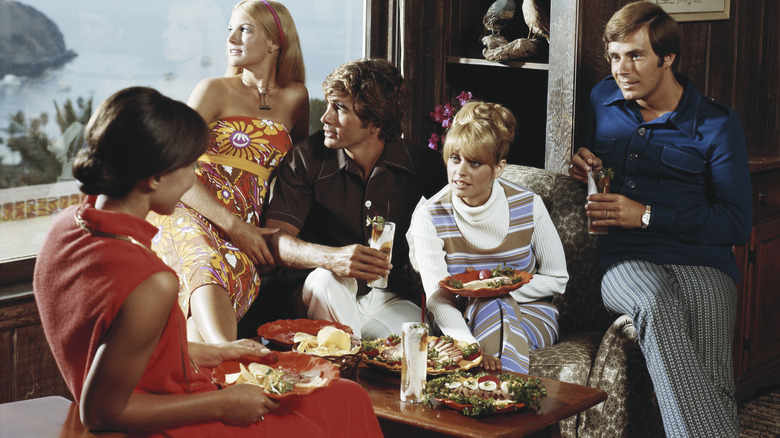
Ah, to be in the golden age of the middle class once more. The American dream was well and alive for middle class citizens in the 1970s, with home ownership, 2.5 kids, and a new car often attainable on one income. While a lot of middle class families still stuck to a budget when it came to groceries and expenses, tables and bellies were full. What, though, were they full of?
The image of a family sitting at the table with a home cooked meal, sides and all, is a solid fit for the '70s. You've likely seen "That 70s Show" – and what Mrs. Foreman pulled from the oven was pretty accurate to what middle class families put on their tables nightly. The '70s were more than just meatloaf and casserole dinners, though. Fast food and supermarkets filled with prepackaged and processed foods were all the rage, helped along by some iconic advertising campaigns. From home cooked meals to foods of convenience, here's what the middle class families of the '70s were chowing down on.
Meatloaf
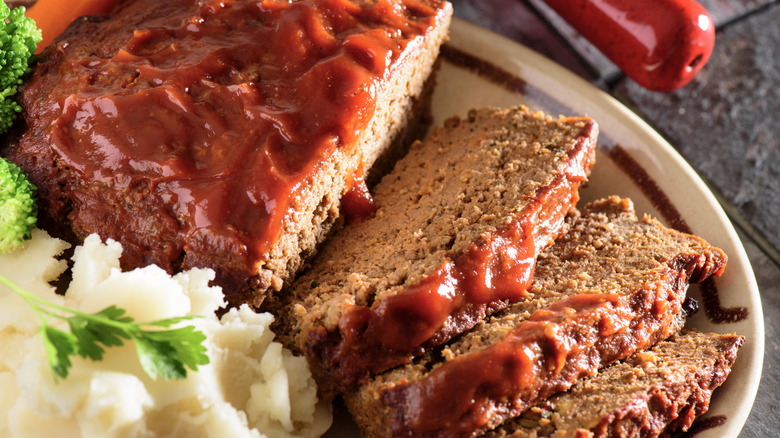
Meatloaf is the backbone of the nuclear family dinner table. When you think of a centerpiece for a stereotypical American dinner, a slab of meatloaf naturally forms in the mind. This is because the dish has a history of feeding families, using protein that could be extended with the use of cheaper ingredients like rolled oats or breadcrumbs. Beef was an incredibly popular protein for middle class families in this time period. Including ground beef in meals allowed for the meat to go further while satisfying the desire for a hearty protein. Meatloaf in particular provided a lot of food, and was a substantial meal that could fill both bellies and hearts.
While putting meatloaf on the table was a common occurrence in the '70s, it was normal for households to have their own versions of the dish. Many recipes were available, and meatloaf's relatively simplistic nature allowed for home cooks to get creative in their making. This is especially true for leftovers, which meatloaf could be trusted to have in a lot of families. The dish could be treated as ground beef, which could result in a meatloaf leftover sandwich or another dish entirely for the next day.
There was a dependability to meatloaf that families yearned for, especially during the mid-70s recession. When a platter of meatloaf was put on the table, the family knew what to expect from it. In a way, meatloaf offered stability to a family at the end of the day.
A Big Mac with fries and a Coke
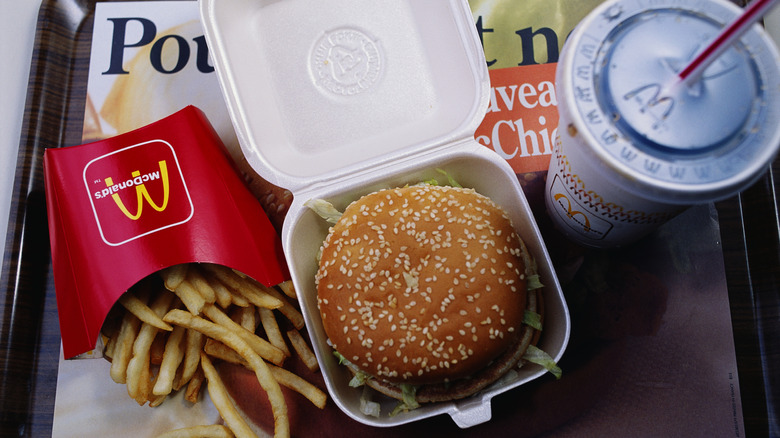
Most generations alive today grew up knowing what a McDonald's meal is, and even know kids ask for a happy meal when passing by the golden arches. The 1970s marked a time when fast food was something to look forward to. While today fast food is a quick drive-by convenience and excuse not to dig into the fridge, restaurants like McDonald's were a family treat. While not a total luxury, a trip to McDonald's was treated as a special family or even social outing.
The Big Mac was released in the late 1960s and saw massive popularity in the '70s and onward, with McDonald's selling a staggering amount of Big Macs every year. The burger even had its own jingle in the mid-'70s. Combos weren't really a thing yet, but families in this time period would pair the burger with a side of fries and, of course, a Coke. McDonald's has had a partnership with Coca Cola since nearly the beginning of the chain, and the two still remain tightly associated. McDonald's ads frequently featured (and still do) a bubbly Coke alongside a Big Mac, which helped customers crave the two together.
The Big Mac today compared to the one ordered by middle class families in the '70s are very similar on paper. They feature the same description and toppings, yet people remember vintage Big Macs as larger and overall more satisfying. Families would have been happier with the '70s Big Mac price, too.
Tuna (or any kind of) casserole
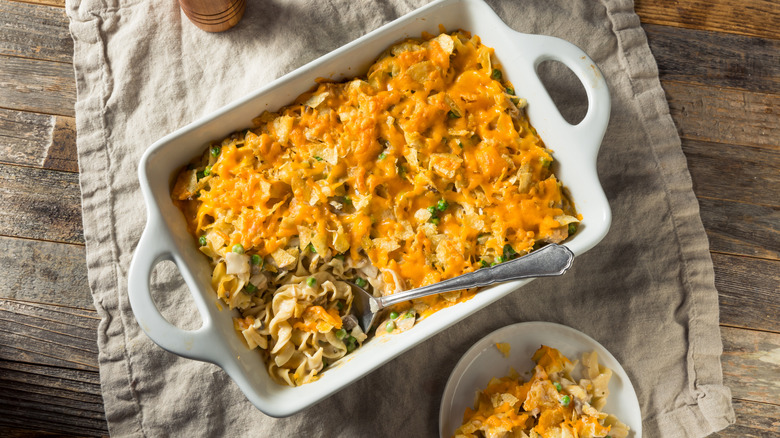
The casserole holds a special place in Americana culture and history. Anyone who spends a decent amount of time in the kitchen likely has at least one stand by casserole recipe on standby, as well as the ingredients in their cupboard. The great thing about casseroles, as many housewives in the '70s knew, is that they can be made simply and in one dish. All you really need to do is put all the ingredients in an aptly named casserole dish, do a little mixing, and pop it in the oven. As long as you don't forget it in the oven too long, you'll be met with a meal that can go right on the dinner table.
While the next-to-no-step assembly of a casserole is a plus, middle class families enjoyed the benefit of affordability as well. Casseroles could be made from ingredients usually already on hand in the pantry or ingredients that have a long shelf life. Canned tuna, condensed soups, dried pasta, and canned veggies were all popular ingredients of standard casseroles. Using pasta was a foolproof way of stretching ingredients to feed large families with not much cost involved. Fresher ingredients like ground beef could be included as well. As modern families look for more affordable and time saving meal ideas, casseroles are just the kind of '70s dishes that are making a comeback.
Fried chicken from fast food joints
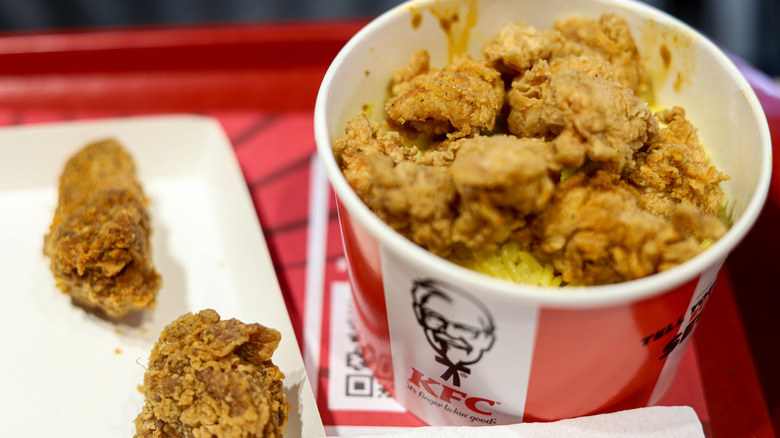
In today's world, it's normal for mom or dad to come home in the evening with a bag full of fast food or something quick for the family to eat. This might result in some excitement, but it's nothing like a kid from the '70s seeing the large red and white striped Kentucky Fried Chicken bucket stroll through the door. Back then, seeing a working parent come home with an arm full of fried chicken was akin to a special occasion and treat. While KFC was around for decades before the '70s, Long John Silver's was a new addition to the fast food scene, offering fried peg-legs (chicken drumsticks) that competed with Colonel Sanders.
Grabbing a family meal of fried chicken and sides was more expensive than a home cooked meal, but was one that a middle class family could splurge on from time to time. Feeding five to seven people at KFC cost around $7 back then, a price that all would happily pay today. It's also important to note that some believe the fast food fried chicken now doesn't even begin to stack up in taste or quality to that of the '70s. Seasoned and fried to perfection, the difference is one that those who enjoyed it back then distinctly remember.
Sugary frozen food, Pop-Tarts, and cereal for breakfast
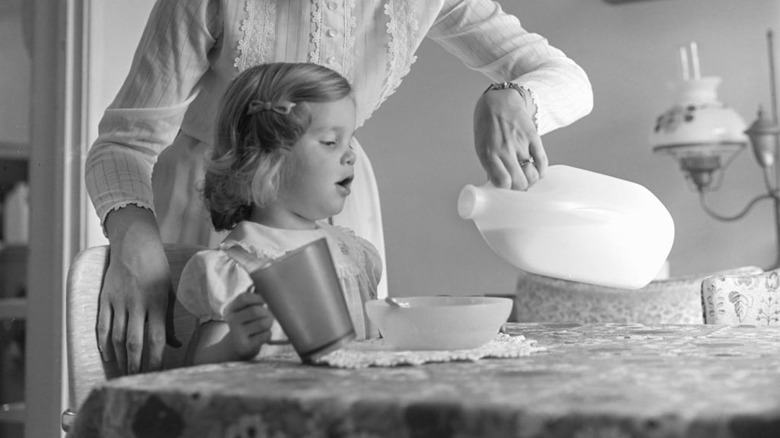
There's a reason Eleven from "Stranger Things" had such a love for Eggos – convenience breakfast foods were still having a big moment around the time the show was set. The vast majority of middle class homes had a toaster as an essential appliance in the kitchen, which was used most weekday mornings. Weeks were hectic with kids in school and parents, sometimes both, heading into work. Frozen morning meals like Eggos, which locked in its famous catchphrase in the 1970s, and Kellogg's Danish Go-Rounds were quick breakfast solutions. Pop-Tarts, though frequently eaten cold now, were marketed as toaster companions and were extremely popular during the '70s.
The 1970s were peak for cereal as well, and for similar reasons. Cereal provided a quick, low effort breakfast that kids had no complaints about. Colorful cereal boxes with partnerships were commonplace during this time. This was also the time period that iconic giveaways and prizes at the bottom of the cereal box were happening. Between advertisements, partnerships with media leading figures, and convenience, cereal had a chokehold on parents and kids alike in the '70s. Popular breakfast brands back then didn't look much different than today, with Kellogg's, Post, and General Mills leading the pack.
Hamburger Helper and Shake 'N Bake
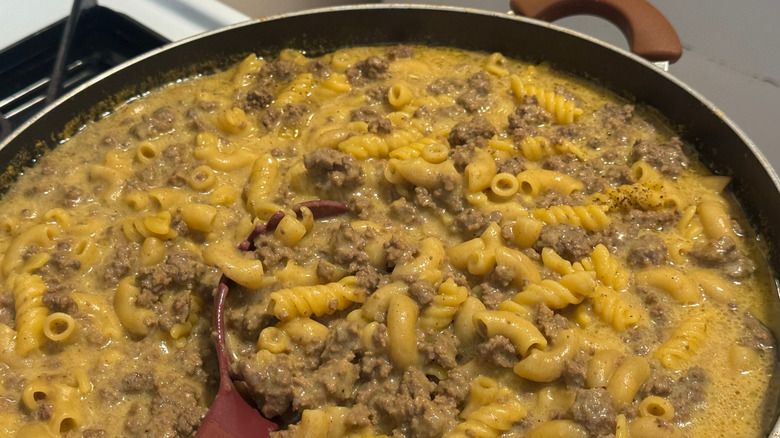
Meals in the '70s were typically centered around protein, and beef was incredibly popular. Actually, beef consumption was at its peak during the '70s. Ground beef was commonplace on middle class tables, as it was able to go further when combined with other ingredients. Hamburger Helper was introduced into the market in the early '70s, as a quick solution to crafting homemade meals with ground beef. The boxed meal kit eliminated the need to buy separate ingredients or to plan out a meal, as only the box and ground beef was needed to complete a family meal.
The use of chicken in meals was also on the rise in the '70s, as families saw it as a more budget-friendly meal component. Hamburger Helper's chicken equivalent was Shake 'N Bake, which actually was available for purchase a few years earlier. While Shake 'N Bake did not offer consumers a full meal in a box, it allowed them to enjoy breaded chicken without the need to fry. This eliminated a lot of time and effort in the kitchen.
Both Hamburger Helper and Shake 'N Bake checked two very desired boxes of the '70s middle class family. First, they had the convenience factor, which was so important for busy families. Second, they did not replace a home cooked meal. In fact, they aided in making a home cooked meal more efficient.
Spam and other canned good meals
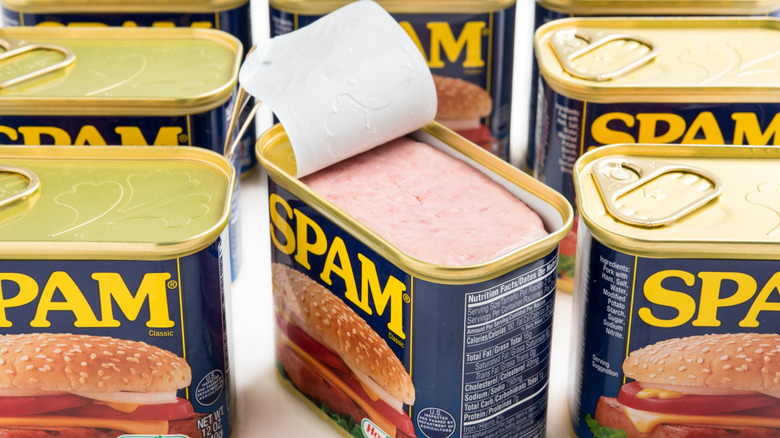
Keeping a stocked pantry was pretty easy in the '70s, thanks to the popularity and affordability of various canned goods. DIY canning was popular during this time for families who grew their own food. This cut down on costs, but heading into the grocery stores for canned fruits, veggies, meats, or even full meals (think Chef Boyardee) kept costs down for middle class families as well. Canned goods have been popular throughout the decades, and back in the '70s families could expect to pay less than 33 cents for a can of food — many times half that price.
Spam was an incredibly popular canned good, and is still on the shelves today with a cult-like following. The tinned meat cubes served as vital proteins for budgeting families, and could be used in any meal of the day: Sliced and fried for breakfast, included in sandwiches for lunch, and cut into smaller cubes for the ever popular casserole.
Buying canned goods also allowed middle class families to enjoy foods that weren't necessarily available to buy fresh in their region. Pineapple and other tropical canned fruits allowed homemakers to put together island inspired meals, like ambrosia salad and Hawaiian pineapple chicken.
A good American breakfast on the weekends
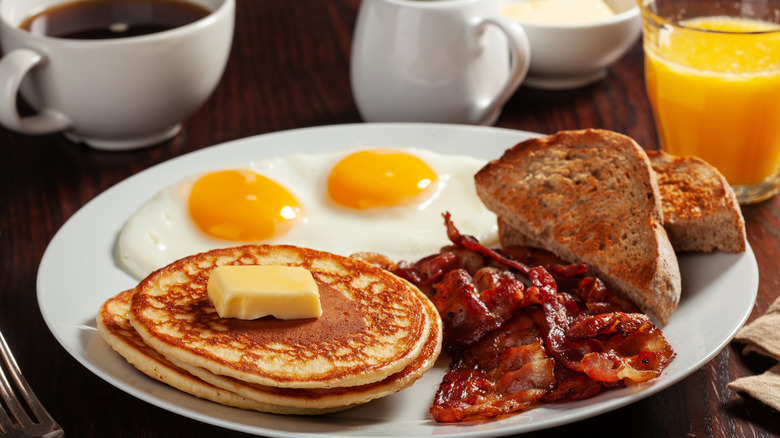
Pretty much every diner or breakfast joint in America has a menu item with some iteration of "Great American Breakfast," and it's typically one of the most ordered meals. It includes bacon or sausage with at least a couple eggs, along with toast and sometimes other side items. It's a version of this meal that would grace the tables of many middle class families' tables on weekend mornings.
After a week of rushed breakfasts that were either dug out of the freezer, popped into the toaster, or poured out of a cereal box, feasts were due to the middle class families. The weekends gave families an opportunity to slow down and come back together. They did this in the mornings over a full table after waking up to the smell of fried meat. Homemakers would spend the mornings putting the full food pyramid on the table, with a focus on the protein and starch levels.
As for what the middle class had to drink with their weekend morning feasts, coffee and orange juice were standard. What you may not expect, though, is that beverages such as Tang could be found on some breakfast tables during this time as well. Tang had a major push into middle class homes with the space age, and Sunny D just started hitting the market during this time. Though the color is their closest similarity, sugary drinks like Tang were treated as an orange juice substitute.
Campbell's soup or a bologna sandwich for lunch
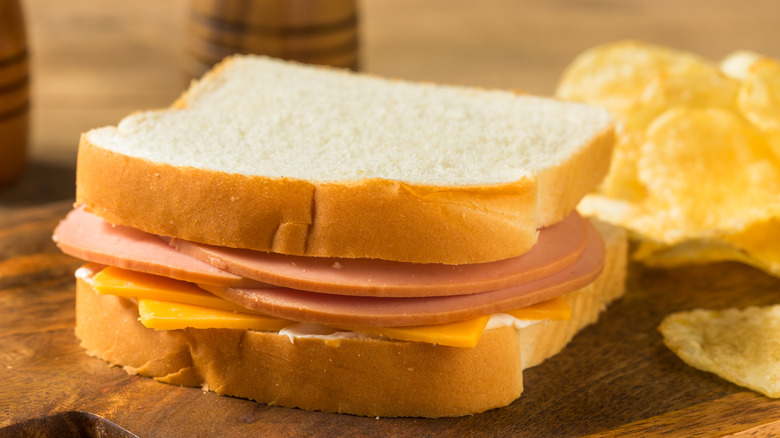
Campbell's and Oscar Mayer were two of the giants in the '70s when it came to brands and advertising, which naturally meant they were being heralded into middle class kitchens and lunch bags. Though both brands were around before the '70s, this decade was a game changer. Campbell's expanded its canned soup offerings with a Chunky line and Oscar Mayer came out with the iconic "My bologna has a name..." jingle that the entire American population still likely has buried somewhere in their psyche.
Campbell's soup is still known for being incredibly versatile. The canned soup can be used as it has always been intended: as a soup. However, certain varieties the brand carries have been used as a component to dishes since the early 20th century. Its versatility, both as a soup and as a vital casserole ingredient, made Campbell's a staple in the '70s kitchen pantry.
If you have never had a bologna (sometimes even fried) sandwich with mustard, you've never truly lived. There is something about the highly processed meat that goes just right with a slice of American and a few squirts of mustard. They knew this back in the '70s, too, and the combination in between a couple slices of white bread could be found in brown paper bags in schools across the country.
TV dinners
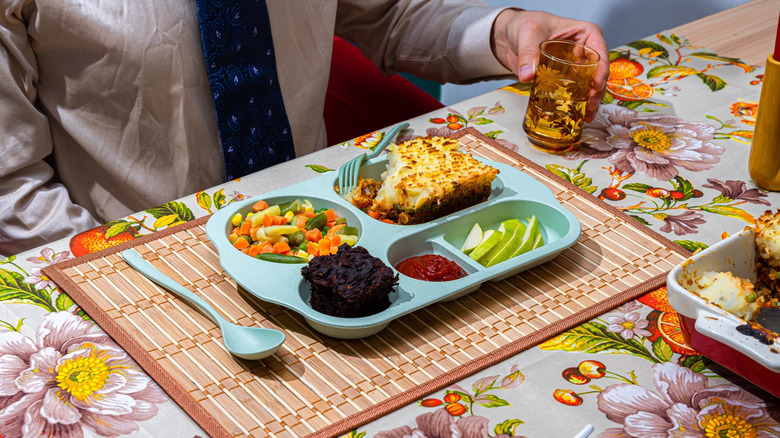
Frozen TV dinners became a hit when families started getting televisions in their home and wanted to spend time enjoying their new gadget. Most middle class families had a TV in their home during the 1960s, and that remained true for the 1970s. By the '70s, there were a number of TV dinner brands for families to choose from, like Swanson's Hungry-Man dinner.
Families typically had fold-out tables they would use in the living room to support TV dinners. This would allow for TV watching while chowing down on the food. These frozen meals often consisted of a protein with two or three sides, plus sometimes a small dessert. This seems fairly consistent to what you could find in the individual dinner aisle in stores today. However, many Reddit users agree there is a huge difference between TV dinners today and those of yesteryear. Those who were eating TV dinners in the '70s say that they tasted a whole lot better back then, and were of higher quality.
Pretty much anything encased in gelatin
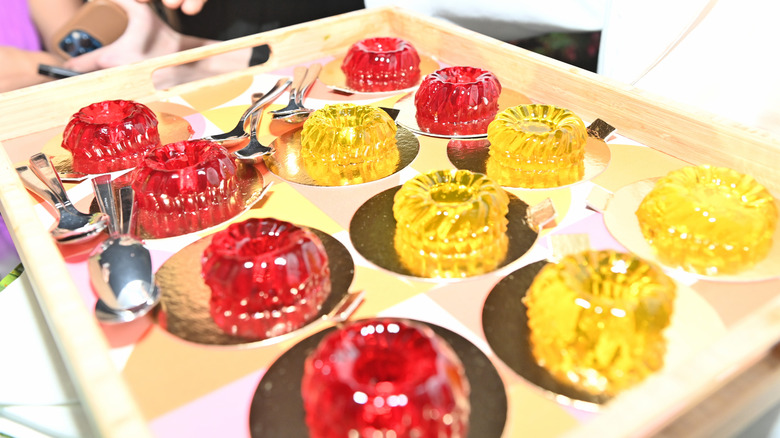
A lot of foods that found themselves on a middle class family table in the '70s are still pretty commonplace, but there are some key exceptions. One such deviation is gelatin dishes. Sure, we still have Jell-O and people still use gelatin, but households in the '70s were under the spell of wacky advertisements promoting eccentric and elaborate gelatin molds. This trend was leftover from the Jell-O craze in the '50s, and more geared toward middle class families essentially trying to stay trendy and out-do one another at dinner parties.
Gelatin dishes during this time period were made with molds, which often resembled a bundt cake. Many households had a collection of molds, including holiday themed shapes and different fruit molds. Instead of an actual cake, though, these molds were filled with colorful gelatin and a number of different foods. Many gelatin dishes stuck with fruit, but others branched out to more savory ingredients, like tuna or hard boiled eggs. The goal was to have an artistic and edible centerpiece for social gatherings, and these concoctions were used by homemakers as a kind of status gauge.
Fondue
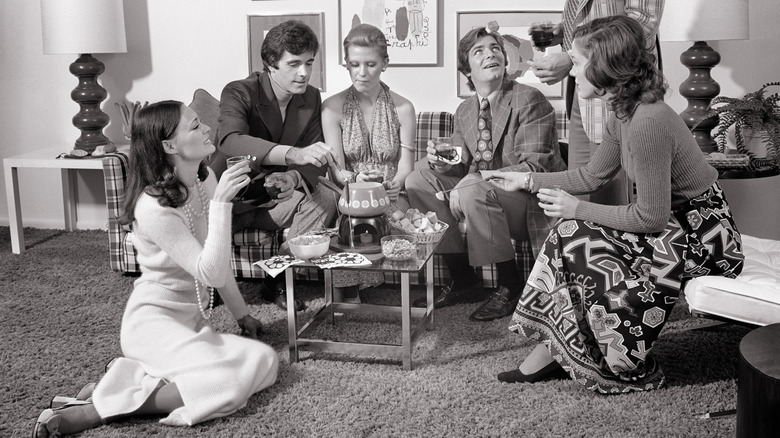
Those artsy gelatin centerpieces were second only to a fondue set-up at dinner parties in the '70s. Fondue took the '70s by storm, and we don't really have to look past our own modern day obsession with cheese to know why, especially when you add on our love of a good chocolate fountain. Fondue is basically the combination of the two: a pot of melted cheese used as a dip for practically anything edible. Popular edibles to push into the cheese would be little bits of meat, fruits, bread, or even vegetables.
A lot of middle class families had a fondue set-up that included a pot over a burner and multiple metal pokers that were used like one would a stick for roasted marshmallows. Instead of cooking the item on the poker, though, it would help the user coat it in melted cheese — yum. These fondue sets were used during dinner parties, social gatherings, or by families who just really loved dipping things in cheese.
The trend inspired a chain of fondue restaurants called The Melting Pot that started popping up in the 70s. You can still find The Melting Pot spread somewhat scarcely throughout the United States, and they still have an air of luxury and sociability about them.