

The 7 Best 6-Packs Of Beer Under $10
Like many consumer products these days, beer has gotten more expensive. In fact, compared to alcohol as a whole, beer inflation trends are higher. According to the Visual Capitalist, while costs of all alcohol for home consumption rose 16% between 2015 and 2025, in-store beer prices rose approximately 29% over the same period. And certainly from a drinker's perspective, 10 years ago all sorts of craft beer sixers from local breweries were available for around $10, while today those would run upward of $15 ... if you're lucky.
As such, what is the budget-minded beer lover to do? While there are still plenty of bland, nearly tasteless — or, even worse, skunky — adjunct lagers (not to mention malt liquors) on the market that remain available for less than $10 per sixer, those looking for a bit of flavor or quality with their suds are out of luck. Or are they? That's where we come in. Though the under-$10 6-pack of quality beer has mostly become a glittery unicorn, it is not irrevocably extinct (yet). Without further ado, then, here are six 6-pack picks that manage to balance reasonable beer flavor with affordability.
1. George Killian's Irish Red
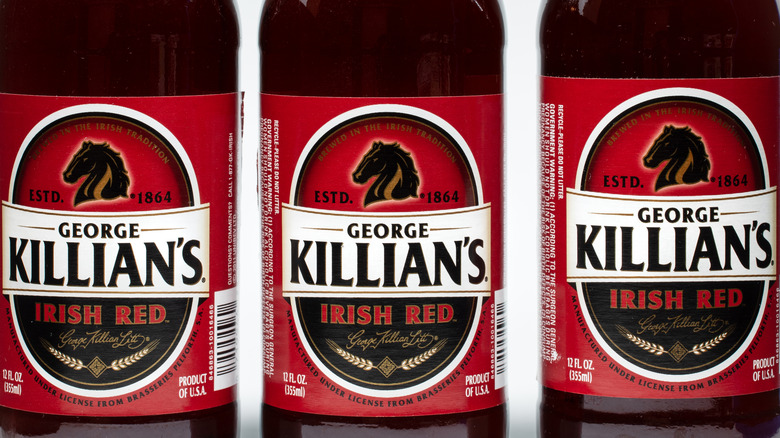
Supposedly based on an Irish red ale recipe from the historic Killian's Brewery in Enniscorthy, Ireland, founded way back in 1864, the U.S. rights to this brand were purchased by Coors in 1981 and the beer was introduced on the American market as an amber lager. During its heyday — the latter part of the 1900s into the early '00s — Killian's stood out as a flavorful alternative to the watery American lagers brewed with corn or rice.
This beer, on the other hand, utilizes caramel malts that are roasted slower and longer than traditional lagers, imparting both the beer's distinctive red color (no dyes are used) as well as its signature nutty sweetness. Being a lager, it remains crisp and dry on the finish, and is only faintly hoppy. Or, as one online reviewer puts it, it is a well-made beer with a "mildly sweet taste and champagne like consistency." Meanwhile, another calls out its usefulness as a food partner, due to its supreme balance of sweetness and bitterness.
Considering the vast selection of modern American craft beer culture, macro stalwart Killian's has become a hazy memory for most, even its biggest fans from two decades ago. And yet, it is still kicking around, offering a lager flavor that is richer and more complex than so many of its macro counterparts, all at a significant value.
2. Michelob AmberBock
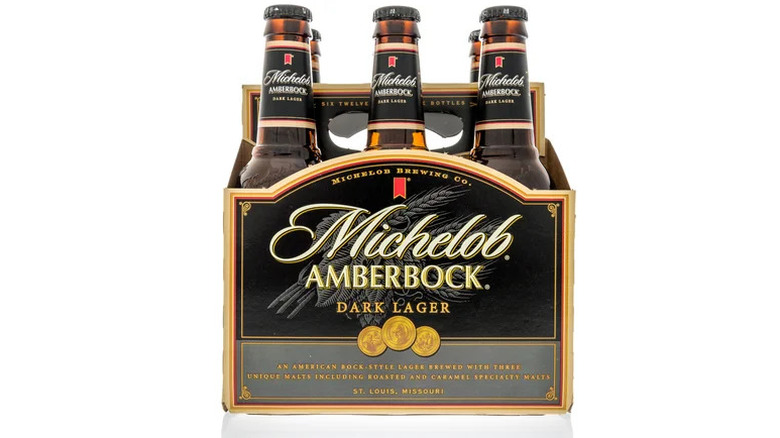
Introduced in the 1990s as an Anheuser-Busch alternative to the increasingly popular spate of microbrews, Michelob AmberBock was once highly regarded enough that it took home a bronze medal at the prestigious World Beer Cup in 1998. With the rise of the Michelob Ultra brand, however, it has become somewhat of an afterthought in the AB InBev portfolio, though can still be found sporadically around the country, and for a price that belies its continued quality ... especially for drinkers looking for something that features lots of flavor but isn't remotely bitter.
A bock-style lager, this beer is made with darkly roasted black and caramel malts, which impart a rich color and notes of mildly toasty, candied malt. Yet because it is a lager, it remains light on its feet and never becomes overly cloying or heavy on the palate, which makes it both easy to drink and versatile with food. "I love this beer!" writes one online reviewer, adding, "It is very easy to drink: not too bock; not too watery; not too fizzy; and especially, not too hoppy." Another points out how pleasantly mellow it is, noting that it is a great option for when "a penny is a penny and ya just wanna mellow beer."
3. Narragansett Lager
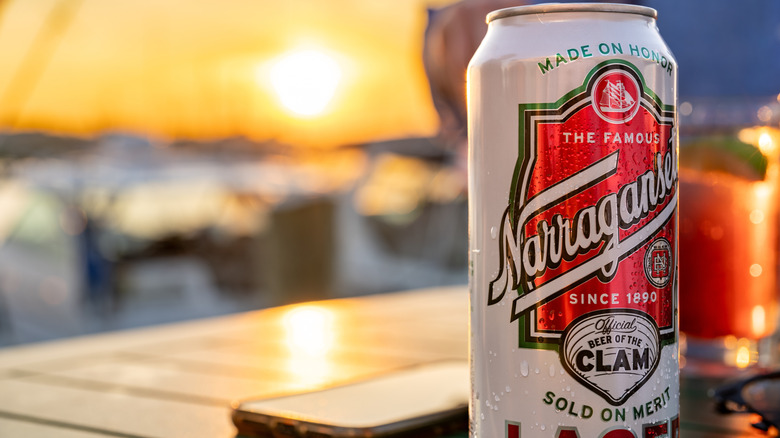
Narragansett is one of those rare brands — in the modern beer landscape — that hearken back to the days of the regional lagers that were popular in a particular locality, but not necessarily nationally. Beers that once ruled workhorse taprooms, such as Iron City, National Bohemian, Hamm's, and, of course Narragansett, the latter a New England icon due to its association with the Red Sox.
This beer isn't particularly memorable for its flavor — it's an American adjunct lager made with corn, after all — though it does provide a crisp, easy-drinking style that still manages to offer more taste and texture than popular light beers such as Bud Light or Michelob Ultra. One BeerAdvocate reviewer sums up the product's ethos nicely, writing, "I could see myself drinking several of these after doing yard work, hanging at the beach, or at a cookout." Similarly, Passable Beer Reviews calls it "a fine complement to a summer day spent eating seafood in a New England coastal town." Speaking of seafood, the brewery suggests pairing the lager with the salinity and slight sweetness of shellfish, calling clams and oysters the beer's optimal accompaniment.
While Narragansett dates back to the end of the 1800s in Cranston, Rhode Island, the brewery's modern comeback began in 2005, when a group of Rhode Islanders bought the then mostly forgotten brand from former brewing giant Falstaff. In 2021, Narragansett's modern brewery finally opened in Providence, RI, though most nationally available cans are still contract-brewed by Genesee.
4. New Belgium Brewing Fat Tire Ale
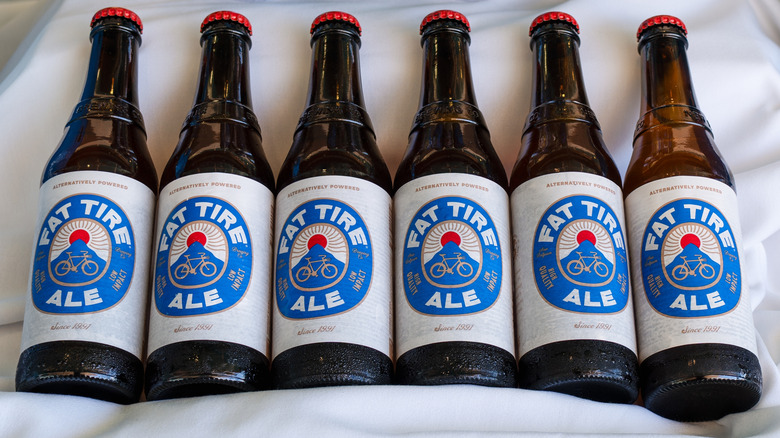
When it comes to iconic craft beers, Fat Tire Ale might not have quite the same name recognition as the likes of Samuel Adams or Sierra Nevada, but it should. This classic, Belgian-inspired, amber-adjacent ale has been brewed by Fort Collins, CO, mainstay New Belgium Brewing since the 1990s — way back when people called them microbrews, not craft beers. So when the brewery claims that it "introduced an entire generation to craft beer," this isn't just hyperbole.
That said, Fat Tire has seen several recipe tweaks over the years, as both the industry and beer drinkers' tastes have changed. What was once a malt-forward ale has, over time, become both lighter and crisper, evolving perhaps closer to a pale ale than its amber roots. Even after these changes, however, it remains impeccably balanced, with pleasant hints of toasted bread and caramel on the malty side, followed by a mild floral bitterness that adds crispness to the finish. Though today not a beer likely to excite craft beer nerds, it's a great intro to the style, or as one online reviewer puts it, an "enjoyable and basic craft beer."
The bottom line here is that for the price — which can slip slightly above $10 in some markets, but is reliably found for $9.99 or less in others — it's an absolutely fantastic buy. Additionally, New Belgium has recently leaned into a larger commitment to sustainability, with Fat Tire becoming the country's first certified carbon neutral beer.
5. Shiner Bock
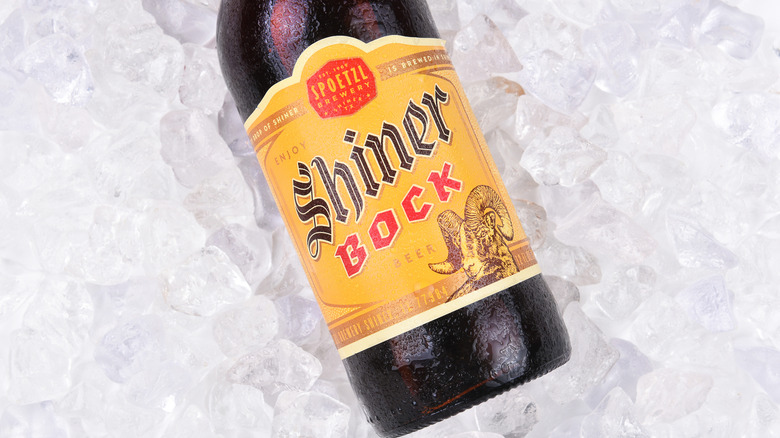
Considering darker beers tend to be enjoyed more during colder weather while lighter beers shine in warmer months, it might be somewhat surprising that Shiner Bock — a relatively dark-looking beer — has become so popular in the often sweltering state of Texas. But here's the thing: Color does not necessarily indicate heaviness on the palate, and while Shiner Bock absolutely showcases a nice amount of sweet, nutty, and caramel notes, it also has a low ABV (4.4%), and thus remains light, clean, and deceptively easy to drink, even as temperatures rise.
"I get why this is their biggest seller and most popular beer," writes one reviewer, adding, "It's nicely balanced and actually kind of light despite being a dark beer style." Another describes it simply as a "very smooth session beer." In some ways, it might be said that Shiner Bock is the antithesis of the many IPAs that can overwhelm the craft beer market.
Though technically named the Spoetzl Brewery, all the beers produced in Shiner, TX, carry the town's moniker. And though this regional mainstay (since 1909) is technically a craft brewery under the Brewers Association definition, Shiner is now distributed nationally. Like Fat Tire, though these 6-packs can occasionally pop slightly above our $10 threshold in more expensive markets, they can reliably be found for $9.99 or less in many areas.
6. Yuengling Original Black & Tan
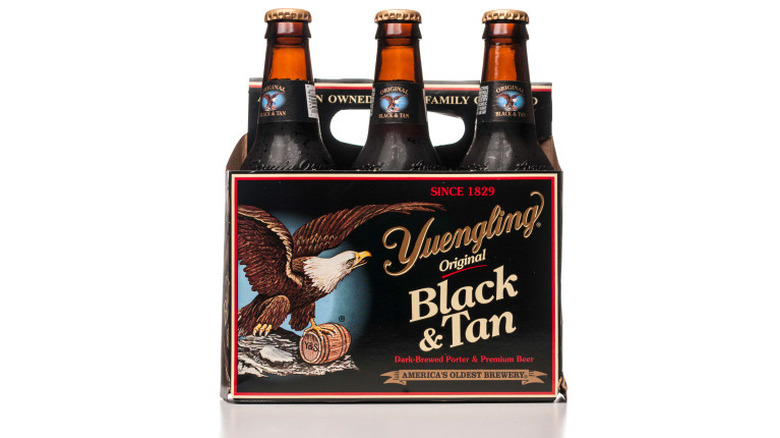
A traditional black and tan is a beer cocktail consisting of pale ale (typically Bass, though sometimes pale lager such as Harp is used) topped with stout (usually Guinness). Yuengling's pre-mixed version, on the other hand, combines the brewery's porter alongside the famous Yuengling lager. In a way it's the best of both worlds, offering the roasty, malty notes of a porter, but in a less heavy product due to the crisp, clean finish of the lager. It's a classic combination for a reason.
Beer Advocate reviewers tend to agree. One, for example, notes how the porter flavors mix well with the light body and easy-drinking aspects of the lager, adding that "Even on a summer day it's light enough." "A solid, approachable hybrid that leans into drinkability over intensity," writes another reviewer, adding, "It finds its niche as a balanced, session-friendly option that performs well within its intended style." Yet a third reviewer adds that "there are no off putting aftertastes and its pricing is excellent."
While Yuengling is today a relatively large beer producer, compared to the heavy hitter macros such as Bud, Miller, and Coors, it still technically qualifies as craft, and generally offers more flavor and personality than other mass-market beers. And the price, of course, remains nice. A 6-pack of Black & Tan — or, for that matter, any of Yuengling's other popular styles, such as Lager, Light, or Flight — sits well below $10 in most markets.
7. Bonus Pick: German Lagers
While almost never regularly priced less than $10 for a 6-pack, there's a group of consistently well-made and refreshing lagers (typically helles or pilsner, to be precise) imported from Germany that can often be found either slightly above the $10 threshold, or sometimes on sale for less. Take Spaten's standard lager, a Munich Helles style, that pairs a lightly biscuity sweetness with a crisp, clean finish, for example. We found this one in many stores for around $10.99, and occasionally as low as $8.49.
Additional brands that sit in this category — meaning deliciously simple all-malt lagers that punch above their weight, price-wise — include Warsteiner Premium, Bitburger Premium Pils, Krombacher Hell or Pils, Radeburger Pilsner, Hofbrau Original, and possibly others. Again, while some of these German beauties may creep up to $13 or $14 at times, mindful shoppers will also be able to score any or all of them as under-$10 deals when the occasional opportunity arises.
Methodology
To determine the cost of a 6-pack for these (and other) beers, we looked through as many store prices as we could find online. Obviously we couldn't travel to stores in every U.S. market, so we had to rely on what we could find at stores that offer online shopping or those that publish their prices through Google and other similar resources.
One additional caveat here is that alcohol pricing and taxation can vary widely, not only state-to-state but market-to-market, so it is virtually impossible to give a definitive standard price for any beer that will apply to every area. In some of the more expensive markets, for example, it may be difficult to find even the beers mentioned above for less than $10, while in others, these may be comfortably a few dollars less than our threshold. As such, we did the best we could to balance quality with relative availability at a price point below $10.
To evaluate each beer's quality, we took into consideration both personal experience with all of these beers as well as online reviews from a variety of available sources, particularly Beer Advocate.