

Why BBQ Ribs Taste Better In Restaurants
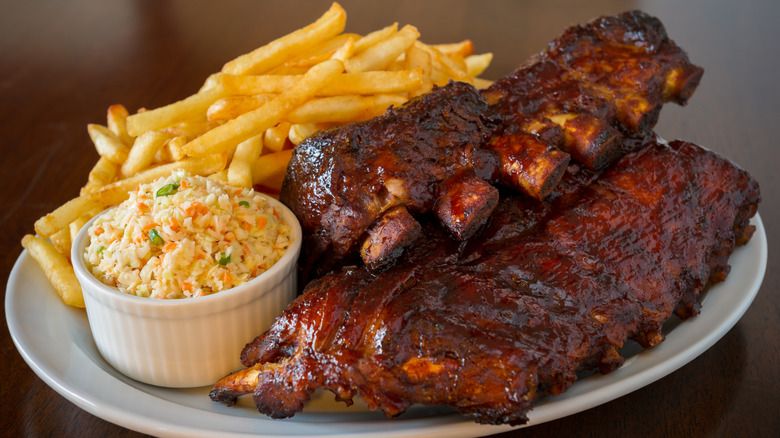
Ordering a giant rack of ribs at a restaurant is a special commitment. Your hands are going to get messy, and you have to gnaw around the bones to get every morsel of meat. You may even smear sauce all around your mouth if you're really going to town. Although the experience is a bit wild, it's always satisfying and memorable. If you've ever tried to recreate that magic at home, your efforts may have fallen flat. It's a tragedy like no other: You invest so much time and money into those ribs, and they turn out dry or not that flavorful compared to what you order at a restaurant. Why is that?
To get to the bottom of the issue, Food Network celebrity chef Marcus Samuelsson has shared his valuable insights. Samuelsson is the founder of over a dozen international restaurants, including Vibe BBQ in NYC and a new Vibe BBQ location in Nassau at Grand Hyatt Baha Mar. A highlight of this menu is an array of smoked meats, including K-Town Pork Ribs. These succulent ribs are bursting with flavor because they have a gochujang glaze and are topped with sesame seeds. Needless to say, Samuelsson knows what he's doing when it comes to infusing flavors into each dish he creates.
Are you salivating at the idea of being able to make restaurant-style ribs at home? Read on to learn the secrets that chefs use to make ribs so incredible, courtesy of Chef Marcus Samuelsson.
Restaurants work directly with butchers
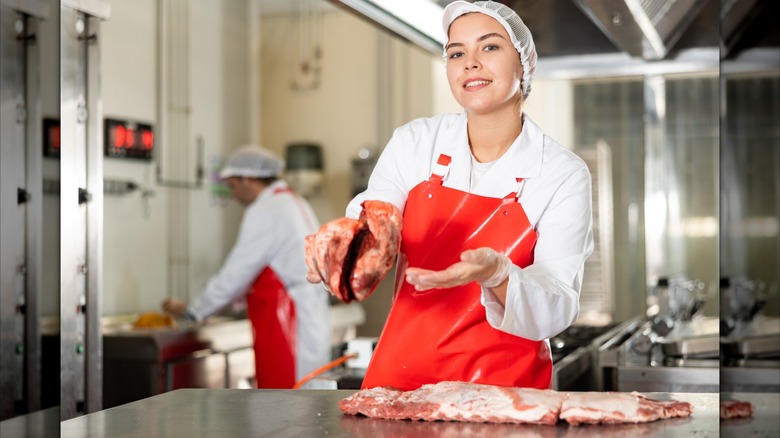
The first mistake you might make when cooking ribs is shopping at the grocery store. Sure, the supermarket may have a decent variety of ribs to choose from, but you'll never get the best quality possible. Marcus Samuelsson is a big believer in getting to know your local butcher. They can hook you up with the nicest cuts of meat that are super fresh. "You want to start with a great butcher," Samuelsson advises. "It's all about building that relationship and knowing where your food comes from."
It makes sense if you think about it. One of the top reasons why Texas Roadhouse is so good is that every location has its own in-house butcher. Each cut of meat is perfect, and the butchers ensure that the fat ratios are ideal. As soon as you let your butcher know that you're making ribs, they'll grab an outstanding rack for you.
Cooking isn't always easy when you're exhausted, and making an extra stop at the butcher may not be ideal for your average weeknight meal, but ribs should be special. Take the time to head over to your local butcher, and you'll be blown away by how much of a difference this one extra step can make.
Home cooks may be cooking the wrong type of ribs
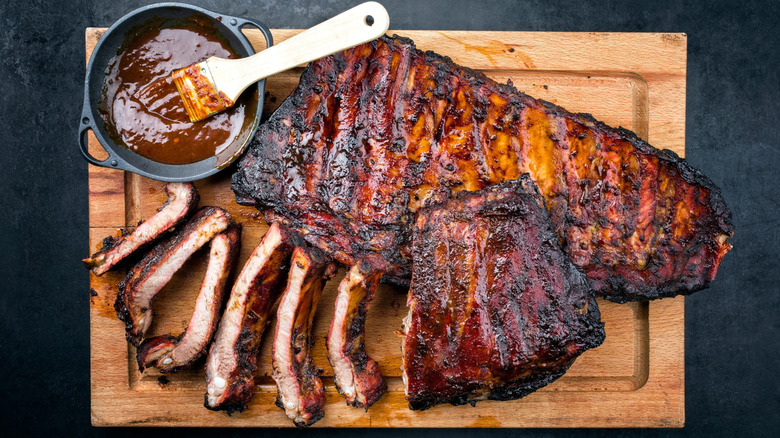
The average diner may think of baby back ribs when they get a craving for ribs due to Chili's iconic jingle. However, there are so many types of ribs that are worth exploring. Spare ribs, short ribs, and country-style ribs are just a few options.
Out of all of the ribs available at a butcher shop, Samuelsson's favorite pick is St. Louis ribs. "For me, whether it's at my Vibe BBQ restaurant or cooking at home, it's all about the St. Louis cut," he says. "It has this beautiful fat-to-meat ratio. It's incredibly forgiving for home cooks and delivers that rich, craveable flavor every single time." Forgiving truly is the keyword here. If you hand any type of rack to an experienced chef, they already know exactly what to do to get juicy results every time. However, home cooks deserve to equip themselves with the most useful tools to make their job easier.
When you ask your butcher for St. Louis ribs, the breastbone, cartilage, and other bits that are tricky to remove are already gone. The ribs are cut in a way that maximizes contact with the grill or smoker so you can maximize flavor. As if this news wasn't good enough, St. Louis ribs also tend to be cheaper than baby back ribs, so you really can't lose with this pick.
Restaurant chefs always remove the membrane from ribs
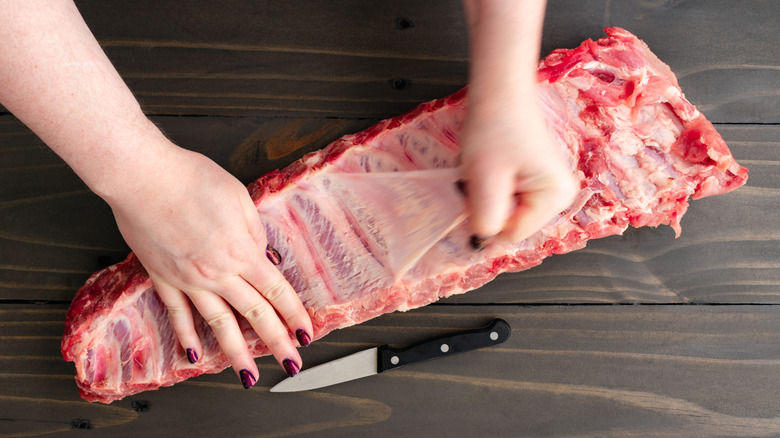
If you've gone out of your way to buy ribs from your local butcher, you may feel like you're ready to go. Samuelsson warns home cooks to never forget to prepare the meat before you start infusing flavor. It's true that a butcher can remove some of the prep work for you, but most shops still leave the membrane that covers the ribs intact.
"The very first step is pulling off that silver skin; that tough membrane on the back of the ribs," Samuelsson instructs. Why is this step so crucial? "You have to remove that so the flavors and smoke can actually penetrate the meat," he explains. This simple rib prep tip helps deliver tender meat as well, because the membrane gets chewy if you leave it on. You'll never be able to achieve fall-off-the-bone ribs if you forget this step.
Removing the membrane isn't too challenging, thankfully. All you need to do is insert a knife carefully between the silvery membrane and the meat to create a small tear. Afterward, you can grab the membrane by the opening and carefully rip it off. As Samuelsson says, once that barrier is gone, nothing is standing in the way between your dry rub and the meat. You'll get much tastier results.
Home cooks might not dry or wet brine their ribs
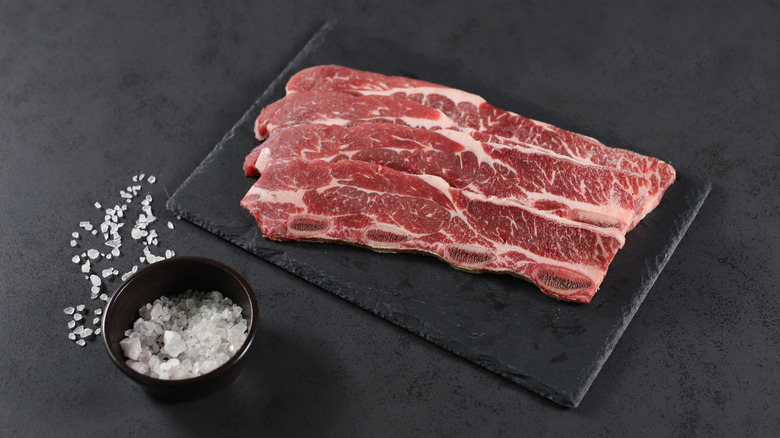
Removing the membrane from the ribs is crucial, but you're not finished prepping yet. "After that, we're looking at a brine, either wet or dry, to start building those layers of flavor and lock in the moisture," Samuelsson notes. Many home cooks are confused about brining because different types of meat fare better with either a wet or dry brine.
Ribs can actually turn out quite juicy and flavorful with either type of brine, but Samuelsson shares, "I'm a big believer in the dry brine," adding, "It's just a beautiful way to slowly dry-age the pork while keeping all that essential moisture inside the protein. It intensifies the flavor profile in a way that is trickier to achieve with a wet brine."
Another benefit of dry brining is that you don't need to hunt for a giant container that can hold your ribs and the brining liquid. The process couldn't be more straightforward. The most basic dry brining technique is to sprinkle ½ teaspoon of kosher salt per pound of meat directly on top of the ribs, then let them rest in the fridge for a minimum of three hours. Dry brining the night before can lead to even juicier meat, though.
Restaurant chefs aren't afraid to experiment with spices
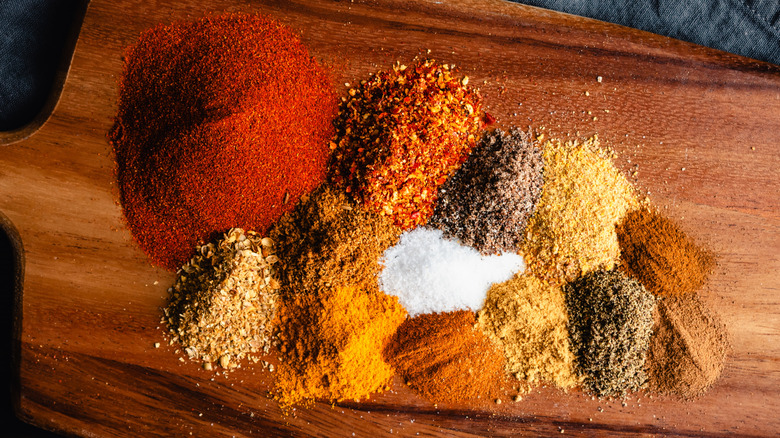
Whether you're cooking meat, vegetables, sauces, or anything else, you need to have the right spice blend on hand to make everything taste phenomenal. This is why it's worth learning about spice blends from around the world so you can get better at flavoring your food. Samuelsson is a big believer in blending spices from various cultures to create the most satisfying, complex flavor profiles. Once he's ready to whip up a dry rub for his ribs, he thinks about building a show-stopping foundation.
"I like to think globally when I build a rub," Samuelsson muses. "Brown sugar and smoked paprika are foundational, but for me, bringing in curry powder is a total game-changer. When that curry hits the smoke and caramelizes right onto the pork, it creates this incredible, unexpected layer of depth. It tells a completely different and delicious flavor story."
The takeaway is to get creative when you're looking through your spice cabinet. If you're ready to experiment, you could try this zesty rib rub recipe that borrows flavors found in Mexican cuisine. Chipotle and ancho chile powder are two ingredients that can help you build smokiness and add a little kick effortlessly. The ultimate goal is to find the ideal spice rub that hits the most important notes: sweet, salty, smoky, and a bit earthy. Some folks may enjoy infusing some heat or tanginess as well. Keep tweaking until you find your absolute favorite combo.
Home cooks sometimes try to build too much flavor
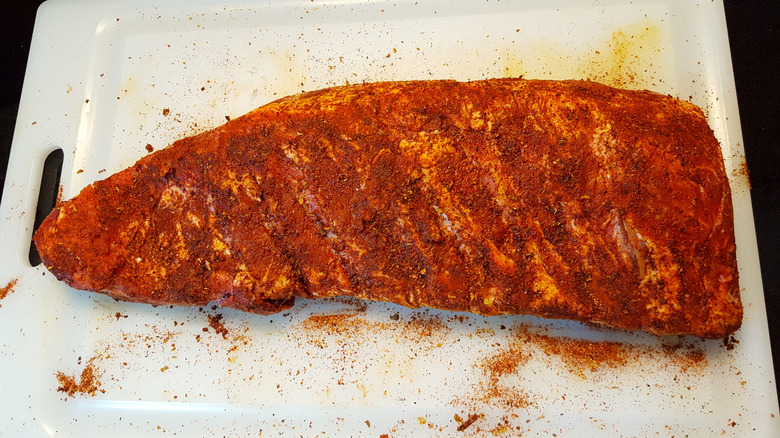
If you take one bite of ribs from a restaurant, your taste buds will light up. Restaurant chefs work all kinds of magic to build complex flavors. When you start working in the kitchen, it's definitely possible to go too far when it comes to creating layers. From brining to marinating and dry rubs, it's understandable if your head starts spinning. There's even more room to add flavor if you also consider basting and glazes. Samuelsson urges home cooks to slow down. Sometimes the best approach is the simplest one that can do all the heavy lifting for you. He believes that a solid dry rub is the key to phenomenal ribs, no marinade necessary.
"Listen, a great dry rub does the work of both," he says. "You're essentially dry-aging and marinating at the exact same time. But yes, you can absolutely go overboard! At the end of the day, you have to taste the pork. The spices are there to elevate and celebrate the meat, not hide it."
His point is a great reminder when cooking any type of meat. Each step along the way, you should ask yourself if you're helping the meat's natural flavors shine. The last thing you'd want to do is overwhelm your senses after putting so much labor into your ribs.
Restaurants have access to impressive appliances
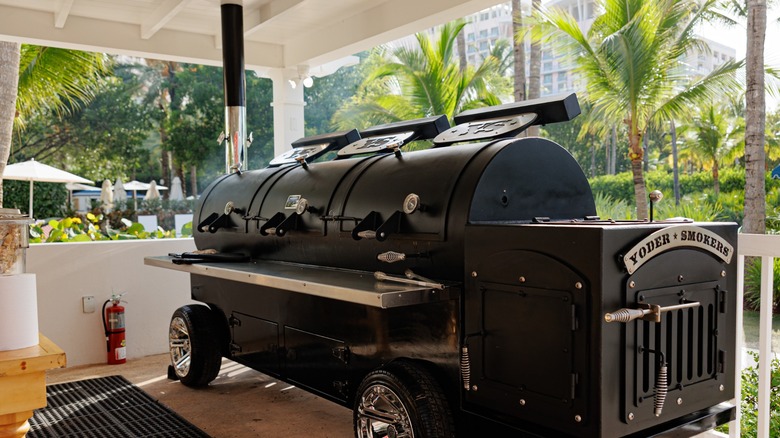
One of the most obvious reasons that restaurant food often tastes better is that home cooks don't have access to expensive commercial equipment with all of the bells and whistles. Samuelsson agrees that restaurant equipment can be quite awe-inspiring. He says, "At my Vibe BBQ restaurant at Baha Mar, we use these gigantic commercial smokers and very specific woods. I love bringing in maple and pimento wood for that unique aroma."
It's certainly discouraging knowing that buying a commercial smoker for your house will likely never make financial or logistical sense. Still, this hurdle shouldn't stop you from getting the most out of the appliances you have. A backyard grill may be humble, but there's a reason why we always get excited to clean it once the weather starts warming up in the spring. If you're dedicated to barbecuing, you could even buy a smoker that's appropriate for a small backyard. In addition to killer ribs, you can also make smoked brisket, chicken wings, and so many other impressive meats.
Samuelsson reminds home cooks to avoid overlooking the power of cooking with wood. He acknowledges that the maple and pimento varieties he uses at Vibe BBQ aren't always the easiest to find. To remedy this, he suggests, "apple and hickory are fantastic and accessible." Wood can impart a lovely smokiness that you simply can't achieve with other cooking methods.
Home cooks may not be taking advantage of the wrap technique with tinfoil
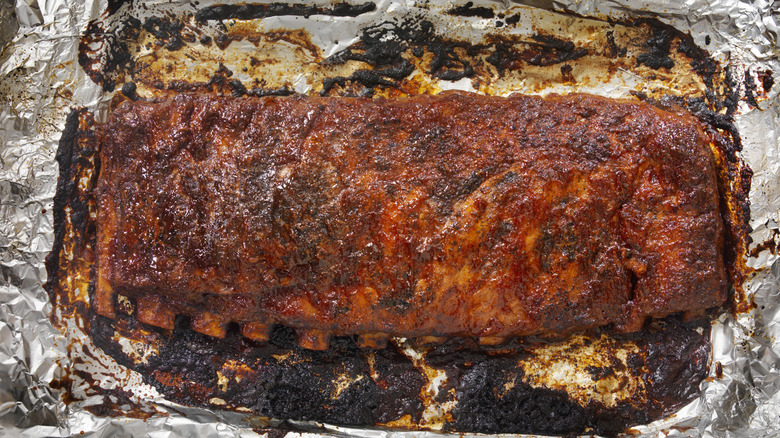
Any home cook who's worried about their ribs drying out during the low-and-slow cook needs to add one kitchen staple to their arsenal: tinfoil. This simple tool is a darling in the barbecue world because it helps promote even cooking. Folks who love camping can also make entire meals in a tinfoil packet. When it comes to ribs, though, Samuelsson has a genius hack that infuses more moisture into the meat.
"The biggest trick for the home grill is the wrap," he begins. "You want to wrap your ribs in foil with a little chicken stock or pork fat. Let it steam in there; that's how you get that tender, fall-off-the-bone magic right in your backyard." He explains that the steam this technique creates yields perfect ribs every time.
Another perk is that the foil wrap will also make your cleanup easier. Of course, you're still going to want to give your ribs some direct contact with the grill toward the end of the cooking process to develop a bark. Wrapping them for the majority of the cook time will keep everything together nicely, though, so you won't need to worry about losing any bits of meat that get stuck to the grates.
Restaurant chefs always cook at the right temperature and use the best techniques
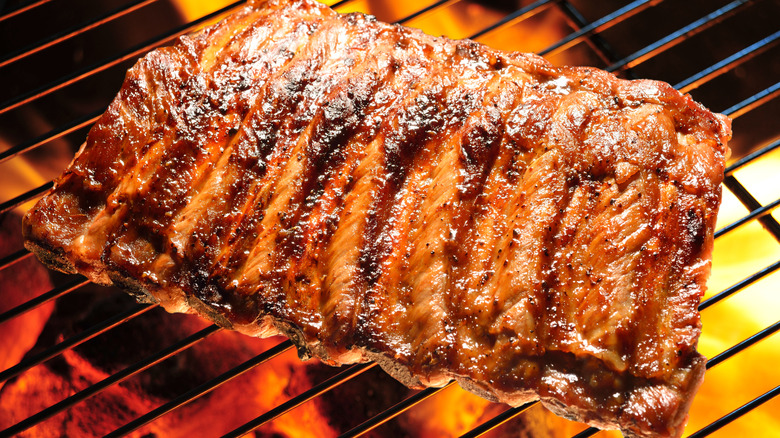
One of the most common mistakes people make when cooking ribs is simply overcooking them. We've all heard about barbecue restaurants that smoke their meats for an entire 24 hours, which sounds super impressive. Trying to recreate this type of meat at home can be disastrous, though. According to Samuelsson, a home cook can enjoy juicy ribs in only three hours. You definitely need to give the ribs time to tenderize, but cooking them too long can dry them out.
"For the home cook using that wrap technique, you want to hit 325 F for about three hours," Samuelsson instructs. "And do not open the lid! You have to trust the journey. Every time you peek, you lose that beautiful heat and smoke. Just step back and let it do its thing."
Restaurant chefs know what's going on behind the scenes, but it can be difficult for a home cook to relinquish control. Three hours seems like a long time, but you need to let go of any anxiety about burning the meat. If you can dump ingredients into a crockpot and walk away for eight hours, you can also do the same with your grill. Checking the meat will cost you big time in terms of flavor and texture, so set your timer and busy yourself with side dishes or just grab a cold drink and relax.
Restaurant chefs use brown sugar to build a beautiful bark
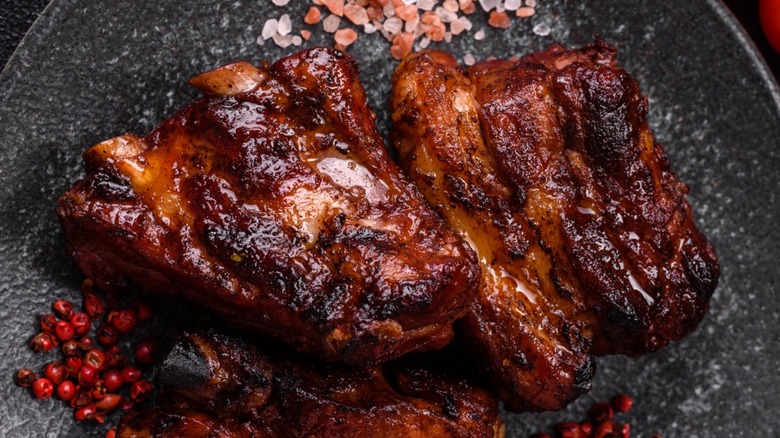
One reason people can't get enough of barbecue ribs is the glorious bark that forms on the exterior of the meat. When ribs have the chance to finish cooking in direct contact with the grill, the meat develops a magnificent bite and unique flavor. Restaurant chefs let brown sugar do a lot of heavy lifting during bark formation. Samuelsson explains, "if you want that incredible, sticky, caramelized bark on the outside, brown sugar is your best friend. It gives you that beautiful, deep crust that everyone fights over."
With heat, brown sugar caramelizes to make the meat a little crunchy and complex. The key is to add the glaze at the end of the cooking process or else the sugar will burn and ruin the taste of the ribs. Some home cooks have shared online that they've had tasty results letting the ribs cook for 45 minutes after glazing, but most folks agree that the ideal cook time is between 10 and 30 minutes. That gives the glaze enough time to caramelize and get tacky, which is the perfect texture people expect from finger-licking-good ribs. It's definitely better to be on the cautious side after applying your glaze, because you can always throw the rack back on the grill if the bark isn't developed enough. However, you can't undo the bitter, burnt taste from overcooking.
Home cooks may not make their own glazes
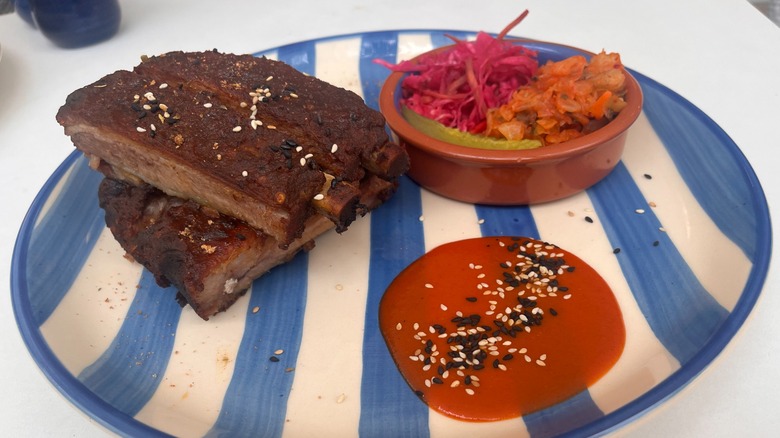
People have strong opinions when it comes to barbecue sauce. Creating a ranking of grocery store barbecue sauces is a major undertaking since there are countless options lining the shelves. Even if you've found a store-bought sauce that you love, Samuelsson urges you to try making your own if you're taking the time to make ribs at home. Being in charge of the ingredients allows you to create a more nuanced flavor profile that takes your ribs to new heights.
"Make your own," Samuelsson encourages, adding, "It's so simple and it brings so much flavor to the dish. Whisk together some Dijon mustard, soy sauce, fresh ginger, garlic, a little chile for some heat, and honey for that sweetness. It hits every single note on your palate; sweet, salty, spicy, and a little funky." The best part is that you know the glaze is fresh and high-quality. That fresh ginger will wake up your taste buds, and the honey will taste so much better than the refined sugar and high-fructose corn syrup that plagues so many prepackaged goods on the market.
If you're a fan of basic barbecue sauce, it's easy to whip that up as well. Ketchup, brown sugar, Worcestershire sauce, and a handful of spices can create a comforting, familiar sauce that pairs beautifully with ribs, chicken, and other barbecued meats. Once you try making your own sauces and glazes, you'll never want to go back to the store-bought stuff.
Restaurant chefs are trained to have an eye for detail and passion

Sometimes, foodies romanticize professional chefs. In actuality, the gig is extremely grueling. You can't become a restaurant chef unless you have the passion and determination to fight the sweat, exhaustion from standing on your feet, rush hours, customizations, and the pressure of perfection. The latter factor alone can make a huge difference when it comes to a home-cooked meal and one that's served in a restaurant.
Samuelsson highlights the importance of meticulousness. "It's simply the attention to detail," he explains. "In a professional kitchen, we are obsessing over every single step of the process, from the sourcing, to pulling the silver skin, to the rub, the smoke, and the rest." It's mind-boggling to stop and think about everything that goes into creating one plate of food at a restaurant. The fact that we get to enjoy a beautiful presentation and outstanding flavors without a care in the world shows how much thoughtfulness goes into any lovely dining experience.
Despite this major difference in attitude and energy, Samuelsson believes that home cooks can hone their skills without the stressors of a commercial kitchen. He promises, "if you bring that same passion, love, and focus to your backyard, you can create something truly magical at home."