

5 Popular Kitchen Appliance Brands Owned By Whirlpool
The appliance giant known as Whirlpool began its existence as the much smaller Upton Machine Company in 1911. Originally a family business, it made a name for itself by building then-cutting edge laundry devices like the electric wringer washer. The brand evolved multiple times, becoming the Nineteen Hundred Company in 1929 and Whirlpool in 1950. The company subsequently expanded its portfolio far beyond washing machines and is now a household name for kitchen equipment, like ranges and top-rated refrigerators.
Don't think you have a Whirlpool appliance in your house? Think again. Through a series of acquisitions, the company now also owns a number of other common kitchen brands, including KitchenAid, Amana, Maytag, JennAir, and Insinkerator, among others. The product lineup doesn't include electric wringers anymore, but changing with the times has come with significant success. All told, Whirlpool and its other brands saw over $16 billion in net sales in 2025. Perhaps an item from one of these subsidiaries is sitting in your kitchen right now.
KitchenAid
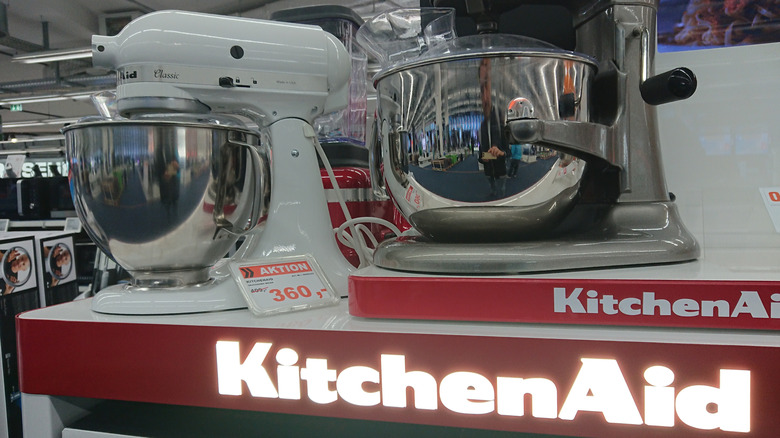
The story of KitchenAid is inextricably linked with an Ohio-based engineer named Herbert Johnson, who came up with a mechanical mixer that bypassed the need for a manual one. It was called the H5, first sold by the Hobart Company in 1914 in a 60-quart commercial size. Years later, Hobart released a household version under the name KitchenAid and later widened its range of offerings.
While Hobart still makes commercial kitchen equipment, it sold the KitchenAid brand to Whirlpool in the 1980s. This effectively added small appliances to the latter company's range of offerings. But Whirlpool didn't secure KitchenAid easily. Although the two companies initially announced the deal in January 1985, it was held up until the following year by a lawsuit from two dishwasher manufacturers who unsuccessfully argued the merger would reduce competition.
Since then, KitchenAid has become a top appliance brand in the United States. The stand mixers still remain a cornerstone of its business. However, now the product line also includes small appliances like blenders, rice cookers, and coffee makers as well as larger ones like refrigerators, dishwashers, ranges, and hoods. In 2018, Ohio Business Magazine reported that KitchenAid's Greenville, Ohio, factory manufactured around 3 million stand mixers annually, so it clearly remained an important part of the business.
Maytag
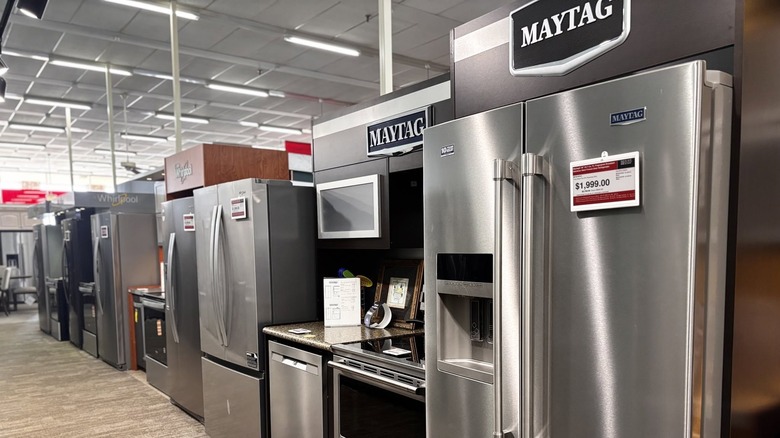
Before Maytag started making kitchen appliances, its claim to fame was a hand-cranked clothes washer that debuted in 1907. The company struck gold in 1922 with the Gyrafoam washer, which used a tub with an agitator at the bottom that helped people clean clothes more effectively. Maytag's time in the kitchen appliance business has been less steady than its dominance in laundry equipment. The brand introduced ranges and refrigerators in 1946, later discontinuing them in 1955 and 1960, respectively. Eventually, Maytag acquired other appliance manufacturers that allowed it to expand its product line. One significant milestone was the acquisition in 1986 of Magic Chef, which allowed Maytag to produce everything from home refrigerators to vending machines.
Whirlpool has owned Maytag since 2006, and the company now manufactures a line of refrigerators, ranges, dishwashers, and microwaves alongside the laundry equipment the brand has been known for. Durability is the word here. In 2019, a group of appliance repair technicians known as Puls conducted a survey among its own members to compare different brands (via CNET). They found that Whirlpool and Maytag had the most reliable items.
Amana
Far from a household name, Middle Amana, Iowa, has around 740 residents, per the U.S. Census Bureau. Despite its small size, the unincorporated community has had a pretty large influence as the birthplace of Amana appliances in 1934.
Amana has hit several notable milestones during its tenure. It made the first side-by-side refrigerator and freezer in 1949, the first self-defrosting refrigerator five years later. It released the first household microwave in 1967, and the list goes on. These achievements must have gotten the attention of a competitor, Maytag, which acquired Amana in 2001. Whirlpool gained ownership after it acquired Maytag 2006.
Today, Amana focuses on affordable, basic appliances, and that includes large kitchen appliances like refrigerators, ranges, microwaves, and dishwashers. The company also manufactures washers and dryers. Amana touts the fact that, like many other Whirlpool brands, its appliances are still made primarily in the United States, estimating that 80% of its appliances sold in the country are American-made (via its website).
JennAir
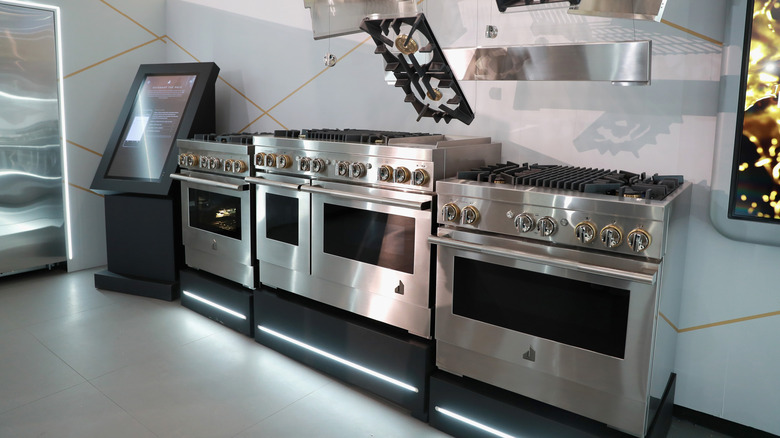
JennAir might sound more like a company that manufactures airplanes or air conditioners than a producer of kitchen equipment. However, it makes sense when you take its history into account. JennAir started in 1947 as an industrial fan manufacturer, named after founder Louis Jenn. It turned towards home kitchens in the 1960s following its development in 1961 of the first self-ventilated downdraft range — that is, a stovetop with fans built in to the cooking surface rather than positioned above it.
JennAir was owned by Maytag starting in 1982, and when Whirlpool acquired Maytag, JennAir came with it. Since then, the former fan maker has undergone multiple changes. Originally called Jenn-Air (with a hyphen), and it rebranded in 2018 to JennAir with a new focus on luxury appliances. Unfortunately, the cost of a higher-end product may not always be worth it. Mashed deemed JennAir one of the most overpriced appliance brands.
Part of the shift involves developing smart appliances with internet connectivity and other smart features like digital thermostats. JennAir executives said that was simply the natural evolution of the high-end machines. "Looking across the luxury market, we found luxury brands resting on their laurels," Jon Hall, JennAir's marketing director, told Forbes in 2018. "Conventional luxury has become complacent. Old luxury does not align with these new expectations for digital connectivity."
Insinkerator
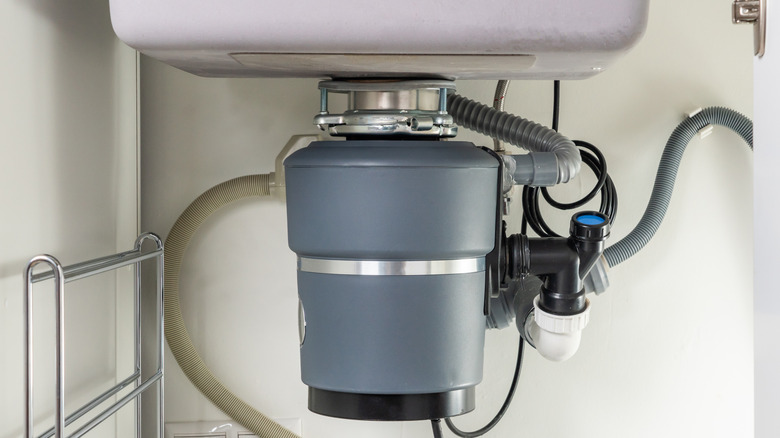
A uniquely American appliance, the garbage disposal allows you to grind up food scraps right in the sink. Insinkerator was the pioneer of garbage disposals, and they're not a modern invention — in fact, an architect named John Hammes built the first one in his basement after cleaning up from dinner in 1927. 11 years later, he patented the design and started a manufacturing company called Insinkerator, according to the company. Nearly a century after that first design, Insinkerator was sold to Whirlpool in 2022.
Insinkerator doesn't only make garbage disposals, though. The brand also manufactures faucets that instantly dispense hot water or filtered water, as well as various types of food waste disposers for commercial kitchens. But garbage disposals remain core to Insinkerator's business. When Whirlpool bought Insinkerator, its market share among garbage disposal manufacturers was over 70%, according to a press release.