

15 Meals Middle Class Families Ate In The '40s
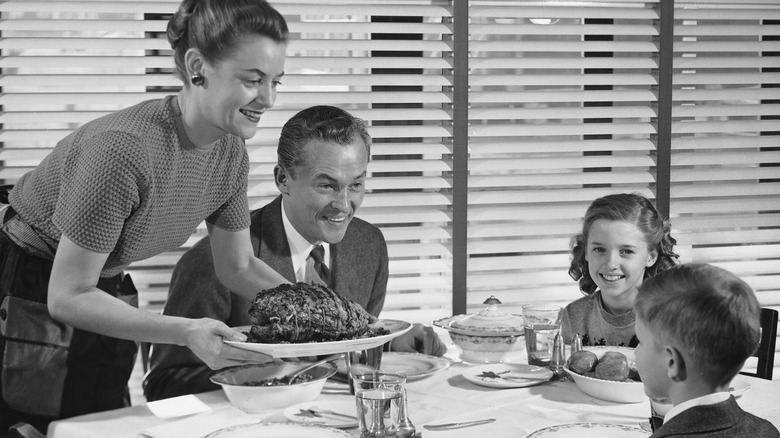
The 1940s were a trying time when it came to food for families in the United States. Not only were they just starting to bounce back from the limited menus of the Great Depression, but they were also faced with the reality that the country would be entering World War II in 1941. This meant that the food supply was going to continue to be impacted. In fact, every family — including middle class families — had to ration their food. And, the government helped enforce rationing by issuing ration books to families.
These books had removable stamps for rationed items like meat, cooking oil, canned goods, milk, and eggs; and a family couldn't buy a rationed item without the correct stamp. Once their ration stamps for certain foods were depleted for the month, they weren't permitted to buy those foods any longer. This meant families in this era not only had to plan their meals with these limitations in mind, but they also needed to be able to cook in such a way that their food went as far as possible. For that reason, some easy-to-stretch dishes became go-to meals in the 1940s — like meatloaf, navy bean soup, and chipped beef. Here are some of the meals families ate frequently.
Meatloaf
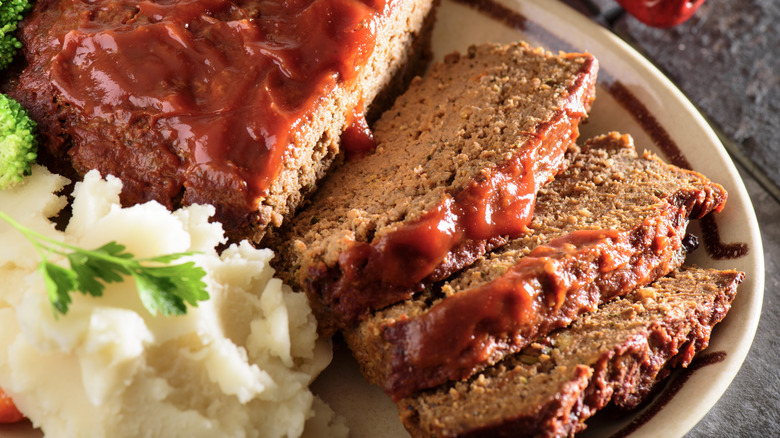
During the 1940s, families were limited to about 28 ounces of meat a week. For a family of four, that meant about 7 ounces of meat per week each, or two 3- to 4-ounce servings. So, chicken breasts, steaks, and other similar options eaten frequently today were not served as often in the 1940s. Instead, families utilized ground meat and other similar proteins to feed their families, because when mixed with other ingredients like day-old bread, crackers, or oatmeal, they could stretch it much further than serving meat in other ways.
Some families even used liver, pork, or soybeans to help stretch their ground beef even further. So, meatloaf of the 1940s was nothing like the traditional meatloaf you might make for your family or find in a diner in modern times. Instead, it likely had very little ground meat and a lot of different fillers like cereal, oatmeal, and wheat-germ. Meanwhile, evaporated milk was likely used to give it some moisture rather than eggs, which were also rationed.
Roasted chicken with bread stuffing
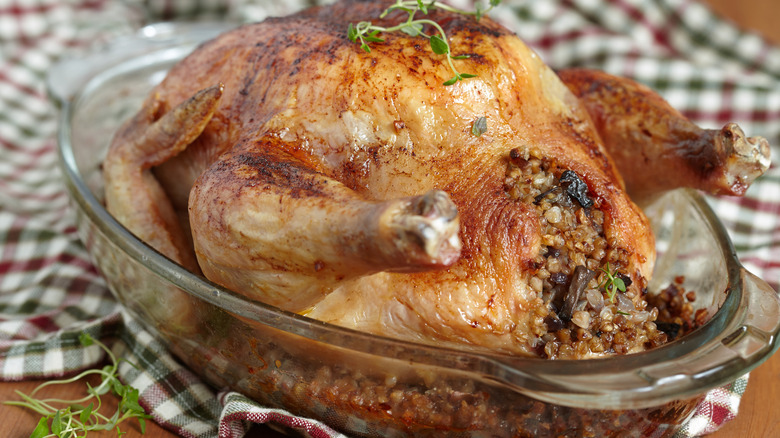
While roast chicken with bread stuffing was often reserved for Sunday dinners or special occasions, when families could save up enough ration stamps to buy an entire chicken, it was something middle class families enjoyed when they could. That said, they still took steps to stretch this meat across a few days, with some historians noting that whole roasted chicken was likely served with plenty of bread stuffing to help fill the stomachs of those surrounding the dinner table.
Interestingly, eating chicken more frequently started to become more of the norm beginning around the time of World War II. Not only was the U.S. government encouraging people to eat more chicken and save the beef, lamb, and pork for the troops and the country's allies, but grain producers also saw benefit in encouraging people to eat more chicken. These influences helped spur the American family's interest in eating more poultry, and by 1964 Americans were eating about 25 to 30 pounds of chicken per person on a yearly basis.
Goulash
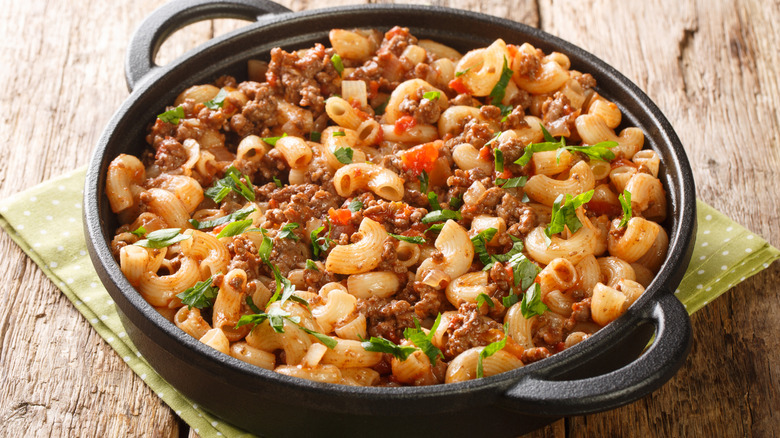
While American goulash is nothing like traditional Hungarian goulash, which had chunks of meat, potatoes, and Hungarian paprika — it was a one-pot meal that became popular during the 1940s when stretching your meat rations was a priority. In the American version of goulash, ground meat took the place of chunks of meat, pasta filled in for the potatoes, and the tomato-based sauce was more economical than making a brown gravy. Plus, it was a meal that could feed a family of six or eight, with some to spare.
This dish was also flexible enough that creative cooks could add vegetables from their gardens to change the taste and add some bulk to fill the stomachs at their tables. For instance, carrots, green peppers, onions, fresh tomatoes, corn, and more could easily be incorporated into a pot of goulash, giving it a unique flavor and texture each time it was made. Its simplicity and flexibility are what made it a middle class family favorite in the 1940s.
Ham hock and navy bean soup
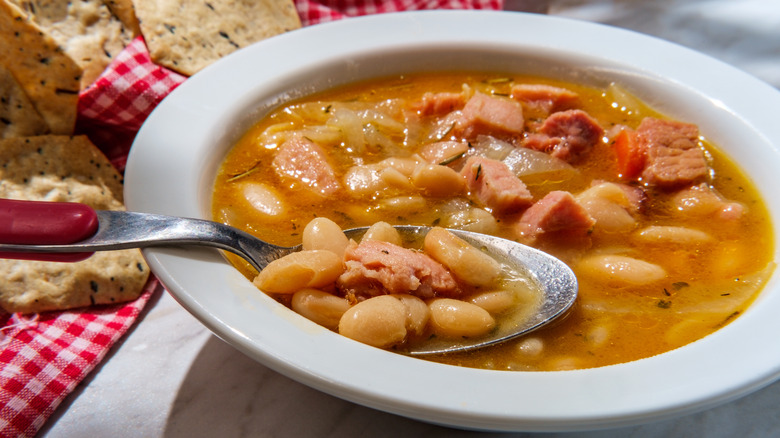
Ham and beans have long been associated with inexpensive and practical home cooking; and in the 1940s, it was no different. In fact, a smoked ham hock cost only 30 cents in the 1940s. Navy beans, or white beans, were also economical as well as shelf stable, meaning the dried beans could sit in a pantry or cupboard for a long time without going bad. For these reasons, ham hock and navy bean soup quickly became a regular on most middle class families' dinner rotations.
To make the dish, families would often soak the beans overnight and then prepare the soup the next day. This process involved building a broth with the beans, a ham hock, and vegetables like celery, yellow onion, and garlic. Sometimes home cooks would even use a mashed Russet potato to thicken the soup.
Interestingly, a version of this soup is still being served in the Senate Dining Room and has been a regular on the menu since 1903. In fact, there is only one day — September 14, 1943 — since the soup was added to the menu that it wasn't served. This was largely due to the fact that rationing made it difficult for the dining room to access navy beans — but somehow, the soup reappeared, the very next day.
Pork chops and applesauce
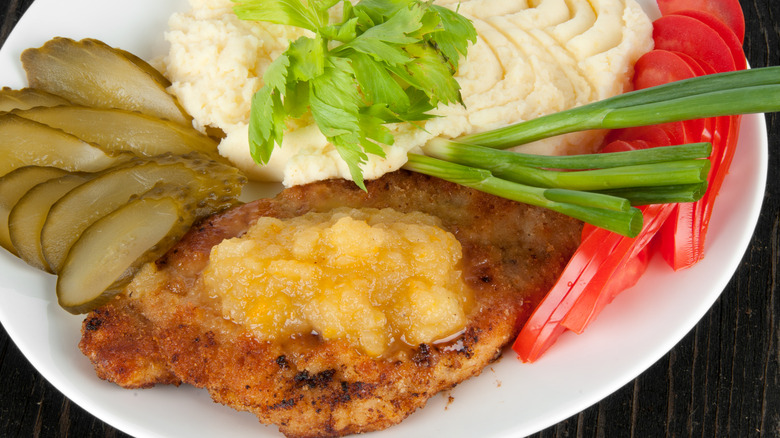
During the 1940s, the United States was the top pork producer in the world. That's why it should come as no surprise that American middle class families occasionally enjoyed pork chops for dinner, especially on Sundays when families had more time to spend in the kitchen. One popular way to serve pork chops was topped with applesauce — a pairing that, to this day, remains popular.
To make the dish, home cooks fried thin pork chops in a pan with lard until lightly browned and crispy, and then topped the cutlets with dollops of unsweetened applesauce. The applesauce, which was homemade from victory garden apples or was purchased canned, added much-needed moisture to the often dry, thin meat. This wasn't a meal that was served every week, as pork chops weren't cheap. However, a small number of pork chops could typically feed around six people, when served with potatoes and other vegetables alongside it.
Corned beef
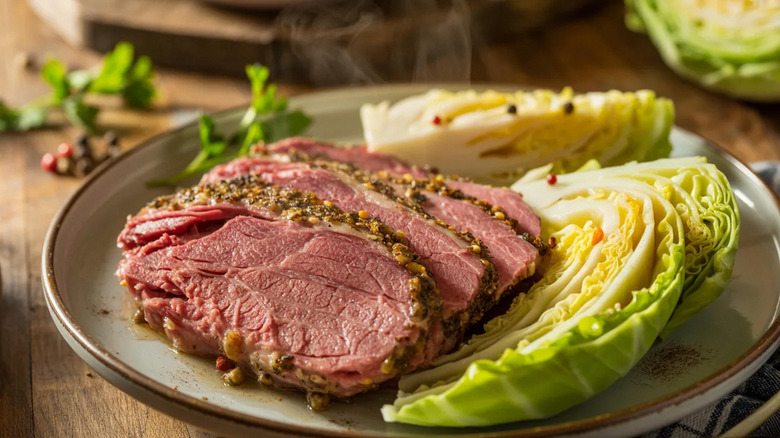
In the 1940s, families often ate corned beef, which was simmered for hours with cabbage, potatoes, and carrots before serving. If these vegetables weren't readily available, some people would use turnips and rutabagas to make their corned beef and cabbage dish. Often, this dish was served as a weekend dinner, and then reheated throughout the week for additional meals if there were leftovers. To make the corned beef, it was often soaked beforehand, and heavily salted.
This dish typically fed a small family, especially if there were lots of vegetables added and the meat was sliced thin. Today, corned beef and cabbage remains a popular dish. After the corned beef is cooked, some people enjoy making sandwiches from the meat that's been simmered for hours. Known as a reuben sandwich, this popular deli and diner dish includes Swiss cheese, sauerkraut, and a Thousand Island-style dressing served on rye or pumpernickel bread.
Spam dishes
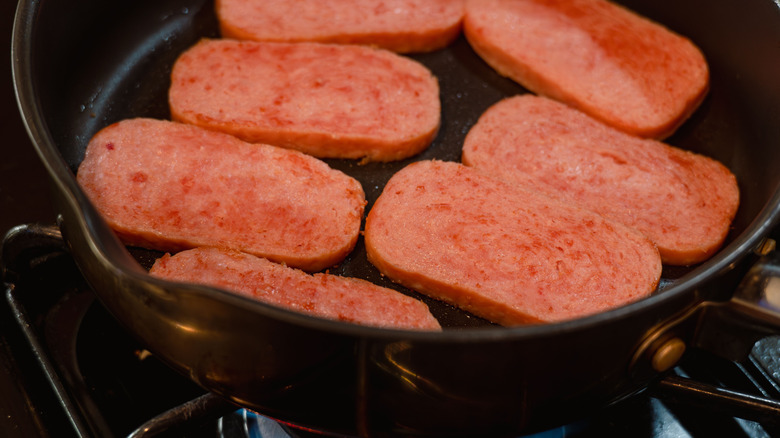
Spam, or canned ham, was developed in 1937 in Minnesota, just in time to become a wartime staple for soldiers fighting in World War II. But it also was embraced stateside, as well. During that time period, families began using canned and processed foods more frequently, especially meats like Spam, that could be used to fill in when other foods items weren't available, or they were out of ration coupons. It was a shelf-stable option that was easy to prepare. And, there were countless ways this humble can of meat could be used.
Not only could Spam be fried in a pan like pork chops or chicken breast, but it also could be used as a replacement in other dishes, too. Think casseroles, ham and sausage dishes, hash, sandwiches, and so much more. Plus, it could be used as a breakfast meat, created into a Spam salad for lunch, or served fried alongside potatoes and other vegetables. There were even some throughout the world, including former British Prime Minister Margaret Thatcher, who considered Spam a "wartime delicacy."
Produce from victory gardens

During the war, Americans were encouraged to grow their own vegetables in small gardens known as victory gardens. These gardens were grown on farms and in families' backyards. They also flourished on city rooftops, in window boxes, and in vacant lots — anywhere people could find a spot to grow their own vegetables. And, by the time the war ended, Americans had grown between 8 and 10 million tons of food in their victory gardens.
These gardens served an important purpose during the war. Not only did victory gardens allow families to fill out their menus with healthy, nutritious foods like potatoes, carrots, tomatoes, green beans, corn, bell peppers, and more — they also used the vegetables to make their meats and other rationed foods go further. More importantly, the produce was used to create vegetable-forward dishes like potato casseroles and pies, as well as victory garden vegetable pies. This filled an important void when meat was hard to come by.
Chipped beef on toast
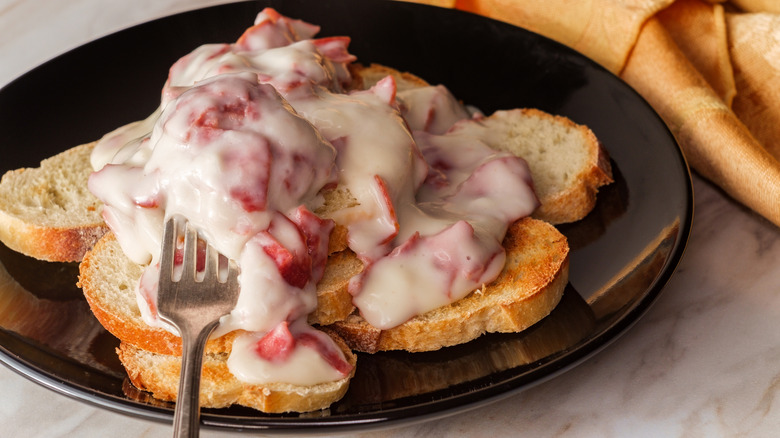
During World War II, dried or chipped beef was readily available and allowed home cooks the opportunity to put together an inexpensive meal rather quickly. This simple dish included dried beef that was cooked in a creamy white sauce made with a little flour, milk, and salt and pepper, and served over toast. While it was sometimes served for breakfast, it also doubled as an inexpensive dinner option as well.
Soldiers also ate this meal while serving the country, and had a variety of names for the dish, some less flattering than others. But overall, creamed chipped beef on toast is a warm, filling dish that has become synonymous with comfort food for some people — even today. You can sometimes find it at some retro-style diners throughout the country, though it's likely to be a little more upscale than what was served in the 1940s; and, may be served over biscuits instead of toast, with eggs, herbs, and seasonings.
Stuffed peppers
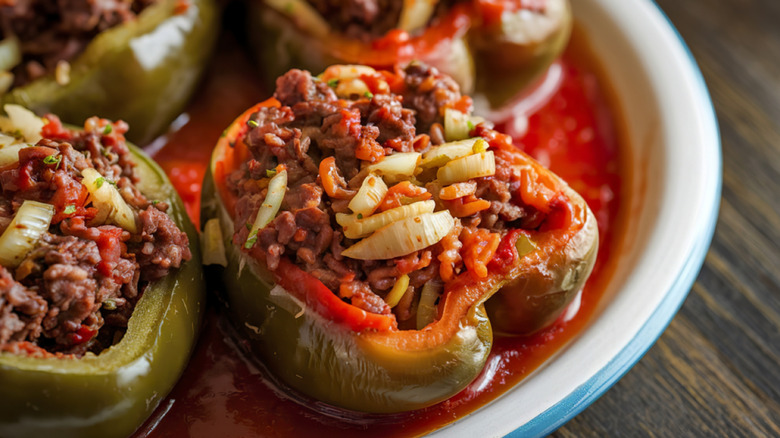
Victory gardens during World War II often yielded a bounty of fresh vegetables including green peppers. These hearty peppers were not only chopped up and used in dishes like hash or stews, but also could be used as vessels to make other meals like stuffed green peppers. And though variations of the stuffed peppers dish have been around for years, this was a dish that was popular in the 1940s because of its conduciveness to stretching ingredients that home cooks had on hand.
Typically, stuffed green peppers were made with ground meat that had other ingredients added to it like onions, shredded carrots, and tomatoes. Some home cooks even added rice to the mixture to make the meat go further, especially since it was an inexpensive staple during that time period. In fact, the late 1940s also was the time period in which instant rice and Minute Rice were created making it easier for home cooks to get food on the table.
Meat and potato patties
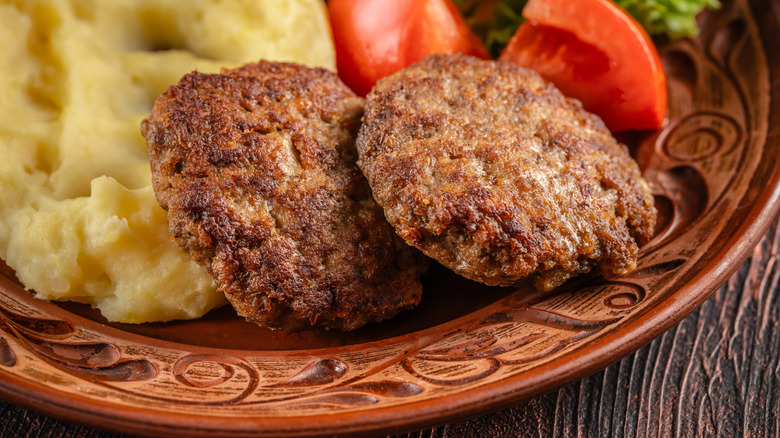
When making meat and potato patties, home cooks were able to stretch ground meat by adding in shredded potatoes. This helped make the meat go further while creating a filling meal that could feed their families during the war. Sometimes other vegetables like diced onions, shredded carrots, or chopped green peppers would be added, too, so that less ground meat needed to be used. The meat and potato patties were then fried in a pan and served with other vegetables to fill out the plate.
Even though this was an iconic World War II era dish, people still make variations of this dish today by adding in interesting spices or dusting the patties with flour to help them brown more easily in the pan. One version of this dish is a kotlet, which has turmeric and a beaten egg mixed in as well. This version can be served hot or cold, and can be used as the entree of a meal or as a snack. Some even use kotlets to make sandwiches.
Liver dishes
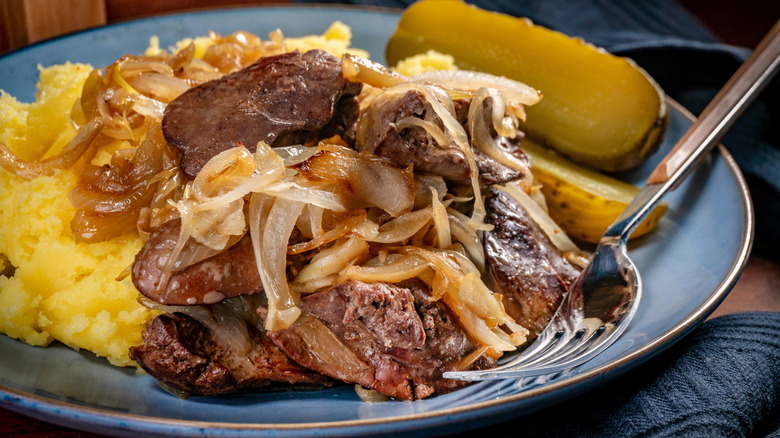
Liver was one of the most inexpensive meats available during the 1940s wartime, so many home cooks often looked for ways to serve this protein to their families — especially because it was considered patriotic to eat liver and leave beef and other meats for the troops. One of the more popular ways to serve liver was as a liver and onions dish that consisted of thin sliced liver fried quickly in a pan and topped with caramelized onions. The hope was that the sweet taste of the onions would mellow out the iron-rich taste of the liver.
Families in the 1940s also used liver to make liver loaf, a dish that was similar in concept to meatloaf. When making liver loaf, they would parboil the livers and then grind them up and mix them with fillers like cornflakes, onions, celery, and perhaps a little sausage to make a loaf. Regardless of which liver dish families would make — liver and onions or liver loaf — they would usually serve it with mashed potatoes and a bounty of vegetables.
Cheese, potato, and onion pie
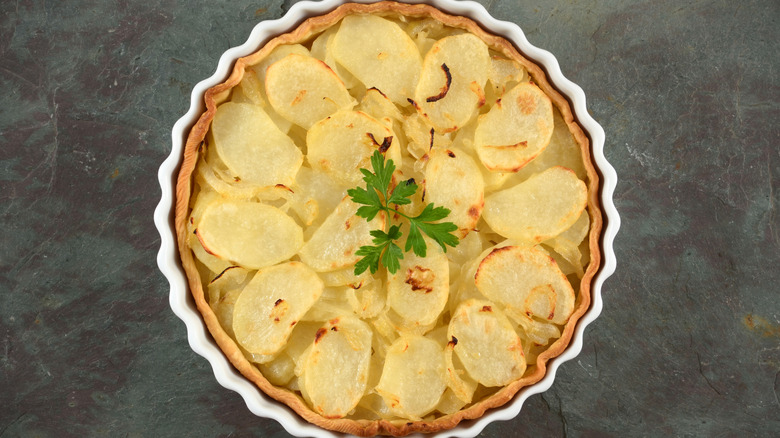
When meat was scarce in the household or the family was out of ration stamps, they likely looked for hearty vegetable-forward meals to fill their stomachs. And the cheese, potato, and onion pie was a comforting choice that likely addressed any lingering hunger pains. Made with layers of potatoes, onions, and a small amount of cheese, this dish was as comforting as it was tasty.
Plus, other root vegetables could be substituted, or mixed with potatoes if the family was short on them. And if they didn't have flour, or the time to make a crust, home cooks could easily turn this dish into a potato casserole and leave the crust out. Overall, the cheese, potato, and onion pie is similar to a British version known as the homity pie, which was also a staple during World War II. With this pie, a crust was filled with potatoes, onions, leeks, a little cream, and topped with cheddar cheese.
Beef stew
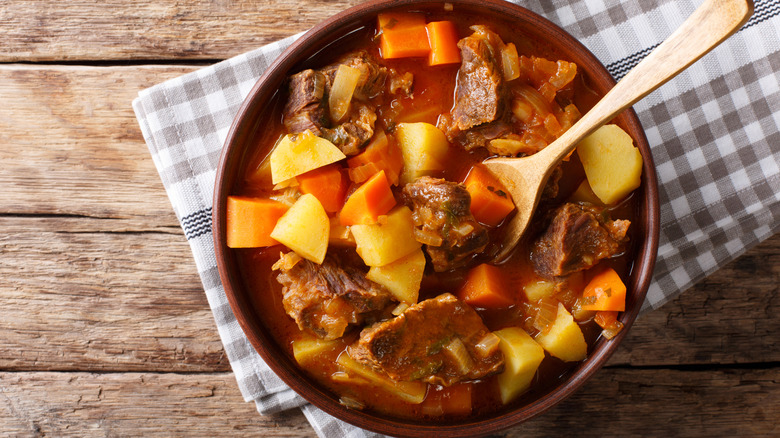
Nothing says hearty and filling like a big bowl of beef stew. In the 1940s, this dish was made with a small amount stew meat as well as root vegetables like potatoes, carrots, turnips, and parsnips. Typically, this stew was simmered all day, allowing the meat and vegetables to become tender. The end result was often a thick stew that could feed a large number of people, sometimes with leftovers. Families often served this stew with white bread to soak up the broth, and heated the leftovers throughout the week.
Today, beef stew is still a staple for some middle class families especially during cold months. But it's typically more complex, and features high-end ingredients that add a richness and an umami flavor. For instance, home cooks might use bone broth, red wine, Worcestershire sauce, tomato paste, and fresh herbs to build a deep flavor. Meanwhile, in the 1940s, families likely used simple ingredients like water, salt, pepper, and root vegetables from their gardens, due to rationing and limited ingredients available.
Salisbury steak
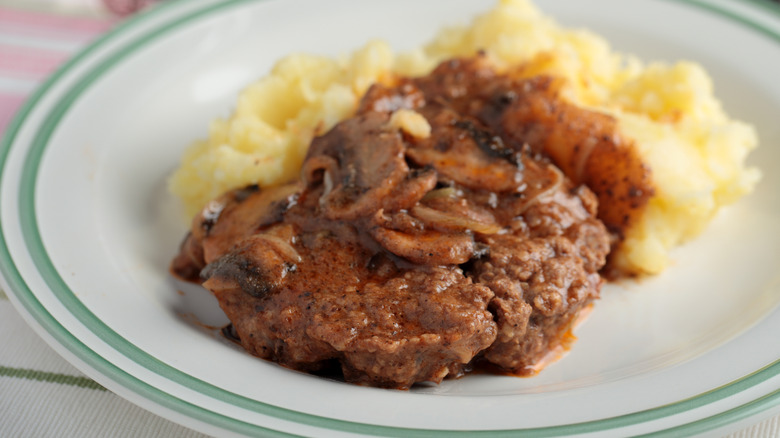
Although the origin of Salisbury steak can be traced back to the American Civil War era, it seemed to make a resurgence during the 1940s, when families needed hearty meals made with inexpensive ingredients. Not only was the dish flexible enough that cooks could get creative with the add-in or filler ingredients, but ground meat was somewhat affordable with ration coupons and could be mixed with other meats to make it go further.
Overall, Salisbury steak — which gets its name from Dr. J.H. Salisbury, who promoted a meat-based diet — was a hearty, tasty meal that could feed a large family and fill their stomachs at the same time, especially when served with a rich gravy, white bread, and a bounty of vegetables like potatoes and carrots. The original Salisbury steak recipe included broiled meat patties served with Worcestershire sauce, mustard, horseradish, and sometimes lemon juice. But in the 1940s, families worked with what they had, and likely created a variety of different versions.