

10 Mistakes You're Making When Using Canned Salmon
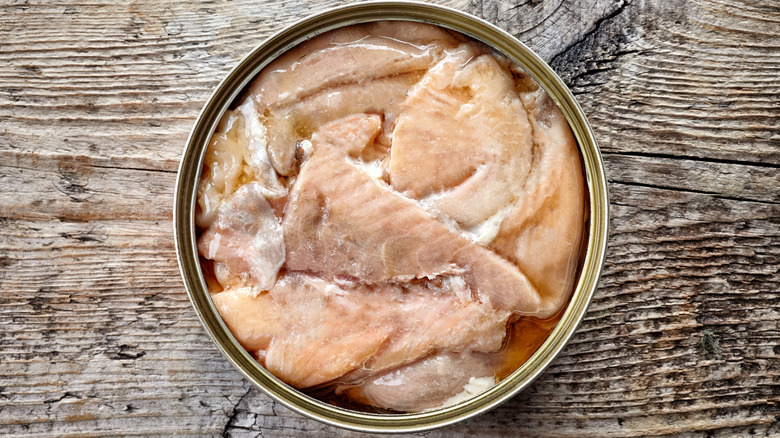
When most people hear the mention of canned salmon, their first thoughts may not be flattering. Just the word "canned" alone can cause people to view the salmon negatively. While fresh salmon often creates visions of a fillet cooked with a crispy skin and served with a delicate sauce, canned salmon causes some people to assume it's going to be mushy, full of bones and skin, and smell like cat food. They just can't imagine a use for canned salmon for anything other than the retro salmon patties their grandmothers used to make.
But canned salmon has a lot of redeeming qualities that many people overlook. Aside from its high nutritional content and shelf-stable construction, canned salmon can also be used in a lot of creative ways including everything from salmon-filled onigiri (Japanese rice balls) and salmon quesadillas to salmon crostini and Mediterranean salmon bowls.
The issue is that most home cooks don't know how to prepare it or even what to do with it once they've opened the can. That's why we asked a registered dietitian and a recipe developer to share the most common mistakes people are making with canned salmon. Here's what Stacy Roberts-Davis, a registered dietitian with Flavorful Nutrition, and Ria Birju, a recipe developer with Cooking With Ria, say you may be doing wrong with canned salmon.
1. Skipping over canned salmon in the supermarket because you're unsure how to use it
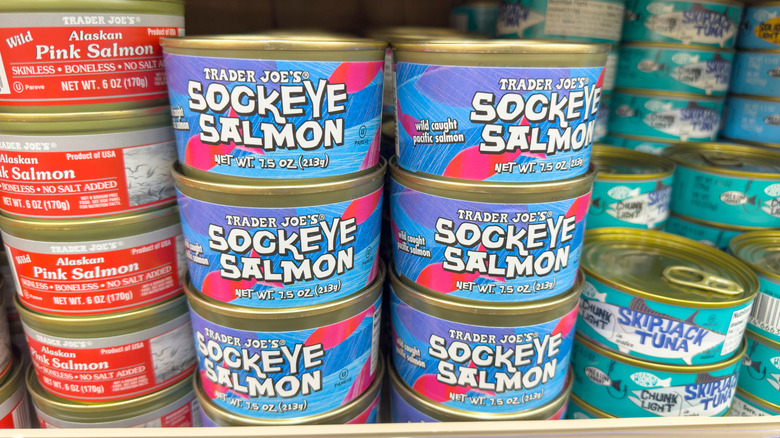
Unless you're stocking your pantry with shelf-stable items in case of a potential weather emergency, you may not be giving canned salmon the attention it deserves in the supermarket. But experts say it's worth having a few cans of this tinned fish on hand for last minute meals or even working it into your regular dinner rotation. Not only is canned salmon economical, but it's also nutritious and surprisingly versatile. Plus, it can be used to pull together a meal in a matter of minutes.
But, if you're like many shoppers in America, you likely aren't buying canned salmon, especially if you don't know what to do with it, says Stacy Roberts-Davis. But, this humble can of fish can be used in so many ways, she explains, including mixing it with pasta and veggies, adding it to eggs, or putting it in a veggie bowl. The key is knowing which canned salmon brands are the best, especially because not all varieties are the same.
Each variety of canned salmon will have a different texture or flavor, Roberts-Davis says, so know what you want ahead of time or be willing to experiment. Some canned salmon will be packed in oil and seasonings while others will simply have water added. Still, others will have bones and skin and you can even find gourmet versions like smoked salmon with chili crisp. You even have the option of wild caught and farm raised canned salmon.
2. Opening the salmon and eating it as is instead of experimenting
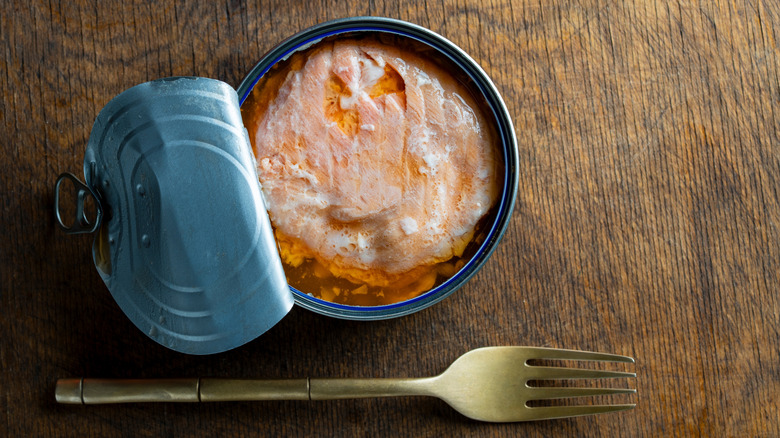
There's certainly nothing wrong with opening a can of salmon and eating it as is. But you will potentially get bored with it if you don't attempt to manipulate the ingredient into a tasty dish or use it in a way that will elevate your lunch, dinner, or even breakfast. Fortunately, there are a number of ways you can enjoy canned salmon and even make it shine at your dinner table.
"From my Caribbean perspective, one of the biggest mistakes is simply opening the can and eating the salmon as is," says Ria Birju. "There is nothing wrong or unsafe about doing that, of course, but I think it is a missed opportunity. Canned salmon becomes so much more exciting and delicious when it is cooked with fresh herbs, garlic, onion, tomatoes, scallions, hot pepper, and other seasonings."
Plus, having an already cooked form of nutritious fish complete with lots of calcium, omega-3 fatty acids, and protein is pretty appealing, too. You don't have to worry about thawing it like frozen salmon or making sure it doesn't go bad in the fridge like fresh salmon. The key is thinking outside of the box when fixing it. Try using it as a substitute for dishes that have canned tuna or chicken, or create your own recipe through a little experimentation. Birju makes curried canned salmon with tomatoes and potatoes or uses it to create canned salmon hand pies where she seasons canned salmon, wraps it in soft dough, and then fries it.
3. Discarding the skin and bones
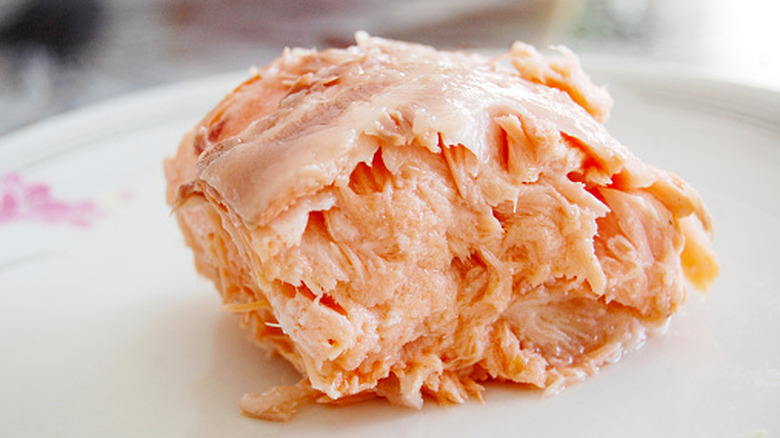
The beauty of canned salmon is that the skin and bones have been cooked to the fullest extent during the canning process making them easy to eat and digest — plus the bones provide much more calcium that you might get from a fresh piece of salmon. In fact, in many varieties of canned salmon the bones soften so much that it blends into the meat and is invisible in most recipes, while still giving you an extra boost of this important nutrient. Plus, according to Stacy Roberts-Davis, the bones and skin are completely safe to eat and won't cause you to get sick from eating them. In fact, eating these parts of the fish may even give your body an extra boost of nutrition.
"The skin provides omega-3 and the bones have calcium," explains Roberts-Davis. However, if you have a swallowing disorder, or you find the idea of eating tiny bones unappetizing, you may want to either grind up the bones even further when using the canned salmon or buy a boneless, skinless variety. But none of these characteristics should deter you from taking advantage of the nutritional benefits of eating tinned fish like salmon.
4. Automatically draining the salmon without considering the recipe
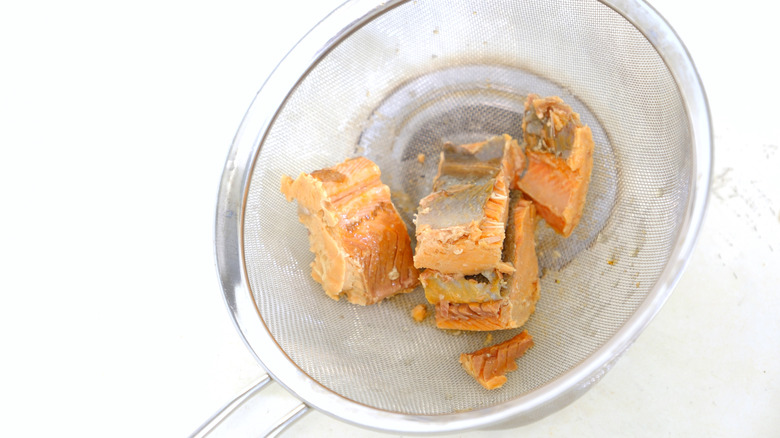
When you open a can of salmon, it makes sense that your first response is to drain away the liquid. After all, you likely drain and rinse canned vegetables before using them, so why not do the same with canned salmon? But both Stacy Roberts-Davis and Ria Birju, said you should hold off on that step until you think through the recipe you're making. If you're using the canned salmon to create a dish that might benefit from a little extra moisture or could use the flavor boost from canned salmon in oil, you should reserve the liquid. On the other hand, if you're using the salmon to create a pie, the meat needs to be very dry for the recipe to be successful, so you may want to drain it, according to Birju.
"If I'm making canned salmon with tomatoes or curry, a little extra liquid can help keep the salmon from becoming dry, so I would reserve some [liquid] rather than immediately pouring everything away," she says. "For my salmon pie, however, it is the opposite. I drain the salmon and press or squeeze out as much liquid as possible because excess moisture would make the filling wet and affect the dough. [But] don't automatically throw the liquid away. Drain it into a bowl first, look at the recipe you are making, and decide whether you need any of it."
5. Cooking canned salmon when the recipe doesn't call for it

When you open a can of canned salmon, the meat you find inside has already been cooked. So you don't necessarily have to cook it again in order for it to be safe to eat. Plus, canned salmon has a tendency to become dry if you overcook it or manipulate it too much. Ria Birju explains that she only cooks salmon again in order to develop flavor and allow the fish to absorb the fresh herbs and seasonings.
"The cooking time really depends on the preparation," says Birju. "For my canned salmon with tomatoes, I sauté the onion, garlic, tomatoes, green seasoning, or scallions first and then add the salmon and cook it for about five to seven minutes, until it is heated through and the flavors have come together."
For other dishes, like curry canned salmon, Birju says she first builds the curry base and cooks the vegetables before adding the salmon. And for her salmon pies, she doesn't cook the filling at all. Instead, she seasons the canned salmon and stuffs it into the dough to fry. For this reason, she suggests considering the recipe, the amount of moisture your dish needs, and the cooking method before automatically cooking the salmon. In some cases, canned salmon won't need to be cooked at all, especially if you're adding mayo, mustard, and dill to make a salmon salad sandwich.
6. Being afraid to experiment with seasonings
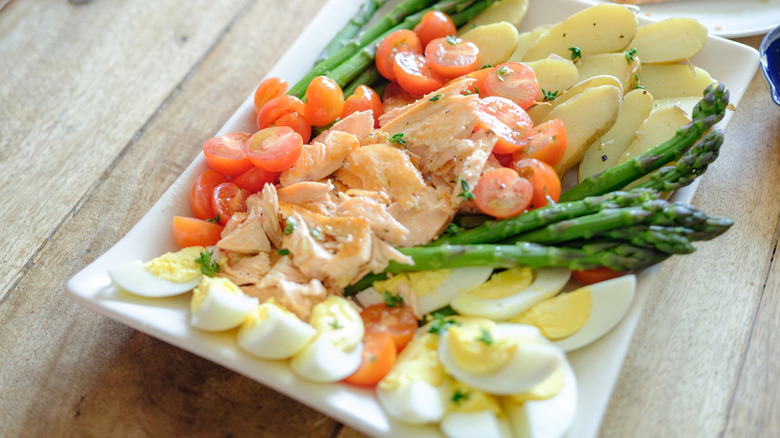
Salt, spices, and herbs are often the lifeblood of any good recipe. Not only do these seasonings make food taste better, but many of these added ingredients also contain antioxidants and anti-inflammatory compounds — key characteristics that can boost your health. But surprisingly, many home cooks tend not to season their canned salmon when preparing it, according to both Stacy Roberts-Davis and Ria Birju.
"Being from the Caribbean, I love seasoning canned salmon with plenty of fresh ingredients — garlic, onion, tomatoes, and hot pepper, along with herbs such as scallion, cilantro, parsley, thyme, and cilantro," says Ria Birju. "I like to build the flavor in the pan first. Instead of simply sprinkling seasoning over the salmon. I cook my onion, garlic, tomatoes, and herbs and then add the salmon so it has a flavorful base to absorb."
Spices and other seasonings can also transform this neutral-tasting protein and boost its overall flavor profile. Not only do the right herbs and spices cut through the dish, but these ingredients can be used to mask any residual metallic taste that can sometimes become apparent in canned salmon. And don't forget the acid — a squeeze of lemon or another citrus fruit can brighten the other spices in your dish. Even a can of chipotle peppers in adobo sauce can add a unique and interesting flavor profile to canned salmon.
7. Buying salmon with too many added ingredients
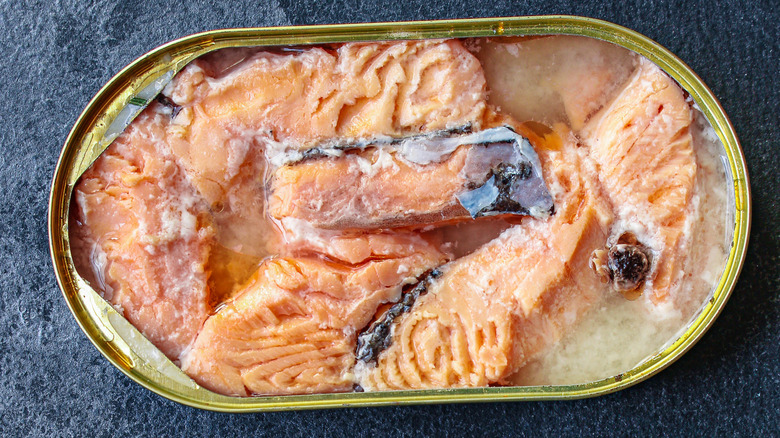
When most people buy canned salmon, they typically purchase pink salmon packed in water or oil. After the canning process, this type of salmon will have a mild flavor and firm flakes. These characteristics make it easy to use in recipes, especially casseroles or salmon salad, but can also make its flavor hard to distinguish and its texture a little mushy. This can lead many home cooks to buy canned salmon with seasonings or flavorings already added. But most experts say this is a mistake and that adding your own when preparing your recipe is a better option. This way you can better control the amounts — and the sodium or salt level of your dish — as well as bring out the flavors you most enjoy.
"I tend to look for products with as few added ingredients as possible," says Ria Birju. "I like knowing exactly what is in the can, and I think a simple ingredient list allows the natural flavor of the salmon to come through. Whether someone chooses pink salmon, sockeye, skinless and boneless salmon, or salmon with the skin and bones included can depend on the recipe, budget, and personal preference."
One way to get a more distinct salmon flavor is to purchase canned sockeye salmon. You'll get a firmer texture and a more distinctive taste with this type of canned salmon. Or you might consider purchasing smoked salmon. This version adds a depth of flavor that can be difficult to achieve on your own. But, keep in mind that canned smoked salmon isn't ideal for every dish and may work better for pasta dishes, dips, spreads, or charcuterie boards.
8. Storing it in the can in the refrigerator
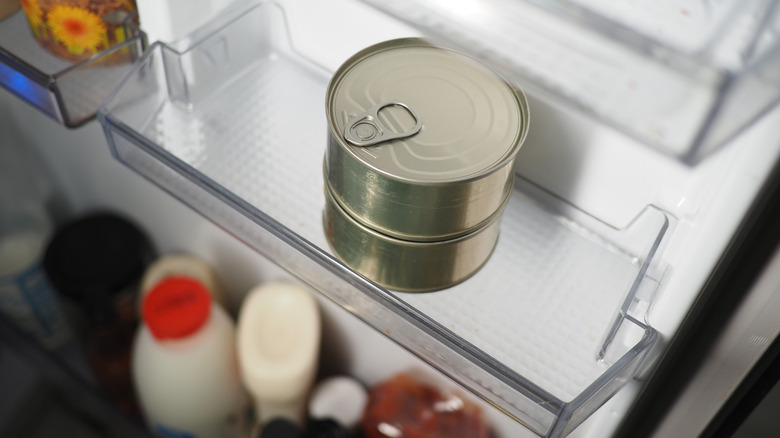
If you have leftover canned salmon after making your dish, it can be tempting to store it in the can in your refrigerator. After all, you don't have to dirty another dish. But both Stacy Roberts-Davis and Ria Birju advise that this is a mistake. Not only can the salmon scent take over your refrigerator and permeate other foods inside, but it can also cause the salmon to have a more metallic taste once the can and its contents are exposed to air for any period of time. Also make sure you use the opened canned salmon within a reasonable amount of time, according to Roberts-Davis. "I recommend three to four days in the fridge," she says. "Make sure it's covered well because it can make the fridge smell."
You also need to store your prepared canned salmon dish properly as well. Birju recommends glass containers when possible and labeling the dish with a date so you know how long it has been in the refrigerator.
"I actually use canned salmon for meal prep quite often," says Birju. "I may prepare a salmon dish for my husband on Sunday, and he can enjoy it throughout the week with roti, fried bake, rice, or bread. That makes it especially useful for weekday dinners when schedules get busy and you want something already cooked and ready to go."
9. Assuming the only thing you can make is salmon patties
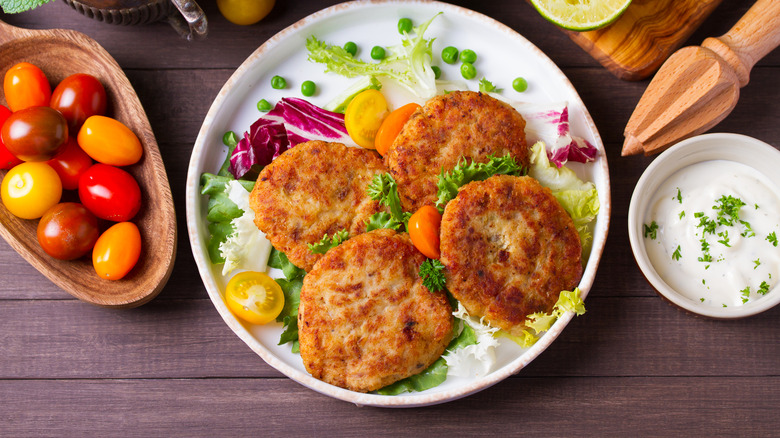
Salmon patties or tasty salmon croquettes are likely the most popular ways to utilize canned salmon. But if that's the only way you use this tinned fish, then you may be missing out. Canned salmon is actually much more versatile than you might realize. In fact, there are a multitude of ways to utilize canned salmon for your family's meals. From salmon Nicoise salad, salmon stuffed potatoes, and salmon salad to salmon onigiri, salmon tacos, and salmon quesadillas, the options are endless.
You can also substitute canned salmon for canned tuna or canned chicken in recipes. And, it works especially well in sandwiches, wraps, pasta dishes, rice bowls, and casseroles. The key is that you use your imagination and think outside of the box. You can even use canned salmon to create interesting dips, canapés, and other party foods.
"For me, canned salmon earns its place as a pantry must-have because it is inexpensive, convenient and endlessly adaptable," says Ria Birju. "It is perfect for meal prep, a quick weeknight dinner, or one of those weekends when you simply do not feel like cooking an elaborate meal. With a few fresh ingredients, a humble can of salmon can become something that feels like a real home-cooked meal."
10. Ignoring the best by date
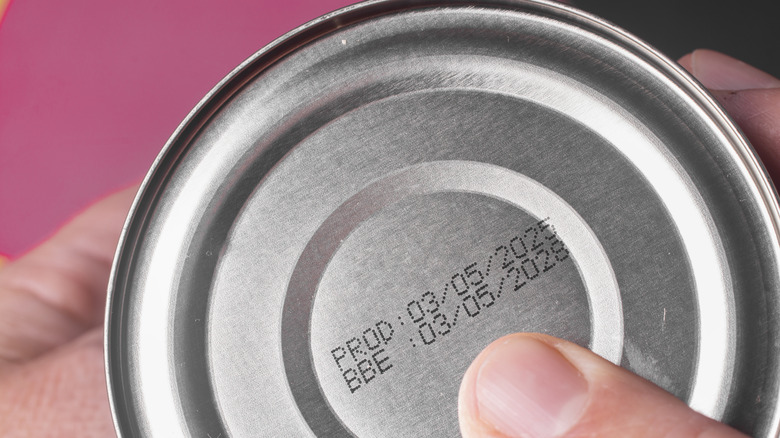
Unlike fresh salmon, canned salmon has a long shelf life and will last in your pantry for a number of years. This means you can stock your pantry with canned salmon to have on hand when you're in a pinch or when you have a hankering for salmon croquettes. But this doesn't mean you still shouldn't take a look at the "best if used by" date on the can before creating your dish.
The "best if used by" date lets you know when the canned salmon will have the best flavor or quality. Likewise, the "use by" date is the last date that you should use the product in order for it to have peak quality. Neither of these dates are a safety date, so you can still safely eat canned salmon after the "best by" or "use by" dates, but it may not taste as fresh as you might like. With this in mind, you may want to consider checking the dates of your canned salmon to ensure the product you're using is of high quality and use it before you reach these dates.
Ria Birju says you may also want to check the condition of the can: "I would never use a can that is bulging, leaking, badly rusted, or seriously damaged, particularly around the seams. If a can seems suspicious, I would discard it rather than taste the food to see if it is okay."