

Air-Frying Or Deep-Frying Fish? The Drawbacks Of Each Method
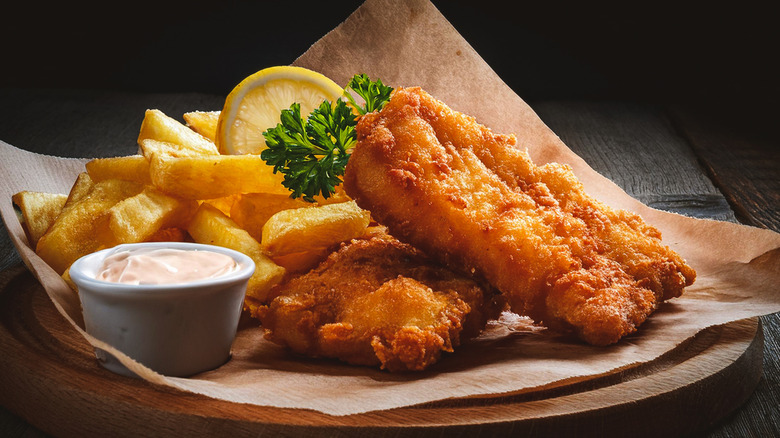
A crunchy, golden brown crust dusted in savory spices and a tender, flaky piece of fish on the inside — this is the standard for fried fish everywhere. In fact, it's this combination of crispiness, spices, and mild-tasting fish that makes fried fish feel indulgent and taste delicious. Whether combined with fries and coleslaw or nestled inside a Baja fish taco, there's something deeply satisfying about fried fish. And, when fried properly, all it needs is a light squeeze of lemon, a dollop of tartar sauce, and a few crunchy cornichons to complete the experience. But can that coveted texture and flavor be best achieved by air-frying or deep-frying the fish?
Both air-frying and deep-frying definitely have their benefits when frying fish, but there are also some drawbacks to each method. For instance, dropping battered fish into an air fryer can create a real mess, while deep-frying fish in a pot of oil on the stove can leave oil residue and a fishy smell in your kitchen. Here, we explore the drawbacks to each method so that you can make an informed decision about which frying method is right for your next home-cooked fish fry.
Air-frying can pose some unexpected health risks
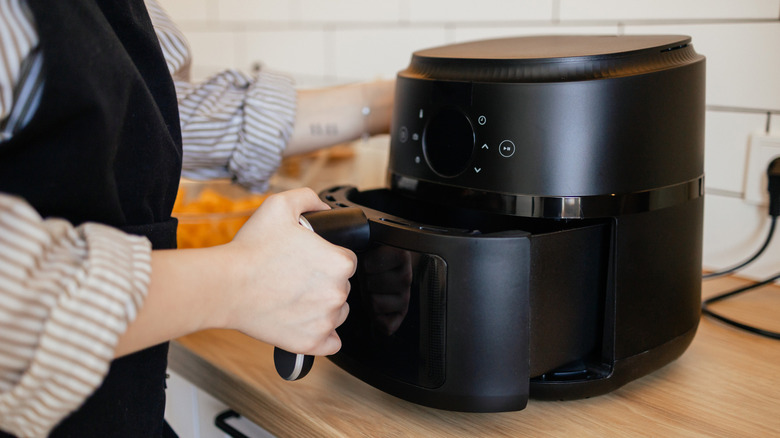
One of the best things about air-frying is that you don't have to use oil to get a crunchy exterior. These mini convection ovens get hot enough and push air around with enough force that they brown food and make it crunchy without requiring much oil — a characteristic that not only reduces calories but also may be slightly healthier. But there are downsides, too, that could potentially make air-frying unhealthy.
One study published in the Journal of Food Science found that when fish was fried in an air fryer, the high heat caused its cholesterol to break down and form cholesterol oxidation products (COPs). These compounds have been linked to heart disease and hardening of the arteries. But the same study also found that you can reduce the number of COPs in your fish by adding herbs to the air fryer basket.
The study used parsley and chives, which are powerful antioxidants, and found that these herbs helped reduce the production of COPs — and flavored the fish in the process. So, if you want to make fish in the air fryer, you may want to add a dose of fresh herbs to offset any chemical reactions that could happen at that temperature.
Deep-frying can also be unhealthy
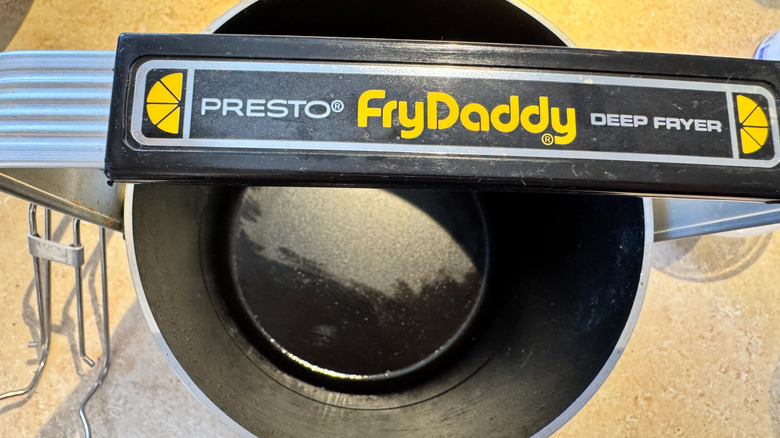
Everyone loves a fried fish sandwich or a basket of fish and chips from time to time. But health experts note that consuming deep-fried fish regularly isn't ideal from a nutritional standpoint. For instance, some estimate that fried fish may absorb 8 to 25% of its weight in oil, depending on the thickness of the batter. Deep-fried foods are also linked to an increased risk of heart disease when compared to healthier cooking methods such as baking, grilling, or poaching.
That said, if you really have a hankering for that fried fish taste, you could try shallow frying your fish in a pan. This method can result in less oil absorption than deep-frying, especially if you fry it with a thinner batter or even just coated in a small amount of flour. The choice of your cooking oil could also influence the nutritional value of your deep-fried fish. For instance, using fresh oil when you fry fish helps minimize the formation of harmful compounds. Even keeping the temperature between 350 degrees and 375 degrees Fahrenheit can help the crust form quickly and reduce the frying time.
Both deep-frying and air-frying can degrade omega-3 levels
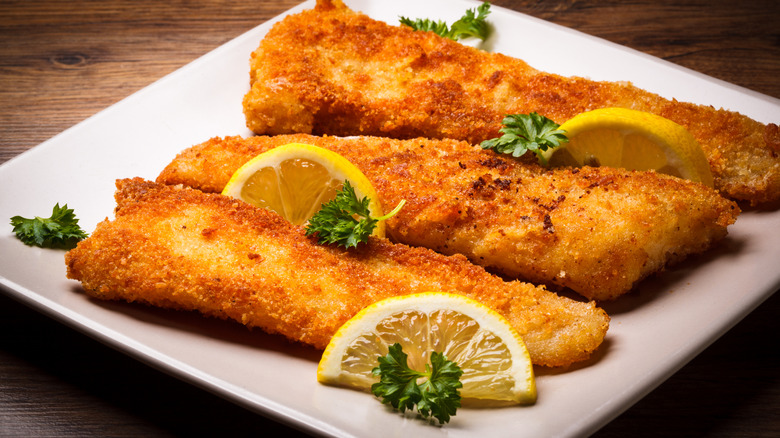
Aside from its typically low-calorie content, one of the primary reasons doctors recommend that you regularly consume fish is that it's rich in omega-3 fatty acids. In fact, a diet high in these fatty acids can help maintain healthy blood pressure, support your heart health, and reduce your risk of blood clots. But there is some evidence that high-heat frying, such as air-frying and deep-frying, can degrade omega-3 fatty acids and potentially reduce the heart-healthy benefits of eating fish.
For instance, by some estimates, deep-fried fish may only retain about 50 to 60% of its omega-3 fatty acid content. By comparison, baked fish retains about 80 to 85% of its omega-3s. Likewise, deep-frying fish results in a significant loss of its other nutrients, too, while baking fish mostly retains its nutritional content. Even pan-frying may be a better option than deep-frying because fish cooked with this method retains about 70 to 75% of its omega-3s, plus most of its nutritional content remains intact. Air-frying can also cause your fish to lose some omega-3s.
However you fry your fish, there is one upside. Health experts maintain that while you're not getting as much omega-3 as you would in more preferred cooking preparations like baking or grilling fish, you still are getting significantly more than you might if you were eating another protein source.
Air-frying can create a mess in the air fryer
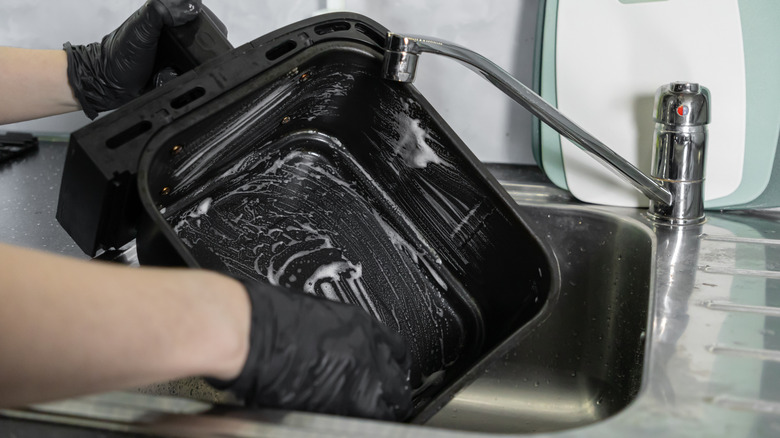
If your air-fried fish has a wet batter made of beer or other liquids, you may find that it's more of a problem than it's worth to try to air-fry it. Not only will the batter drip onto the grates of your air fryer, making cleanup a mess, but it could also set off smoke alarms in your house. It'll also be a challenge to get that light, puffy, and crunchy exterior that deep-fried fish often has — even if you cover your air fryer in parchment paper. Sometimes, wet-battered foods are better off being deep-fried if you're looking for an authentic, fried-fish taste.
However, if you prefer your air fryer to a vat of oil for frying, you can try frying fish using a breading instead of batter. Alternatively, you can use pre-battered frozen foods, such as frozen battered fish. You can even try using a light batter that barely coats the fish and placing it on parchment to see how it turns out. But you may not be able to recreate the same texture of battered and deep-fried fish in an air fryer, and not create a mess to contend with at the end.
Deep-frying can splatter oil and leave your house smelling like fish
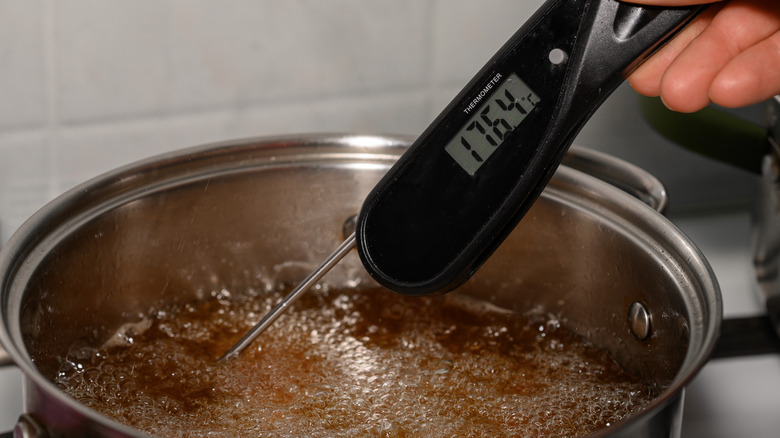
Deep-frying fish is known to leave oil splatters on the stove and surrounding surfaces and create a lingering fish smell that seems to permeate your home for days. For some people, these two inconveniences are enough to make them search for the best fish fry in their community before attempting to fry fish at home. But if you're someone who prefers to make fried fish at home, it can help to understand what's happening and how you can reduce the smell.
According to scientists, the lingering smell of fish in your home comes from a compound in fish known as trimethylamine oxide (TMAO) that breaks down into a compound capable of producing strong odors. Combine this with the fact that when you cook fish at a high temperature, small drops of fat and oil vaporize into the air, and you're left with a strong fish odor that permeates your home.
The key to reducing the smell lies in reducing the airborne particles with acidic steam. To do that, simmer 2 cups of water and 1 cup of white vinegar for 15 to 20 minutes to help eliminate the smell. You may also need to deep-clean the kitchen area after cooking and possibly even sprinkle baking soda on fabrics and carpets to refresh your home. Other options for reducing the smell include soaking fish in milk prior to cooking or drizzling it with lemon juice before adding the seasonings and batter. Using a splatter screen and your exhaust fan can also help.
Air-frying can dry out the fish if cooked too long
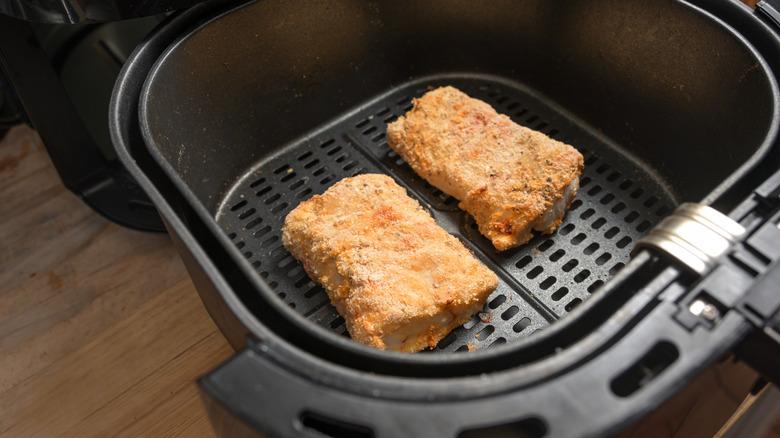
If your goal is delicious, air-fried, crispy cod, but you keep ending up with dry, flavorless fish, it's important to understand how quickly fish can dry out in an air fryer and how you can offset this risk. Keep in mind that air fryers are really just compact convection cookers. This means they can quickly brown foods like fish because of the hot air circulating around the food. But this hot, dry air also has a downside: It pulls moisture out of the fish and can cause it to become dry, especially if it's cooked for too long. This means to keep your fried fish from drying out, you need to pay attention to time, temperature, and moisture.
One way to do that is by adding a thin layer of moisture. If you're using a batter, this will work. If your fish isn't battered, you can add a spritz of oil or a thin marinade. You should also lower the temperature and cooking time if your fried fish is typically dry. Also avoid relying on the color of the exterior to determine its doneness. Fish can quickly dry out if you wait for the deep brown to appear in the air fryer. You can also try starting hotter for a short time to set the outside of your fish and then finish at a lower temperature to keep the inside from drying out.
Deep-frying can saturate the breading if not cooked properly or you use the wrong fish
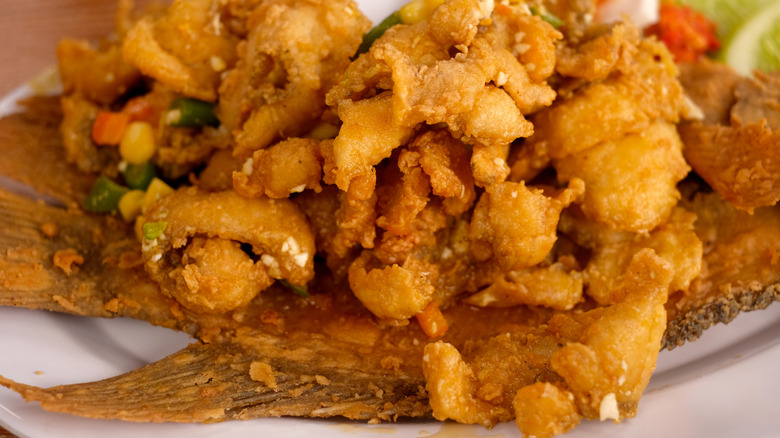
When you deep-fry fish, it's very easy for the batter to become greasy, saturated with oil, and lack a proper crunch. One of the primary reasons this occurs is often that your oil isn't hot enough, or the temperature drops as soon as you drop the fish into the oil. One way to prevent the temperature from dropping too low is to heat your oil to about 10 to 20 degrees Fahrenheit higher than you want it to be before adding your fish.
Over-mixing your batter can also make your fish greasy, especially if it contains all-purpose flour, as it creates a gummy, sticky batter that will absorb a lot of oil when it's deep-fried. This is where mixing together a gluten-free batter with cornstarch or rice flour might be a better move. Using the wrong fish for deep-frying can also negatively impact the final texture — for example, if you choose an oily fish like salmon, trout, or bluefish. Instead, choose white fish like flounder, cod, or haddock.
Air-frying can make it difficult to get a crunchy batter
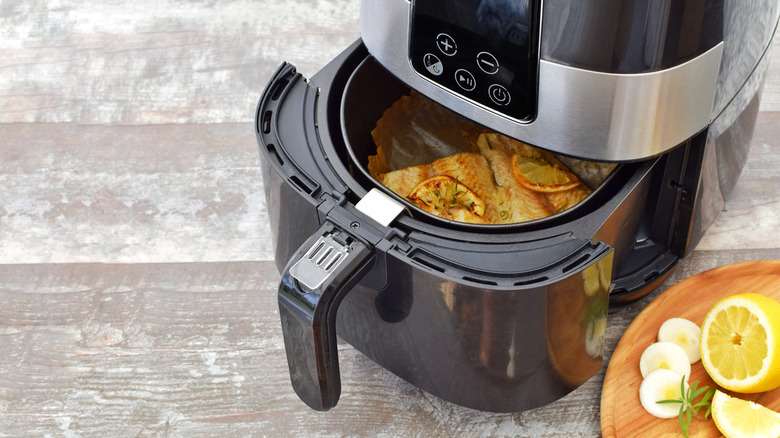
When you put a wet-battered fish in an air fryer, it's hard to get a crunchy coating because the hot air circulating in your air fryer cannot set a liquid batter in the same way as deep-frying in oil. Another issue is that the batter on fried fish tends to be thin, wet, and somewhat on the runny side. As a result, the batter can easily slide right off of your fish and wind up in the bottom of your air fryer's basket if you're not careful.
Another issue with air-frying a battered fish is that it releases moisture as it cooks. When you're deep-frying, this moisture evaporates thanks to the hot oil, and the surface gets crisp. But when this water is released inside an air fryer, this excess steam just makes the coating soggy rather than crispy. Some home cooks suggest battering your fish, dredging it in flour, and then spritzing it with oil so that the batter stays put in the air fryer. You can also try battering your fish and then putting the filets in the freezer for a few hours to help the batter stay on while air-frying.
Deep-frying can cause some fish to break apart in hot oil
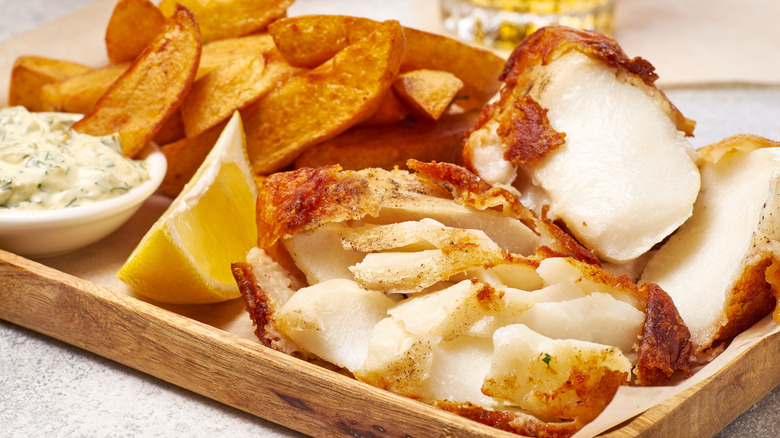
Deep-frying fish is an intense process. Not only are you frying the fish at a high temperature, but the oil is likely bubbling aggressively. Some types of fish just do not hold up well under these conditions. In fact, delicate fish can break apart in the oil, meaning some chunks become greasy while others are left dried out. For this reason, many people use cod when making fried fish because it tends to handle high-temperature cooking well. Other fish that are good for frying include sea bass, flounder, and haddock.
But even fish well-suited for deep-frying can break apart in the oil if you aren't gentle and slow about placing them into the hot oil. You can cause it to break apart if you try to move or flip it too soon. Most of the time, you should put your fish in the oil and leave it be for a bit so that the batter can start to cook and form a protective coating. Likewise, forgetting to pat your fish dry before battering and frying can also cause it to retain excess moisture, which could put it at risk of breaking apart.
Air-frying sometimes can lead to overcrowding
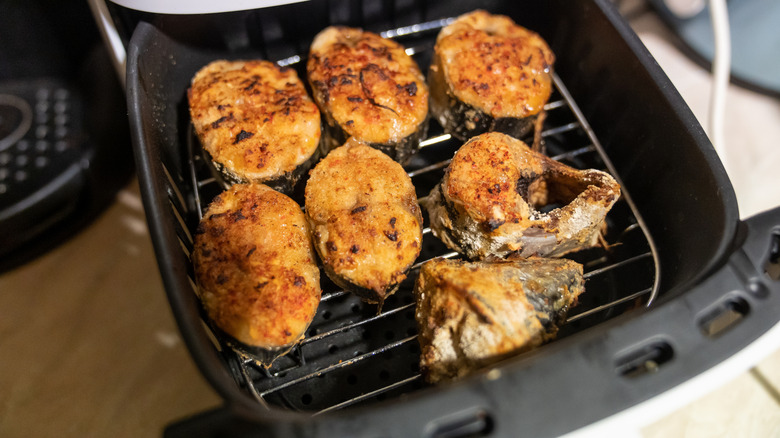
Most air fryers don't have a lot of room in the basket for food, especially if you own a standard-size air fryer or one with a 4- to 6-quart capacity. In fact, many air fryers this size will only hold about three or four portions when food is spaced evenly in the basket. And because battered fish needs space to crisp up — and to ensure the batter stays in place — it can be challenging to fry fish in an air fryer.
Instead, home cooks often run into overcrowding issues in these situations, which can prevent food from cooking evenly and getting crispy. The only way to avoid this scenario is to cook your fried fish in batches, which means your first few batches may get cold before you have fried them all. Of course, you could use a larger air fryer or choose one that has a double basket, but not everyone has room in their budget (or their kitchen) for an upgrade. Alternatively, you could simply choose to deep-fry your fish or select a different preparation method entirely.
Deep-frying requires a lot of oil which could be more costly

Many fish fry aficionados recommend using fresh oil each time you deep fry your fish, which means this method can get expensive. Not only do you have the costs associated with the fish and batter, but you also need to purchase a lot of oil to fill your stockpot, deep fryer, or Dutch oven. Of course, the amount you need will depend on the size of the pot you're using and the type of high smoke point oil you use, such as canola oil, peanut oil, and sunflower oil.
Even though you'll likely only fill your chosen pot or vessel less than halfway to prevent any bubbling over when you add your fish, this is still a lot of oil. For some deep-frying adventures, this can be as much as 2 to 4 quarts of oil each time. For context, a two-pack of 3-quart containers of Kirkland Signature Canola Oil costs roughly $15 based on prices in Columbus, Ohio. With air-frying, you're going to use a fraction of the oil needed for deep-frying, with some estimates putting it at about 100 times less oil.
Air fryers may take longer to cook fried fish but provide easier clean up
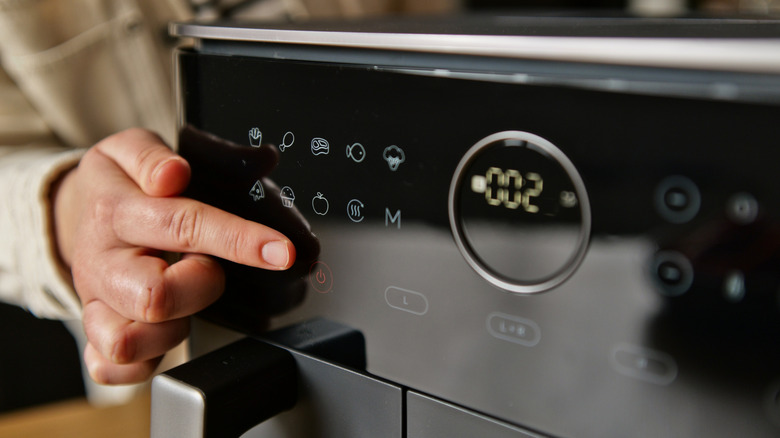
When you're cooking food in an air fryer, you can expect the process to take roughly 10 to 15 minutes longer than deep-frying. This is largely due to the difference in cooking processes. Air-frying appliances typically contain a heating element that heats the air and a fan that blows the air around within the device, while deep-frying relies on hot oil to fry the food. When it comes to fish, deep-frying may take just a few minutes, depending on the thickness of your food.
Where air fryers might have the advantage is in the clean-up process. While air-frying battered fish is definitely messy, this mess can be reduced by using parchment liners or other tools to contain the batter. But with a deep fryer, you not only need to clean up the oil splatter and smell in your home, but you also have to find a responsible way to dispose of your cooking oil. This often means allowing the oil to cool and putting it into a container that can be tossed in the trash. Whatever you do, don't handle hot oil, and be sure to avoid pouring it down your drain or into the toilet.