

The Ideal Thickness For A Perfect Ribeye Steak
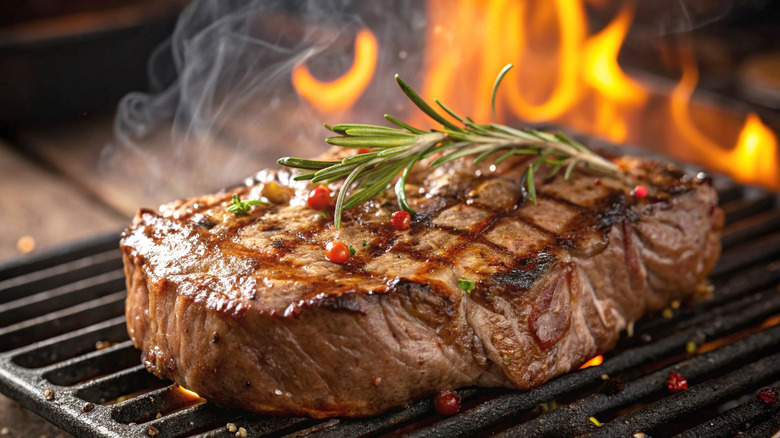
We're always on the lookout for that culinary Goldilocks moment whenever we don the apron and turn into our own makeshift gourmet home chefs. For any dish, getting the right texture, flavor, and ingredients is the holy trinity that can ultimately make or break a dish. When it comes to steak, this kind of mastery can be fiddlier, especially with finding the right cut and prepping it. As for one of the prized cuts on the market — the almighty ribeye — finding the ideal thickness is about ensuring you can get it cooked to perfection, which is why 1.5 inches is a pretty sweet spot.
It's worth knowing what you're dealing with when handling ribeye. The cut comes from the cow's rib and is renowned for its high fat content seen as marbling, which makes it especially tender and flavorful. This can have its downsides, too — sometimes the fat struggles to render, making it tough and chewy. In particular, the thickness of a ribeye has a crucial role in how heat makes its way to the steak's heart, and if you don't want your meat overly well done, a 1.5-inch thickness helps the exterior form a good crust without overcooking the inside. Too thin and a pink interior is a challenge; too thick and it could end up being more blue (closer to raw) than rare, with a burned exterior and an inside so undercooked you can practically hear the cow mooing. In case you're uncertain, we have you covered on how to avoid rookie errors when prepping your ribeye.
Match your ribeye's thickness to how you plan on cooking it
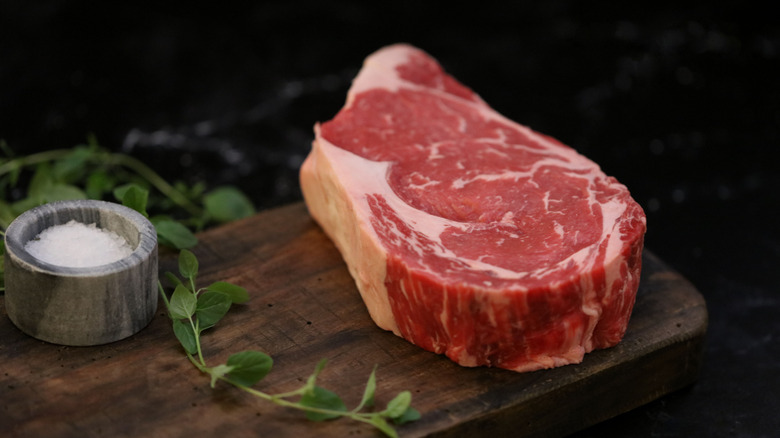
There are many ways to cook a ribeye steak, and the thickness you want can largely depend on the method you choose to employ. A 1.5-incher works especially well if you're cooking ribeye in a pan for a sizzling crust. Here, you want to avoid excessive thickness, since it might require having to potentially cook the steak in the oven after searing it. If you can avoid extra stages in the kitchen, that's usually a plus, since more cooking steps give you more opportunities to mess things up.
If you're opting for the grill, on the other hand, thicker could be better. Here, you have the flame and more room to play with — when you want to sear the exterior, you can move the steak to direct heat, and then indirect heat when you want to give it a lighter finish. In general, having a meat thermometer comes in handy even if you're a well-seasoned steak expert. As per USDA recommendations, the internal temperature should come to at least 145 degrees Fahrenheit.
But before the cooking even starts, buying the best ribeye at the grocery store is the first step to a successful outcome. Aim for a steak that has a relatively even, uniform thickness, as that can allow you to cook it more consistently without ending up with patchy areas. A heavily marbled cut can also be juicier and tastier, owing to its higher fat content — prime ribeye generally beats out choice on this front, although the latter could have a better overall value.