

Chain Restaurants With The Highest Quality Steaks
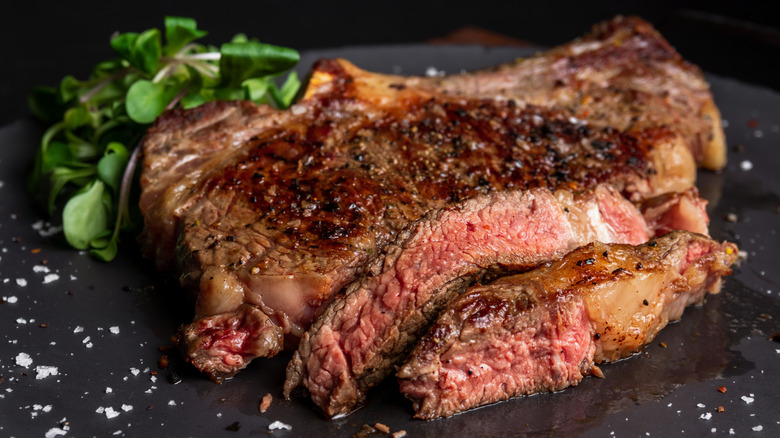
"I know this steak doesn't exist", says Cypher in the 1999 blockbuster "The Matrix." He then takes a bite of the delicious and juicy steak — his one blissful reason to stay inside the matrix. This scene symbolizes America's obsession with steak to a certain extent. The steakhouse culture in the country began in the 19th-century evolving from the London-style chophouses meant for the working class into these elite spaces where diners would go on special occasions. While the number of steakhouses has dwindled in the past decade or so, there are still a few that have withstood the test of time.
The U.S. has a range of steakhouses -– from budget-friendly to premium-priced, from legacy brands to new entrants, and from best to worst. While there are many sneaky ways in which steakhouses can scam you, there are also the ones that hold up to their promise of serving their customers top-notch steaks. This list looks at chain restaurants in America that serve the highest quality steaks. Each restaurant has made it to the list after careful deliberation and keeping a certain criterion in mind. There is a methodology slide in the end for those who are interested in reading about the process.
Smith & Wollensky
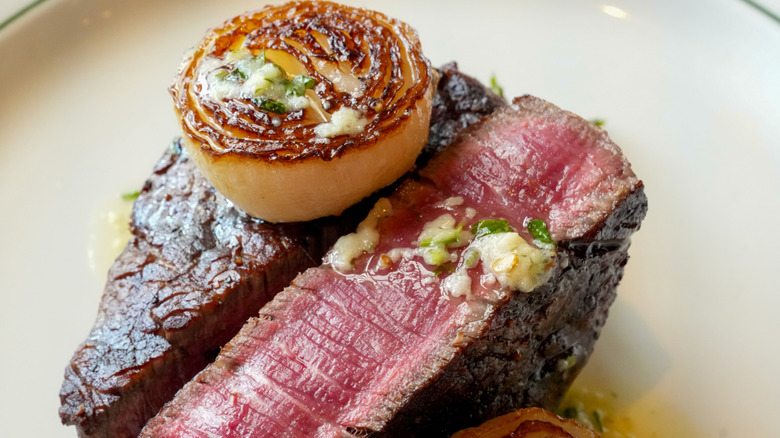
Smith & Wollensky was opened in 1977 in New York City by Allan Stillman and Ben Benson, and it's one of the most high-end steakhouses in the country. It's a small chain, however, with restaurants in six locations in the U.S, including Chicago, Las Vegas, Miami Beach, Boston, and Wellesley, Massachusetts – as well as a few international locations. In 1997 the New York Times called Smith & Wollensky "a steakhouse to end all arguments".
With such high accolades, it should be expected that the steakhouse is serious about the quality of its meat. Smith & Wollensky sources its signature filets and American wagyu from Double R Ranch and Snake River Farms where the cattle are grain fed and humanely raised. The steak is dry-aged in-house for 28 days to intensify the flavor and make it more tender. There is 16 oz. bone-in filet mignon on the menu, that cuts like butter , along with the signature 28 oz USDA Prime dry-aged bone-in rib eye. If you prefer something spicy, get yourself a Cajun-spiced rib. The steaks are served mildly charred –- just the way a good steak should be served.
Del Frisco's Double Eagle Steak House
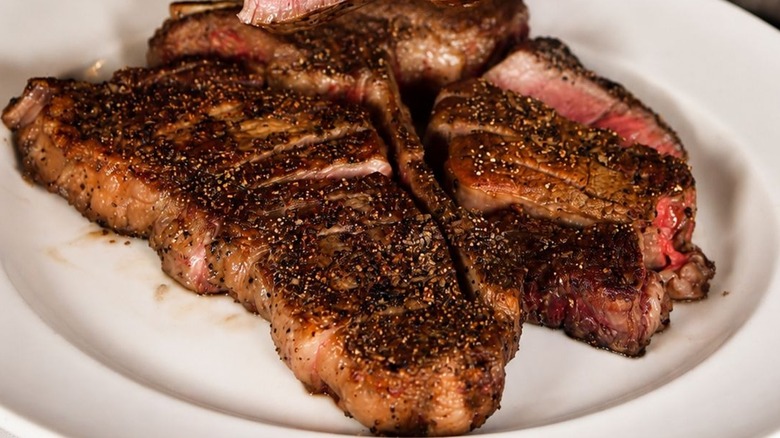
Founded in 1981, Del Frisco's Double Eagle Steak House is an ode to the classic American steakhouses. The interiors are extravagant — high ceilings, a staircase that looks straight out of the Titanic, and wood work that brings a certain kind of richness to the place. It's the kind of restaurant where you would want to order an old fashioned with your steak and feel like you're in a classic American novel. The restaurant is now present in 14 locations in the U.S.
Del Frisco sources its American Wagyu filet from Snake River Farms and it goes without saying that the beef is USDA Prime. It also has Japanese A5 wagyu -– the highest official grade of meat — on the menu. The prime strip and prime ribeye are both dry-aged for 45 days, and customers can expect their steak to hit the table with a perfect char, while still being tender inside. If you like your steak rare, Del Frisco's is the place to be with one customer saying, "You could practically see the blood still dripping." While the steaks are of course the highlight, customers also rave about the Wagyu meatballs and the beef carpaccio being must-haves.
The Capital Grille
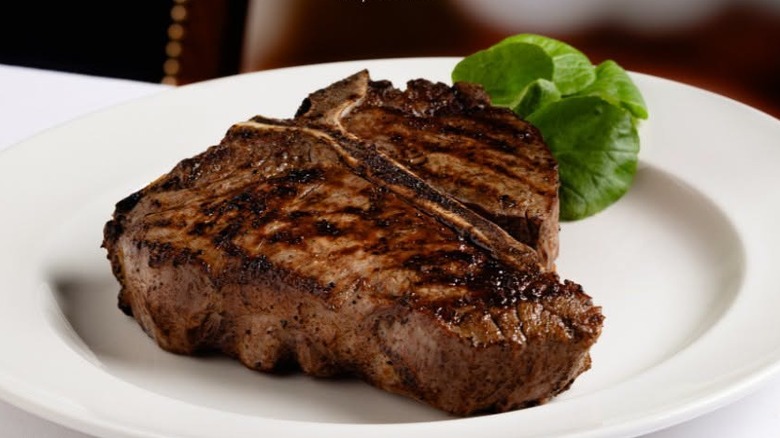
Step inside a Capital Grille steakhouse and the word "classy" instantly comes to mind. Since its opening in 1990, the restaurant has leaned into this aesthetic, with the interiors having an upscale steakhouse feel with African mahogany paneling and Art Deco chandeliers that add a touch of elegance to dining experience. What keeps patrons coming through the door, however, isn't the leather booths, but the meat.
Apart from being USDA Prime, what makes The Capital Grille steaks so delicious is that the meat is dry-aged in-house for 18-24 days to get a rich flavor and melt-in-your-mouth texture. All steaks are carved by the in-house butchers to meet the exacting standards the restaurant holds dear. Yelp reviewers highly recommend the bone-in Kona crusted NY strip — the spice rub made with ground Kona coffee is a specialty at The Capital Grille — and porcini crusted bone-in ribeye. Both the cuts are perfectly cooked and come in portions big enough that you might want to share it.
Mastro's Steakhouse
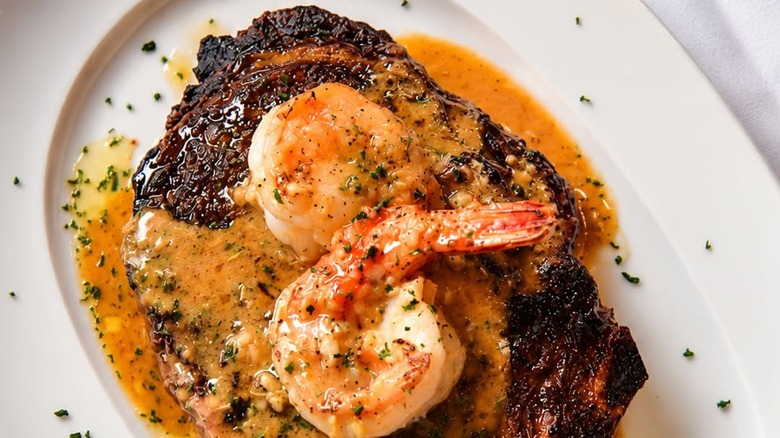
Mastro's Steakhouse opened in 1999 in Scottsdale, Arizona — a chain that is now present across multiple states with 11 outlets alone in California. The interiors of Mastro's Steakhouse are opulent with wood panels, floor to ceiling wine cellars, and live entertainment every night, making it perfect for anniversaries and special occasions.
Every piece of beef that hits the grill at Mastro's is sourced from corn-fed cattle on Midwestern farms. The steaks aren't cheap, starting at around $60, but they're USDA Prime cuts that are wet-aged for 28 days, so customers can expect a delicious chew in every bite. For the uninitiated, wet-ageing is the process where the meat is vacuum-sealed in plastic bags and stored in refrigerator to be aged in its own juices.
Mastro's cooks its steaks in a 1,500-degree broiler and serves it on 450-degree plates that keeps the meat sizzling and hot until the last bite. From its regular selection go for the filet mignon and petit filet, both excellent quality cuts. If you wish to indulge, the Japanese A5 wagyu from Miyazaki Prefecture is a must-try.
Morton's The Steakhouse
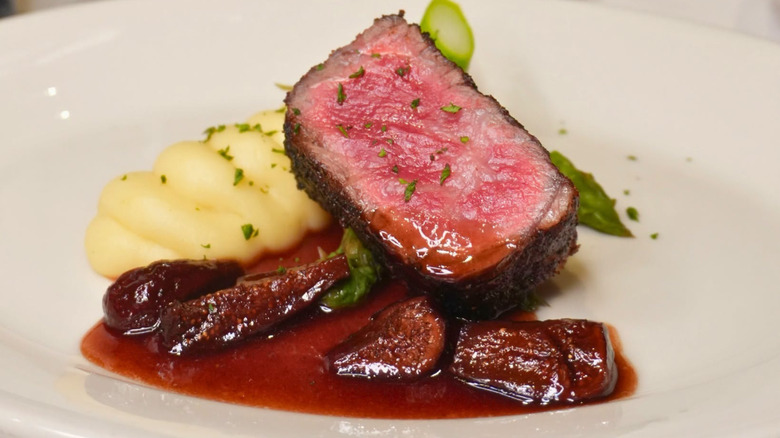
Do you know that Morton's can trace its beginnings back to a hamburger? Founders Arnie Morton and Klaus Fritsch who worked at Playboy Club in Montreal in the 1970s decided to open the first restaurant in 1978 after Fritsch impressed Morton by making a delicious hamburger. The rest is history and the chain now exists in 61 locations across America. Enough about burgers though, what about the steaks?
Morton's gets its steak custom-cut from its network of expert butchers, and ages it for 23-28 days. On the menu there are the USDA Prime, Australian wagyu, and Japanese A5 wagyu, which is only available seasonally. It serves a 16 oz. "proprietary" prime Cajun ribeye — a must try for those who like a bit of a heat in their steak. Yelp reviews recommend the filet mignon medium rare that is cool at the center, and pairs well with bearnaise or steak sauce. The prime ribeye is another favorite with customers opting for medium rare to enjoy its perfect juiciness.
Ruth's Chris Steak House
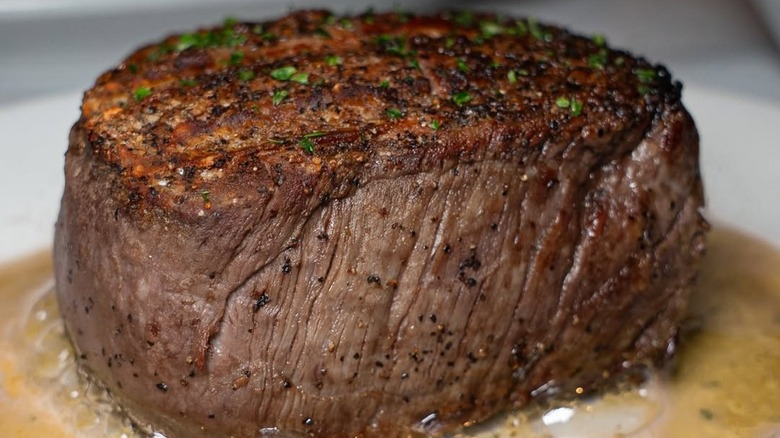
Patrons of Ruth's Chris Steak House can count on a sizzling, hot steak with every visit. Owner Ruth Fertel, who purchased the Chris' Steak House name in the 1960s, was quite an innovator. She designed an 1,800-degree broiler to replicate the sensorial effect of butter sizzling on a 500-degree plate, and to keep the steak volcanic hot.
According to its website, the chain sources its corn-fed beef from farms in the Midwest. The cows start on grass before moving to corn to maximize the beef's flavor (in case you were interested in beef cattle dining habits). The restaurant serves USDA Prime beef that is wet-aged and perfectly seasoned. Order a medium-well and it is good to eat on its own without lathering it up with sauce. Customers recommend the filet mignon at Ruth's Chris, and highlight that its tenderness has the perfect bounce back if when you press your fork into the meat.
Fleming's Prime Steakhouse & Wine Bar
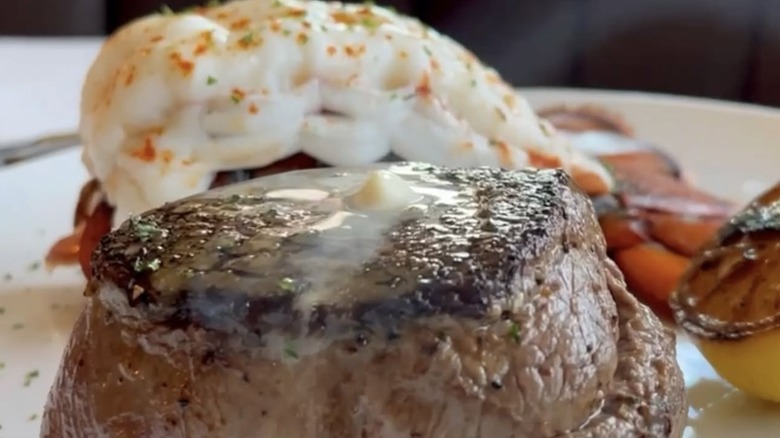
Fleming's is the brainchild of two steak connoisseurs — Paul Fleming and Bill Allen. The duo opened their first restaurant in 1998 in Newport Beach, California and it's now present in 60 locations. Interestingly, before venturing into opening his own steakhouse Fleming owned a franchise of Ruth's Chris Steak House, and is also the 'P.F.' in the popular Chinese restaurant chain P.F. Chang's.
Fleming's sources its grain-fed beef from family-run farms, and both wet and dry ages it for 21 days. Because the restaurant believes in minimal seasoning and letting the meat's natural flavor shine, each steak is seasoned by hand with just a mix of kosher salt and freshly cracked pepper. Steaks are served with a simple pat of butter garnished with parsley.
For its Japanese A5 wagyu, Fleming's has introduced a tasting experience that includes a 4 oz wagyu strip served rare on a 650-degrees hot stone with aromatic miso glaze, grated horseradish, and black lava salt.
Fogo de Chão
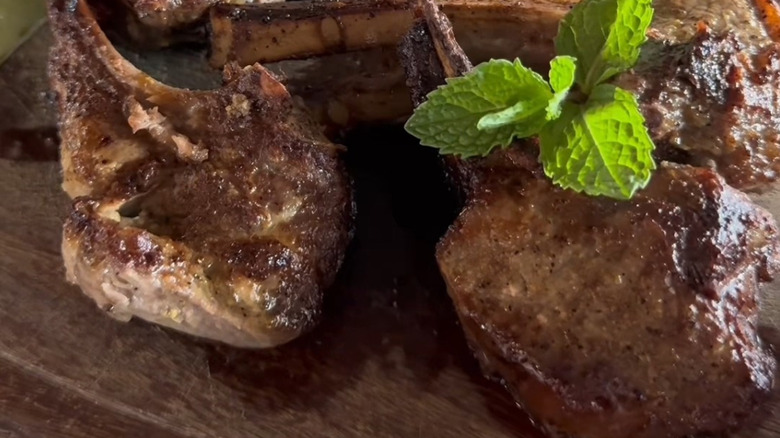
Fogo de Chão was started by two Brazilians who grew up on a farm in Serra Gaucha, where they learned churrasco-style cooking — the traditional grilling practice in Brazilian steakhouses. The duo opened the first restaurant in 1979 in Porto Alegre, and 18 years later brought their Brazilian steakhouse to Dallas.
Fogo de Chão serves a range of cuts; the tomahawk steak is dry-aged for 42 days and the wagyu ancho and wagyu New York strip are both dry-aged for 21 days. and the picanha cut seasoned only with rock salt. One of the premier cuts on the Fogo de Chão menu is the picanha steak. Seasoned with rock salt, picanha comes from the prime part of the top sirloin. It's the star cut of steakhouse culture in Brazil, and arguably the restaurant's most popular beef offering. While the steak itself is a hit with customers, the full churrasco experience that includes table-side carvings really does elevate the dining experience to a whole new level of enjoying a steakhouse meal.
Perry's Steakhouse & Grille
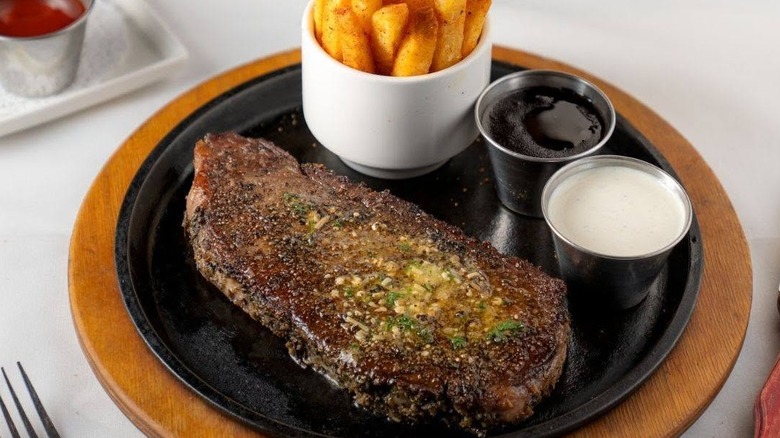
Like many restaurants, Perry's Steakhouse & Grille has humble origins, first opening in 1979 as a butcher shop and deli in Houston's meat market. In 1986 it started serving steaks and grilled meat to its patrons, and added tables and chairs where people could sit and eat.Today, Perry's is present in two dozen locations and white tablecloths and ribeye steaks are the standard at each restaurant.
Perry's serves USDA Prime that is aged for 28 days, uses a signature seasoning, with steak butter on top -– both made in-house. There is koji-aged steak on the menu — a technique where the meat is aged in koji to bring out the umami flavor in a shorter time span than the dry-ageing process. Served on a hot cast iron plate, the steak comes sizzling to your table. One review on Yelp describes Perry's ribeye as "deep, dark sear with real char, crispy edges, butter melting on top, juices already running ... I kept cutting smaller pieces just to make it last". Perry's also has a disclaimer on the menu that they do not "guarantee well done steaks". You've been warned.
Steak 48
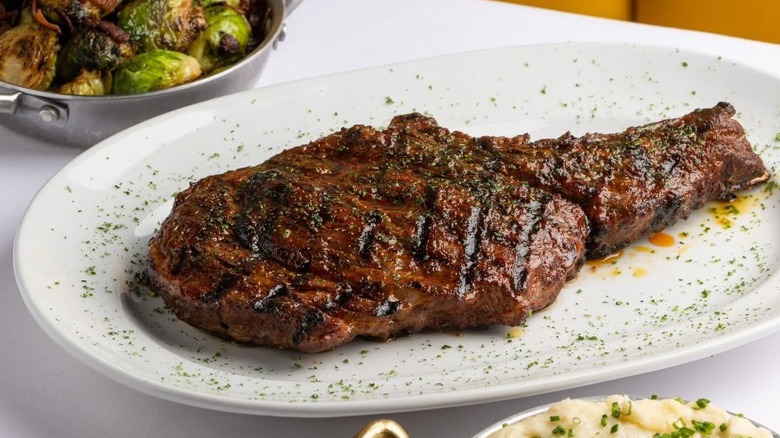
In 2016, almost a decade after the Mastro family sold their legendary brand Mastro's, they opened Steak 48 in Houston, Texas. The restaurant is now present in 11 locations and has kept much of the original Mastro's vibe intact with white table cloths, V-shaped martinis, seafood towers, and of course, the fine quality steaks.
The restaurant's USDA Prime goes through both dry as well as a wet-ageing process. The beef variety includes American wagyu, Japanese A5 wagyu sourced from the Tohoku region, and Australian Tajima wagyu –- though this is seasonal, so check with the server before ordering. Steak 48 has in-house master butchers so customers can expect the cuts to be of the best quality. To make sure that the steak remains sizzling hot until the last bite, it is served on 500-degree plates. The plates are so scorching hot that an Eater reviewer said that the plates were near "lava-like" and "seared holes into the white tablecloths of the serving trays".
III Forks Prime Steakhouse
III Forks is one of the smaller steakhouse chains — present in just four locations — serving high-quality steaks in the U.S. The restaurant's first outlet opened in 1998 in Dallas, Texas, and sources its USDA Prime from Snake River Farms. There is also the A5 Miyazaki Gyu – a premium brand of Japanese wagyu beef that comes from 100% Japanese black cattle, certified Angus beef that is produced from Aberdeen Angus cattle, and American wagyu -– a cross between the Japanese wagyu and the American Angus. The steaks are famous for having a butter-like marbling that perfectly accentuates the rich flavor of the beef.
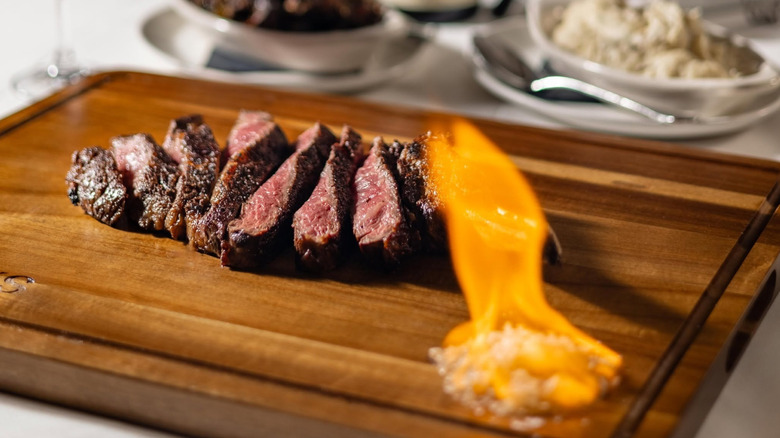
III Forks has an extensive dry-aging process -– 75 days, the longest on this list — to maximize each streak's flavor. The American wagyu from Snake River Farms is so tender that customers might find themselves completely forgetting about their steak knife. A good steak deserves an eye-catching presentation and the steaks at III Forks are served on a wooden platter with whiskey-soaked Maldon salt, which is set on fire for dramatic effect.
Gibsons Bar & Steakhouse
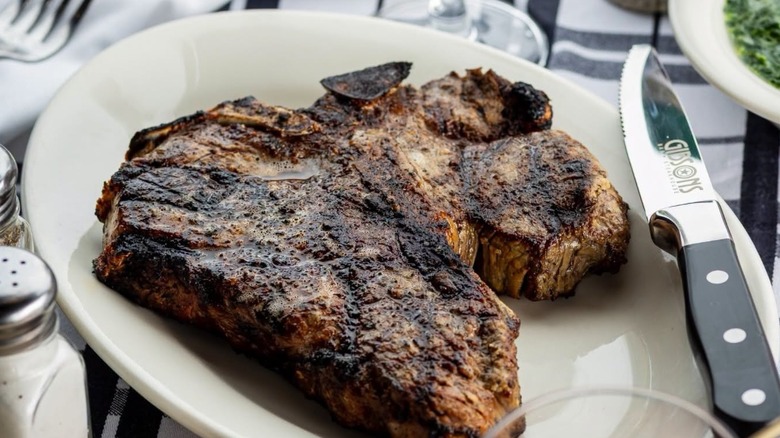
Gibsons has been a Windy City favorite for over 30 years now. The restaurant is only present in three locations — Chicago, Rosemont, and Oak Brook — making it the smallest chain on our list. Gibsons sources its USDA-certified Prime Angus from the family-run farms in the Midwest where the cattle is grain feed for up to 120 days before heading to the butcher.
The restaurant wet-ages most of its meat for 45 days, with the exception being the Gibsons tomahawk and Italia large porterhouse that are dry-aged. While just about any steak on the menu should satisfy carnivores, the Gibsons grass-fed Australian ribeye is popular pick with customers. A customer on Yelp calls it "one of the best ribeyes I have had." While most of the steaks are in the $60-$80 range, the marinated skirt steak is the most affordable option at $49, and with its giardiniera relish — a condiment that's essential to Italian beef sandwich – is full of Chi-town flavor.
Methodology
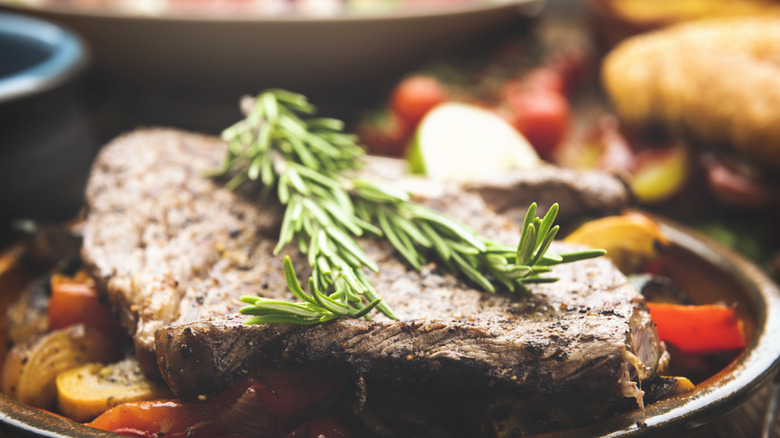
While the United States has many steakhouses across the price-range spectrum, the idea was to create a list of the ones that serve the highest quality steak. One of the main criteria was sourcing, so we looked for the chains that serve USDA Prime steak, which is the highest certification for beef in the U.S. Next, we included the ones that source from family-owned farms like the Snake Rivers Farm or Double R Ranch. There were also a few that go far and beyond and source the Japanese A5 wagyu.
Processing was the next aspect — we looked at the restaurant chains that dry or wet age the beef to enhance the flavor and texture of the meat. And last but not the least, we looked at consistency in terms of flavor and quality, and also searched through online reviews to find out what the customers are saying.