

German Vs American Bologna: How Are They Different?
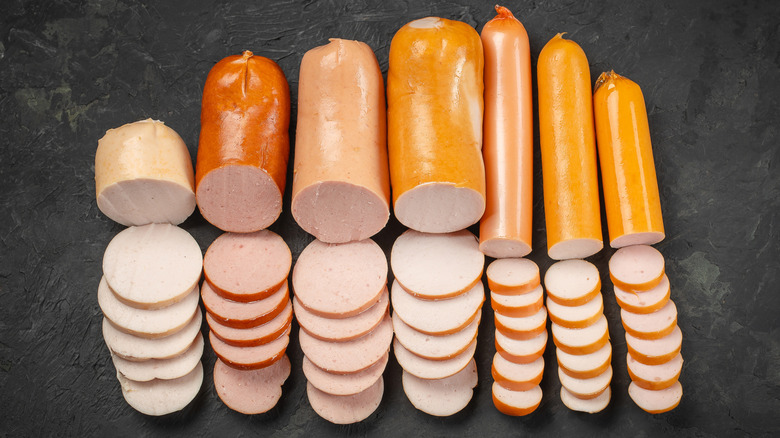
Many Americans associate bologna with the bland, bright pink stuff of lunchtime lore. However, bologna isn't a monolith (that's just one of many false facts about bologna you thought were true). The mass-produced American version we either love or love to hate isn't the only bologna on the block — the term can refer to a wide range of smoked, sliceable sausages, and many are worth trying. Case in point: German bologna.
Bologna originated, as the name suggests, in Bologna, Italy, but has enjoyed a long tradition in Germany (perhaps unsurprisingly, given Germany's rich sausage culture). While the exact history is unclear, evidence suggests that bologna was brought to the U.S. by German immigrants in the 19th century. Oscar Mayer founded his namesake brand in 1883 after immigrating from Bavaria to the Midwest, and it remains one of America's most recognizable bologna producers today. Traditional Deutsch bologna, however, is a different beast from the boring lunch meat most of us are familiar with. Where American bologna is notoriously floppy and bland, its German counterpart packs a powerful flavor and has a denser texture.
German bologna has a hearty texture and garlicky punch

German bologna, also known as ring bologna or Fleischwurst, is a smoked sausage usually made from a finely ground blend of pork and beef. It's typically spicier and firmer than American bologna, generously seasoned with garlic and paprika, and can come in classic logs or U-shaped loops (hence the name ring bologna). German bologna is fully cooked and ready to slice for sandwiches, pan-fry, or chop into pasta salad for a German flair.
While American bologna often gets a bad rap for its highly processed nature and bland taste, German bologna is generally seen as more of a delicacy, with fans praising its delicate, spicy-sweet flavor and hearty bite. One Reddit user gushed that the bologna they ate growing up in West Germany was "absolutely divine," adding, "And no bologna I ever have will ever be as good." Another Redditor affirmed, "Tried some German baloney from my local supermarket and I order it every time I shop there now."
If you're craving a taste of German bologna stateside, you're in luck — similar sausages are available across the country, especially in the Midwest. One of the most popular regional varieties is all-natural German bologna from Milwaukee-based brand Usinger's. Its minimally processed deli slices are a mix of pork and beef spiced up with paprika.
American bologna is mild and soft
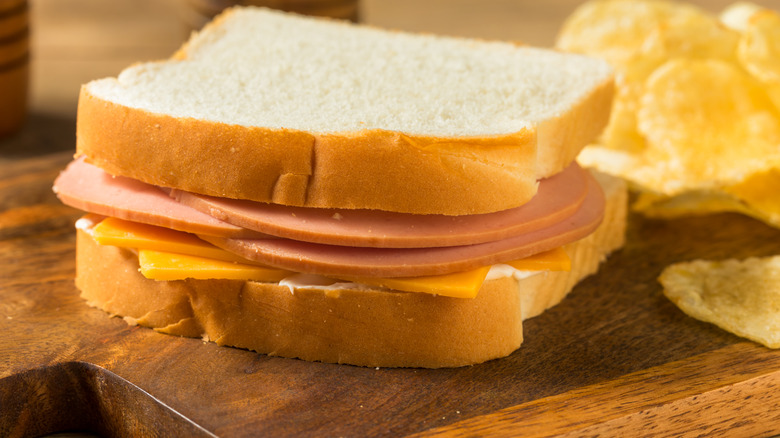
American bologna (better known as baloney) is a cured, fully cooked sausage characterized by a uniform pink color, smooth, soft texture, and mild flavor, with no visible pieces of fat or mix-ins. It typically comes in large, sliceable logs made from some combination of beef, pork, chicken, water, and added fat, emulsified into a paste and stuffed into a sausage casing that you might not want to eat. One of the biggest differences between American bologna and the German version is in the seasonings. The two strongest flavors in American bologna are salty and sweet, and spices are typically limited to paprika and a bit of celery or mustard seed.
American bologna is often looked down on as a cheap, bland, low-quality deli meat. While it may be less flavorful than its German forefather, it has its place in the sausage canon. Many enjoy the nostalgic taste of a classic bologna sandwich on white bread (if that's a little dull for your palate, there are plenty of ways to upgrade your bologna sandwich). Plus, as demonstrated by bologna salad, its mild flavor and soft texture contrast nicely with bolder ingredients such as pickles, onions, and fresh herbs. No matter what kind of bologna you fancy, make sure to avoid all-too-common bologna mistakes, like forgetting to fry it and storing it with raw meat.