

14 Oldest Candy Bars Still Sold In The US
We may receive a commission on purchases made from links.
You may have loved your favorite candy bar for what seems like an eternity, but there are some big brand confections that have been tempting candy lovers for longer than most of us have been alive. Well-known names like Hershey, Reese's, Heath, and Baby Ruth entered the sweets scene in the early years of the 20th century and became fixtures as other creations came and went. Despite trends that have brought in everything from gourmet spicy chocolate bars to the intriguing ingredients of Dubai chocolate, the classics have never gone out of style.
Flipping back through the candy bar history book, you can find your favorites dating back generations. Though new twists and turns have given some of these treats a variety of variants — and have even seen a few sidelined for some time before making a comeback — the oldest candy bars still sold in the U.S. represent some of the biggest names in the confections game. And all of them appear to be in it for the long haul.
1. Hershey's
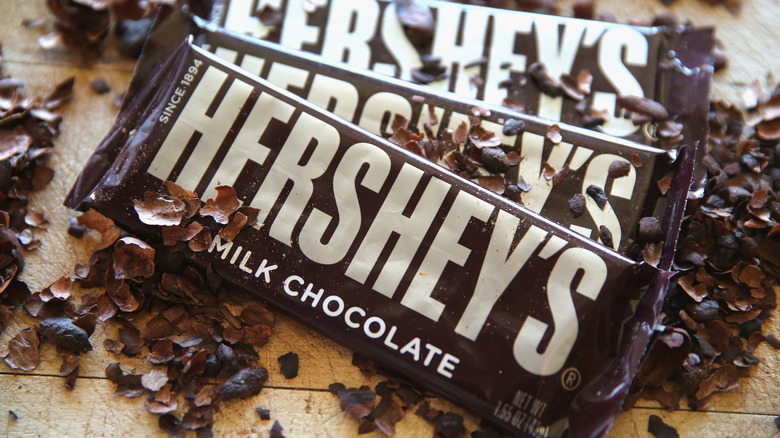
The great ancestor of all candy bars that came after it, good-ole Hershey's is among the oldest candy bars still lining store shelves today. Its introduction in 1900 was the start of a major movement by commercial confections, carving out a niche market that quickly became a thriving industry. The ever-popular Hershey's with Almonds showed up shortly afterward, in 1908, giving the original bar a crunchier counterpart to share the spotlight.
Though the Pennsylvania chocolate company started by Milton Hershey in 1894 has long since expanded its repertoire to include gummies, sours, and even non-candy snacks, the bar that bears its name is a ongoing hallmark of the brand's long-lasting chocolate bar legacy. The name "Hershey" is synonymous with American confections now. Despite being panned for its sub-par flavor, the original Hershey's bar is the bestselling candy bar in the U.S. according to USA Today, holding a whopping 57% of consumer market share.
2. Goo Goo Cluster
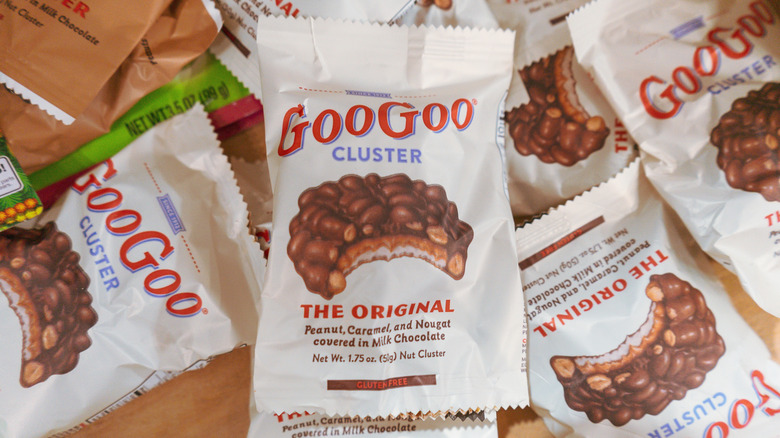
With its lumpy patty of caramel, marshmallow-style nougat, and roasted peanuts drenched in milk chocolate, the Goo Goo Cluster gathered everything good and tasty from the candy world in 1912 and started an ongoing sensation. The formula has been making taste buds happy ever since, with the Goo Goo Cluster Company headquarters becoming a tourist attraction for visitors and residents of Tennessee alike. Shoppers can even design their own Goo Goo Cluster at the Downtown Nashville and Gatlinburg stores.
The company's website touts the creation as the first combination candy bar in the U.S., making Nashville's Standard Candy Company a true innovator in the candy sphere. Its fun name and tasty blend of bits and bobs gave the South a timeless treat that put this candy maker on the map permanently. It also provided Music City with an official candy selection, one that represents both the history and the innovative spirit of the city. That means all sorts of alterations that turn the old-fashioned Goo Goo Cluster into a marvel of modern confectionary creativity.
3. Idaho Spud
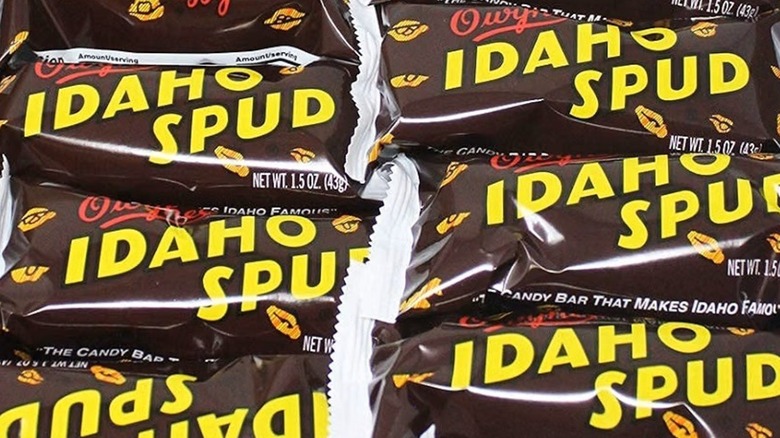
A candy bar made to resemble a potato sounds like a novelty treat with a very brief lifespan, but the Idaho Spud bar surpassed the 100-year mark and kept right on going well into the new millennium. Wonka-like candy maker T.O. Smith began his enterprise in his home kitchen in 1901; experiences in Chicago and Salt Lake City led him to Boise, where he and a team of 17 confectioners started up the Idaho Candy Company in 1909, with a little help from the Adams Family. By 1918, the Idaho Spud Bar had been launched, and candy bars have never been the same since.
To clarify: there are no actual potatoes in an Idaho Spud. It's a mound of marshmallow coated in chocolate and sprinkled with coconut, formed into the shape of a potato. The novelty of the shape that represented the signature crop of Idaho gave the heartland state a candy creation honoring the region. Now in production for more than 110 years, Idaho Spud Bar is just one of several items made by the Idaho Candy Company, including other longtime confections the Old Faithful and Cherry Cocktail, both debuting in the mid-1920s.
4. Mounds
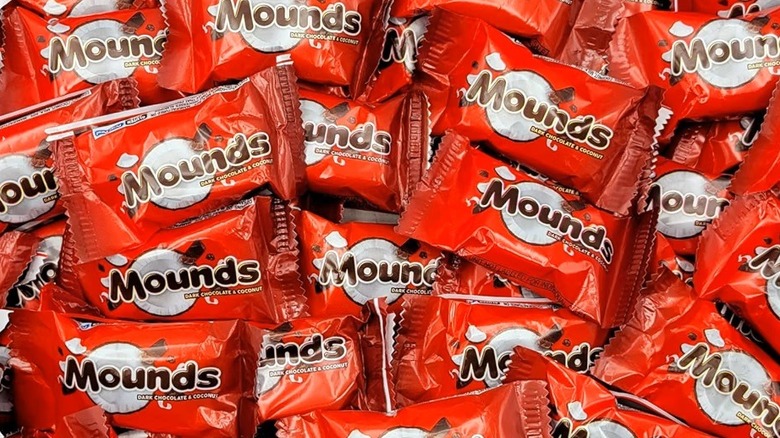
The Mounds bar started out as an offering from door-to-door candy salesman Peter Paul Halajian in Naugatuck, Connecticut in 1919; Halajian would start Peter Paul Candy Manufacturing Company in 1921 to mass-produce Mounds, with help from fellow Armenian immigrants. Halajian expanded the line with the similar-yet-unique Almond Joy in 1946. Both bars became part of the Hershey candy company when Peter Paul was purchased in 1988.
Now in its second century, the Mounds bar is a standard part of candy culture, a two-part story in sweet tropical goodness that stands out from the crowd, thanks to its simplicity and refusal to alter its composition — shredded sweetened coconut covered in milk chocolate — to match modern trends. It's a treat that feels like something from a heart-shaped box of Valentine chocolates, enlarged and given its own chance to shine.
5. Baby Ruth
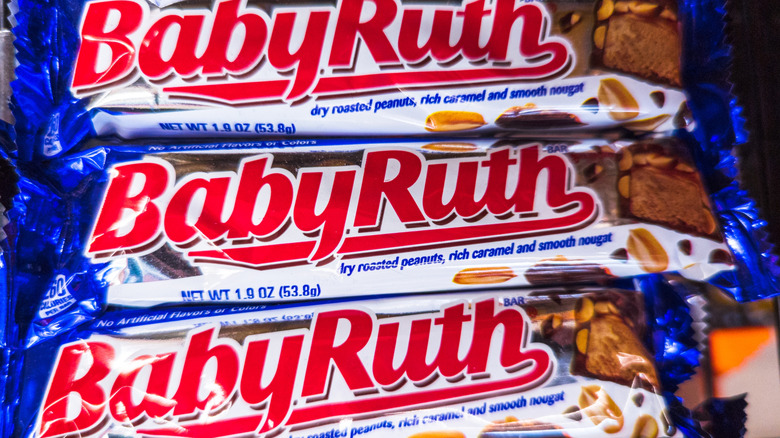
Wrap a layer of peanuts around a core of nougat and soak the whole thing in milk chocolate and you get a Baby Ruth bar, the hot new star of the sugar showcase back when it first came about in 1921. That was when Otto Schnering, owner of Curtiss Candy Company, reconfigured the recipe for a treat called Kandy Kake and conjured up the original Baby Ruth bar. The facility that manufactured the candy became the largest of its kind in the world.
Contrary to popular belief, Baby Ruth wasn't named for baseball legend Babe Ruth, though the slugger did sue in 1926 to gain ownership of the name for his own branded candy bar. Regardless, the Babe and the bar became connected and shared the spotlight through this incorrect 20th century lore. Both the classic-sounding name and the old-timey spirit of this classic candy bar carries considerable nostalgic value more than 100 years after its inception. Even after Nestle bought Baby Ruth in 1990 from RJR Nabisco and then sold it to the Ferrero Group in 2018, the candy bar still holds sway over candy fans with a soft spot for nostalgia.
6. Oh Henry!
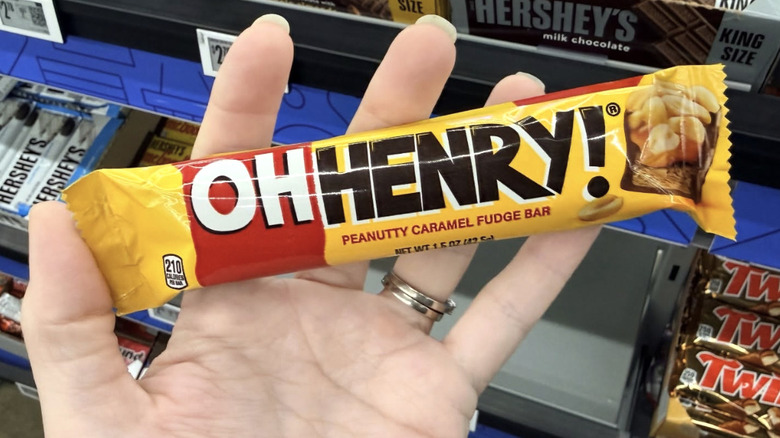
The Oh Henry! bar came about in 1920, when the Williamson Candy Company merged fudge and roasted peanuts with caramel and a coating of chocolate. It was a popular pick when it was purchased by Nestle in 1993 and then by Ferrero in 2018, but it went missing entirely in the U.S. shortly afterward (Canada kept it on shelves — lucky them). Sadly, it was a disruption in the lifespan of a candy bar that had lasted through Prohibition, the Great Depression, and multiple international wars.
But the 2020s are all about retro comebacks, especially for favorite flavors that should never have disappeared in the first place. As of 2026, the Oh Henry! bar has been resurrected and introduced to a whole new audience. For those candy bar shoppers who noticed the absence, there's a resounding sigh of relief knowing that this long-standing favorite is back on the scene in the U.S., more than a century after it first appeared.
7. Zero
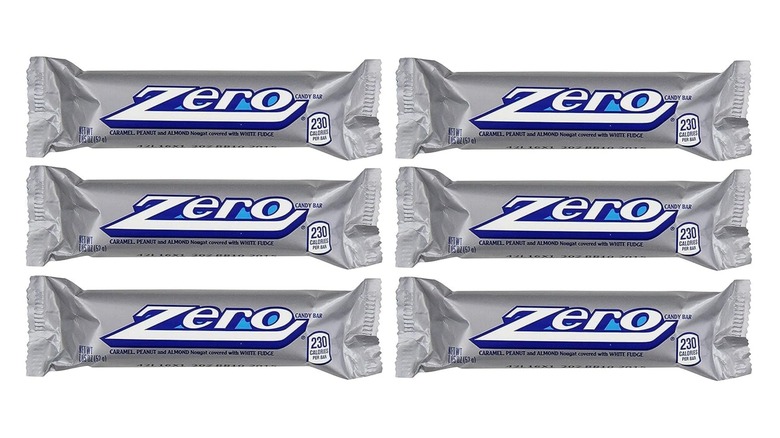
Thanks to its mix of white fudge coating wrapped over caramel, peanuts, and nougat, Zero takes a traditional filling combo and sidesteps the usual chocolate situations to create a thoroughly unique recipe. The Zero bar made its initial appearance in 1920, unleashed onto the world as the Double Zero bar by F.A. Martoccio Macaroni Company. The name of the bar was a reference to cool temperatures, and the label featured polar bears and a frost-topped Z. In 1934, the name was shortened to simply Zero. While it may not be as widely celebrated as the other bars in the sweets section, it's held a steady presence with quiet dignity that belies its flashy silver wrapper.
After changing hands a few times in the mid-20th century, Zero was ultimately scooped up by Hershey in 1996, which kept the singular creation in motion. For candy bar experts who dig a more vintage mix of flavors in a world that keeps pushing more milk and dark chocolate inventions onto the market, it's nice to have a candy bar that keeps its cool alternative personality all these years later.
8. Charleston Chew
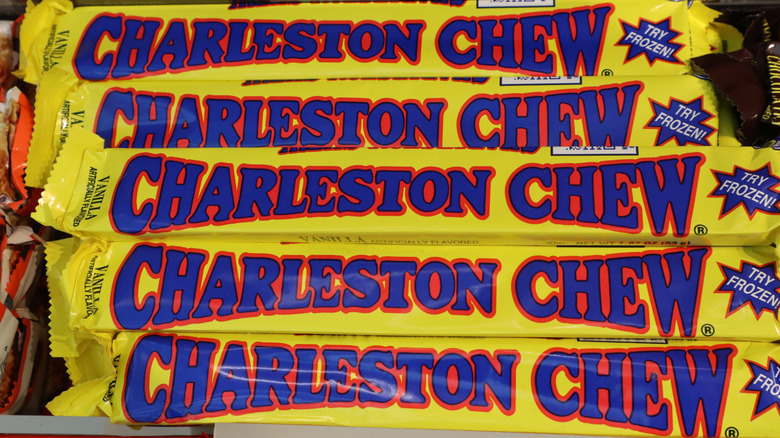
The Charleston Chew was born in 1922, the brainchild of the Fox Cross company, a wedge of chewy vanilla nougat wearing a rich chocolate frock. It became a sensation with a name that tapped into the wild Prohibition-era dance craze that was sweeping the nation. Candy entrepreneur Nathan Sloane bought Fox Cross in 1957, expanded the line to include chocolate and strawberry versions, and even marketed the idea of freezing the bar and smacking it against a counter to create bite-size pieces.
The company was bought by Nabisco in 1980, and it was then sold it to Warner Lambert in 1983. Tootsie bought it in 1993 and currently owns the Charleston Chew enterprise, a logical pairing considering the company's other chewy confections. Even if the dance has long since fallen out of fashion, the candy that adopted its name is still making the rounds more than a century onward. The labels still include suggestions to freeze the bars too, keeping tradition alive in a bar that shows no sign of vanishing anytime soon.
9. Milky Way
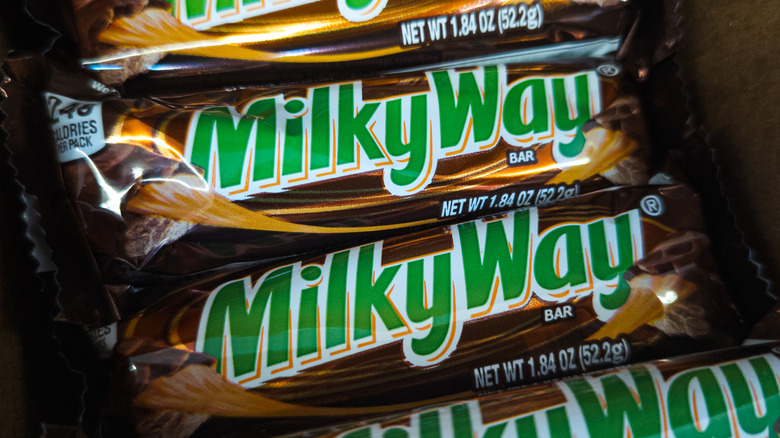
Caramel and nougat slathered in a chocolate coating took on new dimensions of grandeur when Milky Way bars entered the candy fan's orbit back in 1924. The idea was to recreate a milkshake without ice cream in candy bar form. It seemed to have worked, launching a new confection into the universe, one that would pull public consciousness into its gravity and never let go. In fact, Milky Way is the oldest candy bar made by the Mars company, which now expands well beyond the candy scene.
Along the way, there have been reimaginings of what the Milky Way experience can be; alterations like a dark chocolate coating and a cookie dough layer have twisted the original flavors into interesting new shapes. No matter what comes and goes for the candy classics, though, Milky Way has kept on chugging, lasting more than 100 years and becoming one of the oldest candy bars to conquer the market. Even the brand's website invites you to compare your age to Milky Way's.
10. Mr. Goodbar
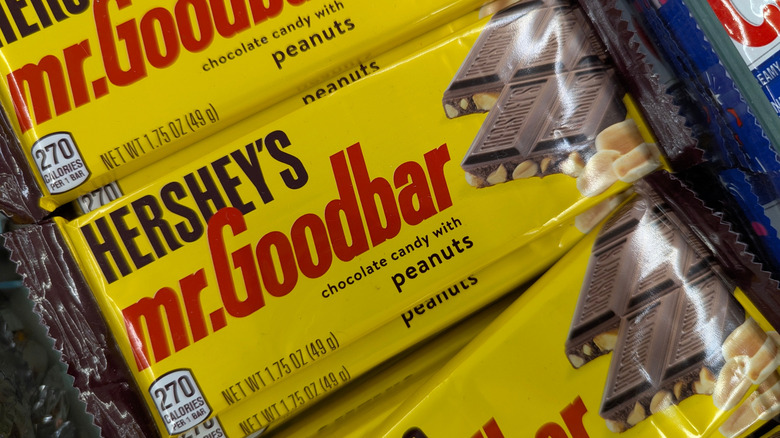
The peanuts-and-milk-chocolate wholesomeness of Mr. Goodbar was welcomed onto the market in 1925 by the good folks at Hershey, who'd launched the basic Hershey's bar a quarter of a century prior. It was only Hershey's second bar to incorporate nuts, after Hershey's with Almonds, and it became a thrilling addition to the collection. The bar retained the snappable squares that made sharing easier, and the peanuts were clearly visible through the chocolate that carried them. It also added a salty twist to the sweet-earthy blend of flavors, something new for Hershey fans to try.
It was a Hershey employee named Samuel Hinkle who first created Mr. Goodbar after expanding the company's lab; William Hershey dubbed it "a good bar," and the name stuck. The bar was initially pushed as a lunch substitute during the Great Depression, when two bars could be had for a nickel. Decades later, Mr. Goodbar has leapt past the century mark and keeps making people happy regardless of the competition.
11. Reese's Peanut Butter Cups
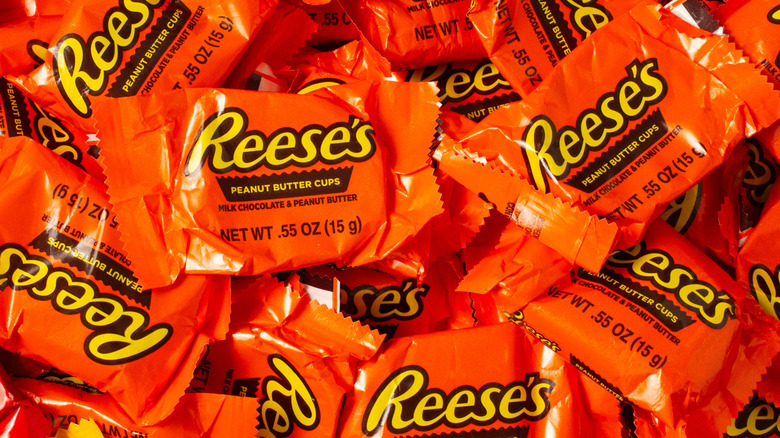
The notion of wrapping a disc of peanut butter filling in a milk chocolate sheath and giving it an oversized candy box-style paper wrapper was a stroke of genius that brought Reese's Peanut Butter Cups into existence in 1928. That year, creator and Hershey worker H.B. Reese began production of his peanut butter cups in his basement; Hershey Company sourced the chocolate that made the cups a familiar yet fresh find for candy fans.
The Reese's company was acquired by Hershey in 1963, a strategic move that made sense for both parties. In the decades following, Reese's cups have been covered in white chocolate instead of milk; filled with jelly and marshmallow cream to accompany the peanut butter; and turned into so many holiday and novelty shapes, it's practically impossible to keep track of them all. Regardless of all the alternative forms, the pedigree inside the bright orange wrapper is a candy invention that has never lost its bite.
12. Heath
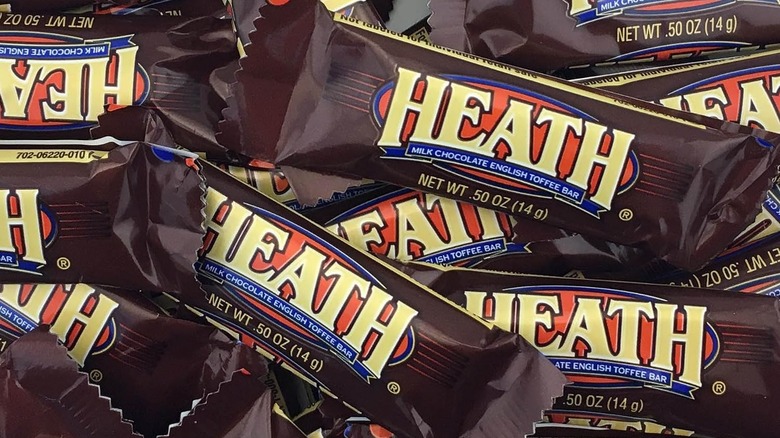
Who would've thought a thin plank of butter toffee robed in milk chocolate would keep candy lovers rapt for the better part of a century? But that's exactly what Heath bars have done since they debuted in 1928 with the Bayard and Heath Company, giving the public a slightly more elegant chocolate indulgence to enjoy. Whether you risk breaking a filling by biting into the bar or break it into easier-to-chew pieces, Heath provides one of the most upscale versions of a standard candy bar.
Hershey nabbed the company in 1996 and added Heath to its growing collection of trademark candy creations. The flavor combination has turned into baking bits, ice cream bars, and ice cream topping. Heath even inspired the 1981 copycat Skor bar — also a Hershey product — 15 years before Hershey came to own the original. Both bars share the toffee bar space in the candy lane, but the elder of the two is the one who's been around the block more than a couple times over the years.
13. Snickers
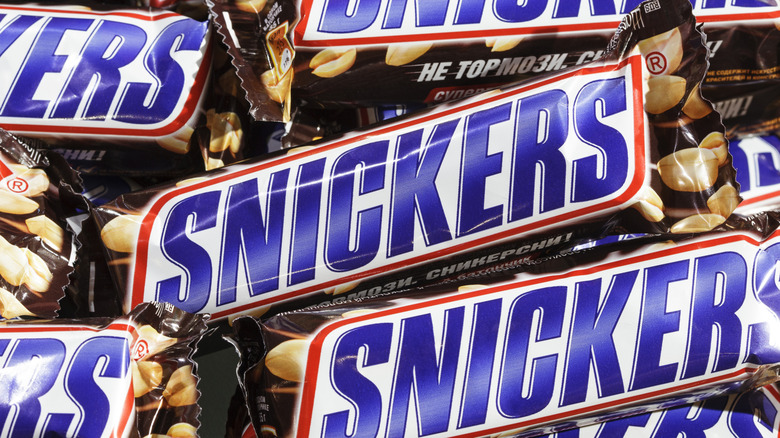
If you weren't yourself before 1930, you couldn't count on Snickers to bring you back around to reality; luckily, the "packed with peanuts" candy bar that satisfies showed up to quell appetites and balance personalities, and it hasn't let up since. It's outlasted trendier treats to become the world's bestselling candy bar, maintaining the standard structure while offering variants like dark chocolate and almond to shake things up from time to time. Rumor has it the name came from a race horse, but that may just be part of the Snickers lore that lingers after such a long lifespan.
Beyond holding sway as one of the most popular candy bars, Snickers has also become a pop culture touchstone. Thanks to a run of raucous and hilarious Super Bowl ads, you can now tell the tired grouches in your life to "have a Snickers" to bring them back to reality. They're sure to understand the reference, especially if they love the bar itself.
14. Chick-O-Stick
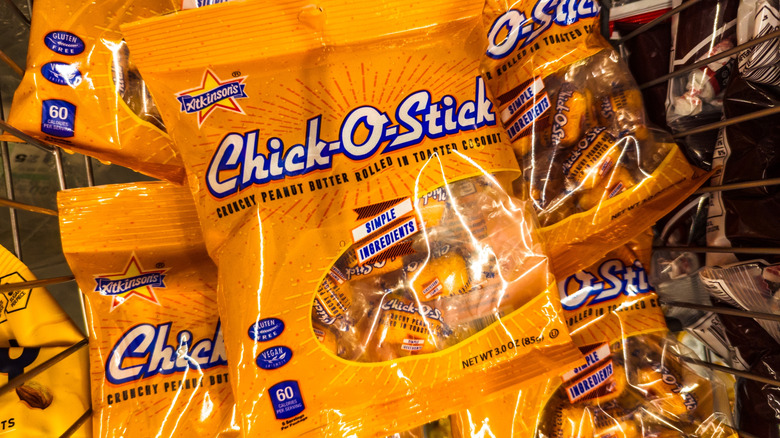
Making waves for the first time in the 1950s makes Chick-O-Stick seem like a veritable youngster among the much older candy bars still in production. But that still makes this crunchy peanut butter treat more than 70 years old, which is a healthy lifespan for any product to achieve. With its crackling layers of peanut buttery confection and chewy coconut, the Chick-O-Stick made the daring move of omitting the usual chocolate coating. The result is a purer candy bar experience that also comes as bite-size nuggets.
The Atkinson Candy Company had already been in operation for more than a decade when it introduced a creation called Chicken Bones, which would later be renamed Chick-O-Stick in the '50s. The ultra-crunchy candy bar has stayed the course and kept its punchy persona as an old-fashioned candy with legs. And for the curious candy lover who's been too afraid to ask: there's absolutely no chicken used in the creation of a Chick-O-Stick.