

Fast Food Menu Items From The '90s That Vanished Forever
Fast food isn't just convenient and inexpensive — for some of us, it's also comforting. Many fast-food restaurants' menu items have been available for years, decades even, and each time you order one, it's reassuringly the same. In a world where things change quickly, it's nice to be able to count on some things we enjoy. But many of us also have discovered some menu items throughout the years that suddenly, and inexplicably, were removed from fast food menus, never to be seen again. Some that we grew up with in the '90s and expected to continue finding have suddenly, POOF, vanished.
In some cases, this was welcome and obvious. (A pizza at a burger place? A table-sized pizza? Good riddance). But in others, we lost a little bit of our youth when those items disappeared. Here's a look at some of the fast-food orders from the 1990s that, for better or for worse, are now in the fast food menu graveyard.
KFC corn on the cob
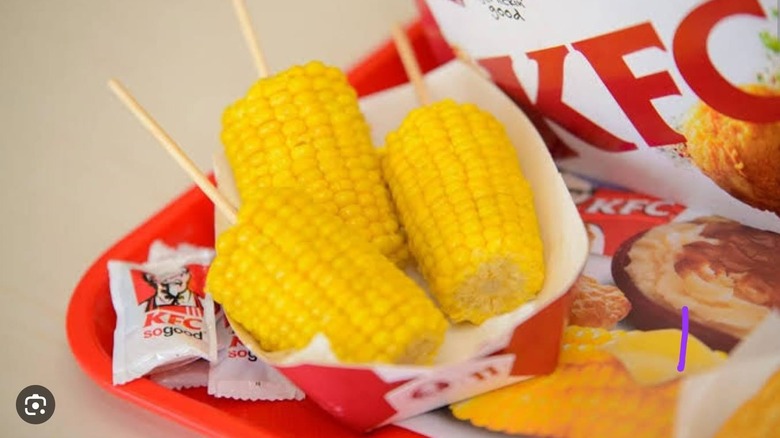
"That corn in the thin yellow bag." Versions of this comment are the general refrain of the online community still wondering what the heck happened to the corn on the cob at KFC. Whether that corn was actually good is still up for debate, but the sensory memory of the "more juicy but not soggy" (or, as some would say, "mushy") corn served on a thin wooden skewer in a thin, yellow plastic bag full of melted butter (or oil? People are divided.) holds strong.
KFC quietly discontinued the corn on the cob in the U.S. sometime in the 2000s, according to fans, slowly phasing it out location by location and replacing it with bowls of whole-kernel corn. It's not clear why, as no definitive answer has been given online, though whole-kernel corn is certainly less messy and easier to stock. Complaints from customers about the greasy bags, the "oily butter flavored yuck," and even that they were "frozen corn rolled in clarified oil. Dirty food nobody treated properly" may have had something to do with it. Despite that, many recall it fondly and wish it would return. And if you're one of them, you might be pleased to know that the KFC stores in the UK still carry it — it's just a plane ride away.
Arby's Onion Petals
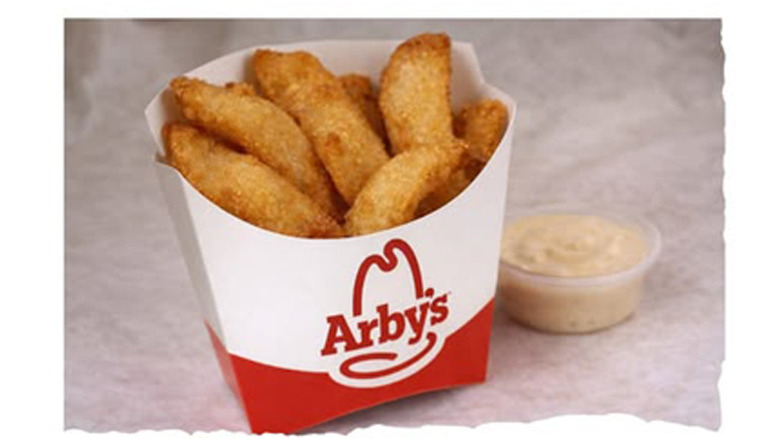
After Outback Steakhouse introduced its Bloomin' Onion in the late 1980s, the concept of a flower-shaped, deep-fried onion became hugely popular, kicking off a series of copycats (Chili's Awesome Blossom, for example). One such imitator was Arby's, which took a portable approach to the concept in the 1990s with its Onion Petals — essentially, the "flower petals" removed from the massive full onion and sold in little paper boxes, along with a spicy dipping sauce, that made them easy to hold and carry.
But like the Awesome Blossom, the petals disappeared without a trace around 2010 and were replaced with the more traditional Steakhouse Onion Rings (which are also a discontinued Arby's item fans desperately want back). But devotees online mourn the loss; one redditor was "devastated" to find them gone, and another on Facebook even argued that this loss exemplifies why restaurants go out of business — because they take away customers' favorite items. Fortunately, though, if you're craving that salty-sweet, deep-fried onion treat, copycat recipes abound online.
McDonald's McPizza
There's something to be said for staying in your lane. Dick and Mac McDonald founded their drive-in restaurant in 1948 on the concept of 15-cent hamburgers, and burgers have been the chain's, well, bread and butter ever since. After all, the whole point of fast food is that the food comes out rapidly and can be eaten on the go. So, just where did the restaurant's leaders get the idea of selling pizza?
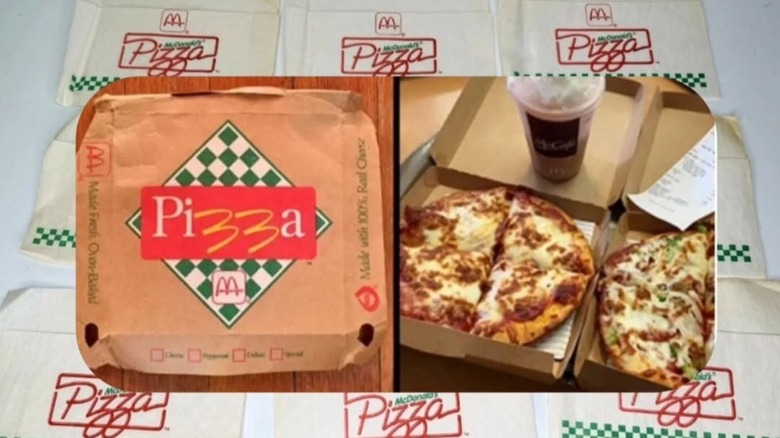
Competition is a funny thing. The pizza market in the late 1980s and early 1990s was huge, and McDonald's wanted a piece of that pie (pardon the pun). At first, the pizzas were family-sized — employees would deliver them to customers dining in and would place them on raised racks in the center of their tables. (The commercial for the unexpected menu offering even shows this in action.) In fact, they were too big for drive-thru windows. Eventually they were individually sized, making it possible for a family to come in and order burgers, chicken, and pizza, all in one place.
The real reason McPizzas were so short-lived, as you might imagine, was that it negated the concept of "fast" food. Even when individually sized, a McPizza took 16 minutes to cook, which disrupted the chain's assembly-line way of working. Also, the appliances required to produce it took up too much space in the restaurant's compact kitchens. Ultimately, by the early 2000s, the McPizza was gone ... except for one place. You can still order a McPizza at the World's Largest Entertainment McDonald's in Orlando, Florida, which is complete with two wood-fired pizza ovens.
Wendy's SuperBar
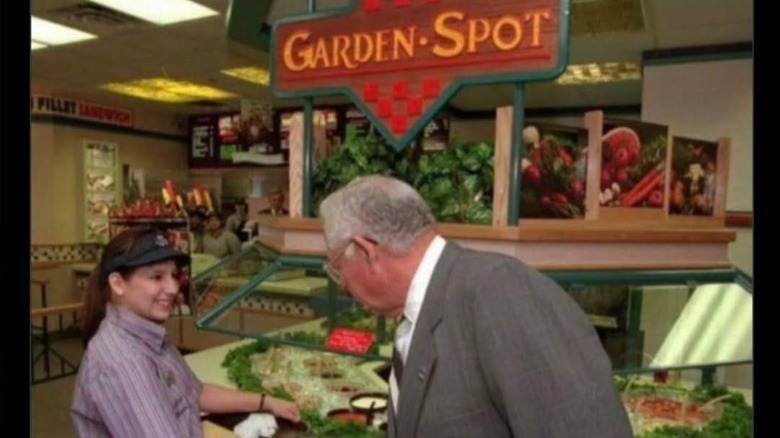
Speaking of atypical fast-food items, remember that time Wendy's had an over-the-top salad bar? Actually, the SuperBar, which existed between 1988 and 1998, was way more than just a salad bar. It was an all-you-can-eat extravaganza complete with salad, Italian food, Mexican food, a baked potato bar, and fruit. Fans also speak very highly of the pudding. All this for $2.99 at lunch or $3.59 for dinner — what could go wrong?
Maintenance alone on the SuperBar proved impractical. How could they keep three fresh food stations stocked and clean while also taking orders and running the register? How could you control whether each person had paid for their all-you-can-eat meal or if they were paying for one person and feeding a family? And the idea of leaving food sitting out for a bunch of other people to touch is unappealing if not done well. Nonetheless, there are plenty of fans still clamoring online for its return — there's even a Facebook group called Bring back Wendy's Superbar.
Burger King BK Broiler
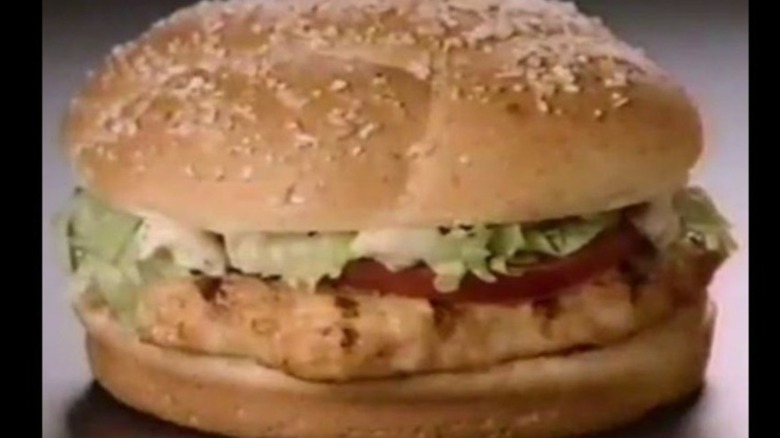
Fast-food restaurants have always made attempts — some successful and some not — to provide healthy menu options in addition to their burgers and fries. The BK Broiler, the chicken sandwich introduced by Burger King in 1990, was one such offering — low in fat and calories. And it was a big hit; at one point about a million of the sandwiches were sold each day. The sandwich was simple: a grilled chicken breast patty, lettuce, tomato, and dill ranch sauce on an oat-dusted bun. It was prepared on a specially designed broiler that enabled employees to closely control the cooking process to produce a juicy chicken breast with flame-broiled flavor.
So, what happened to it? If you're a fast-food aficionado, you may already realize how prevalent grilled chicken sandwiches are on their menus. The general consensus is that the BK Broiler flamed out amid heavy competition and interest waned. The low-fat craze dissipated, and the chicken breast didn't conform easily to Burger King's established process for burger patties. By 2002, the BK Broiler was replaced by the Chicken Whopper, and by 2005, both were kaput. Still, the BK Broiler is considered one of several '90s fast-food items that need a revival.
Wendy's Monterey Ranch Chicken Sandwich
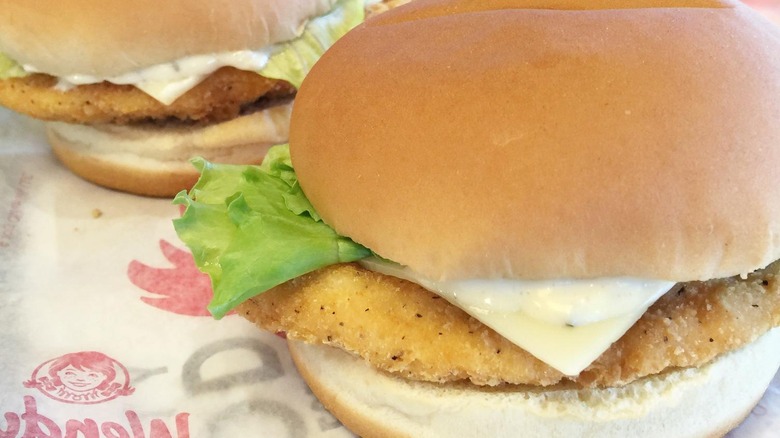
Introduced in the 1990s, Wendy's Monterey Ranch Chicken Sandwich was part of Wendy's Value Menu, meaning that customers could enjoy one of these sandwiches for just 99 cents. Like a lot of chicken sandwiches back in that decade, it consisted of a chicken breast patty — lightly breaded and fried rather than grilled or broiled — along with lettuce and tomato. This one also featured Monterey Jack cheese, ranch dressing, and even bacon bits, all on a kaiser roll.
But like fast-food restaurants often do, Wendy's pulled the sandwich until sometime in the early 2000s, though it was briefly reintroduced in 2013, only for a limited time, also at the 99-cent price. Fans online claim the sandwich was "the bomb," an "all time fave," and that the ranch was extra good. It didn't hurt that it was a steal. Fortunately, if you have a hankering, it's pretty easy to mimic at home.
Jack in the Box Colossus Burger
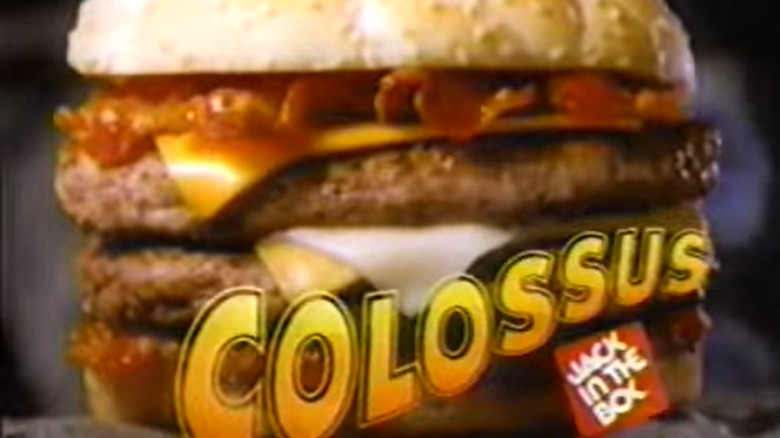
In the 1980s, Jack in the Box, the California-based chain with its spherically headed mascot, introduced the Ultimate Cheeseburger. It consisted of two quarter-pound beef patties and three kinds of cheese, all on a sesame seed bun. It was part of a trend of experimentation that the restaurant was known for — some of its menu offerings even started as employees' brainstormed ideas. So, it's not hard to imagine how someone at Jack in the Box might have said, "You think that's a big burger? What if we added bacon?"
And in 1994, add it they did — eight whole slices of it. The result was the Colossus Burger, a behemoth remembered as much for its TV commercial featuring a hungry giant destroying his way through town to find something to satisfy his appetite. It was an especially bold move considering the prior year saw the Jack in the Box E. coli outbreak, one of the most infamous food poisoning outbreaks in modern American history. The burger somewhat lives on, in greatly pared-down form, in today's Bacon Ultimate Cheeseburger.
McDonald's McDLT
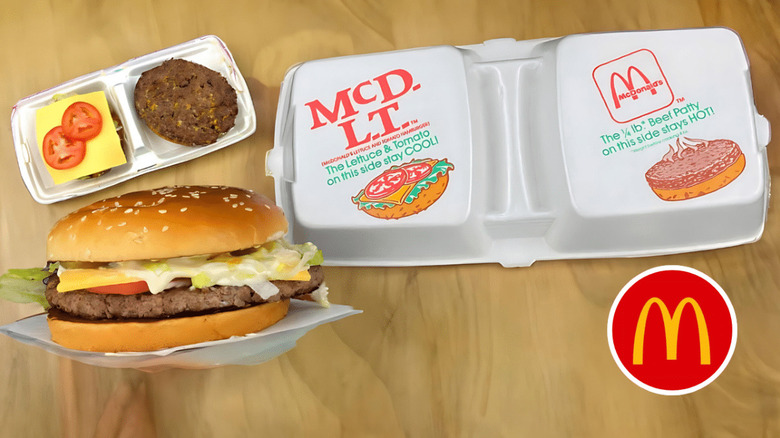
There's a reason your average McDonald's burger doesn't come with lettuce. It's because after the burgers are cooked, according to employees, they're kept in a warming tray to keep them warm until someone buys them. And who wants warm, soggy lettuce? That lettuce should be cool and crunchy. And this is exactly why McDonald's launched its McDLT in the 1980s. Packaged in a unique, two-chambered Styrofoam box, the bottom bun and burger were stored in one chamber to keep it warm, while the other chamber was for the cool top bun, lettuce, tomato, and pickle. The cheese was also kept here — an odd choice for those of us who like melted cheese. The kitchens even kept special racks for storing the cooked burgers to keep the two sides at their correct temperatures.
But the packaging that enabled the sandwich to work is also why the McDLT was canceled. Environmental activists began decrying the restaurant chain for using such environmentally unfriendly packaging. The restaurant switched to paper, but paper simply can't provide the needed insulation. Plus, it's believed that some restaurant staff simply threw them in the standard warming trays, rather than using special racks, which defeated the purpose. So the sandwich was discontinued in the '90s.
McDonald's McLean Deluxe
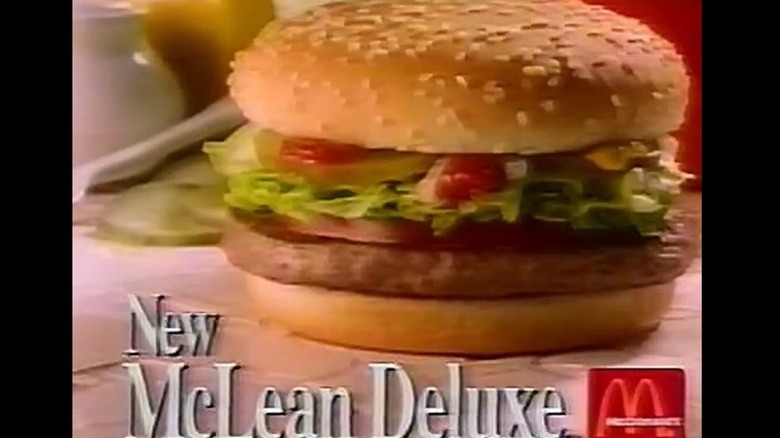
When the McLean Deluxe was created in 1991, it was advertised as "revolutionary" for being a healthier burger. It consisted of a beef patty that was an astonishing 91% fat free, along with lettuce, tomato, pickles, ketchup, and mustard — and cheese on request. If you're thinking, "Meat that lean sounds too good to be true!" you'd be right. In fact, it wasn't actually all meat. Ten percent of it was carrageenan, a natural stabilizer and filler that comes from seaweed.
Because of its ingredients, the burger had up to 16 grams less fat than a Big Mac. It was developed by scientists at Auburn University, but despite its big promise and heavily researched beginnings, the burger never surpassed a very small percentage of sales among all McDonald's offerings, so it was discontinued in 1996. In short, people called it flavorless, and it was panned in the media, which is why some still call it the "McFlopper."
Pizza Hut Priazzo
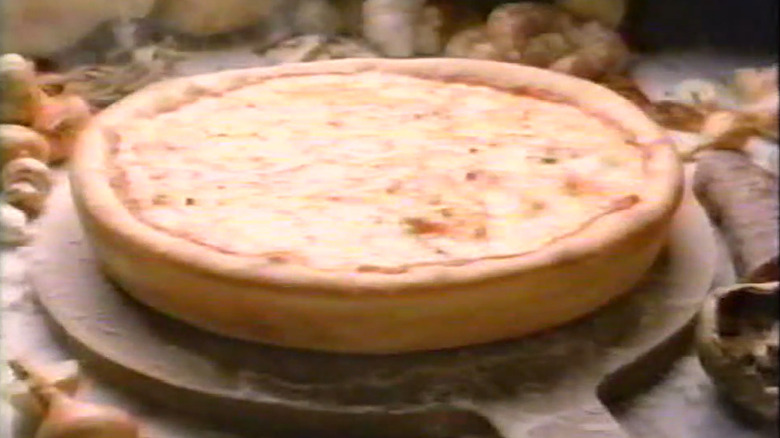
These days, we're used to computer-generated content, but believe it or not, Pizza Hut was an early adopter of it. In fact, that's how the Priazzo was conceived in 1985. The restaurant's parent company, PepsiCo, had just rolled out the Personal Pan Pizza in 1983, to great response from an avid lunchtime crowd, and following, the company was looking to grow its business by at least 10%. It would take a heavy-hitting product, something that felt worth the price.
The company invested $61,000 in a computer program that would develop an original, Italian-sounding name, with only the prompt for a name starting with P and including two Zs. Then, it spent $15 million on TV ads to market the Priazzo as a taste of Italy. An Orlando Sentinel article about the new pizza in 1985 described the commercials as having Italian operatic music from Puccini and shots of small Italian villages in them.
More than a pizza, the Priazzo was an actual pie with a top and bottom crust and many layers of fillings, including a full pound of cheese. It came in three Italian-named varieties: Roma, a meat-heavy pie with mushrooms and onions; Milano, also meat-heavy but without the vegetables; and Florentine, with spinach, ham, and five kinds of cheese. And its heaviness was its downfall — with a full pound of cheese in each one, it took forever to cook and eat — and was even too difficult for employees to serve. It had earned PepsiCo 12% returns, but by 1993, it was discontinued.
Domino's Dominator
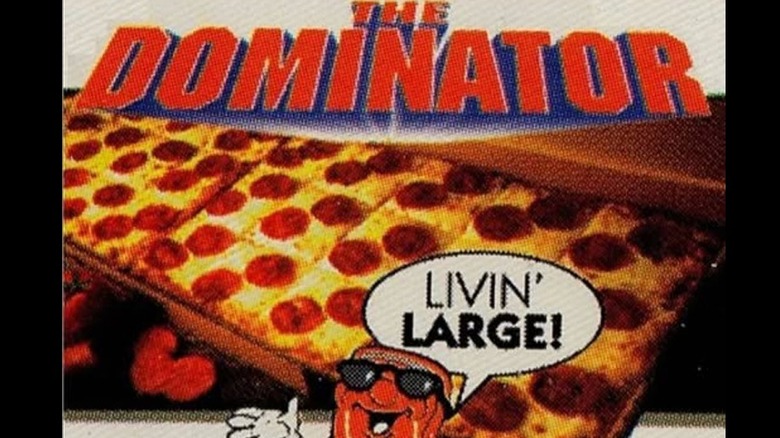
The '90s certainly was a decade of pizza excess. When the Priazzo fell with a too-heavy thunk by the wayside, the Domino's Dominator pizza entered the mix. Unfortunately, so had Pizza Hut's Big Foot and Little Caesar's Pizza by the Foot. All were marketed as massively sized, value-priced pizzas for a crowd, and they were hugely popular. Domino's, the pizza delivery chain whose sales were declining in the early '90s, saw the big writing on the wall and launched its answer to the large pizza wars, the Dominator, in 1993. It was marketed as a yard long (30 inches, to be precise), with 30 slices, all at the low, low price of $10.99.
But Domino's was known for its delivery service. A pizza this big was impractical for delivery, so customers had to pick it up, which wasn't popular. Plus, fitting it into one's car proved challenging, unless they had space to lay it in their trunk. It was the last giant pizza on the market, the least practical, and ignored the prime reason people wanted Domino's in the first place: the delivery. That's why the Dominator goes down in history as one of the Domino's menu items we'll never eat again. It only lasted about a year until it was discontinued.
Burger King Dinner Baskets/Table Service
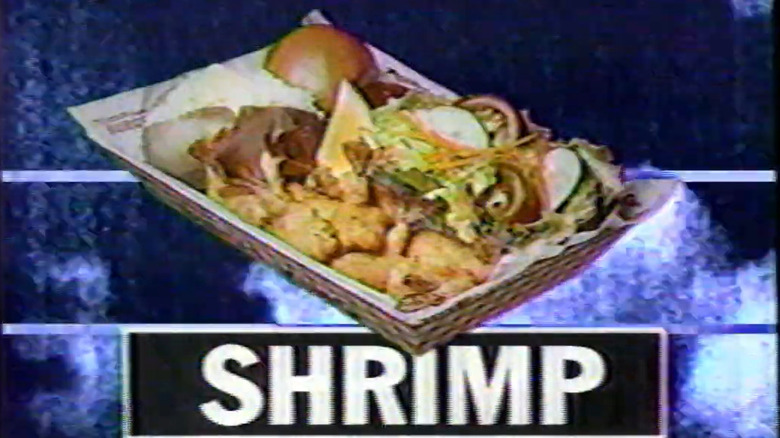
You may have noticed a tendency among fast food restaurants in the '90s to provide customization and healthier options. This was prevalent across the board, but it's certainly exemplified in Burger King's Dinner Baskets and Table Service, which launched in 1992. With a flashy campaign starring the popular, hunky MTV VJ Dan Cortes, Burger King started to rebrand itself as "BK," giving it a little more upscale vibe, and began offering customizable Dinner Baskets, which were served directly at your table.
The baskets came in four varieties: chicken, shrimp, a Whopper, and steak sandwich. The meals also came with customers' choice of salad or coleslaw and baked potato or french fries — the customization being a way to reinforce the "have it your way" component of Burger King's brand. The baskets and table service were available from 4 p.m. to 8 p.m., all as a way to compete with McDonald's Super Size popularity. You'd even be offered free popcorn while you waited. But in the end, people really didn't take to the idea of table service at a fast-food restaurant, and within a couple of years, the baskets and table service were gone.
Wendy's Fresh Stuffed Pitas
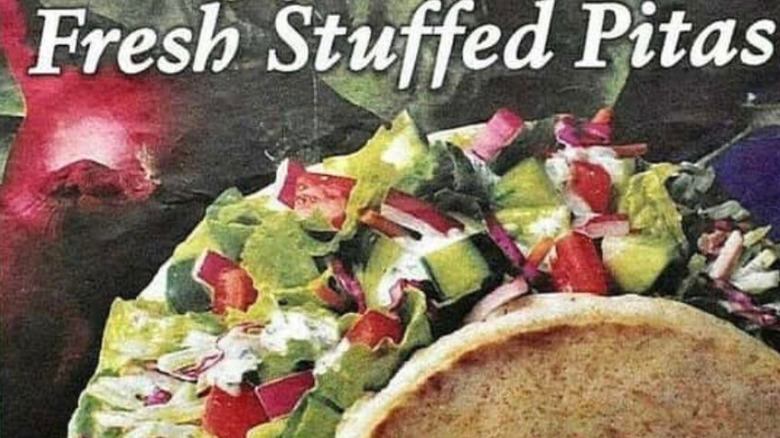
Even now, almost 30 years after they were introduced, people still ask, whatever happened to Wendy's Fresh Stuffed Pitas? Launched in early 1997, the pitas were part of the general public trend toward healthy, fresh fare and food that came wrapped inside things that weren't bread. They came in four varieties: Chicken Caesar, Garden Veggie, Classic Greek, and Garden Ranch Chicken.
The pitas were instantly popular, in part because of the pillowy soft, warm pitas. But they were difficult for employees to assemble, requiring specific assembly stations. The logistics of keeping the produce fresh were also difficult, which is why a lot of it went to waste. By 2000, Wendy's decided to cut its losses and discontinue them. But fans still yearn for them, all these years later. In fact, a petition was started in 2018 on Change.org called "Wendy's Pitas: We Want Them Back!" that, at the time of this writing in fall of 2026, had 618 signatures.
McDonald's Arch Deluxe
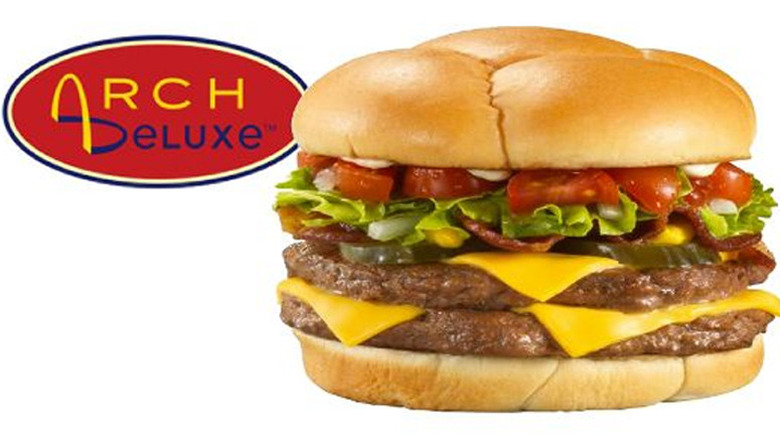
The Arch Deluxe is considered McDonald's most expensive failure, and it's an important lesson in understanding your audience. The Arch Deluxe launched in 1996 and was marketed alongside a series of "Deluxe" products designed to attract a more sophisticated palate. It also commanded a higher price tag. Why was the Arch Deluxe more expensive than other burgers? Its ingredients were considered higher quality. They consisted of a quarter-pound beef patty, American cheese, a circular slice of peppered bacon, leaf lettuce, tomato, onions, ketchup, and some other specialty sauces developed in product testing, and all served on a split-top potato flour sesame seed bun. It was advertised, with a $200 million campaign, as "a burger with grown-up taste," portraying is clown mascot Ronald McDonald doing such "grown-up" things as playing golf.
That might seem like a good theory to sell something a little more upscale, but it had a major flaw: Grown-ups who chose McDonald's weren't looking for sophistication. They wanted inexpensive, convenient food. Response among customers was lukewarm, lost McDonald's millions, and the burger was removed from menus by 2000.