

12 Soda Brands Americans Drank In The '60s
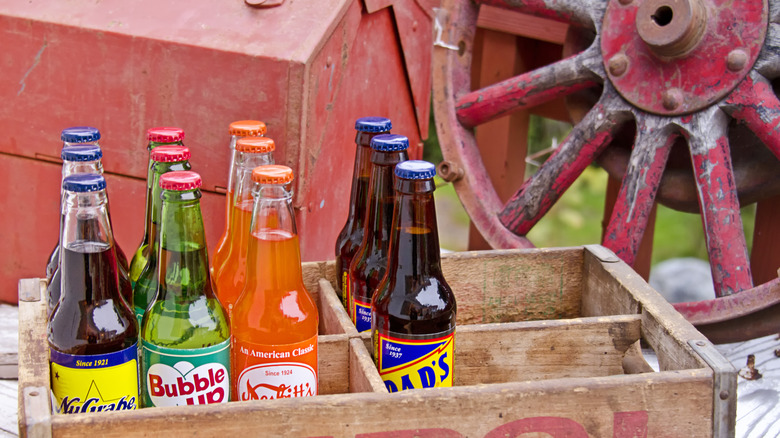
That unassuming soda can in your fridge has a much more colorful history than you might think. The industry was already bubbling along as early as the 1700s, but it didn't really hit its stride until the mid-1900s, when post-war consumerism, packaging innovations, and the shift from soda fountains to vending machines gave it a hefty boost, setting it on the path to its current glory.
Those years were something of a brand sandbox for the industry. Unlike today, when the market is largely a three-horse race between Coca-Cola, Pepsi, and Dr Pepper, the soda scene back then was a crowded, fast-growing ecosystem. Coca-Cola and Pepsi still ruled the roost in revenue, reach, and advertising muscle, but plenty of smaller brands were also scrambling to survive the Coke-Pepsi squeeze. By 1964, Americans could choose from a whopping 300 labels, with flavors ranging from lemon-lime and grapefruit to grape — and everything in between.
Most of these brands eventually fizzled out, although a few old-fashioned soda labels are still floating around in commerce. To give you a peek into the history of some of the brands that once filled America's fridges, we've put together this snapshot of the 1960s soda scene.
Schweppes
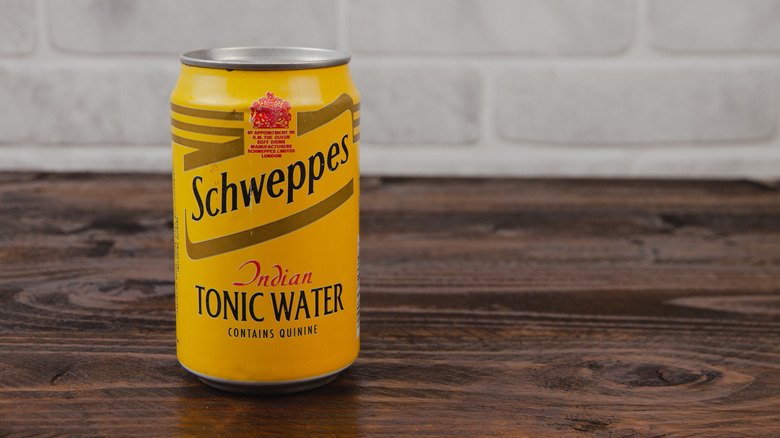
Soda doesn't always have to be about quenching your thirst or washing down a burger. Sometimes, you want your bubbles to carry a few airs and know their way around a cocktail bar. Not many popular soda brands operate on this wilder side, but there are a few outliers; cue British-born tonic water pioneer Schweppes.
Widely regarded as the oldest soda brand still in existence, Schweppes initially entered American commerce as a specialty import, priced at around 40 cents. That's a princely sum when you consider you could pick up a can of soda for as little as 5 cents in the 1950s. Things turned around in February 1953, when, in a bid to bring prices down, Schweppes struck a deal with Pepsi-Cola Co., granting the company exclusive bottling rights in the U.S. Suddenly more accessible, Schweppes surged in popularity, with American sales climbing impressively by 1959.
Then came the clever advertising. Commercials featuring the dry-witted Commander Edward Whitehead, delivered in his plummy English accent, made the brand sound worldly and exclusive. Newspaper advertisements featuring actual gin, vodka, and rum recipes cemented its place in the cocktail game, while scenic commercials featuring gentleman's clubs, stately homes, and the Metropolitan Opera draped it in an extra layer of sophistication. By the early 1960s, Schweppes had left the niche imported beverage scene behind and earned its stripes as a cocktail mixer, making fast friends with the classic gin and tonic.
Grapette
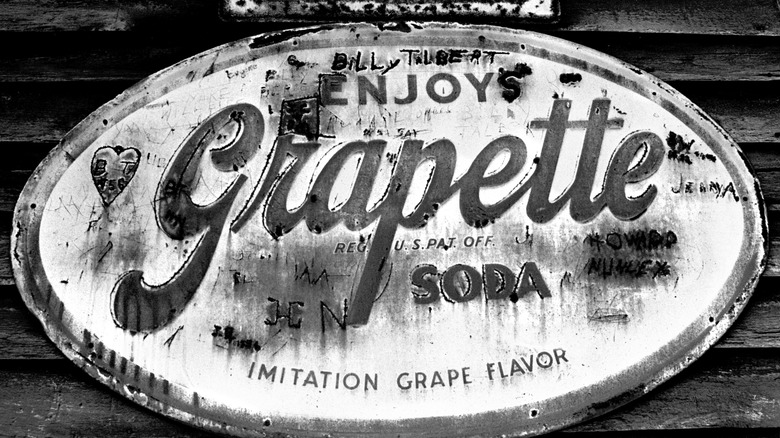
A splash of club soda in your rum or vodka is all very well, but what if you want something to take the edge off a tannin-heavy red wine? Try grape soda. And if you're drinking in the 1960s, there's arguably no better candidate than Grapette. Its story began in 1925, when founder Benjamin Tyndle snatched up a soft drink bottling company in Camden, Arkansas.
Grape soda occupied a relatively small corner of the American soft drink market at the time, with most of the pie going to cola, lemon-lime, and orange varieties. With relatively few players in the game, Grapette quickly carved out a dominant position, helped along by its strong Southern roots.
By the time the 1960s rolled around, Grapette had more than 300 bottlers across 38 states and had expanded its portfolio to include cola, lime, cherry, and strawberry varieties. A rather unexpected domestic downturn followed, with its franchised bottling capacity shrinking dramatically in the '70s. The brand eventually got a new lease on life in the late 1980s, when Brooks Rice, its international chairman at the time, agreed to supply its flavor profiles for Walmart's private-label soda line, Sam's Choice. Then, in the 2000s, Grapette International acquired the American trademarks for Grapette and Orangette, finally reuniting the drinks with their old-school names.
Tab
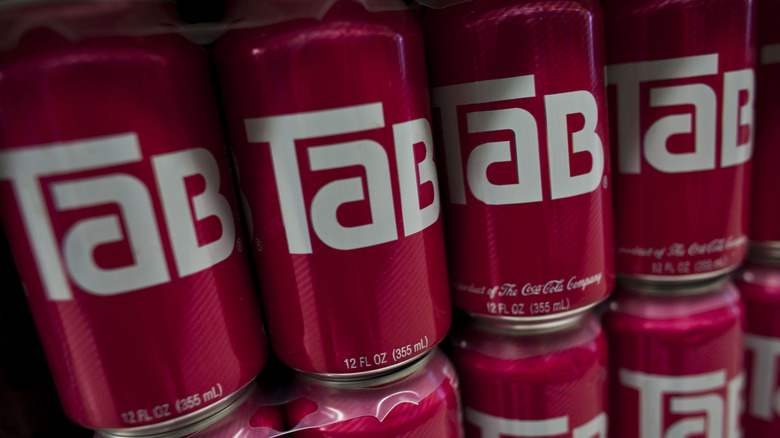
Diet soda brands like Diet Coke may have a dedicated cult following today, but they aren't quite as deeply woven into American culture as you might think. Diet soda is a relatively recent market entrant, first appearing under the No-Cal brand, a product of Brooklyn, New York-based Kirsch Beverages, originally formulated for diabetic patients. By 1963, however, low-calorie soft drinks were projected to rake in a whopping $200 million in sales and claim 7% of the soft drink market (via Time). Naturally, the big players weren't about to sit this one out. First off the blocks were industry heavyweights Coca-Cola and Pepsi.
Coca-Cola staked its claim in 1963 with Tab, a one-calorie cola born out of the rather ominously named Project Alpha. Unlike No-Cal, which replaced sugar with calcium cyclamate alone, Tab used a blend of saccharin and cyclamate, two sweeteners that supposedly got rid of that typical funny taste of diet soda. But Coca-Cola wasn't keen on having Tab inherit No-Cal's rather medicinal image. Instead, it dressed up the newcomer in a little luxury and exclusivity, with advertisements pairing it with high-end indulgences such as Beluga caviar, fine glassware, and Camembert cheese. Still, Tab wasn't about to disown its Coke heritage entirely. An issue of The New Yorker published around its launch date described it as essentially Coke with a hint of tartness.
Patio
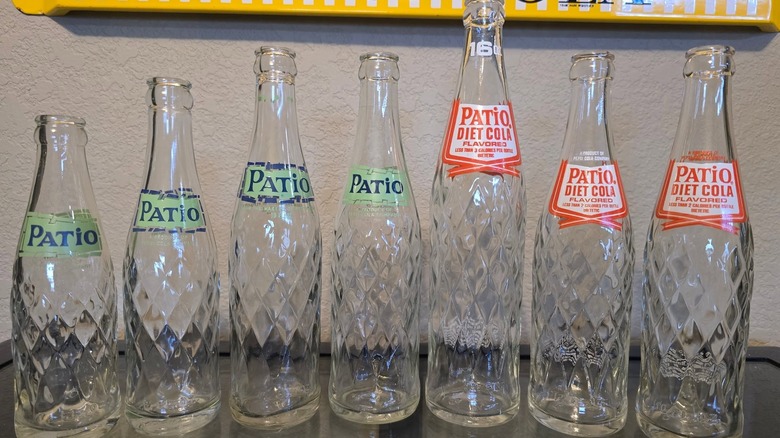
Hot on the heels of Coca-Cola's Tab came Patio Diet Cola, Pepsi's less-than-one-calorie pupil in the diet soda race. While Tab promised to preserve the long-loved taste of Coca-Cola, Pepsi took an entirely different route, marketing Patio as a distinct brand with its own identity. Many grocers initially assumed the newcomer would eventually cannibalize regular Pepsi-Cola sales. The opposite happened. Pepsi sales remained stable while Patio sales climbed, presumably because the brand was attracting shoppers who wouldn't ordinarily buy soda in the first place.
Pepsi's advertising made its intended audience fairly obvious, with newspaper ads featuring female models sporting trim, athletic silhouettes. To drive the message home, the company even enlisted 1960s fitness aficionado Debbie Drake to promote the brand, further tying Patio to the idea of a healthier, more figure-conscious lifestyle.
With sales on the uptick, Pepsi began testing another diet cola offering, Diet Pepsi, initially testing the new formulation in 206 markets. This time, the company took a rather different tack. Instead of following the prevailing wisdom that diet drinks needed identities of their own, Pepsi marketed the newcomer as essentially Pepsi-Cola minus the sugar. The gamble paid off. Diet Pepsi performed so well that then-president Donald Kendall eventually pulled the plug on Patio, replacing it entirely with Diet Pepsi.
7UP
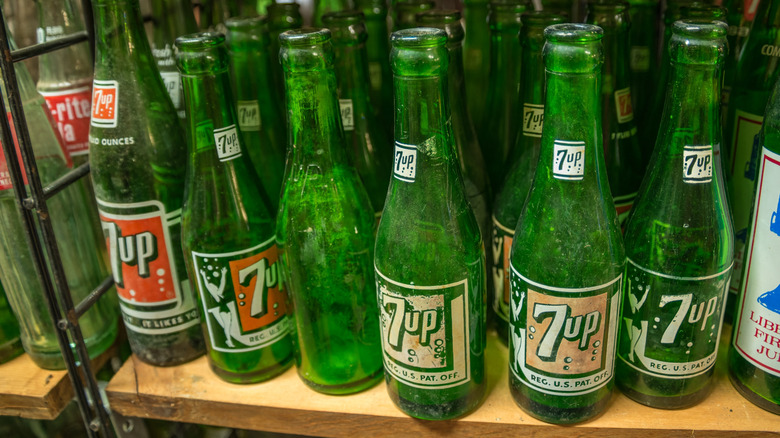
Soda might have a fun, no-frills persona these days, but it didn't exactly start out that way. Many soda brands have medicinal roots, with early formulations promising relief from everything from dyspepsia to jaundice. And while most had shed their medicinal cloaks by the 1900s, a few remnants lingered. Most notable was 7UP, whose original formulation contained lithium citrate, an actual antipsychotic. By the 1960s, however, 7UP had left its medicinal past behind and entered the increasingly crowded soft drink business.
Unlike most players, though, 7UP had a leg up against the Coke-Pepsi duopoly: Its lemon-lime flavor. Now, lemon-lime wasn't exactly the biggest slice of the soda pie, making up just around 10% of national soft drink sales at the time. But as an early pioneer, 7UP had the field largely to itself, at one point commanding a whopping 80% of the segment.
Still, the brand had something of an identity crisis. It was perfectly at home behind a cocktail bar, and perhaps even in the medicine cabinet as a remedy for an upset stomach, but folks weren't thinking of it as an everyday soda the way they did Coke or Pepsi.
Much of the 1960s was spent trying to shake off this image. At one point, 7UP took direct aim at the cola giants with its now famous 1968 'Uncola' campaign. Other advertising efforts tried to reposition it as an everyday beverage, building campaigns around familiar scenes like family reunions, barbecues, cookouts, PTA meetings, and casual get-togethers.
Teem
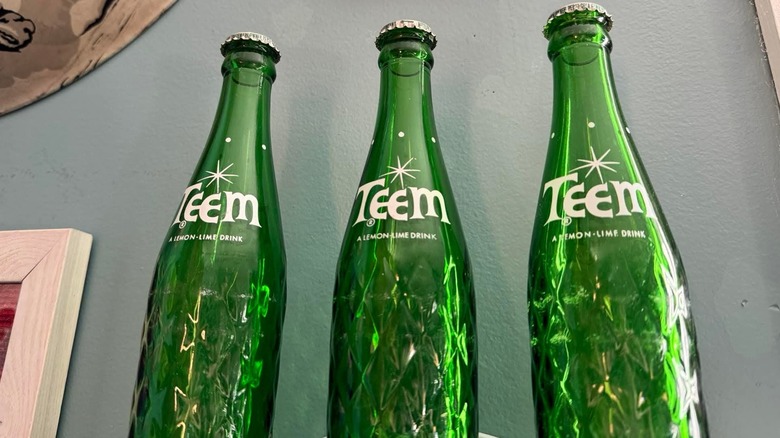
Cola may have ruled the 1960s soda scene, but another category was quietly making a name for itself: lemon-lime. Industry pioneer 7UP was raking it in, at one point selling roughly 185 million cases annually. Naturally, Coke and Pepsi weren't about to sit it out. Pepsi muscled in with Teem, a now-discontinued brand designed to give the old guard 7UP a run for its money. The newcomer had spent two years in development and came armed with Pepsi's formidable distribution network and advertising muscle. Still, 7UP's grip on the lemon-lime market proved difficult to loosen, particularly with heavyweight Coca-Cola already wiggling in with Sprite.
After roughly a quarter-century of trying to elbow its way into the category, Teem eventually joined Patio on Pepsi's brand bench. But Pepsi wasn't quite ready to call it quits with lemon-lime. It took another swing with Slice, this time adding 10% real fruit juice to give it an edge over the 7UP-Sprite duopoly. The brand showed promise, at one point capturing 3% of the lemon-lime segment (via The New York Times). Unfortunately, just as Slice was finding its feet, the fruit-juice soda craze began to fizzle out, sending sales into a tailspin. After a string of redesigns and what amounted to a years-long identity crisis, Pepsi finally threw in the towel, replacing Slice entirely with Sierra Mist by the turn of the decade.
Like
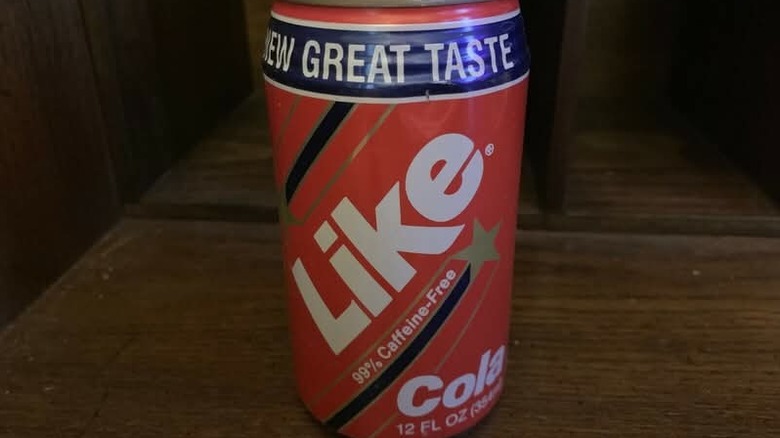
Hot on the heels of Coca-Cola's Tab and Pepsi's Patio came Like, 7UP's contender in the diet soda race. There's not a whole lot going for the newcomer at first. The diet soda segment is still finding its feet, accounting for a small fraction of the overall market, much of it dominated by early entrant Diet Rite. Things are looking up, though. Sales have surged since the Patio and Tab rollouts, reaching around $18 million in 1962 and projected to surge to $200 million in 1963 (via Time).
7UP, however, had an ace up its sleeve. Rather than elbowing its way into the already crowded cola space, it stuck to what it knew best and introduced a diet lemon-lime soda: Essentially 7UP, minus the calories. Like its diet contemporaries, Like leans heavily into calorie consciousness, with advertising largely aimed at women and featuring carefree, leggy models with trim silhouettes.
But just as Like is finding its feet, the FDA drops a ban on cyclamates, after animal studies by Abbott Laboratories raised concerns about potential cancer risks. Diet soda brands start scrambling to reformulate their products to keep them on the market. Like doesn't make it through the upheaval, and 7UP's diet experiment is left dead in the water until 1970, when the company returns with a reformulated offering simply called Diet 7UP.
Fresca
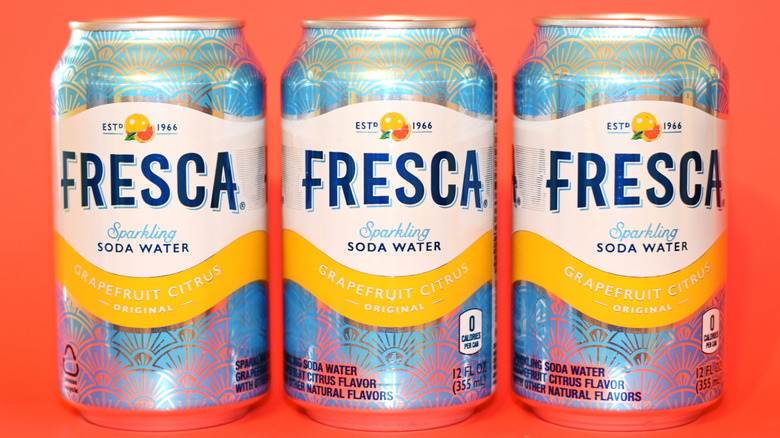
It's the 1960s, and a preoccupation with the bathroom scale is sweeping America. Coca-Cola already has a solid contender in the diet-soda race: Tab. But to stake its claim further, it rolls out Fresca. Much like latecomer Splice, Fresca is designed to cater to the nation's growing appetite for diet drinks beyond cola. The newcomer brings a grapefruit-esque citrus flavor to the table, along with $12.2 million in advertising muscle in 1967 alone.
Fresca's promotion takes a rather different route from Tab's. Instead of positioning it as an everyday, laid-back beverage, Coca-Cola goes a little more niche, selling it as a grown-up drink and a handy way to get some grapefruit and bubbles into your cocktail. Coke goes all out for the rollout, staging an elaborate launch at New York's Four Seasons and leaning heavily into the idea of Fresca as a frosty, refreshing experience.
Its first TV commercial is pretty on message, too. Set at a bachelor's apartment party, it shows guests being buried in a simulated snowstorm after Fresca makes an appearance — a rather literal nod to the "Blizzard of Flavor" concept behind the campaign. Other promotions lean into the alcohol-companion angle, some showing how Fresca could be paired with various sprits, or in a sweeter twist, sherbet. The experiment seems to pay off. By 1969, Fresca had captured around 1.5% of the overall soft-drink market, giving Coca-Cola a respectable foothold beyond diet cola.
Diet Rite
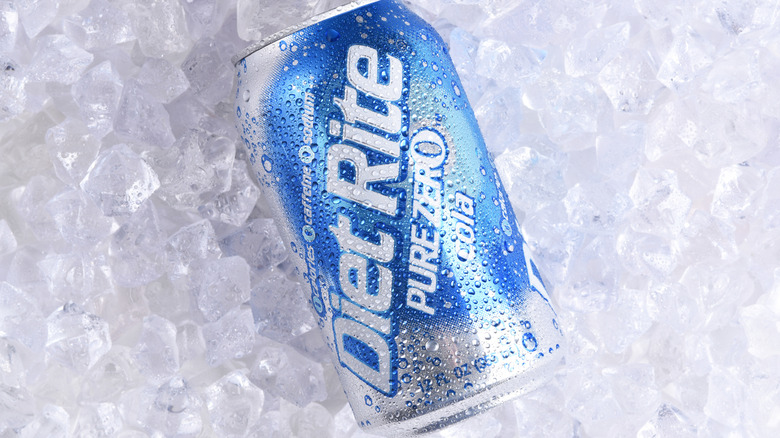
Before everyone came rushing into the diet-soda game, there was Diet Rite. Like its old-guard predecessor No-Cal, Diet Rite was initially set to make a regional splash. But after testing the drink in Greenville, South Carolina, Royal Crown, the company behind this diet-soda pioneer, decided to take the plunge and go national. By the time heavyweight rivals Coca-Cola and Pepsi caught wind of the diet-soda craze, Diet Rite had already carved out a whopping 40% of the low-calorie market (via Broadcasting magazine) and climbed to fourth place in the national cola rankings.
To keep the Coke-Pepsi duopoly at bay, Royal Crown went all in on advertising, coughing up a jaw-dropping $10 million in 1964 alone, a third of which went straight into spot TV. Diet Rite's main trick was making sure it didn't look or feel like some niche diet product. Unlike its predecessor No-Cal, which initially found its footing through health-focused channels rather than mainstream grocery stores and vending machines, Diet Rite positioned itself as an everyday cola, right at home in the supermarket soft-drink aisle.
Its advertising hammered home the idea that Diet Rite was just another household soda, something to toss into the picnic cooler alongside the sandwiches and potato salad. Its packaging was right on message, too. Nothing particularly fancy: Just returnable glass bottles sold in six-packs for a nickel a pop, the same price as other colas.
Bubble Up
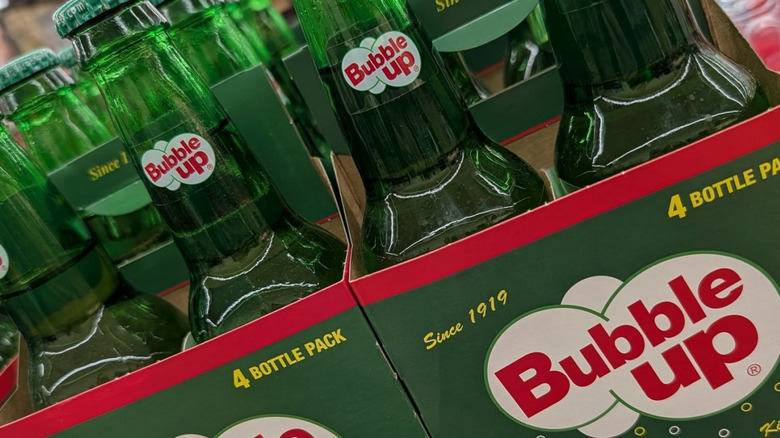
7UP might have had the 1960's lemon-lime market cornered, but competition was still fierce. Coca-Cola's Sprite and Pepsi's Teem were giving it a serious run for its money. Also in the mix were a handful of regional brands, including Bubble Up, now a niche name.
Now, Bubble Up didn't have the distribution muscle to go toe-to-toe with the national industry leaders. What it did have was a solid regional footing. By the early 1960s, Bubble Up had become something of a California favorite, ranking an impressive fourth in Los Angeles' overall soft-drink market. Its national sales weren't exactly setting the world on fire, but they weren't dead in the water, either. At its peak, Bubble Up had established a respectable nationwide presence, selling a reported 20 million cases in 1961 alone (via Click Americana).
Just as sales were peaking, the diet soda boom came knocking. And although pioneers like Diet Rite were already facing fierce competition from newcomers Patio and Tab, Bubble Up threw itself into the fray, launching Sugar-Free Bubble Up in 1963. But despite showing tremendous regional promise, Bubble Up never quite reached national heights. Part of the problem was its rather scant distribution network. The brand got a leg up, if only briefly, by leaning on Coca-Cola's vast bottling circuit. But just as nationwide momentum seemed within reach, Coca-Cola burst onto the lemon-lime scene with Sprite, complicating Bubble Up's efforts to secure the bottlers it needed.
Hires Root Beer
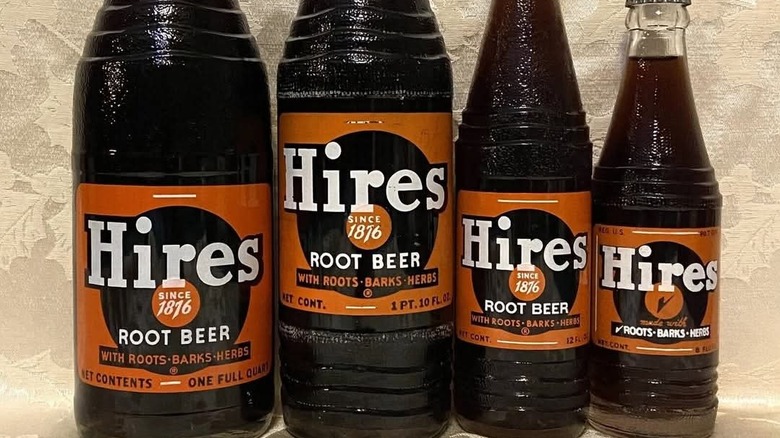
Coke and Pepsi might have been around for well over a century, but the soda scene wasn't frozen in time before they came along. Before either drew breath, there was Hires Root Beer, the godfather of all the popular root beer brands around today. Its story begins in 1876 with pharmacist Charles Hires, who, while on his honeymoon, came across a recipe for a concoction of berries, roots, and herbs. It left such a deep impression on him that he decided to start selling a dry version of the mixture in his shop. Reception was promising, and an enthusiastic Hires soon came up with a liquid concentrate, taking his creation public at the Philadelphia Centennial Exhibition later that year.
Despite having a pretty lengthy head start, Hires Root Beer remained something of a niche name for much of its history. The root beer category as a whole was something of a soda-market straggler through much of the 1960s, accounting for a rather dismal 4% to 8% share of the national soft-drink market in 1965 (via Cashbox magazine). Its regional standing wasn't much to write home about, either. A 1960 Los Angeles consumer survey (via Television magazine) made this painfully clear, placing Hires a disappointing seventh among the soft-drink brands surveyed. By September of that same year, Hires had conceded that its growth had stagnated. A clutch marketing effort was then launched to rescue sales, with roughly $200,000 devoted to radio spots in select markets, including Philadelphia, Miami, Salt Lake City, and Tampa, Florida.
Moxie
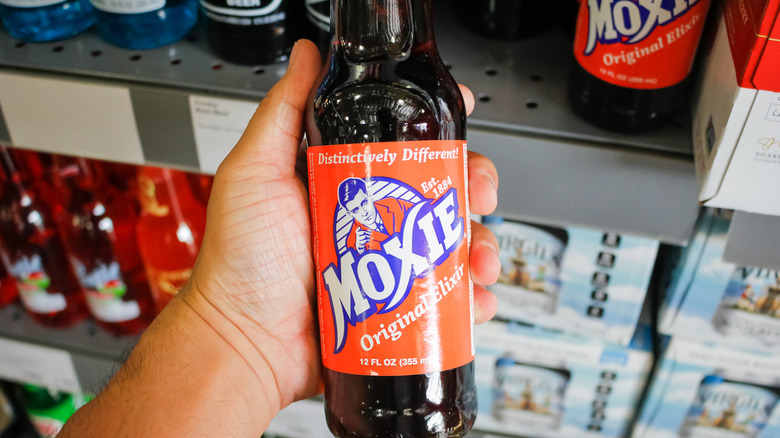
A must-have in any roundup of niche regional soft drinks deserving of a national spotlight is Moxie. Its story begins in 1876, a good decade before industry heavyweight Coca-Cola even came along. Like many early soft drinks, Moxie got its start with medicinal ambitions. Its original concoction, dubbed Moxie Nerve Food, was a peculiar blend of cinchona, sassafras, caramel, and gentian root extract, supposedly capable of curing a whole host of ailments — including such wonderfully vague afflictions as nervous exhaustion, helplessness, and imbecility.
The drink became something of a sensation in the early 1900s, with sales surging largely thanks to some decidedly inventive advertising. A highlight was the Moxiemobile: An automobile contraption featuring a dummy horse, with a driver perched in the saddle, that drew crowds wherever it went. By 1920, Moxie had become so popular that it was reportedly outselling Coca-Cola.
Sadly, by the 1960s, Moxie had wandered far from its former glory, shrinking into a niche New England name. By the middle of the decade, the brand had changed ownership and entered a serious financial downturn, with almost half of its sales reportedly coming from its diet formulation — a rather sobering reality considering Diet Moxie was nowhere close to leading the diet soda category. Company executives tried to rescue the situation with a reformulation, but it proved a horrible misstep, reportedly costing the brand half of its New England customer base.