

What's The Actual Difference Between Bread And Pastry?
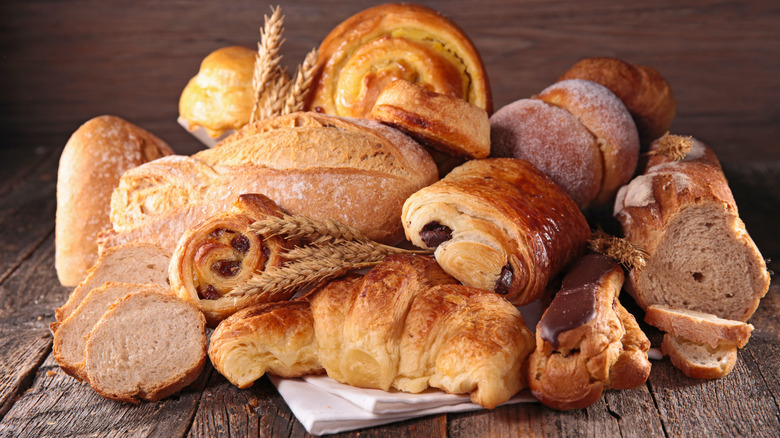
Baguettes and croissants may appear similar at first. But the truth is: The only things these two bakery items have in common are that they both use flour and water and start from a ball of dough. From there, the ingredients used and the way in which one handles the dough will alter the chemical makeup and therefore change baking results (e.g., texture and taste). There are other specific definitions that separate bread from pastry.
Bread is made of flour and water, kneaded, then baked. Often, bread is put through a fermentation process. This is when yeast consumes the starches in flour and creates a carbon dioxide byproduct. Carbon dioxide causes your homemade sourdough bread to rise, develop air bubbles, and reach that delicious spongy texture. Pastry dough also consists of flour and water but, unlike bread, adds fat (like lard or butter) and potentially sugar. From there, the dough is rolled together in thin sheets. This makes for flaky, or crumbly textures, as opposed to bread's chewier texture.
Of course, there are always discrepancies. For example, do biscuits (which have butter but little to no sugar) count as bread or a pastry? Ultimately, the answer falls to how and with what frequency the dough is handled, the ingredients used, and even the specifics within the ingredients (like high-protein vs. low-protein flour). Below, you'll find a comprehensive breakdown for breads and pastries.
Bread's key ingredients are flour and water
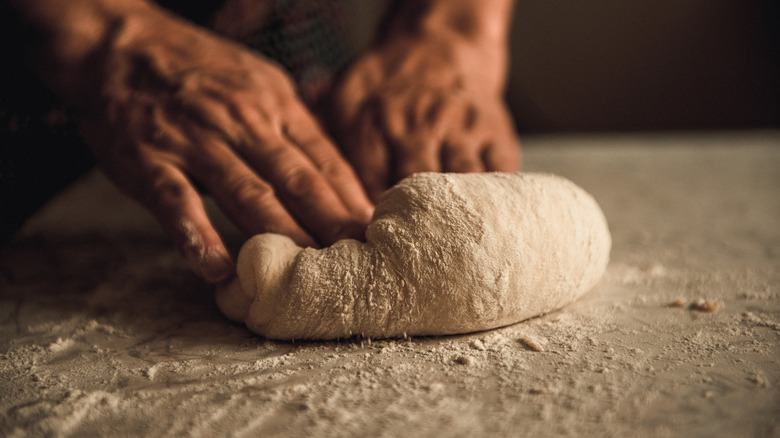
The earliest discoveries of mixing ground cereal grains with water to make bread trace back over 22,000 years. However, yeasted bread began with the ancient Egyptians, around 1350 BCE. Bread is still little more than milled grain (flour) and water. That's it.
Now, you're probably wondering about yeast. Here's the caveat: Some bread, but not all bread, will contain a rising agent (like yeast or baking soda). Yeasted, or "leavened" bread, includes bubbly, super-rising breads like sourdough, challah, brioche, and pizza crust. On the other hand, unleavened bread (without rising agents) is typically made with flour, water, and a little oil. These include flatbreads such as tortillas, matzo, or roti.
The flour and kneading process determines whether bread is flat or spongy. When you combine flour and water, the flour proteins create gluten networks. These networks are what trap steam and allow even flat breads, like tortillas, to rise when heated. This is why the protein density of your flour (like all-purpose vs. bread flour) will have a direct impact on how much the bread rises. The more protein, the more water absorption and trapped steam. Once you ferment the dough with yeast, carbon dioxide bubbles get trapped by the gluten networks. When you knead the dough, you divide the bubbles, allowing the bread to rise and expand further.
A pastry has flour, water, and a high fat content
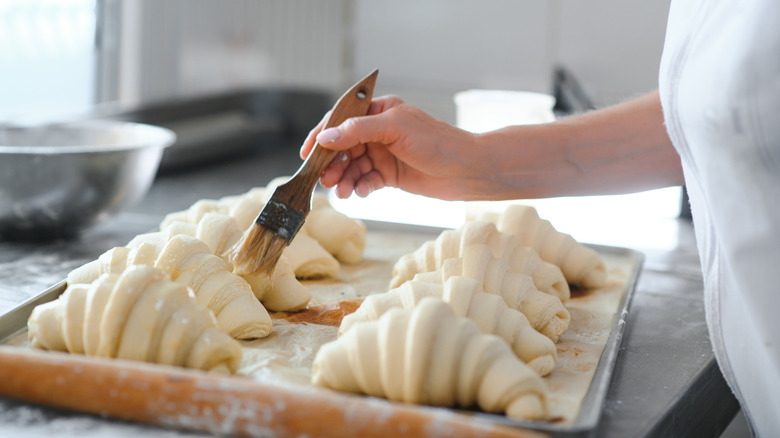
Discovered in ancient Egypt around 2000 BC, the pastry is bread's sweeter, younger sibling. To be considered a pastry, the dough must have a high flour-to-fat ratio of at least 3:4. For example, a traditional American biscuit recipe is 3 parts flour, 2 parts water, 1 part butter, so it isn't considered a pastry. Most pastries, like quiche, pie crust, donuts, and cinnamon rolls, will offer a fat content of 50% or more — and there's a reason for that.
Fat does two things for pastry dough: prevents water absorption and slows down the development of gluten. In the same vein, pastries are very hands-off when it comes to dough handling, which also slows gluten development. Without kneading or mixing, the water content doesn't spread as cohesively throughout the dough, resulting in weaker protein bonds. With partially developed gluten, the dough remains dense and pliable enough to roll and fold without breaking.
While the high fat content is a key indicator of a pastry, this type of baked good may also include sugar, yeast, or both (like a Nutella-stuffed croissant). The ratio of these ingredients will determine what type of pastry the dough becomes when baked: flaky, shortcrust, puff, choux, or filo. To get the thinnest, lightest flaky layers, you'll need pea-sized balls of butter spread throughout the pastry. This creates lamination — a desirable pastry feature.