

10 Pilsner Beers, Ranked Worst To Best
We may receive a commission on purchases made from links.
With its crisp and balanced flavor profile, pilsners taste like a true Everyman's beer. However, not every pale golden lager is a pilsner. To qualify, a brew must be bottom-fermented with lager yeast and undergo a specific lagering process that produces light-colored, heavily carbonated beer that's well-balanced between refreshing crispiness and tongue-tingling spice. The main difference between pilsners and lagers comes down to the balance of yeast, malt, and hops, which prevents the brew from becoming too creamy.
When most casual beer drinkers — myself included — think of pilsner beer, they picture a pale golden brew that's as approachable as it is refreshing. Thus, I always assumed that most popular light beers, like Bud Light, Coors Light, Natural Light, and others, were all pilsners. I was wrong; they're lagers. Interestingly, the only classic American beer in this category of brews that's a pilsner is Miller Lite.
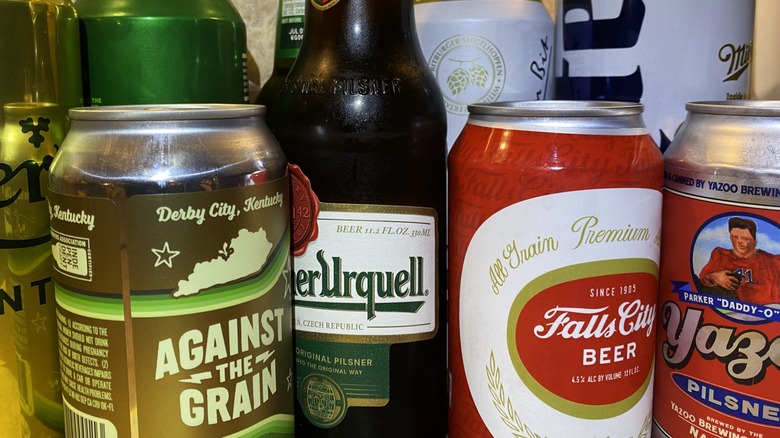
My realization sent me on a quest to answer an important question: If the beers I've been drinking aren't actual pilsners, then which ones are? Here are my findings from my sudsy deep dive into pilsners, including general cost and a ranking from worst to best. Please note prices may vary by location. My methodology is explained at the end of the article. Cheers!
10. Against the Grain Derby City Pils
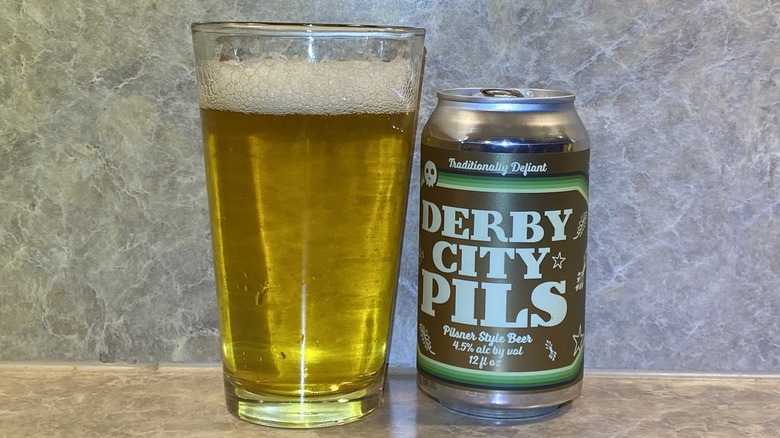
Of all the pilsner beers I tried during my taste-testing experiment, Against The Grain's Derby City Pils was one I had never tried before. I nabbed a sixer for $11 from my local liquor store, but online prices tend to be for 12-packs, which cost around $25 at Total Wine.
Upon cracking open a cold can of Derby City, I immediately noticed a bright fruitiness to the aroma that reminded me more of a saison or sour. The pour did little to dissuade my doubts about this brew, as the dense, foamy head was stubbornly thick, even after a proper pour (although I'll give ATG a freebie by admitting that I wasn't pouring this pilsner beer into a stange glass, which would have been better).
The mouthfeel of this pilsner felt more like a stout: thick, creamy, malty. There was a chocolatey depth to it, which might appeal to some who prefers a caramelly brew to a spicy pilsner. Though in that case, why not just opt for a dark lager? In any event, I likely won't be buying another sixer of this beer any time soon. Still, I wouldn't be ashamed to offer it to willing house guests.
9. Carlsberg Elephant
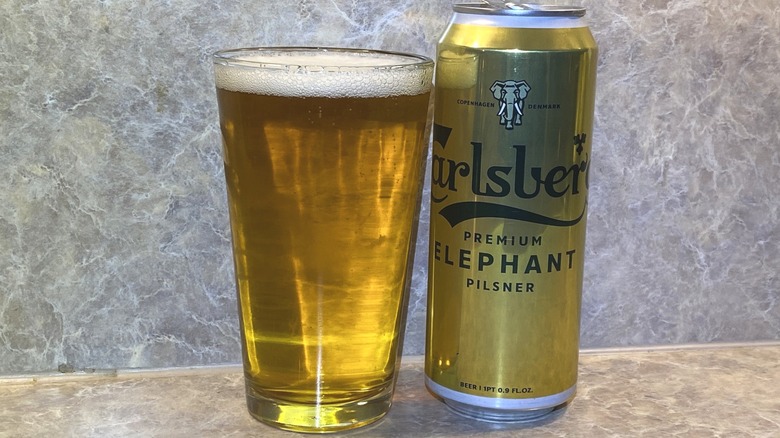
Carlsberg Elephant is a beer that doesn't make its identity known, and that's apparent in both its curiously vague flavor profile and the fact that various online sources will call it different things. According to the brewing company, Carlsberg Elephant (with the gold label) is a full-bodied pilsner. According to some enthusiasts, it's a strong lager. Both descriptions are essentially saying the same thing, but after trying this bold pilsner, I might lean more toward the "strong lager" camp, too.
Although Carlsberg Elephant was fairly light on the nose, its spiciness definitely added a substantial bit of weight to the overall mouthfeel. I also noticed a bitterness on the back end that felt more indicative of an amber or dark lager.
At 7.2% ABV, this is a beer to approach with caution. It might have a pilsner label, but it's working with an ABV that's nearly double your standard 4% fare. On the other hand, with an $11.99 price tag from Total Wine, Carlsberg Elephant and its ABV are a pretty good deal for a four-pack that shakes out to $3 per beer.
8. Yazoo Brewing Company Daddy-O Pilsner
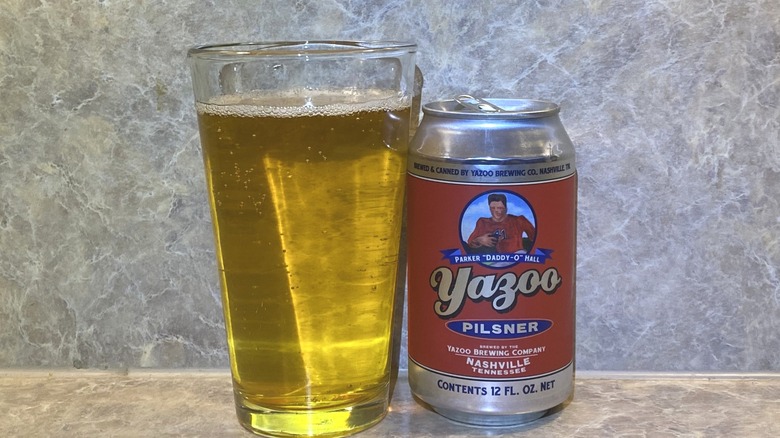
If you happened to be buying a beer somewhere that only served pilsners but you actually like IPAs more, I would, without hesitation, point you in the direction of Yazoo's Daddy-O Pilsner. Imagine, if you will, that a pilsner is like milk chocolate. Your standard IPA fare is dark chocolate. Drinking a Yazoo Daddy-O is like biting into what you thought was a light, creamy milk chocolate bar only to find the cocoa percentage is 20% to 30% higher than you anticipated. That doesn't mean it's bad. It's just not what you expected.
Yazoo's pilsner variety had a very hop-forward flavor profile that often comes with the territory of smaller brewing companies. The bitterness wasn't totally overwhelming, as a subtle sweetness moved into the aftertaste. Nevertheless, the spiciness leaned too far into pine or citrus territory to really win me over. Will I end up drinking the rest of these? Maybe. If not, I'd gladly offer them to house guests so I can make room in my fridge for beer I like better. Would I buy Yazoo's Daddy-O Pilsner again at $13.99 for six from Total Wine? No, probably not.
7. Grolsch Premium Pilsner
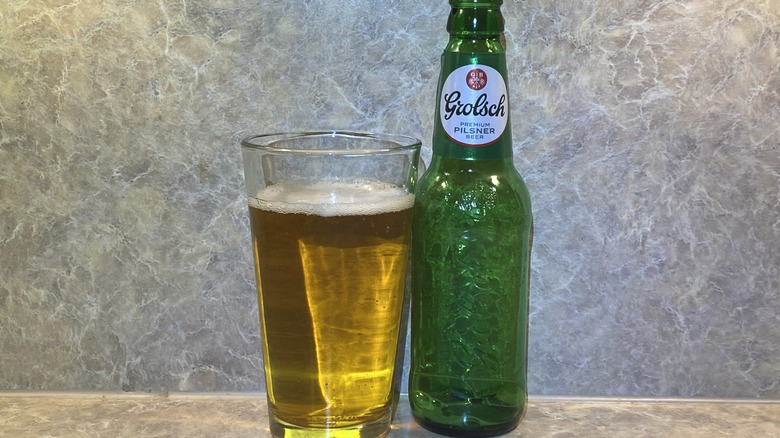
With its swing-top bottle and green glass finish, Grolsch has always been a brand that caught my eye but was never one I actually tried. On the first sip, I noticed a fruity aroma that translated to the flavor finish as well. The overall mouthfeel was light and crispy and not unlike a Heineken in the way that it tends to linger on the sides of the tongue. Later, I looked up the Grolsch brand and realized that it was a Dutch brewing company, just like Heineken, which explains the noticeable similarities in taste.
Overall, Grolsch made for a perfectly adequate pilsner. I'd recommend this to a beer lover who doesn't mind sweet, fruity undertones in their brews, as anyone else might have a hard time adjusting to this Dutch-style pils. For sweet-toothed drinkers, though, Grolsch is a great option — one that I imagine would pair particularly well with a robust, meat-and-potatoes kind of meal. At $10.99 for a six-pack from Total Wine, Grolsch Premium might not be worth the risk. But I'd argue the reward is pretty good.
6. Carlsberg Pilsner
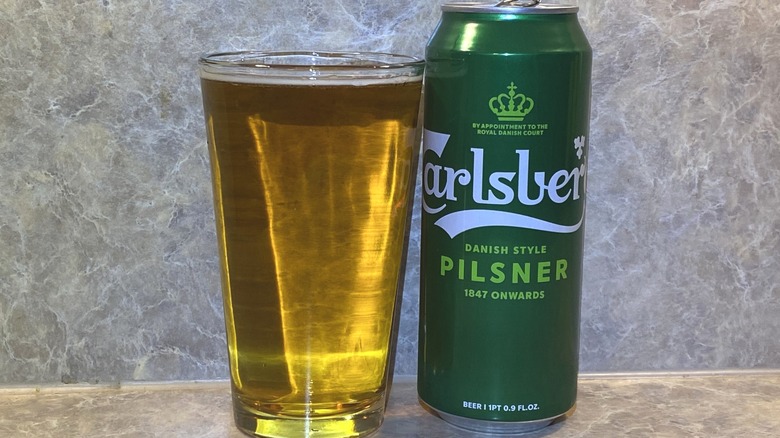
I tried two Carlsberg tall boys for this experiment, and out of the two, only one of them actually tasted like a pilsner to me: the green can, labeled Carlsberg Danish Style Pilsner. As the name would suggest, this brew is light and crispy with the faintest hint of saltine crackers in the malt. It wasn't noticeably fruity, although there was some acidity in the finish.
Between the two types of Carlsberg I tried, I would consider this Danish-style option to be the more approachable of the two. Its 5% ABV is reasonable without being too terribly watery, making this a perfectly drinkable session brew. To me, the pilsner had all of the things you would want in this style of beer. The notable lack of anything extraordinary is the only thing keeping its ranking so low. I would drink this if it were in front of me, but I might not spend money to do so, if that makes sense. If you're interested in spending the money to do so, a four-pack of Carlsberg tall boys will set you back $8.99 at Total Wine.
5. Miller Lite
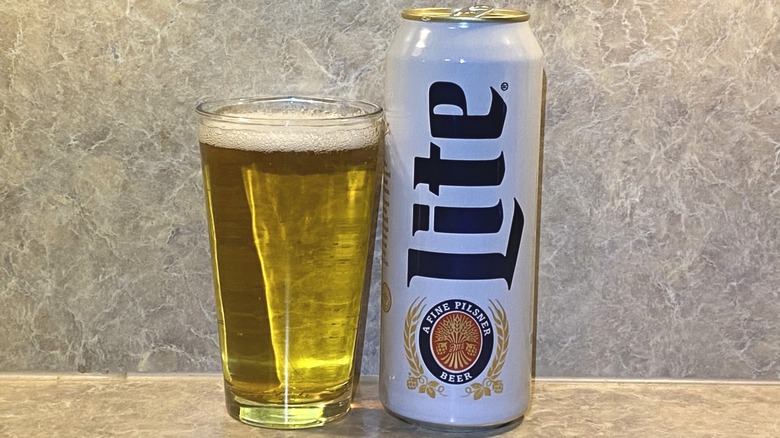
Before I went into this taste-testing experiment, I already knew that Miller Lite was my favorite beer. It's my go-to on a hot day, the beer I stock in the fridge before my friends and family come over, and the one I'll most often buy to accompany a shot at a dive bar. However, I love Miller Lite in the same way that I love fast food french fries and cheap gas station coffee.
Most notably, Miller Lite is also cheap, coming in at around $12 for a 12-pack at Walmart. Secondly, I know it's not the best option, objectively speaking, but there's a hefty dose of nostalgia wrapped into my opinion and perception of this item that makes it taste better.
Thus, Miller Lite fell right in the middle of my pilsner ranking. With a slight skunkiness on the nose, crispness on the palate, and plenty of carbonation to keep things light and refreshing, this is a classic domestic pilsner (and one of the only popular beer brands, like Budweiser and Coors, that's an actual pilsner). Do I think that everyone should broaden their palate to try beers other than these ubiquitous brands? Yes. Will I drink a Miller Lite if it's handed to me? Also yes.
4. Falls City Classic Premium Pilsner
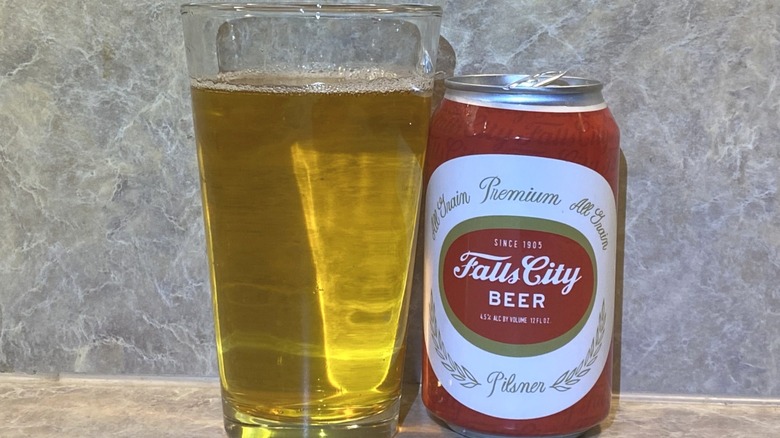
Falls City's Classic Premium Pilsner was one of the first beers that opened my eyes to the potential complexities of this style, as someone whose pilsner palate was almost exclusively Miller Lite. On the nose, Falls City has an almost champagne-esque aroma, which I'll admit is a little misleading. It's actually not that airy and light. Of all the pilsners I tried, Falls City had one of the lower carbonation levels. That, paired with the warm, bitter flavor profile, makes it feel heavier than other options.
The thicker mouthfeel knocks it out of the running for being my go-to beer on a hot day. However, I'd gladly have one (or two) at a bonfire or after dinner. The Czech-style pilsner from Louisville, Kentucky, is definitely for someone who doesn't mind a full-flavor beer — or the slightly unpredictable, hoppy nature of craft brews. At $9.99 for a six-pack from Liquor Barn, Falls City is for the pilsner lovers who want something with more of an edge but don't want to spend a fortune.
3. Pilsner Urquell
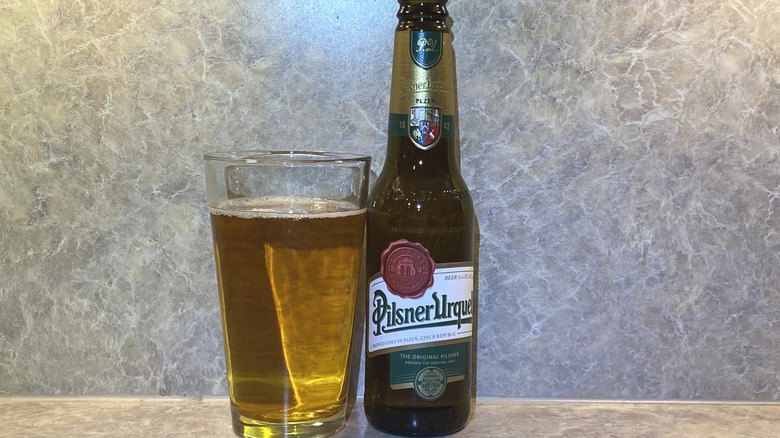
I've had Pilsner Urquell many times over the years, so I knew that it would likely rank somewhere high on my list. This Czech brewing company is from Plzeň, the birthplace of pilsner, which was anglicized as Pilsen. As one might expect from a beer batting from the home field, Pilsner Urquell is a confident, bold brew that takes the idea of this style and turns it up to 11, if you'll allow the "Spinal Tap" reference.
Pilsner Urquell is, to put it lightly, not a beer for the light-hearted. There is a bold earthiness that sits along the sides of the tongue in a delightfully bitter way. It feels almost like a heavier brew, although the spiciness of the pilsner keeps it squarely in this Czech-born category. I would hesitate to call this one a session beer, unless you have the kind of palate that can withstand all that flavor. For a robust brew with dinner, this is definitely a go-to. I'd also mention that at $10.99 for a six-pack from Total Wine, Pilsner Urquell drinks like a brew that costs $5 to $10 more.
2. Trumer Pilsner
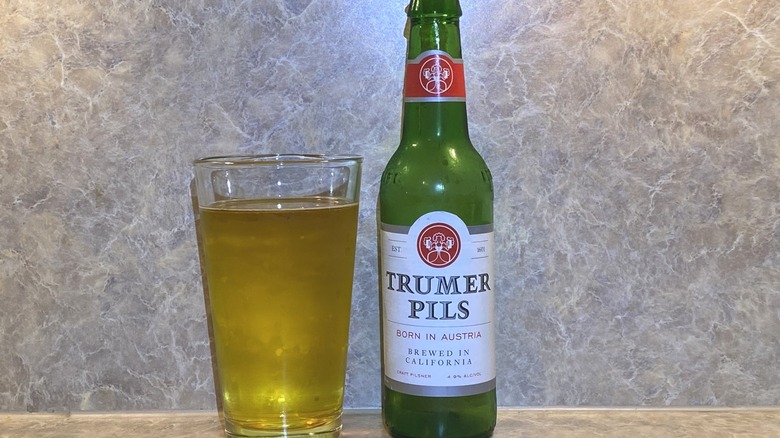
I had never heard of Trumer Pils before this tasting spree, and after researching the brewing company further, I realized that was very much a me problem, not a Trumer problem. This beer originated in Austria in the early 1600s, where it stayed brewing high-quality pilsner for centuries. In the early 2000s, a group of American brewers established a sister brewery in Berkeley, California, to expand distribution further. After having 400 years and some change to perfect the recipe, it's no wonder that Trumer Pils offers a perfect blend of hoppy spice, zingy carbonation, and refreshing mouthfeel.
This one is pleasantly dry on the palate, fading softly on the finish without lingering heavy on the tongue. It has a pleasant, slightly sweet, grainy aroma on the nose, which serves as an accurate foreshadowing of the balanced flavor to come. After never having tried this German-style pilsner before, I'd say that I'm officially a convert and will be buying again.
Speaking of, Trumer Pils most commonly comes in 12-packs, which go for around $18.99 from Total Beverage. Don't let the initial price tag give you pause. Not only is the beer worth it, but it also still equals out to a surprisingly affordable $1.50 per bottle or can.
1. Bitburger Brauerei Premium Pilsner
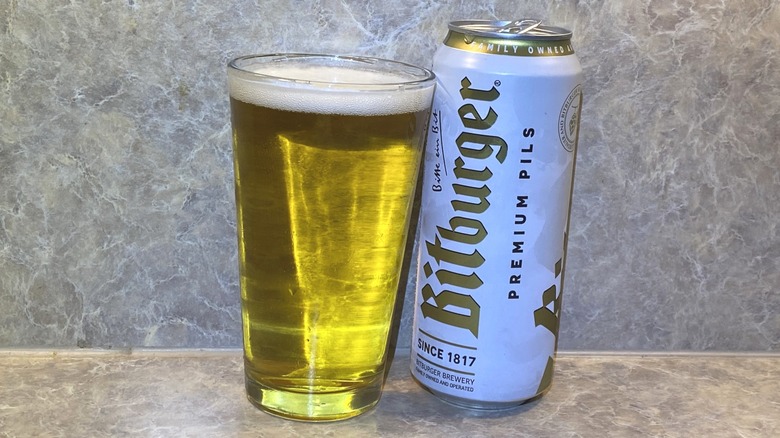
The Bitburger Brauerei Premium Pils is, to me, everything that I'm looking for in a pilsner. The fact that it's a German-style gives it extra points in my book, being that this tradition is close to the original pilsners from the Czech Republic. Thus, I awarded this fresh-tasting brew the top spot on my list. To put it in the context of my favorite domestic pilsner, Miller Lite, this is the beer I would drink if I was in the mood for a Miller Lite but wanted something a little more elevated.
The Bitburger Premium Pils is a bitter-forward brew, with no notes of acidity, fruitiness, or lingering sweetness. There's an exceptionally refreshing balance between the earthy, muted hoppy flavors and the crispness of the carbonation. The sweetest part of the entire sip comes from subtle notes of honey on the back end. The aftertaste is just bitter enough to make me want another sip and sweet enough to keep me coming back for another glass.
At $9.99 for a four-pack of 16-ounce cans at Total Wine, Bitburger Premium Pilsner might be a hair above my comfortable price range under normal circumstances. However, I'd be willing to splurge a little bit for the sake of a good beer.
Methodology
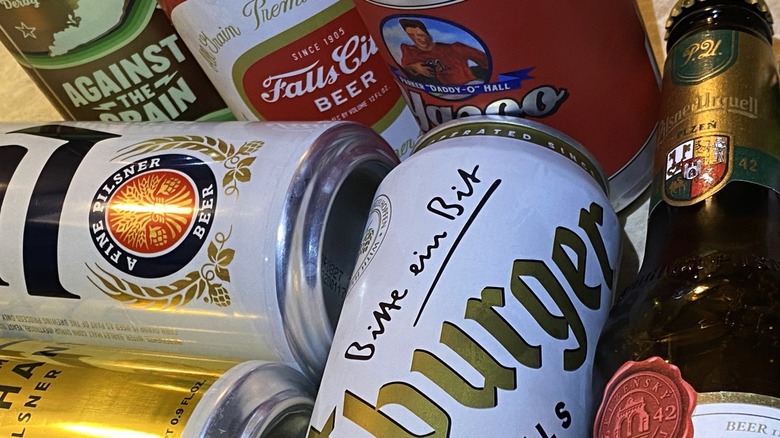
I sourced the pilsners for this taste-testing experiment in a couple of different ways. For all but one, I found them by shopping at the liquor stores within 30 minutes of my house in western Kentucky. I looked specifically for beers from any country, avoiding those that are similar but not quite pilsners, like light lagers and pale ales. The brews I tested here were all the ones I could find in my hometown. Trumer is the only exception, as the company graciously sent me a sample so I could include it in this round-up, since no retailers near me carried it.
I ranked the beers on aroma, flavor, mouthfeel, and drinkability. ABV was not a major component in my ranking system, though I did take note of it whenever I felt it was necessary or pertinent to the review. Pilsners that received top ratings in the aforementioned categories ranked the highest on my list.