

My Top 5 International Grocers In Boston After Years Of Searching
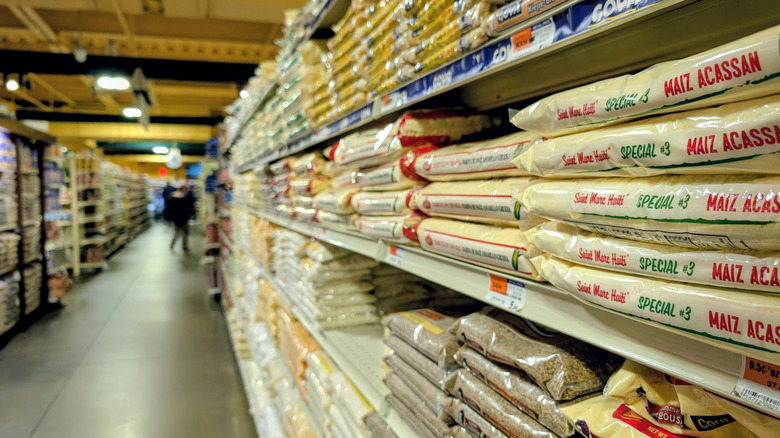
The supermarkets of Boston are just boring. For context, I moved to the city to work in a high-profile cafeteria with chefs from around the world. We made everything in-house, right down to our hoisin sauce and salad vinaigrettes. The people I worked with were as comfortable turning out first-rate horta vrasta — a Greek dish of boiled greens with lemon — as they were with roasting Peking-style ducks or house-smoking brisket for a barbecue dish. So, after work it was quite jarring to settle for the unremarkable but perfectly adequate Stop & Shop or Star Market for my own grocery shopping.
I learned quickly that, despite the blandness of the average supermarket in Boston, the grocery scene overall was far from bleak. Over years of walking and riding across the city, I made it a point to learn about where the best food was, far beyond the usual tourist spots (which, of course, are worth visiting, too). The stores I enjoy most are those that grow organically from one of Boston's many vibrant communities, from the famous North End Italian enclave to the Vietnamese population of Savin Hill.
These grocers reflect the way people actually live, shop, and eat in these neighborhoods in a far more genuine way than big-chain supermarkets. The latter enterprises could easily seem at home in the average Midwestern suburban strip mall. In the best way, these international grocers don't just represent a culture or ethnicity, but instead are deeply rooted in the experience of those who moved across the world and established a little flavor of home.
Greek International Food Market, West Roxbury
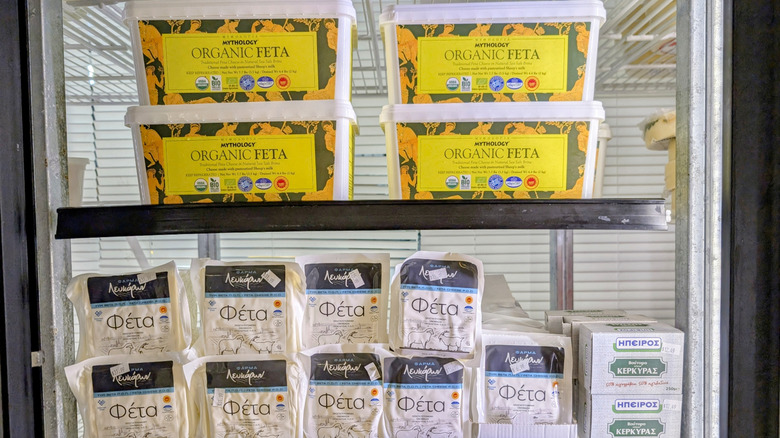
Are you in need of 8-pound buckets of imported Greek sheep's milk feta (a tangy, salty traditional version of the crumbly cheese often found on supermarket shelves)? How about a variety of olive oils that range from large, commercial-sized cans to slender, delicate bottles of premium options? If so, West Roxbury's Greek International Food Market is worth a visit. A small store not much larger than a 7-Eleven, Greek International offers both imported items and freshly prepared ones. There's also a menu of food available for takeout.
Given the market's history, it's not necessarily a surprise that the ready-to-eat food is prominent. The owner, Katerina Iliades, opened the store in 2009, but her father has owned a Greek restaurant in nearby Newton since 1996. Even though many businesses catering to Greek communities in West Roxbury have come and gone over the years as the population moved out, Greek International has managed to become a destination as one of the relatively few markets of its kind in the Boston metropolitan area.
Among the grocer's many notable offerings are freshly-made pita chips that you can sometimes see stacked up in the windows of the store's kitchen. Additionally, you should try the Phyllo pies, which are stacked with similar abundance in a display case near the front of the store. The deli counter is also home to various salads, but don't picture the average cole slaw or cold macaroni dishes in a supermarket deli. Instead, imagine marinated calamari salad, creamy baba ghanoush, or an herbaceous tabouli.
Nubian Markets, Nubian Square
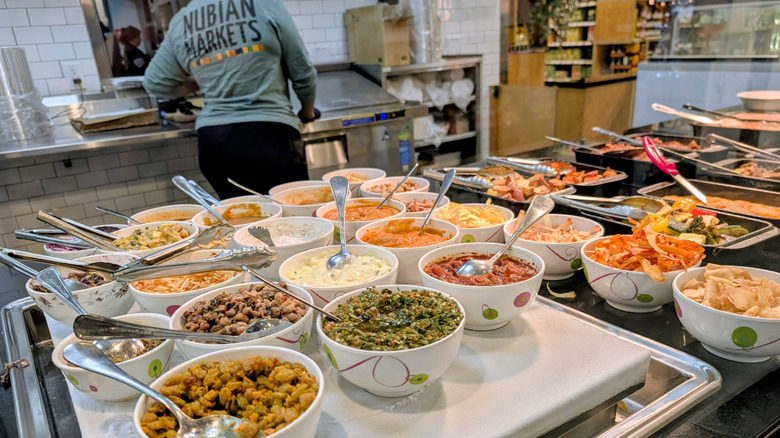
At a development near Nubian Square in the Roxbury section of the city, a small grocer and cafe called Nubian Markets opened in 2023. On the surface, it doesn't appear to be that different from the average neighborhood grocer, but its mission extends beyond simply being a regular bodega. Nubian Markets describes itself as "Roxbury's only market, cafe, and gathering space that celebrates the African diaspora through food." The founders Ismail Samad and Yusuf Yassin have sought to build a store that both serves its neighborhood and functions as a political statement, and it's an important one.
Black entrepreneurs are enormously underrepresented in the grocery business. There's no official count in the United States, but some estimates put the number of Black-owned grocery stores in the dozens. Already a rare find from that perspective, Nubian Markets brings together Caribbean and African food culture in its cafe and grocery aisles. The cafe, for instance, has a sampling of options from both categories: jerk chicken, black eyed pea fritters, peri-peri chicken, curry goat. Even the signature bowls (think of a rice or grain bowl like you might get at Chipotle) feature bold flavors in their bases: shredded injera, coconut ginger rice, jollof rice.
There's a real community feel inside Nubian Markets, and its cafe — the centerpiece of the store, and one of the best reasons to visit — serves lunch and dinner. You can take the food out or stay for a while, which is both what the founders were hoping for when setting it up and something plenty of visitors do. The cafe is often populated with people working on laptops, writing, or just catching up with someone.
Phú Cường Market, Savin Hill
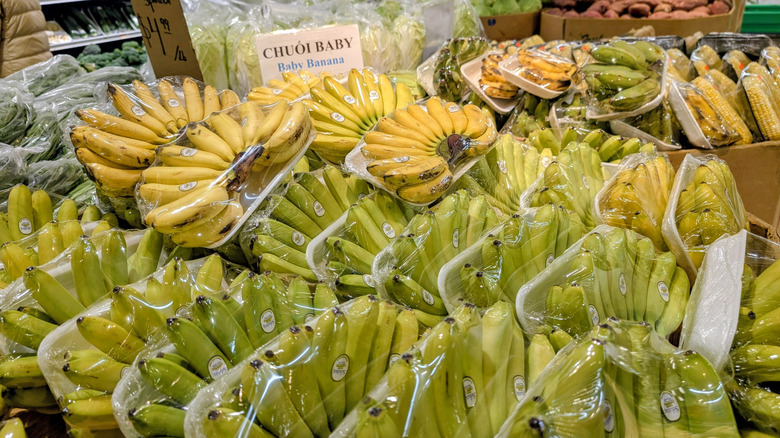
Boston has a robust and famous Chinatown near downtown, but another bustling neighborhood worth visiting is Dorchester. The area has a notable Vietnamese population, specifically around Savin Hill. You'll find a variety of Vietnamese eateries and other businesses lining Dorchester Avenue, and a handful of Vietnamese grocers. The largest is Phú Cường Market, located in a former industrial building that now sees heavy traffic from customers looking for imported groceries and fresh produce.
One of Phú Cường's best features is its sprawling seafood department. Rows of whole fish are displayed on ice and custom-cut to order, and yet more selection is packaged and frozen. A far cry from the average Stop & Shop seafood department, it has multiple clerks ready to fillet or debone the fish. In fact, there's even a poster hanging above the counter with six options of how the fish can be prepared (head on or off, gutted and scaled, tail on or off), printed in Vietnamese and English. That's only logical given how important seafood is to Vietnamese cuisine.
Whole squid, snails, and multiple types of shellfish start one end of the seafood display, and then the vast majority of the ice tables are filled with whole fish — porgy, mackerel, snapper, grouper, skate, and even less-common versions of familiar familiar seafood, such as black tilapia. Many Vietnamese dishes use fish heads to make stocks or broths, and indeed, Phú Cường lists prices separately for the whole fish and just the head. Underneath the ice tables, you'll find live seafood like tilapia, rock crabs, sea bass, and eel.
Salumeria Italiana, North End
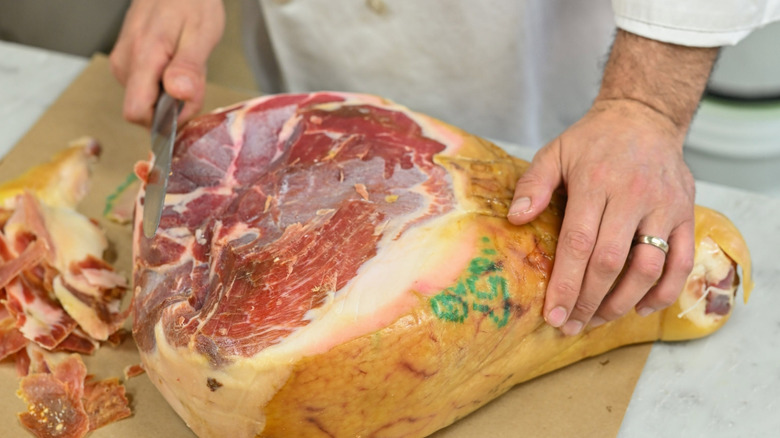
Boston's North End is famous for its Italian community. The insular neighborhood, separated from the rest of the city by water and highway, is home to over 100 restaurants in roughly a third of a square mile. Although my favorite Italian sub isn't in the North End, my favorite Italian market is. That would be Salumeria Italiana, which has been selling imported cured meats, high-end cheeses, fresh pastas, oils, and pantry items since 1962.
The diminutive shop is just a small room. Pantry items and exquisite freshly-baked crusty Italian breads are up front, with an impressive variety of cured meats, cheeses, and olives behind a glass display case at the back. It wouldn't be a surprise if the interior hadn't changed in the many decades Salumeria Italiana has been in business, as the wood-paneled walls and brown vinyl tile flooring harken back to a time when the majority of Salumeria's customers came because they lived nearby, not because they saw it on the internet.
It's not uncommon to find certain supermarket cheeses labeled with their origin (like Vermont cheddar, for instance, or Parmiggiano Reggiano that's certified by Italian trade organizations). At Salumeria, you'll find cheeses actually labeled with the Italian region they hail from: Auricchio provolone from Lombardy, fontina from the Aosta Valley, Moliterno from Sardinia. Shoppers will even find butter from the Emilia-Romagna region. It's notably creamier and richer than standard butter because of its high milkfat and use of cultured cream.
Tropical Foods El Platanero, Roxbury
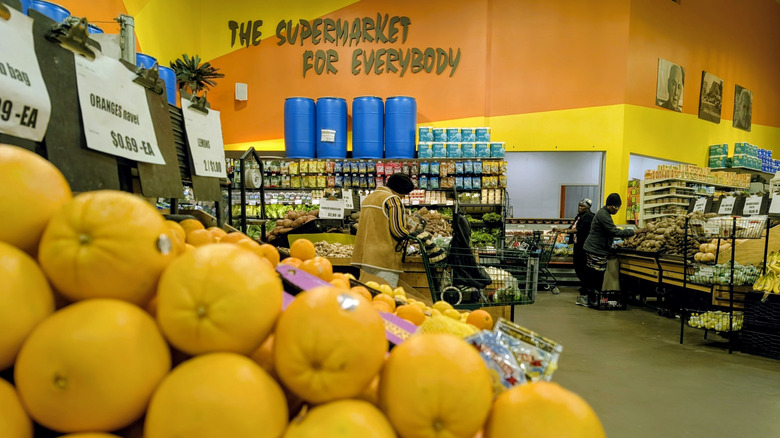
Tropical Foods started with just one product: plantains. Having been forced out of the supermarket business in Cuba, Pastor Medina had to move out and landed in Boston's Roxbury neighborhood. His corner store opened in 1974 and was called simply El Platanero ("the banana man"). Over the years, El Platanero became Tropical Foods and expanded into a full supermarket as it was run by Medina's son-in-law and later, his sons. In 2015, the original Tropical Foods moved next door into a brand-new supermarket that still has a lot of plantains — but also a lot more.
Today, Tropical Foods is an employee-owned store and advertises itself as "the supermarket for everyone." That's certainly an idea of what the store has to offer. At first glance, Tropical Foods might look like an average big-chain supermarket. However, it has just as much to offer for the Haitian, Dominican, and Puerto Rican communities of Roxbury as it does for the students at nearby Northeastern University.
You can find one of the largest selections of Goya items in the city here, along with an array of pan dulce from local bakeries, fresh coconuts, and an assortment of tropical root vegetables. For example, you can buy yuca, yautia, malanga, and batata to make viandas con bacalao (a Puerto Rican dish enjoyed by "Next Level Chef" contestant Omi Hopper). And while the deli doesn't focus on ready-made food the way a store like Nubian Markets across Roxbury does, the tender pernil from its hot food section held me over after many a long work day.