

6 Popular Belgian Beers Available In The US, Ranked Worst To Best
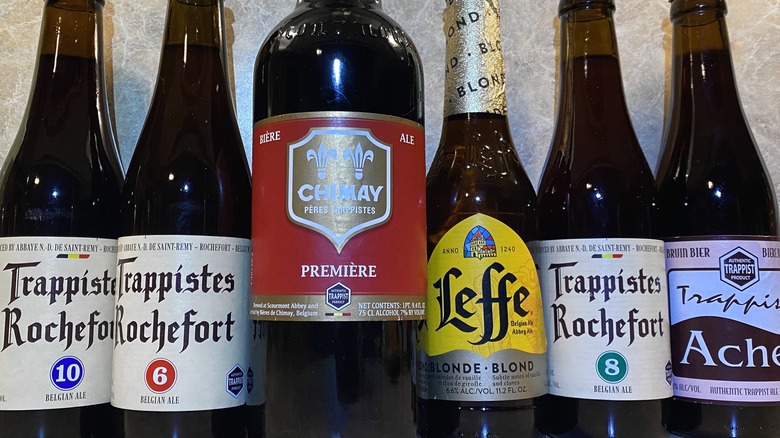
Belgian beer is an umbrella term for over 1,000 different types of beer across hundreds of brands, all with complex, yeasty flavors that make these brews stand out among other global varieties. This small-but-mighty country is a brewing powerhouse with traditions dating back centuries, yet Belgian picks makes up less than 5% of American beer revenue. Compared to sales of classic American beers and classic Mexican beers, Belgian options represent a widely unfamiliar corner of the U.S. market, and I wanted to change that.
Belgian beer is robust, unique, and rich in history. Brewing of some kind has been common practice in the region since the 200s (no, that's not missing a zero). A large sect of the brewing community found its roots in Trappist monasteries, which continues to this day, though in small numbers. There are a number of common beer varieties in Belgium, including ales, lambics, lagers, Trappist beers, white beers, and strong beers. Each category boasts its own unique flavor profiles, but they all share a common characteristic: boldness.
In an effort to familiarize myself with Belgian beers so that you can too, I tried six popular Belgian offerings then ranked them worst to best. Please note that prices might vary by location. I dive into the methodology behind my ranking at the end of this article. Cheers!
6. Leffe Blonde
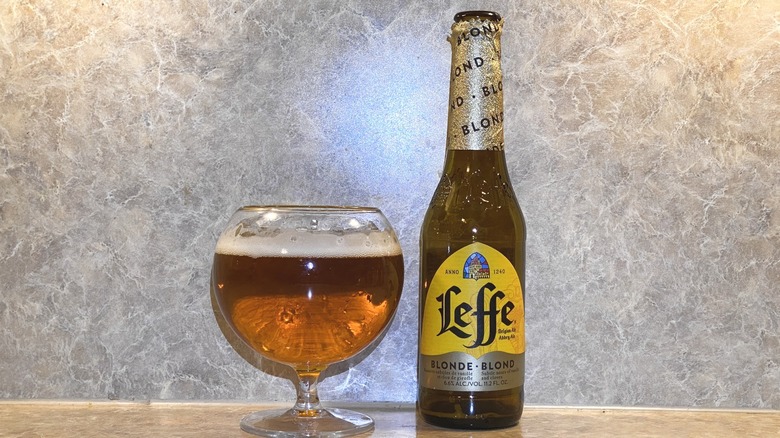
With only six beers to rank from worst to best, the differences between these brews were razor-thin. However, Leffe Blonde came in last for me. This 6.6% ABV Belgian blonde ale is an abbey beer that originated at Notre-Dame de Leffe, an abbey in Dinant, Belgium. Abbey beers are a common staple of Belgian beers, as monks have been brewing various ales in monasteries for centuries. As a blonde ale, I assumed that this option would be fairly approachable, since I'm normally a big fan of similarly colored pilsners.
Instead of a spice-forward flavor I would expect from a pilsner, the Leffe Blonde tasted more acidic, almost like a sour or saison. The flavor had a slight fruitiness to it that, as weird as it is to say, reminded me quite a lot of Banana Boat sunscreen. Sunscreen is a nostalgic smell for me, but it's not something I look for in a beer.
With a six-pack of Leffe Blonde ringing in at around $10, it isn't the priciest beer on the market, but I probably wouldn't buy it again, good deal or not.
5. Trappist Achel 8 Bruin
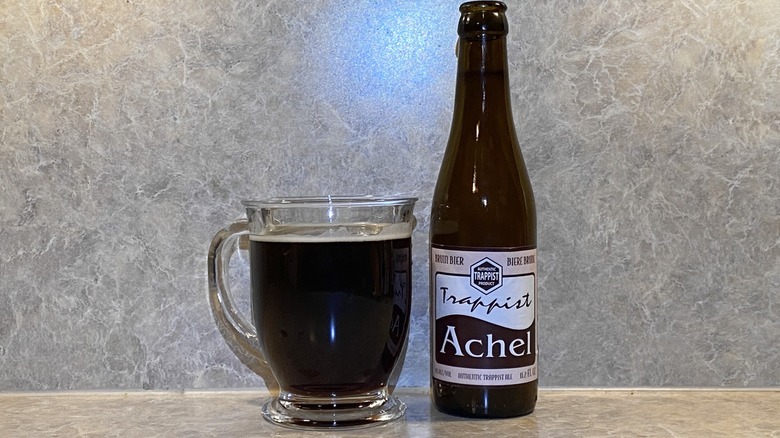
Achel 8 Bruin is a strong ale that comes from Achel Brewery — or Brouwerij der Sint-Benedictusabdij de Achelse Kluis. The brewery is connected to the Abbey of Saint Benedict in Achel, on the northern border of Belgium and the Netherlands. As soon as I poured this rich, dark brown ale into the glass, I figured I was in for a bold, spicy, and malty flavor — and I was right. It had a strong caramel aroma, similar to traditional stouts and porters.
The combination of strong caramel and bitter flavors reminded me of a Scottish ale. There was a metallic taste that lingered in the finish that I didn't particularly care for, which is why it ranked so low on my list. This would be a great dark Belgian beer to try if you like stouts, porters, Scottish ales, or other similarly robust brews.
A 330-milliliter (or single-serving) bottle of Trappist Achel 8 Bruin costs around $4, which means it's a pretty reasonably priced bottle to try for the first time.
4. Trappistes Rochefort 8 Ale
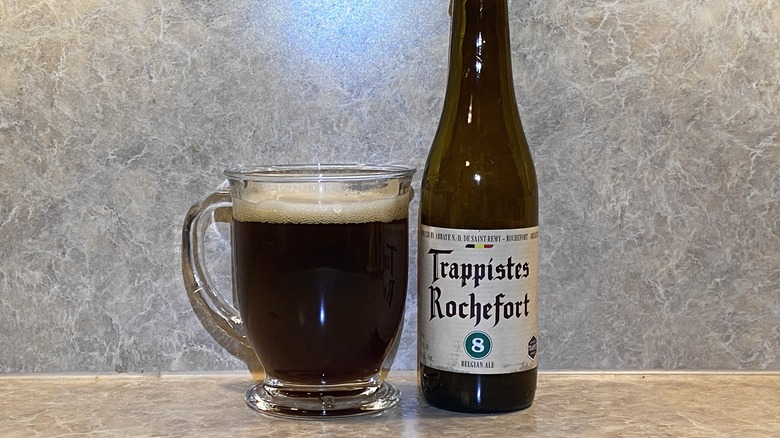
Brewed by the Abbey of Notre-Dame de Saint Remy, a monastery in Rochefort, Belgium, the Rochefort 8 Trappist ale is a traditional brew with a dark red-brown color and a somewhat acidic aroma on the nose. By smell alone, this seemed like it might be lighter than a typical dark ale, and indeed, the flavor delivered on that promise with a surprisingly light-feeling sip.
I would compare this Trappist ale to an Irish red or similarly medium-color lager. While caramel and brown sugar notes do come through, there isn't so much maltiness that it coats your mouth in an unpleasant way. Moreover, between the low bitterness and the decent amount of carbonation, it feels particularly easy to drink.
At around $7 for a single bottle, Rochefort 8 Trappist ale is on the pricier side. However, if you're looking for a middle-of-the-road Trappist selection, I would recommend this one. The beer's relatively neutral flavor profile is the only reason it ranked so low on the list.
3. Chimay Premiere
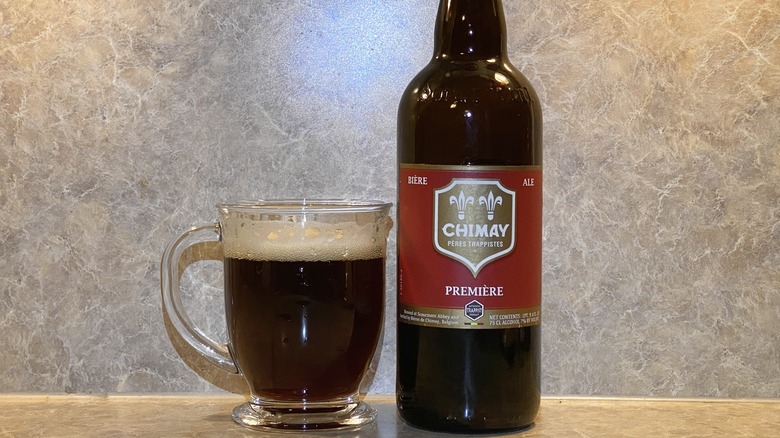
Ranking right in the middle of my Belgian beer taste-testing experiment is Chimay Premiere, a Trappist ale from the Abbey of Notre-Dame de Scourmont on the Scourmont plateau, which is close to the town of Chimay. I ranked this one in the middle because, to me, it has everything you'd want in a Belgian beer if you're just trying it out for the first time without having to commit too strongly to the flavor.
Chimay Premiere is slightly nutty on the nose with dark caramel notes on the finish. A good amount of fizz helps cut the low-end bitterness, making this a great option for trying out Belgian beers without missing out on its distinctive flavors.
I didn't know what to expect from this pick when I first tried it, and I was pleasantly surprised to find it ranking so high on the list. Chimay Premiere costs around $17 per 750-milliliter bottle, so I'm not sure that I would splurge on this brew regularly. However, I'd gladly drink it if it was in front of me.
2. Trappistes Rochefort 6 Ale
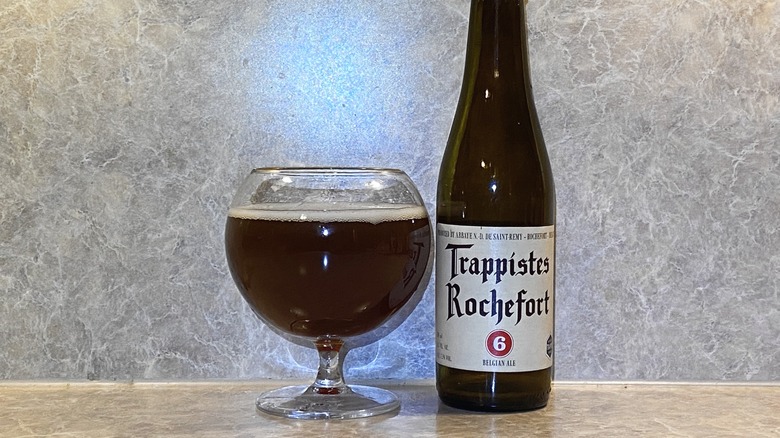
The runner-up to first place in this abbreviated ranking is Rochefort 6 Trappist ale, which I would call the perfect beginner Belgian beer. This brew comes from the Abbey of Notre-Dame de Saint-Remy and is one of the lighter fares to come from this monastic tradition. With a medium reddish-brown color and a malty aroma on the nose, this Trappist ale smells a bit heavier than it tastes.
With light carbonation and a flavor profile centered around stone fruit and caramel, this Belgian beer gives you the distinctive spiciness of the style without knocking you over with the flavor. If you're still on the fence about Belgian beer, I'd suggest starting here.
At around $7 for a single-serve bottle, Rochefort 6 Trappist ale is a bit pricier than some beer-drinkers might be used to. However, I'd say it's worth the extra few bucks, especially if you want to wait to commit to buying a multi-pack of this kind of brew.
1. Trappistes Rochefort 10 Ale
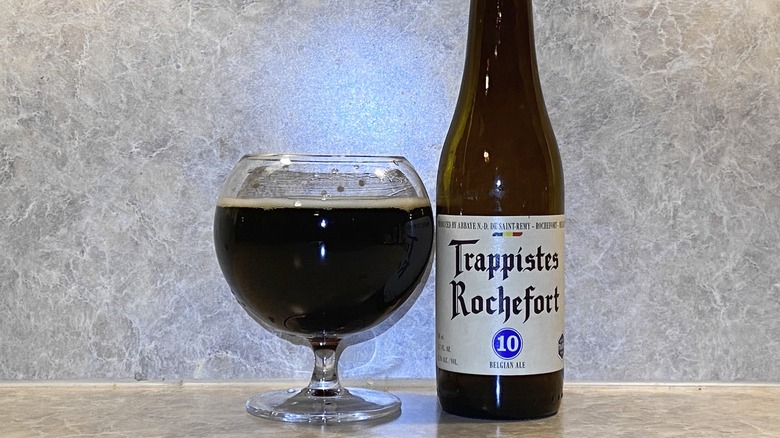
Coming in at first place in my Belgian beer tasting spree is the Rochefort 10 Trappist ale, a dark, full-bodied brew from the Rochefort-based abbey. This offering is not for the light of heart (or palate), but if you can get past the dark color and intense aroma of leather, ester, and cacao, the flavor is worth it.
Upon first sip, I was met with notes of graham cracker, sorghum, and dark fruit. There isn't a ton of carbonation, but the lack thereof helps you appreciate the rich malt of this complex brew. The ABV is relatively high at 11.3%, which isn't one of the beers with the highest alcohol content in the world, but it's still something to be mindful of if you plan on having more than one of these robust ales.
The higher ABV also helps ease the sticker shock. A single-serving bottle of Rochefort 10 Trappist ale will set you back about $9, which could be a dealbreaker for some. But when it comes to lovers of strong beers, right around $10 is well worth it.
Methodology
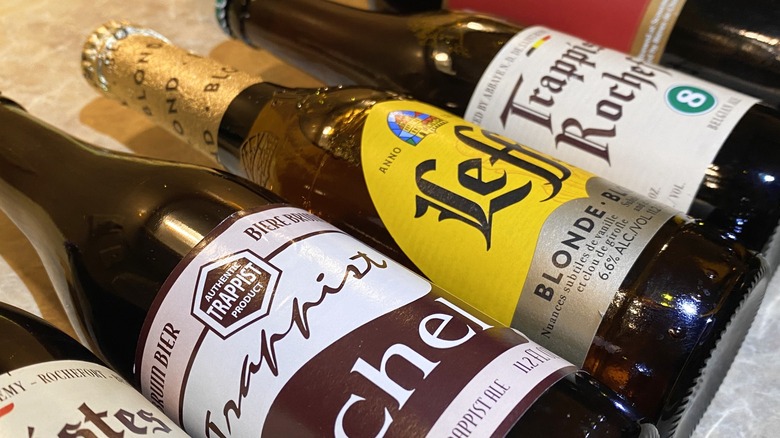
I began my ranking process by sourcing Belgian beers from my local liquor stores in West Kentucky. After finding six different types, I brought them home and let them sit in my cool basement overnight. Although I didn't take an exact temperature, these brews were generally cooler than room-temp but warmer than a beer that came out of the fridge. I poured them into clean glasses and drank water in between each to cleanse my palate. I also abstained from eating food while testing to get as accurate of a flavor read as possible.
As I tried each one, I judged them based on overall flavor, mouthfeel, drinkability, ABV, and cost. Beers that earned the highest marks in these categories ranked higher on the list.