

11 Convection Oven Tips You'll Wish You Knew Sooner
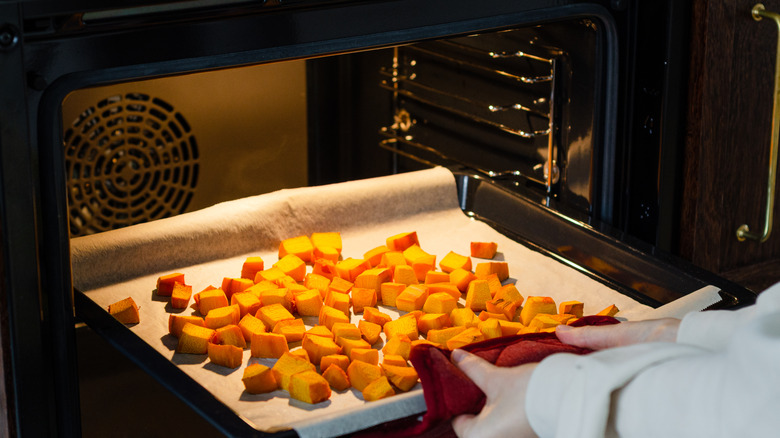
Air fryers might be ruling the countertop appliance roost, but they're hardly the first appliances to build a sales pitch around circulating hot air. Before they showed up, there were convection ovens. For a while, though, nobody seemed particularly interested and it wasn't a mystery why. Why splurge on another bulky oven when the standard one already did the job just fine?
But with air fryers taking over kitchens at a dizzying pace, chances are you've already had a taste of what convection cooking can do. Perhaps enough to consider bringing a full-sized version into your kitchen. Cooking with a convection oven isn't all that different from using a conventional one, but the two don't operate quite the same way. Rather than naturally rising hot air, convection ovens use a fan to distribute heat around your food. That not only changes how quickly your food cooks, but also affects browning, texture, and moisture retention.
Once you get the hang of it, though, you might be surprised by just how handy the convection setting can be. To set you on the right path, we spoke to Smeg USA product manager Ilaria Castagnoli, professional chef Dennis Littley; Pinnacle Sales Group's lead field instructor and technical specialist Mike Langan; owner and founder of Copper & Thyme, Alicia Charolle; and professional chef and food safety expert at Level 3 Food Hygiene Certificate, Mark McShane. Here are 11 pro tips and tricks they shared for getting the most out of your convection oven.
1. Turn the fan off for delicate pastries
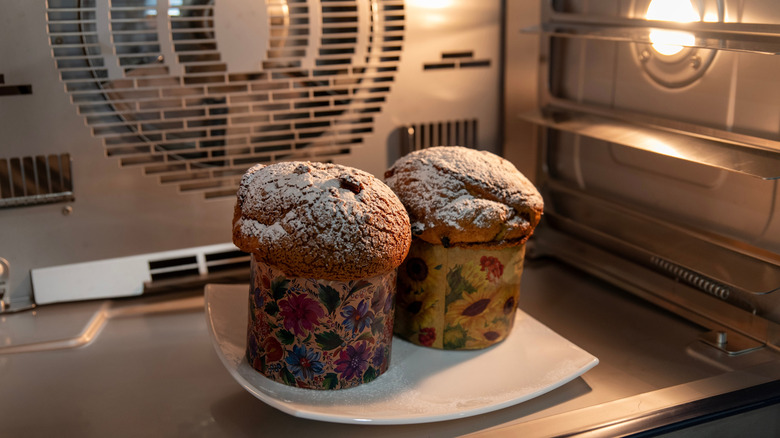
One common misconception about convection ovens is that they do everything better and faster than conventional ovens. As it turns out, though, there are situations where it's best to just skip the convection setting altogether.
A convection oven operates basically like a wind tunnel, blasting hot air around your food at a much faster rate than a conventional oven. That's fantastic news when you're after golden-brown edges and crispy skin, but not so much when you're making something that's far better served by steady radiant heat. Cakes, custards, and cheesecakes, for instance, can take a beating from all that circulating heat. "A cake may set or brown on the outside before the center is finished, while a custard or cheesecake can develop an overly dry or browned surface," explains chef Dennis Littley.
Chef Mark McShane agrees, adding that convection can be particularly unforgiving with soft, airy batters like those used for angel food cakes, soufflés, and sponge cakes. Those forceful gusts of hot air can push a light batter to one side, set the outside too quickly, or cause it to puff up before its structure has had time to set.
And sometimes, switching off the fan is simply the sensible thing to do. "I stick with conventional heat when I'm making a recipe that has been carefully developed for a regular oven, especially if I haven't made it before," says Littley. "Once I know how the recipe behaves in my oven, I can experiment with convection if it would help."
2. You still need to turn and rotate the food
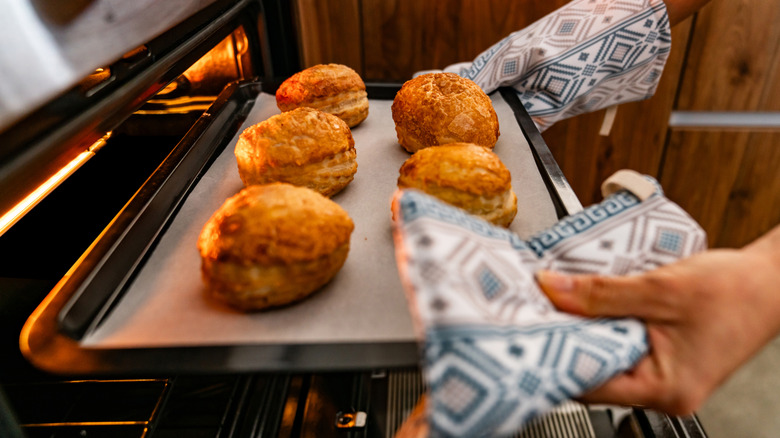
One thing many folks get wrong about convection ovens is assuming they distribute heat so perfectly evenly that you can simply pop your food in, walk away, and come back to something beautifully browned and crisp.
But according to appliance expert Mike Langan, convection doesn't completely eliminate hot spots. Areas directly in the fan's path might get a more consistent blast of hot air, while those farther out in the periphery get something a little more tepid, slowing down browning and cooking. To get around this, Langan recommends rotating your pans halfway through cooking. A good flip or 180-degree turn should help ensure every side gets its fair share of those hot air gusts.
And remember, ovens aren't all alike. Tiny variations in calibration and even how you use your oven can affect the paths heat takes through the cavity. This means your oven may have its own unique hot spots, which you'll want to keep in mind when rotating your food. Langan recommends getting proactive about finding out exactly where they are.
"One easy way to learn about your oven and hot spots and cool spots is to spread sandwich bread across your usual rack and watch which slices brown first. Take a picture and you'll know where the hot spots are," he tells us.
3. Check for doneness early
A lot of folks assume that because convection ovens brown food so much faster, they must run considerably hotter than conventional ovens. But the fan doesn't actually crank up the temperature inside the oven cavity. Instead, it circulates hot gusts of air around your food, supercharging browning, crisping, and cooking.
To keep that forceful heat from burning your food, chef Dennis Littley recommends checking for doneness much earlier than you would with a conventional oven. If you're not working with a set recipe, chef Alicia Charolle suggests gradually lowering the temperature over a few cooking sessions until you find the sweet spot. But if you're following a recipe with specific temperatures and cooking times, chef Mark McShane recommends starting to check for doneness around 20% to 25% earlier than the set time.
Don't go by sight alone, though. Browning in a convection oven happens quickly, which means something can look beautifully done on the outside while the inside is still playing catch-up. Appliance expert Mike Langan recommends reaching for your trusty temperature probe to check doneness, particularly with thicker foods like roasts.
Another way to keep things from cooking too aggressively is to lower the temperature a little. This slows down heat transfer to the food, giving the interior more time to catch up with the exterior. "For a conventional recipe written for 400 degrees Fahrenheit, I'd begin at 375 degrees Fahrenheit on convection, unless the oven automatically converts the temperature," says Littley.
4. Make sure your pans have enough airflow
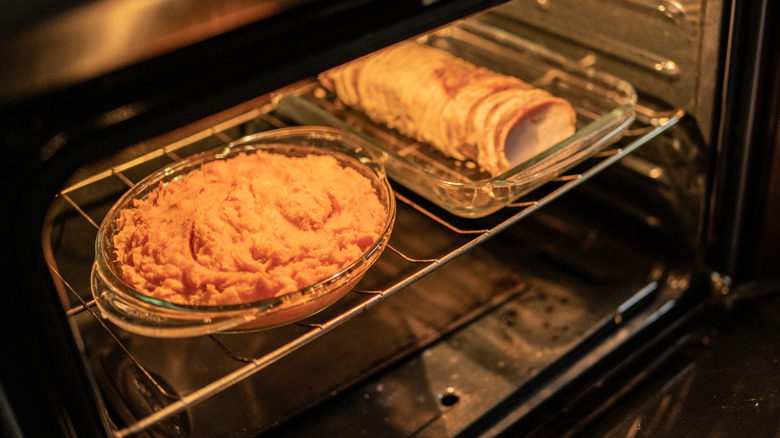
If there's one thing worth remembering when using an oven, it's that you still have to play an active role in making sure all your food gets its fair share of hot air. This sounds obvious enough when using a conventional oven. Without a fan pushing heat around, you know better than to cram everything in and expect it to cook evenly. But because convection ovens have that extra oomph from the fan, some folks assume they're free to pack the oven cavity as tightly as they please.
While convection ovens do handle multi-pan cooking pretty well, you still need to leave enough room for hot air to circulate around your food. Large pans, cookware packed neck and neck, and trays pushed against the oven walls can all get in the way, creating temperature differences that leave some areas cooking faster than others. To keep the air moving freely, chef Mark McShane recommends leaving a couple of inches of clearance between your pans and the oven walls, as well as between the pans themselves.
And, of course, don't crowd the pan! To make sure everything in your dish gets properly acquainted with the heat, spread your food out in a single layer whenever possible. Otherwise, the pieces on top and around the edges may brown and cook faster than those buried underneath or in the middle.
5. Choose the right setting for your dish
Once you've unboxed your swanky new convection oven, you might be surprised by just how many modes and settings it comes with. The instinct is to stick to what you know: the standard broil or bake modes. But as Smeg USA product manager Ilaria Castagnoli tells us, some modern models give you access to as many as 15 cooking functions.
You will, of course, get the usual conventional oven essentials, but you might also run into options like true European convection, convection bake, convection roast, convection broil, and even a dedicated pizza setting. Each combines different convection capabilities to achieve different results, making the setting you choose something of a deciding factor in how well your food turns out.
Convection bake, for instance, combines the fan with the bottom heating element for a more restrained distribution of heat. "This is an option when you're baking items on multiple racks without needing to rotate the pans — such as cookies, pastries, casseroles and pies where you don't want the exterior to brown and need uniform heating throughout the dish," Castagnoli points out.
Convection roast, on the other hand, brings the fan, bottom heating element, and top broil element into the mix, delivering a more aggressive blast of heat to encourage even browning and crisping. "This setting is deal for roasting poultry and large roasts for a crispy or browned, crispy or caramelized exterior while the interior stays juicy," says Castagnoli. "It's also a great setting to roast firmer vegetables like root vegetables and Brussels sprouts."
6. Rack positioning matters
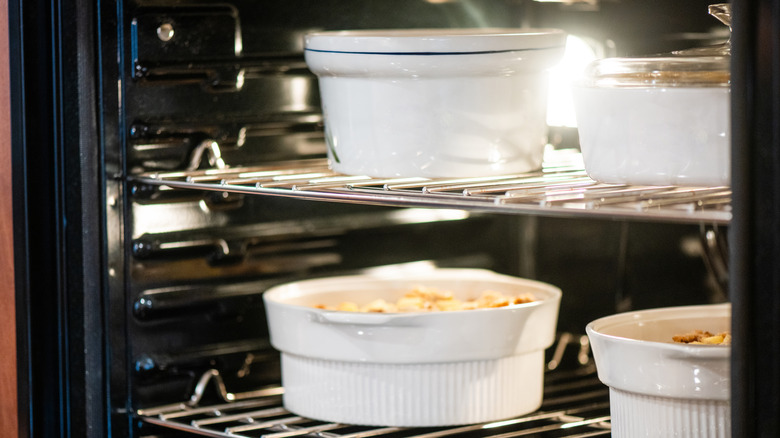
Because manufacturers have really hammered home the idea that convection ovens distribute heat more evenly across racks, you might assume every shelf gets exactly the same dose of heat. But that's not necessarily the case, particularly with fan-assisted convection models. Rack placement still matters.
According to Smeg USA product manager Ilaria Castagnoli, there are, in fact, a few tried-and-true ways to position your food in the oven. "If you're planning to use the broil or convection broil [mode] to grill meat, it is recommended to place the food at the center of the rack," she explains. "If you are cooking on two levels, we recommend placing the pans in the center of the rack and leaving an empty level between the two."
That's not a one-size-fits-all method, though. According to appliance expert Mike Langan, the food you're cooking and the results you're after should also guide your strategy. "Start in the middle for a single tray of cookies, muffins, or a cake. Go one level lower for a pie if the bottom crust tends to come out pale. For a whole chicken or turkey, drop the rack so the bird itself sits near the center of the oven," he tells us.
And if you're still lost, let your food tell you what's missing and adjust accordingly. "If a pie looks good on top but stays pale underneath, move it down a rack on the next bake and leave the temperature alone. You'll know whether rack position fixed it," Langan points out.
7. You can get air fryer results
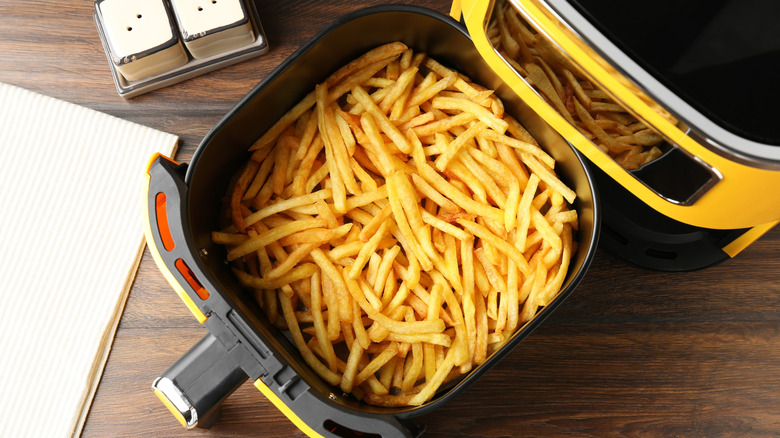
Air fryers might be darlings for a weeknight family dinner or a small get-together with friends. But what if you're feeding Thanksgiving-level crowds and still want that golden, crispy finish? This might be wishful thinking with a conventional oven, but you can absolutely achieve something pretty close with your convection oven.
Convection ovens really don't operate all that differently from air fryers. "Air fryers combine high heat and fast-moving air to achieve that crispy, crunchy exterior synonymous with frying food," says Ilaria Castagnoli. "Because of this, convection ovens offer the ability to achieve similar results without one more gadget taking up space in the kitchen."
The trick is to replicate the conditions that make air fryers so good at crisping food. First, create the right conditions for airflow. "Give the hot air room to circulate. Arrange food in a single layer and use a shallow sheet pan or roasting pan when browning is the goal," says chef Dennis Littley, who also advises against crowding the pan to avoid "moisture around the food ... [that] can leave it steaming instead of browning."
Don't expect full-blown air fryer perfection, though. "The full-size oven may take longer to cook the same amount, and the finished food may not get quite as crisp as it does in an air fryer," says Littley. "Check early, then adjust based on what you see rather than expecting the same result at the same time."
8. Your convection oven can do more than roast
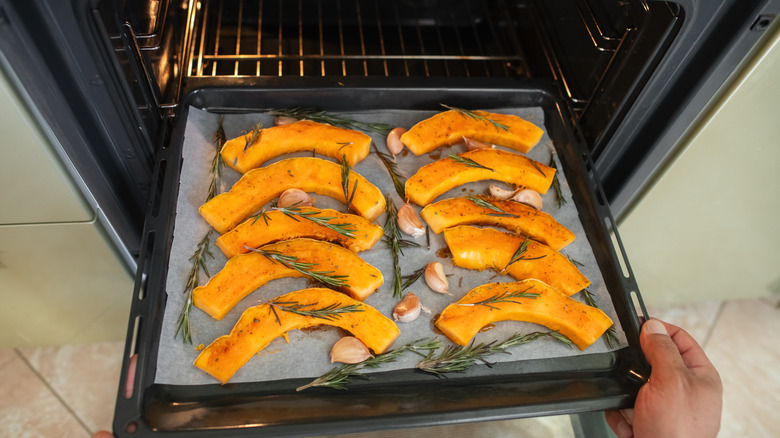
Your convection oven might do an outstanding job with a hunk of meat, but that's hardly all it's good for. Those blasts of hot air are great at stripping moisture from food. This opens almost endless possibilities beyond just baking and roasting.
Need to rescue some scary-looking citrus or prolong the life of your berries but don't have a dedicated food dehydrator? Your oven can absolutely step in. Just make sure to slice the fruit thinly so there's less moisture for the heat to work through. And don't forget to pick the right temperature. Dehydration needs to happen slowly, using gentle, steady heat — around 140 to 160 degrees Fahrenheit — so the outside doesn't dry out while the inside is still holding on to moisture. You also don't want to overdo the heat and end up sacrificing some of the food's flavor and texture along the way.
Drying fruit is not the end of it. Chef Dennis Littley has a few unique suggestions to stretch your oven's versatility: "I like convection for drying bread cubes for stuffing or making croutons. It's also handy for finishing a loaded pizza when the crust looks good, but the toppings are still wet." Chef Mark McShane also has a few tricks up his sleeve. "You can rapidly thaw frozen meat by placing it on a wire rack inside a cold oven with only the fan running, and you can proof bread dough using just the oven light after a 60-second burst of low heat," he says.
9. You don't always have to preheat
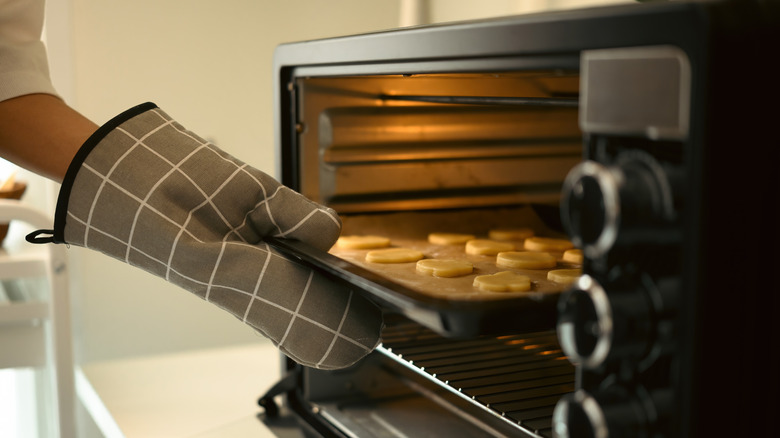
If there's one thing oven recipes have drilled into home cooks, it's that you should always preheat your oven. But preheating isn't really an oven rule you should never break, and isn't at all necessary with some foods. "You can safely skip preheating when cooking dense casseroles, baked pasta, or reheating leftovers that just need gentle warming through," chef Mark McShane says. "Starting in a cold oven also works well for slow-roasting large, tough cuts of meat like pork shoulder from the inside out."
Knowing when you can skip the preheat takes a little discernment. As McShane explains, preheating is essential for foods that need sustained heat from the get-go to develop the right structure. "It is critical for baked goods and high-heat roasting so fats do not melt before starches set and vegetables sear instead of turning mushy," he says. "Without a hot start, cookies will spread flat and meats will fail to develop a golden crust."
Vegetables can also benefit from a properly heated oven. You generally want a good sear to caramelize their edges, build flavor, and keep them from turning mushy. McShane has a little trick for getting that head start. Rather than just preheating the oven cavity, he recommends heating the empty sheet pan first: "[That's] so the oiled produce sears immediately upon contact while the fan browns the tops."
10. Prep your food before cooking
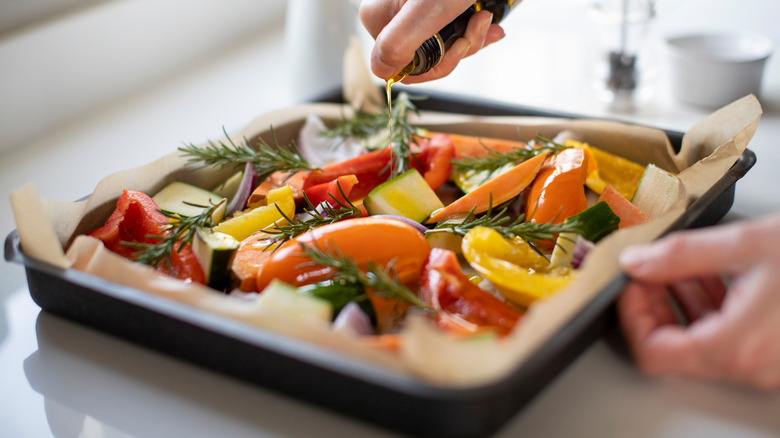
Because convection ovens are so efficient at transferring heat, you might assume there's not much groundwork to do before chucking your food in. But just like conventional ovens, these bad boys reward a little prep work, especially when you're hoping for crispiness.
A little discernment goes a long way when deciding what kind of prep your food needs. If you're trying to recreate something you'd normally deep-fry, for instance, consider swapping wet batter for dry breading. Otherwise, the fan will send that coating flying before it has a chance to set.
For meat and poultry, chef Mark McShane recommends starting with a simple dry brine made from a generous amount of salt and a dash of baking powder. He suggests giving your food an overnight stay in the fridge, uncovered, to dry out the surface and help it blister beautifully once it hits the heat. You, of course, can shorten that stay when working with smaller cuts or stretch it out for a particularly hefty hunk of meat.
Veggies also need a little love before going into the oven. A quick pat-down with a kitchen towel helps remove surface moisture, giving the hot air a head start on crisping. And if you want your oven-roasted potato wedges extra crispy, soak them to wash away some of that loose surface starch, then give them a thorough pat-down before they hit the pan.
11. Use the right cookware
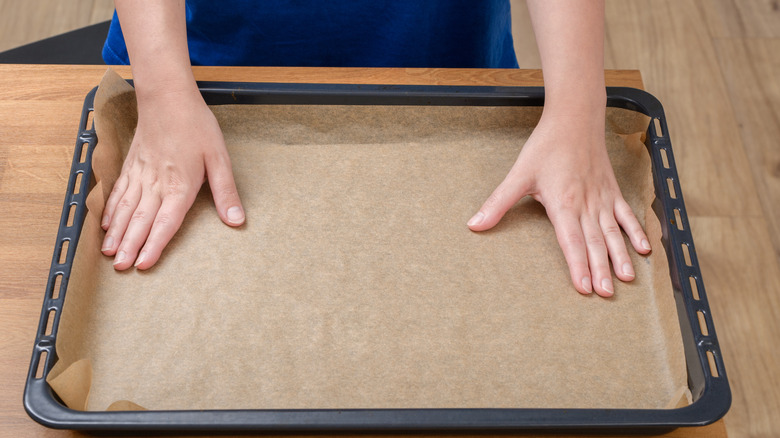
Convection ovens deliver more robust heat circulation than conventional ovens, but they're not immune to the pitfalls of poor equipment. Cookware doesn't all behave the same way under convection heat, meaning your choice of pan can drastically affect the finished result. Dark pans, ceramic, and glassware absorb and retain heat more readily, potentially giving you a darker crust, while shiny pans made from materials like aluminum reflect more heat and tend to produce lighter browning — ideal for cookies and cakes.
Convection ovens also rely on good airflow to distribute heat evenly, so the design of your cookware can either help that hot air along or throw a rather inconvenient roadblock in its way. "Avoid deep roasting pans with tall walls, as they block moving air and leave the bottoms of your food pale and soggy," says chef Mark McShane. "Heavy-gauge aluminum, stainless steel, and rimless cookie sheets or low-sided pans under 1.5-inches tall work best because they let hot air wash over the food."
And if you must break out the heavy artillery, like a Dutch oven, it might be worth switching the fan off altogether. "Covered braises and stews in heavy Dutch ovens will do better on conventional settings since the tight lid blocks the fan's airflow anyway," McShane tells us. If you really must use convection, take the lid off. Just remember to add a touch more liquid since your sauce may reduce quicker.