

Whatever Happened To Marsh Supermarkets?
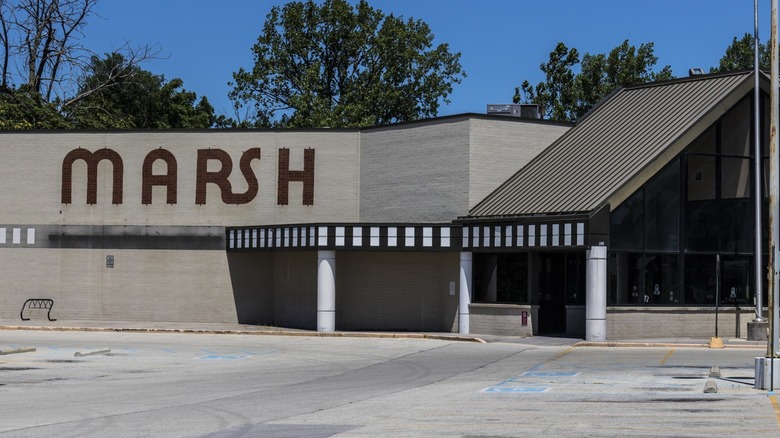
In major cities and their surrounding suburbs, supermarkets are a dime a dozen. Everyone has a most-trusted grocery store, the place they rely on to meet their needs on a weekly basis. For the better part of 86 years, Marsh Supermarkets was the regional grocery chain that reigned supreme for many residents of Indiana and Ohio.
At its height, there were over 100 Marsh locations across the region. Touting the slogan "Supermarket of the Future" at one point, the chain was known for its innovative practices, marketplace layout and commitment to its loyal customers. However, that slogan fell out of commission as competitors entered the surrounding areas, shopping habits changed and the family-run business began to falter.
So how did Marsh Supermarkets go from a highly successful regional chain to a flailing business that shuttered its doors a decade after private equity acquisition? The downfall of Marsh was a slow descent marked by increasingly-hard-to-conquer competition and money problems. From early accomplishments in the industry to a free-spending CEO, there's a lot you might not know about what happened to Marsh Supermarkets.
It all started in Muncie, Indiana
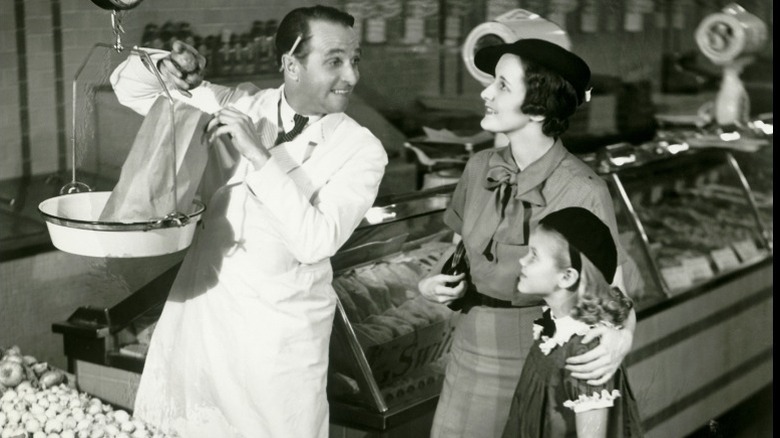
The first Marsh store was founded in Muncie, Indiana by Ermal Marsh in 1931. He opened the store to cover the cost of his schooling at the time, bringing in a whopping $7 in sales on his first day. Ermal Marsh came from a family background in farming and food retail, experience that lent itself to his early success. Despite economic turmoil caused by the Great Depression and World War II, he was able to expand and operate multiple stores within the region.
In the late 1940s, Ermal Marsh took a chance on the business and opened a 6,430-square-foot supermarket known as Marsh Foodliner. Once the first Marsh Foodliner proved itself successful, the chain's growth was rapid. The company went public under the name Marsh Foodliners, Inc. and continued to accumulate more locations, with seemingly no end in sight to its expansion. However, tragedy struck in 1959 when Ermal Marsh died in a plane crash.
His brother, Estel Marsh, took over the company (rebranded as Marsh Supermarkets, Inc.) and in turn took over his brother's dream. Under his leadership, operations continued to grow. Nearly twenty years after the first Marsh Foodliner had opened, the company was bringing in over $100 million in annual revenue.
It was in 1968 that Don Marsh, son of Ermal Marsh, took over as president of the company. Through expansion into convenience and drug stores, exploration of innovative marketing tactics and expansion into the superstore world, Don continued pushing the needle forward into the early 2000s.
Marsh Supermarkets brought innovation to the Indiana grocery industry
From the opening of its first supermarket to a loyalty program introduced near the end of the company's reign, Marsh worked hard to keep innovation at the forefront of the company. It continuously built upon its existing operations, opening its first grocery store bakery in 1949. The Marsh brand ice cream business followed shortly after, quickly becoming the top selling gallon ice cream brand in the country at one point.
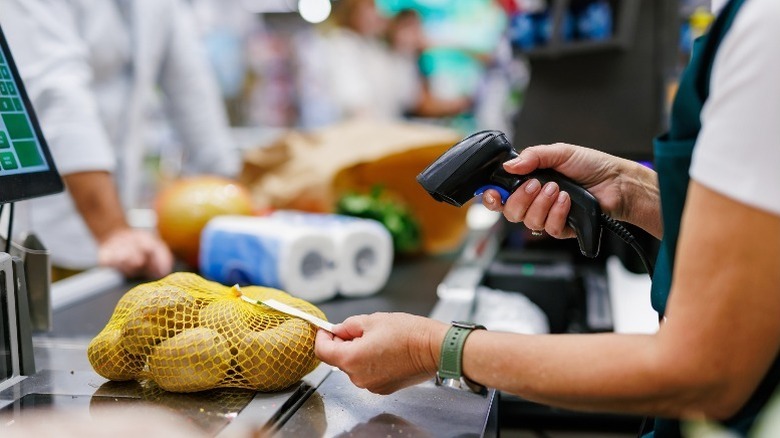
The very first universal product code (aka barcode) was scanned at a Marsh store on June 26, 1974 in Troy, Ohio. The Marsh employee working scanned a pack of Wrigley's Juicy Fruit gum, marking a turning point in efficiency for the industry through the introduction of grocery store barcodes.
Marsh had a strong hand in popularizing the one-stop-shop model within its stores (what sets apart supermarkets vs. grocery stores), opening its first combined supermarket and drugstore in 1977. From there, Marsh went on to expand its offerings into multiple divisions within the course of a decade. These included its supermarkets, convenience store branch, drugstores, in-house restaurant, discount supermarkets and farmer's market stand.
Marsh also offered an early grocery store loyalty program for its shoppers, known as the Marsh Fresh Idea card. In 2016, Marsh launched its own app called Fresh Lettuce for customers to connect their loyalty accounts. Customers could use the app to view ads from retailers at Marsh stores in exchange for store perks and discounts. While Marsh's commitment to innovation and improvement likely contributed to its longevity, the company's stream of fresh ideas eventually ran dry.
The chain struggled to combat increasing competition

Marsh struggled to measure up against an increasing number of competitors in the region. Its first real struggle arose when Cub Foods entered the Indiana grocery scene in the 1980s. Known for its affordability and discount pricing, Cub Foods forced Marsh to restructure some of its spending in order to retain its competitive edge (and customers).
In order to most successfully hold its own against its competitors, Marsh conducted the Marsh Super Study. The research examined Marsh stores over a 65-week-period in order to track how and where customers shopped the store. Most noteworthy from the study was its findings on customers' gravitation to fresh produce, which led to restructuring of stores' individual layouts to prioritize space for produce and other fresh offerings. While these improvements may have contributed to Marsh's hold on 30% of the Indianapolis grocery market in the 1990s, that grip proved itself to be loose.
Large retailers like Walmart, Kroger and Meijer began to crowd out Marsh stores, wooing customers with better deals while operating on much larger budgets than the regional grocer. Marsh was left to grapple with combating competitive pricing, convenience and big-box stores able to carry larger product inventory.
The Sun Capital Partners acquisition didn't change things for the better

In the early 2000s, Marsh was struggling to stay afloat. Discussions of a potential sale began to arise, eventually turning toward Boca-Raton-based private equity firm Sun Capital Partners, Inc. Klaff Realty, an affiliate of the firm, acquired Marsh Supermarkets in 2006 in a $325 million dollar deal. Then-CEO Don Marsh saw the ample resources and experience of the firm as a way for the company to move forward in a market it had been struggling to find its place within. In an effort to take the company in a different direction, Sun let Don Marsh go with a severance package of $4.2 million.
Under Sun's leadership, the once-mighty regional chain began to shrink. The firm sold off much of Marsh's existing real estate and closed substandard stores shortly after its acquisition. Marsh's convenience store chain, Village Pantry, was split off into its own entity.
Amid all of the ongoing change, Marsh's once-loyal customer base began to shrink. All products affiliated with the Marsh brand were replaced by the Food Club brand. While the switch made financial sense for the company, many customers loyal to the in-house brand began to turn elsewhere for their groceries.
Within the decade, the number of existing Marsh stores was nearly half of what it had been at the time of its acquisition. In early 2017, word got out that rent wasn't being paid at multiple Marsh locations. Around this time, Sun opted to sell its controlling rights with little fanfare to Delaware-based JT Grocery Consulting LLC, marking the beginning of a quick end for Marsh.
Former Marsh leadership led long history of financial woes

Financial problems had plagued Marsh Supermarkets long before Sun Capital Partners entered the picture. Many of these issues began with exorbitant staffing expenses for the Marsh family and a former CEO with a taste for the finer things.
Just prior to its sale, a 2005 U.S. Securities and Exchange Commission filing outlined that a significant amount of company funds went exclusively to paying the Marsh family and their spouses. This figure included former CEO Don Marsh, head of the company for nearly 50 years, who appeared to know just as much about running up a bill as he did about running the family business. Marsh Supermarkets Inc. took Marsh to court in 2013 in a suit regarding $3 million he allegedly used in company funds to pay for personal expenses. The expenses outlined in court documents included trips to see his mistresses, annual fishing trips to Alaska, restaurant bills and more.
Marsh counter-sued in regards to the post-retirement payouts he never received, as his payouts came to a halt when the company began to uncover years' worth of unaccounted funds. While the jury had found Marsh guilty in his initial trial and held the former CEO responsible for $2.2 million owed to Marsh Supermarkets Inc., the judge in Marsh's counter-suit ruled that he was entitled to the $2.17 million in post-retirement payouts.
Ambitious ventures led Marsh down the drain
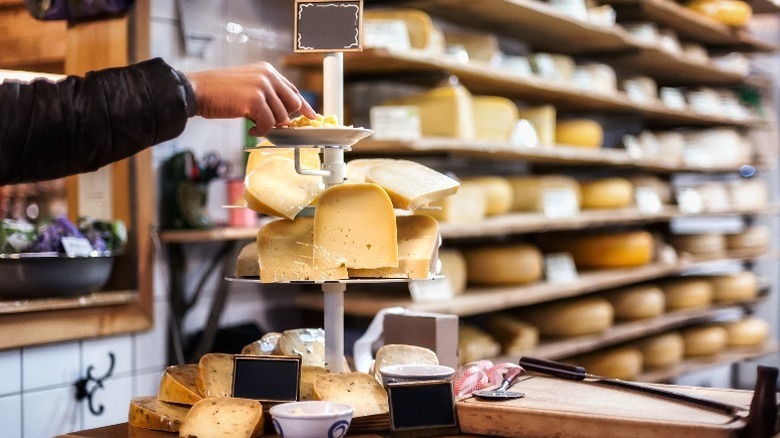
The consequences of risky financial decisions began to catch up with Marsh as the chain pursued new designs and expansion in the market. In an effort to champion an innovative floor plan, Marsh restructured its new stores in 2004 with a racetrack layout. The setup was built around a central courtyard and cafe, borrowing inspiration from European marketplaces. Lining the perimeter of the store were specialty departments like the bakery and butcher shop. Every department thrived on details — fluorescent bulbs were abandoned in favor of natural lighting, corresponding products like frozen fish fillets and tins of tuna found themselves sharing the same display and themed decor adorned each space.
The layout was aesthetically pleasing but ultimately hurt the customer shopping experience, according to commentary from former Marsh CCO Danny O'Malia to the Indianapolis Business Journal. In order to knock every item off of the typical grocery list, it was necessary to make a stop at each department's individual kiosk. This led to lengthier shopping trips instead of the convenient stop that a traditional aisle-based layout makes possible.
In another ill-advised venture, Marsh opted to expand from its confinement in Indiana and part of Ohio to the broader Midwest. The company tried and failed to successfully operate an expensive expansion into the Chicago market in 2005 with a new store in Naperville, Illinois. The brief stint in Illinois lasted less than a year and cost the company $8.3 million to close.
Chapter 11 Bankruptcy is the nail in the coffin
As store after store closed, Marsh was falling under fast. In May 2017, the chain finally succumbed to its setbacks and filed for chapter 11 bankruptcy.
"While today's decision was extremely difficult, we believe this action is necessary to preserve the value of the business as we seek a sale," said Tom O'Boyle, CEO of the Indianapolis-based retailer, at the time of the announcement to Progressive Grocer. "After reviewing every alternative, we concluded that chapter 11 clearly provides the most effective and efficient means to ensure the best recovery for the company's stakeholders."
In the subsequent sale of all assets, creditors were paid far less than they were owed. On the other hand, investors at Sun Capital Partners were able to retain the funds they had sunk into the business. However, hundreds of Marsh employees were saddled with a mountain of debt to their severance and pensions as a result of the bankruptcy declaration, totaling $80 million. "It was a long, slow decline," said Amy Gerken, formerly an assistant office manager at a Marsh store, to the Chicago Tribune.
Repurposing the old Marsh spaces
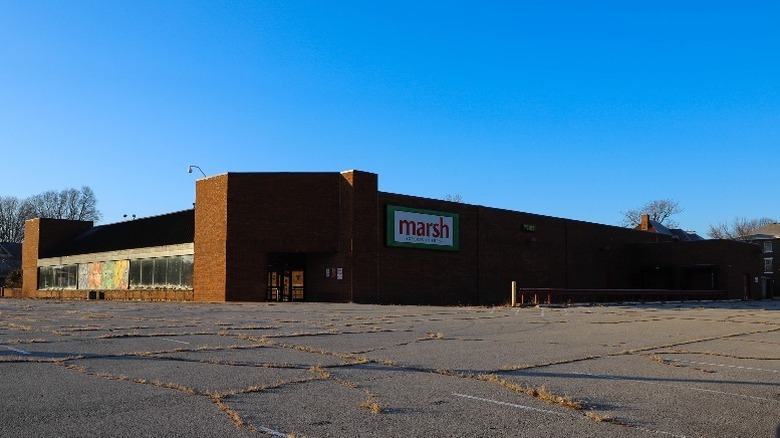
When bankruptcy forced the closure of all remaining Marsh locations across Indiana and Ohio in 2017, 44 stores were left vacant.While Marsh Supermarkets may have faded into the ghosts of grocers' past, many of its former store locations have gone on to find a new lease in life in everything from the supermarket industry to thriving apartment communities.
Multiple Marsh stores were auctioned off to other grocery competitors in the region, including Kroger and Fresh Encounter. Fourteen of these stores were flipped into Needler's Fresh Market locations, a chain focused on serving the same fresh produce and goods to its respective communities that the former grocer did.
Other locations were transformed into community spaces across Indiana. For example, the old Marsh in Carmel served as the temporary home for the Carmel Clay Public Library in 2020. Another in Broad Ripple was turned into Trader's Point Christian Church's newest campus. The city of Shelbyville was able to transform another former Marsh into a preschool fit to house the district's excess number of enrollees.
Various businesses took advantage of the store's central locations to establish new businesses within their communities. HMD Motorsports, an IndyCar racing team, sought out a former Marsh space for its main headquarters. In light of the sport's ever-growing popularity, a pickleball arena was given the green light to move forward by the city council in Fishers. In Noblesville, an old store site and parking lot became the new home of a multifamily living complex.