

How Costco Has Changed Since The '80s
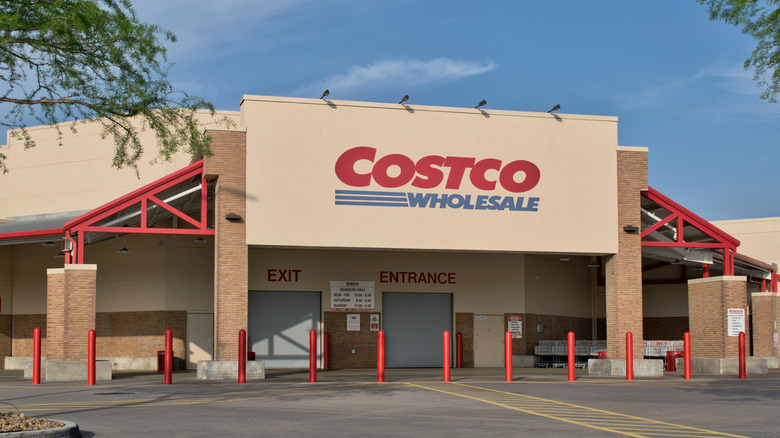
Love it or hate it, Costco is an undeniably huge success story. It opened its first location in Seattle in 1983, and since then, it has become a household name. As of 2025, Costco had 81 million paid memberships and 145 million cardholders (as partners and family members can hold additional cards in a single paid membership), and is worth over $400 billion. However, it didn't get so popular by staying the same. Although the basic concept has always remained, there are many ways Costco has changed since opening in the '80s.
If you looked at one of the original stores, you'd still recognize it. Locations have always been warehouse-like, and packed with crates and boxes of goods up to the rafters. The chain has always offered great bulk deals on a limited range of products compared to traditional supermarkets. That said, there are numerous ways that Costco stores and the shopping experience have changed over the years. Just for starters, there are certain products you wouldn't find in the '80s, nor would you have the same food court experience.
We're here to take a closer look at 11 of the ways Costco has changed since the '80s. Whether you're a Costco super fan or you're just interested in the history of grocery stores, we've got all the juicy details.
Costco has gone from one store in 1983 to 923 as of late 2025
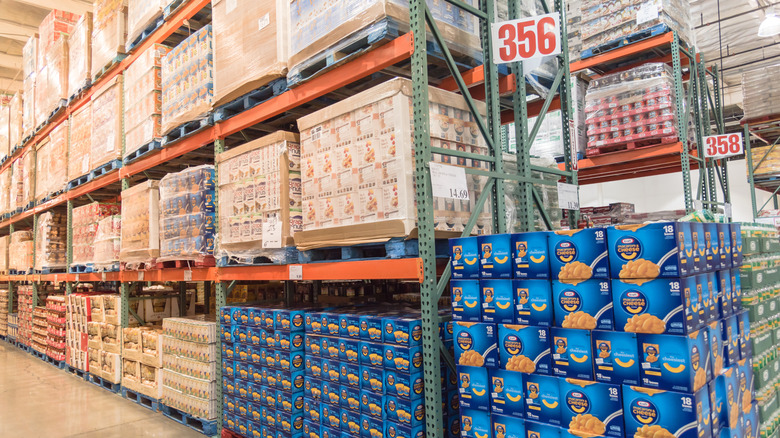
When Costco opened in 1983, it was just a single store. The original opened in Seattle, where it was advertised in the Seattle Post-Intelligencer for wholesalers and small business owners. Shopping at the first Costco was similar, but different. It had the same no-frills warehouse vibes and great discounts, but fewer of the extra perks and offers you'd find today. More on that later.
In actuality, Costco's history dates back even earlier. In 1976, a similar warehouse chain called Price Club opened its doors. James Sinegal, its executive vice president of merchandising, distribution, and marketing, was one of the co-founders of Costco. He took the basic concept of a warehouse store and adapted it to start this new chain.
Things have moved on significantly since then. According to the latest stats at the time of writing, there were 923 Costco stores by late 2025. That might be significantly fewer than standard supermarket chains — there are over 4,500 Walmart locations, for example — but it's still a big jump. Since people are likely to travel further to access the deals Costco offers, each store has a larger catchment area. Given the financial success of Costco, it's doing well with the current number of stores.
The Costco food court used to be an outdoor hot dog cart
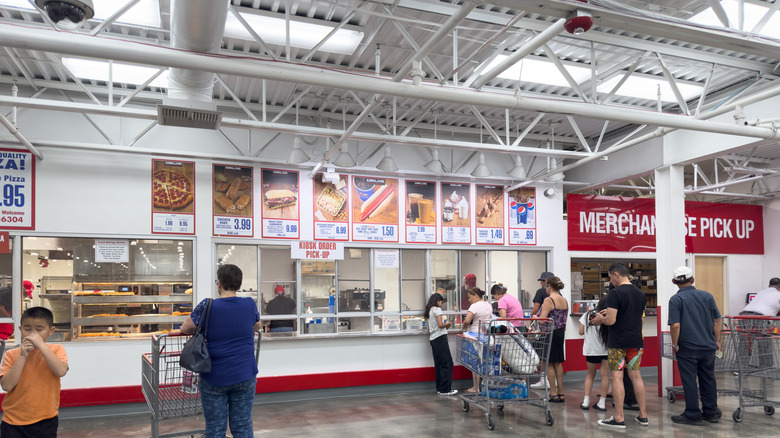
If you went to the very first Costco hoping to get a $1.50 hot dog and soda combo, or a slice of pizza to tide you over for your mammoth shopping trip, you'd be disappointed. When the warehouse chain first opened, there was no food court at all. It wasn't until 1984 — the year after opening — that the roots of the food court experience took hold.
At first, however, it wasn't a food court at all, but a single hot dog cart outside the San Diego store. The trial went well, and the hot dog stand endured, finally switching to an indoor food court in the '90s. What you might not know about the Costco hot dog is that the price hasn't changed since that very first cart. In fact, the first indoor food court was named Cafe 150, in homage to the $1.50 combo. The name didn't stick, though, as current Costco food courts don't really have a name beyond "food court."
The Costco hot food experience has come a long way since the 1980s. It has gone from nothing to a hot dog cart to an iconic food court that sells over 100 million dogs a year, with 2023 sales the highest on record at 200 million sold. These days, it's a loss leader, but it brings people into Costco and keeps them there longer, making it worthwhile from a business standpoint.
The Kirkland Signature brand didn't exist in the '80s
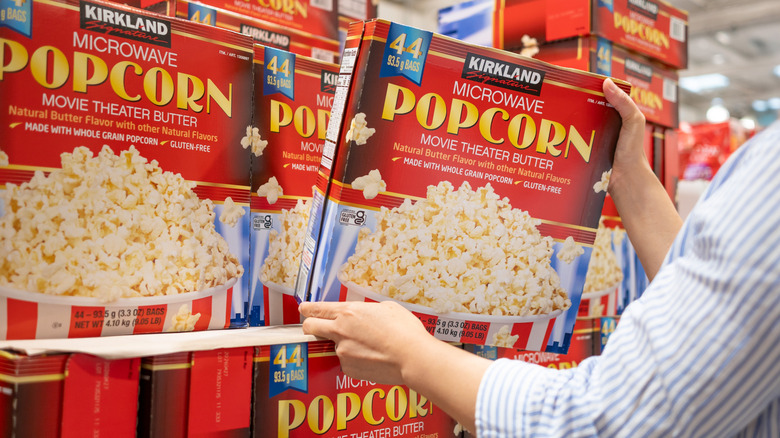
The Kirkland Signature brand is one of Costco's biggest successes. It's worth more than $80 billion and accounts for a third of yearly revenue for the warehouse chain. But if you went back in time to visit Costco in the '80s (admittedly, not the first thing most people would do with a time machine), you wouldn't find any Kirkland Signature products at all.
Although Costco had its own private label products, it used to sell them under a number of brand names. It wasn't until 1995 that Kirkland Signature was born. The very first products in the range were shampoo and vitamins, but now you can get everything from ready meals and pantry staples to wine and clothing.
The initial reasoning behind unifying the private label brands was to simplify things for customers and create more brand recognition. This is a risky move that some grocery chains avoid, however, since one bad experience with a private label product could put a shopper off the whole range. Costco's Kirkland Signature products have to undergo a rigorous approval process to keep standards up, which helps avoid negative associations. Plus, the price is right. Costco keeps Kirkland Signature prices cheap due to low store overheads and no need for marketing costs, which keeps people buying products from the range.
Since there was no Kirkland Signature, there weren't the same secret partnerships behind it
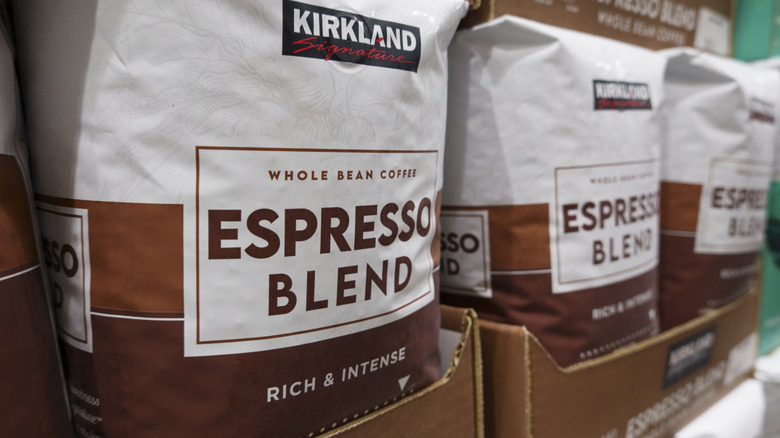
Now that you know there weren't any Kirkland Signature brand items in the 1980s, it follows that there weren't the same secret brands behind the goods. Part of how Costco gets high-quality private label products is by getting big household name brands to make them on its behalf. Officially, this is a big secret, but over the years, some of the brands have been revealed one way or another.
So, what are the name brands hiding behind Kirkland Signature products? Well, we don't know everything, but some big ones might surprise you. Some types of Kirkland Signature coffee — including Regular House Coffee and Espresso Blend Coffee — are roasted by Starbucks. This is a custom roast, so it's not identical to any other Starbucks coffee you could pick up. Kirkland Signature batteries are made by Duracell, so you can get the same lasting power at a fraction of the price. If you feed your dog Kirkland Signature's Dog Food, they're getting Diamond Naturals without the bigger price tag. Finally, parents who reach for Huggies diapers might be interested to know that the company also makes Kirkland diapers.
Costco membership was $25 in the 1980s, but comparatively pricier than today
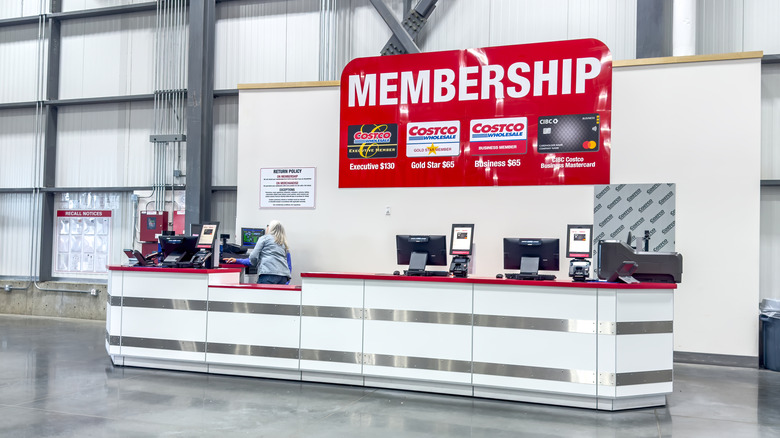
Some people refuse to pay to shop at Costco, but its membership is comparatively more affordable today than it was in the 1980s. It started at $25 in 1983, when the retailer first opened its doors to customers. The price has risen over the years, but it still offers great value — arguably better value, in fact.
Let's take a quick look at every time Costco raised membership prices. The first time wasn't for almost a decade. Costs rose by $5 to reach $30 in 1992, nine years after opening. It went up again in 1995 and 1998, so by the time we entered the new millennium, it cost $40 a year to be a Costco member. By the time the 2010s rolled around, it cost $50, going up to $60 by 2017. It then stayed the same for 7 years before going up to its current price (in Jan 2026) of $65.
So, it's gone up $40 in over 40 years — less than $10 a decade, which seems pretty fair to us. Plus, if you look at the average wages of a blue-collar worker in 1983 versus 2025, it's actually cheaper by comparison. That's one small win against the cost of living crisis.
An app and digital membership cards would have seemed like science fiction in the '80s
Today, if you forget your Costco membership card, it shouldn't be a problem. If you use the Costco app, you can access a digital membership card. Although it's not a ridiculous amount of time ago, if you had talked about apps and smartphones back in the '80s, it would have sounded like science fiction.
The Costco app has all kinds of great features. Alongside the digital membership card, you can view recent receipts, view promotions, refill prescriptions, check current gas prices, get grocery deliveries, book yourself a holiday, and so much more. Back in the '80s, your only options were cash or check.
Imagine trying to describe an app and a digital membership card to folks for whom a home computer was impractically bulky and expensive. At best, they would have had no idea what you were talking about. We're glad we aren't really traveling back to the '80s, but it's a good chance to reflect on how far technology has come.
Costco didn't have gas stations in the '80s
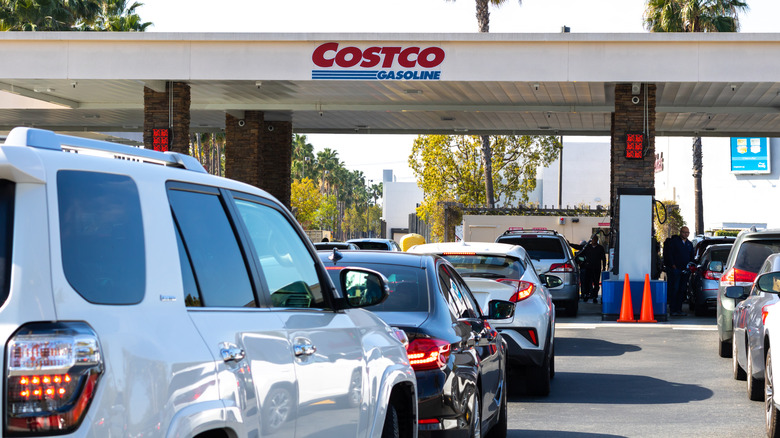
You might be used to combining your grocery shopping with a trip to the gas station on your way out of your local Costco warehouse. But if you headed to Costco in the 1980s, you wouldn't have found any pumps. This was a later addition to the retailer's offerings, and one we're grateful for.
The amount you save buying gas at Costco varies depending on the type of fuel, the location, and other factors, but it's often around 20 cents per gallon. This all adds up, especially when you're filling a large tank. You wouldn't have gotten these kinds of savings in the 1980s, as the first Costco gas station didn't open until 1995. It popped up in Tucson, Arizona, and must have done well, because Costco gas stations spread across the chain.
The simple reason why Costco can offer such cheap gas is its membership model. It gets 70% of its gross profits just from membership, so it doesn't need to have such a high profit margin on other goods, including gas. Plus, the low gas prices draw people in, who might then squeeze in a shopping trip. Why not?
Costco didn't exist outside North America until the '90s
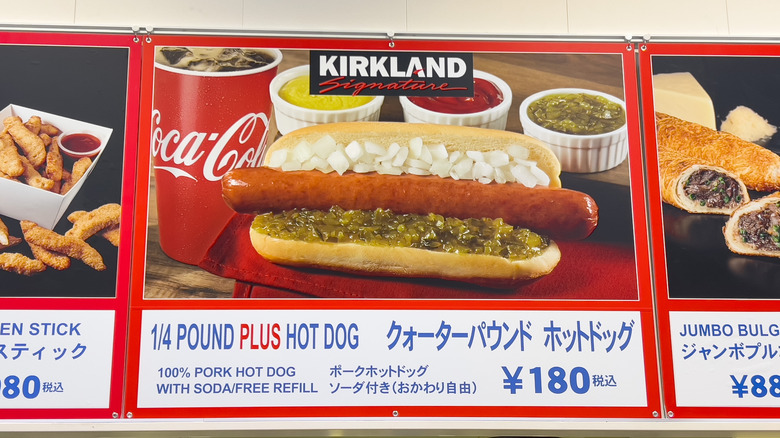
If you visited Costco in the 1980s, you definitely would've been in North America. The retailer didn't have any stores outside the continent until the 1990s, when it started to expand its reach. Now, you'll find Costco far beyond the confines of North America.
Costco opened in 1983 with a single store, but quickly expanded to 17 locations by 1986 and 46 by the beginning of 1989. The first store outside the United States opened in Canada in 1985. However, it didn't expand beyond North America until the '90s. In 1992, Costco headed South of the border, opening a branch in Mexico City. Then the retailer expanded into Asia in 1994, opening a warehouse in Seoul, South Korea.
Its expansion went on from there, with stores now in Mexico, Iceland, Sweden, the U.K., France, Spain, China, Taiwan, Japan, South Korea, Australia, and New Zealand. While the format remains the same, these countries have some exclusive items that you won't find in the United States. These include Vegemite in Australia, 15-month and 24-month comté cheese in France, Indomie Mi Goreng Noodles in the U.K., and pan de muerto in Mexico.
Free samples didn't begin until the late '80s
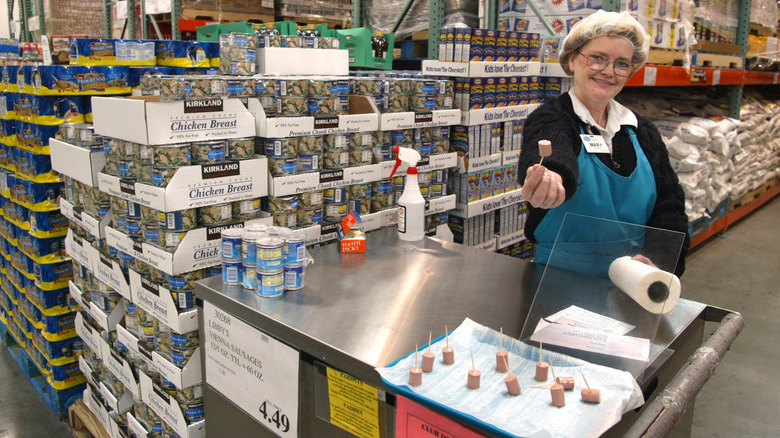
One of the greatest things about a Costco trip is checking out the free samples. If you head there on a weekend or at a peak time, you can pretty much get lunch for free with all the products available to try. What you might not know about Costco samples is that you can go back as many times as you like. Be respectful and don't hog a whole tray to yourself, but you don't have to don a disguise to go back for seconds.
When the retailer first opened its door, free samples weren't a thing. That's right: You'd have to make it all the way around that giant warehouse without even a little snack to keep you going. We don't know how people did it. It wasn't until 1988 that free samples entered Costco stores, but they were such a hit that they've been going ever since — excepting a year or two at the height of the COVID-19 pandemic.
You might not realize that these free samples aren't given out by Costco employees, but by a third-party company called Club Demonstration Services. So don't be surprised if they're not able to direct you to a particular item in the store, or help you with other queries.
You wouldn't find meat, produce, or bakery items in the first Costco stores
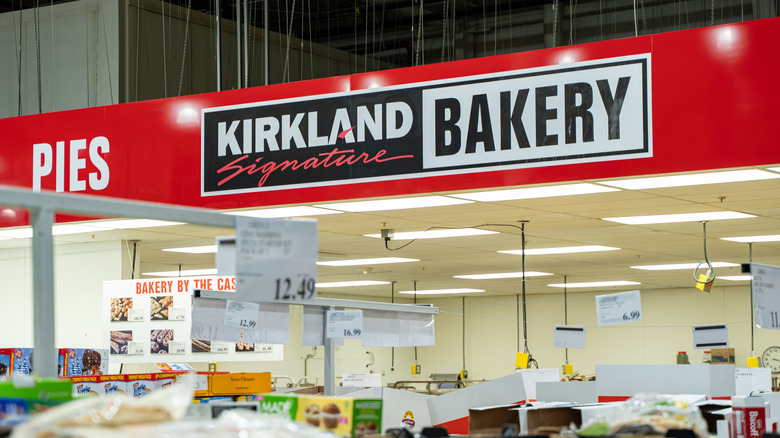
When Costco first opened, it was serious about being a warehouse and nothing more. It focused on dry goods and merchandise that could be stacked on shelves with no chance of spoiling. So if you had rocked up to a Costco in the early to mid-'80s looking for fresh produce, you'd be out of luck.
Costco opened its bakery, produce, and meat departments in 1987. Before that, anything perishable was off the table. This makes sense in terms of profits. You're more likely to lose money on items that go out of date quickly. Order in a shipment of oranges and you've got a week or two to shift them, whereas canned goods or appliances last basically forever.
This was the start of Costco expanding beyond just a hangar full of goods, and becoming a one-stop shop for groceries and more. The chain also opened its first optical departments in 1987, letting people get cheaper glasses and contact lenses at the same time as buying a giant sack of rice and 3 pounds of ground coffee. Today, it's a place where you can pick up a prescription, buy a TV, book a holiday, and pick up your weekly shop. What a store.
The treasure hunt strategy has been developed and refined since the '80s
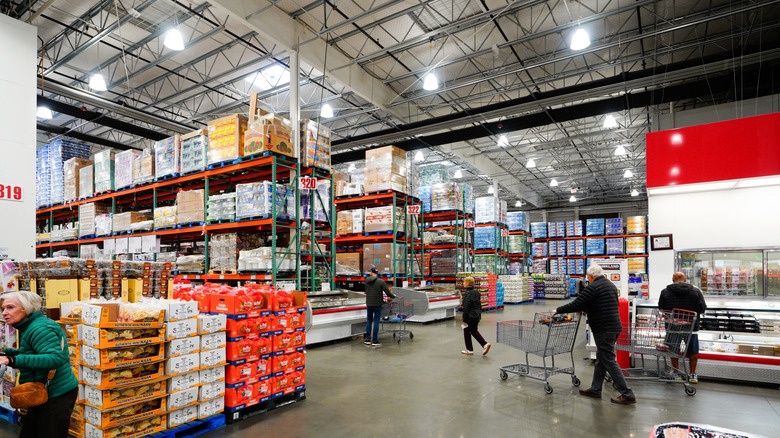
If you've ever noticed that shopping at Costco is a bit like a treasure hunt, that's no accident. Since the beginning, each warehouse store has always felt a bit like this. The aisles aren't signposted, you have to wander around the whole thing, and you aren't sure what you'll find at every turn. It's always been a maze full of treasures, but the strategy has been intentionally developed and refined over the years.
These days, around 25% of the items at Costco are limited edition "treasures." Costco intentionally only keeps a small inventory of product lines: around 4,000, compared to 30,000 to 50,000 in an average American supermarket. But it doesn't stop interesting products from showing up on the shelves. Alongside your everyday groceries, you can find precious metals, designer purses, and $37,000 scotch. However, they're there one day and gone the next. This taps into a scarcity mindset: People aren't sure if the item will still be there next time, so they feel like they have to buy it on the spot.
Although there are plenty of limited items that aren't that notable, you can also find some big discounts and particularly unusual items — the $30,000 booze or literal gold bars, for instance. This gets people talking about them online and in person, doing the marketing work for Costco without the brand having to spend a cent.