

The Biggest Cottage Cheese Recalls To Sweep The US
We may receive a commission on purchases made from links.
There are a fair number of illnesses and even some deaths among accounts of the biggest cheese recalls in U.S. history. Thankfully, cottage cheese has been recalled exponentially less frequently than cheese as a general category, and the history of recalled cottage cheeses is considerably less macabre. As a soft cheese, the length of time cottage cheese lasts after opening it is relatively short for a dairy product. Nevertheless, despite that fragility, cottage cheese is just not recalled with much regularity. When it has been, the resultant danger has been minimal.
Determining the biggest cottage cheese recalls required isolating incidents in which a significant volume was recalled, as well as those that impacted large swaths of the country. That meant first combing through the Food Industry Counsel's archive of food recalls, before turning to an in-depth Google search to find a few additional recalls that didn't come up in the archive. Based on that research, the following are the biggest cottage cheese recalls that have impacted shoppers across the U.S., listed in chronological order.
Kraft recalled 11,000 cases of cottage cheese after a test at a factory returned positive for E. coli (2000)
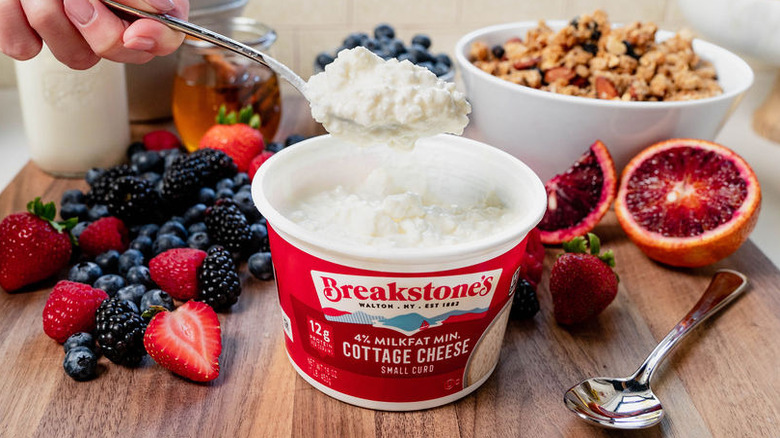
Kraft-Heinz was once one of 11 corporations that quietly dominated every aisle in the supermarket, responsible for products like Kraft Mac & Cheese, Heinz ketchup, Jell-O, and plenty more grocery store staples. That era began in 2015, when both companies merged, and concluded in 2025 when the two brands split. In June of 2000, during the time that Kraft products were simply under the Kraft Foods umbrella, the company had to recall 11,000 pounds of various cottage cheese products after multiple samples tested positive for E. coli bacteria.
The incident, for what it's worth, was limited to just a single day's production at one facility in upstate New York. Nevertheless, that day's output was sizable enough to encompass 11,000 cases of cottage cheese. In total, six different cottage cheese products of varying sizes were affected, divided between the Breakstone's and Light n' Lively brands. No E. coli infections traced back to a Kraft Foods cottage cheese product around that time were ever publicly reported.
Kraft recalled 1.2 million cases of cottage cheese due to improper storage temperatures at a production plant (2014)
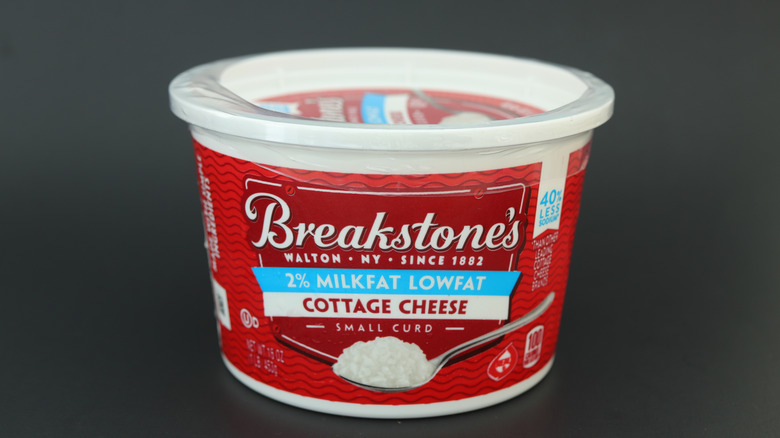
In May of 2014, a little over a year out from Kraft Foods' merger with the H.J. Heinz Company, Kraft instituted a recall of a whopping 1.2 million cases of various cottage cheese products. The affected cottage cheese brands included Knudsen, Breakstone's, Daily Chef, and Simply Kraft. A total of 34 different products under those names were implicated in the massive recall, with best-by dates ranging from May 9, 2014, to July 23, 2014.
The impetus for Kraft Foods' decision was the fact that a facility in Tulare, California, was storing certain ingredients used in cottage cheese production at insufficiently cold temperatures. While nobody reported any adverse reactions from cottage cheese containing one of those improperly cooled ingredients, Kraft decided to preemptively recall the affected products over the risk they might spoil early or cause illness. At that time, Kraft even shut down production at its Tulare facility in order to remedy the issue. For what it's worth, the facility remains in operation to this day.
After customers found foreign materials in their product, Kraft Heinz recalled over 150,000 pounds of cottage cheese (2019)
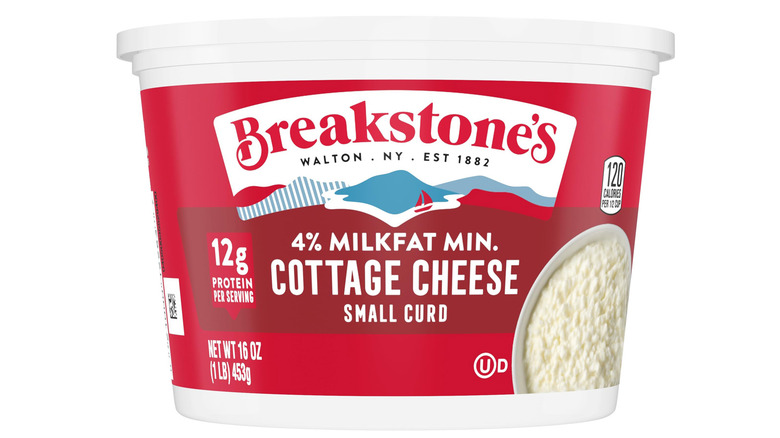
Cottage cheese recalls occur so seldom, that the third-oldest major cottage cheese recall since the invention of cottage cheese — or, perhaps more accurately, since food recalls became a common practice — occurred in November of 2019. Instituting the recall was the conglomerate Kraft Heinz Foods Company. A total of 9,500 cases of Breakstone's cottage cheese were affected, adding up to approximately 153,504 pounds.
Inspiring the Kraft Heinz Foods Company to initiate this recall were complaints from six distinct customers, each recounting the presence of red plastic and metal in their cottage cheese containers. Foreign objects are a relatively common impetus for such incidents, impacting, for example, two of the biggest grocery store bakery item recalls in U.S. history.
While the source of those red plastic and metal pieces was never shared with the public, Kraft Heinz isolated the potential for that particular foreign material to three Breakstone's cottage cheese products, all with December 10, 2019, best-by dates. Customers with one of the recalled products were encouraged to return it to the store at which it was purchased for a full refund.
Almost 5,000 pounds of Turner's cottage cheese were recalled over potential bacteria (2022)
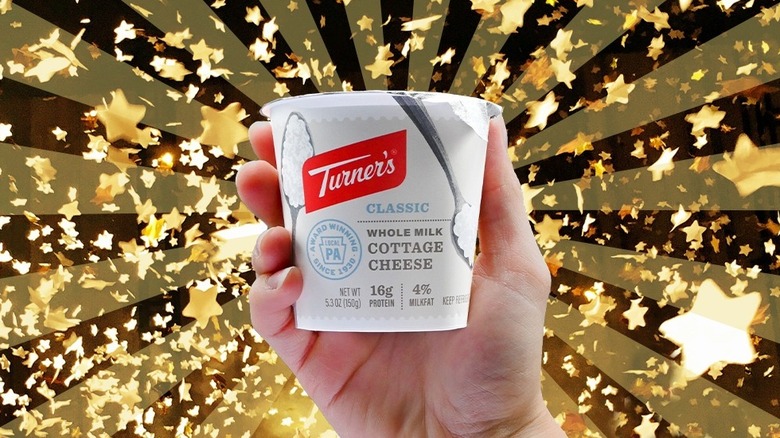
Turner's is a dairy brand based in Pennsylvania, with distribution predominately in and around the Pittsburgh metropolitan area. In September of 2022, Titusville Dairy Products — a dairy facility in nearby Titusville, Pennsylvania, — initiated a recall of a handful of Turner's products, adding up to approximately 4,860 pounds of cottage cheese.
Included in the recall were four specific whole milk cottage cheese products. Three had added flavors, so the whole milk cottage cheese that served as the base of each product was likely at fault. Titusville's decision was driven by the potential for the cottage cheese to develop bacterial spoilage. With that said, the FDA labeled this a Class II recall, indicating a medium level of severity. Perhaps contributing to its lack of a higher Class I classification was not just the fact Turner's is localized to the Pittsburgh area, but also a lack of customers reporting the development of any illnesses linked to the product.
Nearly 400,000 cases of grocery store cottage cheese products were recalled for potentially containing plastic (2022)
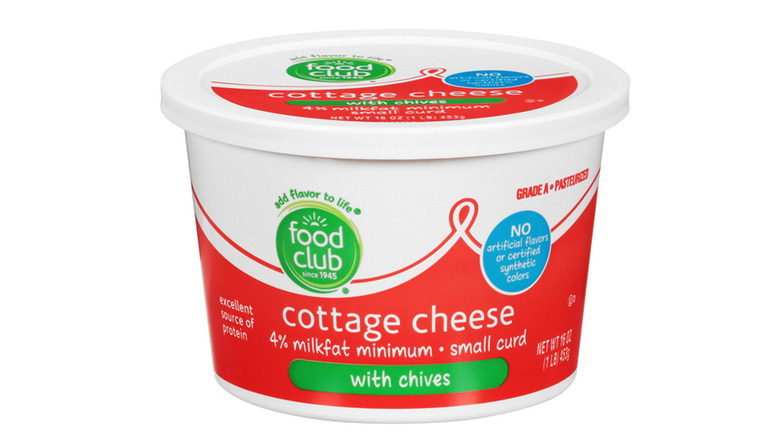
In October of 2022, HP Hood, the parent company responsible for Hood dairy products, recalled 391,824 cases of various cottage cheeses after determining they were at risk of containing plastic. Incidentally, that would not be the last time HP Hood would have to recall a dairy product over foreign material concerns — in 2024, the company recalled over 15,000 cases of Wellsley Farms Nonfat Greek Yogurt for the same reason, amounting to one of the biggest yogurt recalls in U.S. history.
It was not just Hood cottage cheese affected by the 2022 recall, but three additional store brands produced by HP Hood as well, including Food Club, Hannaford, and Lactaid. Altogether, 13 kinds of cottage cheese products packaged under those four labels were implicated. The recall's scope, meanwhile, covered almost the entirety of the contiguous U.S., totaling 39 states.
Approximately 1,500 pounds of cottage cheese were recalled for multiple undeclared ingredients (2024)
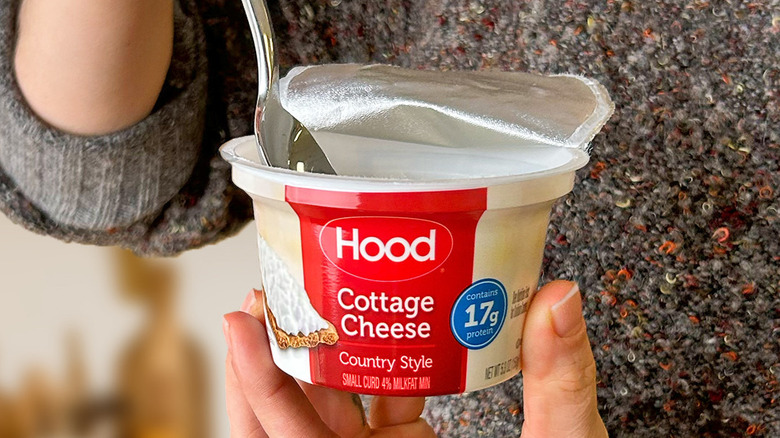
HP Hood recalled a significant quantity — albeit much smaller, compared to its 2022 recall of 391,824 cases — of Hood Country Style Cottage Cheese in March of 2024. In total, the recall affected 171 cases of cottage cheese, totaling 1,026 containers, each 24 ounces. That adds up to a still-formidable 1,539 pounds. Affected containers could be identified by a single best-by date of April 20, 2024.
Responsible for the recall was a significant list of undeclared ingredients, including pineapple, sugar, modified corn starch, natural flavors, and phosphoric acid. At best, a customer's simple preference for avoiding certain ingredients could be undermined by their lack of inclusion on a product's ingredients list. At worst, a customer could be unaware that the product contained a dangerous allergen. Undeclared ingredients were, notably, responsible for three of the biggest ranch recalls that impacted the U.S. HP Hood, therefore, instituted its 2024 recall to help avoid any and all incidents that might be caused by information missing from its products' ingredients lists.
Walmart cottage cheese products were recalled in 24 states over inadequate pasteurization (2026)
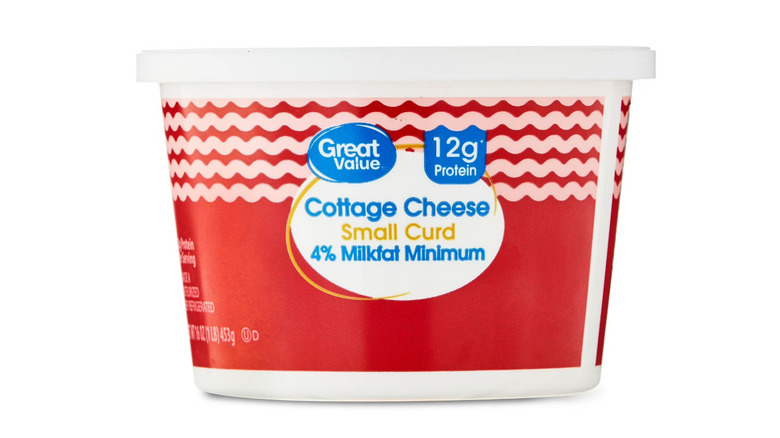
In February of 2026, Saputo Cheese USA Inc. recalled three different kinds of cottage cheeses it had produced for Walmart, sold under the chain's proprietary Great Value brand. While troubleshooting its pasteurizer alongside the California Department of Food and Agriculture, Saputo discovered that certain cottage cheeses may have contained insufficiently pasteurized liquid dairy ingredients. For what it's worth, just about as soon as the problem was identified, Saputo rectified the issue with its pasteurizer, allowing its cottage cheese production to continue unimpeded.
Neither Saputo nor the FDA stated the quantity of product covered by this recall, but even without an exact number of cases or precise poundage, it's clear that it was considerable. In total, five sizes of those three kinds of cottage cheese with three different best-by dates fell under the recall's purview. Furthermore, the affected products were shipped to Walmart stores and distribution centers in 24 distinct states. Walmart offered full refunds for customers who brought back containers of the recalled cottage cheeses.