

Why Spam Is So Popular In Many Asian Countries
We may receive a commission on purchases made from links.
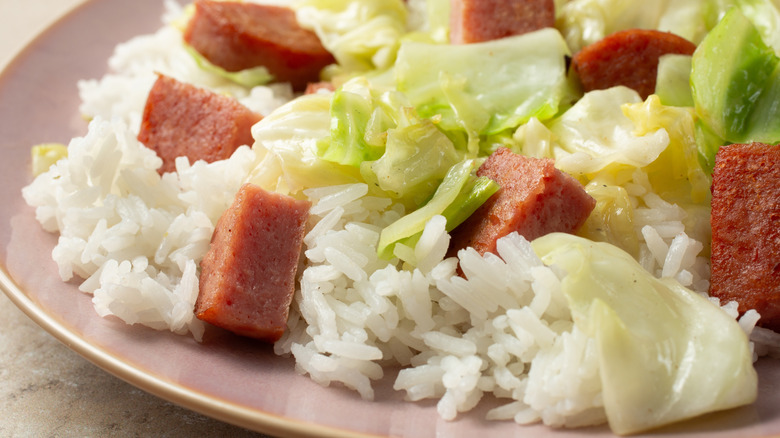
Spam might be the most polarizing food to ever come in a can. The processed meat is hated by celebrity chefs like Andrew Zimmern, and it's one of the canned food products to avoid if you're trying to eat healthier. It is also undeniably popular. Spam broke sales records during COVID, and that was mostly due to the meat's frequent use in Asian and Pacific cuisine. In fact, it's so ingrained in Asian culture that there have been plays, poems, and even a (fictional) Filipino boy band dedicated to Spam (via Hormel Foods). How did this American product find a home so far away? The answer is war.
Spam was the perfect ration to give to soldiers abroad. It was dense, cheap, and had a ridiculously long shelf life. During World War II, the Korean War, and the Vietnam War, soldiers traded or gave away cans of Spam to locals and left many behind when the wars were over. According to Rachel Laudan's book "The Food of Paradise: Exploring Hawaii's Culinary Heritage," Spam also helped prevent Hawaii from starving when offshore fishing was banned during World War II — a punitive measure aimed at its large Japanese population. Since then, Spam became a kitchen cabinet mainstay on the islands.
Asian cuisines elevated Spam to new heights
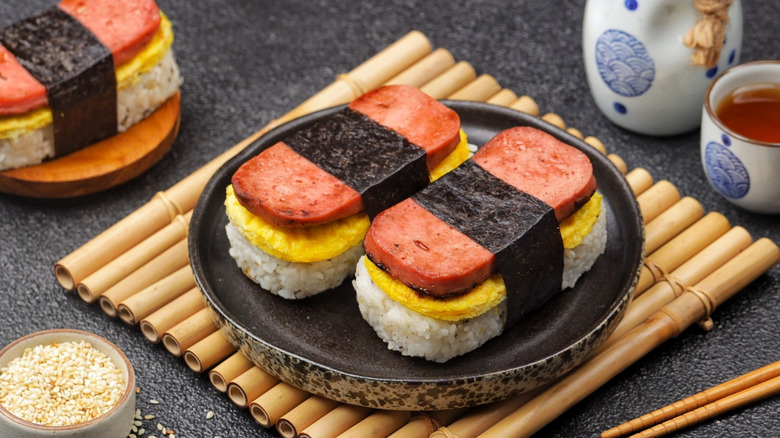
In the United States, the canned concoction has a reputation for being a "mystery meat", one of many misconceptions about Spam. But in Asia, the true potential of Spam was unlocked, with many delicious recipes and tasty treats showcasing the so-called mystery meat. South Koreans feature Spam a lot in their cuisine, including a mouth-watering Kimchi Fried Rice with Spam. Meanwhile, the Hawaiian classic sushi snack Spam Musubi is a bona fide Hawaiian classic. Spam has also been incorporated into macaroni soup in Hong Kong and bánh mì sandwiches in Vietnam. Many of these creations can be tried at Spam Jam, Hawaii's festival dedicated entirely to Spam.
If you're wondering whether you've judged Spam too harshly, there are plenty of unexpected ways to use a can of the salty stuff with amazing results (Spam tacos, anyone?). You can even add it as a savory twist to some of your favorite desserts. Asia's fascination with Spam may have begun in times of war and desperation, but it has survived this long because it's very versatile — and very tasty.