

The 12 Biggest Mistakes People Make With Neapolitan Pizza
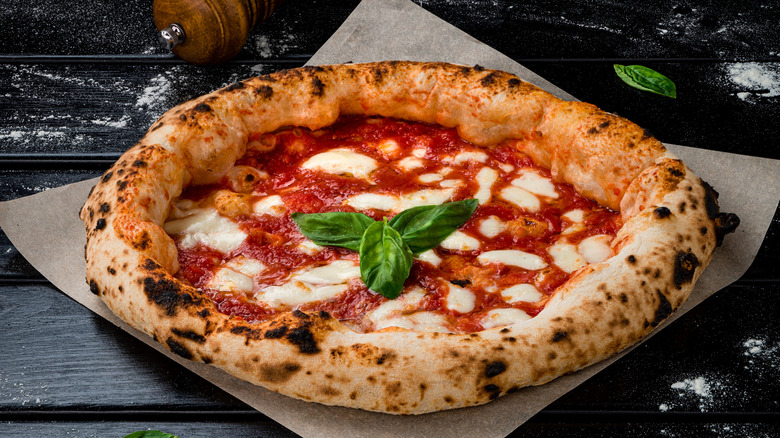
If you're a fan of Neapolitan-style pizza and you want to make it at home, you're probably aiming for a pie like one from your favorite shop, with a puffy crust speckled with charred spots. Maybe you're lucky enough to have gone to Naples and want to recreate that level of deliciousness. That's a hard standard to live up to, especially if you're working with a basic home kitchen setup. But you'll definitely have better luck if you avoid the common mistakes people make when making Neapolitan pizza.
Unless you put in the hours it takes to learn the craft — and also go out and buy yourself a pizza oven — you might not be able to craft a 100% authentic Neapolitan pizza, but you can come close. Once you've learned more about the technique and the common missteps, it's easy enough to make a pizza with a light, airy crust that's thick on the outside (known as the cornicione) and thin in the middle.
As a half-Italian food writer who used to run a pizza pop-up, I've spent a lot of time perfecting my Neapolitan dough, and I've had my own mishaps along the way. I'm going to explain some of the most common mistakes I've noticed people make with Neapolitan pizza, and what to do instead.
1. Using the wrong type of flour for Neapolitan pizza
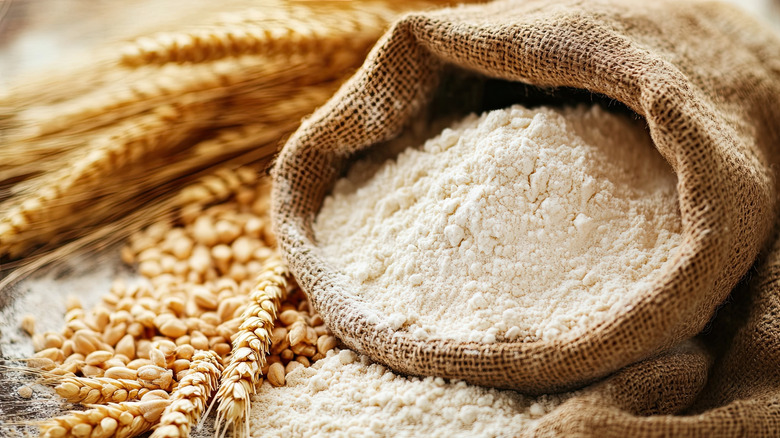
Yes, there is a best type of flour for making pizza — and for Neapolitan pizza, that's even more specific. Sure, you'll make an edible pizza with any kind of white wheat flour. It might even be delicious, but it won't be a Neapolitan pizza if you choose the wrong flour.
So, what to look for when seeking the perfect flour for this kind of pie? First, it should be 00 flour. This refers to how finely it's milled, and is a term used particularly for Italian flour (though some American millers have adopted it). The difference is that 00 flour is milled very finely. This makes a soft dough, which then becomes the big, puffy crust on a Neapolitan pizza. You're aiming for the perfect balance between lightness and chewiness, which makes the crust just as enjoyable to eat as the center.
It's not just the fineness of the grind that matters. The protein content also needs to be just right. This is what gives the crust its structure and puffiness without being excessively chewy. Between 11 and 13% is about right for Neapolitan pizza, with 12 to 13% being the sweet spot used by the most popular Neapolitan pizza flours, such as Caputo Pizzeria Flour. All-purpose flour is too low in protein; most bread flour is too high in protein.
2. Choosing the wrong hydration for the dough
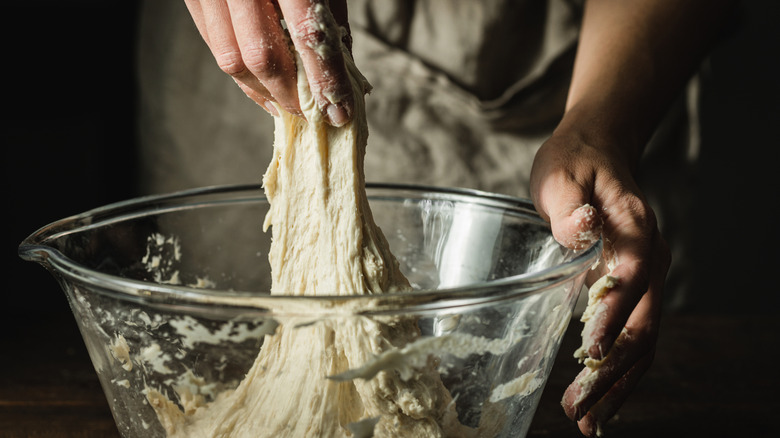
If you bake bread, you might be familiar with the concept of hydration. A high hydration is what gives bread an open crumb, and the right hydration similarly gives Neapolitan pizza dough its distinctive structure and texture, with large air pockets in the crust.
The concept of hydration might sound technical or tricky, but it's actually quite straightforward: It refers to the amount of liquid in a recipe relative to the amount of flour. It's also sometimes called a baker's percentage. If a recipe called for 1,000g of flour and 650g of water, for instance, that's a 65% hydration, as the water in the dough is 65% of the amount of flour. Once you're familiar with hydration, you can easily scale a recipe up or down, increasing or decreasing the hydration to find what works best for you.
Generally, Neapolitan dough has somewhere between 55 and 65% hydration. On the lower end of the spectrum, you'll produce a drier dough that might not be as light and airy in the cornicione, but will be easier for beginners to knead and shape. At around 65%, the dough will be wetter and trickier to work, but will ultimately produce a more open crumb. The right hydration for your pizza will also depend on how well your flour absorbs water. While there are many variables, a general rule of thumb is that higher protein flours hold more water than lower protein flours, letting you have a higher hydration without the dough becoming a sticky mess.
3. Kneading the dough too little
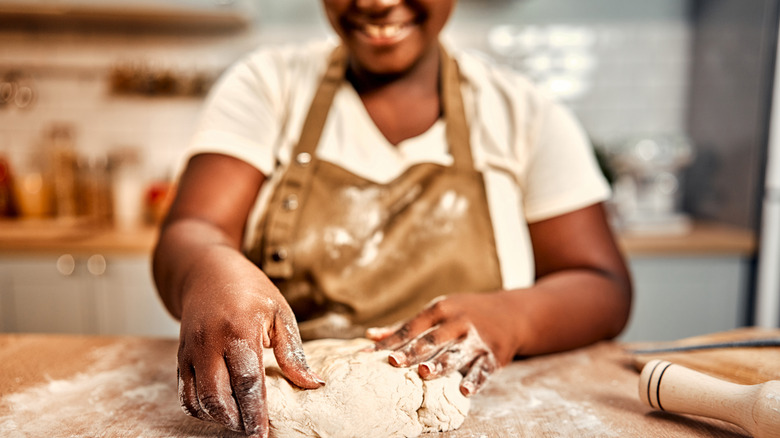
We know that kneading dough is time consuming, but it's something you shouldn't skip or cut short. Kneading the dough too little is among the most common mistakes you can make with Neapolitan pizza. You might think that it won't make a difference, but it can greatly affect how your crumb turns out.
To understand why kneading is important, you should know what it's for: Kneading dough develops the gluten in the flour, forming it into long strands that help create structure in the dough. When the yeast releases gasses, the gluten forms a network around them, which ultimately creates the bubbles and air pockets that make the difference between a pizza crust and a cracker.
To get the gluten to develop properly, you should need it for around 10 minutes, either by hand or in a stand mixer. The exact amount of time can vary depending on your kneading chops and other factors, so it's good to know how to tell when kneading it done. If you know how to tell your bread isn't kneaded enough, you can use the same technique to judge pizza dough. But if you're totally new to yeasted doughs or kneading, that's fine too. One of the most common methods to tell when dough is kneaded enough is the windowpane test, wherein you break off a walnut-sized piece of dough and stretch it between your fingers into a rough square. If you can see light through it without the dough breaking or tearing, it's ready.
4. Giving Neapolitan pizza dough too little time to rise
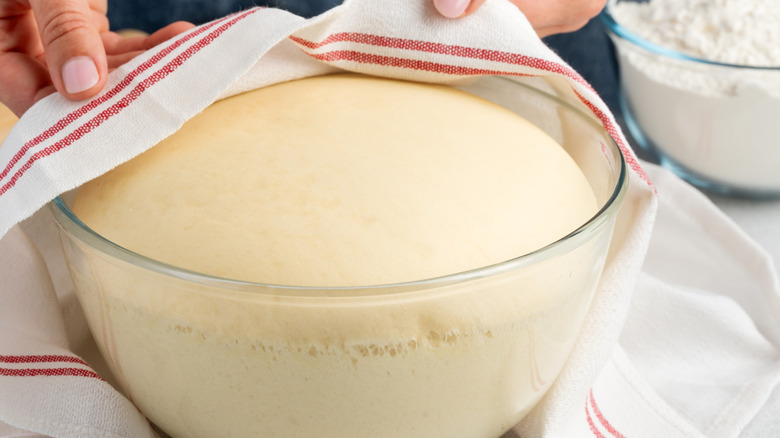
A simple pizza dough recipe will usually call for about an hour of rising time, but you need longer to make it Neapolitan-style. Many folks trying it at home don't give Neapolitan pizza dough enough time to rise. This will leave you with a pizza that's lacking the big, airy cornicione you're looking for (and it may also be underwhelming in the flavor department).
Neapolitan pizzas are usually cold fermented. This means the dough is left to rise in the fridge rather than at room temperature. Yeast gets sluggish at colder temps, which means that it can be left in the fridge for 24 to 72 hours before baking. This isn't just for the fun of it. The long, cold fermentation time gives the gluten more time to develop, which aids in large bubbles forming in the crust. It also allows for a more complex flavor to form. This means you get some sourdough-like notes, even when the dough is made with commercial yeast.
Of course, all of this means that you have to plan in advance. You can't decide that morning that you're going to make Neapolitan pizza for dinner. The good news is that you can spread the work over a couple of days, mixing the dough one day and baking another. For some, this can be more convenient.
5. Not allowing time for a second rise after balling
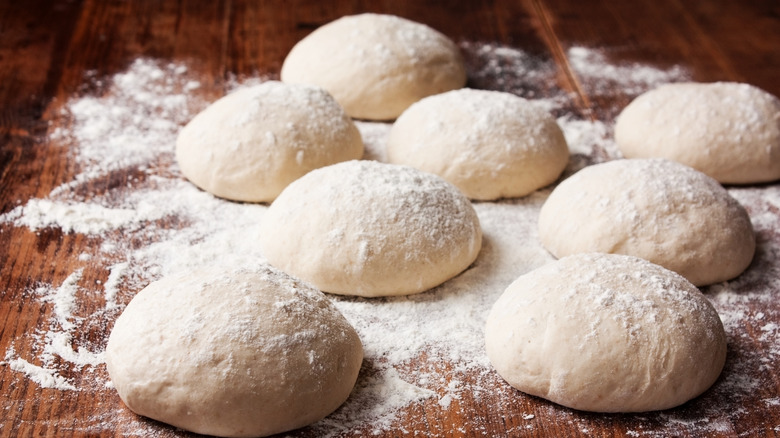
Mixing up pizza dough and letting it rise is known as the bulk ferment. In many cases, you'll be making enough dough to form several pizzas; "bulk" therefore refers to the dough rising in one bulk mass. But this isn't the only time you'll need to let the dough rise. After you've taken the dough out of the fridge and divided it into individual portions, you'll need to give those portions time to rise as well.
A common error is taking the dough out of the fridge just before you want to bake it, rather than allowing time for the second rise. Having more time to rise in individual balls helps the dough get that large, airy crust that's so indicative of Neapolitan pizza. And when you divide cold dough up rather than giving it time to come to room temperature and rise, it's extremely hard to shape.
Generally, you should aim to get your dough out of the fridge around four hours before you want to form and bake your pizzas. It takes two or three hours for the dough to reach room temperature and loosen up, at which point you can shape it into balls. After that, the balls need to be left to rise at room temperature for an hour or two until it doubles in size. It's important to ball the dough tightly, as this helps to get a nice, round shape and strengthen the dough before it's baked.
6. Making the sauce for Neapolitan pizza incorrectly
You might already have a go-to easy pizza sauce recipe, but if it's a conventional version, it's probably not right for Neapolitan pizza. Many people make the mistake of using their usual sauce or (even worse) buying a jar of pizza sauce from the store. But to make true Neapolitan pizza, the sauce needs to fit certain parameters.
Authentic Neapolitan pizza sauce is extremely simple. All you need is canned tomatoes, salt, and pepper — though adding a drizzle of olive oil won't go amiss. However, if you want to meet true Neapolitan pizza standards, you can't use any old tomatoes: It's San Marzano or nothing. These come from volcanic regions near Mount Vesuvius. The soil from this area contributes to their sweetness and low acidity. San Marzano tomatoes are also relatively low in moisture, so they form a sauce that isn't too wet and won't make the base of the pizza soggy.
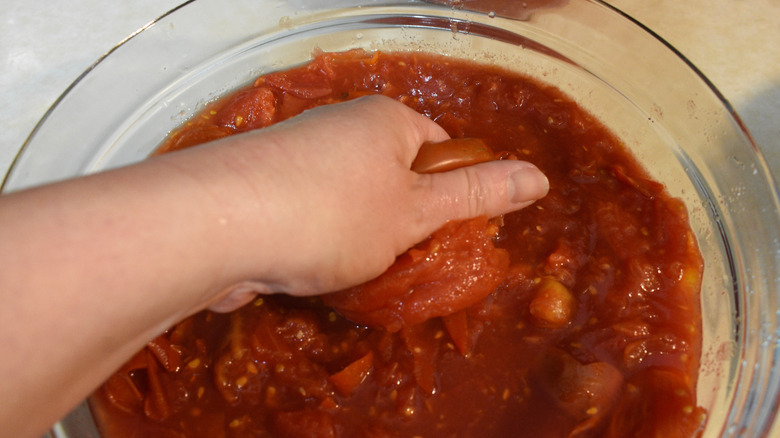
To make the sauce, take whole canned (or fresh) San Marzano tomatoes and crush them in your hands or with a wooden spoon. You're looking for a texture that's saucy but with some chunks, though you can tailor it to your preferences. Stir in the salt, pepper, and olive oil, and you're good to go. It cooks on the pizza so there's no need to cook it ahead of time.
7. Choosing the wrong cheese for Neapolitan pizza
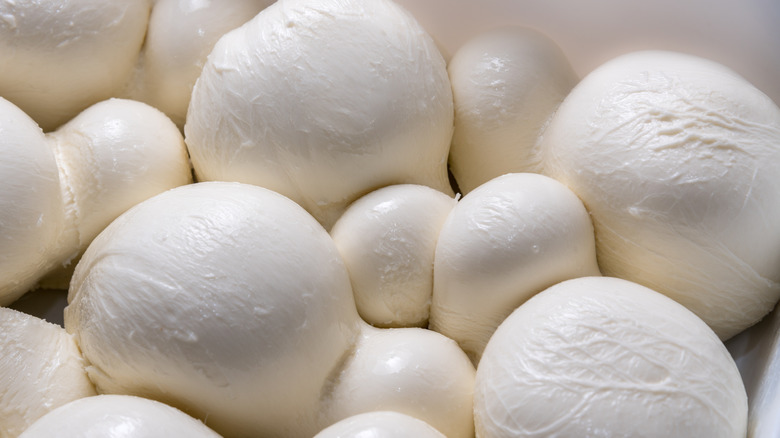
When it comes to choosing cheese for Neapolitan pizza, there is a right answer and a wrong answer. Of course, you can make a delicious pizza with all kinds of cheese; it's not so much that people are using the wrong type of cheese for pizza in general. But for this particular style, there are rules. For true Neapolitan pizza, the traditional cheese is Mozzarella di Bufala or Fior di Latte. Both are types of fresh mozzarella, just made from different milks. Mozzarella di Bufala is made from water buffalo milk. It's particularly rich and tangy, and it has a high moisture content that gives it a soft, creamy texture. Fior di Latte is made from cow's milk. It's milder than Mozzarella di Bufala and a little firmer.
Both of these types of mozzarella are fresh, high-moisture cheeses, so they melt quickly in the intense heat of a Neapolitan oven. If you want a traditional Neapolitan pizza, you must use either of those two types of cheese. Low-moisture mozzarella, which is often the go-to for pizzas, doesn't perform the same and isn't an authentic choice. It can be fun to experiment with other options, but it will be outside the remit of the Neapolitan style.
8. Shaping the dough wrong
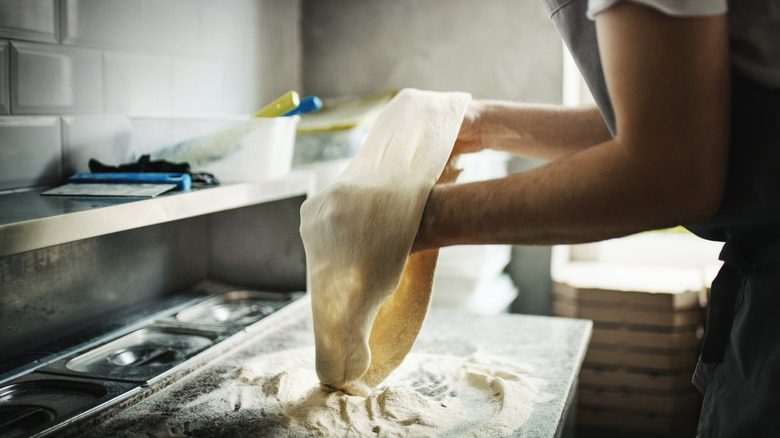
Once your pizza dough is ready to go, you need to know how to shape it. This is where many go wrong. It doesn't matter how great your dough is; if you knock all the air out of it or tear it while shaping it, you won't end up with an excellent pie.
The process of shaping pizza is sometimes called opening the dough. The aim for Neapolitan pizza is to get a perfectly round shape with a puffy edge, but it's okay if your first attempts come out a bit wonky. The diameter of a ball of dough weighing 200 to 280 grams should end up between 22 and 35 centimeters. The center should be of a uniform thickness, while the outer edge of the dough — which will become the cornicione — should be thicker.
To shape your dough, take your risen dough ball and flour it lightly. Press it down with your fingers or the palm of your hand to flatten it out, leaving roughly an inch around the edge that you don't flatten or press down on. You want to avoid knocking the air out of the edges to get that puffy crust. Pick up the dough and stretch it out over the knuckles of both hands, pulling your hands apart to stretch it, but also letting the weight of the dough do some of the work. This technique takes a while to perfect and it can be useful to watch videos to get it down.
9. Overdoing it on sauce and toppings
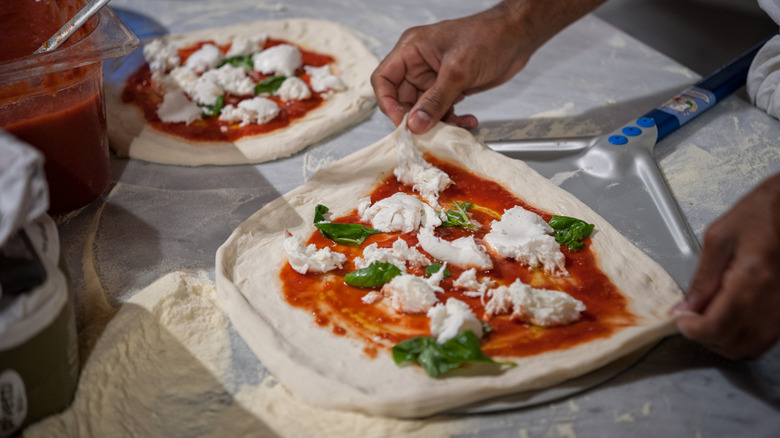
If you're used to eating pizza with a more robust base, like deep dish pizza, you might be used to piling on the toppings. We totally get it. There are so many great flavor combinations out there that it can be tempting to load up your pie. But true Neapolitan pizza keeps it simple.
Part of the reason for this is structure. That cornicione might be thick, but the central part of the base is thin. So when you load it up with toppings, especially those like veggies or meats that release lots of water or fat, the base can easily get soggy. It's not generally an extremely crisp style of pizza, and a little soupiness in the center isn't off-base for a classic Neapolitan. But too many toppings can leave it undercooked in the center, which isn't what you want.
The other reason is tradition. In many pizzerias in Naples, you'll find just two pizzas on the menu: the marinara, which is topped with just tomato sauce, olive oil, oregano, and garlic; and the margherita, which is topped with sauce, mozzarella, olive oil, and fresh basil leaves. That's it. The reasoning behind this is that, when the quality of a Neapolitan pizza is on point, anything more than this is unnecessary. It's considered gilding the lily. You can put additional toppings on Neapolitan pizzas — and some pizzerias in Naples do — but keeping things sparse and simple is traditional.
10. Launching the pizza into the oven incorrectly
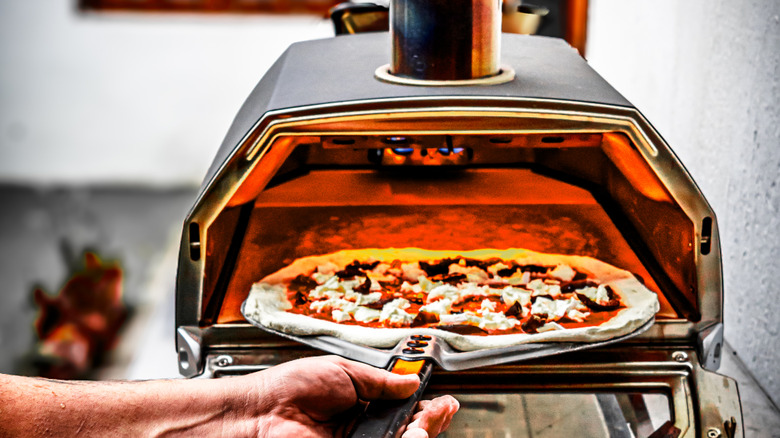
Whether you're using a baking steel or pizza stone in a home oven, or you've invested in a proper pizza oven, getting that pizza into the oven is where many people make mistakes. You have to prepare early to make sure that you can seamlessly transfer your dough to the oven — this is known as launching your pizza — without it ending up a big mess.
First off, you'll either need a pizza peel or a rimless baking sheet. The best option is a pizza peel, especially a wooden one as dough is less likely to grip to the textured surface. But if you're not in the market to buy new equipment, using a cookie sheet is fine, as long as it has no lip. Prepare the surface by either flouring it or using fine semolina. The latter is more effective as the coarser grains act like ball bearings, letting the pie slide off the peel (or baking sheet as a makeshift peel) and into the oven.
Next, make sure you put your shaped dough directly onto the prepared peel. Once you've topped it, you won't be able to transfer it to the peel without messing it up. Before launching, give it a little test wobble to see if the pizza is sticking anywhere. If it is, lift up the dough in those areas, and add more flour or semolina. Finally, launch it into the oven using one swift, confident motion.
11. Cooking Neapolitan pizza the wrong way
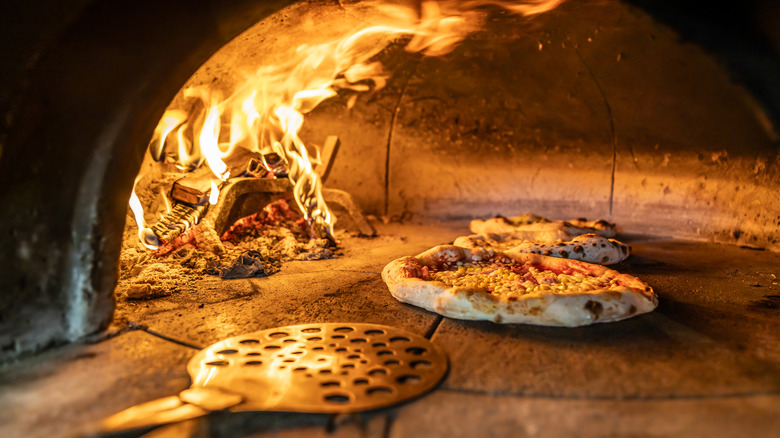
Traditionally, Neapolitan pizza is baked in a wood-fired oven with a temperature of at least 700 degrees Fahrenheit on the floor and 1,000 degrees Fahrenheit in the dome. This heat is what allows the pizza to cook so quickly — usually in around 60 to 90 seconds — and also what gives the crust those signature charred spots on the exterior and pillowy soft interior. Of course, recreating this at home is a challenge.
For those who want to invest, there are some very good home pizza ovens on the market today from brands like Ooni and Gozney. It is also possible to get similar results in a home oven, though it will never be identical to what you'd get from a wood-fired oven. One technique is to cook the base of a pizza in a skillet and then cook the top under the broiler. This gives the base that characteristic char without leaving the pie in the oven for so long that it dries out. Others have found success by simply turning the oven up as hot as it goes and using a pizza stone or baking steel.
12. Not accepting that homemade Neapolitan pizza will be a little different
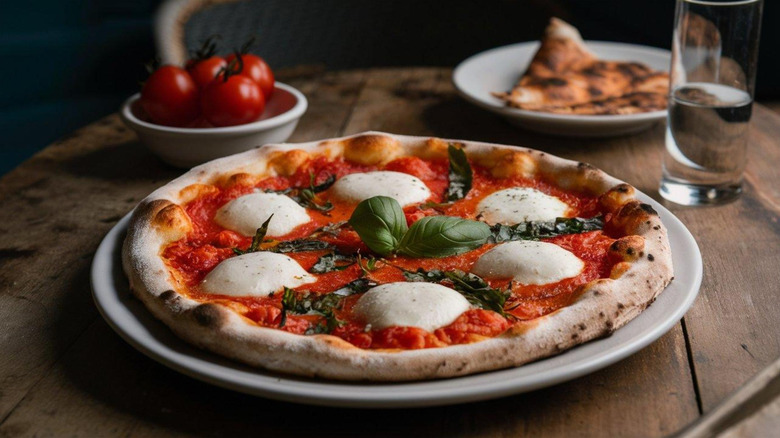
The fact is, when you make Neapolitan pizza at home, it will be different from your favorite restaurant's version. While there's nothing wrong with striving to make the best pizza you can, it's a mistake to get too hung up on the details (and then disappointed when you can't match them). It's alright to put your own spin on things and produce a delicious pizza that isn't quite Neapolitan.
A pizza you make at home is more likely to be neo-Neapolitan, as it may not live up to the strict standards that traditional Neapolitan pizzas have to meet in order to be afforded the label. In fact, neo-Neapolitan pizzas are becoming so prevalent that classic Neapolitan is one of the once-beloved pizza styles that are getting harder to find. And there's nothing wrong with neo-Neapolitan; it's just a variation on the classic that offers more freedom to experiment with ingredients, toppings, and techniques. For those reasons, it might even be preferable for those making pizza at home.