

What These 11 Major Chain Restaurants Do With All Their Leftovers
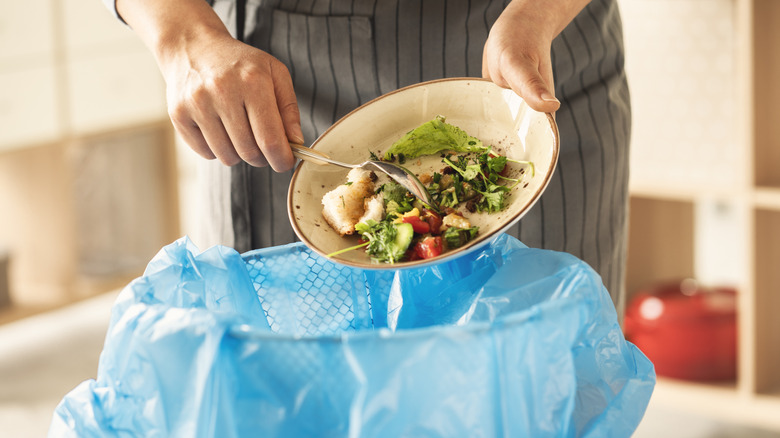
When you go out to eat and don't manage to finish everything on your plate, you may or may not choose to take home a doggy bag with your leftovers. But that's not the full extent of the food that gets wasted by restaurants and other eateries. There's also the food they prepare that doesn't get sold, and the ingredients that might pass their best before they've even made it into a dish. So, what do major chains do with all their leftovers?
The answer varies widely. It all depends on the restaurant chain and sometimes individual branches, especially in the case of franchises. The good news is that big restaurant chains increasingly have strict policies to help reduce their carbon footprint and ensure that perfectly good food doesn't go totally to waste. There's a huge problem with food insecurity in the U.S. and worldwide, and with restaurants throwing so much food in the trash, this seems like a missed opportunity to do some good.
It does seem like chain restaurants are waking up to the issue and attempting to do their part to reduce food waste. What this really looks like in practice and whether establishments always live up to their goals is harder to track, but having the policies in place is at least a step in the right direction, and impact reports often give some information about how it's going. Here's what these 11 chain restaurants do with leftover food.
Pizza Hut
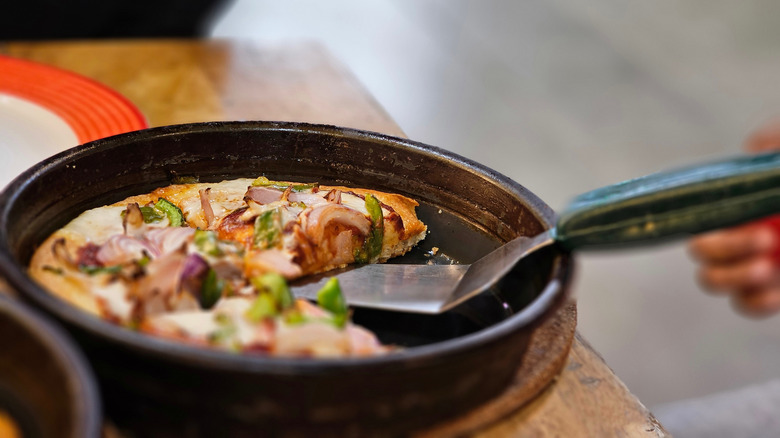
Pizza Hut is known for its deep pan pies, but what happens to all that food waste? There's bound to be a lot of surplus — particularly if it's one of the locations with a buffet, as it's harder to predict how much will be eaten compared with food cooked to order. Luckily, Pizza Hut has a robust food waste policy that's been going on for longer than you might imagine.
In the U.S., the company has run its Harvest food donation program since 1992, making it one of the earlier major restaurant chains to formalize surplus food donations. Safe, unsold food such as mistaken orders, no-shows, and buffet leftovers is collected by local hunger relief organizations instead of being thrown away. By 2017, the company said it had donated over 100 million pounds of food through the program and continues to donate roughly 5 million pounds of food waste each year.
This ethos extends beyond the U.S. In the U.K., Pizza Hut Restaurants' former franchise operator Heart with Smart Group — which went into administration in 2025 — previously partnered with Keenan Recycling to collect food waste that couldn't be eaten from restaurants nationwide. It's also worth noting that Pizza Hut has taken part in broader industry efforts to reduce waste, including work with the Food Waste Reduction Alliance and input into ReFED's restaurant food waste guidance. So, all in all, the chain seems to be doing a pretty good job.
Chick-fil-A
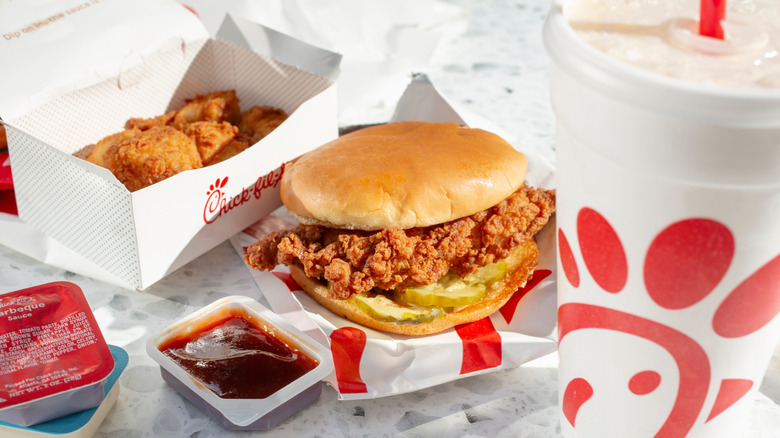
Ever wondered what happens to leftovers and surplus food at Chick-fil-A? Well, there are a couple of answers. Depending on the restaurant and the state of the food, it will either be composted or donated through the Shared Table program. However, the thing about this chain is that it's a franchise business, which means that most locations are owned and operated by individuals, running under the company name. It means that each location may or may not opt into these waste reduction schemes.
Shared Table is a program that encourages Chick-fil-A restaurants to donate food that would otherwise go to waste to local nonprofits and hunger relief organizations. Any surplus meat and eggs can be donated, alongside items like salads, biscuits, and fruit cups. These can be prepared by these organizations and turned into nutritious meals. The equivalent of over 42 million meals have been donated to date.
That which can't be passed on through Shared Table is composted at many Chick-fil-A restaurants. Nearly 2,500 restaurants have signed up to the program, and this number is growing. It takes food waste to be composted, a process that takes roughly six months to one year. After this time, the compost can be used to improve soil health.
Panera
You can imagine that, at Panera, there's a lot of bread, bagels, and other baked goods leftover at the end of the day. That's why the company came up with the Day-End Dough-Nation program. It's a way to reduce food waste while also helping feed people who may need a helping hand from time to time.
Each Panera will have a selection of local charities and organizations that they call upon when there's surplus food left at the end of the day. This includes domestic violence shelters, food pantries, after-school programs, veteran services, homeless shelters, immigrant or refugee services, youth shelters, and low-income housing for the elderly. These organizations help distribute the food to those in need.
Organizations that sign up must be registered as a 501(c)(3) nonprofit, a religious organization, or a public school. They must also commit to giving out the food to those in need, people who are ill, and underserved communities. The chain is always looking for new partners, so if you're part of an organization that fits the bill, it's worth signing up.
Starbucks
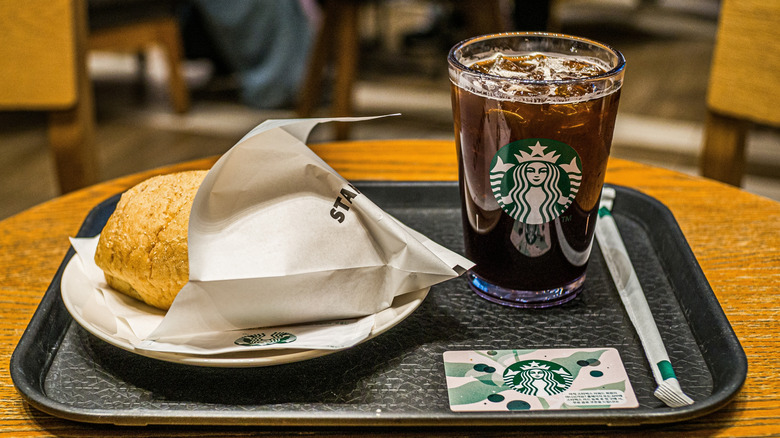
Most people head in for a frappuccino or a flat white without ever considering what happens to leftover food at Starbucks. Although some Starbucks food is unsafe to donate, the company does have a robust food waste program designed to redistribute meals to those in need.
Starbucks has its own FoodShare program that operates in the U.S. and Canada. All Starbucks-owned locations are included, but it's worth noting that some belong to a different franchise, most notably in kiosks in places like hospitals and colleges. The program is highly coordinated. The chain employs a third-party organization for pickups. At the end of each day, refrigerated trucks turn up and take the food to a distribution center. The food is then sorted and sent on to nearby food banks and similar organizations. According to current statistics from Starbucks, it has donated 121 million meals and diverted 144 million pounds of food from ending up in landfills.
The FoodShare program is exclusive to the U.S. and Canada, but other regions have their own initiatives. In Europe, for example, Starbucks works with Too Good To Go, which offers bags of food at steeply discounted prices to app users at the end of the day. As of 2025, this has saved 5.3 million meals from going to waste.
Chipotle
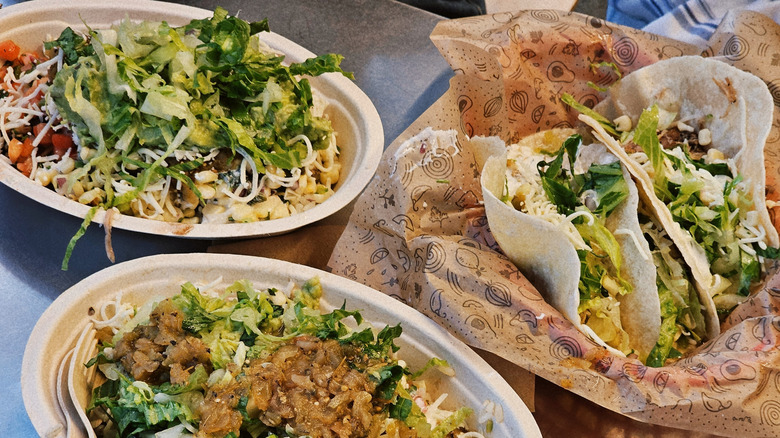
Known for its fast, casual Mexican-inspired food, Chipotle is a staple chain for many. But how does it handle waste? If you're looking to frequent joints with good food waste policies, you're in luck. Chipotle aims to minimize waste where possible, but it also has a process in place for donating excess.
The chain is known for food that's fresh rather than overly processed or cooked hours in advance, and this plays into its anti-food-waste strategy. Food is cooked in small batches to help avoid extra leftovers at the end of the day. Employees measure food and are careful when preparing it, thinking about factors that might affect how much they need and making adjustments accordingly. Of course, all this doesn't completely eliminate excess food. So, what does Chipotle do with leftover food? It is part of the Harvest Program, which diverts food waste to local charities so that it goes to those in need rather than ending up in the trash.
Chipotle workers talk about how they're encouraged to cook to run out of items that aren't safe to redistribute. Plus, some items are covered, refrigerated, and used the next day. Still, they note that some foods are inevitably thrown away at the end of service, such as steak, rice, and fajitas.
McDonald's
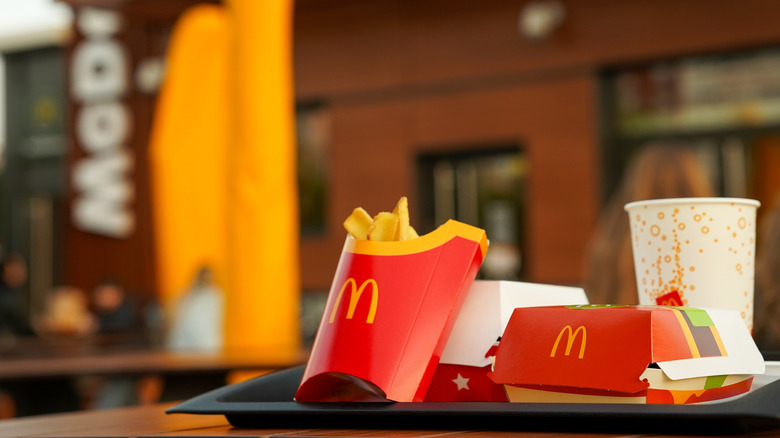
McDonald's makes a lot of its food speculatively, holding it in a transfer bin until somebody orders it. This speeds up service, making the restaurant chain live up to its fast food title, but it does mean that a lot of food can go to waste. There are rules in place about how long the food can be kept, so this means it often doesn't get eaten, but it doesn't necessarily go in the trash.
You might be wondering where McDonald's leftover food goes after this time. During the COVID-19 pandemic in 2020, the Golden Arches kickstarted new partnerships with Global FoodBanking Network and Feeding America to change its food donation policy and reduce food waste. Ingredients such as meat, lettuce, milk, and cheese are now donated, with 9 million pounds of food — estimated to be worth around $12 million — going to communities and food banks between March and June 2020 alone.
KFC
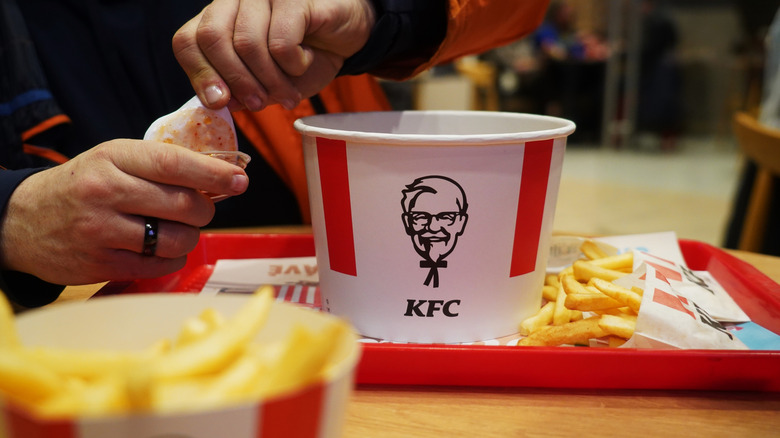
Like many chains, KFC can end up with a lot of surplus food. Luckily, it doesn't all go into the trash can. What happens to leftover KFC chicken and other ingredients can depend on the location and other factors. But the main thing is that the chain doesn't just shirk its responsibility to tackle food waste.
Eagle-eyed readers may have spotted us talking about the Harvest Program before. This is something that all Yum! Brands restaurants can be part of, including KFC. The chain has been part of this initiative since 1999 and has donated more than 92 million meals in the U.S. Other countries may have different programs. For instance, U.K. KFC restaurants work with FareShare to redistribute food.
Some KFC employees also say that leftover chicken gets turned into pot pies the next day. Although some customers may find this off-putting, assuming the food has been handled and stored correctly, there's nothing unsanitary about this. In fact, it seems like a great way to repurpose food to keep from wasting it.
Subway
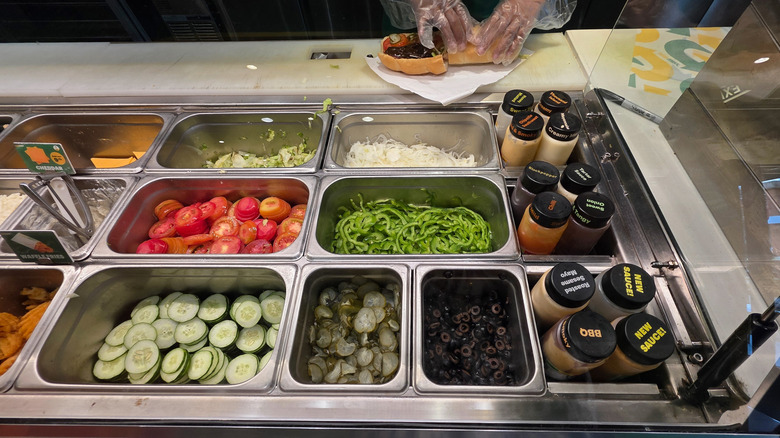
If you're looking for an eatery that's serious about food waste, Subway might not be the one. The chain claims to be working hard to achieve as close to zero landfill waste as it can and has had recycling and composting bins available for its franchisees for many years. It uses some restaurants in San Francisco and Seattle as examples of locations that compost all their food waste. But the reality across the board is often different.
Subway is a franchise system, so what happens to leftovers varies from branch to branch. Restaurants are individually owned and operated by independent franchisees, and the composting program is optional. So, you really don't know how much food is thrown out and how much is composted. And, there is no initiative designed to donate any of its leftover ingredients.
Subway also appears to be working on waste at the packaging and prep stage. Its sustainability page says it aims to reduce its resource consumption. However, beyond that — and a promise to adhere to local waste management rules — there isn't much to go on about its approach. An employee post on Reddit, for example, showed a whole bin of day-old bread being thrown away at one location. Considering that a separate post showed a similar situation with its cookies, this is unlikely to be an isolated incident.
Taco Bell
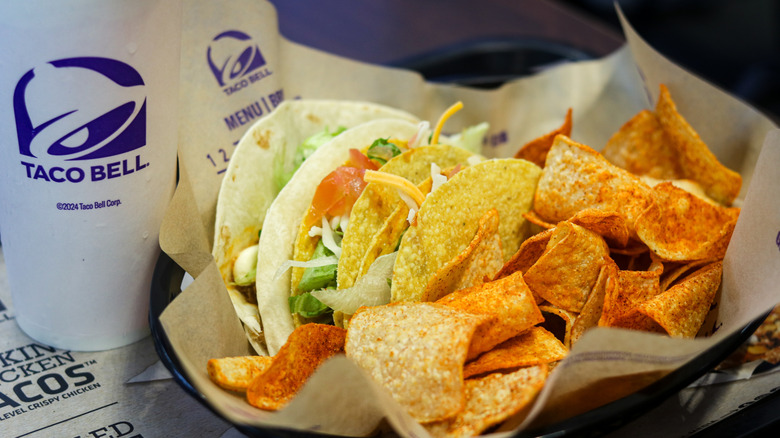
You might go there for late night tacos or a cheeky crunchwrap, but have you ever thought about what Taco Bell does with its leftovers? Like many fast food restaurant chains, waste can be an issue because food isn't always cooked to order and fillings are usually prepped ahead of time.
Taco Bell is another restaurant that's part of Yum! Brands. This means it's also part of its Harvest program, so food that's leftover at the end of the day and is still good to eat gets donated to local organizations to fight hunger. The program has been running since the 1990s, which means a lot less food has ended up in landfill than could have done without this initiative.
As a member of Yum! Brands, Taco Bell also adheres to its sustainability and waste management protocols. It has committed to reducing food waste 50% by 2030. Of course, it remains to be seen if this goal is ultimately achieved, but it might mean there are some new ways that we'll see Taco Bell avoiding or donating leftovers in the coming years.
Olive Garden
Olive Garden is part of the Darden restaurant group, which has a robust food waste strategy. This means that, in theory at least, all those leftover breadsticks and bowls of pasta won't go to landfill. The chain partners with Feeding America and also has its own food distribution program called Darden Harvest (not to be confused with Yum! Brands Harvest program).
In its 2025 Impact Report, Darden notes that food waste is tackled first by forecasting demand so that less food is prepared than will be needed. That matters in a restaurant like Olive Garden, where prepared food is more likely to go to waste, such as cooked pasta compared to dry pasta, which has a long shelf life. The group aims to use data to help reduce waste, carefully analyzing where waste occurs most and coming up with strategies to mitigate it.
During 2025, nearly 6 million pounds of food were donated between Olive Garden and other Darden restaurants. In total, over 146 million pounds has been donated since the beginning of the initiative. In addition to food donated through its Harvest program, composting is used where possible and 100% of restaurants recycle used cooking oil, so food and ingredients that aren't fit to be eaten can still avoid ending up in the trash.
The Cheesecake Factory

The Cheesecake Factory is known for having a huge menu and this can often increase food waste. It's hard to predict exactly what will be ordered on any given day, and it means ordering and prepping a lot of ingredients. However, the restaurant chain has a range of initiatives in place to deal with food waste. We're not suggesting that it's perfect, but nor is it just throwing everything in the trash without a second thought.
The Nourish program is Cheesecake Factory's food donation initiative. It's a way for the company to give back to communities while also fighting food waste. It matches the kind of excess food available — whether fruit and produce, sauces, grains, or dessert — with the local nonprofits that are most likely to be able to redistribute it successfully. Since it started in 2007, the program has donated 8.7 million pounds of food that would have otherwise been wasted.
It also has other techniques for reducing waste, such as careful inventory management, preparing food efficiently, and composting food waste that isn't suitable for donating. So, it seems to be doing what it can to keep food from being tossed out. Ultimately, it diverts around 25% of its waste from landfill (across all waste, not just food waste), which isn't a huge percentage but it's better than nothing.