

Rachael Ray's Top Cooking Tips Every Home Cook Should Know

In the mid-2000s, American culture was swept away by celebrity chef Rachael Ray. She became so beloved that she's still a darling in the entertainment world two decades later. Not only has she taught us how to cook fun, nutritious meals in 30 minutes, but she's also provided a lot of comfort with her down-to-earth personality.
We've all been delighted by Ray's biggest kitchen fails on her show because she knows how to laugh at herself. She proves that learning doesn't have to be so serious, and even the pros mess up sometimes. Without her guidance, who knows how many folks would be stuck in the habit of ordering takeout and buying microwaveable meals.
The star is begging everyone to learn to cook, so it's never too late to start or sharpen your skills. What are Ray's most powerful words of wisdom? Read on to learn the celebrity chef's top cooking tips every home cook should know, no matter how experienced they are.
Get days ahead on prep work whenever possible
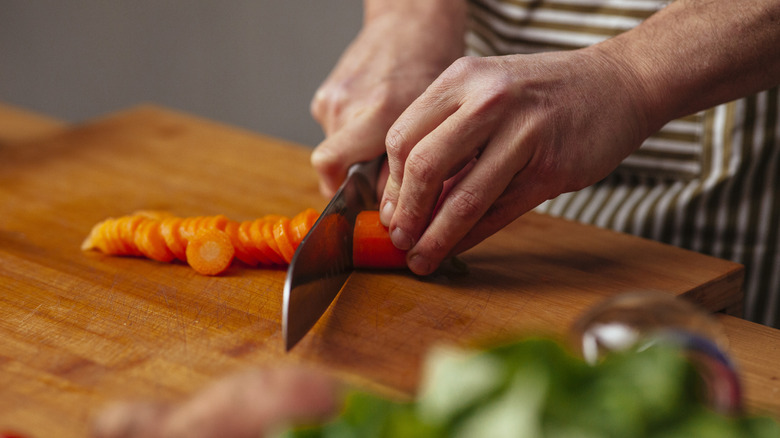
Rachael Ray believes that setting yourself up for success is key to reducing food waste and resisting the temptation to order in. When you have a bit of free time, she suggests doing a bunch of pesky prep work that could deter you during a busy workweek. For example, you could peel garlic cloves, dice onions, peel and chop carrots, slice bell peppers, and wash and dry certain produce, like lettuce. When you have a fridge full of ingredients that are ready to go, approaching a home-cooked meal doesn't seem so exhausting.
This tip is so clever because many people get burned out by meal prepping, which has long been touted as the go-to solution for busy schedules. After a couple of days, though, reheating the same tired dishes feels like a punishment. By keeping your ingredients fresh but prepped, you can seamlessly throw together a variety of meals and stay excited about eating. You'll get inspired whenever you open the fridge because all you'll see is potential.
Of course, you'll have to stay on top of freshness, but the solution is simple. Ray instructs home cooks to replace these ingredients once a week. You may still face a little bit of food waste now and then, but you'll get the hang of how much you'll realistically use in a week when you hold yourself to this schedule.
Always cook bacon in the oven for hands-free, grease-free deliciousness
Those of us who enjoy bacon know that it can be a love-hate relationship. Bacon packs so much smokiness and savoriness into each bite, yet frying it in a pan can feel like a battle zone. You have to keep a close eye on the meat to save it from burning, but it spews molten grease at you seemingly every second. Dealing with grease splatters on your clothing is risky business because you have to act fast to avoid a permanent stain, but feeling it land on your skin and sizzle unlocks a deeper level of despair.
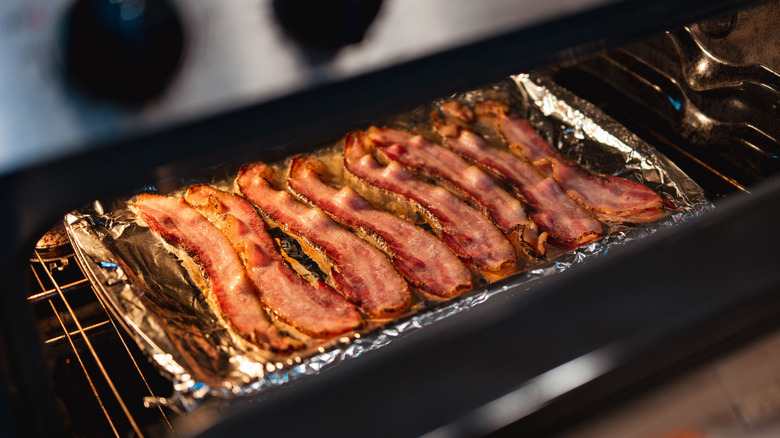
Rachael Ray declares that it's time to end this challenge by sequestering your bacon in the oven. You can cook the entire package in one fell swoop, and it'll never be able to hurt you again while it's cooking. There are many helpful tips for cooking bacon in the oven that will never lead you astray, but Ray has developed her own method for baking perfect bacon.
She prefers to arrange her bacon in a broiler pan, but she also says that a wire rack resting on top of a rimmed baking sheet will do the trick. Ray pops her bacon into a preheated 375 degrees Fahrenheit oven and lets it cook for about 18 minutes. By then, the fat renders beautifully, and each slice is uniform.
Never cook turkeys whole
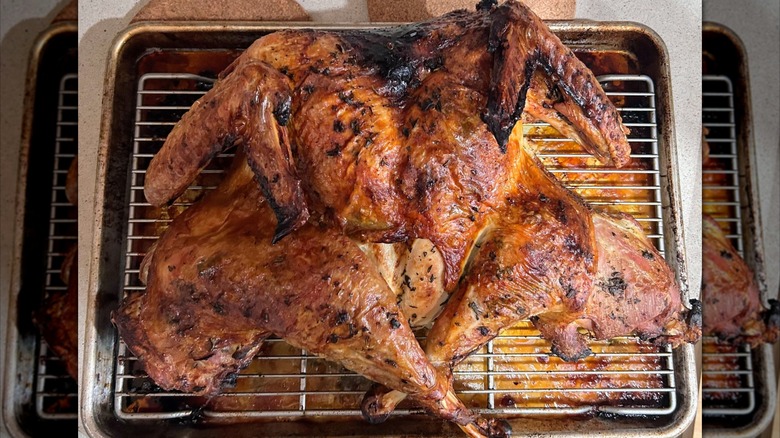
One of Rachael Ray's most controversial hacks is to never cook a whole turkey for Thanksgiving again. Sure, a whole stuffed turkey is the most iconic holiday table centerpiece, but your party can live without it once they discover how succulent your turkey is. Ray's brilliant trick is to cook two smaller turkeys to shave hours off the cook time while still ending up with plenty of meat. She spatchcocks both, which means she removes the backbone and splays them so they rest flat on the pan.
In her experience, a 14-pound spatchcocked bird is ready to eat in only two hours. Plus, this cooking method ensures that both the light and dark meat roast evenly, so nothing is too dry or unsafe to consume. Depending on how large your gathering is, you may not even need to prepare a second bird. Either way, you'll be able to juggle so many side dishes with valuable oven real estate freed up.
If you're interested in paring things down even more, Ray's one-pan Thanksgiving dinner hack can change everything. You can prepare an entire cozy meal in one pan and say goodbye to holiday stress. It's perfect for single folks, couples, and small families.
Butterfly chicken breasts and pound them with a dragging motion for perfect evenness
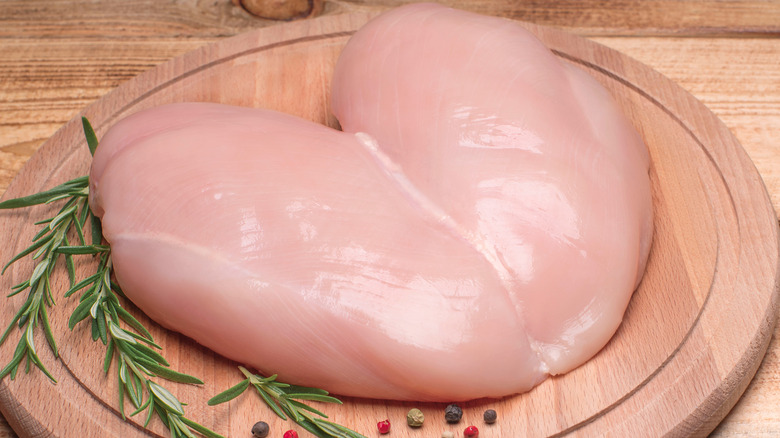
Rachael Ray is a big fan of butterflying pork and chicken. What does it mean to butterfly chicken, exactly? It's when you take a thick breast and carefully slice it on the side almost all the way through, but stop so it stays one large, thinner piece. Ray uses a boning knife to delicately slice and open the breast, which she describes as opening a book. Once you butterfly the breast, it's much quicker and easier to pound it to an even thickness.
Ray stresses the importance of pounding with purpose. You shouldn't attack the chicken like it owes you money. Rather, use the mallet to pound and finish with a gentle pulling motion. You can work the meat upward or downward to ensure uniformity.
Not only are thinner breasts quicker to cook, but they also hold up well in the freezer. Ray says that if there's ever an irresistible deal on chicken breasts, buy a bunch, do the butterflying and pounding prep work, then store them individually in plastic bags. You can stack those bags on top of each other to maximize freezer space.
Stop fighting hard citrus fruits and microwave them instead
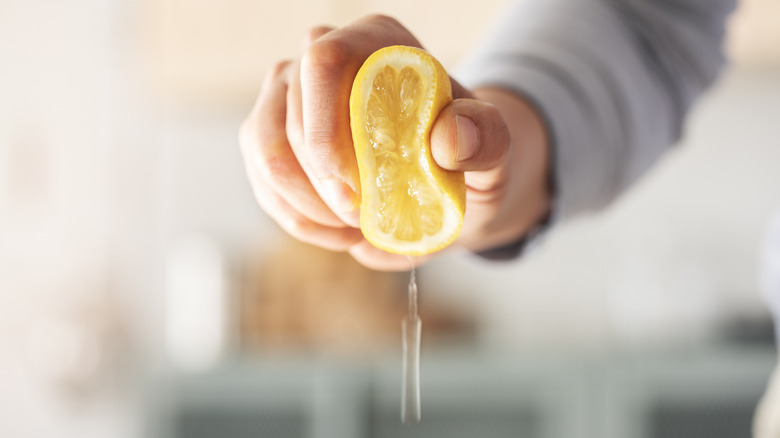
Have you ever bought citrus fruits in bulk and found a couple of duds in the bag? You leave them on the counter for a few days, hoping they'll soften a bit more, but they seem as hard as rocks. Instead of throwing them away or breaking your hands trying to juice them, take advantage of Rachael Ray's juicing tip.
One of the best microwave hacks home cooks know is to zap tough citrus fruits for 15 to 30 seconds to soften them. Your mind will be blown once you see how much more juice you can extract from the fruits after doing this one effortless step. The heat helps soften the membranes, which means all the liquid inside is primed to come out. Pop lemons, limes, and oranges in whole, then you'll see how much juicier they seem as you start to cut them open. You may not even need to take out your citrus press since they'll be malleable in your hands.
Be careful about how and when you use water and salt when cooking mushrooms
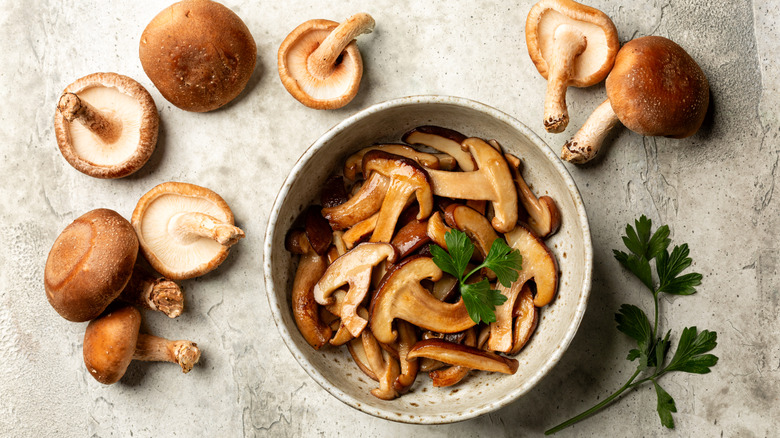
Many home cooks are intimidated by sautéed mushrooms because it can feel like the mushrooms soak up gallons of oil before they've achieved the ideal texture. Rachael Ray acknowledges that getting the timing wrong on a couple of crucial steps can throw off the whole cooking process. Since mushrooms are spongy, you have to be mindful of how you clean them. Since most folks aren't digging in the soil for fresh mushrooms, they can rest assured that the ones from the store are already quite clean. As a result, Ray advises home cooks to wet a paper towel and rub the mushrooms instead of keeping them under a running faucet. This keeps excess moisture away, which turns the texture rubbery.
Ray also tells home cooks to add salt to the mushrooms only after they've finished browning. If you've ever salted fresh tomatoes, you already know that salt impacts an ingredient's water content. To ensure that the mushrooms can cook as quickly and evenly as possible, keep that salt shaker out of your hand until you're done cooking them.
Save your Parmesan rinds for richer soups and sauces
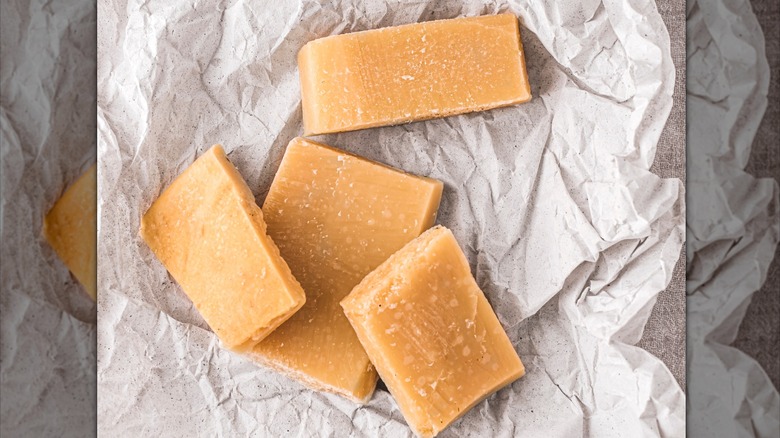
Have you ever tasted your soup while it's simmering and thought that it really needs something, but you can't put your finger on what? Sure, you can add more salt, a squeeze of lemon, a dash of hot sauce, or some sugar, but it might not do the trick. An ingredient that Rachael Ray uses in her soups is a Parmesan rind. The hack is helpful because the rind releases a scrumptious, salty, nutty flavor. Best of all, you can get use out of something that most folks just throw away. If you don't plan to use your rind in the near future, Ray suggests freezing it.
Since the rinds are so durable, keep in mind that they likely won't fully dissolve into the soup, just soften. You'll have to fish out the rind unless you want to play a fun game to see who gets the lucky rind in their bowl. Whether you simmer and discard or make Parmesan dumplings, your soups will benefit greatly from this basic addition.
Take a few extra seconds to crush dried herbs with your hands before seasoning dishes
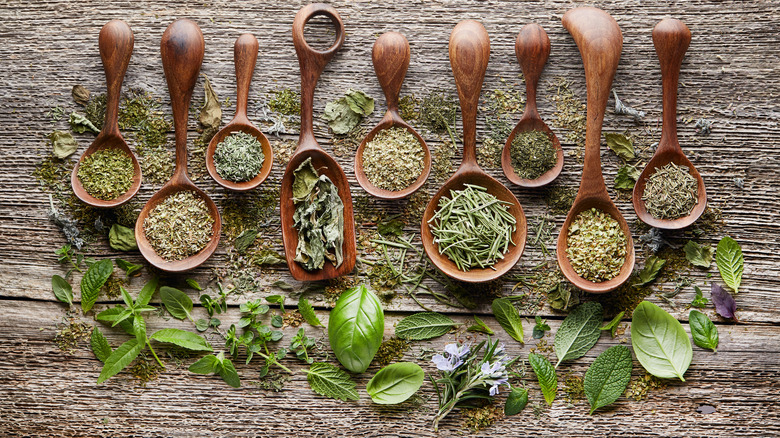
In her own kitchen, Rachael Ray rarely uses dried herbs. However, she adores the taste of dried oregano and marjoram. Whenever she's working with dried herbs, she takes a few moments to pour them into her hands, then rubs them together to break them up a bit. She calls this process waking up the herbs.
The reason this makes a difference is that air exposure and time are an herb's enemies. There's a limited window in which dried herbs are still potent and delicious, which is about a year. Even when you're working within that one-year window, drying the herb seals in its essential oils. When you cook a dish, heat and moisture help unlock those essential oils that release flavors. However, taking the time to crush the dried herbs by hand first breaks them down and makes the essential oils more accessible, which results in a richer dish. If you'd like to test the power of this trick, do a before-and-after smell test to learn how much more fragrant your dried herbs become.
Consider investing in a cast-iron plate and griddle
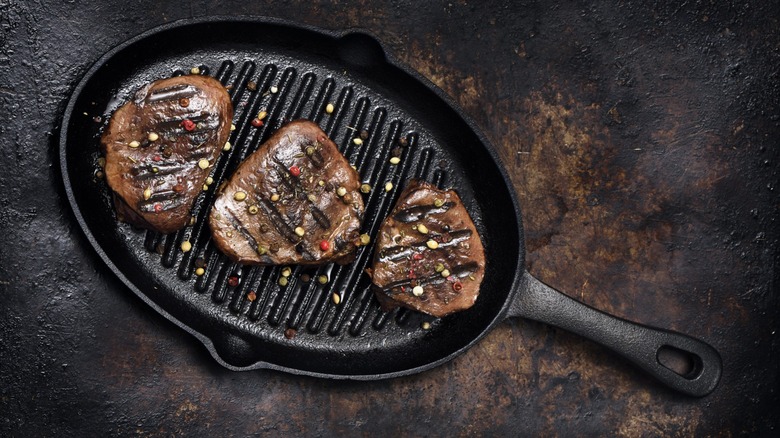
Fans of grilled burgers may want to shield their eyes from this fact: Rachael Ray doesn't place her patties directly on a grill. She loves using a cast-iron plate that she can rest on top of her grill. By doing this, she distributes the grill's heat evenly so that each patty develops a crust on both sides instead of just getting traditional grill marks. You can still enjoy the smoky flavors of the grill when you use a plate, especially if you close the lid for a few minutes.
When it's too cold or inconvenient to use an outdoor grill, Ray whips out her cast-iron griddle for the stovetop. She says a cast-iron pan works just as well, but the benefit of buying a griddle is that you can cook several burgers at once, which saves time. Obviously, you don't need this tool if you're only cooking for yourself or another person.
Ray loves loading her burgers with cheese, so forming thinner patties that she can stack lets her use more slices of cheese. In one demonstration on her show, she placed 2 slices of cheese on each patty, which equates to 4 slices per burger. If your household loves the sound of this, a cast-iron griddle will help you crank out tons of thin patties in no time.
Use Rachael Ray's foolproof cream base when making cheese sauces
Making a roux isn't necessarily hard, but it takes time. You have to cook the flour for several minutes to remove the raw taste. You also need to whisk the roux constantly to make sure there are no clumps. A beginner can do it, but home cooks may not want to go through the hassle when they're in a rush.
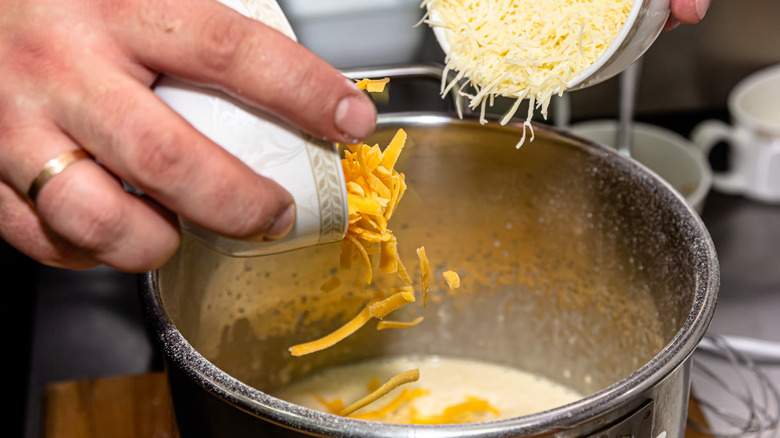
Rachael Ray developed a foolproof cheese sauce that uses cream as a base instead of a roux. She uses it for homemade baked mac and cheese, but it can work for any type of cheesy, creamy dish you like. Casseroles, roasted veggies topped with cheese, smothered chicken, and loaded nachos are just some of the many possible uses.
All she does is pour a pint of heavy whipping cream into a saucepan with half a cup of grainy Dijon mustard, then lets it come to a low boil before lowering the heat. She simmers the mixture for three minutes, then adds a few cups of her favorite cheese blends. For a traditional mac and cheese, she suggests adding equal parts yellow American and sharp cheddar, but your selection is totally up to your preferences and the dish you're preparing.
Grate your garlic instead of chopping or pressing it
Raw garlic is pungent, and the smell seems to linger on your fingers for days. Not to mention, the little cloves can be quite unwieldy if you're trying to thinly slice or chop them. Garlic presses can definitely help, but you need to have good hand strength. It's simply not a good option for folks who have arthritis or other conditions.
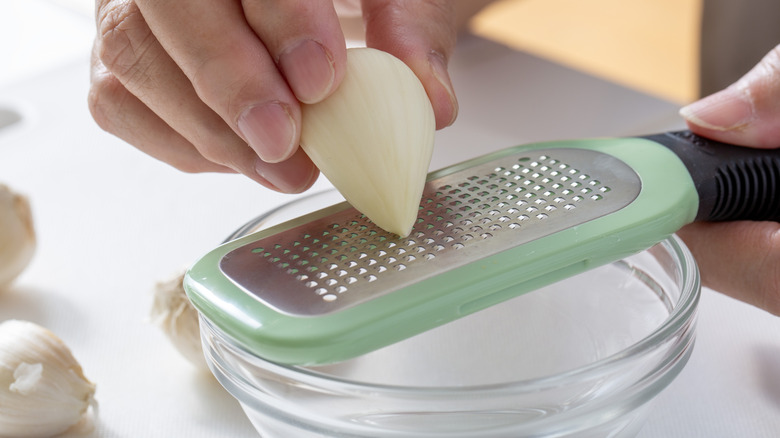
This is why Rachael Ray is obsessed with grating her garlic. She can unlock the garlic's full aromatic potential without much fuss. All she does it rub the clove over the grater and scrape the bottom to get every delicious morsel out.
She's been grating garlic in front of her fans for many years, so it may come as no surprise to learn that she developed her own garlic grater. She put enough thought into the design to include a heatproof foot that rests directly on top of the pot or pan, so you don't have to wrestle it with both hands.
Cook perfect steaks by using Rachael Ray's 8-minute rule
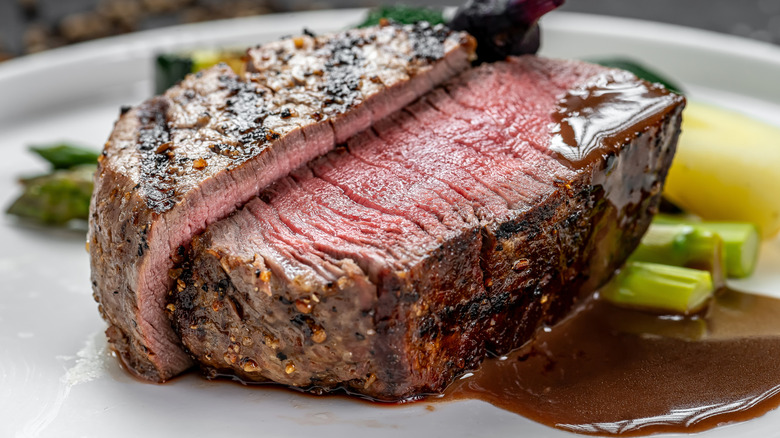
Everyone has their own preferences when it comes to their steak's doneness. If you appreciate steaks that have some pink in the middle, such as medium-well or well, you can count on Rachael Ray's simple math trick. For each additional inch of thickness in a steak, cook it for another eight minutes. This means that a 2-inch-thick steak needs 16 minutes to cook, with a flip halfway through.
Why does this matter? Ray urges home cooks to never touch their steaks too early. The meat needs time to develop a gorgeous, flavorful crust. You must let the steak do its thing uninterrupted for the best results. With Ray's trick, you don't need to stress about flipping too early or too late. Just divide the total cooking time in half, and that's when you can flip for a perfect steak that's still pink in the center.
Even if you've done your math correctly, you still need to wait a bit longer before you can dig in. Ray explains that steaks need several minutes to rest so the juices can redistribute throughout the entire piece. Cutting it too early causes you to lose those precious juices, which results in a drier steak.
Rely on tray-bake meals when you're busy
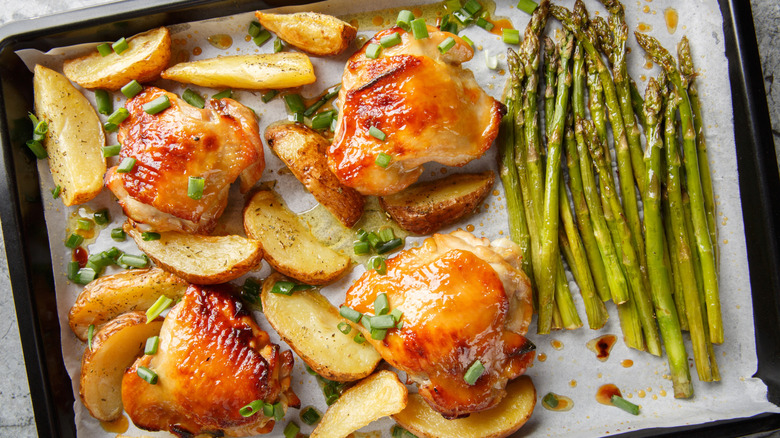
It's safe to say that Rachael Ray is a big fan of tray bakes. Using two pans, she can have a big meal ready for a family of six in less than hour, including prep time. In an Instagram video, she places 6 chicken breasts on one tray and seasons them. She whips up a simple, thick cream sauce that she spreads across each breast, then sprinkles them with breadcrumbs and shredded cheese. It's crunchy, decadent chicken without any frying.
In a second pan, she spreads halved cherry tomatoes, potato wedges, and green beans. She seasons the veggies with grated garlic, olive oil, lemon zest and juice, and herbs. Ray slides both pans into the oven, and voilà. A feast is ready without worrying about changing the oven temperature and fussing with the trays. Of course, this is just one great example of a tray bake. The options are endless because you can work with all kinds of proteins and veggies. The point is that anyone can create a nutrient-packed meal with only one or two trays, depending on their household size. If you're ready to simplify your weeknight dinners, check out this sheet-pan recipe.
Never start cooking without a garbage bowl nearby
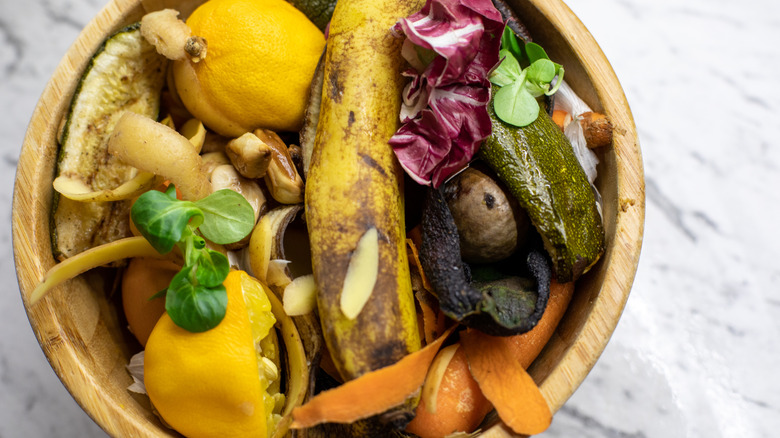
Longtime fans of Rachael Ray have likely heard the celebrity chef tout the use of a garbage bowl for many years. The concept is simple: keep a big bowl on your counter so you can throw all your trash, scraps, and recyclables into it as you're cooking. Once you're done cooking, you can go through the bowl and make sure everything goes in the right place. This can save you dozens of trips to the trash and elsewhere while you're cooking. To this day, Ray is selling her collection of garbage bowls, which are designed to be gorgeous. You may fill them with trash, but at least they look nice.
Interestingly enough, the garbage bowl wasn't actually Ray's idea. She says that she learned the trick while working as a line chef, so this has been valuable insider information. The person who is credited with bringing this tool to the general public is Ray's friend and colleague, Sara Moulton. Regardless, everyone can agree that this gospel is worth spreading since it's such an excellent timesaver in the kitchen.