

How To Order From A Bakery
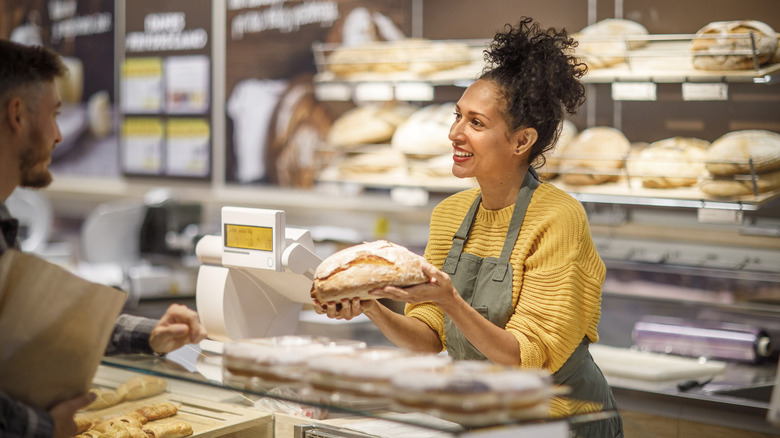
Whether you're heading to the fanciest bakery your town has to offer or popping into a traditional neighborhood joint that's been open 50 years, ordering isn't always straightforward. Once you get to the front of the line, you're confronted with more types of bread and pastries than you knew existed, feel pressured to hurry your order, and walk out feeling like you didn't make the best of your trip. But, once you learn how to order from a bakery with confidence, you'll have no such issues.
I'm no stranger to bakeries, regularly frequenting my favorite Oxford bakery in England — shoutout to Hamblin, thanks for all the bread — and visiting others whenever I travel. But, I'm also an avid baker myself, and previously ran a micro-bakery, selling at markets and online. So, I'm confident putting in my perfect order at a bakery, and can help you to be, too.
Part of ordering is knowing a bit about the types of products that might be on offer. Once you know your fougasse from your focaccia, you'll find it easier to make a call when you reach the counter. But, you also need to understand what you like. Perhaps it transpires that you're a big fan of viennoiserie, which will narrow down your choices. It's good to have a solid grasp on your likes and dislikes, but still give yourself room to branch out. Armed with this knowledge, you'll be able to order from a bakery like a pro.
Learn the difference between pâtisserie, boulangerie, and viennoiserie
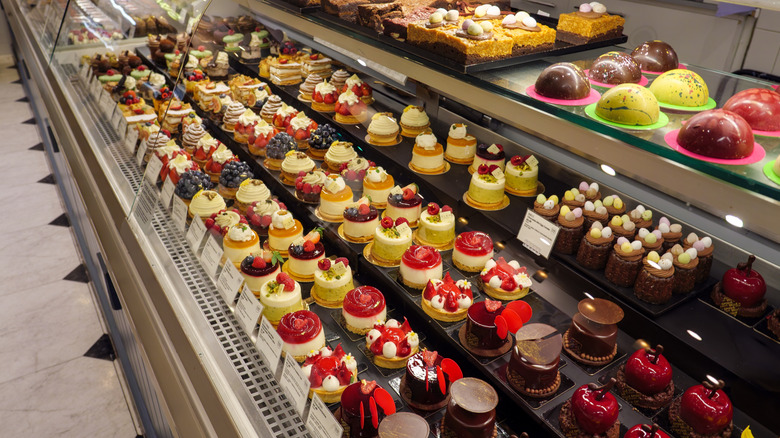
When you head to a bakery, most goods will fit in one of three categories: pâtisserie, boulangerie, and viennoiserie. These are the French terms, but their meanings also stretch to bakeries from other cultures. Once you know what you like or are looking for from a bakery, ordering will become easier.
Pâtisserie refers to sweet baked goods, such as tarts, mille-feuille, macarons, and madeleines. Outside of French pâtisserie, it could also refer to a wide range of sweet treats, like cakes, donuts, cannoli, strudels, or baklava.
Boulangerie equals bread. This could be a wide range of breads from baguettes and focaccia to sourdough batards or dense rye bread. It also includes rolls, bagels, flatbreads, and so on.
Viennoiserie is a type of pastry that's somewhere between bread and a sweet bake. These are often eaten as breakfast pastries. Croissants, Danish pastries, pains au chocolat, and pains Suisse all fall into the viennoiserie category.
When you're on your way to a bakery, you might want to think about what category of baked goods you're interested in, as this will help you narrow down your options and figure out where to look. There's no point poring over the breads if you're interested in buying a cake, for instance. It may also dictate which bakery you head to. While some are all-rounders, others specialize in particular bakes.
Understand common bread styles and your preferences
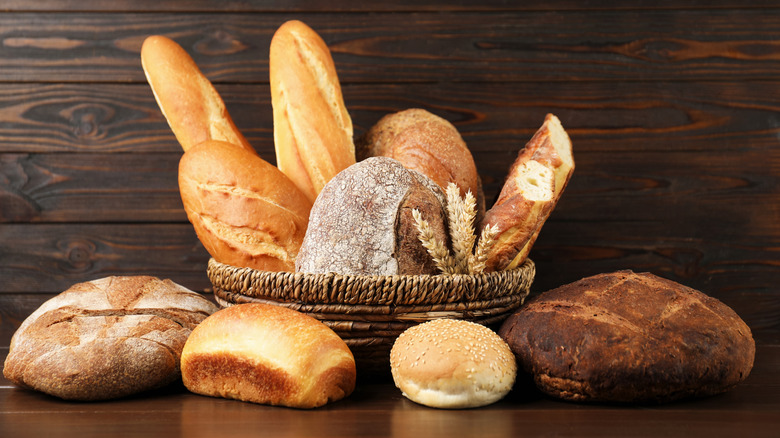
One thing that can hold you up at a bakery is not knowing what kind of bread to buy. You might be familiar with the basics, but freeze up when faced with so many options. Or, perhaps you always end up buying the same thing because you know what to expect, but you have the sneaking suspicion that there's something you'd prefer if you knew more about the different bread varieties on offer. Well, familiarizing yourself with them and working out your preferences is a simple way to get more confident with your bakery order.
A bakery may sell many types of bread. Craft bakeries often focus on naturally leavened bread, such as sourdough. You'll find your classic sourdough boules (round loaves) or batards (oval loaves), which might be made with white flour, whole wheat flour, or a combination of the two. However, there are other varieties of bread that can be made with sourdough starters, such as rye breads, baguettes, and focaccia.
Then, you have the kind of hole-in-the-wall bakeries that might have been serving people their daily bread for generations. These may sell naturally leavened breads, but are more likely to rely on commercial yeast. You might find less trendy but still delicious types of bread here, such as sandwich loaves and dinner rolls.
The thing is, there's no right or wrong bread to buy at a bakery, it just comes down to what you like. Spend some time mulling your preferences. Do you prefer white or whole wheat? Fluffy yeasted loaves or dense sourdough? Once you know more about what you like, or things you want to try, ordering will come easy.
Think about what you'll be eating bread with
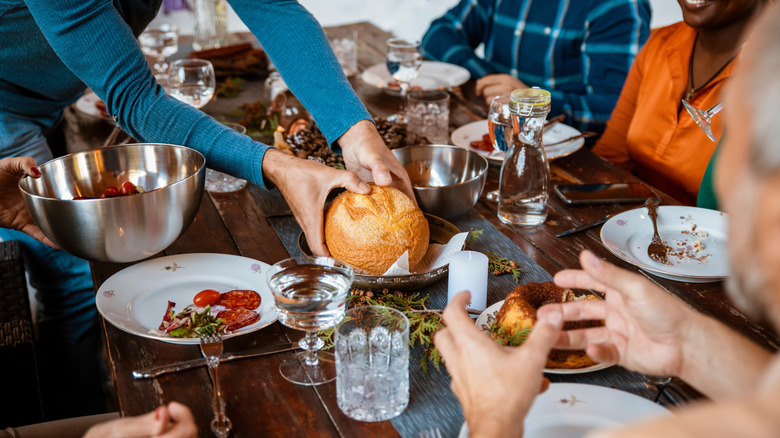
Context matters when deciding on the type of bread to order. Once you've learned more about the common types you might find in a bakery, you still need to think about what you'll be eating the bread with or how you'll be using it to pick the best option. It's another great way of narrowing down your choices, because not every bread is suitable for every use.
If you're making an Italian meal, you might pick up something like focaccia or ciabatta to eat alongside it. These can also make excellent sandwich breads. A dense rye bread, on the other hand, might be delicious with soups or with certain sandwich fillings — a Reuben comes to mind — but you're not going to want to use it for mopping up your pasta sauce.
Soft enriched breads, such as brioche or milk bread, work well for sandwiches, French toast, or burgers because they're tender and slightly sweet. Chewier artisan loaves are better suited to dipping into olive oil, or serving alongside soups and stews, or topping with ingredients that won't get overwhelmed by the robustness of the bread.
It's also a good idea to think about how soon you'll be eating it. A crusty baguette is at its absolute best on the day you buy it, making it perfect if you want something to eat for lunch or accompany dinner that day. A hearty sourdough, on the other hand, is good for several days, making it a better choice if you're planning to make toast and sandwiches throughout the week.
Understand some common types of bakery goods
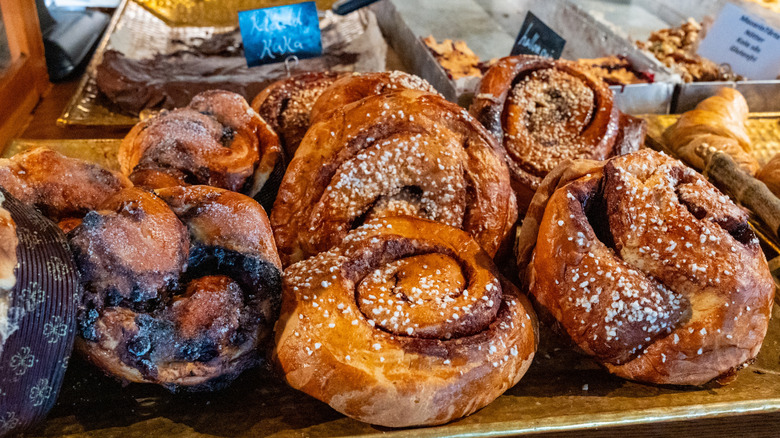
Once you have more knowledge about bread under your belt, you can boost your confidence by learning more about other goods you might find at a bakery. Once you have a mental list of the types of bakery products you like, it's much easier to order. There'll be no more dithering or choosing something on a whim and ending up disappointed.
You have classics, like cinnamon rolls baked fresh, but then you'll increasingly come across items that have been less common in the U.S., such as cardamom buns. These are knotted rather than swirled but have the same gooey butter and sugar filling, just with cardamom in place of cinnamon. This has a citrusy and almost eucalyptus type bent to the flavor, which can take getting used to if you've always been team cinnamon, but is beloved by many.
But, of course, there are so many things you might find in a bakery and this will vary from spot to spot. Some might focus on cakes or cookies, others sell Scandi-style buns or French pastries, like canelés or madeleines, and others still might have a broad mix of offerings. I often differentiate between the more intense options, like donuts with elaborate fillings or cupcakes piled high with frosting, and those that are more restrained, like a classic pain Suisse or a German crumb cake. You probably know which category sounds more appealing to you and this is a good place to start. Once you've wrapped your head around your choices, bakeries will no longer be so baffling.
Visit early for the best selection
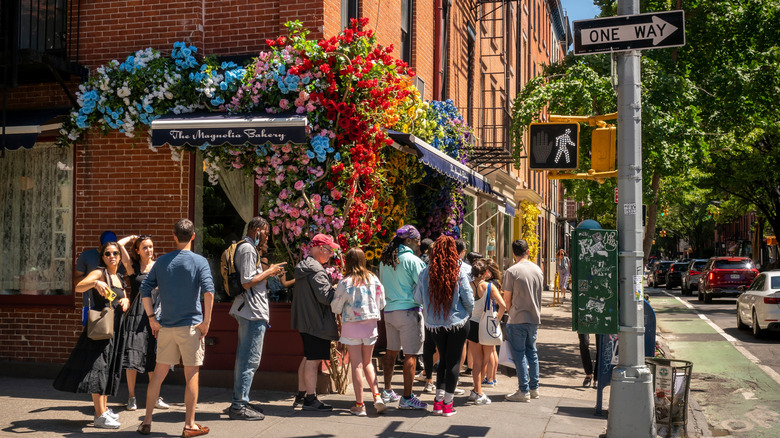
We know that bread tastes better from a bakery, and clearly other people do too because popular joints do sell out. The higher the quality of the bakery you go to, the more likely it is that there won't be much left by the time you get there. I recently showed up to one of my favorite bakeries 45 minutes after opening, only for the last two slabs of focaccia to be bought up by the person ahead of me. Devastating. So, you should try to visit early for the best selection.
Professional bakers are often up half the night, shaping, proofing, baking, and frosting. This allows them to open at a reasonable hour in the morning, often something like 8 or 9 a.m. But it also means that a lot of bakeries shut early. While some may be open until 5 p.m., don't be surprised if smaller artisan bakeries wrap up around 2 p.m. Rather than baking throughout the day, some work on the model of being open until sold out. And, if that's at 11 a.m., so be it.
We get that not everyone is an early riser, but at many craft bakeries, you can't show up at midday and expect a full selection of breads and treats. At this time of day, you'll probably be left with the least popular items to choose from, if there's anything left at all. So, anyone hoping for a strawberry Danish and a classic sourdough batard should set their alarm and come early.
Order in advance, where possible
At some popular bakeries, ordering in advance is an option. It's usually via an online system, where you place your order and pay for it, before picking it up in person on the specified day. Generally, you'll need to do this a day in advance. It's a great way to get the items you want without needing to get up at the crack of dawn.
There's nothing quite like rocking up to a bakery at noon, getting to the front of a long line where everyone else has been picking from what's left, to be presented with your order of the best goodies, that have been tucked aside until you were ready to pick them up. Of course, there might be some days where you're heading to a bakery on a whim, but if it's a regular weekend ritual for you, ordering in advance is the way to go.
The other benefit is that you get to take your time poring over the options. There's no need to feel rushed if you get to the counter and there's a line snaking out of the door. You can carefully consider everything on offer, look up any items you don't recognize, and make an informed decision. It's always a good idea to check your local favorites and see if you're able to order online.
Don't be afraid to ask questions
You don't have to enter a bakery knowing everything. Yes, it's great to do some research when you're a regular bakery-goer who's feeling confused. However, it's also okay to ask questions. In fact, bakers and bakery workers are usually passionate about their craft and eager to get nerdy about ingredients and processes.
If you're not sure what a particular item is, it's totally fine to ask. Perhaps you're coming across some unfamiliar bakes, like bomboloni or semlor, which aren't widely known in the U.S. and need some explanation. Or, maybe there's an ingredient that you're not familiar with or haven't had in the context of baked goods, like matcha or saffron. Most bakery workers will be happy to give you more of an idea of what that tastes like.
You might also want to ask about the ingredients in a particular item, whether that's because of an allergy or just down to preference. And, if you're stuck on what to buy, asking for recommendations can help. Of course, try to be mindful and avoid asking 50 questions when there's a huge line but, generally, asking questions is no bad thing and can lead to some interesting convos with your baker.
Know if you want sweet or savory options
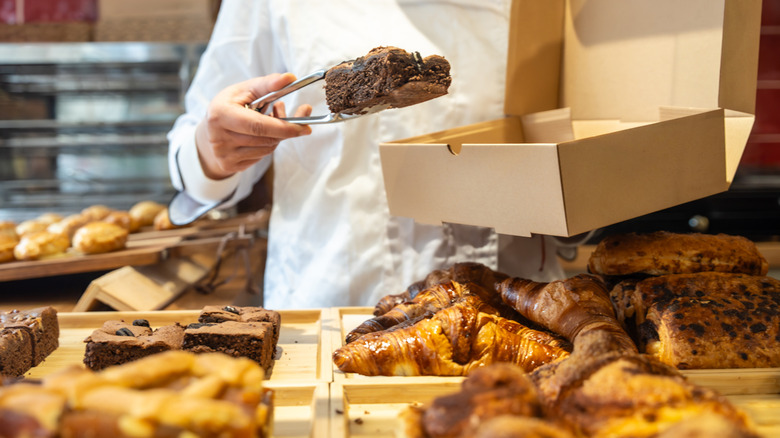
When you think about bakeries, bread and sweet bakes might be the things that come to mind, but there are all kinds of savory options available too. Have a think about whether you're in the market for a sweet or savory item. Or both, there's no judgment here. This can help you narrow down your options and speed things up.
We've already mentioned a lot of the sweet treats you can find in bakeries. These include all kinds of viennoiserie, like croissants and Danishes; cakes; sweet buns; French pastries; donuts; cookies; and so much more. But, what about savory bakery items? There's often some kind of savory pie or tart. There can be savory pinwheel pastries with combinations like pesto and mozzarella or olive and feta. Some bakeries might offer pizza rolls or pizza slices.
You also might find items that follow the sweet-savory trend, like black garlic mixed with chocolate, savory donuts, or a savory tart drizzled with honey. There's really no wrong choice when you head to a bakery. You like what you like. But considering what broad category you want to choose from before you go will help you order with more confidence.
Look for signs that the laminated pastries are high quality
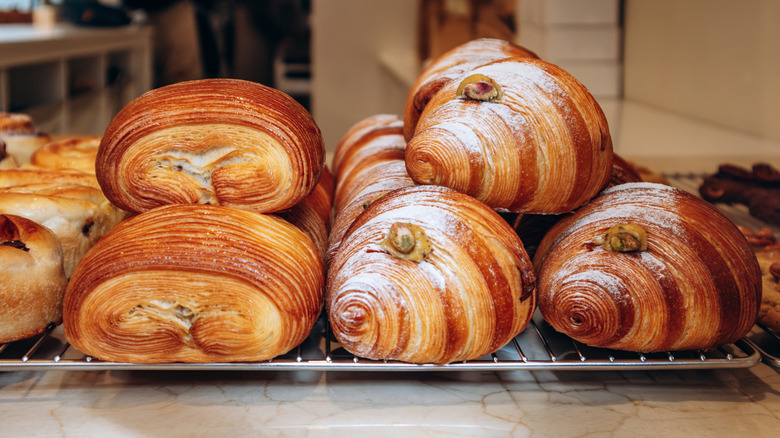
Laminated pastry, or viennoiserie, is among the hardest things for a bakery to get right. We've all fallen foul of a disappointing Danish at some point in life. That's why you should look for signs that these types of pastries are of high quality. Otherwise you might spend your money on something barely worth eating.
Laminated pastries get their name from the process used to make them. Bakers repeatedly roll and fold the dough to create dozens of thin layers of pastry and butter. When baked, the water in the butter turns to steam, pushing those layers apart and creating that light, flaky texture we all hope for in a good croissant or pain au chocolat.
This kind of pastry should have a deep golden color. If it looks pale and doughy, walk away. You want to see a crisp, slightly shiny surface with visible layers and definition. If you don't see layers, it may not have been laminated properly. The shape can also tell you something. High-quality viennoiserie should have some structure and height to it. It shouldn't look flat or like it's collapsed in on itself. When you break one open, it should have an open, honeycomb-like crumb inside, with clearly defined layers rather than a dense, bread-like middle.
When ordering bespoke items, provide clear details
Bakery cakes are worth ordering, but you need to be specific with your instructions. And, the same goes for other bespoke bakery items, although cakes are by far the most common option for folks to order. Being clear with your wants and needs will help avoid any disappointment down the line.
You might want to start by telling your baker what the occasion is, as a birthday cake will often look different from a wedding cake, for instance. However, non-traditional cakes are a thing, so you'll also need to talk about the kind of style you like and what your design preferences are. Perhaps you have something extremely specific in mind and already know exactly what colors and decorations you want, or maybe you're happy for the baker to be creative, but you should still give some direction so it's not way off the mark.
You should also know what flavors you want or be open to input from the baker. Having a loose idea will help guide this, such as knowing whether you want something intense, fruity, or light. Tell your baker how many people you want it to serve — and err on the side of caution if you don't yet know exactly how many people you need to feed. And be clear about any dietary restrictions you need it to cater for.
Check out the options before you get to the front of the line but don't feel rushed
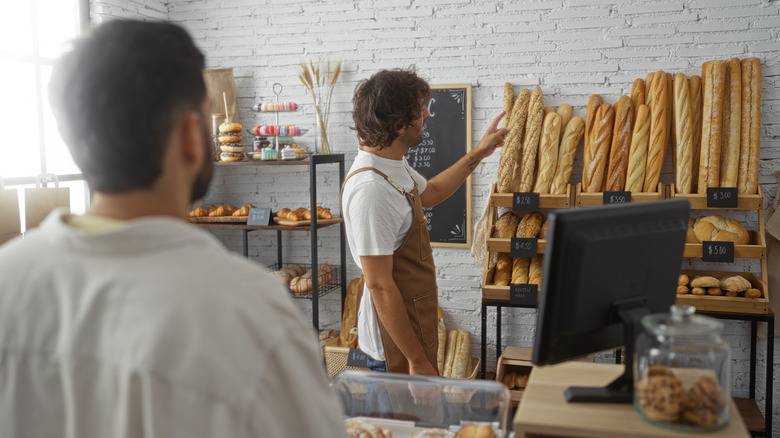
While it's not necessarily a bakery red flag when there's no line, you often have to wait in the most popular spots, especially on a weekend. So, when you get to the front, you can end up feeling rushed, not wanting to hold up those behind you. That's why it's a pro move to take a good look at your options while you wait.
Of course, not being able to see what's on offer can be an annoyance. Some bakeries arrange their goods so that you can see them from anywhere, while others have the kind of pastry case or shelving where you can check out the options when you get closer to the front. And some may have a written menu of what's available today. However, you'll sometimes come across an establishment where it's virtually impossible to see the goods until you reach the counter, and there's not much you can do about that.
Although it is good practice to scope out what you want beforehand, this doesn't mean you have to hurry once it's your turn to order. Do be mindful of the time you're taking up, but don't let that stop you from asking any questions you need to and taking a closer look at any options that have made it onto your shortlist before you commit. You've gotten this far, after all; don't leave disappointed.