

Does Older Scotch Really Taste Better?
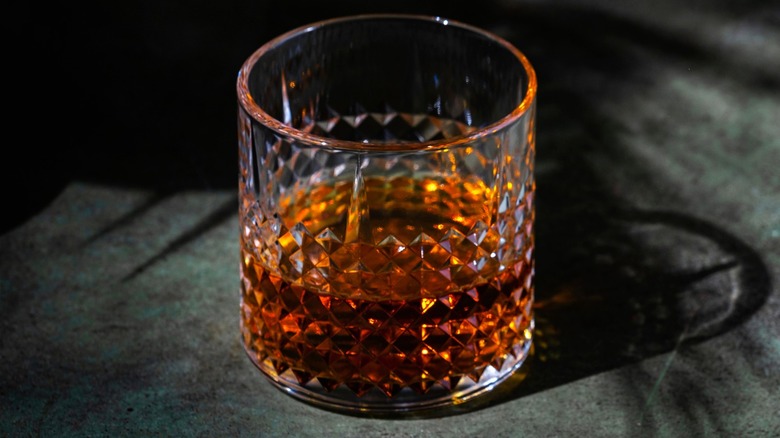
Back in 2019, Sotheby's sold what was then the world's oldest whisky, Macallan's 81-year old The Reach, for an impressive $340,000. The age record was broken in 2021, when a bottle of Old Ingledew Whiskey dating back to around the late 18th century sold for a cool $110,000. While it's clear that the rarity of both contributed a lot to their respective values, some folks might reasonably assume that their quality was a major factor, too. Older, after all, is better — right? Unfortunately, that idea is just one of many false facts about whisky we need to unlearn.
While aging does play a crucial role in developing the spirit's final flavor profile, other factors like the quality of ingredients and region of origin all play a part in determining the quality. A badly made Scotch, if aged for 21 years, will just be bad whisky that's of legal drinking age. The beverage can even be over-aged, developing too much of a woody taste if it sits in the cask for too long.
Despite all this, checking a bottle's age can still be a decent way for beginners to easily identify quality whisky. Many whisky aficionados recommend anything with an age statement between eight to 12 years since these tend to develop the best balance. Once you've cut your teeth a little more in the world of Scotch appreciation, you'll find other ways to identify a quality product beyond its age. For instance, you could consider the tasting notes rather than just the numbers on the bottle.
An aged Scotch's quality depends equally on the cask itself
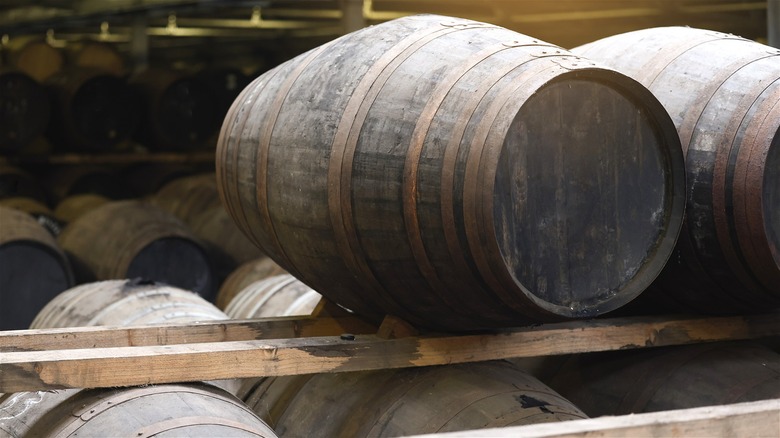
The quality of whisky partly depends on the vessel in which it was aged. Many of the flavors that a Scotch develops during this process come from being kept in wooded casks that contained other beverages or even foods in the past. One particularly notorious example is Fishky, which was aged in a cask that previously stored herring. The spirit tasted of vomit and grease, according to WhiskyCast.
The origin of the wood also makes a difference. American oak barrels, for example, tend to yield sweeter flavors and notes of vanilla because of certain flavor compounds in the wood. European oak barrels tend to impart more layers of spice and nuttiness to the Scotch, which you'll notice in some whiskies from distilleries like Dalmore and Kavalan. Some Scotch whiskies, like Chivas Regal Mizunara, even use a rare Japanese oak during aging to give the spirit notes of coconut and incense.
How a barrel is treated prior to aging also has a significant effect. The wood can be either toasted or charred; the former gives the spirit a caramelly sweetness, while the latter builds on a whisky's smoothness and smokiness. Many distilleries age their Scotch in casks that were used in the production of spirits, like sherry and bourbon, because their wood tends to give whisky other favorable nuances in flavor and aroma.
Can bottle-aging improve Scotch?
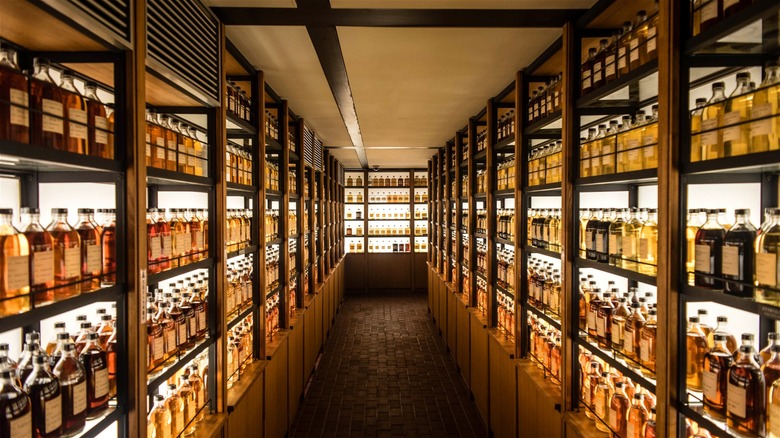
It's widely accepted that whisky stops aging once it's bottled because a proper seal won't allow the liquor to oxidize, and because glass doesn't react like wooden casks do. In a 2022 interview with VinePair, master sommelier David Keck explained that the high alcohol content also tends to arrest any chemical reactions associated with aging.
This, however, is a notion that tends to be challenged by a good number of folks. Some experts believe that bottles are hardly ever 100% airtight, and air can still flow in and out through pores and small cracks in the seal even if the most common whisky storage mistakes are avoided. This causes oxygen to enter the bottle and the Scotch's volatile compounds to escape, which transforms its qualities — albeit at an incredibly slow pace.
A respected voice in the Scotch community has argued that bottle aging does occur, but there's some nuance to the matter. In a 2025 column on Whisky Fun, whisky expert Angus McRaild acknowledged that people can taste changes both good and bad after bottle-aging Scotch for years. However, these experiences could simply be the result of our senses or memories of the whisky changing over time. Due to a lack of reputable scientific studies on the phenomenon, we can't be completely certain about bottle-aging Scotch. The best thing you can do, really, is enjoy it as-is. Every Scotch is bottled at its specific age for a reason.