

8 Disadvantages Of Using Gas Ovens
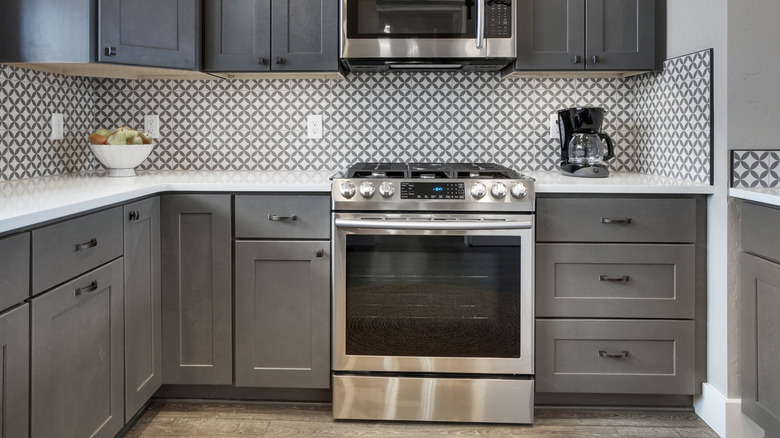
Some people swear by gas stoves and ovens, especially because these appliances tend to preheat faster and allow more flexibility on the cooktop side of things. But the oven itself is not without flaws and can create issues you may not have considered. To some state legislators, these disadvantages are so great, that some have pursued bans on installing gas stoves and ovens in new buildings and homes in an attempt to alleviate some of the risks. For instance, New York has passed a ban on gas stoves in buildings more than seven stories high while Montgomery County in Maryland has a gas ban for new home construction. California, Colorado, and Massachusetts are also considering gas bans as well.
If you're thinking about buying a new oven, or you're having a new home built where you're picking out appliances, it may be worth researching some of the disadvantages of owning a gas oven versus owning an electric oven. From safety concerns to challenges with baking and cooking, you need to know what you may be up against. Likewise, if you already have a gas oven, it can be helpful to know what these disadvantages are and what you can do to mitigate them. Here are eight of the most common disadvantages of using a gas oven that you need to be aware of.
Gas ovens produce indoor pollutants
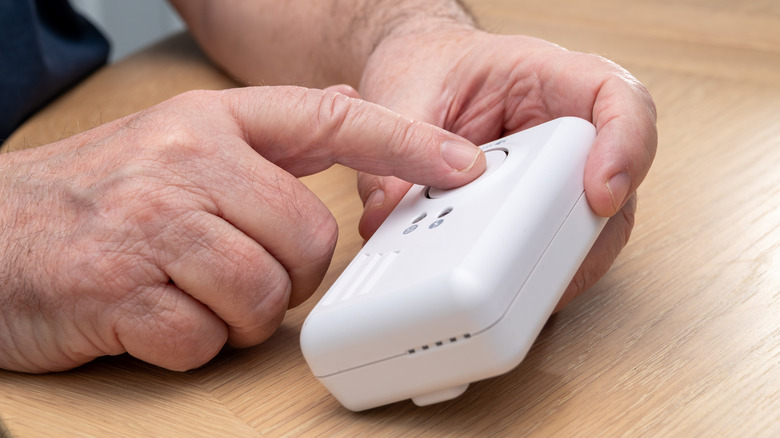
When it comes to gas ovens, perhaps the biggest disadvantage is the potential that you and your family could inhale indoor pollutants. Not only does a gas oven release gases and particles when you're cooking but it can even pollute the air inside your home when the stove is turned off. One study published in Environmental Science & Technology in 2022 found that a gas stove can leak as much benzene as secondhand cigarette smoke — even when it's not in use. Meanwhile, another study in the same publication found 21 air pollutants in unburned gas including hexane and toluene that may enter your home.
Your gas oven can also produce nitrogen dioxide, which irritates airways and can cause people with asthma to cough or have difficulty breathing. And, it's possible your oven could be releasing well more than what's safe. For instance, the Environmental Protection Agency (EPA) says the exposure shouldn't be more than 100 parts per billion (ppb) in one hour, and the World Health Organization has similar guidelines for indoors. But some experts suggest that when baking a cake, your gas oven could produce 230ppb, and roasting meat could produce 296ppb (via the Columbia Climate School).
If you're concerned about indoor pollutants when using your existing gas oven or stove, consider taking some precautions. Use an air purifier with carbon and high-efficiency particulate air (HEPA) filters to reduce particulate matter. Open windows when you're cooking or baking, and run a fan to keep the air in your home circulating. Avoid long roasting or baking times where possible, and choose electric cooking options like a pressure cooker, toaster oven, air fryer with baking capabilities, or use a slow cooker for flavorful meals when you can.
Gas ovens can lead to uneven baking and cooking
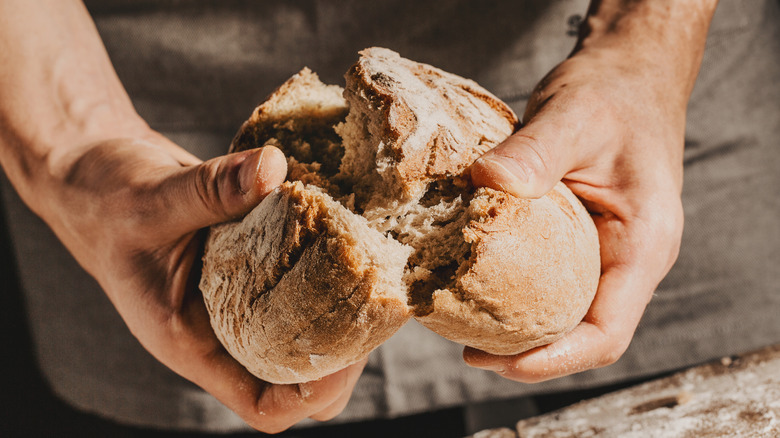
While gas ovens tend to preheat more quickly and produce a more moist heat — which are ideal for roasting meats and cooking casseroles— these appliances are less conducive to baking. In fact, gas ovens are less likely to distribute heat evenly and may even have hot spots. This can result in uneven baking, with parts of your dish becoming overcooked while other parts are undercooked. This characteristic can be a huge disadvantage if you primarily use your oven for baking cookies, cakes, cupcakes, pies, breads, and pastries. Even pizzas and flatbreads may not cook as well in a gas oven.
Part of this uneven cooking issue is caused by the fact that the heat from a gas oven comes from the bottom burner. This means parts of your dish will get a good amount of heat while others may not. You may also notice that your gas oven fluctuates in temperature and that you cannot fine tune the temperature as precisely as you can with an electric oven. All of this can lead to an inconsistent heat that negatively impacts your baked items, especially more delicate baked goods like cheese soufflés, homemade macarons, and other items requiring a precise baking process.
It may be harder to get things crispy
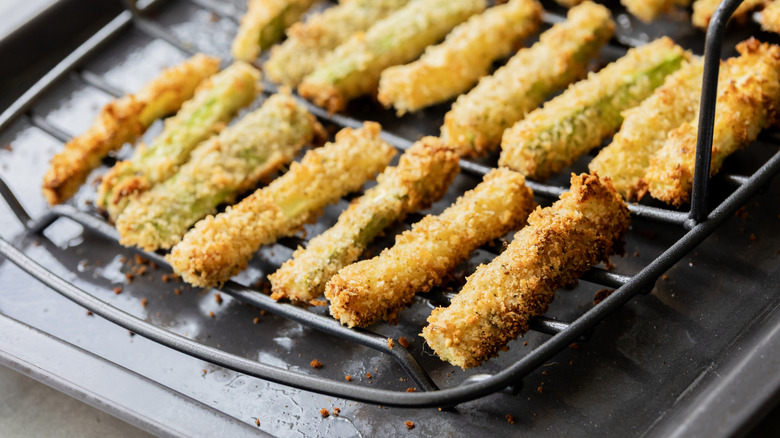
When you're cooking with gas, the combustion in the oven creates moisture or water vapor, which can prevent your fries, roasted potatoes, breaded items, and pizza edges from getting as crispy or as crunchy as you might like. This is because getting a food crispy requires a drier surface area than a gas oven sometimes allows for and ultimately makes it harder to develop a crunchy, brown exterior.
If you currently have a gas oven and want to increase the crunchiness or crispiness of your dish, some cooking experts suggest turning up the heat on your oven by about 25 degrees Fahrenheit. Of course, this means your cooking time will also change, so make sure you keep checking on your dish. The last thing you need is to cross over from crispy to burnt-to-a-crisp.
The position in your gas oven can also play a role in crispiness. For instance, if you want crispy pizzas or flaky pie crusts, try placing your dish in the lower third of the oven while a more delicate item like a dessert with a meringue top might do better in the top third, further away from the heat source.
Baked items may get burned on the bottom
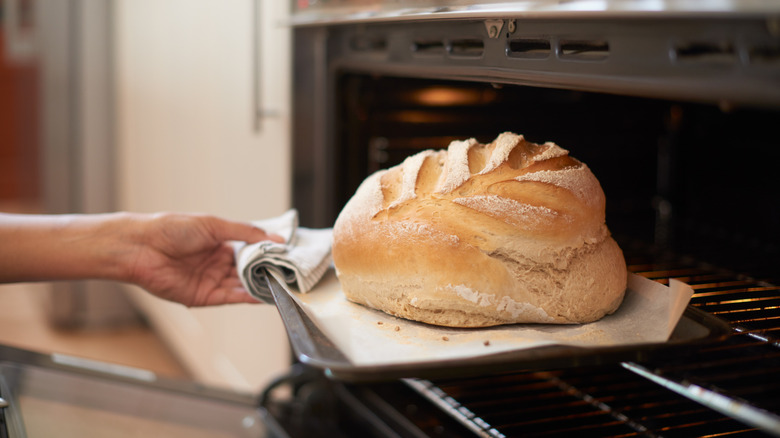
While gas ovens tend to be efficient, these appliances can also be unwieldy when it comes to baking in them — and if you're not careful, the bottoms of your cakes, cookies, and pies may become burned long before the dish is cooked through or the top has properly browned. A lot of this risk has to do the intense gas heat source on the bottom of the oven. Fortunately, though, recognizing this in advance can allow you to take some much needed steps to keep from burning the bottoms of your dishes.
First, make a point to rotate your dishes and trays during the cooking process. For instance, when baking casseroles, cakes, muffins, and breads, try rotating them about 90 degrees midway through your cooking process. Or, if you have multiple items in the oven, switch the top tray and the bottom tray, so that one doesn't spend all of the baking time closest to the heat source. You could also stack two trays when baking instead of just using one.
You can also use a pizza stone or a baking stone to hack your oven and create more radiant heat inside. Simply, place the cooking stone on the rack above the heat source and then put your baked goods on the rack above that. This will promote more even cooking and reduce the risk of burning the bottom of your dish. And, finally, avoid using dark baking dishes in your gas oven which absorb heat faster. Instead, opt for glass, silicone, and light metals to reduce the likelihood of burning the bottom.
Gas ovens can be harder to clean at times
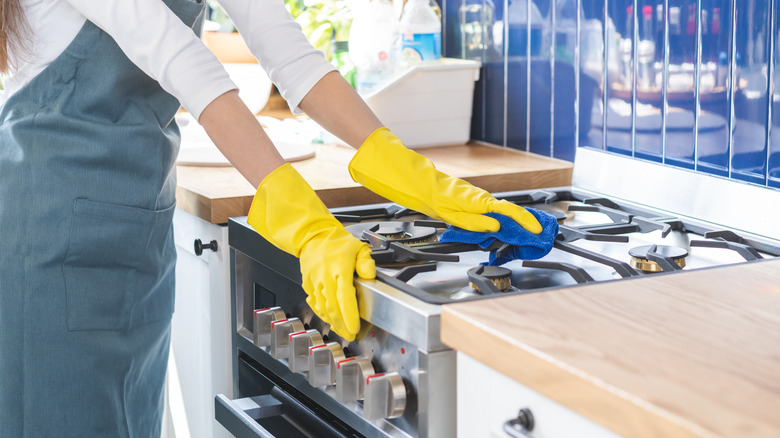
Cooking, baking, and roasting is fun. But the clean up afterwards is rarely enjoyable, especially if you have a gas oven. One of the major disadvantages of using a gas oven is how difficult it can be to clean. Not only does the high heat generated by gas cooking carbonize food spills, but it also can turn them into rock-hard deposits on your oven's surfaces. Overall, experts recommend cleaning a gas oven three to four times a year. Doing so not only keeps your oven looking nice, but it also keeps it operating safely and efficiently — and it keeps unsavory smells from developing.
As for the cooktop of your gas oven, it can be particularly challenging to clean this portion of your gas oven. Typically, gas stoves have a multitude of detachable parts to contend with. From grates and burner caps to the burner heads themselves, cleaning this type of appliance can be both time consuming and frustrating. Then, on top of that, you have to worry about electronic igniters and temperature sensors that can be damaged by using too much water or heavy cleaners. When cleaning these items, you need to be very careful not to damage anything. If the igniter is particularly dirty and a soft, dry cloth doesn't get rid of the debris, try using a can of compressed air.
Gas ovens may pose safety risks
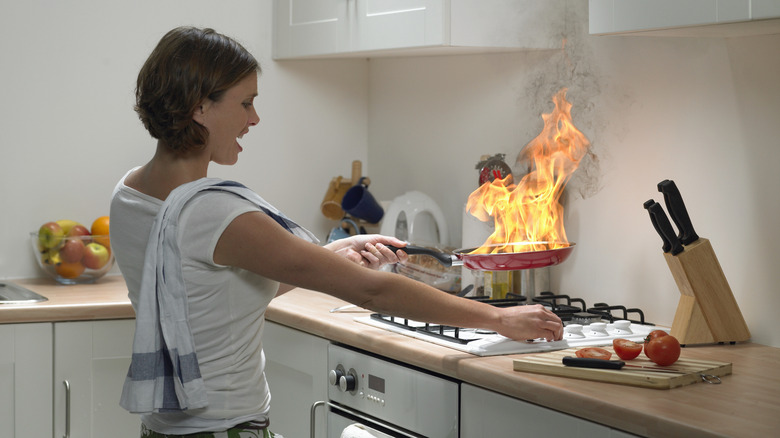
While gas ovens today tend to be much safer than they were years ago, there are still some safety risks with using them that don't necessarily exist with electric ovens. For instance, there's always a slight risk of a gas leak, especially if your appliance is old or not properly installed. And, if gas accumulates and is combined with a stray spark, it can trigger an explosion. So, if you smell that telltale rotten-egg smell in your home, you need to leave right away and call 911 to let them know you may have a gas leak.
There's also a higher risk of fires and burns, especially from the stovetop. After all, you have an open flame under your pot or inside your oven, which can easily catch food, clothing, and kitchen towels on fire if you're not careful. (This can also happen with an electric stove, but it takes much longer for something to catch on fire when there's not an open flame.) Regardless of which type of oven you have, you should always have a fire extinguisher in your kitchen in case of emergency. In the meantime, there are some signs your gas stove isn't functioning properly: The flame isn't blue and instead appears yellow; the igniter clicks without stopping; there's rust on the burner heads; your oven doesn't light when you click the igniter; or you suspect a gas leak or continue to smell rotten eggs even after the burner has been on a while.
Gas ovens are expensive to install
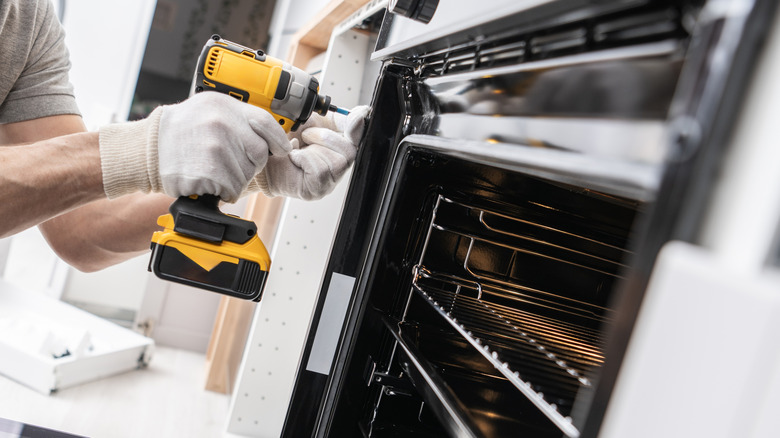
When you cook with a gas oven, it needs access to natural gas or propane, a gas line, and a 120V outlet for the igniter. Because of this more technical configuration, you're likely to pay much more to install it than you would if you purchased an electric oven. After all, an electric oven simply needs to be unboxed, set up, leveled, and plugged in.
Part of the expense with installing a gas oven includes hiring a professional technician trained in handling gas. This level of training naturally increases the installation price. Other factors that can boost the cost include installing the appropriate ventilation system, checking for leaks, running gas lines, and potentially even converting between propane and natural gas.
When it's all said and done, a gas oven installation can sometimes cost more than what you paid for the oven itself. If you already have a gas line and are just getting a replacement oven, your cost may not be as high. The only positive here is that once installed, gas is sometimes more budget-friendly than electric.
Gas ovens require extensive ventilation
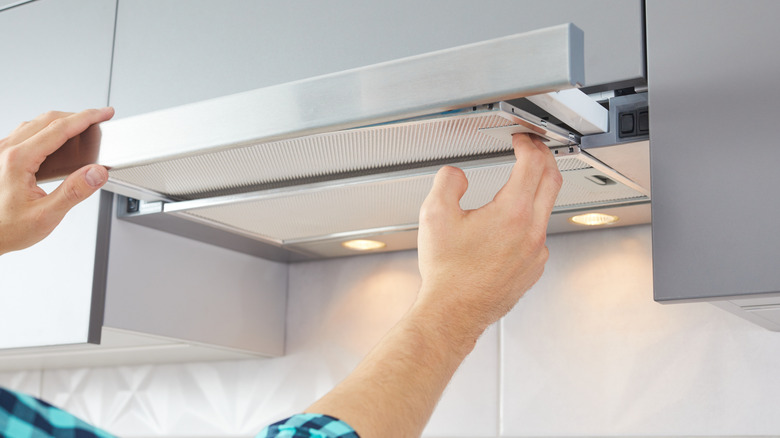
Because gas ovens and stovetops produce carbon monoxide, nitrogen dioxide, and formaldehyde, they typically need extensive ventilation outside of the house in order to reduce indoor air pollutants that can be harmful for you and your family. Plus, the appropriate amount of ventilation will also help get rid of lingering odors and extra moisture. And while opening a window, running a fan, and using an air purifier can help, most experts in gas oven installation indicate that to create the safest indoor environment, your mechanical vent should push the fumes and pollutants to the outside.
Gas ovens also require more powerful ventilation systems than electric ovens. For instance, some installers recommend using a high-CFM (cubic feet per minute) range hood, especially if you have an enclosed kitchen, cook frequently, or your home already has limited ventilation elsewhere. One way that people vent their gas ovens is by using range hoods that bring air up and blow it somewhere else. Others will use range hoods that recirculate the fumes, odors, and pollutants into the kitchen. But if you have a choice, choose an external vent. Recirculating hoods aren't as effective as those that exhaust the steam, smells, and pollutants outside.