

Can Store-Brand Olive Oil Really Beat The Big Names?
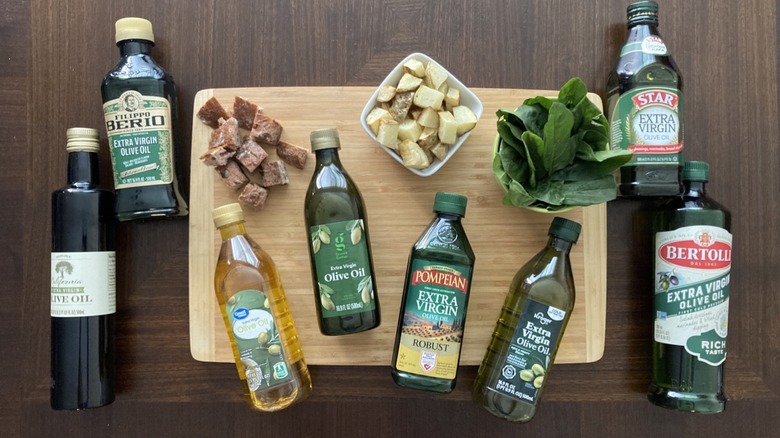
The quality of extra-virgin olive oil makes it a preferred ingredient for cooks who appreciate a balance of gourmet goodness and nutritional wholesomeness. Depending on the dish, you may think you've been using olive oil wrong, when really you've just chosen a sub-par product. While premium brands often come with a higher price tag, store-brand options offer relief, providing more modestly priced versions of extra-virgin olive oil that work within your budget. The savings are particularly worthwhile if the quality meets or exceeds that of its higher-priced competitors.
To get to the heart of the matter, I gathered a collection of extra-virgin olive oils for some tasty food science that would determine whether a store-brand bottle can top the big brands. Naturally, oils from particular chains may only be available in certain regions, so I picked stores with the furthest reach across the U.S. — including Kroger, Walmart, Target, and Trader Joe's — to serve as my store-brand samples. Then I zeroed in on national brands Bertolli, Star, Pompeian, and Filippo Berio and used their olive oils in a variety of ways to determine if the cheaper options can compare to these more prestigious labels. You can find out more about my methodology at the end. The results were a study in savory discovery, even for a frugal olive oil shopper like me.
8. Store-brand: Kroger
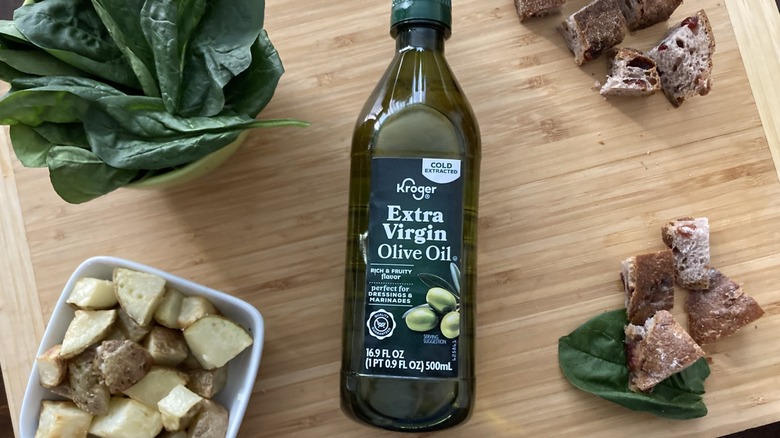
You can usually find a bottle of Kroger extra-virgin olive oil in my spice cabinet. It's readily available at all of the grocery chain's various banners, the price is pretty unbeatable, and the quality on its own has never let me down. Then again, I've never sampled it in concert with a slew of other olive oils, so there's always a chance I've just gotten used to its charms. And one of those charms is the low price (although arguably even a cheap bottle is a waste of money if the oil doesn't meet expectations). Of all the bottles on my counter, this was the one I wanted to learn about the most.
Boy, did I learn a lot — mostly that I've been fooling myself into thinking Kroger has decent olive oil. The bread test I did for this oil revealed a flavor so subtle that I had to redo it two more times to see if I could detect any stronger notes. Sadly, I could not. Similarly, my roasted potato pieces cooked with this oil might as well have been cooked in canola oil, for what little flavor it imparted. And with my spinach test, I couldn't taste anything but the leafy greens themselves, which left me wondering why I've been bothering with this store-brand olive oil at all. There are definitely good store-brand olive oils available, but Kroger isn't one of them. Lesson learned.
7. Big brand: Star
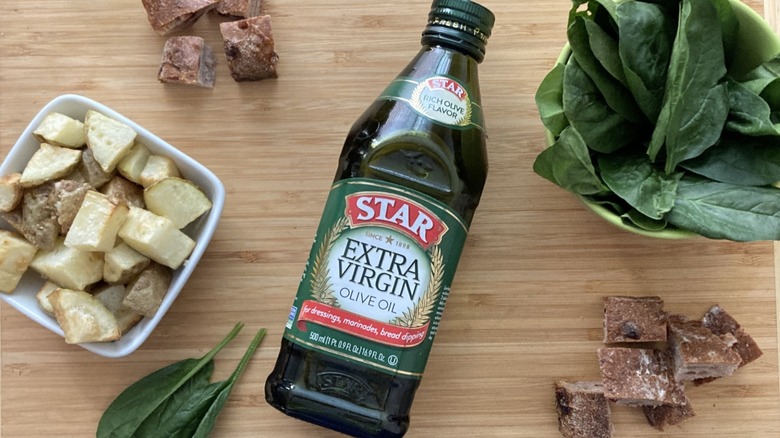
Star is one of my go-to extra-virgin olive oils, largely due to the company's use of glass bottles rather than plastic. This was a must-have on my national brand list, though, admittedly, my previous experience with olive oil hadn't been overly scrutinized. Usually, I just pour or drizzle it and add all my extras without getting too deep in the weeds. It was good to have the opportunity to test each oil and find out whether it performs as well as I expected, or whether it had drawbacks that made it a second-tier option.
The label on the Star bottle brags about a rich olive flavor, but during my bread test, all I could really taste was the bread, with a little earthy undertone. Likewise, when I tried it with potato, the most I could discern was a pleasant oily flavor that didn't really scream olives. A little more of its essence came through when I tried it with spinach, enough to tell me that this is a moderate oil with not a lot of magic to back it up. That's not exactly the profile you expect from a popular olive oil, but it's what I found with Star.
6. Big brand: Pompeian
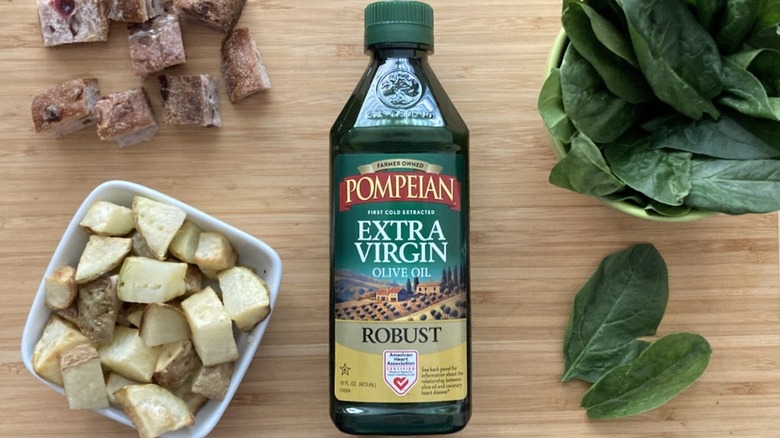
Pompeian extra-virgin olive oil is another olive oil that happens to go on sale pretty regularly at my local store, so I've given it a try in the past. It's always seemed a little generic, which I attribute to my inattentive nature. I know it did the job, but I've never given it the once-over to determine if it was the best use of my olive oil budget. This was a great chance to figure out if I should make future purchases or select a superior option, national or store-brand, as an economical go-to and leave Pompeian in the ashes.
This bottle bore the closest resemblance to actual olives during my bread test, more so than any of the other oils on the list. It was bright and earthy without being overwhelming. The roasted potato test proved that Pompeian can add a similar olive flavor to plain tubers to make them enjoyable without requiring a condiment or sauce.
As a salad dressing, Pompeian olive oil minded its manners and lent a subtle additional greenness to the spinach, suggesting it would be an ideal partner for a dressing with less acid and enhanced sweetness. While I wouldn't shell out extra money for a bottle like this, I'd definitely look for it on sale, especially among store brands that are similarly priced.
5. Big brand: Filippo Berio
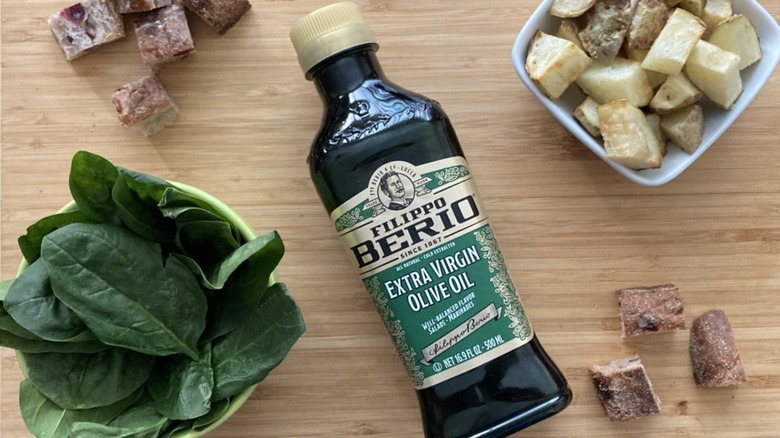
Filippo Berio extra virgin olive oil is a brand-new option for me. I've danced around it when shopping for olive oils, though it's one of the more moderately priced national names. Still, when you're facing all the bottles, and you know your shopping money has a limit, whatever temptation might arise to try a fancier pick disappears when you realize you have a cart to fill with more than just olive oil. I was happy to get the opportunity to see how it measured up.
I detected a delightful grassiness in this oil, most prominently noticed in my bread test. I found plenty of sharp bitterness and a peppery kick on the back of my tongue, too. All of that dimmed to a respectable subtlety with the potatoes I tried it on, which was a big relief; a bitter oil flavor applied to cooked starch sounds like an unpleasant deal. As far as the spinach test goes, there was a dirty element in this oil, indicating it would need a lot of extra add-ins to become more balanced. It may sound like a slam against Filippo Berio, but I think it actually indicates an olive oil with admirable depth.
If I found this one on sale, I would buy Filippo Berio again. But I wouldn't knock a reasonably priced store-label version off my shopping list in favor of it.
4. Big brand: Bertolli
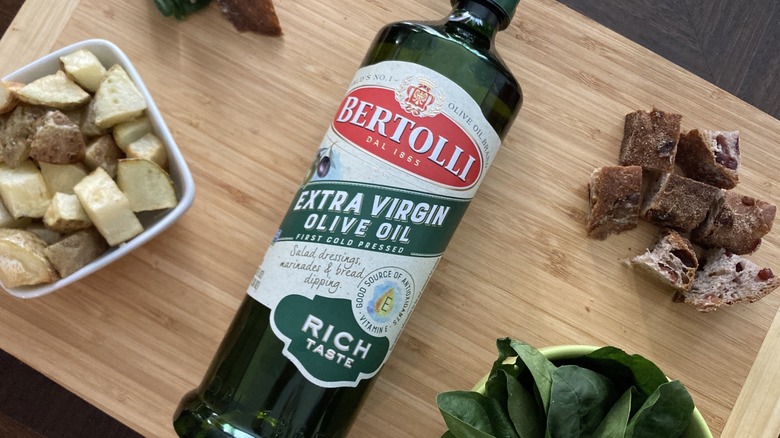
Bertolli extra virgin olive oil is a familiar name that's sure to put home cooks at ease when choosing olive oil. I haven't tried this one too many times, only because the price is a bit prohibitive when compared to the other brands on the shelves in my area. I'm always open to sampling a famous label to see what the fuss is about, so I relished the chance to get my taste buds wrapped around this Mediterranean nectar.
I quickly learned that "nectar" is the wrong word here. Bertolli has a significant bitterness that came through vibrantly during my bread test, which is admittedly a bit off-putting if you're not used to full-bore olive oil. The bite mellowed quite a bit during cooking for the potato test, resulting in a gentle umami flavoring of the basic potato cubes. Then it kicked up a notch when I tried it on spinach, though it also revealed more complexity.
As a cooking oil, Bertolli makes a tasty kitchen partner. In its raw form, it takes a little finessing and some time on the palate to keep the sharper elements from spoiling the fun.
3. Store-brand: Great Value
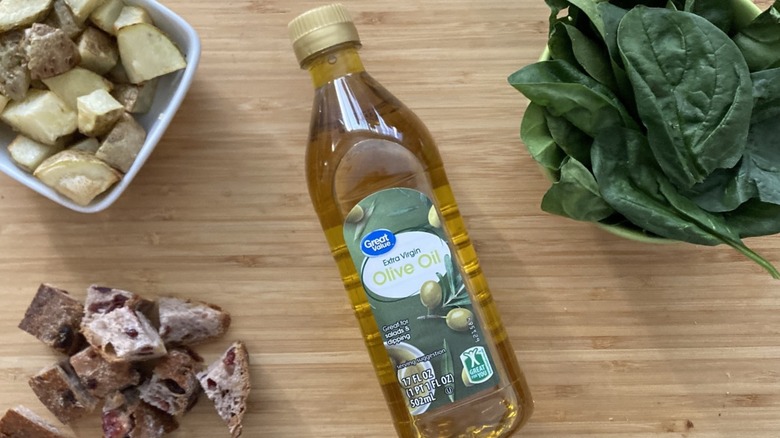
Walmart shoppers in search of an affordable olive oil are sure to gravitate toward Great Value extra virgin olive oil, even with all the more glorious bottles sitting higher on the shelves to woo them. A selection of sizes and organic or standard versions offers enough choices to satisfy, as long as you aren't too picky about your oil being pressed in a particular manner. There's nothing frou-frou or frilly about these bottles; they're the workaday version of olive oil, and if they come through with taste and consistency that at least match the bigger brands, there should be no reason not to toss a bottle into your cart.
In my bread test, I discovered that this oil has a light, fruity flavor that comes close to apples. When added to my roasted potatoes, it brought just a little bit of sweetness to the party, which was ideal. Fortunately, the fruitiness didn't come through too strongly in the spinach test, confirming the moderate body and flavor of this oil in all of my sampling. Overall, I'd have no problem incorporating Walmart's budget-friendly olive oil into my culinary collection.
2. Store-brand: Good & Gather
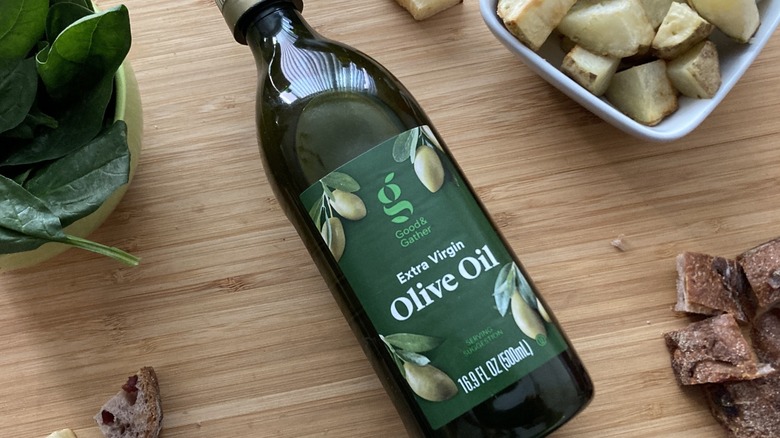
Target gives shoppers a more affordable option in the cooking aisle with its Good & Gather extra-virgin olive oil, a relief for home cooks looking to enhance their recipes with something other than vegetable oil. Target's signature brand has always been hit-or-miss for me, rolling out a spectacular version of a certain grocery staple that makes me think everything in the line is fantastic, then walloping me with a baked good that falls flat on its face. Armed with this knowledge, I was leery about how this taste test would play out. I'm happy to report the brand rose to the occasion this time.
As a bread dipper, Good & Gather has a bitter bite, an indicator that the olive oil is showing off its gourmet assets. For the potato test, I found that this oil applied a well-apportioned earthiness that didn't compete with the potato itself but enhanced it beautifully. And in the spinach test, that gourmet bitter bite gave an interesting complexity that would be great in a sophisticated salad with upscale toppings. Good & Gather may not always hit the mark with its products, but this olive oil is one that the company gets absolutely right.
1. Store-brand: Trader Joe's
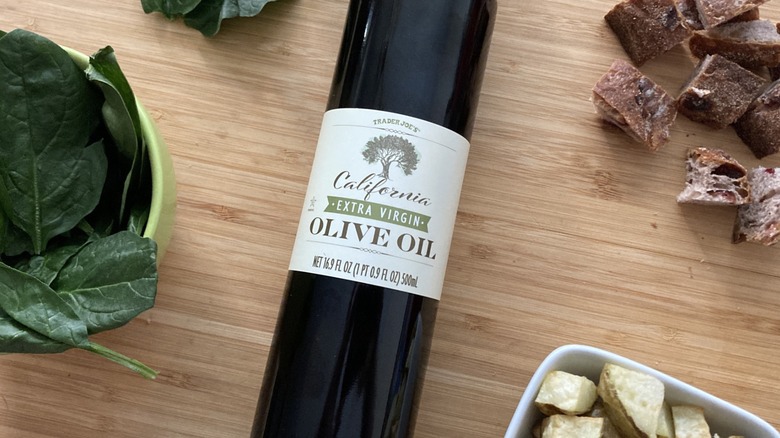
Trader Joe's always offers an array of sizes, flavors, and prices to give customers all the choices they could possibly want, and the California extra-virgin olive oil is no exception. Even if it's the store's own name on the bottle, the attention to variety more than compensates for a chain that doesn't really deal in many national brands. I've sampled and ranked Trader Joe's oils in the past and was impressed by the variants I tried. But I've never had the California version, so I was eager to see how it stacked up against other store brands as well as the national producers.
It turns out this bottle is a winner. It has a perky tanginess among its tasting notes, which I noticed distinctly while sampling my bread. It flavored my roasted potatoes so subtly that I could've sworn it wasn't there at all — a big bonus for anyone switching to sweet potatoes, where the tuber's flavor is the star of the show rather than the oil it's cooked in. The extremely well-executed sweet-versus-earthy balance also showed up in the spinach test. Trader Joe's presents a premium oil here, one that would be an exceptional drizzle or dressing, even if served without any other enhancements.
Verdict: You can find store-brand olive oil that's even better than the national brands if you know where to shop
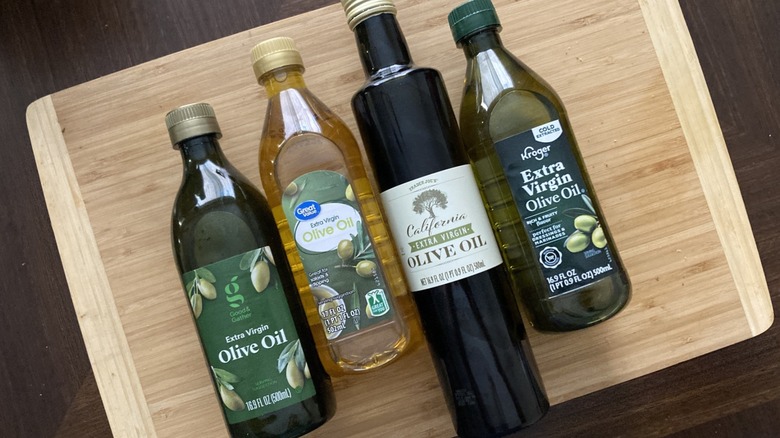
What a relief to discover that olive oil wearing grocery store labels can shine just as brightly as the more expensive bottles with which they compete. Anyone with a local Trader Joe's can rest assured that they can get prime olive oil at a discount without having to toss enjoyment out the window. And if you have a Target in your area, Good & Gather will give you just as much satisfaction as Bertolli or Star would. Whether you shop sales and coupons or stick with store-name selections to keep your grocery spending under control, you have options in both arenas that will fit the bill.
As with most products that exist in both store and bigger-name brands, your taste will dictate what you believe are the best and worst olive oils for your money. This is especially true with olive oil, where tasting notes vary almost as much as price and quantity. My preference is almost always for a less costly bottle, since I give oil a modest role in my cooking. But having laid these store-brand olive oils side-by-side with the bigger names that boast about their higher quality and slap a price sticker on the shelf that seems to agree, I'm satisfied knowing I can find cheaper options that are just as good, even if my standard Kroger bottle isn't the one for the job.
How I tasted and gauged these olive oils
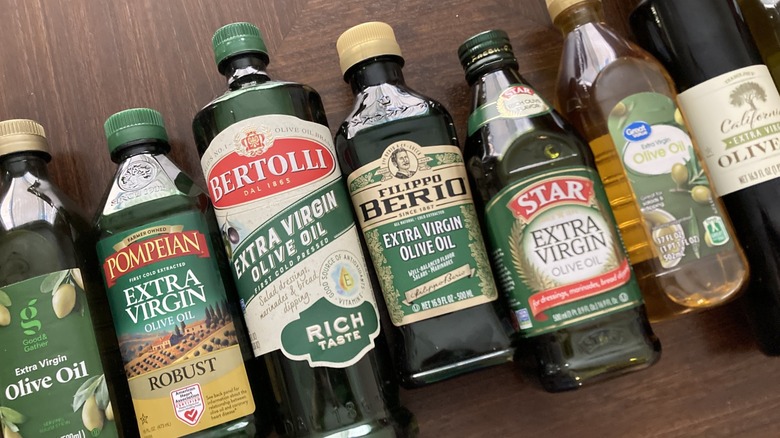
To sample the oils in their most common uses, I arranged a taste test of roasted potatoes, cubed and air-fried in each oil until crispy on the outside and tender on the inside. For an olive oil-based salad format, I tried a simple spinach salad with a drizzle of oil and a pinch of sea salt. And for dipping, I spread a little on a plate and dipped strips of crusty bread. This gave me the plainest picture of how each oil stood up in each scenario, without extra adornment or seasoning that could skew the flavors and textures.
I gauged each oil for the smoothness of its flavors. Though fresh olive oil is somewhat bitter by nature, most home cooks are used to a more mellow version of that tasting note in their olive oil selections. I noted the various aspects that made each oil unique: greenness or grassiness, peppery sharpness, tartness or bitterness, and fruit-forward sweetness. Most of my selections presented one or another of these aspects, though a few combined greenness or bitterness with a pepper-like heat as a closing note. Since both the store brands and the bigger names shared these qualities, I was able to affirm that store-brand olive oils can be as tasty and useful as the national brands, though not all are of equal quality during regular use.