

11 Mistakes People Make When Choosing Stout Beer
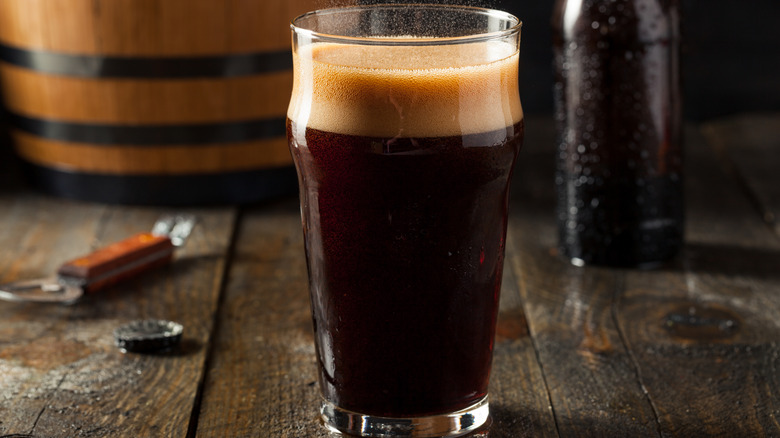
Stout can be a tricky beer for newbies to get into. It doesn't initially seem as approachable as lager or IPA, which can leave buyers confused over what to look for in a brew and how to pick one they'll like. But, once people learn how to pick a good stout beer and the missteps to avoid, this all becomes much simpler.
As a former bartender and all-round beer fan, I have my own views about what people should consider when selecting stout. However, I wanted to get some additional expert opinions to help readers out. I spoke with Fish Scales, co-founder of Atlantucky Brewing; Tom Nielsen, director of brewery operations at Emberside Brewery; and Juan Castillo, brewmaster at Dreams Cap Cana Resort & Spa. Thanks to their extensive beer and brewing experience, they were able to shed some light on where people often go wrong with stout.
One of the big things about stout is that it can vary wildly from one style to the next, so just because you love one bottle, it doesn't mean another will go down as easily. And, if you're not yet well-versed in this style of brew, you might end up being put off when you pick up a handful of options you don't like, believing you're just not that into it after all. However, once you learn more about the mistakes people make when choosing stout, you'll know what to look out for and what to avoid.
Believing stout begins and ends with Guinness
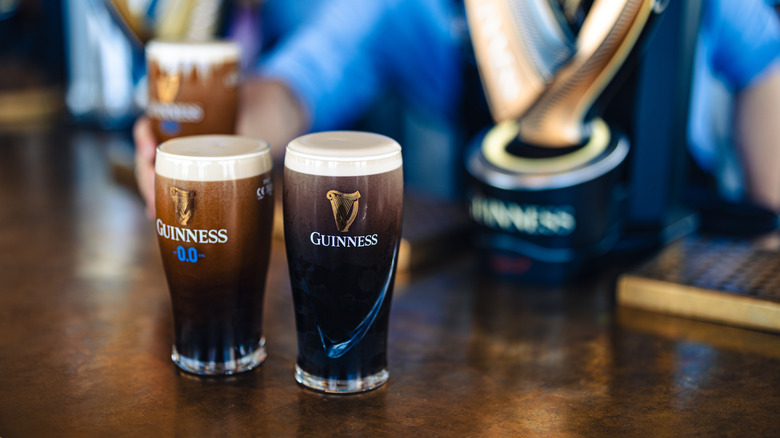
When you mention stout, many people will think of Guinness and not much else. However, it's a mistake not to expand your horizons. Nobody's denying that Guinness is iconic and has a cultural legacy that's impossible to ignore, but it's still a mass-market beer made by a huge macrobrewery. If you think that it's the beginning and end of stout, it's like believing Bud is the only lager worth trying.
Beyond Guinness, there are some brilliant Irish stouts to try. "In the traditional Irish Dry Stout category, Murphy's is another great option," Tom Nielsen tells us. "Cans of Murphy's have a widget of nitrogen gas inside that produces the creamy draft pour that one would get from Guinness served at the bar," he adds.
As a stout fan, I'll drink Guinness if it's the only dark beer at the bar, but it's not my favorite. It's a lot lighter and on the watery side compared to some other stouts, and while there's a lot of personal preference involved in choosing beer, it's far from the first stout I'd recommend if someone told me they wanted to get into the style. So, if you've tried Guinness and didn't love it, you shouldn't assume you're just not a stout fan. Or, if you enjoy Guinness and think there's no reason to branch out, you might want to reconsider that.
Not realizing how many types of stout exist
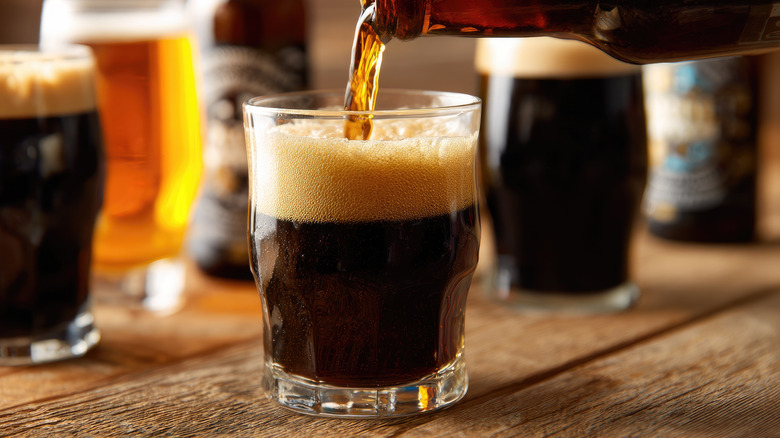
If you walk into a liquor store or bottle shop thinking stout is stout and it will be easy to pick between the options, you're in for a surprise. It's among the most popular dark beers and there are so many substyles that have developed over the centuries that it has existed. If you don't realize how many types of stout exist, you run the risk of picking one up that you don't especially like.
Irish dry stouts (sometimes just called dry stouts) are among the most common options. This is what Guinness is. This style often sits around 4% to 5% ABV, and has a smooth, coffee-like finish from the roasted barley contained in it, Tom Nielsen tells us. "It's far easier drinking than the color suggests," he adds. Imperial stout is another common style that's on the other end of the richness and sweetness scale from dry versions. These are "typically 9% ABV and up, showcasing dark fruit, molasses, licorice and warmth," says Nielsen.
Then there are sweet stouts or milk stouts that are brewed with lactose, a milk sugar that isn't fermented by brewer's yeast, so it stays in the beer giving it more sweetness and a rounder body. "Akin to chocolate milk for adults," Nielsen remarks. Oatmeal stouts also have a smoother, creamier finish but without the extra sweetness.
Other styles include American stouts, which have a high level of roast plus bitterness from the hops; sweet pastry stouts; foreign extra stout, which has a higher ABV than dry stout; and fruited stouts. Now it's clear why you need to know a little about styles of stouts before you attempt to choose one.
Always expecting a heavy finish

If you steer clear of drinking stout too regularly because you think of it as heavy, you might be in for a surprise. While all beers are hard to drink a lot of because of their sheer volume, stout isn't inherently super-heavy, although it can depend on the style. A lighter finish can be a good thing, if you want something chuggable, but it can also leave you disappointed if you'd prefer a richer beer, so it's good to know what to expect from whatever you're buying.
"People often expect a much heavier tasting beverage due to the dark color of stout," Tom Nielsen says. "In fact, a dry stout drinks lighter than many lagers," he adds. Irish stouts or dry stouts aren't especially thick and creamy, nor do they have intense chocolate or dark fruit flavors. While some people think of stouts as exclusively winter or fall beers, Nielsen disagrees. "It is a perfectly good beer to drink in all seasons, not just the cooler months of the year," he says.
Fish Scales agrees that people often erroneously believe all stouts are heavy. "I look forward to going to Ireland one day and hanging out in a pub where drinking dry stouts can be a normal, refreshing beer experience instead of something you only have in a bottle share," he says. If you're looking for a rich stout, however, they are out there. Strong imperial stouts, milk stouts, and pastry stouts tend to be heavier and something you might sip in smaller amounts.
Ignoring the tasting notes on the bottle or can

If you're faced with a sea of beers in your local bottle shop and you don't know where to start, there's an obvious solution: pick up some cans and start reading them. "Beer producers are usually really good at describing the notes they're going for," says Fish Scales. So, if you ignore the tasting notes on the bottle or can, you're missing out on a simple way to discover what the beer inside tastes like.
"Oatmeal is also a common word when it comes to stouts, which gives the beer a nice, soft, creamy and sometimes nutty flavor," Scales notes. "The darkness of a stout comes from the roasted or dark grains, which definitely comes through in the beer," he adds. And, while hops are a big part of stout, he explains that the roasty notes are more prominent, which is good news for those who aren't into classically hoppy beer.
"You can find notes of coffee, cocoa, dark chocolate, toasted bread, caramel, nuts, and even dark fruit," Juan Castillo tells us. And, alongside any tasting notes on the package, the style, ABV, and any ingredients added offer clues as to the flavor. "If it says dry stout, expect something drier and roastier; if it says milk stout, it will probably be sweeter and creamier; if it says imperial, expect something more intense," Castillo remarks.
Not trying stouts from craft breweries
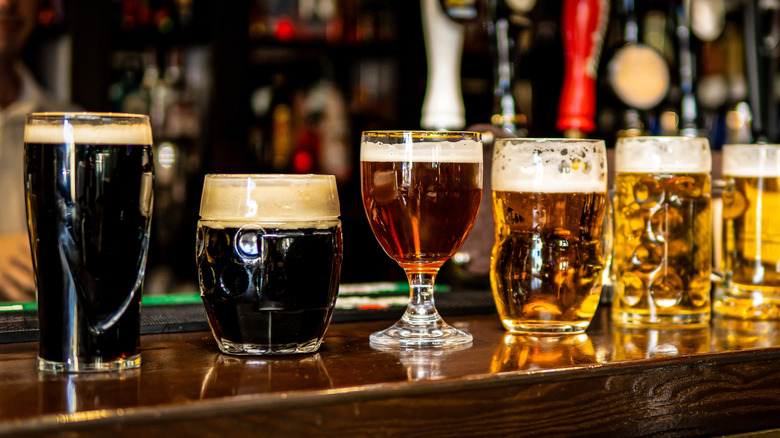
Whether you're trying to order beer at a bar like a pro or you want to pick up some cans or bottles to drink at home, one of the biggest mistakes is not trying stouts from craft breweries. If you only shop for beer at a supermarket or you stick to big brand names that you know, you're missing out on a whole world of excellent beer.
Many craft breweries across the nation make brilliant stouts. "The first that comes to mind is Deschutes Brewing Obsidian Stout," says Tom Nielsen. It's brewed in Bend, Oregon, and is known for its balance and consistency. However, Nielsen notes that many brewpubs and taprooms have great stouts on offer and trying them out and about is a brilliant way to sample them.
"I recommend ordering a flight and finishing the flight with the darker beers," Nielsen suggests. "Then taking home a mixed case of beers, including a couple of stout cans to further try at home," he adds, noting that this is a good way to get familiar with a wide range of stouts. If you don't have a local brewery, try heading to a specialist bottle shop rather than a chain liquor store, as this is likely to have a wider selection of craft stouts.
Failing to consider the difference barrel aging makes
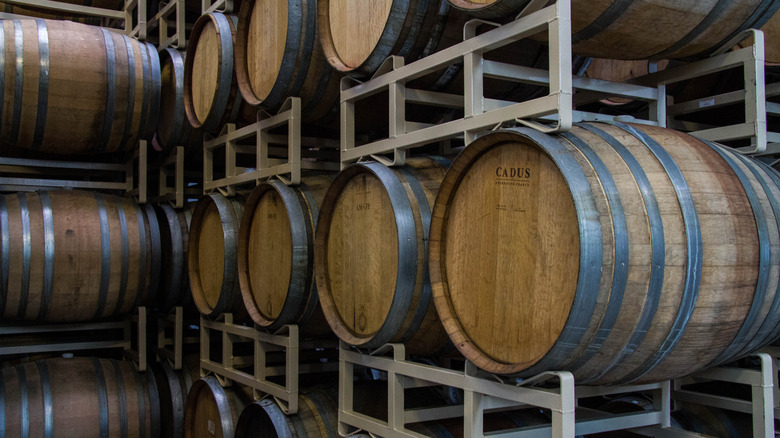
Before you buy your next stout, it's a good idea to get familiar with the difference barrel aging makes. If you make the error of not considering its impact, you might end up with a beer you're not a fan of, or perhaps you'll miss out on something you love. It's a simple process by which the stout is left in whisky barrels to age, but it makes a big difference to the flavour.
Imperial stout is often aged in bourbon barrels. "New charred oak barrels are only used once by bourbon distilleries, making them widely available to breweries for barrel aging," Tom Nielsen tells us. An imperial stout might already have 9% to 12% alcohol, and will pick up another 2% to 3% as it ages. It's often aged between 12 to 36 months, though this varies.
"During this time alcohol is extracted from the barrel, along with oak character (vanilla, caramel, toasted coconut and some tannic structure)," explains Nielsen. "As beer ages in the barrel, some oxygen is incorporated in the liquid, softening the flavor profile with richer, sherry-like, dried fruit notes," he adds. These kinds of stouts are usually served as small pours due to the high alcohol content. "I currently have a beautiful imperial stout aging in Eagle Rare bourbon barrels that we will serve at Emberside starting Fall 2027," Nielsen remarks.
"It's definitely a practice of patience because it gets better the longer you let the beer sit in the barrel," says Fish Scales. "Our last stout sat for 10 months, and it was great, but I can definitely see how waiting longer only helps add more layers of flavor to the beer," he adds.
Assuming nitro means better
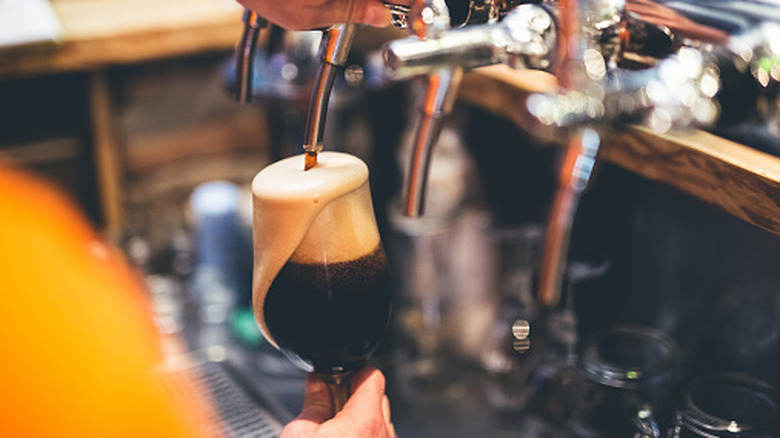
You might have heard the term nitro stout. This is a stout that's been infused with nitrogen rather than being carbonated entirely with carbon dioxide The nitrogen creates smaller bubbles, so the beer is creamier and smoother with a particularly thick head. It's a notable difference, but it's a mistake to assume nitro stouts are straight-up better.
"Many stouts, like Guinness or Sierra Nevada Knightro, are poured with nitrogen gas instead of CO2 gas," explains Tom Nielsen. "This method of pouring draft beer creates a highly desirable dense, creamy texture made of tiny nitrogen bubbles beloved by Guinness drinkers worldwide," he adds, describing it as the gold standard for dry stouts worldwide.
But, nitro isn't necessarily better. If you like smooth, creamy, mellow stouts, it can be fantastic. The nitrogen gives stout a creaminess and a softness on the palate, plus it can temper some of the roastiness and bitterness that some stouts have. But if you're looking for a stout with more pronounced roasted coffee and chocolate notes with a healthy bitterness to offset them, a traditionally carbonated stout can turn out a better option.
Thinking the ABV won't make a difference to the flavor
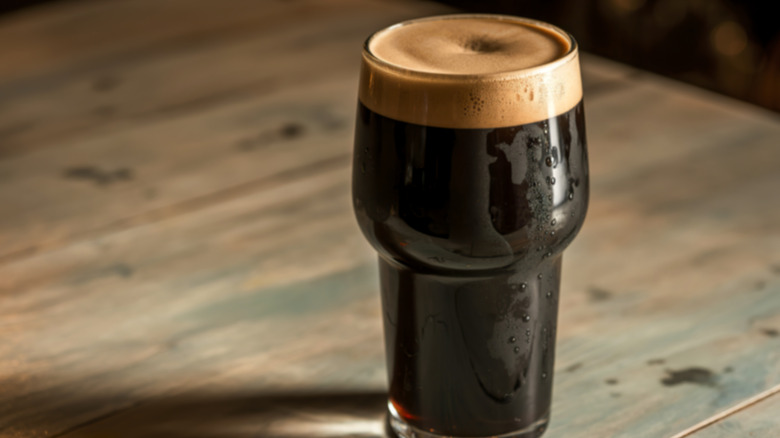
You might think that looking at the alcohol content, or ABV, of a stout won't tell you anything other than how drunk it's going to get you. But, actually, looking at the alcohol content can be a quick way of learning a bit about how the beer might taste. If I'm in a hurry or not feeling too fussy, I'll often use the ABV of a stout as a quick and dirty indicator of how much I might like it (for my tastes, stronger is usually better).
"Sometimes when the ABV is really high, the beer can have a slight molasses or raisin taste, in my opinion," Fish Scales notes. "That can come from the higher alcohol production you get from dark crystal malts and adjunct sugars," he adds, noting that at his brewery, they sometimes compare very thick, high ABV stout to motor oil.
"A stout at 4% to 5% ABV will typically be lighter and easier to drink," says Juan Castillo. "As you move up to 8%, 10%, or 12%, you will generally find more body, sweetness, intensity, and noticeable alcohol warmth." So, if you're looking for something fairly crushable and refreshing (for a stout), a low ABV is where it's at. Higher alcohol content is usually a sign of a sweet, syrupy stout that's very much a sipper, not a chugger.
Not considering balance

One word came up from every expert I spoke with: balance. A well-balanced stout is a good one, whatever the style. However, many people don't even take this into consideration when choosing a stout.
"Like most beer styles, balance is key," Tom Nielsen remarks. Stout is all about those big, intense flavors of roasted barley and dark malts that give flavors such as toasted bread, coffee, and chocolate. "If not in balance with the sweetness and bitterness of the beer, too much roasted grain can turn acrid and ashy," says Nielsen. "The best stouts, whether a 4% dry stout to a 12% imperial stout, have the roast, body, carbonation, sweetness and bitterness all pulling in one direction."
The fact is that, although stouts are robust beers, this doesn't have to make them over the top. "The roasted character, body, bitterness, and any sweetness should work together," Juan Castillo explains. "A stout can be intense without feeling heavy or overly sweet," he adds.
Of course, it can be difficult to tell which stouts will be well-balanced just by looking at them in a bar or bottle shop. It never hurts to ask for recommendations. Otherwise, a quick bit of online research can help get you the answers you need.
Judging all stouts from one experience
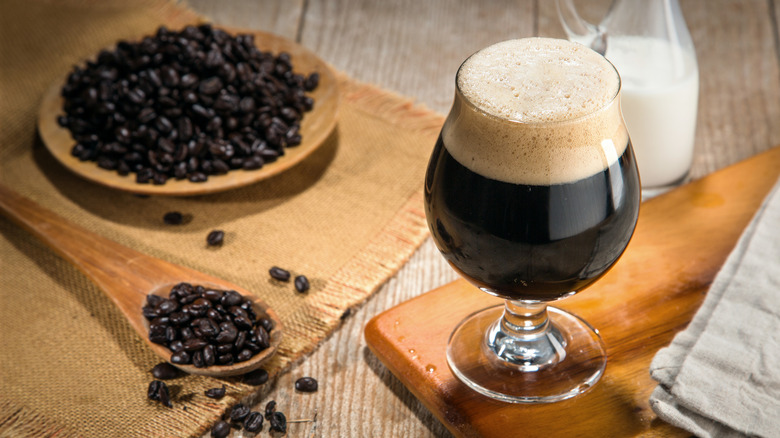
I've met a lot of people who say they don't like stout, citing that it's too heavy, too bitter, or too intense. But, on chatting about it further, it often transpires that they've only ever tried Guinness or their first experience was with an elaborate pastry stout. The trouble with insisting that you don't like this style of beer based on one experience is that there's a huge amount of variety. It's like saying you hate all lager when you've only ever tried Coors Light.
"Do not judge the entire category by a single stout," advises Juan Castillo. "Try several styles, pay attention to the flavors you enjoy, and go from there," he adds. If you've had a bad experience, try to remember which stout you tried and pick something different.
If you've only ever had dry Irish stout, try an imperial for a wholly different experience. Or, if you've had stouts that felt extremely rich and heavy, maybe Murphy's is exactly what you're looking for. "There is much more variety within stouts than you might expect at first glance," Castillo remarks.
Being intimidated by the options

Many people find stout unapproachable or intimidating, but it doesn't have to be this way. You can't help your initial reaction, but you can attempt to talk yourself around and spend some time discovering that stout isn't so scary after all. It opens up a new world of beer that's waiting for you to enjoy.
"Stouts can be overwhelming or intimidating for some people who are just venturing out to try new beers," says Fish Scales. "In the U.S., we grow up drinking lagers, and stouts are almost the opposite of that." There are big differences between lager and stout, so if you're a lager drinker who's new to dark beers, it's no surprise that it can seem overwhelming making your way into a whole new style of beer.
There are some differences that you have to get used to, so being curious and open to new things is key. "Ales are typically served warmer with ample foam, so don't expect a 'stadium pour' of ice-cold beer when ordering a stout," says Tom Nielsen. "Stout is really one of the most approachable and comforting beer styles," he remarks. You just need to be willing to meet it where it's at.
Plus, some styles of stout are more approachable than others. "There's nothing wrong with starting out with a Murphy's or a Guinness and learning to appreciate the drinkability of a good Irish stout," Scales notes. For many, this is a more drinkable entrypoint than strong imperial stouts. That said, if you're a fan of double IPAs or strong Belgian beers with dried fruit notes, you may find an imperial more approachable than a dry stout.