

11 Things You Need To Know Before Shopping At Aldi For The First Time
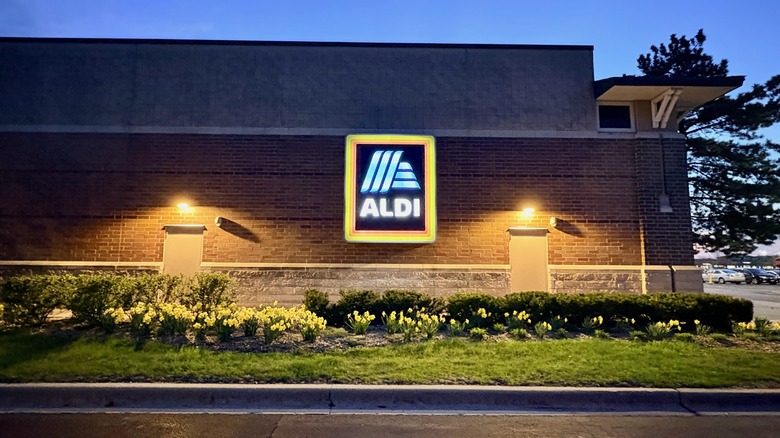
Some people don't like shopping at Aldi due to factors like its rotating stock selection, lack of name brands, and warehouse-style displays, so taking your first visit there might seem daunting. It is a different shopping experience from an average supermarket like Target or Walmart, but don't let that put you off. As an avid fan of the chain, I've thought about some of the things you need to know before shopping at Aldi for the first time that might help you arrive prepared.
There's nothing especially outlandish about Aldi, but things do work differently. If you head to your first Aldi trip with no knowledge of its quirks, you might end up unable to get yourself a cart, baffled at the checkout process, and left to carry heavy groceries in paper bags. On the other hand, when you show up knowing what to expect, none of these idiosyncrasies will come as a surprise and you can waltz through the store like you've done it 100 times before.
These are the 11 things you need to know before your first time at Aldi. Some of them will help you navigate the eccentricities of the store, while others will help you figure out what kinds of products to look out for and which you might not find in Aldi at all. Once you've got the hang of this budget chain, you'll wonder what you were worried about in the first place.
1. You need a quarter if you want a cart
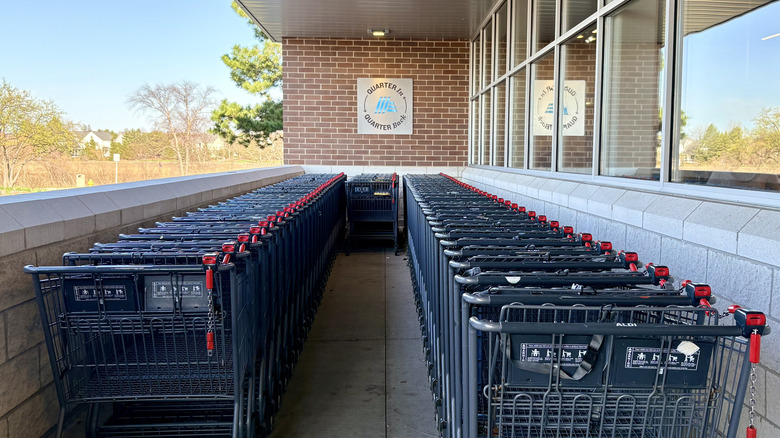
At most supermarkets, you rock up, grab a cart, use it, and then deposit it in the cart return zone closest to your car. However, like many things, this all works a little differently at Aldi. If you show up without a quarter, don't expect to be able to be able to use a cart.
At Aldi, all the carts are chained to one another in a line. You release the cart at the end of the line by putting a quarter in a slot located on the handle. When you're done shopping and have loaded up your car, you return the cart to the front of the store, lock it back up, and your quarter is returned. So, it doesn't cost you any money to use a cart, but if you don't have a quarter on you, there's no way of releasing one, which trips many people up on their first Aldi visit.
The reason behind this isn't to avoid theft (we're sure if someone really wanted a shopping cart, a quarter would be a small price to pay), but rather to keep costs down. Everything about Aldi is designed to be as efficient as possible so stores don't need as many members of staff, and that savings goes into offering cheaper food. And because people have to return their carts to get their coin back, there's no need for a member of staff to spend all day roaming the parking lot, wrangling shopping carts.
2. You'll mostly find Aldi brands which can be better than name brands
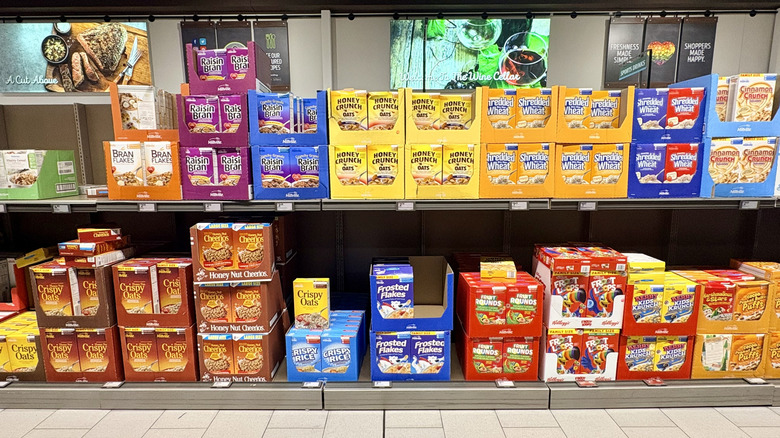
If you head to Aldi hoping to buy your favorite Kellogg's cereals or a case of Pepsi Max, you might leave disappointed. Aldi mostly sells its own brands, so don't expect to recognize anything on your first shopping trip.
The reason why you'll almost never see name brands at Aldi is a simple one: it's cheaper. Stores make much more profit on the private label products than on items from big name brands, so in order to offer the lowest possible prices to customers, Aldi sticks to selling its own products. The main exception is in the Aldi Finds section. This is a rotating selection of products and often contains a small number of brand name items, but nothing like the quantity you'd find in a regular supermarket.
This can be off-putting to shoppers who usually stick to big brands. It might leave you worrying the generic Aldi products won't live up to the brands they're trying to replace. However, the chain is known for quality, despite its low prices, and some Aldi brand products are even better than the originals.
Aldi has its own test kitchen where its private label products are tasted by experts and compared against name brands. Food has to pass these stringent checks to make it onto Aldi shelves, and the generic versions aren't always obvious in blind taste tests. So, missing out on branded products isn't something you should be too concerned about.
3. Aldi stores are smaller than average supermarkets
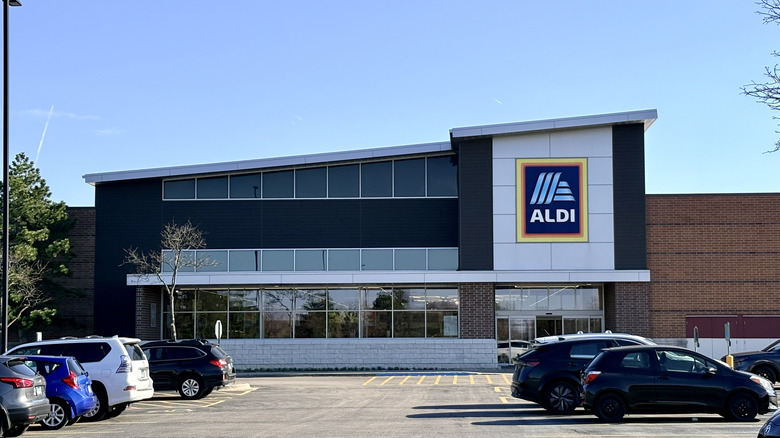
If you're used to shopping in mainstream supermarkets, Aldi might seem quite small by comparison. Even more so if you usually get your groceries from warehouse stores like Costco or Sam's Club. The downside to this is fewer products, but the plus is that you might not need as much time as usual for your shopping trip.
An average Aldi store is around 20,000 square feet, which is roughly half the size of a regular supermarket, meaning you might be surprised at how quickly you can whizz around and grab your groceries. These smaller stores also mean fewer products. You'll find roughly 2,000 separate products in an Aldi store compared to around 30,000 in a standard supermarket.
Since Aldi mostly sells its own brands, it makes sense that there are so many fewer products. Rather than having 10 brands of canned chopped tomatoes, there will only be one, so it doesn't necessarily mean there are fewer types of products, just that you get less choice for each item. Still, you may find some more niche or international ingredients that you could find in a large supermarket you might not get in your average Aldi. So, if you often buy specialty ingredients, this does mean you might need to factor in a supplementary shop elsewhere.
4. The displays aren't neat and polished
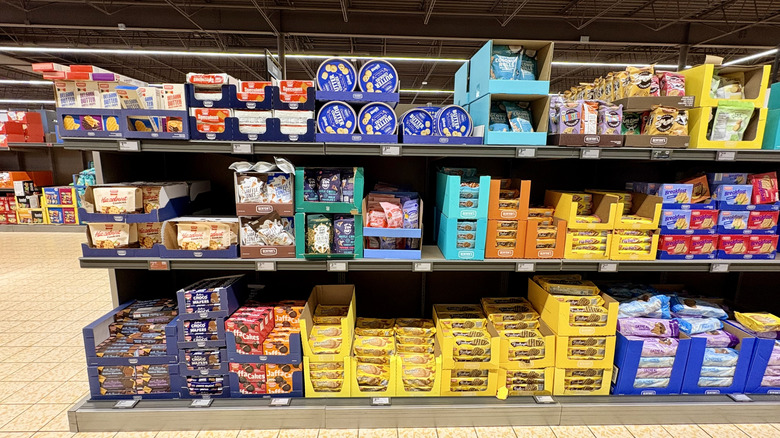
Supermarket displays are often varying degrees of attractive. At a store like Trader Joe's or Whole Foods you might get a particularly elaborate display, while an average supermarket will have neatly stacked shelves, even if they're nothing fancy. But, at Aldi, you shouldn't expect the displays to be polished or especially neat.
At most supermarkets, the products arrive in boxes and staff unpack these boxes onto the shelves, which is relatively time consuming. Always looking to streamline its processes, Aldi does things its own way. Aldi products come in boxes that double up as display units, so instead of unpacking boxes, employees simply put them on shelves and rip off a perforated top or front section so people can see and access them more easily.
It looks utilitarian rather than polished, but Aldi is about cheap groceries, not a curated experience. By displaying products in this way, the chain doesn't need to employ as many workers to stack shelves and refresh stock, which reduces its overheads and means it's able to offer food at the low prices it does.
5. Aldi is known for having a good range of organic foods
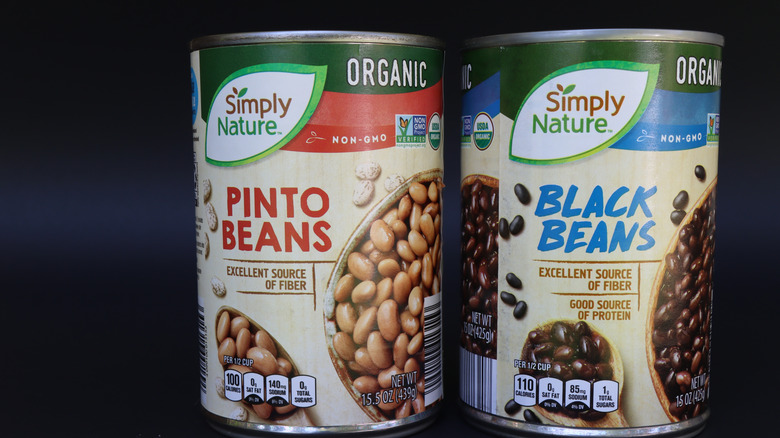
People who have never set foot in a store often make assumptions about the type of food you might find in an Aldi. It's cheap, so people often think that the food is basic and perhaps focuses on lower quality frozen or canned products over fresh produce or items often considered higher-end. So, folks are often surprised to learn that Aldi is known for having a good range of organic foods.
In addition to selected organic fresh produce, it also has a Simply Nature line of packaged products that are certified USDA organic. This includes products like nut butter, dried pasta, milk, granola, and snacks. This is all part of Aldi's food philosophy, whereby the chain pays attention to the ingredients and overall quality of products, making sure they're clearly labelled so customers can make their own decisions about the way they want to eat.
If you prefer avoiding pesticides, you should start getting your organic food from Aldi. Not only is it affordable compared to other stores, there's also a great range considering the smaller size of Aldi, and it tastes as good as you might hope.
6. The Aldi Finds section is unpredictable
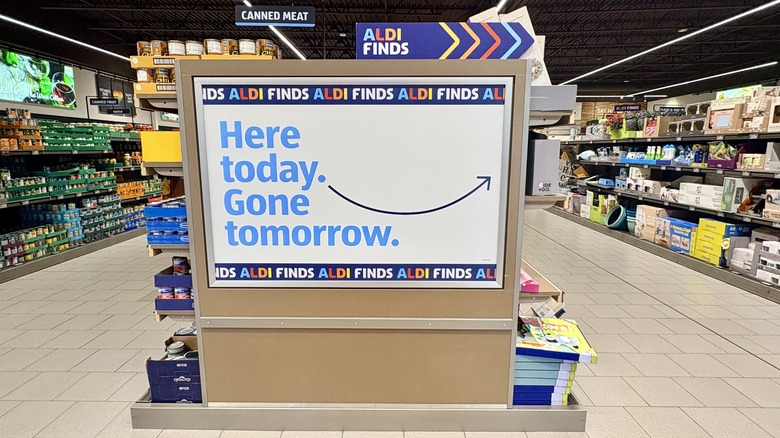
You may have heard of Aldi's Middle Aisle or Aisle of Shame as it's commonly known. Officially, this is called the Aldi Finds section, and is the spot where Aldi sells its limited edition items. This is all well and good, but it's worth knowing before you shop that Aldi Finds are unpredictable and you might not always be able to find what you're looking for.
The Aldi Finds section is an aisle or two roughly in the center of the store that contains a mix of seasonal and other special items. They can be anything from candles and toiletries to kids clothes and toys to kitchen goods and other homeware. It can also include food (sometimes from brand names). The best Aisle of Shame items are unlikely to still be there after a week or two. And some particularly popular or great value products can be gone within days.
If you head online, Aldi lists the current week's Aldi Finds, as well as the upcoming week's, noting when they will become available in store. If you notice something you think will sell quickly, it's best to get to an Aldi as quickly as possible, as there's no guarantee of stock, which can be disappointing. You can pick up some amazing Aldi Finds, but it is a toss up.
7. Aldi has great seasonal stock

If you're the type of shopper who wants pumpkin spice everything come October and spends the whole of December eating gingerbread and sipping peppermint hot chocolate, you'll love Aldi. As a new shopper, it's worth noting that Aldi has excellent seasonal items. In some cases, these are things like holiday decorations located in the Aldi Finds section, other times these are recurring seasonal specials, like the best fall pastries found in the bakery.
There's something special about a store where you can expect Christmas items from late fall onward, but equally can pick up beach balls and bargain sunscreen in the hotter months. And, on the topic of Christmas items, as a German supermarket, you can find festive products that are hard to get elsewhere, such as lebkuchen and stollen.
Although you might not always need seasonal items, it's good to know that Aldi has you covered when you do. And not knowing exactly what new treats you'll find each time you go there to do your groceries is all part of the fun.
8. There's no music in Aldi stores
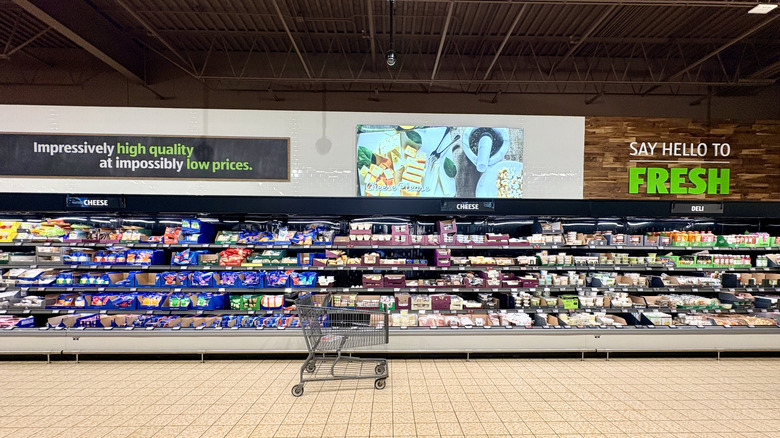
Aldi can seem eerily quiet, and it might take you a beat to notice why, but once you do, you'll either love it or hate it. There's no music in Aldi stores, whereas your average supermarket pumps out tunes from open until close. Some people love the peace that this brings, whereas others get bothered by the sounds of other shoppers without music.
There's a reason why Aldi doesn't play music in its stores, and it's not just because nobody could decide who would get control of the playlist. When music is played in stores, retailers have to pay a licensing fee. This is divided up and goes to artists whose music is played. However, you will have noticed a pattern by now: Aldi aims to save money wherever it can, and this is yet another way to spend less and keep costs down.
Interestingly, there's a psychology behind the music that's played in other grocery stores. By analyzing trends, experts have discovered which tracks encourage people to spend more and supermarkets tend to play music to encourage shoppers to be looser with their wallets. So, there's another benefit to shopping at Aldi: not being subconsciously manipulated by the choice of music.
9. Aldi doesn't take coupons
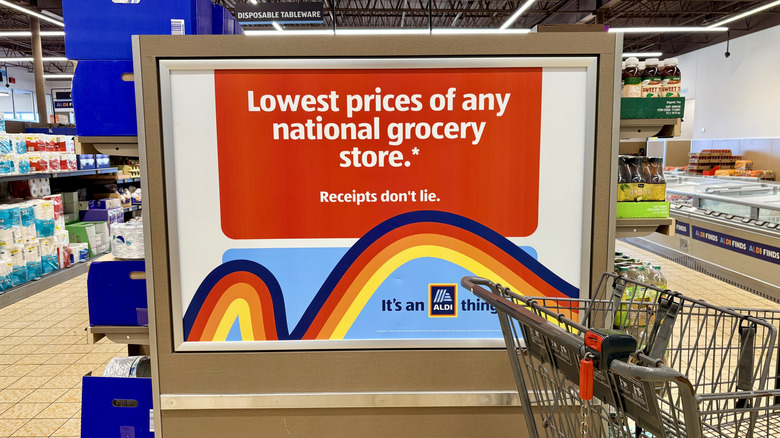
If you usually go to the supermarket with a wallet full of clipped coupons, you might be surprised when you get to the checkout at Aldi and you're told you can't use them. Aldi doesn't accept coupons and instead focuses on its own deals and everyday low prices to make groceries cost effective.
There's a good reason why Aldi doesn't accept coupons, and it's in order to keep prices low for everyone. Supermarkets have to factor in the cost of accepting coupons into its business model, so those who have them will get a good deal, but anyone without them will end up paying more. Aldi, on the other hand, aims to keep its prices low across the board and therefore coupons aren't needed to make the cost of your groceries lower. The retailer also has weekly sales, where certain items are reduced. You can find details of these on flyers in the store or on Aldi's website.
On top of this, it wouldn't make much sense for Aldi to take manufacturer's coupons, since it rarely sells name brand products. Even if it did intend to honor these coupons, you'd be unlikely to find the products in question, since it mostly sells private label items. It just makes sense, logistically and financially, for Aldi to forgo coupons altogether.
10. The checkout works differently from other stores
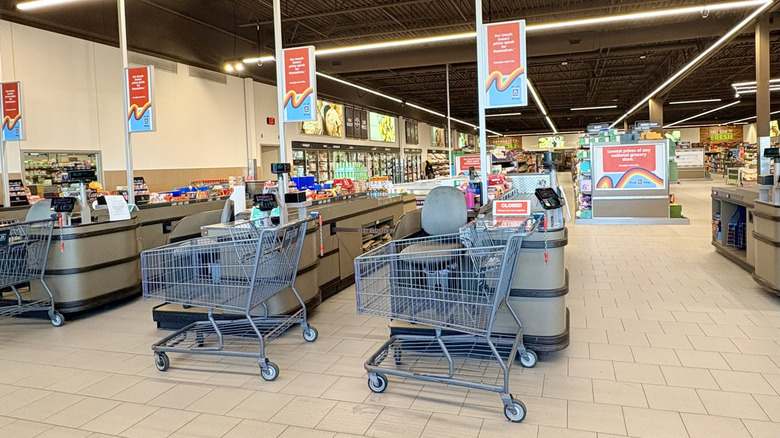
If you think you know how supermarket checkouts work and you've never been to Aldi, you're in for a bit of a surprise. It might leave you feeling baffled or worrying that you're doing the wrong thing on your first visit, so it's good to get a feel for how things work before you go. This will mean you're prepared and less likely to make a faux pas.
On your first trip to the chain, Aldi checkout etiquette can be confusing. The main thing to remember is that speed is the name of the game. In another attempt to save money, Aldi employs less checkout staff than other supermarkets but they work at an impressive speed. So, even if a line seems long at first, it will go down quickly.
Employees at the register load your items straight into your cart. They often start scanning while you're still unloading your groceries onto the conveyor belt, which is possible only because you don't walk out with the cart you walked in with. Your groceries will be loaded into the empty cart of the person ahead of you in line, while your cart will be left empty for the next customer, and so on. This means that you shouldn't use a lucky quarter to release your cart as you won't be getting it back.
In the name of speed, small talk with the cashiers is rarely appreciated. It's still polite to exchange some brief pleasantries, but don't get into your life story. And it's best if you have your cash or card ready when it's time to pay.
11. There are no plastic bags and you'll need to pack your own groceries after checking out
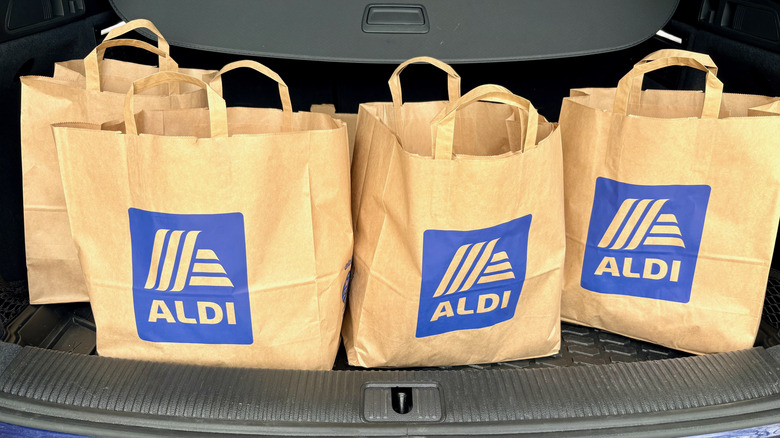
Back in 2022, Aldi announced a major environmental change, totally banning plastic bags from all stores nationwide. This doesn't mean you can't bring your own to pack in, but you won't be able to get new ones, even for a fee. You also don't pack while your groceries are being rung up, instead doing this once you've checked out.
It's always best to bring your own reusable bags to Aldi, but there might be times when you forget or you go on an unexpected shopping trip and don't have any in the car. If you need to get bags from Aldi, there won't be any plastic ones on offer. This won't be a surprise if you live in one of the states where single-use plastic bags are banned, but if you're still used to being able to opt for plastic, it's important to know you can only get paper bags or reusable totes for your shopping at Aldi.
And you shouldn't attempt to pack them while your cashier is ringing you up. Employees on the checkout work to strict deadlines and there's no time for this. They will load your groceries right into the cart and you're expected to pack them after. There are packing benches near the checkouts for this purpose.