

This Pear And Hazelnut Pork Roast Is Made For Fall Entertaining
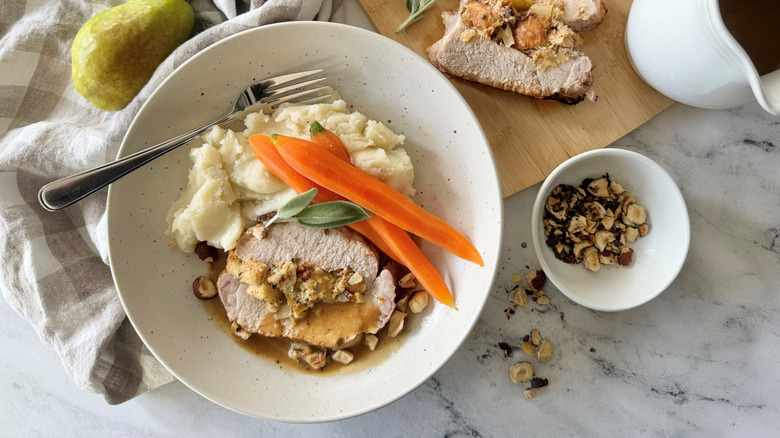
If you eat pork often, then you likely already know how well it pairs with fruit. This pear and hazelnut-stuffed pork loin is the perfect balance of sweet and savory, with pears adding an autumnal fruitiness, and sage and a touch of Dijon complementing the slight sweetness in the pork itself. The hazelnuts in the stuffing help to amp up those cozy fall vibes while infusing even more warm, nutty flavor and a touch of crunch into the mix. The dish is finished with an easy pear cider pan sauce, which adds a buttery, creamy richness to the tender pork and ensures that every bite of your pork loin is adequately moist and fall-forward. This is an elegant dish, perfect for fall, that feels special enough for entertaining but is surprisingly approachable to make.
When it comes to hosting a dinner party, you can't go wrong with serving pork loin as the main course. Pork loin is a surprisingly cheap cut of meat that goes a long way when serving multiple people, but with a little finesse in the kitchen, you can transform it into something downright elegant and refined. This autumnal pear-stuffed pork long recipe is a great example of just how easy it is to jazz up the inexpensive meat, all while adding a distinct fall flair for those seasonal parties.
Gather the ingredients for autumnal pear-stuffed pork loin
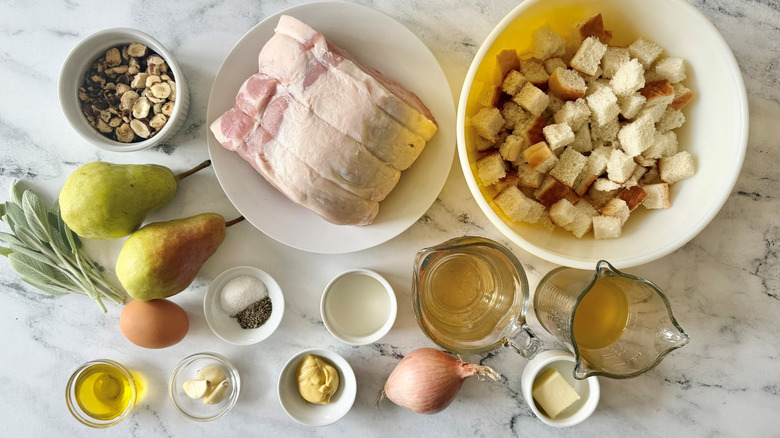
To begin this recipe, start with a 2-pound pork loin roast (not to be mistaken for pork tenderloin, which is a different cut of meat entirely). You'll also need salt and pepper to season the pork, Dijon mustard to spread over the pork before adding the stuffing, and avocado oil for searing.
For the autumnal pear and hazelnut stuffing, reach for butter, a shallot, garlic, fresh sage, Bartlett pears, toasted bread cubes, toasted chopped hazelnuts, salt, pepper, Dijon mustard, chicken stock, and a beaten egg. Finally, for the pan sauce, you'll need pear cider, chicken stock, Dijon mustard, sage, cold butter, salt, pepper, and heavy cream.
Step 1: Melt the butter in a pan
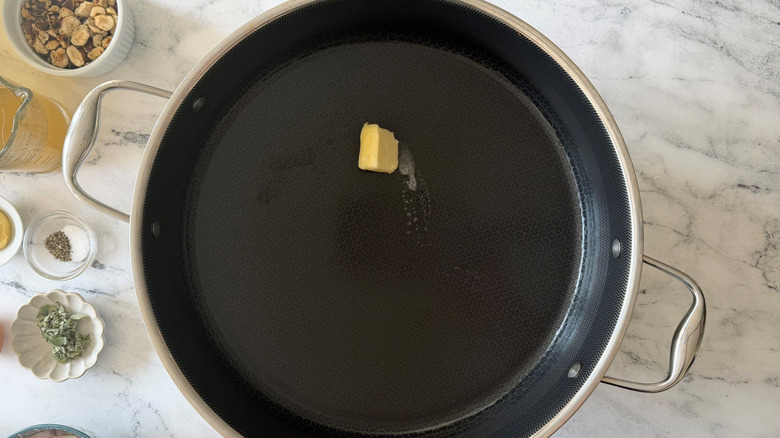
Melt the butter in a large pan placed over medium heat.
Step 2: Saute shallots and garlic
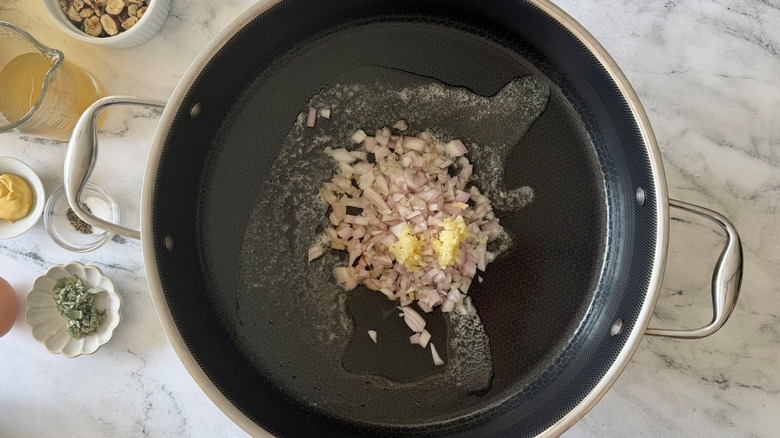
Add the shallots and garlic and cook for 2 to 3 minutes, until softened.
Step 3: Add the pears and sage
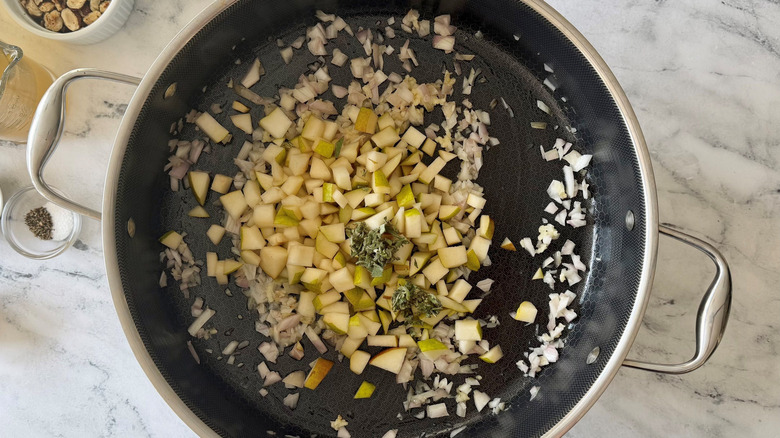
Stir in the diced pears and sage. Cook for 3 to 4 minutes until the pears begin to soften. Remove from the heat and cool slightly.
Step 4: Mix the stuffing ingredients in a bowl
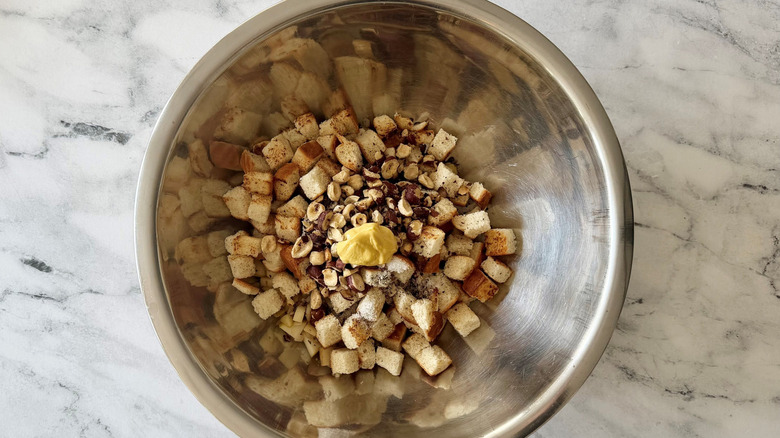
Add the pear mixture, bread cubes, hazelnuts, salt, pepper, and Dijon to a large bowl. Add the chicken stock and egg and mix well.
Step 5: Butterfly and open the pork loin
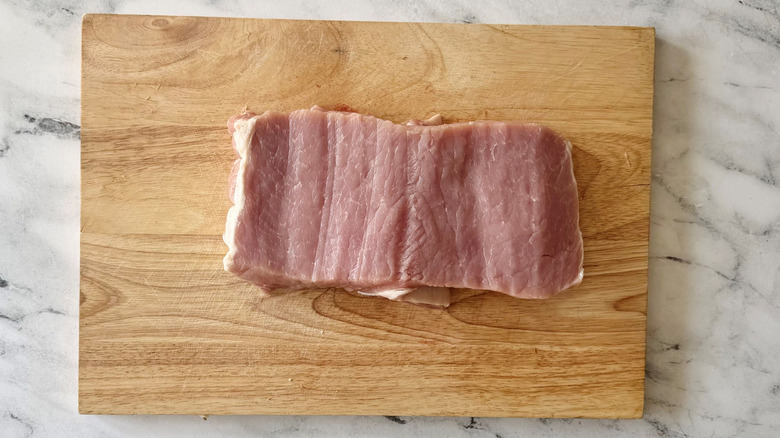
Place the pork loin on a cutting board. Using a sharp knife, butterfly the roast by slicing lengthwise into the meat, keeping the knife parallel to the board and stopping before cutting all the way through. Open the roast like a book.
Step 6: Season the pork with salt and pepper
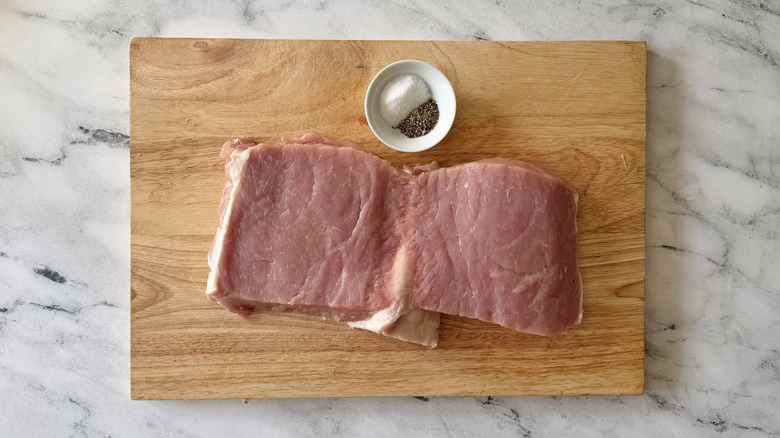
Season the roast on both sides with the kosher salt and pepper.
Step 7: Spread the Dijon mustard on the pork
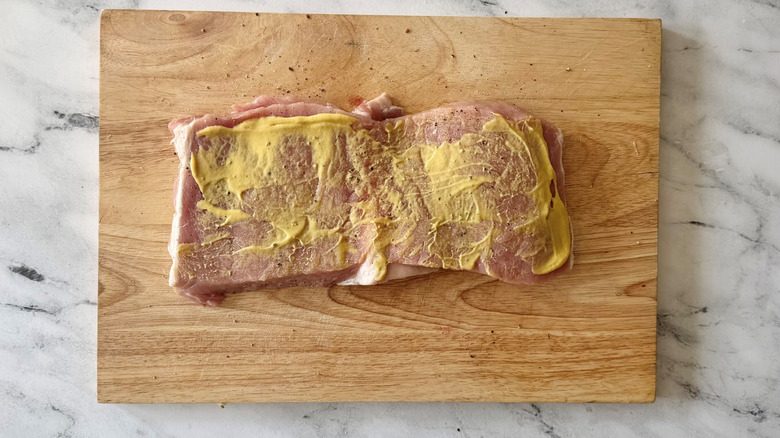
Spread the Dijon mustard evenly over the pork on one side.
Step 8: Spread the stuffing on the pork
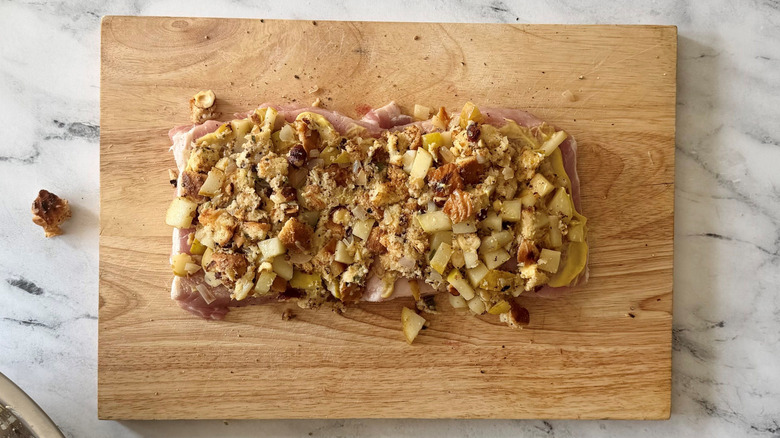
Spread the stuffing evenly over the pork.
Step 9: Roll up the pork
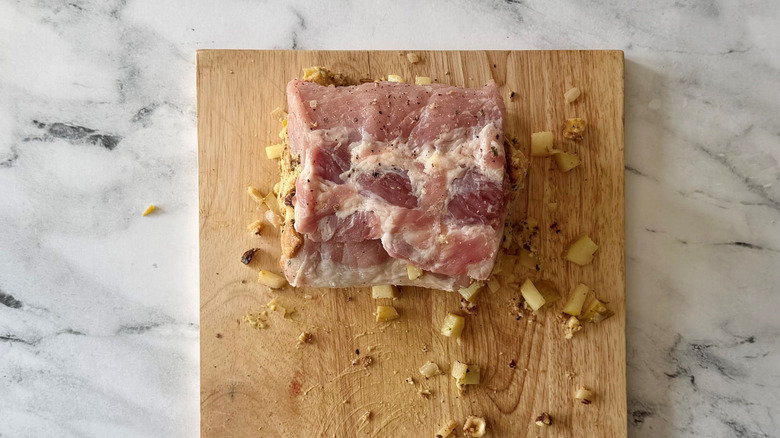
Roll the pork up tightly. If any stuffing falls out, tuck it back into the pork.
Step 10: Secure the pork with twine
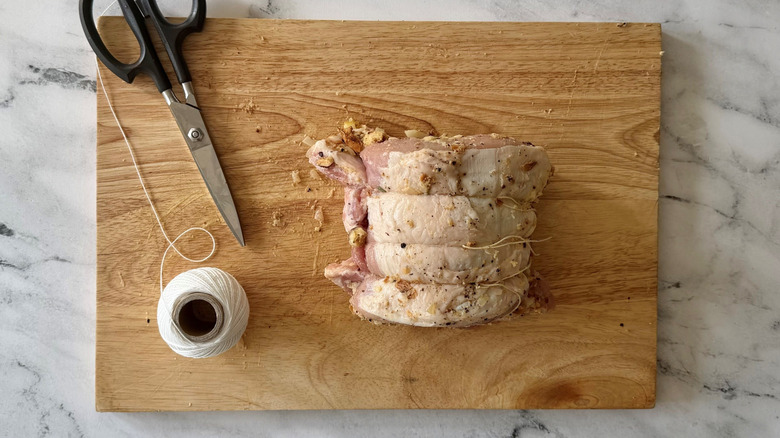
Secure with kitchen twine at 1- to 2-inch intervals.
Step 11: Preheat the oven

Preheat the oven to 375 F.
Step 12: Heat the olive oil in a pan

Place the avocado oil in a large pan placed over medium high heat.
Step 13: Sear the pork
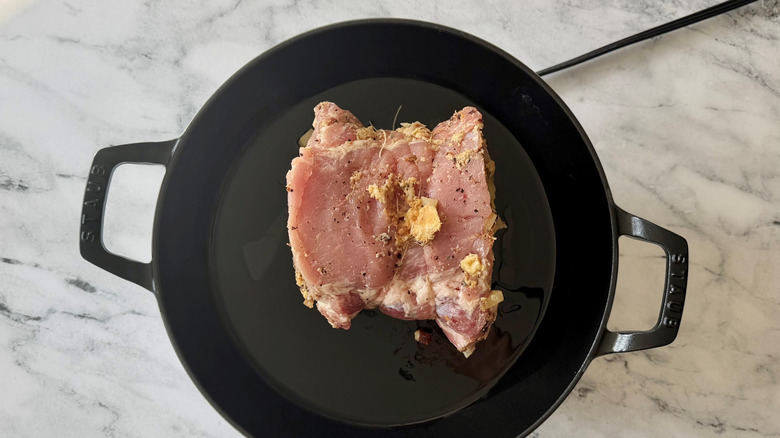
Sear the pork for 3 minutes until browned.
Step 14: Sear the pork on the other side, then transfer it to the oven
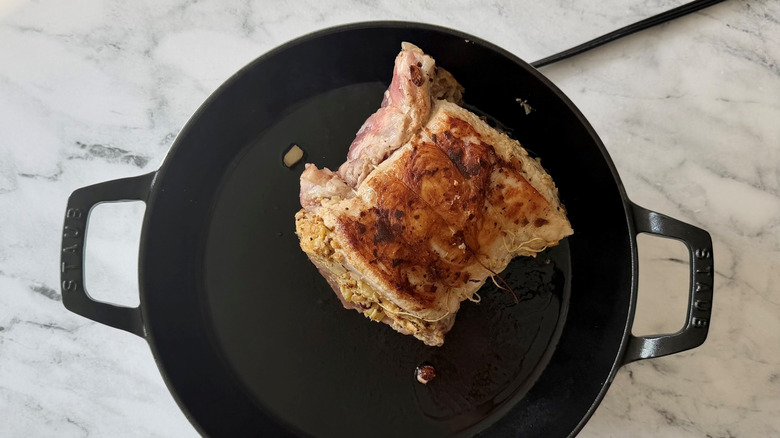
Flip the pork and sear for another 3 minutes. Place the pork in the oven and roast for 45 to 55 minutes or until the pork reaches an internal temperature of 145 F and the stuffing reaches 165 F.
Step 15: Tent the pork with foil and rest

Transfer the roast to a cutting board, tent loosely with foil, and rest for 10 to 15 minutes.
Step 16: Add pear cider to a pan

Place the roasting pan over medium heat, spoon off some of the excess fat, add the pear cider, and scrape up the browned bits from the bottom of the pan. Simmer until reduced by about half.
Step 17: Add chicken stock
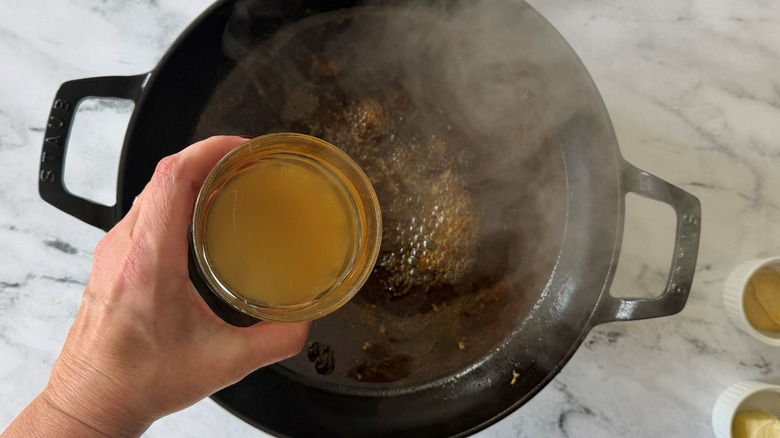
Add the chicken stock.
Step 18: Add Dijon mustard and sage
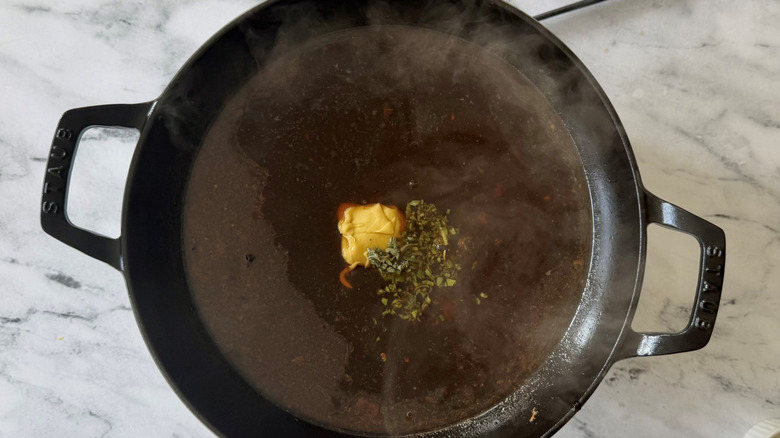
Add the Dijon mustard and sage. Simmer for 5 to 8 minutes, until the sauce has reduced slightly.
Step 19: Whisk in butter, salt, and pepper

Reduce the heat to low. Whisk in the cold butter and add the salt and pepper.
Step 20: Whisk in the cream
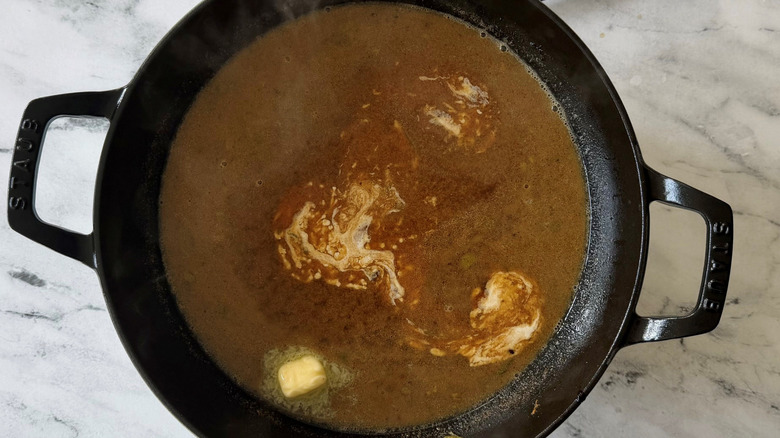
Whisk in the cream and keep warm.
Step 21: Slice the pork and serve with pan sauce
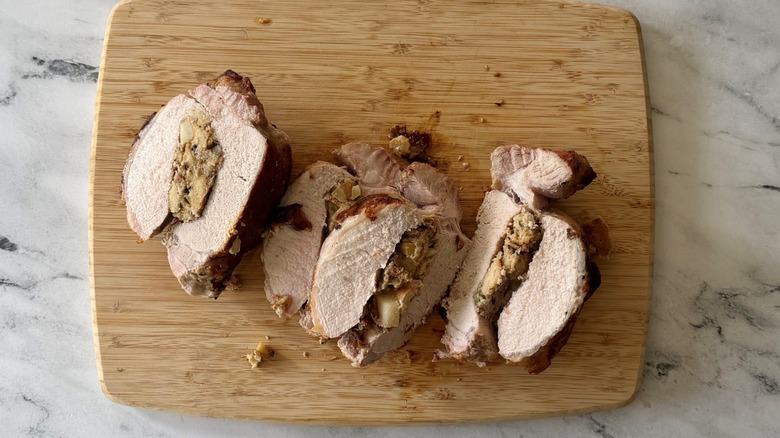
Remove the string from the pork, slice it into thick rounds, and serve it with the sauce.
What can I serve with pork roast?
Autumnal Pear-Stuffed Pork Loin Recipe
Roasted pork loin stuffed with an autumnal pear and hazelnut stuffing and finished with a creamy pear-cider pan sauce makes this the perfect fall meal.
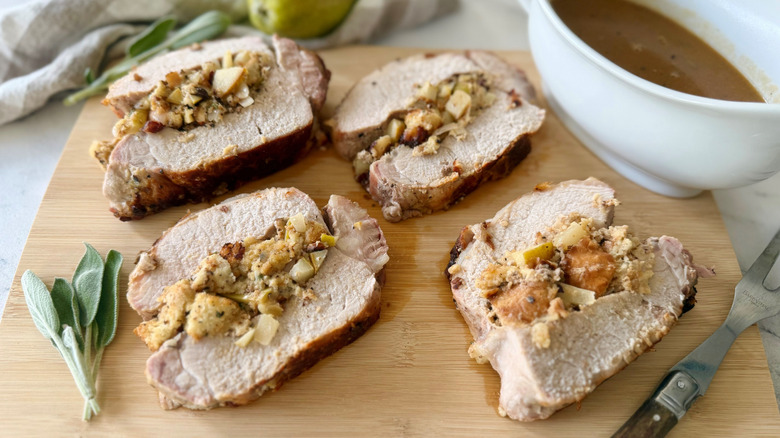
Ingredients
- For the pear hazelnut stuffing
- 1 tablespoon butter
- 1 large shallot, minced
- 3 cloves garlic, minced
- 2 Bartlett pears, diced
- 2 teaspoons minced sage
- 3 cups toasted bread cubes
- ½ cup chopped hazelnuts, toasted
- ½ teaspoon kosher salt
- ¼ teaspoon ground black pepper
- 1 tablespoon Dijon mustard
- ½ cup chicken stock
- 1 egg, beaten
- For the pork loin
- 2-pound boneless pork loin roast
- 1 teaspoon kosher salt
- ½ teaspoon ground black pepper
- 1 tablespoon Dijon mustard
- 1 tablespoon avocado oil
- For the sauce
- 1 cup pear cider
- 1 cup chicken stock
- 1 tablespoon Dijon mustard
- 1 teaspoon minced sage
- 2 tablespoons cold butter
- ½ teaspoon kosher salt
- ¼ teaspoon ground black pepper
- 2 tablespoons heavy cream
Directions
- Melt the butter in a large pan placed over medium heat.
- Add the shallots and garlic and cook for 2 to 3 minutes, until softened.
- Stir in the diced pears and sage. Cook for 3 to 4 minutes until the pears begin to soften. Remove from the heat and cool slightly.
- Add the pear mixture, bread cubes, hazelnuts, salt, pepper, and Dijon to a large bowl. Add the chicken stock and egg and mix well.
- Place the pork loin on a cutting board. Using a sharp knife, butterfly the roast by slicing lengthwise into the meat, keeping the knife parallel to the board and stopping before cutting all the way through. Open the roast like a book.
- Season the roast on both sides with the kosher salt and pepper.
- Spread the Dijon mustard evenly over the pork on one side.
- Spread the stuffing evenly over the pork.
- Roll the pork up tightly. If any stuffing falls out, tuck it back into the pork.
- Secure with kitchen twine at 1- to 2-inch intervals.
- Preheat the oven to 375 F.
- Place the avocado oil in a large pan placed over medium high heat.
- Sear the pork for 3 minutes until browned.
- Flip the pork and sear for another 3 minutes. Place the pork in the oven and roast for 45 to 55 minutes or until the pork reaches an internal temperature of 145 F and the stuffing reaches 165 F.
- Transfer the roast to a cutting board, tent loosely with foil, and rest for 10 to 15 minutes.
- Place the roasting pan over medium heat, spoon off some of the excess fat, add the pear cider, and scrape up the browned bits from the bottom of the pan. Simmer until reduced by about half.
- Add the chicken stock.
- Add the Dijon mustard and sage. Simmer for 5 to 8 minutes, until the sauce has reduced slightly.
- Reduce the heat to low. Whisk in the cold butter and add the salt and pepper.
- Whisk in the cream and keep warm.
- Remove the string from the pork, slice it into thick rounds, and serve it with the sauce.
Nutrition
| Calories per Serving | 847 |
| Total Fat | 46.9 g |
| Saturated Fat | 15.4 g |
| Trans Fat | 0.3 g |
| Cholesterol | 220.1 mg |
| Total Carbohydrates | 46.8 g |
| Dietary Fiber | 7.6 g |
| Total Sugars | 20.3 g |
| Sodium | 1,350.7 mg |
| Protein | 59.4 g |

Do I need to toast the bread and hazelnuts for the stuffing?
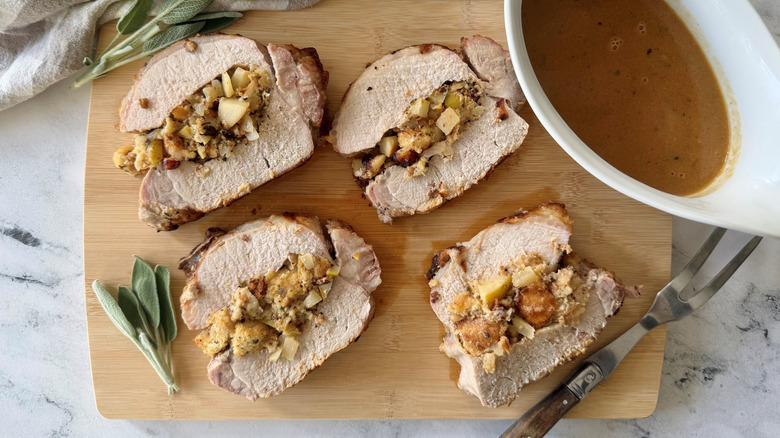
As you read through this recipe, you'll notice that it calls for two key ingredients to be toasted before you even begin the cooking process: the bread cubes and the hazelnuts. While it may be tempting to skip the toasting step, it's crucial for building both flavor and texture in the stuffing. For starters, toasting the bread cubes helps to dry them out, making them much better equipped for absorbing liquid ingredients (like pear juice, stock, and egg) without becoming too mushy. Toasting also helps the bread cubes maintain their shape and texture better in the stuffing.
The hazelnuts, on the other hand, also benefit from the toasted treatment before they go into the stuffing. While toasting the hazelnuts does ensure a crunchier texture (and one that pairs really nicely with the soft, juicy pears), it also helps the nuts release their natural oils and establish more depth of flavor. You can typically buy pre-roasted or toasted hazelnuts, but it's easy to either spread hazelnuts on a baking sheet and roast them in the oven, or add them to a dry pan and cook the nuts until they're fragrant.
What are tips for making this stuffed pork loin recipe?
Although this pork loin recipe yields an impressively elegant main course, it's actually pretty easy to whip up. The two biggest pitfalls to look out for are overstuffing or overcooking the pork. When adding the stuffing, don't try to make every last morsel fit across the surface if there's not room. It's normal for some of the stuffing to leak out when you roll up the pork, but too much stuffing will make the process that much more difficult. Note that you may have some extra stuffing, depending on the exact size of your roast and how it was butterflied.
I highly recommend using a meat thermometer so you know exactly when to pull the pork from the oven. With stuffed pork, it takes a little extra care to get the timing just right, since the stuffing needs to get to 165 F, but ideally, you should pull the pork when the meat itself hits 145 F. To ensure a more even cooking process, make sure you tie up the loin as evenly as possible with twine, aiming for about 1 to 2 inches of spacing in between rows.
Finally, when making the pear pan sauce, don't rush the process. This sweet, savory, rich sauce truly ties the whole dish together, so make sure you give it plenty of time to properly reduce. If you want a restaurant-style presentation, strain the sauce, or leave the shallots and sage bits in for a more rustic look.