

11 Of The Oldest Bourbon Brands Still Sold In The US
Bourbon is one of those quintessential American spirits enjoyed by many for many reasons, from big celebrations to quiet nights to the Kentucky Bourbon Trail. There are unique bourbon distilleries in each state, and the spirit is certainly is taken seriously in the United States. There are even specific guidelines that bourbon must meet (being made from at least 51% corn mash and distilled within the States, to start, as well as how it is aged and the proof). Bourbon is a niche category of whiskey — as the saying goes "all bourbon is whiskey but not all whiskey is bourbon." And if you have ever sampled a bourbon or two, you have likely figured out the difference between a good bourbon one and a not-so-good bottle.
With bourbon's deep roots starting in the 1700s in Kentucky, it's not a surprise that there are brands that have withstood the test of time. Some of the oldest brands are still among the best top-shelf bourbon labels. We took a glance back at history to find some of the oldest bourbon brands that you can still find on shelves across the nation. Some brands are more well-known for their whiskey instead of their bourbon, but we tried to keep the list as close to strictly bourbon we could (with a couple of exceptions).
Michter's (1753)
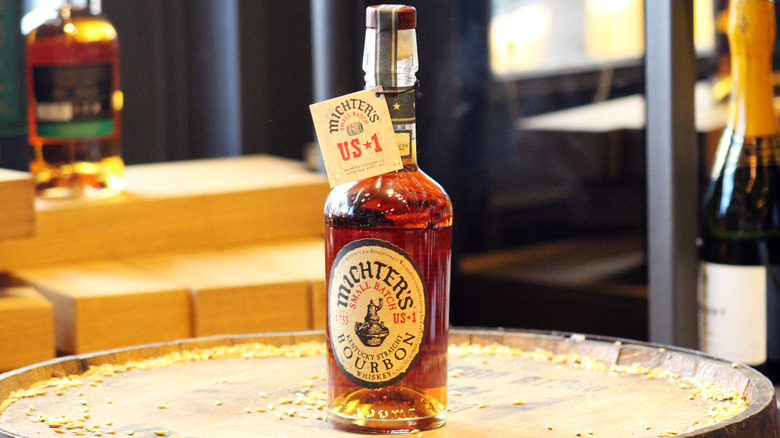
Though Michter's Distillery was not originally known for its bourbon, it has been around since 1753 under its original name, Shenk's. Named after founder John Shenk, a Swiss Mennonite farmer in Schaefferstown, Pennsylvania, Shenk's was well-known for its rye whiskey. In fact, it was so much so that it is said that General George Washington purchased whiskey for his soldiers in the Revolutionary War. Shenk's became Bomberger's and switched hands multiple times over the years, eventually leading to its Michter's brand name in the 1950s.
The original location shut down in 1989, but was resurrected in Kentucky in the '90s. It was after the move to Kentucky that Michter's sold its first branded bourbon in the late 90s, with its 10-year bourbon closely following, thanks to sourcing Kentucky 10-year-old whiskey to jumpstart the process. Since then, Michter's 10 bourbon has been beloved for its oak-forwardness and sweet and spicy flavors with layers of dried fruit, cooked cherries, and candied orange peel.
Buffalo Trace (1775)
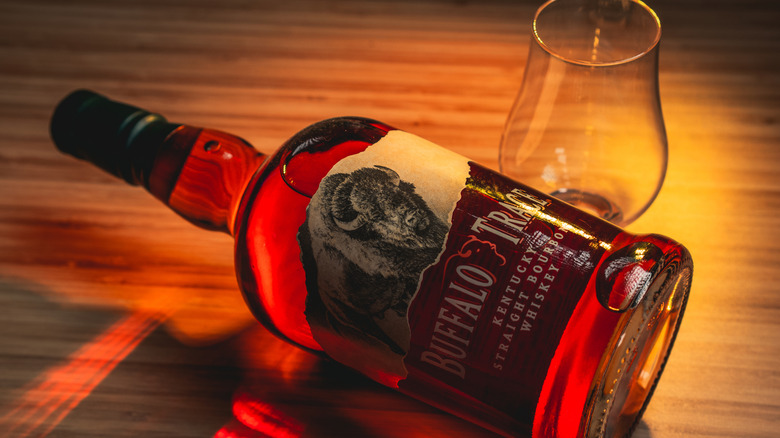
Buffalo Trace holds the accolade of being the oldest continuously operating distillery in the United States, tracing its roots to the same grounds in Frankfort, Kentucky, since 1775. The property is even designated a National Historic Landmark; it still has the original Old Taylor House, built in 1792, on the property today. There have been various milestones over the years as the property evolved from a warehouse to the O.F.C. Distillery, founded in 1870, George T. Stagg Distillery in 1904, to the Buffalo Trace Distillery that we know and love now, back in 1999.
Buffalo Trace produces numerous bourbon brands, from the world's first single-barrel bourbon — Blanton's – to its namesake Buffalo Trace, to the Eagle Rare line with bourbons aged from 10 years to 30 years. The distillery also produces long-time brands like Pappy Van Winkle and Weller on-property. Buffalo Trace filled its nine-millionth barrel since the end of Prohibition in 2025, so there are no signs of this bourbon brand slowing down.
Jim Beam (1795)
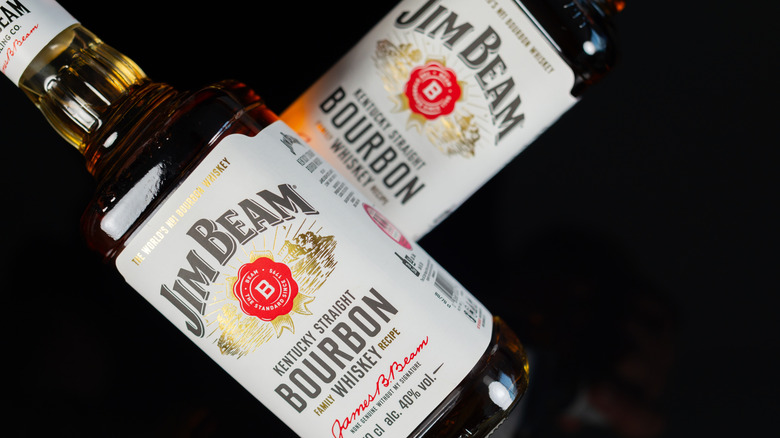
Even if you aren't a bourbon fan, Jim Beam is likely one you have heard of before. The Beam family has been distilling and selling bourbon since 1795. The first barrel of Old Jake Beam Sour Mash was sold in 1795, and people brought their own jugs to fill straight from the barrel. It was then renamed Old Tub by Jacob Beam's son, David, in 1820. In 1894, James Beauregard Beam (Jim Beam) took over the distillery. After Prohibition, Beam's son re-founded the distillery in 1935 as the Jim B. Beam Distilling Company, also giving the bourbon the name we know and love today: Jim Beam.
Over the years, Jim Beam overcame the ups and downs in the liquor industry, eventually expanding to small-batch bourbon in the 1980s. The small-batch collection grew to include Basil Hayden's, Baker's, and Knob Creek. You certainly can still find a variety of Jim Beam bourbon products on shelves. In fact, Jim Beam is the world's best-selling bourbon brand today (and has been for several years).
Old Overholt (1810)
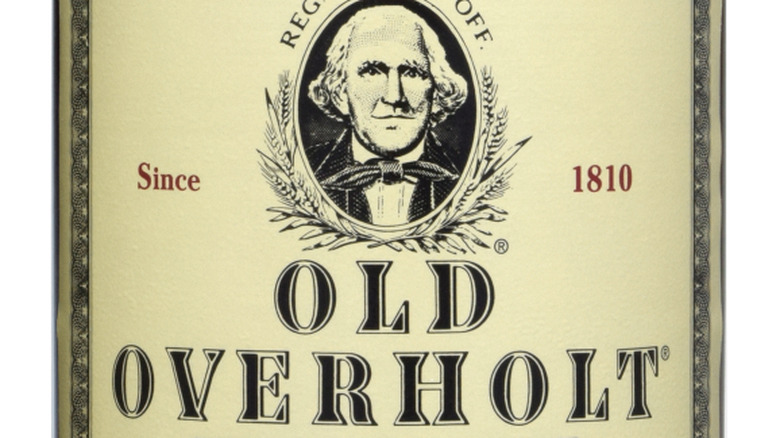
This one is technically a rye, but it earns a spot on our oldest brand list due to its place in bourbon and whiskey history. Old Overholt calls itself the "first family of bourbon," on its website, with eight family distilling generations behind it. It was founded in 1810 at Abe Overholt's West Overton, Pennsylvania farm. Though the distilling location, the company ownership, and its mash bill have changed throughout the years, the name Old Overholt has remained. This makes Old Overholt the oldest continuously maintained American whiskey brand. The brand evolved its offerings over the years, even making it through Prohibition, when it was still producing "medicinal whiskey."
It is currently produced at James B. Beam Distilling Co. in Kentucky, where it was relocated in the late '80s as part of an acquisition deal that also included other brands like Old Grand Dad, and Old Crow. With that move came a shift in the distilling. The mash bill is now a high-corn, Kentucky-style rye with a lower ABV and smoother, silkier, closer to the bourbon style. A resurgence in rye popularity in recent years keeps Old Overholt on shelves and at bars.
Old Crow (1830s)
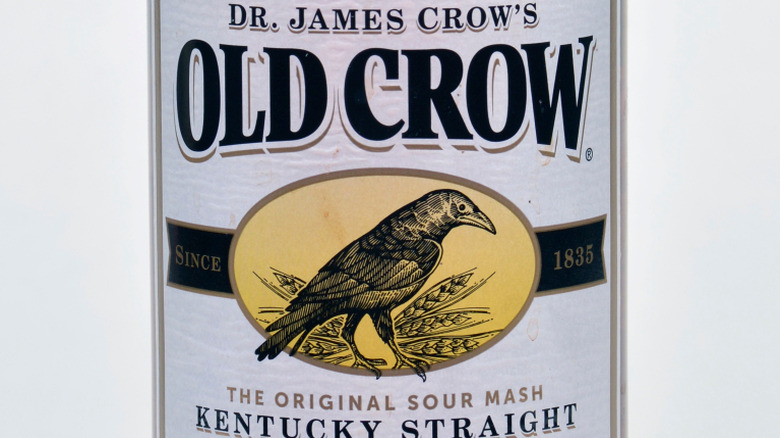
James Crow is known as the scientist who pioneered whiskey-making techniques in the 1800s. So it's only right to have the namesake bourbon on our list. Crow's bourbon was one of the first to use sour mash, which is now an industry norm.
Though it wouldn't be branded until much later, the first batches of Old Crow were produced in 1835 at Old Pepper Distillery (now the home of Woodford Reserve). The bourbon at this time was well-liked by many, sought after by Ulysses S. Grant and Mark Twain. Crow's recipe was inherited after his death in 1856, continuing to grow in popularity until Prohibition. After being purchased by National Distillers, Old Crow rivaled Jim Beam as the top-selling bourbon through the 1950s.
A downturn came in the '60s and '70s due to bourbon popularity as a whole, plus some rumored changes in taste. Jim Beam bought the distillery and brand in 1987, moving production to Beam's location. You can still find Old Crow on shelves today, making it a label recognized for more than 150 years.
Weller (1849)
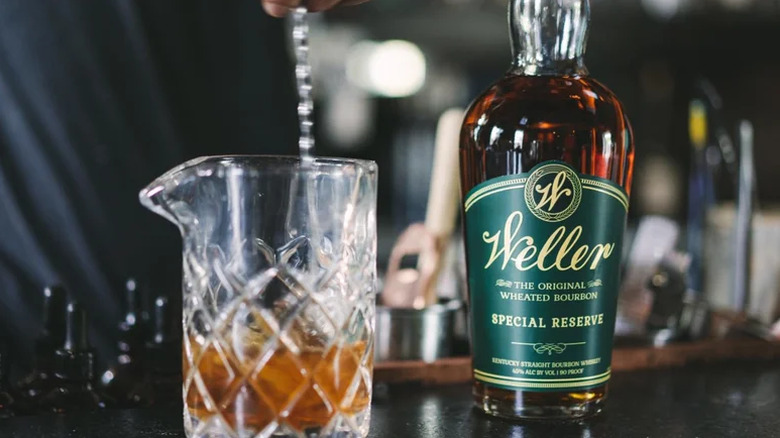
Weller's roots trace back to Louisville, Kentucky, in 1849, when William Larue Weller founded the W.L. Weller brand — first W.L. Weller and Brothers, then W.L. Weller and Sons. Known for the use of wheat instead of rye, the Weller bourbon has long been beloved for a softer, smoother taste that sets it apart from other bourbons. The same wheated mash recipe is still used today. The Weller brand stayed within the family even after William's death, with the oldest son remaining President despite new owners in 1908. The brand merged with the Stitzel Distillery to create the Stitzel-Weller Distillery at the start of Prohibition.
The brand switched hands throughout the years, finding its current home at Buffalo Trace Distillery in Frankfort, Kentucky, as part of the Sazerac Company's acquisition in 1999. Weller's bourbons are sought-after today, especially by collectors yearning for some of the more limited editions. Some of those include Weller Special Reserve, Weller Antique 107, and Weller 12 Year. There is even a line serving as an homage to Weller's grandfather, Daniel Weller.
Early Times Bourbon (1860)
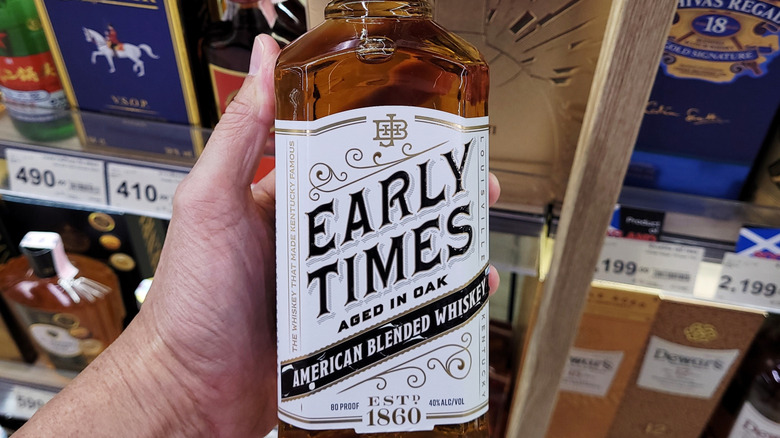
Another product of the Beam family, Early Times has been around since before the Civil War. The bourbon was distilled at the Beam distillery's original location starting in 1860, growing in popularity after the Civil War. The story goes that John Henry "Jack" Beam then broke off from the Beam distillery and started the Early Times Distillery Company in Nelson County in 1866. Early Times stopped distilling in 1918 thanks to Prohibition, but not for long as Brown-Forman acquired the Early Times brand and its inventory in 1923. Popularity skyrocketed by 1953 — it was even the best-selling bourbon brand in America.
The 1970s came along and bourbon became less popular, so Brown-Forman decided to make some cost-saving changes in 1983 to the Early Times bourbon that shifted it to an "Old Style Kentucky Whiskey" instead of a bourbon. Not only did it impact the taste, but also the proof. Early Times became more of a bottom-shelf whiskey product. But in 2017, Early Times was reborn as an aged, 100 proof Kentucky Straight Bourbon. The brand has stayed on shelves throughout the years, even as products have evolved.
Old Forester (1870)
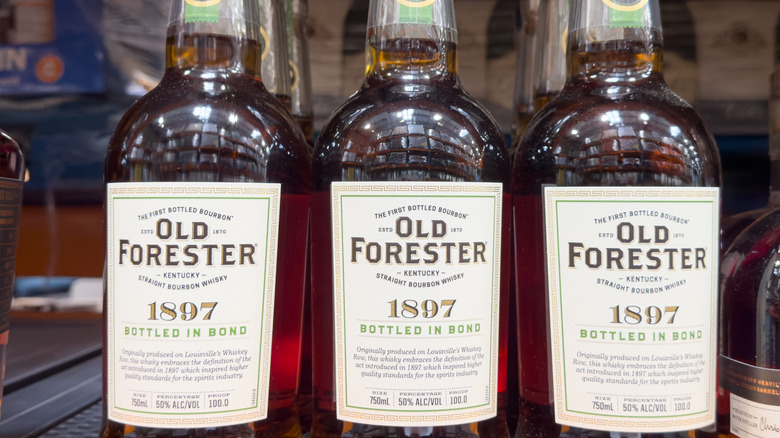
There are a handful of brands on this list that began before Old Forester. However, it earns the accolade as America's first bottled bourbon that is still continuously produced. Up until this time, bourbon was typically enjoyed right from the barrel. But in 1870, George Garvin Brown started batching bourbon from three distilleries (Mattingly, Mellwood, and Atherton) at 90 proof and sealed it in a glass bottle with his signature to guarantee quality. He called it "Old Forester" after Dr. William Forrester. The U.S. Bottled in Bond Act of 1897 requiring bourbon to come from one distillery and be 100 proof led to Brown buying Mattingly Distillery in 1901, where he created the first double barrel bourbon in 1910.
Not even Prohibition stopped Old Forester, which produced under the "medicinal whiskey" allowance. According to the company's website, "Old Forester remains the only bourbon continually sold by the same company before, during, and after Prohibition."
Old Forester kept up with the trends over the years, with products like 86-proof bourbon in 1959's cocktail culture, the first single-barrel bourbon in the industry in 1962, and the first vintage-dated bourbon in 2002. Not only does Old Forester still produce quality bourbon for a range of prices today, but they continue to pay homage to years past with specialty releases.
I.W. Harper (1872)
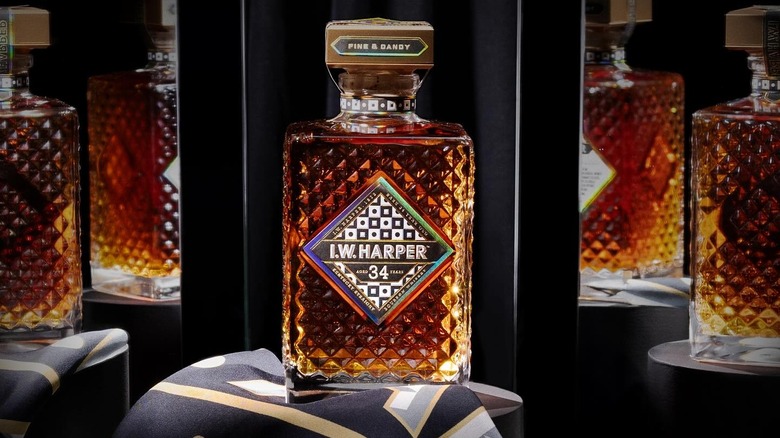
I.W. Harper's story began in 1872 when German immigrant Isaac Wolfe Bernheim started a bourbon brand within a trading company in Paducah, Kentucky, with his brother. In 1888, the brothers purchased their own distillery and continued producing "medicinal whiskey" throughout Prohibition. The brand gained popularity after winning a gold medal at the 1885 New Orleans Exposition and at Chicago's World Fair in 1893. Though the Bernheim brothers were no longer involved, the Schenley Distillers continued the I.W. Harper legacy from 1937 until 1987 when it was acquired by United Distillers (Guinness). I.W. Harper was brought over to the Asian markets as a top-shelf brand in Japan in the 1980s.
After being acquired by Diageo, I.W. Harper came back stateside in 2015. Stitzel–Weller Distillery now produces I.W. Harper's Cabernet Cask Reserve and the Aged 15 Years. The brand is particularly popular with collectors, and its standard I.W. Harper bourbon can even be found at bars today for mixing cocktails.
Old Grand-Dad (1882)
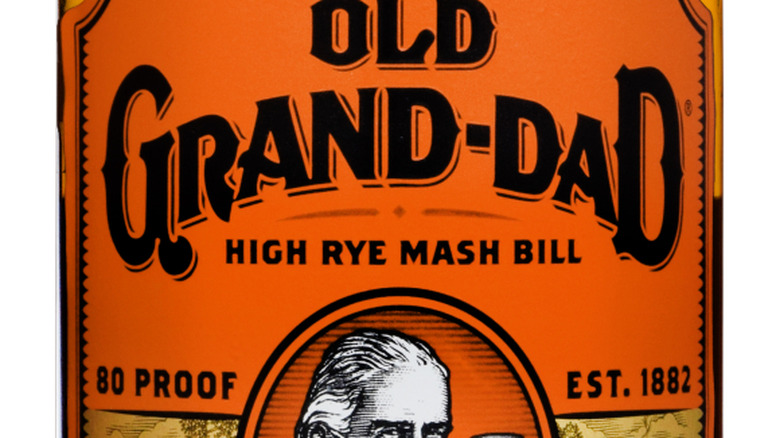
This high-rye Kentucky straight bourbon was first bottled in 1882 by Colonel Raymond Hayden, who named it after his grandfather, Basil Hayden Senior. Basil Hayden Sr. was a farmer-distiller of whiskey, who then passed down the craft to his grandson. Because of that, Raymond Hayden named the distillery and bourbon brand after "Old Grand-Dad." In fact, Basil Hayden Sr.'s face is even featured on each bottle. The brand survived changes in ownership and Prohibition, as well as packaging redesigns.
Now made at the James B. Beam Distilling Company, which acquired Old Grand-Dad in 1987, the website says very little of the actual recipe has changed over the years to stay true to the original bourbon. You can find a range of bourbons from a 4 Year 80-proof to a limited 16 Year release on shelves today — a testament to the distinctive rye spice.
Four Roses Bourbon (1888)
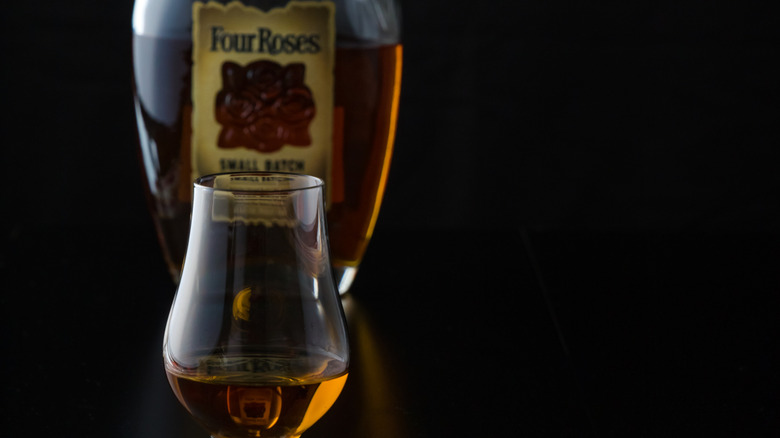
Four Roses Kentucky Straight Bourbon was officially trademarked in 1888, when founder Paul Jones Jr. opened a storefront in a historic part of Main Street, "Whiskey Row," in Louisville. However, he claimed production and sales back to the 1860s. But the story of the brand's name is what gets interesting, as it is a romantic tale of Jones falling in love with a southern belle and requesting her hand in marriage. The woman said that if she accepted the proposal, she would wear a corsage of roses to an upcoming ball. The legend is that she wore the roses to the ball, and Jones was inspired to name his bourbon after his love (even though the marriage allegedly never came to fruition).
The brand survived Prohibition by purchasing the Frankfort Distilling Company and the rights to sell medicinal whiskey. In 1943, Four Roses was purchased by Seagram, and was one of the top selling bourbons in the U.S. through the '50s even though it was discontinued in the States. It was brought overseas to Europe and Japan, where it is still a top seller.
Four Roses eventually made it back to the United States in 2002, when it was purchased by Kirin Brewing Company. Today, Four Roses is beloved as a budget-friendly, easy-drinking, entry-level bourbon for easy sipping and on the rocks.