

How Fast Food Chains Fake Freshly Cooked Food
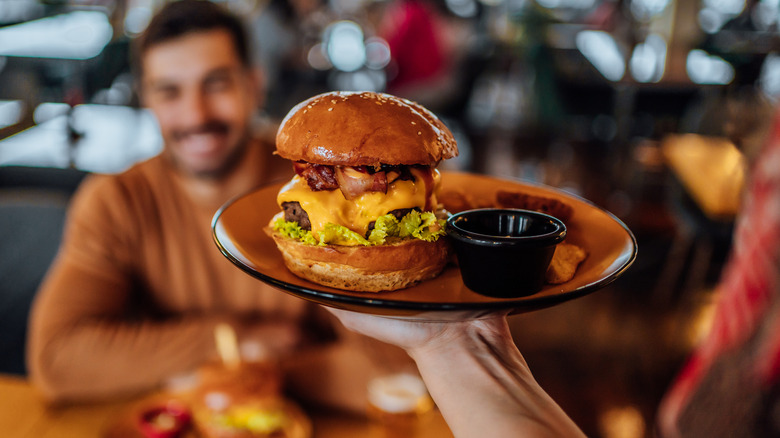
Fast food may not be held to the same high standards as restaurant food cooked by trained chefs, but customers still expect it to be of a certain quality. People expect the food to be made with the ingredients advertised, for example (even better if it also looks as advertised, although to be honest, most fast food meals don't match the marketing posters or commercials).
At the very least, customers expect to be served warm, freshly-cooked food. And yes, there are fast food chains known for cooking food to order, such as Culver's with its ButterBurgers, and Bojangles with its biscuits. But for many others, cook-to-order is not a strict policy. According to former employees and highly observant customers who habitually peek past the counters and into the kitchen, fast food chains sometimes fake freshly cooked food. Even when they serve warm food, some of those orders might have been cooked earlier, then left in a holding shelf for an hour, maybe even longer. So even if they somehow turn up piping hot on a plate or takeout box, they weren't freshly cooked anymore.
Wouldn't you like to know if there's a chance that your food wasn't cooked-to-order, as expected? We can give you some hints. Here are some of the things fast food chains do to make it seem like they are serving freshly cooked food when they're actually not.
They use warming cabinets to keep food warm
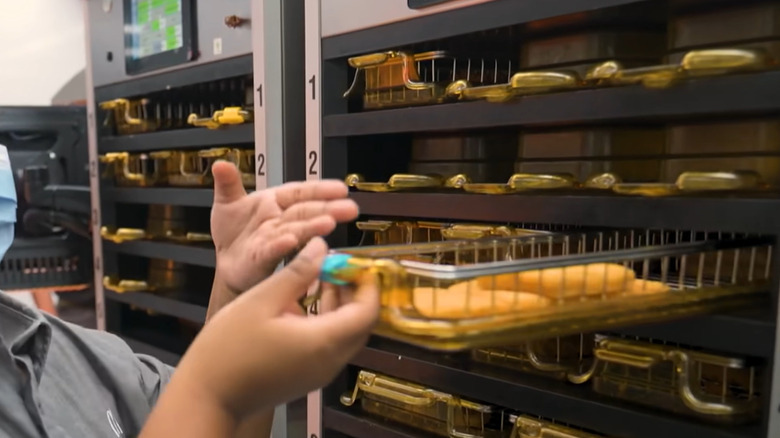
Some fast food chains use a universal holding cabinet, or UHC. Known to customers as a "warmer," the UHC is a compact steel cabinet with lots of heated shelves and a screen that shows multiple, pre-programmed timers. The likes of burger patties, fried chicken, tenders, and nuggets can be kept warm inside its shelves. Once a batch is cooked, it is immediately deposited in the UHC. Employees press a timer corresponding to the food in the basket every time they load up the UHC. Once a timer goes off, any food that's left in the basket must be discarded.
Most fast food items have a short window of "freshness." Customers get optimal flavor and texture when they get their food within that period — even if some fast food employees allege that their restaurant has previously reset the timers and served old food that still looks passable.
But things could be worse: employees could leave food in the warmer overnight. A Taco Bell manager recently took to Reddit to allege that they were told to stop putting cooked leftovers in the fridge overnight, which was the standard operating procedure. "We are putting them back in pans and leaving them in one turned on heating cabinet overnight for the morning crew," they said. This isn't the normal procedure at every Taco Bell — or chain — but it's surprise to hear that even one fast food location would use the heating cabinet for this purpose.
Burgers are only assembled when ordered
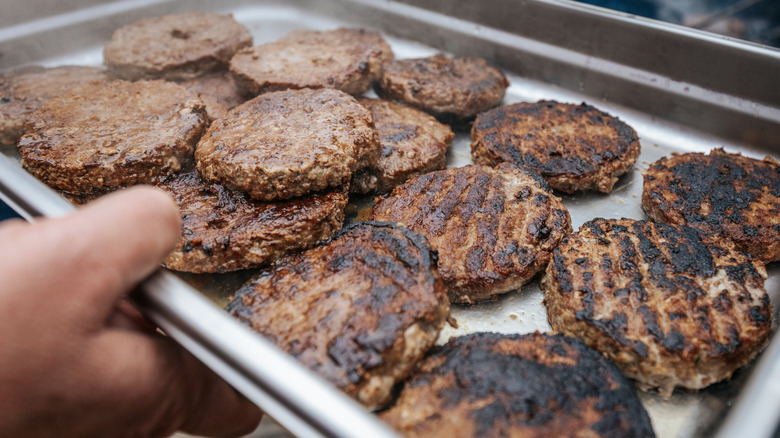
It is customary for restaurant kitchens to cook components of popular menu items in batches, especially during peak hours. Managers estimate how much food needs to be cooked based on historical and real-time foot traffic and online orders. The kitchen crew also preps the rest of the commonly used raw components, like lettuce, tomatoes, cheese slices, and sauces. This strategy allows kitchen crews to stay on top of orders, keep the assembly lines moving quickly, and ensure customers don't have to wait too long for their food even if a huge crowd comes in at once.
A former McDonald's employee talked about this on Reddit, citing hamburgers as an example. "The burger patties are cooked in batches and then placed into a heating cabinet, ready to be assembled upon order," the ex-crew member said. But there is a catch: The holding period for beef patties is just 15 minutes, after which they should be discarded if they are unsold.
Some McDonald's employees have alleged that their store has previously filled UHC trays with 16 cooked patties at a time. Some have also admitted to keeping food in the UHC longer than they should. And so, some customers get burgers that are assembled 20 to 30 minutes after they were cooked. This is why burgers sometimes taste dry even though the tomatoes and lettuce are perfectly fresh and crunchy. The meat was probably sitting in the UHC for the entire 15 minutes, if not longer.
Sometimes grilled menu items are not really grilled
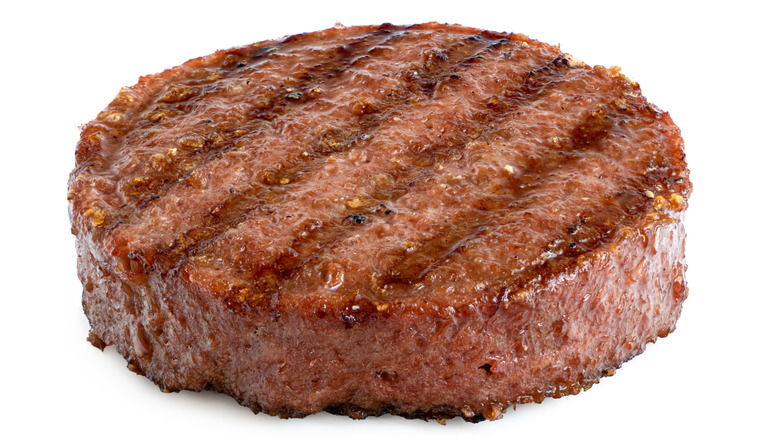
Meat that's been grilled over an open flame or hot embers tends to have a truly mouthwatering flavor, aroma, and texture. The Maillard reaction from contact with the hot grates, along with the smoke from the wood or embers, gives grilled meat a one-of-a-kind flavor. The fat melting from the high heat also unlocks flavors enhanced by the dry rub or liquid seasonings. At the same time, it keeps the meat tender and moist.
Expecting all of these from fast food might be a tall order, but they are reasonable expectations from menu items that are advertised as flame-grilled. At the very least, customers expect some char and smoky flavor. Unfortunately, some fast food chains aren't exactly honest about their grilled food. According to Fast Company, Chick-fil-A was the only fast food chain back in 2006 that actually grilled its chicken in-house. Some fast food chains even fake grilled food, using frozen meat pre-stamped with fake grill marks instead of cooking with an actual grill.
Today, more fast food chains use flat-top griddles instead of open-flame grills. We can understand why from a business perspective. But from a customer's perspective, it's a shame to miss out on the smoky flavor and aroma of a true grill. Fortunately, we know of at least eight fast food restaurants that still grill burgers over an open flame.
Some chains cook liquid egg mixture instead of freshly cracked eggs
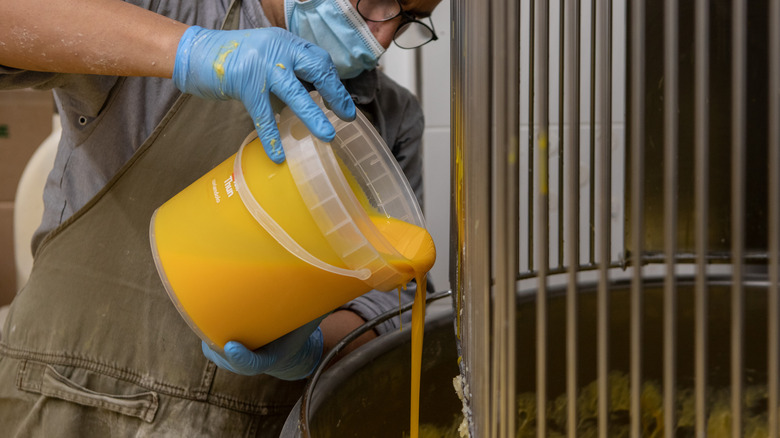
Eggs complete fast food breakfast sandwiches and brunch meals. They're a great source of protein and make sandwiches more satiating. But many people don't know that instead of cracking open fresh eggs, some fast food chains simply use highly processed, pasteurized liquid eggs. McDonald's is a prime example. According to the Golden Arches website, the chain uses a liquid egg mixture for its breakfast platters, Sausage Burritos, and the Bacon, Egg & Cheese Biscuits. The only time employees crack open fresh eggs is when they make the likes of the Egg McMuffins.
Starbucks also quietly uses liquid eggs for its breakfast menu. The nutrition page for the Sausage, Cheddar & Egg Sandwich, for example, shows a surprisingly long list of ingredients under what should simply be scrambled eggs. It contains modified corn starch, soybean oil, and xanthan gum, all of which are commonly used food fillers and binders. No doubt these ingredients are also key to the coffee chain's consistently fluffy scrambled eggs, but knowing the truth dims the otherwise idyllic vision of having a freshly cooked breakfast sandwich with a hot cup of Starbucks coffee.
Some menu items are frozen, then cooked or reheated in-store
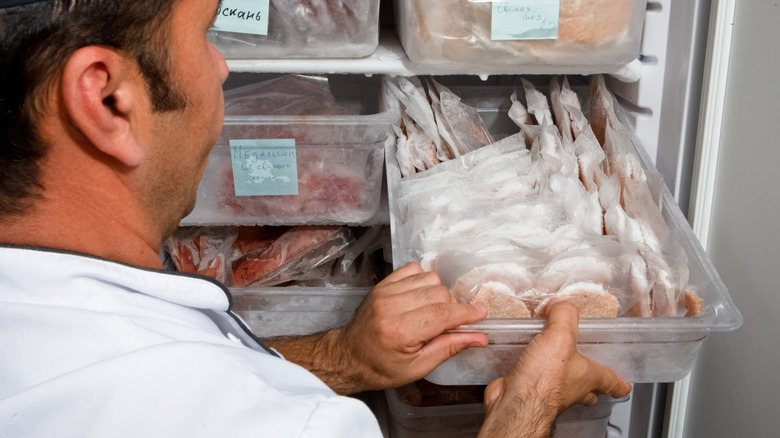
We already discussed how in-demand menu items are often cooked earlier, then kept warm under heating lamps. But there's another way fast food chains fake warm, freshly cooked food: They don't cook everything from scratch. Some components of a fast food meal are often already pre-cooked, frozen, then reheated — sous-vide style, like Taco Bell, for example.
Fast food chains are under so much pressure to streamline their kitchens and keep the cooking and assembly times short. For a location to be profitable, customers should be able to go through the drive-through, service counters, or self-ordering kiosks as quickly as possible. Simultaneously, at the back of house (BOH), the kitchen should be able to keep up with the influx of orders. The more orders it can fulfill, the higher that day's sales will be.
Here's where pre-cooked, frozen, or chilled fast food comes in. One of the most effective strategies that fast food chains have developed over the years is to pre-cook and flash-freeze popular menu items and meat components. They are shipped frozen to every restaurant, where employees would only have to reheat them properly and dress them up with pre-portioned, ready-to-use condiments. This process effectively trims the cooking time. Frozen food offers so many business benefits that fast food chains are unlikely to stop the practice anytime soon.
Some refry or mix old fries with fresh fries
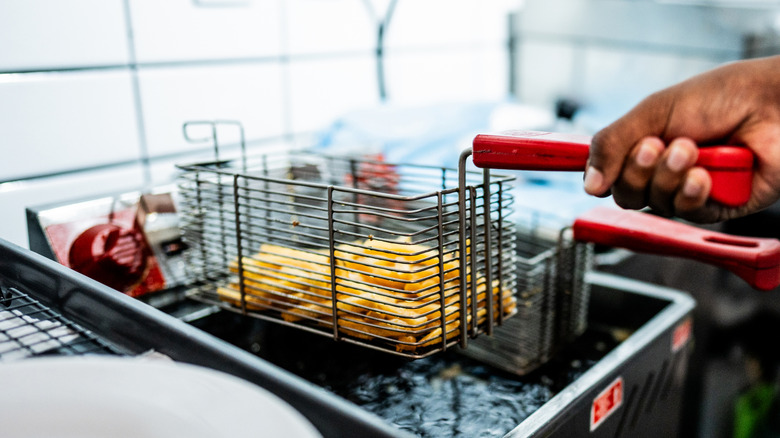
One popular ordering hack that many believe is the key to getting fresh-cooked fries is to order them without salt. Salt sticks more easily and evenly when sprinkled on fries that are still damp with hot oil, so employees typically salt each batch as soon as they come off the fryer. And so, if a customer wants no-salt fries, the person manning the fryers will have to drop a fresh batch and serve it unsalted.
This hack works for the most part. The exception is when fast food employees get clever, too, and just fake freshly cooked fries by simply dunking an old batch in the fryer again. "A lot of employees just throw fries back into the fryer and shake them around for 'no salt' fries," an employee alleged on Reddit. Another worker said that a "cook to order" request ideally does the trick, but some managers are simply too "cheap" that "they'll mix old fries in with new ones and it's gross."
These confessions are not new. In 2021, a McDonald's employee uploaded a TikTok video where he appeared to re-fry old chicken nuggets for a few seconds, then dumped them back into a takeout box for a customer who wanted fresh nuggets. He wrote "joking" at the bottom of the video, but he later confessed to Newsweek that he did the same thing once with a crispy chicken, as instructed by his manager. Obviously, one employee's admission isn't indicative of an entire chain's approach, but it's still interesting to know any fast food worker considers it to be an option.
Some ingredients are rehydrated with water on-site
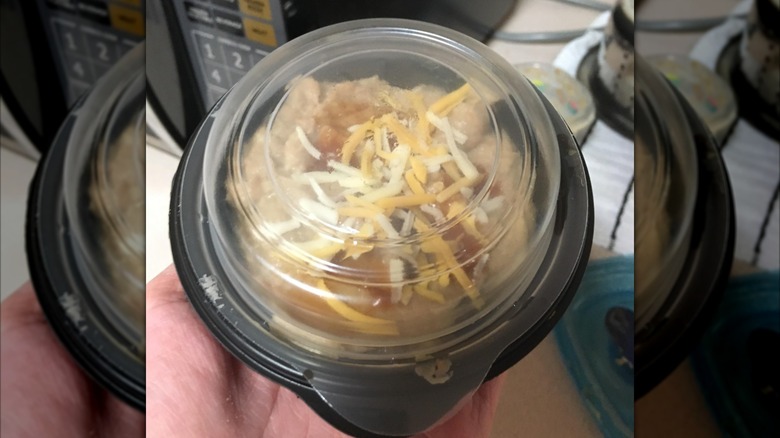
Are you a Taco Bell fan? Perhaps you are a fan of the refried beans, like many of its loyal customers? Well, what many people may not know is that your local Taco Bell doesn't actually cook the beans from scratch. Employees just pour boiling water over dehydrated beans, as shown in a video uploaded to social media by an employee. The seasonings are already included in the bags of dehydrated beans because employees don't even add other ingredients. They just have to stir and leave the beans to rehydrate.
Using dehydrated ingredients is not new in the fast food industry. White Castle, for example, also famously adds dehydrated onions to its sliders. What's interesting is that while many people reacted negatively to Taco Bell's dehydrated beans, White Castle's dehydrated onions don't seem to have generated quite the same level of backlash.
We can hazard a guess about these different reactions, though. With Taco Bell, the entire dish was made with dehydrated food, whereas at White Castle, it was just one component. It helps that the rehydrated onions enhance the burgers' flavor and texture, too. From this perspective, using dehydrated food is a convenient, clever way to ensure food consistency and prevent spoilage. Still, it is an undeniable strategy for how fast food chains fake freshly cooked food.
Sometimes the chili is made from yesterday's leftovers
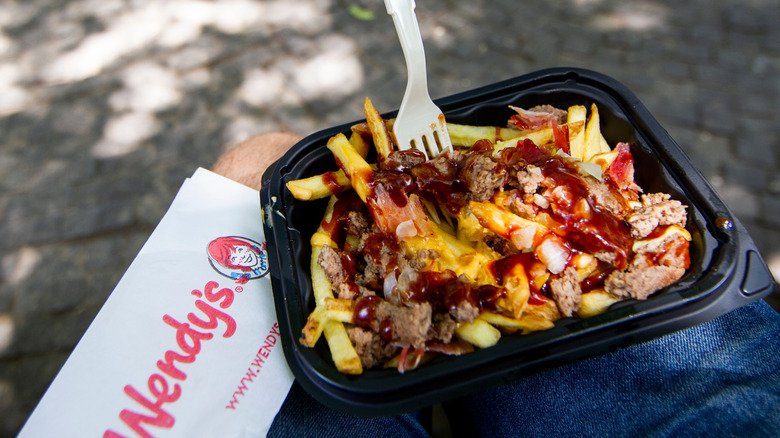
If you're a regular Wendy's customer, then you're probably a fan of the chili. A hearty dish with vegetables, chili beans, and ground beef, Wendy's chili is the perfect snack for a chilly day. But before you order, you should also know that the chili is made with leftover burger patties. And according to a viral TikTok video from the Wendy's kitchens, the patties are rinsed, microwaved, chopped, then bagged and frozen, ready for cooking the next day.
Not all locations do this, however. Current and ex-employees have gone online saying the frozen patties are really not as bad as people say and that some locations even cook patties specifically for the chili. Some people aren't convinced cooking with leftovers is value for money, but others consider this business practice sustainable and ethical, considering the alternative is to throw out perfectly good food.
This practice of repurposing unsold but still viable patties has never exactly been a secret, per se. It's been discussed on Reddit for well over 10 years, and was also covered in an episode of "The Food That Built America." However, the average person isn't totally fluent in the ingredients and cooking process of their favorite fast food meals, so there are people who are unaware of the truth behind Wendy's chili. Does this mean the chain is faking freshly cooked chili? Well, it depends on how you look at it. Wendy's doesn't say anything about repurposing old patties in its list of facts about the chili. Is it a problem? You decide.