

10 Classic American Beers That Are Harder To Find Than They Should Be
Breweries have been quenching Americans' thirst for a long time, and many classic brews have experienced a rise and fall in popularity across the United States. Appealing to different tastes and different regional preferences, some of these beers continue to enjoy fiercely loyal followings, while others have quietly begun to slide under the radar.
The country's history has had a direct impact on the success of some of these beers, as many brands suffered during Prohibition in the 1920s and 1930s. During this time when alcohol was no longer legal and banned from public spaces, some breweries got creative with experiments in "near beer" that paralleled clandestine home brewing. But nothing compared to the real thing, and beer in its truest form came back with increased popularity once alcohol was legalized again in the 1930s. However, some breweries lost their influence by the end of the 20th century through a complicated series of corporate takeovers and shifting consumer trends.
The beer brands that have survived these market shifts are largely considered classics, but not necessarily because they are the most stunning or remarkable in terms of flavor. Most of the beers on this list are simply easy to sip and appreciated for being affordable. The majority have maintained loyal, local fans, though some are desirable because their limited distribution has made them tantalizingly elusive. Here is a list of 10 classic American beers that are difficult to find, but which nevertheless enjoy a devoted regional pride.
1. Schaefer
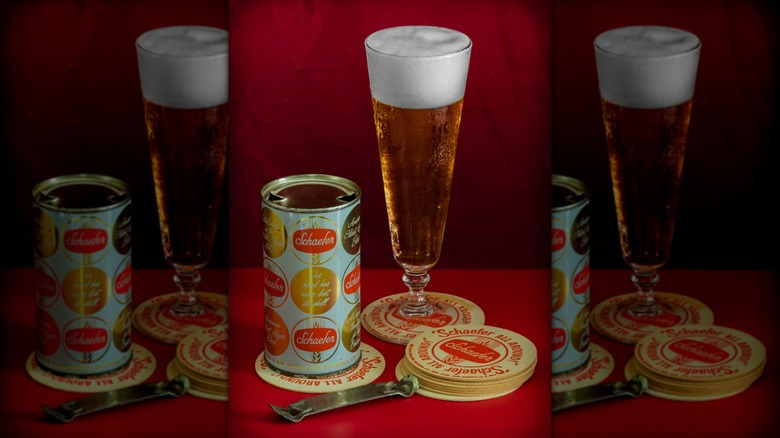
Originating in Brooklyn in the mid-19th century, Schaefer beer was once a mainstream brew. By the 1970s, it was one of the most popular American beers, though things began to shift after Schaefer's first change in ownership. By 1999, the brewery had changed hands twice to end up with Pabst Brewing Company, which moved production out of New York but kept it largely concentrated in the Northeast, notably in Pennsylvania.
Today, Schaefer's popularity has fallen, but it hasn't disappeared completely. As light lager with a very low alcohol content — around 3.8% — it's easy for consumers to enjoy. This ties into the brand's iconic slogan, "The one to have when you're having more than one." But no emphasis on quantity has solved the limits of its distribution. Schaefer's production and consumption remains largely limited to the Northeast, though even in this region consumers have voiced that it's not always easy to find. With some sprawl into the Midwest, there's still no brewing operations on the West Coast. Schaefer is lesser known and generally inaccessible out West, a fact which has not helped to revive its once widespread popularity.
2. National Bohemian
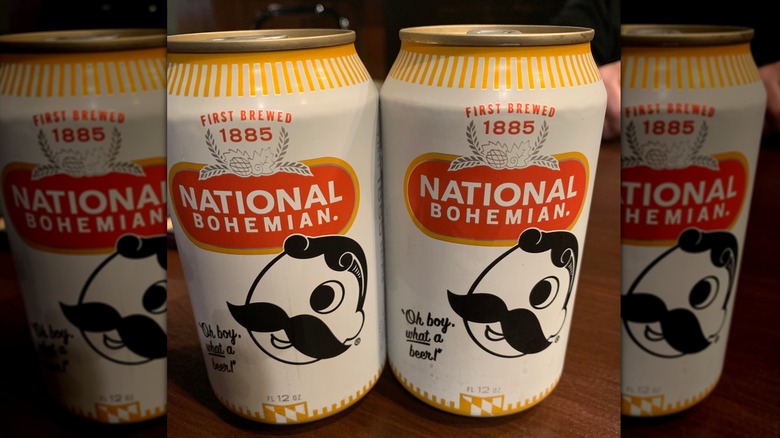
First brewed in Baltimore, Maryland in 1885, National Bohemian is still a Charm City favorite, affectionately known to locals as Natty Boh. Created by the National Brewing Company, and the first in the U.S. to sell beer in a six-pack, Natty Boh hasn't been brewed in its hometown for decades. Nevertheless, the vast majority of its sales and consumption remain largely concentrated around Baltimore and the surrounding areas in Maryland and Washington D.C.
As a result, Natty Boh's distribution remains largely concentrated in the greater DMV region, notably in Virginia, Pennsylvania, Maryland, and down to North Carolina. Over the years, Natty Boh hasn't traveled too far from this region, though has spread a little into the Midwest. Fans of the beer take flavor and quality less into consideration, as National Bohemian is largely enjoyed for its reliably low price point. Being such a regionally-based drink, with its popularity closely tied with local pride, Natty Boh remains elusive in other parts of the country, but its fans are devoutly loyal.
3. Hamm's
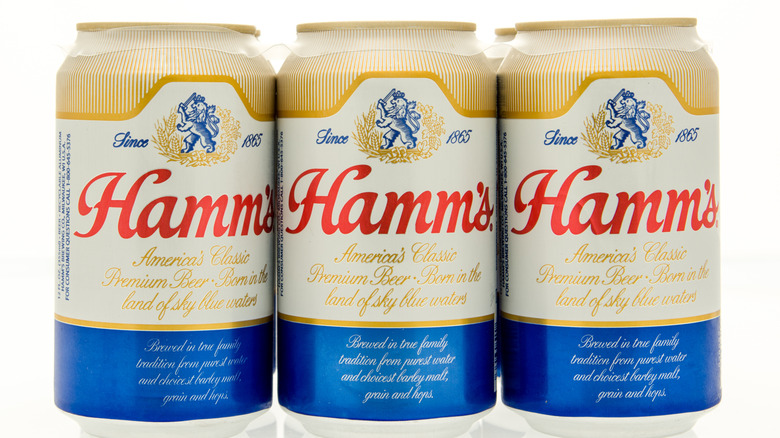
First introduced in Saint Paul, Minnesota in 1865, Hamm's came about when German immigrant Theodore Hamm took over an unsuccessful brewery and began producing German-style lager. The timing and location were ideal, as the the brewery's position near the Mississippi River meant that Hamm's had immediate access to a major distribution network. Hamm's therefore spread throughout the Midwest, and became a regional favorite. Thanks to ubiquitous advertising strategies on radio and TV, Hamm's popularity expanded nationwide, and it became one of the biggest names in beer by the mid-20th century.
But, as with so many successful beer brands, Hamm's popularity is precisely what led to the brand's decline. Bought out by different brewing companies in the late 20th century, Hamm's could no longer compete with changing consumer expectations. It hasn't disappeared completely, but has become a Midwestern beer that's fallen under the radar. Today, Hamm's has at least remained a reliable staple that is mostly consumed and distributed in the Midwest as a go-to cheap beer. While it's widely available in Minnesota and Wisconsin, consumers have voiced that it's much harder to find in the Northeast and Southwest, and no longer the nationwide choice it once was.
4. Rainier
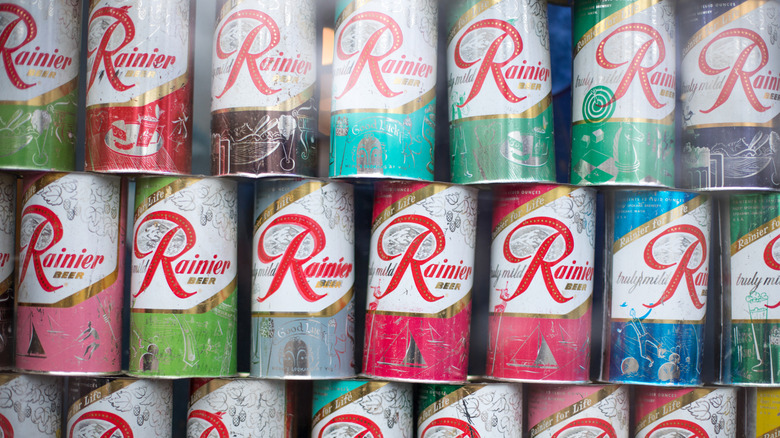
Initially produced in Seattle in 1878, Rainier was the local libation before Washington officially became a state. It's popularity grew in the beginning of the 20th century, but Prohibition forced its influence southward. Brewed in San Francisco to escape Washington's earlier alcohol restrictions, the beer started gaining a following in California as well. Post Prohibition, brewing operations continued in both Seattle and San Francisco.
Pacific Northwest locals have admitted that the beer is nothing special; it simply enjoys regional popularity due to a fierce local pride. That starts simply with Rainier's name, which comes from one of Washington's most famous dormant volcanoes and harkens back to the beer's Pacific Northwest roots.
But the brand's brewing history has solidified its popularity along the entire West Coast. Rainier experienced an even more widespread surge in popularity in the 1970s, but due to an influx of larger breweries stealing the competition, it has simmered back down to subsisting as more of a regional favorite. Today, Rainier is brewed in Irwindale, California and is enjoying a hipster revival on the West Coast. For anyone who's not out West, however, this beer is difficult to find.
5. Grain Belt
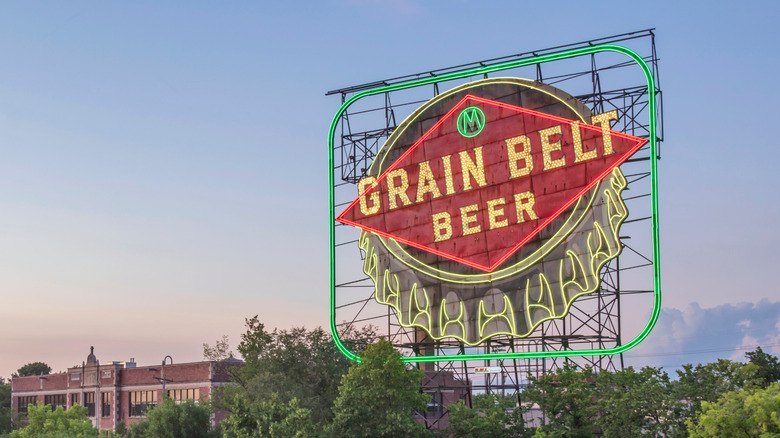
First introduced in Minneapolis in 1893, Grain Belt's beer is among the oldest beer brands still available in America. This golden lager was an instant hit with locals. The name was a further nod to local pride, as it makes reference to one of the region's dominant industries — the upper Midwest is the country's dominant producer of wheat, and Minneapolis itself is also home to Pillsbury and Gold Medal Flour.
But despite its local success, Grain Belt beer would go on to suffer a continuous rise and fall in popularity throughout its brewing history. This started with Prohibition, which nearly put Grain Belt out of business. Things improved once Prohibition was repealed, and the beer continued to enjoy regional popularity until sales began to decline again. Changes in ownership further exacerbated matters, and the beer continued to lose popularity through a series of poor advertising strategies.
After nearly going out of business numerous times, Grain Belt finally achieved stability on the market in 2002, when it was bought by the August Schell Brewing Company, another Minnesota-based brewery. Since then, Grain Belt has gained a permanent place in Minnesota stores and bars. The beer's influence is slowly expanding, but its consumption and distribution remain highly concentrated around its state of origin, making it difficult to find in most parts of the country.
6. Lone Star
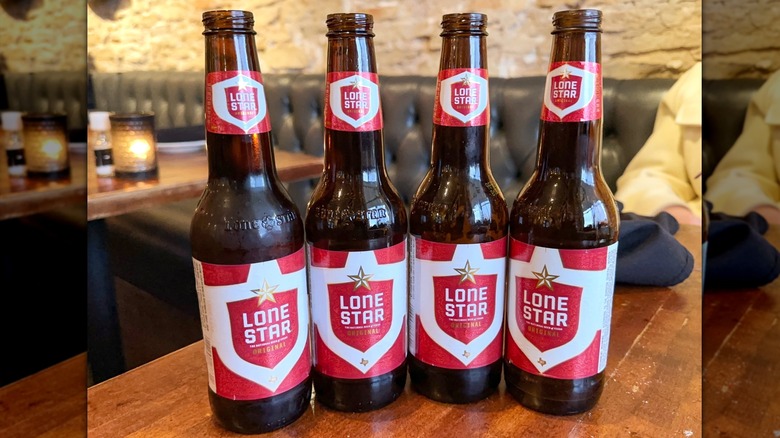
First brewed in San Antonio in 1883, Lone Star has witnessed much of Texas' history to become the state's official beer. With the support of Adolphus Busch, a beer magnate famously known for his Budweiser brand, Lone Star had a head start against other smaller breweries in the area, and was able to mass-produce its beverages to quench a local's thirst fairly quickly. The operation was a success until it fell victim to the same fate that halted all breweries' production in the 1920s: Prohibition. But after this decade of deprivation, beer production continued, and Lone Star came back more popular than ever after an improved recipe was developed in 1940.
The light lager was a success with Texans, refreshingly well-suited to the hot climate. Lone Star continued to gain Texas' acclaim in the following decades, but it began having a wider reach after being served to the Austin music scene in the 1970s. Lauded by country music transplants who enjoyed Austin's beer as much as its musical counterculture, Lone Star got more attention. But even though it has since become available in other states, the beer's fiercely loyal fan base remains concentrated in Texas. Consumers have been able to find it in parts of the Midwest, the Northeast, and the South, but its influence has not yet spread westward. Those west of Texas might have a hard time finding it without making a trip to the Lone Star State.
7. Spotted Cow
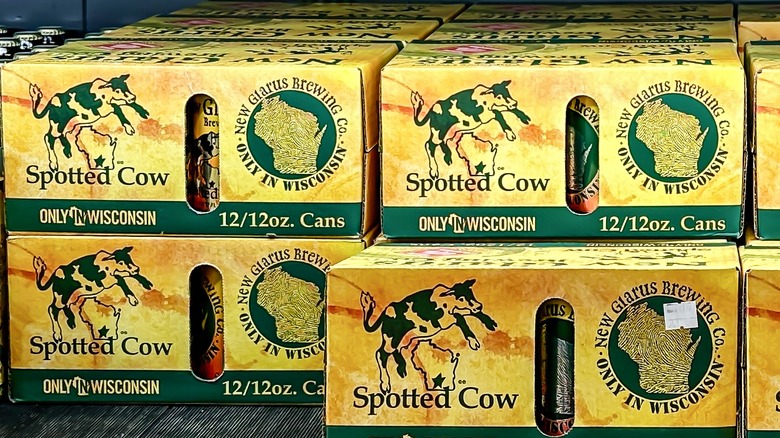
A more recent brew than many other classic American beers, Spotted Cow was first released in New Glarus, Wisconsin in 1997, just a few years after the New Glarus Brewing Company opened for business. This Midwestern microbrewery's beer quickly attracted attention from locals and visitors out of state. Those who've tasted Spotted Cow will go out of their way to taste it again, and many must do so literally, as the beer remains proudly available only in the state of Wisconsin.
Spotted Cow's flavor has attracted all manner of beer enthusiasts, as it is more distinct than many other widely popular beers. Made from the well water on the brewery's property, there's something original about the taste, which has notes of fruitiness and a bit of a sour twist. Fans of the beer make a point of stopping to pick some up whenever they find themselves in Wisconsin and lament the fact that they cannot easily get it when a craving strikes. Proudly regional and beloved by those who've passed through, Spotted Cow remains one of the most popular beers that's the hardest to get ahold of, but this is also part of its charm.
8. Narragansett
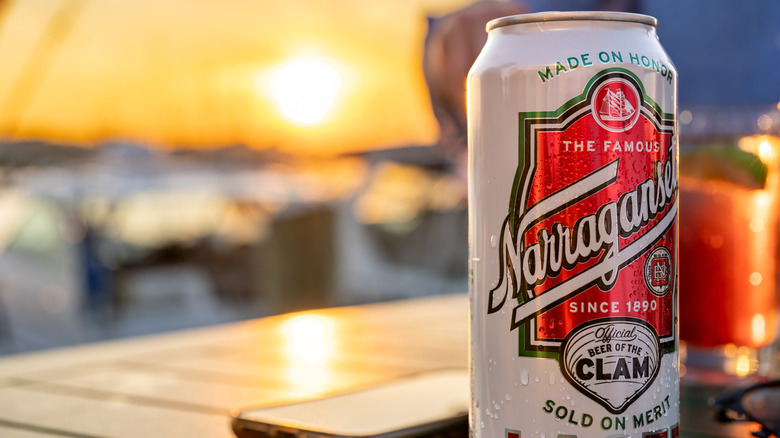
First introduced in 1890 in Cranston, Rhode Island, the beer produced by the Narragansett Brewing Company was enjoyed by locals until Prohibition put a damper on production. By the mid-20th century, after alcohol was legalized again, Narragansett beer had become a staple across New England, strengthened by its adoption as the official beer of the Boston Red Sox baseball team. With the Sox announcer voicing ads for Narragansett and Dr. Seuss behind the original graphics, New England figures played a major role in transforming Narraganset into the largest brewery in the region. Nevertheless, the brewery faced financial trouble in the latter half of the 20th century. After a change in ownership, brewing operations moved to Indiana, and the beer brand lost favor with its New England consumers.
It wasn't until 2005 that Narragansett regained some of its popularity. Another change in ownership made efforts to win back New England, including an advertising tactic that introduced the Gansett Shandy, a mixture of Narragansett beer and the locally-renowned Del's Frozen Lemonade, which also originated in Cranston. After gradually gaining favor again, Narragansett has had a revival in the Northeast, enjoying renewed popularity as a well-priced lager that elicits a fair bit of regional pride. It's newly strengthened New England ties keep it largely limited to this region, however, though Narragansett has become available down the coast. Those in other parts of the U.S. have voiced that anyone who isn't on the East Coast might have difficulty finding this beer.
9. Pliny the Elder
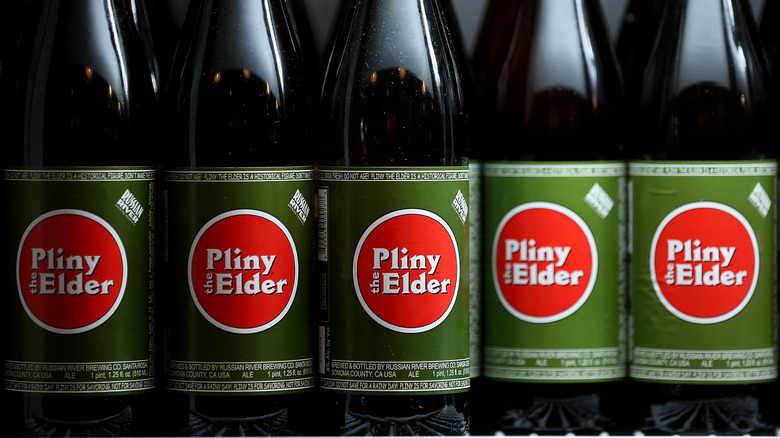
First brewed in Santa Rosa, California in 1999, Pliny the Elder is a beer from Russian River Brewing Company with a reputation that truly precedes it. The brew has been notoriously elusive for avid beer aficionados hoping to get a taste, due to its limited distribution. An IPA with lots of hops and not much bitterness, Pliny the Elder has an 8% ABV, making it a strong beer that's surprisingly smooth. Its uniqueness has won this beer many awards, garnering widespread curiosity. But despite a large number of beer fans eager to get their hands on Pliny, this beer was, for the longest time, only available in its hometown.
Pliny being so hard to find has frustrated many who are eager to have a taste, transforming the beer into something of legend. Fortunately, the beer's growing reputation has enabled Russian River Brewing Company to expand its operations, and distribution has spread to a very small handful of states. Outside of California, fans can only find it in Oregon, Washington, Nevada, Colorado, Pennsylvania, and Maine. Consumers outside of these states have been left craving Pliny, obliged to solicit friends from these states to bring a few bottles, or to make trips to select states for the chance to enjoy it.
10. Genesee Cream Ale
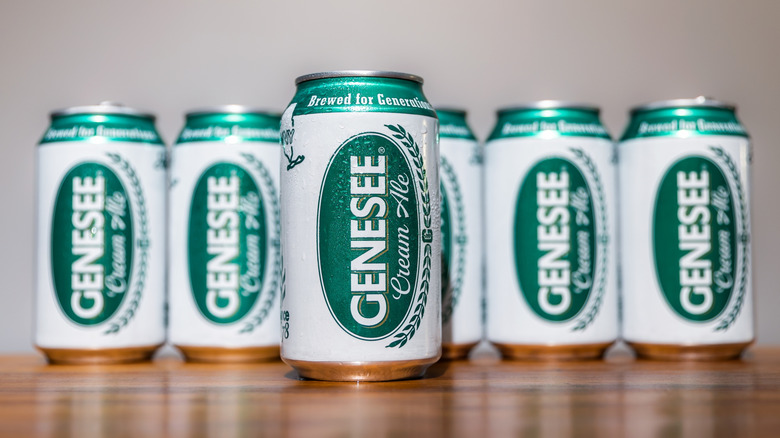
Though the Genesee Brewing Company got its start in Rochester, New York in 1878, the brewery's legendary Genesee Cream Ale wasn't introduced until nearly a century later, in 1960. Instantly popular, Genesee Cream Ale quickly became available across the U.S. Merging the differences between an ale and a lager, Genesee's Cream Ale appealed to a wide array of beer drinkers for its crisp bubbliness and subtle fruitiness.
A beer that washes down easily and remains relatively affordable, Genny's has kept a loyal and widespread fan base, and enjoyed a few surges in popularity over the years. But despite once being one of America's most popular ales, Genesee Cream Ale has nearly disappeared. This particular cream ale's consumption has always been the most heavily concentrated in sporadic parts of the Rust Belt, including New York, Pennsylvania, and Ohio. Beyond these regions, Genny's has joined the ranks of beers that are not so easy to find anymore.