

10 Warning Signs Of A Bad Restaurant, According To Restaurant Pros
Not every restaurant is a winner. I won't name names, but I've certainly wasted money in plenty of food establishments that weren't worth it. But if you can tell the warning signs of a bad restaurant, you may be able to avoid the subpar establishments before you've parted with your hard-earned cash. The thing with restaurants is that they don't have to be fancy. Some hole-in-the-wall joints serve incredible food. And some Michelin Star restaurants are overrated. It's not all about appearances or 16-course tasting menus, but there are things to look out for.
As a food writer who has spent time working in various food businesses, I've eaten at my share of restaurants, and I feel like I have an eye for what separates the good from the bad. But I didn't want to give you my opinion alone. I also interviewed four restaurant pros, including owners, managers, and chefs. These people are at the heart of the business and have insight from living the restaurant life every day.
With their experience and my own, I honed in on those signals that a place isn't worth eating at. Some of these tip you off the moment you step through the door. Or even beforehand, if you look up the menu online. In other cases, you need to sample the food before you spot the issues. Here's to eating at better restaurants from now on.
The restaurant looks shabby or uncared for
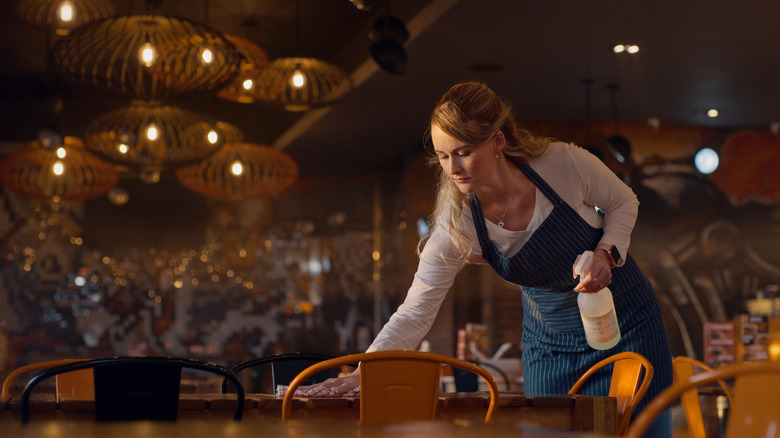
I try not to judge a restaurant based on appearances alone. Some of the best noodles I've eaten have come from places that look like college spots, and my top dim sum spot looks more like an antique shop than somewhere you'd go for food. But, while a restaurant doesn't have to be slick, if it looks very shabby or like nobody cares for it, that's a bad sign.
Executive Chef Alan Gosker of Lola at the National Exchange Hotel in Nevada City, California, says he always takes a look around at the common areas when he checks out a restaurant he hasn't been to before. "Floors, menus, waiting area — if those look cared for, the rest usually falls in line," he remarks. There's a difference between a restaurant that's a little worn and old but has a lot of heart and one that people don't give a damn about. Dirty floors, tables that haven't been wiped down properly, baseboards that have never seen a duster — these kinds of things are all bad signs.
Dean Woodhouse, owner of the Woodhouse Hotel and onsite restaurant Casa Di Legno, checks out "the cleanliness of everything, from cobwebs in the corners to dust on the reception desk." These are some of the initial signs that a restaurant might not be a good one. Because if nobody cares about cleaning or maintaining the place, it's unlikely they care that much about the food.
The host and waiters aren't engaged

I understand that a job is a job, and by no means do I think restaurant employees have to love every minute of their working day. However, when the host and waiters are obviously not engaged, this can be a warning sign of a bad restaurant. Great establishments are excited about their food and want to share it with the world, so a lack of engagement can be a symptom of a work culture that isn't cultivating any care.
There are things your waiter is doing behind the scenes, like working expo and checking in with the chefs, so there might be times when they're not around. But there's a big difference between a busy server and one who doesn't care. Woodhouse looks at the response he gets from waiters or hosts as soon as he enters the door. "If the restaurant cares about these details and makes a good first impression, it's a good sign," he remarks.
"First thing I look at is the host," says Chef Gosker. Did they make eye contact, or did they shy away like they'd rather be anywhere else?" He also takes a look around the room. "If a bunch of guests are looking around, unsure what's happening or waiting for someone to notice them, that's your cue," he remarks. He says that small signs add up fast, and you should trust yourself if you think you notice an issue.
There are too many items on the menu or it's unfocused

Simply having a glance at the menu can tell you all you need to know about a restaurant. Sure, some places sound great on paper and end up letting you down, but you can usually tell a bad establishment from a large, unfocused menu. Gone are the days when all restaurants had a vast, multi-page menu presented like a hardback book. Most of my favorite spots to eat have a single page of dishes, often printed out in-house that day.
"If the menu reads like a small novel, I'm already wary," remarks Gosker. "I lean toward short, focused menus because you can actually nail every dish," he adds. I wholeheartedly agree that a small menu is often one of the signs you're in a good restaurant. It's not universally true. I've been to excellent Chinese and Indian restaurants with enormous menus, for instance. But it tends to be a good indicator.
The focus of the menu is also important. Mike Bausch is an award-winning restaurateur, owner of Andolini's Worldwide, and founder of Unsliced, a platform that helps indie restaurant owners succeed. "If the menu shows no point of view or tries to please every type of diner, you're looking at food that will be mid at best," he says. Dishes that don't seem like they belong on the menu can be a red flag. "If you go to an Italian restaurant and see that they also serve Indian dishes, you might wonder how authentic the Indian and Italian dishes are," notes Woodhouse.
The restaurant seems disorganized, rather than just busy
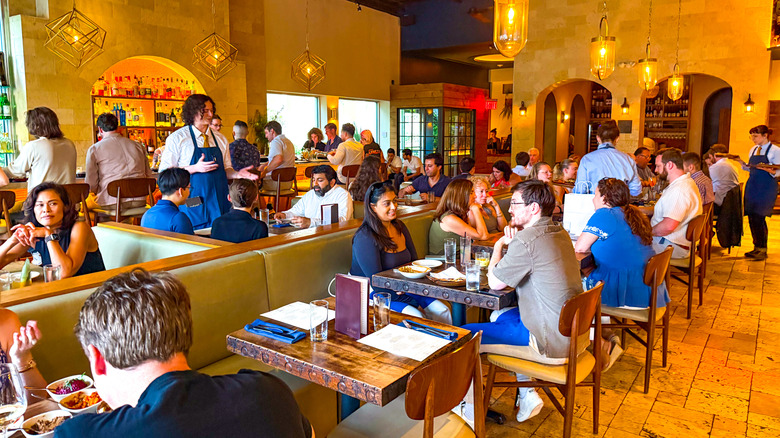
When a restaurant is busy, it can look bustling, with staff rushing around doing their jobs. But there's a noticeable difference between busy and disorganized. And if somewhere looks lacking in organization, that might be a warning sign about their food. I love the atmosphere of a lively spot, but I don't want to feel ignored or notice issues that come from disorganization.
"A good restaurant can deal with being busy," notes Woodhouse. You can usually spot the difference between a busy spot and a chaotic one. Busy restaurants might be full, and the staff may be rushed, but they shouldn't be keeping people waiting without acknowledging them when they walk in, nor should there be multiple empty tables that haven't been bused.
"If the host can't quote a basic wait time or servers keep bouncing without a purpose, that's disorder," says Bausch. And if you don't spot a restaurant being disorganized when you walk in the door, you might notice it once your food starts coming out. "Even when all seats are full, the timing between each course should be correct — if it's not, then the restaurant is disorganised," Woodhouse adds. Sometimes a restaurant can lack organization but still produce great food, but this lack of order can extend to the kitchen and impact the quality of what they're putting out.
The dishes don't have any standout touches
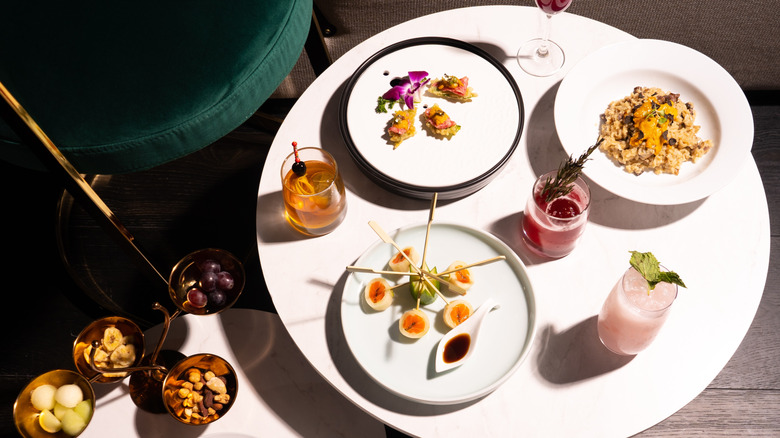
If you want to go to a great restaurant, looking at the menu can tell you a lot. When the dishes don't have any standout touches, you might be in for a disappointing meal. Rather than a dish that's worth the money, you might go home having eaten a disappointing dinner and wishing you'd stayed in and cooked.
Like a lot of these warning signs, there are exceptions. Sometimes you might go to a hole-in-the-wall restaurant that isn't trying to elevate any dishes but makes incredible no-frills food. But a lack of standout ingredients is often a sign of a kitchen that's doing the bare minimum and isn't interested in experimenting with flavors or trying new things.
Gosker tells us that he loves it when dishes have at least one thoughtful touch that stands out. This might be "a pickle or a garnish that ties everything together, not just an afterthought, something that tells you the kitchen's awake and cares," he remarks. Some restaurants throw on something that seems fancy — like pearls of balsamic vinegar or a drizzle of truffle oil — but doesn't really work with the dish. That's not what we're talking about here. You're looking for something truly thoughtful and real that shows a chef cares. "That tiny spark usually means the whole place has a heartbeat," says Gosker.
The physical menu looks outdated or old

We've talked about looking at the menu, but the actual physical menu can tell you a lot about a restaurant. Gosker always checks the menus to see if they're clean and cared for or reused without a second thought to their appearance. Dirty or beaten-up menus are a bad sign. This is the kind of small factor that might signal greater problems in a restaurant. If the staff don't care about the little things, it may follow that the larger issues aren't that important to them, either.
But it's not just the state and cleanliness of the menus. The design also matters. "Menu design and engineering is an art," says Bausch. "If the menu is half-baked, so will the kitchen's execution." So, while it's partially aesthetic, it also often speaks of wider problems in a restaurant.
Woodhouse agrees that the design of the menu is important. He tells us that, if it's "visually outdated," for instance, it's cluttered, has a poor color scheme, or lacks visual hierarchy, this "gives a bad impression." So, if the menu looks like it was designed in Microsoft Paint in the '90s and hasn't been updated since, it probably doesn't say anything good about the food.
Food that tastes like it's been stored in the fridge for too long
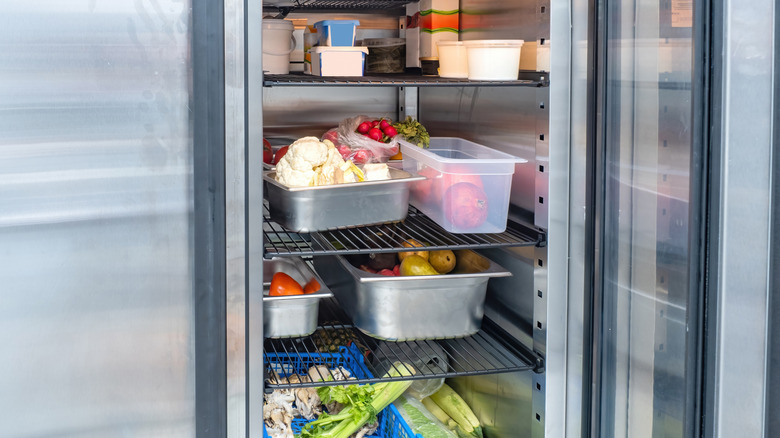
Improper food storage is one of those sketchy restaurant practices you shouldn't ignore. Unfortunately, as a customer, you don't get to look behind the scenes, so you're relying on appearances. But, there's a particular flavor that can tell you food isn't being stored right or is being kept hanging around for too long.
"After years of working in a restaurant, you learn how to identify a very specific flavor that comes from an item being stored uncovered for too long in a walk-in fridge," says Joakim Eriksson, the General Manager of The Lark in Santa Barbara. "A stale item will begin to taste like everything else in that fridge, and then you end up with whipped dessert components with hints of onion and smoked brisket."
Unfortunately, by the time you've received your food and it tastes like the inside of a fridge, it's already too late. It might stop you from going back in the future, but you've already wasted your money. So, although you can't tell a restaurant's food storage practices just from looking around, there are signs that it might not be up to scratch.
If a restaurant is generally unclean out in the dining area, it doesn't bode well for the kitchen. And, a large menu might also be a sign that food is stored too long. When a menu "offers everything under the sun, it's very difficult to keep so many ingredients fresh all at once," Woodhouse tells us.
Trendy dishes that offer style over substance
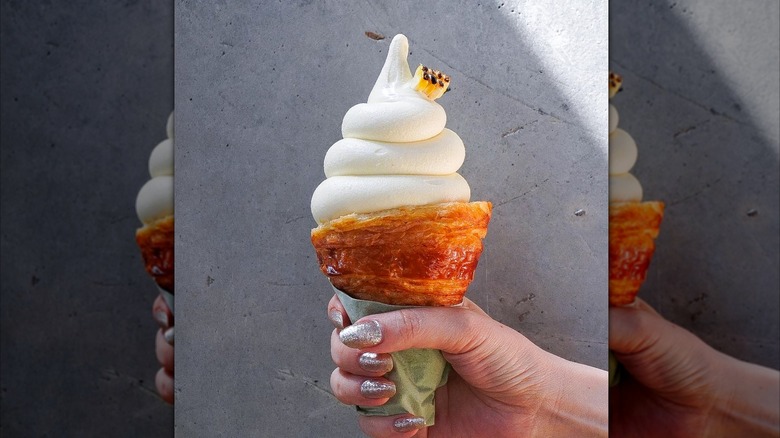
"Trend-chasing is a big turn-off," according to Eriksson. If you're as into food as we are, you probably see the latest food trends on TikTok and Instagram, from ice cream served in croissant cones to Dubai chocolate everything. But, trying to be trendy and impress people on social media isn't necessarily the sign of a good restaurant. It might have lines out of the door, but it's often all style over substance.
"Do not try to go viral on TikTok with 3D-printed garnishes on charcoal and gel membranes and nitrogen nonsense with table-side theatrics," says Eriksson. He prefers something real over the hype. "I want to taste something from your childhood, especially if you grew up far away... I want authenticity."
This might make you think twice before you head to that restaurant everyone's been raving about on the 'Gram. We're not saying that every trendy restaurant is a bad one. There are some delicious viral dishes out there that are popular for a reason. But, when a place starts copying all the big trends to try and drum up more business, it's a sure sign they're doing it for publicity rather than because it's the right thing for the menu. A solid classic dish is likely going to taste better than something over the top.
The silverware or glassware are dirty
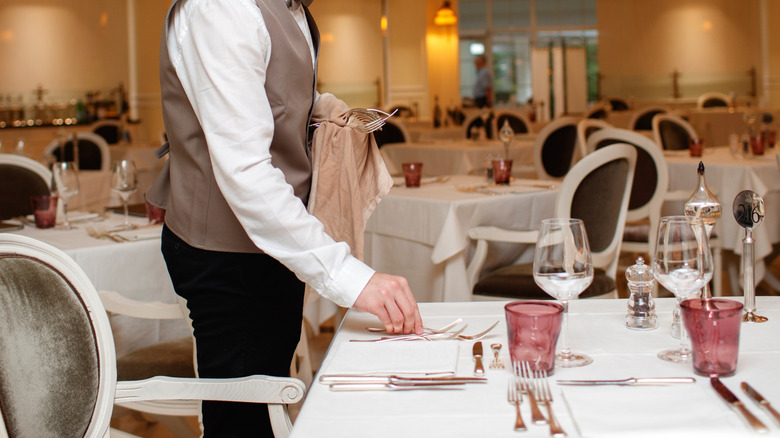
It might not seem like a big deal, but when your silverware or glassware isn't completely clean, it can be a sign of a larger issue. We don't mean so dirty that they look as though they literally haven't been washed, with food crusted on silverware or lipstick marks on glasses, of course, that would be bad. We're talking about when they have heavy water marks and haven't been polished. This might not bode well for the quality of the restaurant.
Both Bausch and Woodhouse list dirty flatware and glasses as warning signs of a subpar restaurant. It could be a sign that "basic hygiene is being missed," Woodhouse remarks. Sticky menus and greasy, finger-marked condiment bottles are also bad signs of a place that isn't prioritising hygiene. Looking at the door handles, particularly in the bathrooms, can also tell you something.
But, watermarked glasses and silverware aren't always a dealbreaker. It really depends on the vibe of the joint. I've eaten in my fair share of neighborhood hole-in-the-wall spots where shining the knives and forks wasn't a priority, but the food was exceptional, and the rest of the place was spotless. It's more of an issue for me if a restaurant is trying to be fancy, serving small plates or tasting menus, but isn't taking care of the basics, like having spotless glasses. It's context-dependent, so look at the rest of the restaurant before judging too harshly.
The food doesn't come out at the correct temperature

You've picked a restaurant that looks good, and it's passed all your visual tests. But that doesn't mean you're totally out of the woods. It might look amazing, be totally spotless, and have excellent wait staff, but if the food doesn't come out at the right temperature, that's a big problem.
"When hot food isn't actually hot, it tells me the kitchen isn't paying attention to the basics," says Gosker, noting that it could be a sign of poor food safety overall. "If the hot food is lukewarm, or desserts are half-melted, their temperature control is off," notes Woodhouse. Food temperature is something you don't want to mess around with. When food isn't heated hot enough, or is stored or held at the wrong temperature, it's a danger sign for food poisoning.
It can be serious, so if you get hot food that's still cold in the middle or cold food that's warmer than it should be, talk to the staff. Their response can make or break things. Occasionally, things go wrong in the kitchen, but that doesn't necessarily mean it's a bad restaurant. But you can tell a lot by the response of the staff. If they apologize, whisk the food away, and quickly replace it with a new dish, this time done right, it may have been a one-off mistake. If they're defensive or rude about it, you're at a bad restaurant.