

10 Classic Beers That Defined The '70s
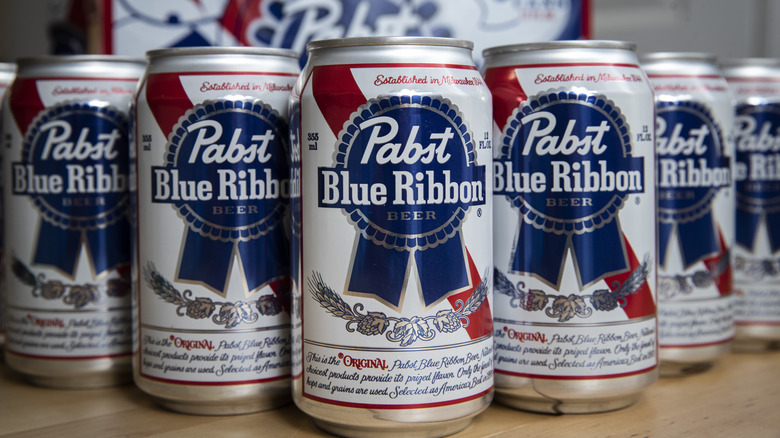
Beer culture in the 1970s was a wildly different animal. The biggest brands were propelled into the public consciousness through clever advertisements with catchy jingles. Some even engaged animated cartoon mascots to attract drinkers, a technique rivaled only by Camel Joe hawking cigarettes. It sure was a strange decade.
The biggest beers of the era were a mix of classic quaffs that would keep their hold on America for generations to come and long-time favorites that would soon outlive their popularity. It's hard to hear the name Coors or Schlitz without being transported back to a time of sideburns and leisure suits. Even if you weren't around during the 1970s, something about these simple, store-bought beers stands out among the artisan market that craft beers have softened beer drinking society in the 21st century.
Several brands bore the mental of being the best known beers of the Me Generation. They all seem like quaint throwbacks now, but in their heyday they were some of the best beers you could buy. All you had to do was run to the liquor or convenience store (or grocery store, if your region allowed) and pick up a six-pack to know you were getting beer that represented the decade in the best way possible. Here's a rundown of the brands that capture the heart, soul, and suds of the 1970s.
1. Budweiser
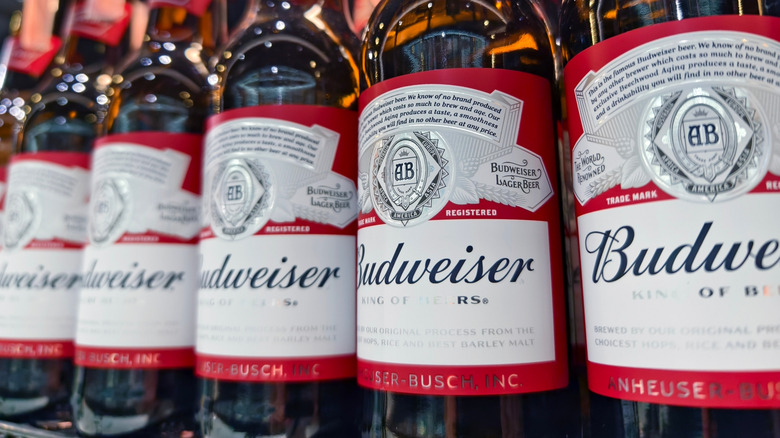
They don't call it the King of Beers for nothing, and Budweiser's reign over the other brands has been long-held and hard-won over the course of decades. Much of this cachet was built during the '70s, when you could hardly turn on the TV without seeing Budweiser ads that gave the beer a patriotic personality.
The Bud jingle of the era was a catchy march that explained, "When you say Bud, you've said it all," to a hummable tune that locked in tightly. Even younger watchers became enamored of the ads, especially the ones that made early use of the Budweiser Clydesdales as the company mascot. All of it combined with a quality beer being mass-produced for a public in search of a dependable brew to keep in the fridge or order on tap. All of this media magic was effective enough to make Budweiser the No. 1 beer in the U.S by the later half of the decade.
When beer drinkers of the '70s grew into health-conscious consumers of the '80s, Budweiser flexed its marketing muscle by introducing Bud Light. The shift allowed the disco-era favorite to keep fresh for new generations and maintain its popularity into the 21st century. The Clydesdales still show up in tearjerking Super Bowl ads for Budweiser, too, maintaining their star power. Let's just overlook the irritating "Wassup?" guys in Bud campaigns from the mid-2010s. Even the King of Beers makes mistakes.
2. Stroh's
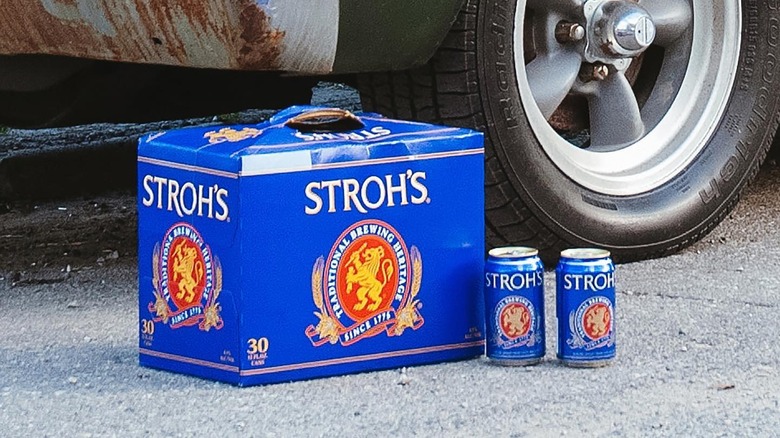
A Detroit original that became the largest brewery in Michigan in the late-1800s, Stroh's captured the imaginations of the American boomer beer drinker. It helped Motown become one of the U.S. cities with the best beer, especially in a decade where beer was becoming more of a mainstream indulgence. It didn't hurt that the name was a little different from the others and kind of fun to say.
Before Stroh's helped slake the thirst of America's beer drinkers, it was a heritage brewery that began pumping out traditional German brew in 1850. The '70s saw it become one of the more familiar names in the beer market, thanks in part to adult-oriented advertising that explained why the bottles came in a cardboard container that covered the glass (it was to prevent light from causing the beer to degenerate). The playful nature gave Stroh's an order of grown-up fun that didn't rely on sports or nature activities.
As of 1980, Stroh's had become the country's third-largest brewery, having enjoyed a successful run that gave the name well-deserved prestige. But by the mid-'80s, the Stroh's star had faded and the company was sold in parts to Miller and Pabst Blue Ribbon. It was the merging of three classic '70s beers, though it meant the decline of a long-time Michigan brewery with deep regional roots.
3. Coors
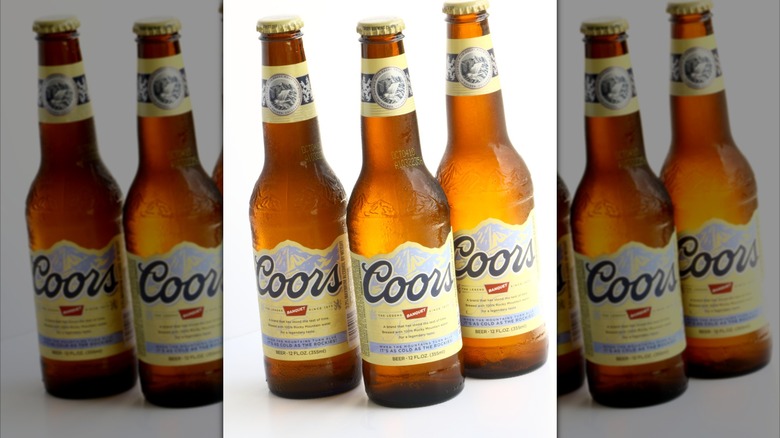
If you want to give your product regional prestige an air of mystique, restrict the portion of the United States where it can be sold. That's how Coors captivated the beer lovers of America, thanks to a beer that wasn't pasteurized and contained no preservatives. With temperature being an enemy of beer, especially one as pure as Coors, long hauls beyond the Mississippi River were illegal.
The rest of the country was in luck, however. Spring water flowing from the Rocky Mountains to the town of Golden gave Colorado a signature state beer that '70s drinkers loved. It developed a bit of a prohibition-era mystique that enticed the beer community and even inspired the movie "Smokey and the Bandit," in which Burt Reynolds hauls contraband Coors from Texas to Georgia. The story was played for excitement and laughs, but the concept of resorting to criminal means to get this classic '70s beer to Eastern states is based firmly in fact.
The '70s also made Coors a standout in the labor sphere when the company discriminated against gay workers, launching a major strike in 1973. Homophobic policies and poor standards in the San Francisco distribution hub led to an alliance between teamsters and the LGBTQ community, as well as other marginalized groups in the area. It may not be an occurrence that's largely known beyond union historians, but at the time, it showed Coors to be a major company that required modernization to fit into an era of social evolution.
4. Michelob
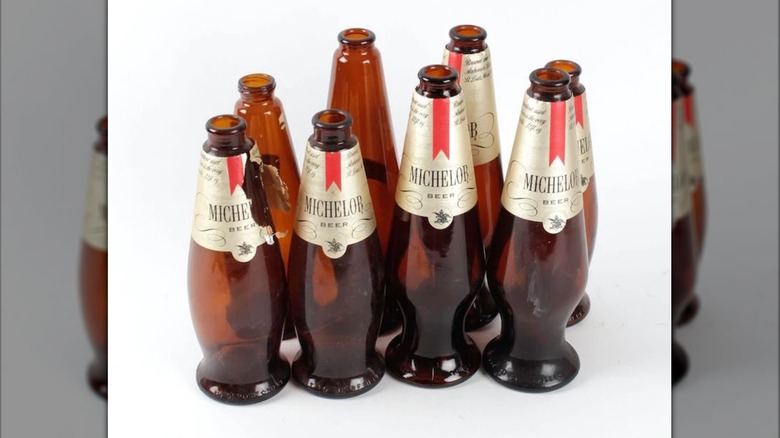
The fact of the matter is that Michelob has never really dropped off the radar of ground level beer drinkers. For a beer that began in 1896, it's a remarkable feat. But the impact it had on consumers in the '70s set this bottled favorite on a path to superstardom like few other products.
Nowadays, there's a variety to choose from, including the highly popular Michelob ULTRA, a lighter, low-calorie version of the original providing crisp refreshment that doesn't taste like light beer. But in the 1970s, you only had the bottle with the gold label to choose from. And when advertising from the era declared that "Weekends were made for Michelob" and showed poker-playing suburban dads lighting up at the sight of the bottle, you knew good times were ahead. Whether you were chilling out by the pool in an hour before people called it chilling out or cracking one open after a long day of doing nothing but relaxing, Michelob had you covered.
An Anheuser-Busch beer with a lava lamp-shaped bottle and a golden label wrapped around the neck, Michelob stood out from the crowd for more than just its voluptuous design. If you're a Gen X-er, you undoubtedly witnessed the beer-drinking adults in your life enjoy this brew back in the day; some fans favored the original over other beers. Though the brand has evolved, its '70s heyday helped make it a defining beer brand of the era.
5. Miller
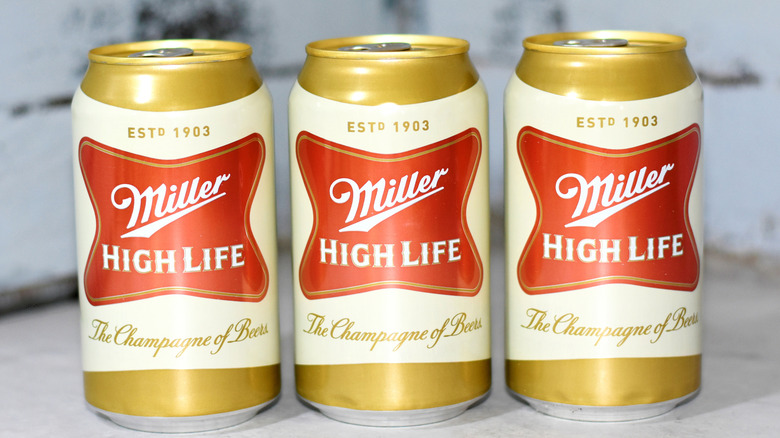
How could a beer drinker in the '70s resist a canned beverage with a slogan, "If you've got the time, we've got the beer." It almost sounded like a friend scheduling a hangout, only the friend was a long-time brewery and the hangout was actually the suggestion that you buy some Miller beer. Whether or not you enjoyed it with friends with your business, it was just as likely to be on the menu at a hot tub party as in the ice chest at a softball game.
Miller was a popular enough choice for the brewer to introduce Miller Lite in 1972. This move expanded its market and made Miller the No. 2 beer in America by 1977. No wonder it was known as the champion of beers. Major sports names like John Madden and Bob Uecker showed up in a series of incredibly popular ads for Miller Lite, launching the far reaching and long-lasting slogan, "Tastes great ... less filling." Clearly, Miller had the market cornered on the catchy beer centered marketing wordplay.
For a supremely popular '70s beer to retain its glamour through the 2020s is a remarkable achievement. Miller seems to have discovered the secret formula and after more than 120 years in production, it's still one of the most common beers around, proving that pretty much any time is Miller time. The company has also experimented with offshoots like Miller beer mints, which weren't as successful as the beer itself.
6. Billy Beer
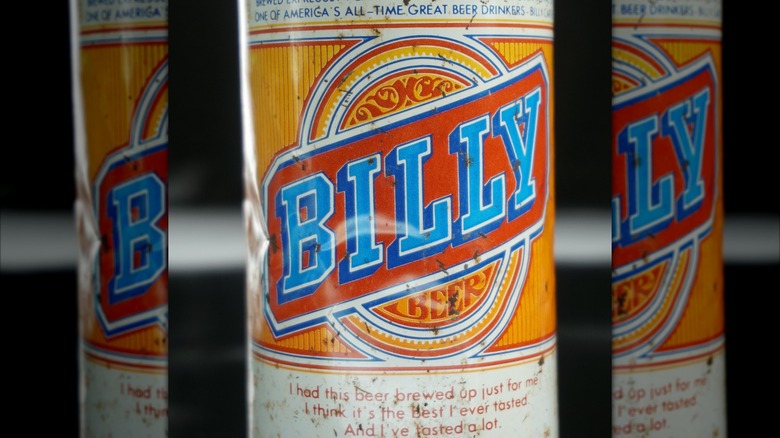
It was only meant to be a novelty, a canned beverage for adults bearing the image of the president's brother to celebrate his love of beer. But when Billy Carter introduced Billy Beer during Jimmy Carter's administration in the late 1970s, the public drank it up, both literally and figuratively.
Billy Carter was a real character whose goofy antics stood in stark contrast to his world-leader brother. Part of this persona included a love of beer, which led to Billy Beer becoming a collectible can of suds. It was produced in the late '70s by four different breweries. But the Carter name became even more connected to the American beer community in 1978 when Billy's teetotaling brother signed a law that legalized home brewing. Meanwhile, Billy Carter cleaned up with his namesake beer, making $50,000 a year for licensing his name to the brewery.
Anyone interested in picking up their own Billy Beer for kicks and giggles will find listings on eBay just itching for a bidder. Unopened cans can be had for prices ranging from under $3 to over $20, which seems like a lot for a 50-year-old novelty, even if it did help define beer in the '70s.
7. Pabst Blue Ribbon
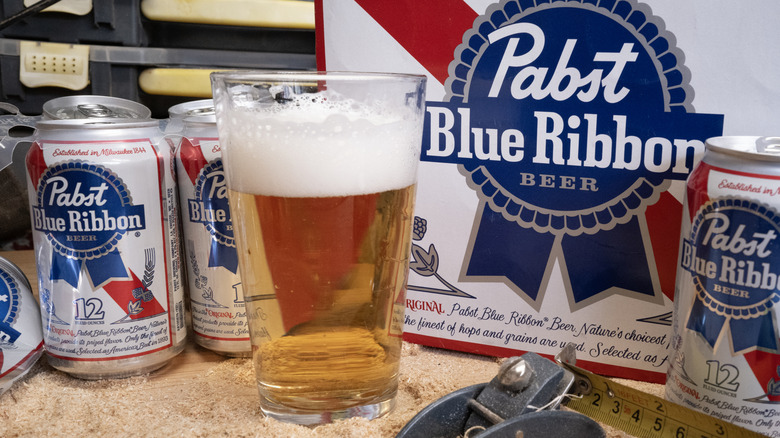
Before savvy marketing minds shorten the name to PBR, Pabst Blue Ribbon was being enjoyed by people in denim leisure suits who were way too proud of their waterbeds. The brand was solid enough to become a billion-dollar beer, holding its own against the major players all through the '70s. In its early days, the company tied actual blue ribbons around bottles to show off its high-performance formula.
The strange direction this brand took with its ads seems unlikely to have moved the needle; one in particular shows men racing vintage bicycles with oversized wheels to demonstrate the old time standard that Pabst used to create superior beer. Later ads featured bodybuilder Frank Zane and an up-and-coming Patrick Swayze picking up his disco-dancing date, with a "Saturday Night Fever"-friendly soundtrack. The through line with all of it was the slogan "I've got Pabst Blue Ribbon on my mind," which seemed to have a subliminal effect on the beer drinkers of the day.
The popularity of Pabst Blue Ribbon peaked in 1977, when sales hit an all-time high of 18 million barrels. Though its aura got lost in the decades that followed, those who love PBR today may have inherited their love of the beer from Boomer relatives who passed it on. For newcomers, PBR is still around, making a quiet resurgence amidst the century of the craft brew.
8. Schlitz
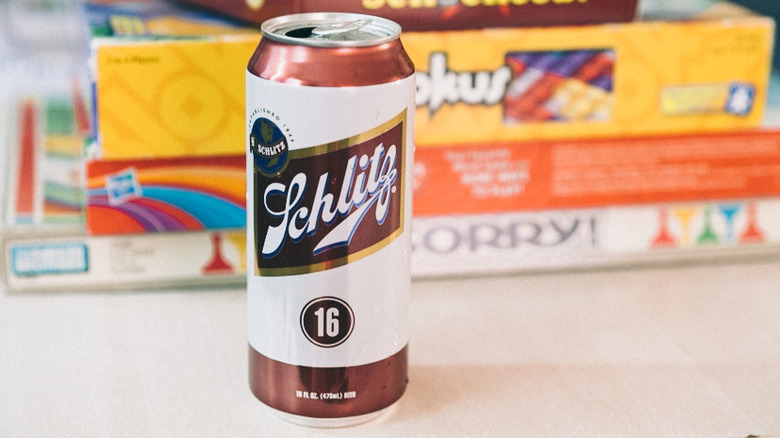
A beer that impacts pop culture in the '70s as much as Schlitz did is a no-brainer as a beverage that represents the decade better than most. Milwaukee made more than a dent in the market while this can creation took up shelf space.
Schlitz came into being in 1858 when Joseph Schlitz rebranded a brewery he managed after the owner died. By 1902, it had become the largest beer producer in the U.S. competition between Anheuser-Busch and Schlitz resulted with Schlitz gaining dominance by 1976. The brand was so familiar at the time that when the creators of the hit '70s sitcom "Laverne and Shirley" needed a one-off brewery for its blue-collar heroines to work in, they chose the name Shotz. It felt like a tribute to the Wisconsin city's beer contributions and a wink at the Schlitz–loving members of the audience.
Schlitz fell out of favor once it began cutting corners and using cheaper ingredients like corn syrup to reduce costs. What had once been the pinnacle of American beers turned into a shadow of its former self and encountered the downfall that never really recovered from.
9. Hamm's
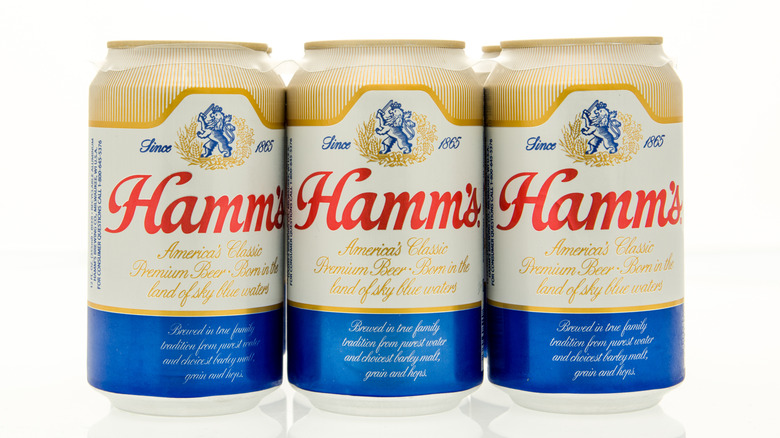
Brewed in the "Land of the Sky-Blue Waters" as the jingle went, Hamm's was one of the most noteworthy beers of the '70s if for no reason other than its unusual choice in advertising methods. Whether it was jingles you couldn't get out of your head or TV commercials that made you scratch it in confusion, Hamm's made an indelible impression, even on youngsters who shouldn't have been paying attention to beer ads in the first place.
There's no question the jingle would be struck from today's market, due to a generous helping of cultural appropriation. The Native American drumming and musical motives used were likely meant to pay homage to the purity of the Minnesota landscape where the beer was made. If you heard it when it was popular, you probably still have it stuck in your head. Sometimes controversial advertising is the stuff that sticks.
More than just the song made Hamm's a memorable '70s beer that stands as a hallmark of the era. There were also the animated ads that used the Hamm's bear as a mascot in a variety of beer drinking situations like during a baseball game played with other woodland creatures. Another show shows the bear enjoying a nap in a tree while a devious beaver cuts it down to disastrous effect. It's as questionable a move as using a cartoon camel to sell cigarettes, but it definitely made an impression.
10. Olympia
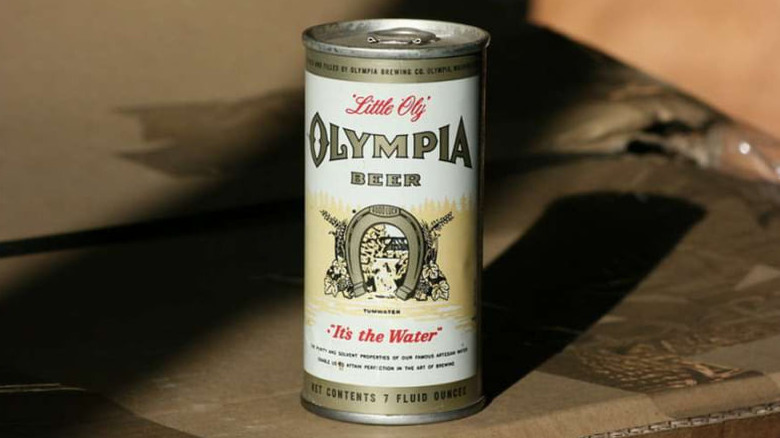
The Pacific Northwest weighed in on the '70s beer scene with Olympia, a brewski named for both the city and the Olympic Mountains that beautify the region. The obvious association is one of higher-quality ingredients grown in pristine surroundings that serve to create a purer brew.
Washington's state beer has quite a storied past, even before it became one of the more recognizable beers of the '70s. Brewing began in 1896 Tumwater, Washington, courtesy of Leopold Friederich Schmidt. The simple slogan "It's the water" told consumers everything they needed to know about what was in the formula. It seemed to do the trick; the beer was so familiar, it became a movie star of sorts, showing up in classics like "One Flew Over the Cuckoo's Nest" and "The Graduate." When its '70s boom ultimately went bust, the company was sold to G. Heileman Brewing in 1983. In 1999, Pabst Brewing took over the brand, while Miller picked up the brewery. And by 2001, production of Olympia beer ceased entirely.
But even an old beer can learn new tricks, thanks to a low-key come back. Though its footprint is much smaller these days, Olympia is still around to quench the thirst of diehards and curious quaffers in Canada and Texas . The spirit of this classic '70s beer is not only nostalgic, it's indomitable too.