

11 Mistakes People Make When Grilling With Propane
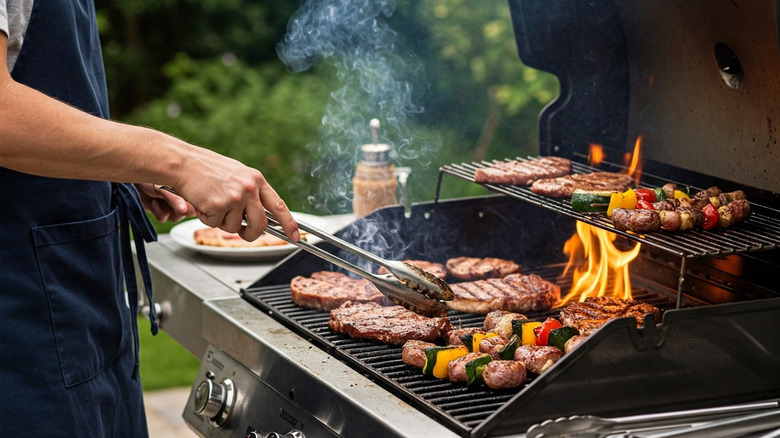
If you're like the majority of American households, you own at least one gas grill. You might even own two grills — one that's fired with propane and one that uses charcoal. But the bigger question is: Are you using your gas grill properly, or are you making mistakes that not only compromise the taste of your food, but also put your health and safety at risk? After all, there's more to grilling with propane than just turning on the gas and throwing a few steaks on the grates. In fact, knowing how to master a gas grill — and make it work for you — is the secret to perfectly grilled food every time. The key is learning what to do and what not to do, especially if you're a rookie.
So, we asked four grilling experts — Jorge Thomas, trained chef, butcher, and founder of Swaledale Butchers; Erica Blaire Roby, pitmaster and Food Network's "Master of Cue" Champion; Dylan Clay, a grilling and barbecuing enthusiast and founder of Barbecue FAQ; and Steve Ingber, executive chef and owner of MileHighCook — which mistakes people commonly make when using a gas grill. Not only did they share their expertise and insights, but they also provided tips on how to produce great-tasting grilled food every time. They also offered ideas on how to stay safe and how to make sure your grill works for you. Here's what they recommend when it comes to grilling with propane.
Expecting the propane to do all of the work
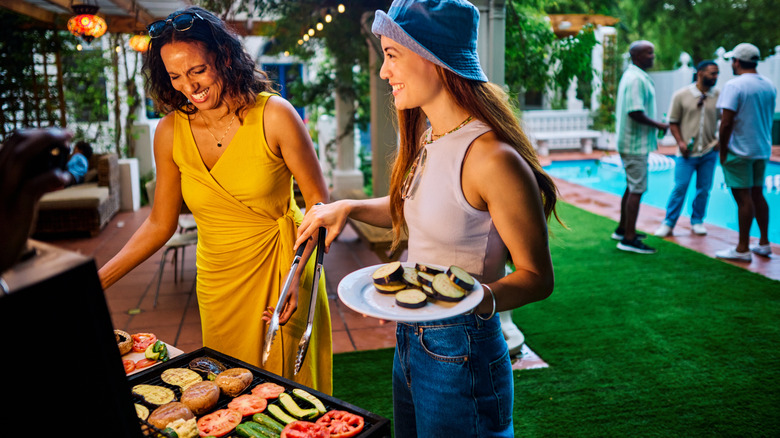
According to Jorge Thomas, the biggest mistake people make when cooking with a gas grill is thinking the propane does all of the work for you. "It's easy, yes, but people still cook everything too hot, keep lifting the lid, and don't think enough about where the heat's sitting."
Thomas says even though propane is convenient, it still needs to be properly managed. You have to consider how high the temperature should be, where the hot spots are on your grill, and what method you're going to use to grill your food.
Essentially, cooking well with propane is about control, says Thomas, not about maximizing flavor. "Preheat it properly, use different heat zones, stop lifting the lid every five seconds, and don't assume hotter means better. If flavor is the main goal, I'd still choose charcoal every time, but cooking over any flame can produce a great result."
Believing you will get the same flavor as charcoal
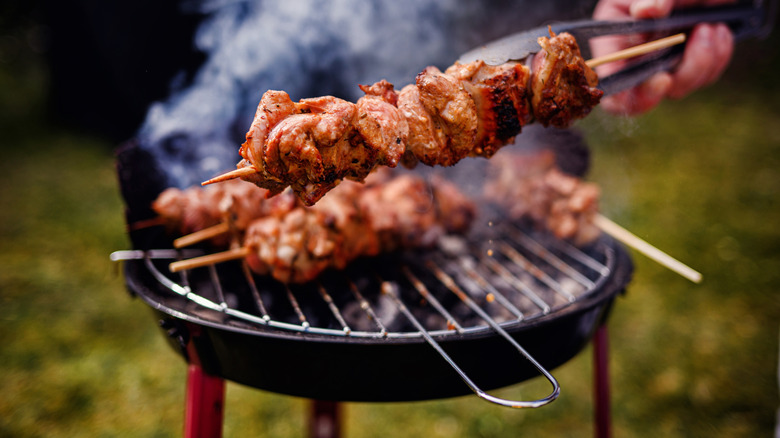
Many chefs including Bobby Flay and Ina Garten favor charcoal over gas if you want to maximize flavor. In fact, most of the grilling experts we spoke to stressed that using charcoal will give you better flavor — and you need to recognize that from the start if you're going to grill with propane. "There's not much point pretending otherwise," says Jorge Thomas. "Propane is quicker, cleaner, and easier to control, which is why people like it. But if you care about that smoky, properly grilled character, charcoal wins. The mistake is expecting propane to give you the same result, because it won't."
According to Erica Blaire Roby, charcoal has a different burn rate and produces smoke, which is what makes beef cooked over charcoal have that distinct smokey flavor. "Charcoal needs more airflow and a proper burn down time for even heat. A lot of people make the mistake of cooking over charcoal before it's fully heated and that can make food taste bitter."
That said, there are some benefits to cooking with propane that you cannot deny, adds Dylan Clay. Propane is more convenient than charcoal, especially when it comes to igniting, maintaining, or controlling the fire. It's also cheaper and lasts longer than charcoal, he says. "[But] I think charcoal tastes better [...] The meat juices dripping directly onto the coals creates this vapor of flavor that condenses on the meat that makes it unmatched. With that said, my aunt isn't a huge fan of charcoal. She'd much prefer that I cook burgers, hot dogs, or really any of my food on propane."
Skipping the preheating step with your grill
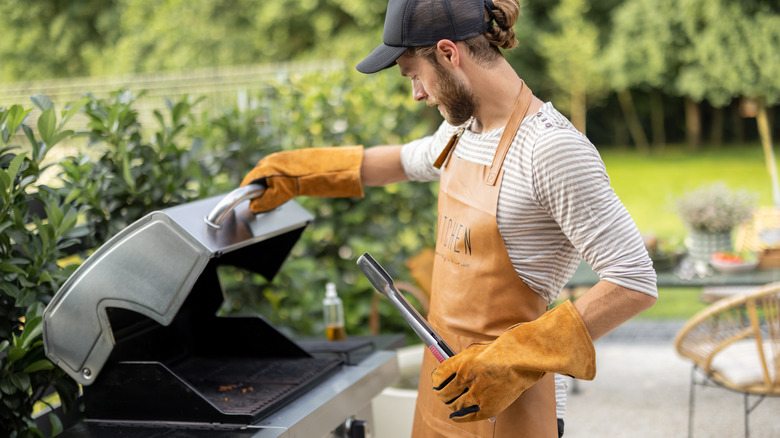
The grilling experts we talked to stressed the importance of preheating your grill. Just like preheating your oven before cooking prime rib, you cannot skip this step no matter how short on time you are. "If you don't preheat properly, food sticks, color is poor, and the grill never really settles," says Jorge Thomas. "The other mistake is going too far the other way and blasting it on full for ages, then throwing food on and burning the outside before the inside's caught up."
If you take the time to properly preheat your grill, you can ensure a good sear on your beef, says Erica Blaire Roby. If you don't preheat your grill, your food can tear when it's moved. She says "nothing ruins a beautiful dish more than being left behind on the grates."
According to Dylan Clay, he preheats the grill for 15 minutes by setting the temperature, closing the lid, and walking away. He also notes that the thermometer on the lid is the ambient temperature and not the grate temperature. "Meaning it may be 350 degrees Fahrenheit ambient but 200 degrees Fahrenheit grate temperature," he says. "What's likely to happen is your food will stick and you miss out on creating better maillard reactions (browning), which transforms how food tastes. Say we were cooking chicken breast, which is already sort of time and temperature sensitive [...] In this scenario, by putting it on early we get pale chicken as the grate isn't at optimal temperature, and we now have less of a window to brown the meat."
Grilling everything on high heat
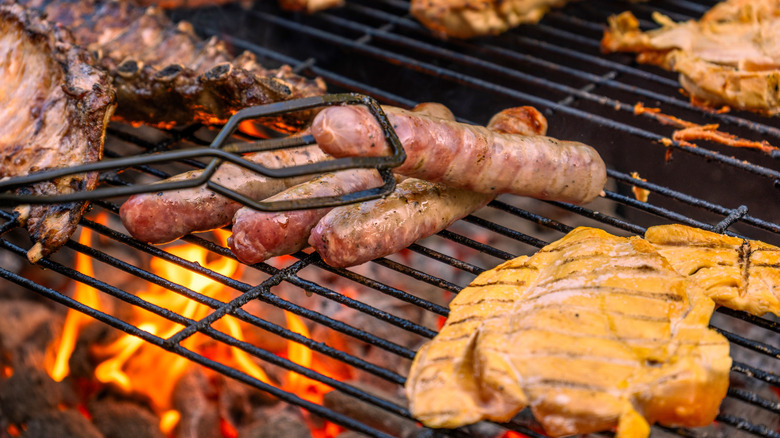
Not everything you cook needs high heat, says Jorge Thomas. He says that's probably the primary mistake people make when cooking with propane: They crank it up and leave it there. "Different cuts want different treatment," he says. "Burgers and steaks can take more direct heat. Chicken needs a bit more care. Bigger cuts want time and usually some gentler heat as well. The mistake is cooking everything like it's the same thickness, same fat content, same cut. It obviously isn't."
Steve Ingber says this is where most home grillers go wrong. "They run everything on high and wonder why their chicken is burnt outside and raw in the middle. High heat is for searing. Medium heat is for cooking through. You need to use your grill like a professional range, not like a light switch."
For propane specifically, Ingber suggests learning your grill's actual temperatures with a surface thermometer, not just by the dial position. "Every grill runs differently," he explains. "Match the heat to what you're cooking." Also, if you're using a dry rub, you'll start caramelizing sugars too fast and burn the exterior, turning it bitter at temperatures above 400 degrees Fahrenheit, says Dylan Clay.
Failing to create cooking zones on your grill
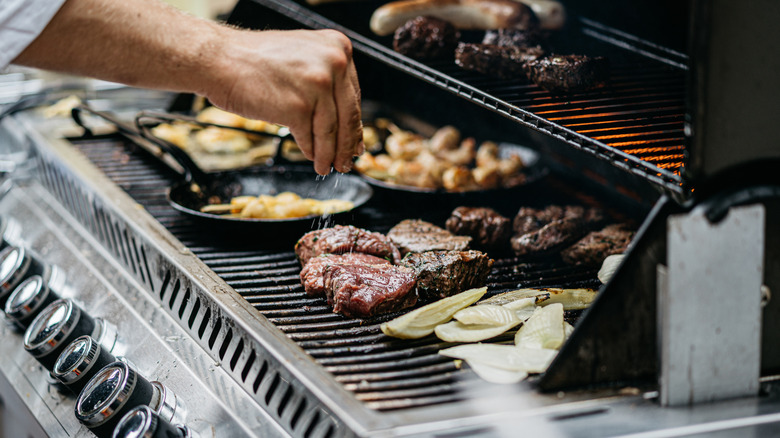
According to Erica Blaire Roby, a lot of people don't understand their grill's heat zones and they don't have room on the grill to move things around. She says it's also important to learn the difference between indirect and direct heat so you can be in control when cooking on your grill.
"I recommend using a combination of both zones, as cooking solely on high heat can burn the exterior of your beef before the interior is properly cooked," she says. "A go-to method is to start searing your beef on direct heat and then move to indirect heat to finish cooking without burning." Roby says she uses a two-zone propane setup that includes high heat (450 to 600 degrees Fahrenheit) for searing steaks and burgers, medium (350 to 450 degrees Fahrenheit) for thicker cuts, and indirect (250 to 325 degrees Fahrenheit) for roasts and ribs.
In other words, use direct heat for color and a quicker cook, adds Jorge Thomas. Indirect heat is for bigger cuts or anything that needs more control, he says. "People mess it up by not creating zones in the first place, so once something starts catching they've got nowhere to move it," he says. "It's also worth remembering that direct heat doesn't always mean very high heat. Some cuts want strong heat to start with, then a bit more distance from the heat source. Proper indirect heat, with a deflector or similar, is best for larger cuts like brisket or Boston butt, or oily fish like salmon and mackerel."
Lifting the lid too frequently when grilling
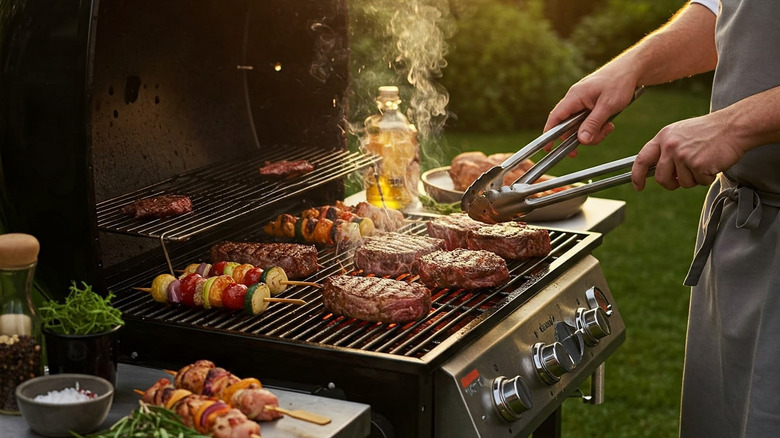
Every time you lift that lid, you drop the temperature 25 to 50 degrees Fahrenheit and add minutes to your cook, says Steve Ingber. "On a propane grill you recover faster than charcoal, but it still disrupts the cooking environment significantly. More importantly, you're interrupting convection — the hot air circulating around the food is doing real work, and you kill that the moment the lid comes off."
Most people are checking on their food out of anxiety rather than technique, says Ingber. Instead, he suggests trusting your thermometer and your timers and only open the lid when you have a reason like flipping your meat on the grill or checking the internal temperature. "Opening it every two minutes to see if it 'looks done' is the most common thing I see people do, and it's the reason their food takes forever and comes out unevenly cooked," he says.
Have a look when you need to, but not every 30 seconds, says Jorge Thomas. "A wireless probe thermometer is useful here. You can see the internal temperature without lifting the lid, which is especially handy with slower-cooking cuts." Keep in mind that a closed lid mimics an oven where heat is cooking the food from every direction, adds Erica Blaire Roby. Some people will open and close the lid so often that the grill's temperature is in a constant state of flux.
Forgetting to protect the meat from direct flames
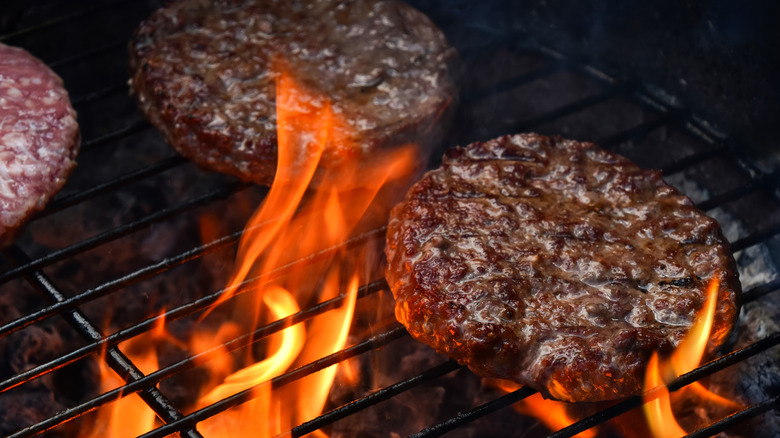
Another common common mistake with propane grilling is failing to protect the meat from direct flames, says Erica Blaire Roby. "Always have a flame barrier or space on your grill specifically for cooking your meat indirectly," she says. Not only does a barrier or shield allow you to keep food away from sustained flare-ups that can create a gas or combustion taste on your food, but it also gives you more control over your grilling process.
With this in mind, Roby says you need to remember that "propane grilling is a powerhouse in heat consistency, not flavor. A lot of cooks don't recognize this and under-season their meat. I say: If it's going on gas, then it must be marinated first!"
And, if you decide to go with a sugary marinade, these barriers or shields could be a lifesaver if you experience a lengthy flare-up. In fact, sugary marinades can mean that your food quickly becomes burned in a matter of minutes and you'll miss out on the gentle char you were looking for.
Assuming you have enough propane
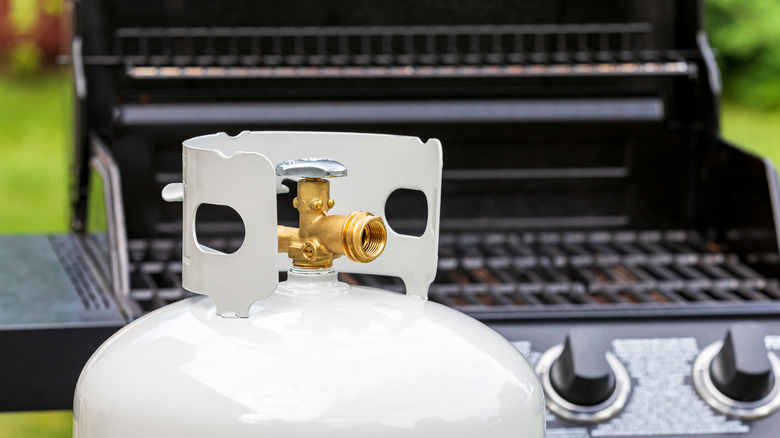
Nothing kills a backyard barbecue like running out of gas mid-cook with a half-done brisket on the grates, says Steve Ingber. "Get in the habit of doing a quick weight check or using the warm water trick — pour warm water down the side of the tank and feel where it turns cold. That's your fuel line."
"I almost always have two tanks at home for scenarios like this," adds Dylan Clay. "It's also easier to exchange when you need to if your level is low. Just swap the tank for the full one and you're back to grilling."
The second mistake people make when it comes to propane cooking is ignoring the connections, says Ingber. "People hook up the same regulator for years without ever inspecting it for cracks or checking for leaks. A quick spray of soapy water on the connections tells you everything — if it bubbles, you have a problem."
Failing to keep your grill clean
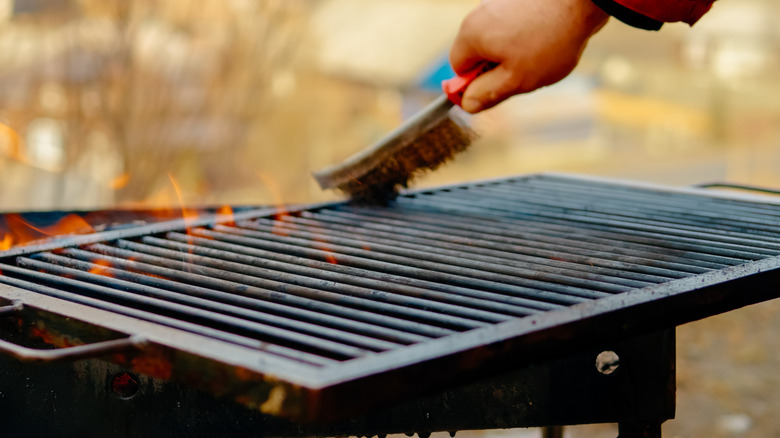
People often don't clean their grills enough, says Erica Blaire Roby. "Creosote, carbon, food debris, grease, and other unwanted things can build up on the grill grates. This then goes directly on the food that's cooking, leaving it bitter and undesirable."
To keep this from happening, you should clean your grill while it's hot rather than when it's cold, says Steve Ingber "After you preheat, that's your window — turn the burners to high for a few minutes, then brush the grates with a good stiff bristle brush. The residue from the last cook burns off cleanly and the brush moves through it easily." But, he says you need to be careful with the type of brush you use. "Wire brushes with loose bristles are a safety hazard — those bristles can end up in your food. Swap to a coil brush or a grill stone." Also, he says not to forget to clean the grates and don't ignore the drip tray and the inside of the lid. "Grease buildup in those areas is the primary cause of flare-ups [...] A thorough clean-down once a month for regular grillers isn't overkill."
Roby says for a deep clean, she uses a Shop Vac to vacuum out all of the fallen debris. "If the grill has a lot of grease, I use a degreaser spray and a power washer to deep clean my grill." You could even use some Barkeepers Friend every once and while to scrub away caked on debris, adds Dylan Clay. "Overall though, gas grills aren't like charcoal or pellets and don't have tons of volatile compounds," he says. "Gas burns clean."
Neglecting the need to take safety precautions
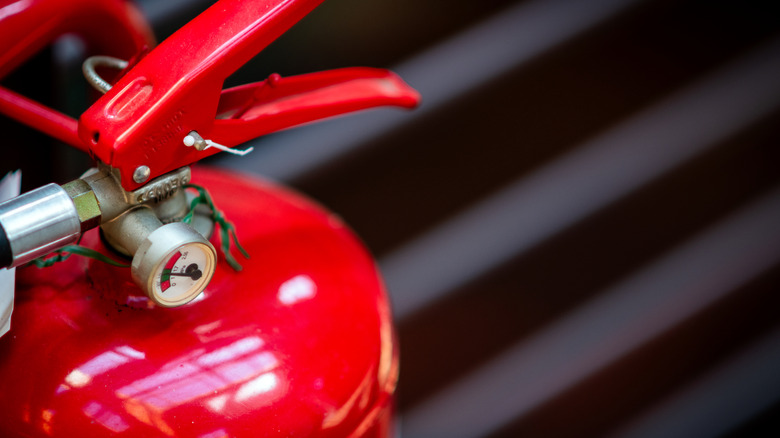
When it comes to cooking with propane, you need to keep in mind that you are cooking with a substance that is volatile and flammable and can create grilling risks if it's not properly managed. For this reason, Erica Blaire Roby suggests making sure your gas line and hose aren't cracked. You also want to ensure the connection is secure and that no gas is escaping. "Also, keep your tank away from direct sunlight," she says.
According to Dylan Clay, you can do a leak check by making a solution of warm soapy water and then taking a sponge and brushing it along all the connections and tubes as well as the valve and regulator. Then, he suggests opening the tank valve while the burners are off. "If you see bubbles anywhere, you have a leak," he says. "Also, on the topic of lighting the grill, do so with the lid open. If you're pressing the igniter button and have the valves open and nothing catches, the grill now has tons of propane gas inside the firebox. If it randomly lights, you just built a small bomb. So keep the lid open."
Also, keep the grill away from the house and don't put it tucked into a tight little corner, suggests Jorge Thomas. "A lot of problems come from people being too casual, either with old grease or where the grill's actually positioned."
Forgetting to prevent and be prepared for flare-ups on your grill
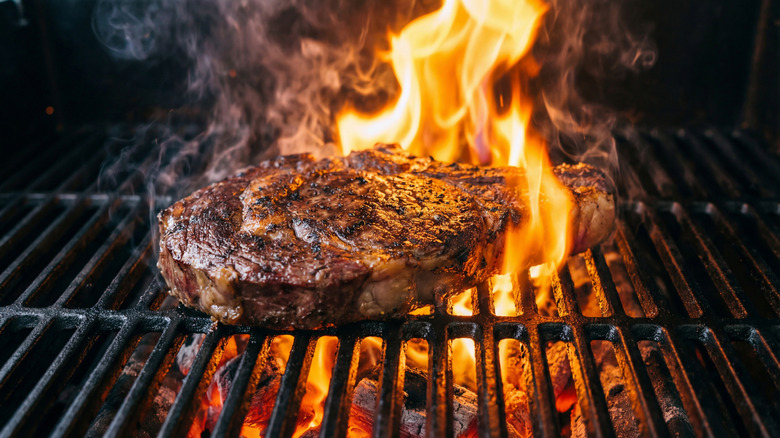
Depending on what you're grilling, flare-ups are somewhat standard behavior for a gas grill, says Dylan Clay. "As fat drips onto the flame, small flare-ups are normal. Most gas grills these days use tamers that try to prevent flare ups as much as possible." Also cooking super fatty cuts of meat directly over flame is apt to create tons of flare-ups, especially with the lid open as more oxygen enters the system. Clay says this can be mitigated by using zone cooking or using direct and indirect heat.
"Flare-ups are almost always caused by fat hitting the flame — either from dripping during the cook or from grease buildup on the drip tray and burner covers," adds Steve Ingber. "Marinated proteins are a big trigger, too, because the oil in the marinade drips right into the fire."
Ingber says you can keep this from happening by trimming excess fat from the meat before it hits the grates, keeping your grill clean, and using a two-zone setup when you're cooking fattier cuts, so you have a safe zone to move food to if things get out of hand. "Never spray water on a propane flare-up," he says. "Move the food, close the lid to starve the flame of oxygen, and turn down the burner under it. Water and grease fires don't mix."