

Old-School Ways People Used To Eat Spam
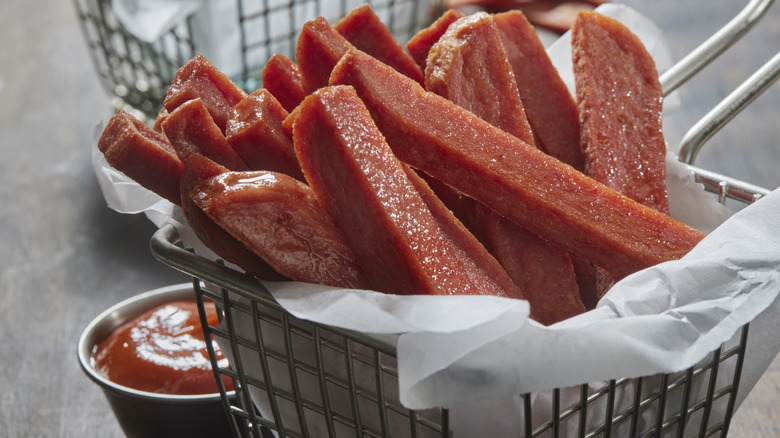
There's something deeply satisfying about eating old-school comfort foods. Not only do they bring a sense of nostalgia to the table, but they also shake up the weeknight menu by offering something different to what usually ends up on the plate — and there's no better way to celebrate old school classics than with a can of Spam and a little creativity.
Created in 1937, Spam is both a convenient and a shelf-stable meat that can be stocked in your pantry long-term and brought out in a pinch when you want something different for lunch or dinner. Plus, it fits seamlessly into just about any dish you want to make — whether that's something new like kimchi fried rice or something a little more old-school like Spam loaf.
Regardless of what you make, Spam is versatile and can be substituted for ham or other meats in countless dishes. These dishes have changed significantly over the years. "Cooking trends are always evolving, and the recipes people reach for shift with the times," said Erich Chieca, executive chef at Hormel Foods Culinary Collective. "As fresh and from-scratch cooking took center stage in the 1970s and '80s, some of those classic preparations naturally got less airtime — not because they weren't delicious, but because the culinary conversation moved on." If you're longing for some retro foods, there are a number of creative ways to use that can of Spam on your pantry shelf. Here are 10 classics that could make a comeback in your kitchen — and surprise your family, too.
Using it in a Spam and bean casserole
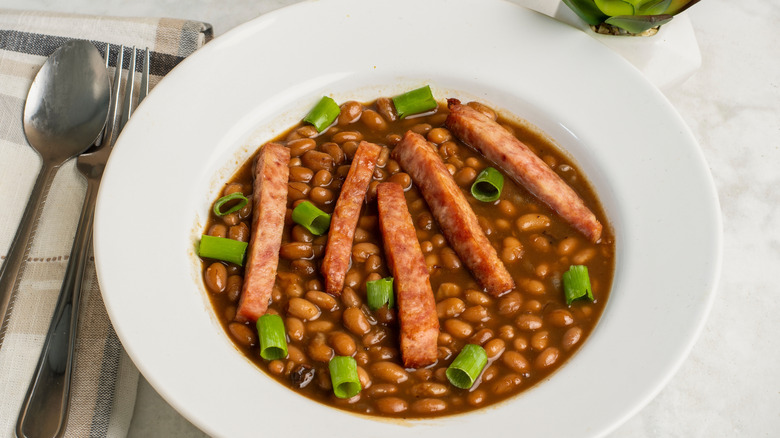
In recent years, retro foods have been making a comeback. You'll even see some old-school dishes popping up on restaurant menus, and this has inspired home cooks to do the same in their own kitchens, especially when it comes to bean dishes. After all, nothing is more old school than a bowl of baked beans. These hearty legumes — which are often flavored with a little salt and something sweet, such as brown sugar and bacon — are the epitome of comfort food. Plus, you can easily make this classic dish with sliced or diced Spam instead of bacon and still get the same rich, smoky flavor.
Chef Erich Chieca highlighted the combination of baked beans and Spam as a classic combination for those seeking an affordable yet filling dish. "A hearty, Depression-era staple that paired Spam with baked beans and a breadcrumb topping," he said. "Pure comfort in a dish." If you're interested in making baked beans, but long for a more modern touch, you could even add a little Sriracha or a drop or two of spicy brown mustard to give it an extra kick of flavor. No matter what twist you put on it, Spam and beans are a natural combination that you can add to your next dinner menu.
Creating Spam fritters
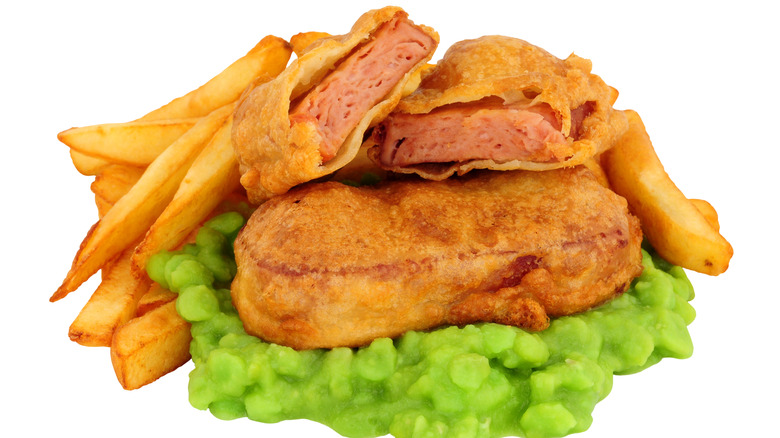
If you're a fan of schnitzel — slices of meat that are breaded and fried — then you might want to try your hand at creating Spam fritters. Just like when making a classic crispy wiener schnitzel, start with a breading made with flour, egg wash, and breadcrumbs, and go from there. And while schnitzel doesn't typically feature a lot of seasonings, you can get creative and put your own modern spin on this classic dish.
According to chef Erich Chieca, Spam fritters were big in mid-century Britain and featured slices of Spam dipped in batter and pan-fried until golden. "Think of it as the original Spam schnitzel," he said. If you've never made schnitzel before, just look at a classic schnitzel recipe and substitute Spam for the meat in the recipe.
Schnitzel is often served with lemon wedges, a mushroom sauce, or even a cream sauce, but you can let your imagination be your guide with this dish. You could even serve your Spam fritters like a classic chicken milanese with a little flaky salt, arugula, and Parmesan on top.
Developing Spam salad sandwiches
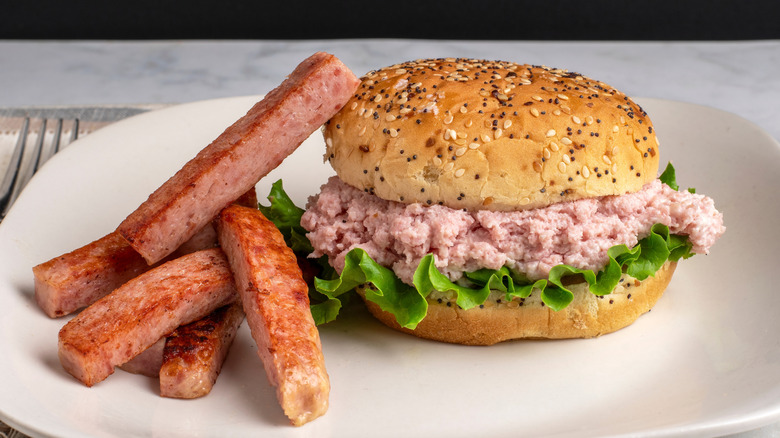
Perhaps the most iconic way to utilize Spam in an old-school dish is to dice it up and use it to create Spam salad sandwiches — a riff on the Depression-era classic ham salad. This classic salad is also considered one of the South's quintessential picnic salads and was often the go-to way to use leftover ham after a big meal. But you don't need leftover ham to make this versatile filling. Back in the day, some people turned to a can of Spam instead.
"[Spam salad is] like a classic chicken or tuna salad, but made with diced Spam, mayo, celery, and a little mustard," said chef Erich Chieca. "Perfect on white bread or a buttery roll." You also can slather it on crackers, use it to create tea sandwiches, or even put it in a lettuce cup for a less carb-laden version. Some people even put it in a bowl and eat it that way. No matter which way you choose to serve it, it will surely be a hit. As for adapting your ham salad recipe to accommodate Spam, don't be afraid to get creative if you want and mix up your add-ins to include something unexpected like olives or capers.
Serving glorified Spam
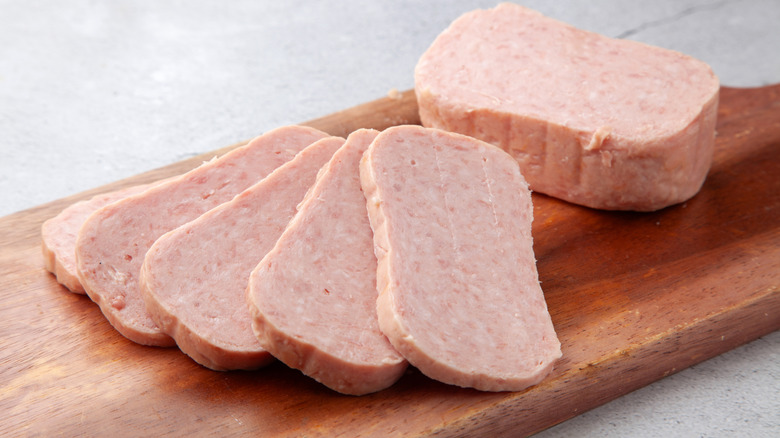
According to chef Erich Chieca, glorified Spam is reminiscent of a baked ham with pineapple and a brown sugar glaze that sits proudly at the center of the dinner table. He said it's a retro party dish that mimics the classic holiday ham. "It was a showstopper at 1950s dinner parties," he said.
But its uses aren't limited to special occasions. For some people, making glorified Spam is also an inexpensive way to serve this holiday-inspired treat during the week. When done properly, the leftovers are something to write home about. The key is choosing a ham-centric recipe that you love and adapting it to include Spam.
So, if pineapple and brown sugar are not your thing, you can opt for a more savory dish. Some people even cut a crisscross pattern in their ham and put cloves in the slits for a zingy punch. The same would work for Spam. You can also make it as simple or complex as you want with just a three-ingredient glaze or a 14-ingredient masterpiece. Either option will take your Spam to the next level.
Creating Spam chop suey
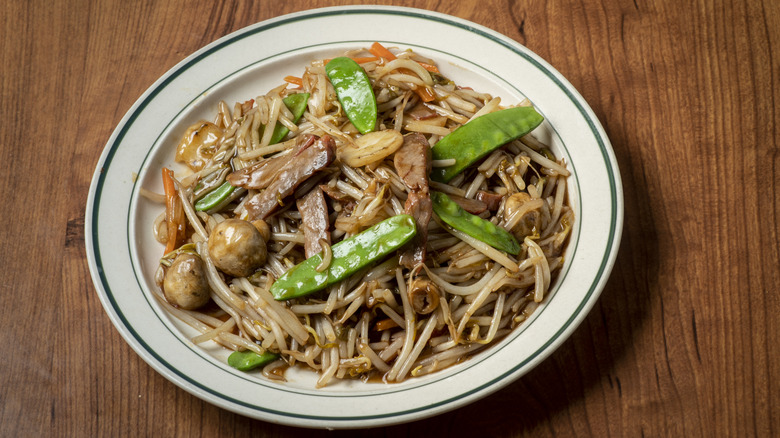
Whether you're unfamiliar with chop suey or grew up eating it almost weekly, this recipe is one of the most interesting and iconic Chinese-American dishes out there. While it's difficult to pinpoint the dish's exact origin story, it's one that has stood the test of time and has been passed down over the years.
Admittedly, there have been some tweaks and changes through the years as each home cook or restaurant chef has put their own unique spin on the dish, such as topping it with crunchy Chinese noodles or adding an egg at the end. But it's still one that inspires a nostalgic feeling — and lends itself well to the incorporation of Spam.
Chef Erich Chieca said that many home cooks made the dish with Spam mixed with celery, bean sprouts, and soy sauce over rice. "Mid-century American cookbooks were full of Spam-based takes on Asian-inspired dishes," he said. So, whether you use a chop suey recipe as your base for creating your own unique dish or you simply swap out the protein for Spam, the options for Spam chop suey are as endless as your imagination.
Using it in a Spam and noodle bake
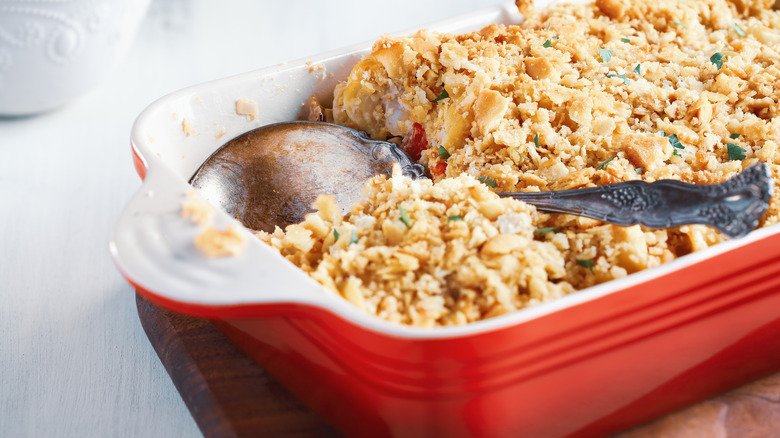
Whether you're from the Midwest, the South, or somewhere else altogether, there's a good chance you've eaten your fair share of casseroles during your lifetime. The classic comfort dish — available in numerous varieties, such as an American take on goulash, tuna and noodle casserole, and cheesy potatoes — is a staple at church potlucks, wakes, family gatherings, and more.
These dishes are easy to make and typically include whatever you have on hand at the time. Whether it's fresh scallions from your garden, a can of creamy soup, or a can of Spam from the pantry, you can whip up this type of dish in a matter of minutes, pop it in the oven, and then do something else while it bakes to golden perfection.
One popular option is to create a mid-century casserole similar to a tuna noodle casserole but with Spam, said chef Erich Chieca. "[Try] egg noodles, cream of mushroom soup, peas, and diced Spam, topped with crushed crackers. Pure church potluck energy." To make your own version of a Spam and noodle bake, choose your favorite casserole recipe and adapt it to include Spam. Or, you can get really creative and develop a recipe from scratch. But no matter what route you choose, Spam is the perfect protein for your next casserole.
Showing it some spice love in Spam jambalaya
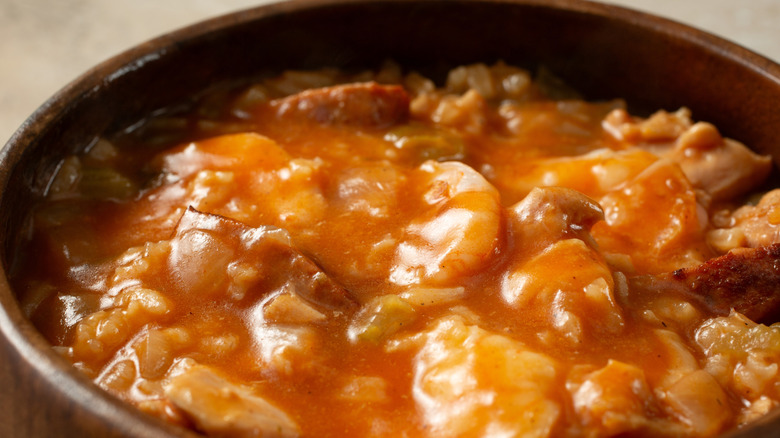
Who doesn't love a big, spicy pot of jambalaya? This rice, meat, and vegetable dish is a staple in the South, particularly in Louisiana. Not only is it inexpensive to make, but there are no hard and fast rules on which types of protein you can include. Some people choose to include sausage, shrimp, and ham, while local versions of the dish might include any type of protein or game they have on hand. Spam can even be added to the dish if you want.
"Southern home cooks used Spam as a sausage substitute in jambalaya during lean times, and honestly? It works beautifully," said chef Erich Chieca. When making your own version of this delicious and versatile dish, let your favorite spices lead the way. You can make a one-pot jambalaya as spicy and smoky as you like or stick to the traditional spices such as cayenne pepper, smoked paprika, oregano, thyme, and parsley. The key is to consider your palate and your preferences and create the dish accordingly.
Creating Spam and egg foo young
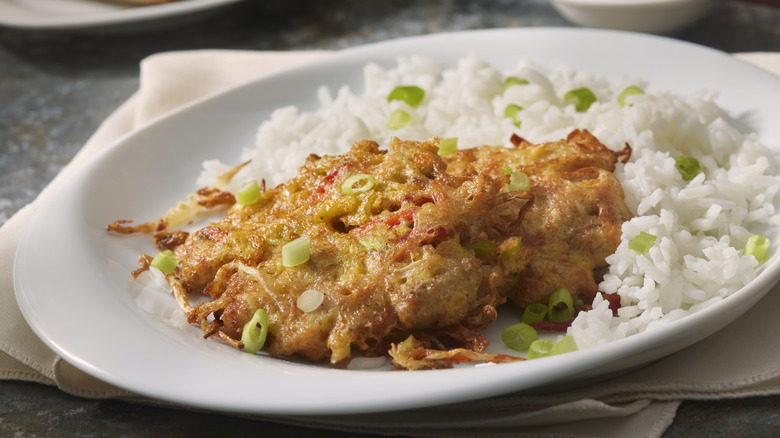
Eggs and Spam always work well together, and egg foo young is no exception. This thick, egg omelet — which is filled with chopped vegetables and a protein of your choice — is a Chinese-American favorite that has been served in the United States for decades. Typically, this dish is fried until crispy on the outside and served with rice and a gravy or sauce.
While there are many different ways to prepare egg foo young, one thing is for certain: Spam works well in this dish, no matter how you make it. Chef Erich Chieca said one classic way to serve what was a "mid-century fusion favorite" is to fold Spam and scallions into savory egg patties and serve them with a simple brown gravy.
When you're making your own version of egg foo young, feel free to be creative with your vegetable choices. Mung bean sprouts, chopped scallions, shredded cabbage, celery, mushrooms, diced peppers, and even bamboo shoots are all options. You can also get creative with the sauce, adding a touch of umami with oyster sauce or fish sauce, or opt to make a classic gravy or loco moco.
Spreading it on crackers
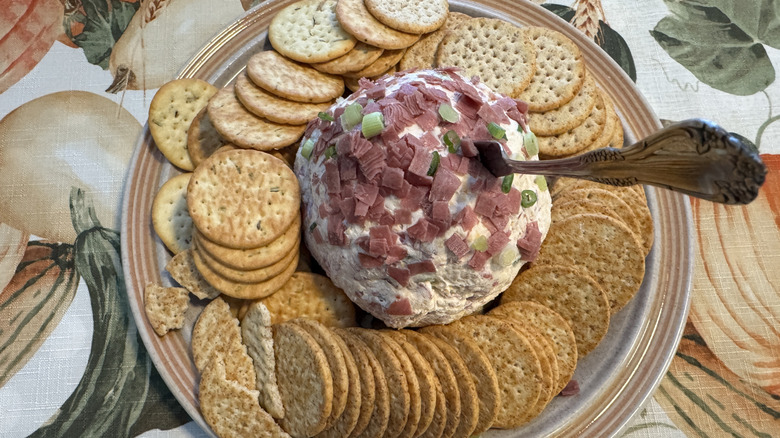
In the words of chef Erich Chieca, "Before charcuterie boards, there was Spam spread." Typically, home cooks blended Spam with cream cheese and their favorite seasonings and served it on crackers at their church potlucks and cocktail parties.
There's a chance that some may have made the delicious concoction into the iconic cheese ball and topped it with nuts and herbs. The first ever cheese ball was created in the early 1800s by Elder John Leland of Cheshire, Massachusetts. According to Culture, Leland's cheese ball weighed a whopping 1,235 pounds and was known as "The Mammoth Cheese." Historians indicate that it was even served to President Thomas Jefferson before eventually being tossed in the Potomac River.
Of course, when you're making your own Spam cheese ball, you'll likely create yours on a much smaller scale. But the beauty of these cheesy creations is that you can use just about any combination of mix-ins, spices, and herbs and still create something delicious. Cheese balls with Spam are remarkably forgiving and can stand up to just about any flavor combination you come up with.
Developing a Spam loaf
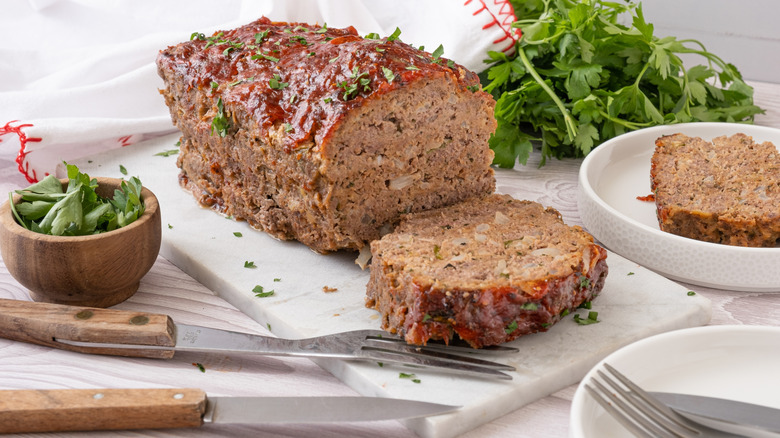
Nothing says comfort like a big slab of meatloaf. In fact, it seems to be the one old-school favorite that has stood the test of time. Not only do you frequently find meatloaf, mashed potatoes, and gravy on diner menus, but you can also find it on some upscale menus where chefs have taken the tried and true staple and turned it into something otherworldly, complete with gourmet ingredients like black garlic and maitake mushrooms.
But just like any other routine favorite, the classic can get a little old. That's where Spam comes in. Try using it in place of, or in combination with, ground beef to give your meatloaf a new twist. "It added a salty, savory punch that kept every slice incredibly moist," said chef Erich Chieca of the old-school approach to adding ground or diced Spam into a traditional meatloaf. Who can argue with the promise of moist meatloaf? When creating your own version, you may need to experiment a bit to get the ratio right. But, with a little effort, you may find you're delighted with the results.