

8 Ways To Cook Corn On The Cob, Ranked
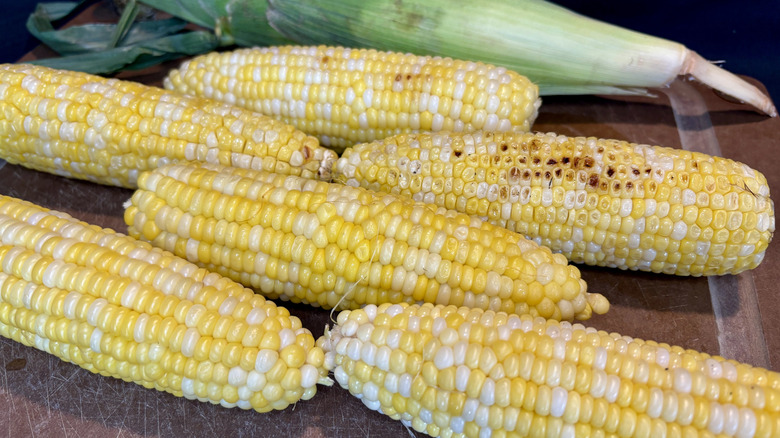
No matter what state you call home or whether you live in the heart of a major city or 10 miles from your next neighbor, corn is pretty hard to avoid. While folks in places like Nebraska, Iowa, and Wisconsin can hardly leave the house without passing a field of sweating stocks, the product itself is in everything from food to fuel, making corn one of the most omnipresent plants in modern life.
Of course, not all corn is the same. Most corn grown in the United States is not meant for human consumption. The vast majority of corn produced in the country is field corn, which is used for animal feed, ethanol, and many other products, ranging from glue to cosmetics. Corn is everywhere, but it's never quite as fun as when it's on your plate.
Few foods scream summer quite like an ear of freshly cooked corn on the cob. Whether you stick with straight butter or opt for more unique toppings, there are plenty of ways to eat an ear of corn and nearly as many ways to cook it. With corn season quickly approaching, I tried eight different cooking methods to find the best way to prepare your corn on the cob.
8. Boiled in a milk and butter bath
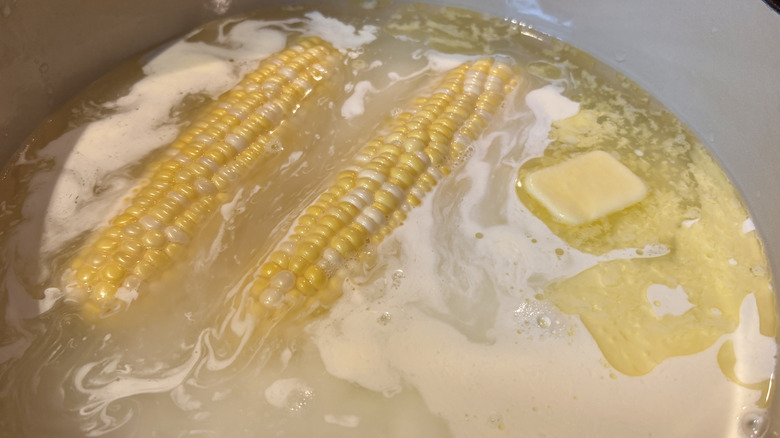
As a Wisconsinite, I've both cooked and consumed a lot of corn on the cob. Still, this method was new to me. The idea makes sense on paper: The milk and butter will infuse the corn with flavor during cooking, eliminating the need to doctor the corn before eating. Some recipes called for sugar or salt in addition to butter and a combination of milk and cream. I was aiming for simple, so I stuck with the basics: enough water to cover the cobs, ½ cup of milk, ¼ cup of cream, and 3 tablespoons of butter. After bringing the ingredients to a boil, I reduced the heat to a simmer, covered the pot, and let everything soak for 10 minutes.
The main reason this was my least favorite method was the lack of results. Sure, the corn was cooked well, and it retained a firm, juicy texture, but the flavor was super underwhelming. This tastes like someone buttered an ear of corn, then had second thoughts and tried to wash the butter off.
Considering the extra ingredients — and therefore, additional cost — this cooking method needed to stand above the others, and it simply did not. Boiling corn in water will show up much, much later on this list because it's simple and the results are just as good, if not better than this overly complicated method.
7. Baked in the oven
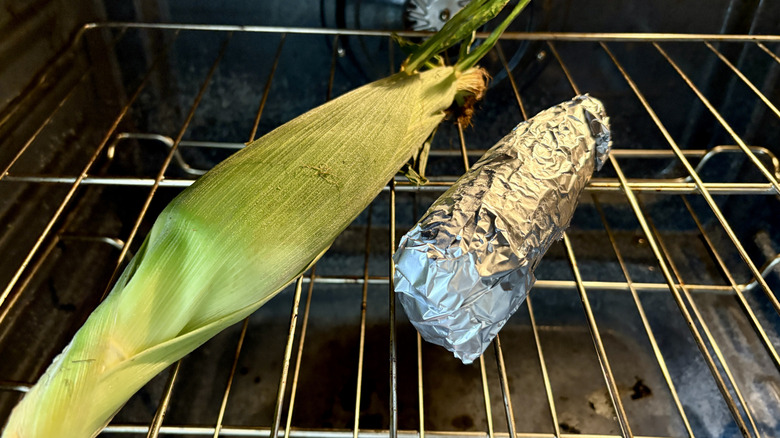
I don't think it's an exaggeration to say there are hundreds of online recipes detailing different ways to cook corn on the cob. Even inside a single method like baking, there are plenty of variations in preparation, temperature, and time, so I split this method across the two cobs. One was shucked and wrapped in tinfoil while the other remained in its husk. I placed both in the oven at 400 degrees Fahrenheit — directly on the rack, no pan — and cooked them for 30 minutes.
In terms of work, this method is hardly difficult regardless of which route you take, but I'm a big fan of avoiding the oven when I can, and even more so in the summer when cranking up a 400-degrees Fahrenheit box in the middle of my kitchen sounds especially unpleasant. Thankfully, the results back up my oven-avoidance strategy because these cobs were pretty disappointing. While it's always possible they were baked a few minutes too long, though I don't think time was the reason this corn came out a bit tougher than the other methods. I think it was because the oven tends to dry things out.
At 30 minutes, this corn took the longest to actually cook. Even if I'd have trimmed the time by 10 minutes, it still would have been one of the longer cook times on the list, and each additional minute exposed to heat is another for the corn to lose moisture. Unless you already have the oven fired up for something else, there are faster and tastier ways to cook corn.
6. Cooked in the microwave
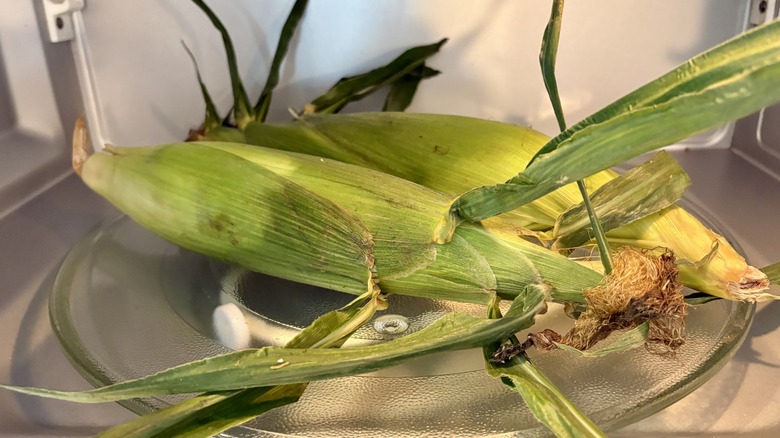
I genuinely don't know how anyone survives without a microwave. Okay, maybe "survive" is a bit hyperbolic, but I use mine at least once a day, so tossing a full ear of corn inside hardly felt like a stretch. I found a recipe that called for a full, unshucked ear of corn to be microwaved for four minutes. If you want to toss in a second ear, add another two minutes to the cook time, with the caveat that timing may vary depending on your microwave.
From a convenience standpoint, this one is hard to beat right up until you remove a steaming hot ear of corn and need to actually shuck it. I used insulated cooking gloves to pull mine apart, but without that option, you're stuck with a too-hot-to-touch ear of corn that's totally inaccessible until it cools significantly.
Potentially burnt fingers aside, this is a decent way to cook corn on the cob. I probably need to dial in my cooking time a bit more because the corn was on the verge of being chewy, but thanks to the husk, it stayed moist. In a pinch, microwaving an ear of corn is an option, but there are definitely tastier methods.
5. Grilled in the husk
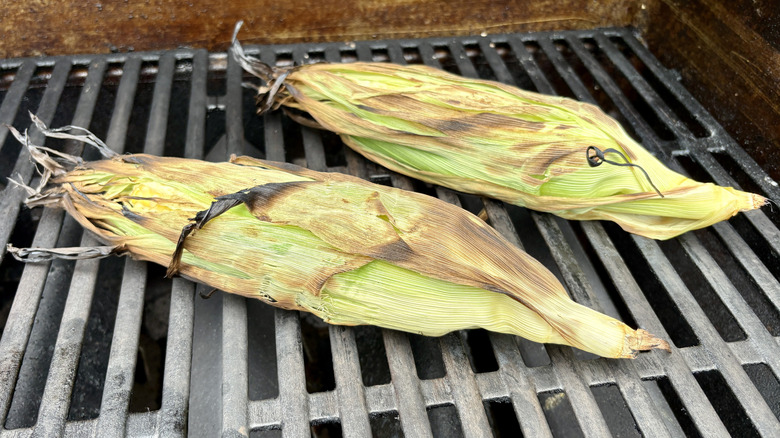
Grilling sweet corn is a very popular method, so I tried three variations to see how they compared. My least favorite of the three — the other two being wrapping the corn in tinfoil and putting the shucked corn directly on the grill — is cooking the corn in the husk. Once again, recipes vary, but most recommend soaking the cob in water for at least 30 minutes to prevent the husk from catching fire during cooking. With a 30-minute investment on the front end, this is the most time-consuming method I tried, which is why it doesn't rank higher.
In terms of effectiveness, soaking then grilling corn in the husk works quite well — and it's how Bobby Flay gets juicy corn on the grill. The vegetable's natural moisture stays trapped by the wet husk, allowing the corn to cook thoroughly and evenly.
Unfortunately, the husk also acts as a shield against the grill, keeping out most of the smoky flavor and preventing the corn from achieving any char, and you're once again left with the issue of removing the corn from the steaming-hot husk. On the plus side, you can fill a grill with cobs rather than having to microwave them in batches. It's not a bad way to grill corn, but it's far from the best or the easiest.
4. Air fried
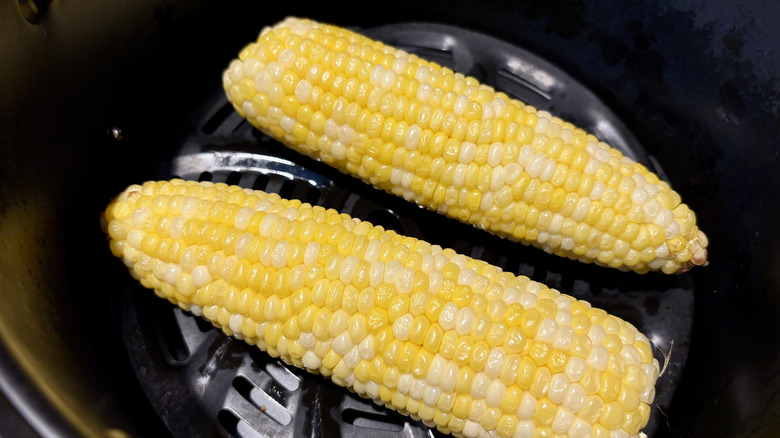
At this point in the list, it's safe to shuck your corn, as all husk-on cooking methods have passed. It's not a terrible way to cook corn, but unless you have a solid plan for how you're going to dispose of the hot husks, it's more work than it's worth. In husking 16 ears of corn, I made a proper mess of my kitchen floor thanks to the silky fibers that line each cob. Thanks to a bit of internet sleuthing, I learned that each silk corresponds to a single kernel of corn, so the more silk, the better.
Back to the cooking methods, the air fryer might just rival the microwave in terms of efficiency. All air fryer recipes I found called for the corn to be coated in some way, either with melted butter or olive oil, so I drizzled just enough olive oil to prevent sticking and set my air fryer to 400 degrees Fahrenheit. At the same temperature as the oven baking method, this corn was cooked in a tidy 10 minutes.
The corn was tender and juicy, and this kind of efficiency is certainly impressive. For a fast, almost zero-cleanup method, air fryer corn is hard to beat.
3. Boiled in water
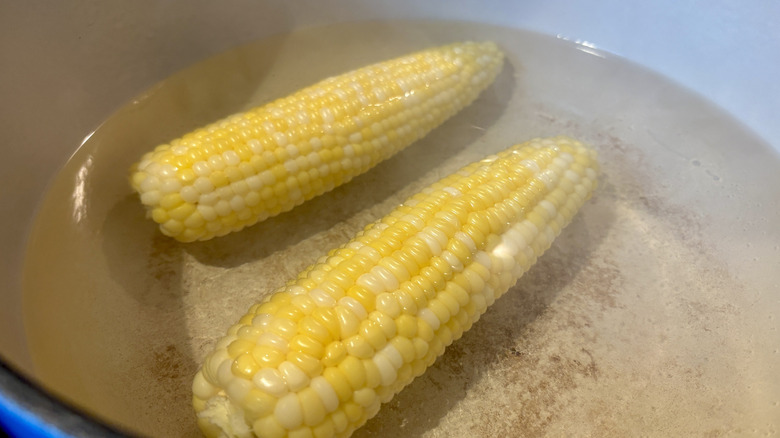
Sometimes the old ways are the best. When it comes to boiling corn, there's no need to reinvent the wheel — looking at you, milk-and-butter bath — because 10 minutes in a pot of water is more than sufficient.
For speed, boiling some water is right up there with the air fryer. I set my water on the stove until it was bubbling, then added the corn, turned off the heat, covered the pot, and let it cook. The results were wonderful. The corn was tender and juicy, and thanks to the fact that it was already shucked, nearly ready to eat from the jump. In a perfect world, I'd have added some butter and salt to the final product, but even enjoyed on its own, sweet corn is plenty tasty.
It's not flashy or trendy, but boiling corn on the cob is a great way to cook it. The only real issue is that the method doesn't infuse any additional flavor into the corn, but thankfully, I have two more that do.
2. Grilled in foil
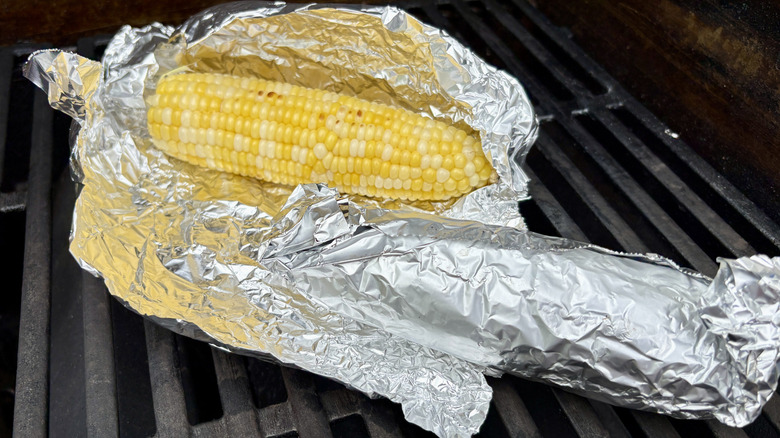
I'm a big fan of grilling food when I can, and corn is no exception — it's undoubtedly the best way to cook corn on the cob. The smoky, charred flavor flames impart is hard to beat, which is why my top two cooking methods take place on the grill.
Wrapping it in foil and grilling corn on the cob on its own is both easy and tasty. I had the temperature of my setup hovering around 400 degrees Fahrenheit, and I cooked my cobs for about 18 minutes, flipping periodically to ensure an even cook. With the foil around the cob, the corn can still get a little brown in spots, but you get more of a steamed effect as the moisture is trapped inside the casing. The result is a tender cob with just a touch of extra flavor from the darker spots.
The real benefit of grilling in foil, though, is the possible inclusions. Whether it's butter and spices or an all-out cojita Mexican corn treatment, there are so many ingredients you can add to a foil-wrapped cob of corn that it almost seems wrong to put it in there naked. If you're looking to just grill corn, then just grill it, but if you're looking to spice things up, wrapping it in tinfoil is the way to go.
1. Cooked directly on the grill
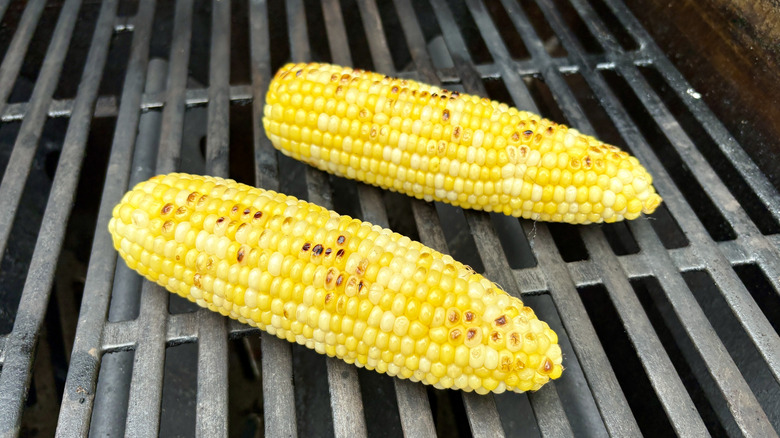
Simpler is better. I've been saying it this whole time, and here's more proof. If you've already got the grill blazing for a cookout, there's no need to cook the corn separately, soak it in water, or wrap it in foil if you're just looking to put some butter on it in the end. Simply shuck the corn and place it directly on the grill, and watch the magic happen. (Though I would recommend lightly buttering the corn on the front end as well.) The kernels will take on a lovely brown color as they begin to cook, imparting all of the flavors of an open flame in each bite.
The cook time for this one is between 15 and 20 minutes, depending on your grill's temperature, but, convenience aside, this is corn with personality. While most other methods do a solid job of cooking the corn, they don't impart any unique flavors, making it tough to tell the difference between a microwaved cob and an air-fried one. With a grill, there's no doubt where a cob of corn came from. The next time you're cooking out and want a simple, tasty ear of corn, just toss it on the grill and let the flames work their magic.
Methodology
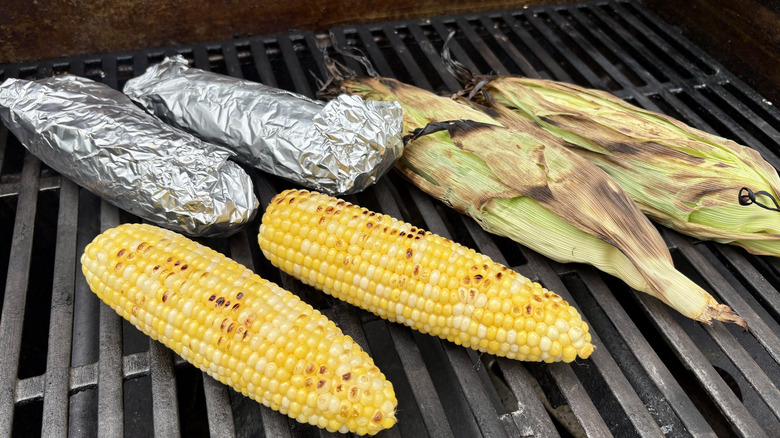
Like any other vegetable, corn can vary from cob to cob, so I purchased 16 ears for this test; two per cooking method. While I love my corn slathered in butter and a little salt, I did my best to keep things simple and avoid butter unless absolutely necessary.
I cooked two cobs per method and let them cool enough to handle before sampling a bit of each from the stem end of the cob. My evaluations were based on flavor and texture, with the required time and convenience of each cooking method taken into consideration.