

Costco's Kirkland Signature Vs. Fairlife Ultra-Filtered Milk: Which Is Better?
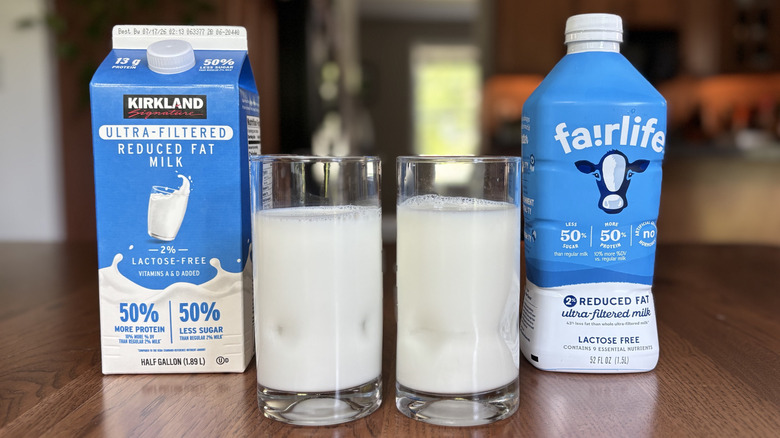
When Fairlife milk first hit shelves in 2012, it was met with a bit of skepticism. It was priced much higher than "normal" milks of the same size, and was owned by the Coca-Cola company. What does a soda manufacturer know about milk, after all?
It turns out, it knows enough to turn the speciality line of ultra-filtered milks into the standard by which all others are currently compared. As of 2022, the Fairlife brand had passed $1 billion in annual retail sales, but there are still very few competitors that offer a similar product. In fact, Costco shoppers rejoiced in early 2026 when customers started to report they spotted a Kirkland Signature version of ultra-filtered milk hitting shelves. Many thought it could offer some competition in the specialty milk landscape — and maybe help them save some money, too.
Kirkland Signature is known to be one of the best store brands out there, and loyal shoppers swear the Costco ultra-filtered milk is a perfect dupe of the Fairlife product. Both products are higher in protein and lower in sugar than regular milks, and offer other nutritional benefits as well. I bought both versions and compared the two to see which is the better buy, taking into account factors like nutrition, cost, and taste.
What is ultra-filtered milk?
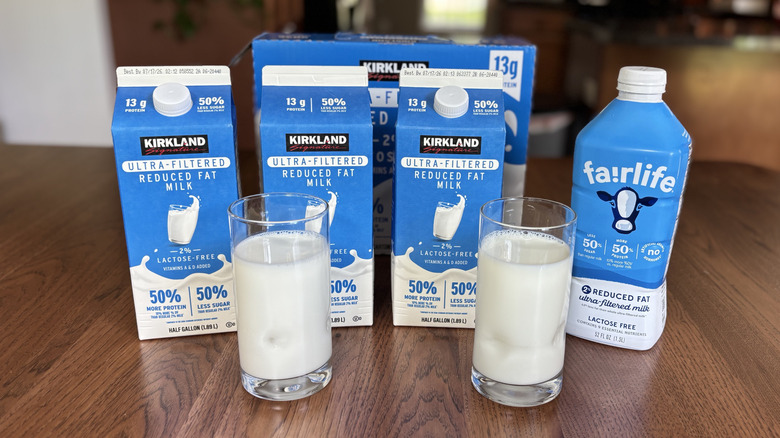
Ultra-filtered milk is regular cow's milk that goes through an extra filtration process before being bottled. That process separates the natural components of milk and allows creators to concentrate certain nutrients and eliminate others.
The result for most ultra-filtered milks are bottles that have significantly more protein than a normal glass of this dairy product, along with fewer natural sugars (which, in this case, is lactose). Other vitamins and minerals can also be concentrated in higher amounts, including calcium.
Some customers say that concentrating the milk through extra filtration makes it a creamier texture than your normal glass of 2%, even though the fat content remains the same. Dietitians report that ultra-filtered milks become closer to nutritionally ideal with this process. These milks are often digestible for those with lactose intolerances, and the lower sugar content can be helpful for people with diabetes.
Since the ultra-filtered milks are still milk at the core of everything, they can be incorporated in 1:1 trades for most uses of the dairy drink. You can pour a glass to drink with cookies, add it to cereal, or use it in the equal measurements for baking and cooking.
Kirkland Signature Ultra-Filtered Milk vs. Fairlife: How do they compare nutritionally?
If you look at the nutrition labels for the Kirkland Signature ultra-filtered milk and for Fairlife, you have to dig pretty deep to find any differences. Total fat, saturated fat, cholesterol, and carbohydrate values are exactly the same between the two brands, both of which list the serving size as one cup with 120 calories. Total sugars, added sugars (both at zero), and protein are also the same.
The main difference comes in the vitamins and minerals section. Fairlife has 25% of the daily value suggested for Vitamin D, while the Kirkland version has only 15%. Fairlife's milk also lists Riboflavin, Vitamin B12, Phosphorous, Magnesium, Zinc, and Selenium in varying percentages — none of which are listed on the Kirkland label. Both contain a lactase enzyme, which makes the milk truly lactose free.
There are, however, significant differences between both ultra-filtered milks and regular 2% milk. The ultra-filtered milks have 13 grams of protein per serving compared to 8 grams in regular milk. The ultra-filtered milks have half the amount of natural sugars from lactose, along with fewer carbs and higher amounts of Vitamin D and calcium.
How do the ultra-filtered milks compare in price?
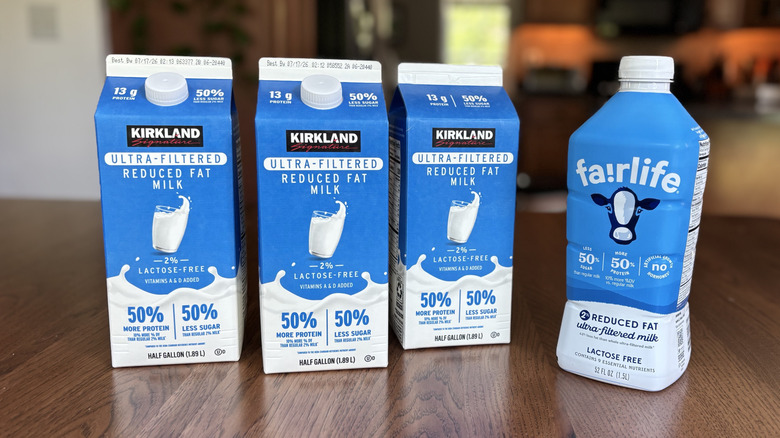
While the nutrition content might be very similar, purchasing ultra-filtered milk at Costco could save you some serious money on a pantry (or refrigerator) staple. It was a big reason why Costco shoppers were so excited about Kirkland rolling out its own version of the product in the first place. Normally, the store brand has excellent food for a fraction of name-brand prices.
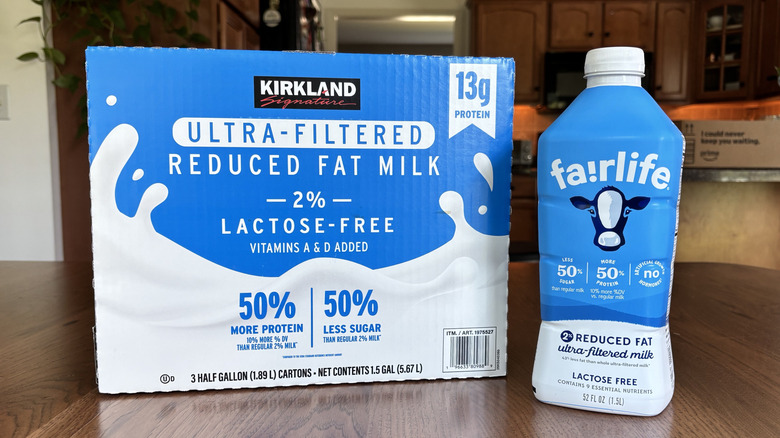
That remains the case in the dairy aisle, at least with ultra-filtered milk. Fairlife's 1.5-liter bottles retail in my area for $6.19 right now, which is a unit price of $4.13 per liter. Costco sells three 1.89-liter cartons in one box for $11.99 at my local warehouse, which is a unit price of $2.11 per liter. Costco does it again on price: That's a full $2 less per liter for a product with the same nutritional value, give or take a few vitamins.
The complaints about the cost of Fairlife for grocery shoppers online bubble up frequently in discussions about where to find alternatives. There still aren't many out there right now, but when Costco's store brand gets in the game, it tends to be a sign that the product is sticking around, and likely to be a big seller. Cost is a big reason why Fairlife doesn't rank well among popular milk brands. And, if retailers like Costco offer a cheaper alternative, Fairlife might have to face the fact that it's not the only darling speciality milk anymore.
How does Fairlife taste?
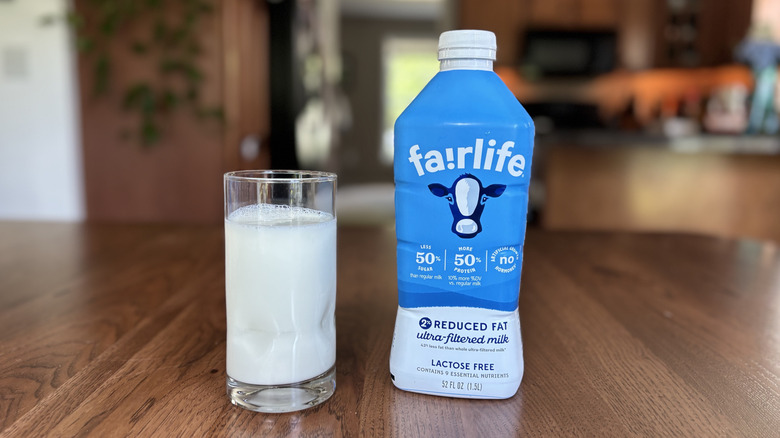
Before this taste test, my only exposure to Fairlife milk was purchasing it in airports for my toddlers when no regular milk options were available. On a recent flight, my current 1-year-old straight up rejected it, throwing the sippy cup full of very expensive airport Fairlife milk on the ground. Ah, parenthood.
While the flavor of ultra-filtered milks is different compared to other 2% versions, I'm pretty sure that only an opinionated toddler who drinks it by the gallon each week would notice it that dramatically. The first sip or two tasted more flat compared to regular milk — I attribute that to the lower sugar content. I tasted Fairlife's version, took a sip of water, then tasted the regular 2% milk in my refrigerator. The lack of sweetness was noticeable. Fairlife's milk also seemed creamier to me, even though the fat content was the same. Fairlife mentions this is a result of the extra filtration process.
I did notice that Fairlife's bottle had a slightly weird smell when I first opened it. I would compare it to (fresh) raw meat; others compare it to eggs or sulfur. This dissipated quickly and didn't affect the taste, but it was more noticeable in the smaller bottles we bought while traveling. Fairlife says this is a normal side effect from its high-heat pasteurization and the higher protein content in the milk. It didn't end up being off-putting, but was noticeable enough to mention.
How does the Kirkland Signature Ultra-Filtered milk taste compared to Fairlife?
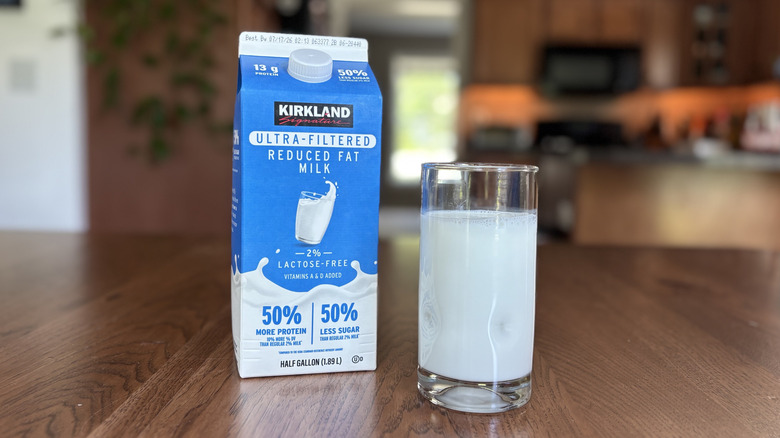
In the interest of good reading material, I tried to find differences in taste between the Costco version of ultra-filtered milk and Fairlife's bottle. I really did. But, that said, I did not taste any discernible difference between Kirkland Signature and Fairlife ultra-filtered milks. Like Fairlife, the Kirkland Signature version was less sweet than regular 2% versions, and more creamy when I drank it. But, if you blindfolded me, I wouldn't be able to tell a difference between the two.
I tried them on their own; I tried them back-to-back; I compared them to regular milk. I took sips of water in between at first, then I skipped that part. There are times when I've been surprised by how much variation there can be in products — like when I've taste-tested store-bought cheesecakes or compared which grocery store NY Strip steak is best. That simply wasn't the case here.
In a way, that makes sense. Both companies start with a single raw ingredient; the only minor differences happen in the filtration process. I did also notice the slightly funky odor when I opened the Kirkland version, although it didn't seem as pronounced as in the Fairlife bottle. Since both dissipated quickly, it didn't end up being a large factor for the comparison.
Overall thoughts on Kirkland Signature vs. Fairlife ultra-filtered milks
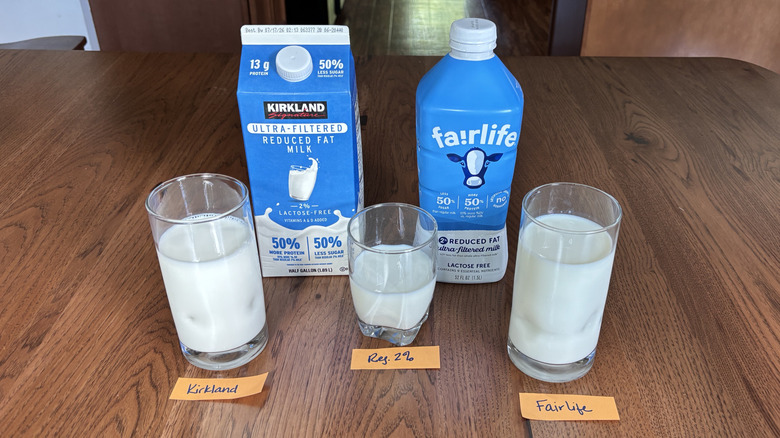
"Better" is subjective, especially when flavor is in play. Some people prefer sweeter foods, while others' palates lean toward savory or even bitter flavor profiles. That becomes much less of a factor when the products taste virtually the same.
In this case, you could make the case that Fairlife has an established reputation for making this type of milk — and doing it well — for over a decade. For longtime customers, perhaps there is some loyalty there, and I wouldn't blame them for it. But, that said, if I'm a new customer looking for a high-protein, low-sugar milk, the Kirkland Signature version is going to get my vote. All other characteristics are pretty equal (give or take a small amount of Riboflavin, and who really knows what that does) — except for cost. Grocery prices continue to increase, and you can save almost half the amount of money you would otherwise spend by purchasing Costco's store brand.
The only drawback to Costco's version is the volume in which you need to buy it. If you already fight for space in your refrigerator, it could be tough to make room for three cartons from Costco. That said, both products also boast a long shelf life (best by dates were at least a month from when I bought them for both brands), so if space isn't an issue, Kirkland's ultra-filtered milk is a clear winner in my book.
How I compared the ultra-filtered milks
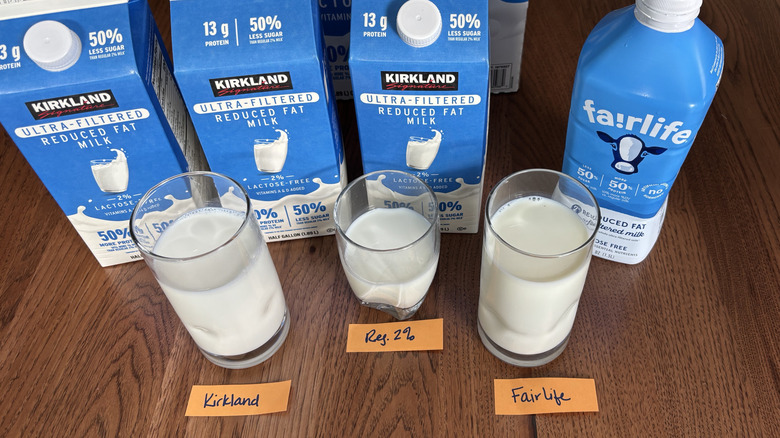
I bought and tried the 2% versions of both the Kirkland Signature and Fairlife brands of ultra-filtered milks. (This is the only option Costco offers, though Fairlife currently sells skim, whole, and chocolate milks as well.) I tasted each one separately with sips of water in between to start, and then compared them directly when I could not taste a difference initially.
I also compared both milks to the regular 2% milk I had in the refrigerator to taste the nuances with the lower sugar content. I evaluated both brands of ultra-filtered milk for flavor, nutrition content, and overall value. Since the flavors were essentially identical, my judgment of the "better" milk came down to cost savings with the Costco version.